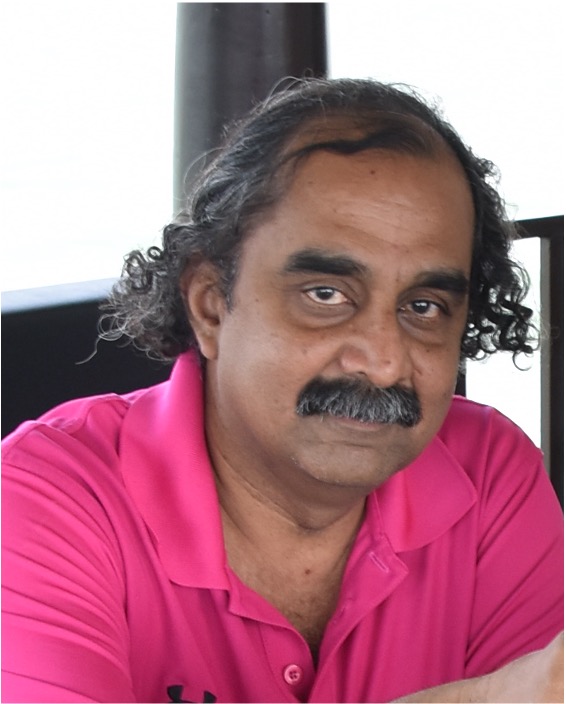
Dr. Alexander Eichler is a Senior Lecturer (Privatdozent) and Senior Scientist at ETH Zürich's Department of Physics. His research focuses on nanomechanical sensing, spin-mechanics coupling, and parametric phase logic devices. He holds a permanent position at ETH since 2019 and became a Privatdozent in 2022. Education: Doctoral studies at University of Basel (2006–2009) Teaching: Teaches Classical and Quantum Parametric Phenomena (Autumn 2025). His work explores cutting-edge topics like nuclear spin detection, parametric instability landscapes, and topological classification of nonlinear systems. Research highlights include developing membrane-based scanning force microscopy and creating Boltzmann machines using coupled parametric oscillators. Awards: KITE award for teaching innovation (2022) Swiss Physical Society ABB Award (2012) Marie-Curie IEF Fellowship (2010) Current projects involve nanoscale MRI, stochastic dynamics in coupled oscillators, and parametric phenomena in graphene resonators. His lab develops advanced microscopy techniques and quantum-classical hybrid systems.
Satoshi Yamaguchi is a Professor at the Institute of Scientific and Industrial Research (SANKEN), Osaka University , leading the Synthetic Chemistry for Molecular Systems laboratory. His research focuses on creating novel molecular systems using organic synthetic chemistry to obtain previously unattainable biological information. Developed photoresponsive cell culture surfaces for regenerative medicine, drug discovery, and biosensors Invented "bulky caging" technology to control biomolecule and cell functions with light or environmental stimuli Collaborates internationally on platform technologies with applications in medicine, food science, and environmental research The lab's innovations include three patented technologies: photodegradable surfaces, photoactivatable surfaces, and wavelength-switchable surfaces. They have demonstrated their capabilities through collaborations with companies and presentations at conferences like PharmaLab EXPO 2025 and the Bio-Polymer Symposium. The laboratory emphasizes problem-solving methodology and practical research training for students.
Laure Catala is a Professor at the University of Paris-Saclay, affiliated with the Institute of Molecular Chemistry and Materials of Orsay (ICMMO - UMR 8182). Her research focuses on coordination nanoparticles, spin-crossover materials, and their applications in nanomedicine, energy, and optoelectronics. She leads projects on Prussian blue analogues, magnetic nanoparticles, and functional nanomaterials for biomedical imaging and theranostics. Her work integrates inorganic chemistry, materials physics, and nanotechnology to design responsive materials with tailored properties. Key areas include nanocrystal dynamics, light-driven phenomena, and magnetic behavior modulation. Collaborations span disciplines like ultrafast spectroscopy and catalytic growth of carbon nanotubes. Publications emphasize nanomaterial synthesis, magnetic properties, and biomedical applications. No scientific awards are explicitly mentioned, but her extensive publication record reflects significant contributions to the field.
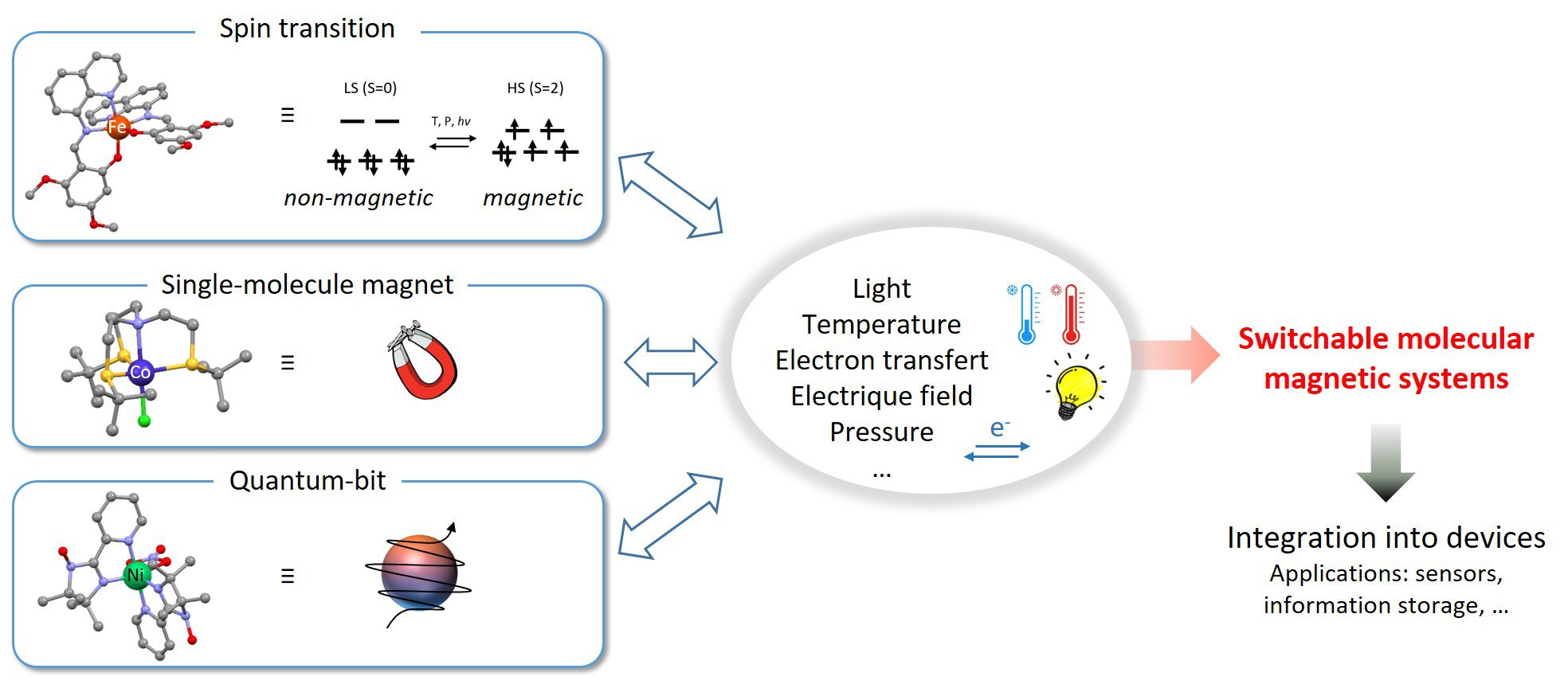
Nathalie Bridonneau is a CNRS Researcher at the Institut de Chimie Moléculaire et des Matériaux d'Orsay (ICMMO) within Université Paris-Saclay, affiliated with the Inorganic Chemistry Team (ECI). She has been with the Magnetic Nanosystems group since 2019. Her research focuses on designing photo- and electro-switchable magnetic molecules, including single-molecule magnets, spin crossover complexes, and qubits. Prior roles include postdoctoral positions at institutions like Université Paris Diderot (2018–2019) and University of Modena and Reggio Emilia (2014), where she explored functional multimetallic architectures and nanoparticle synthesis. Education: Ph.D. (2010–2013): University Pierre and Marie Curie (Paris VI), supervised by Dr. Valérie Marvaud. Thesis: "Functional multimetallic architectures: Single Molecule Magnet behavior and Photo-magnetism" Research Interests: Magnetic nanosystems, nanoparticle synthesis, photo-magnetism, gold nanoparticle stabilization, and applications in inkjet-printed electronics. Her work integrates inorganic chemistry, materials science, and electrochemistry to develop responsive materials for energy and biomaterial applications. Key Contributions: Bridonneau's studies on gold nanoparticles stabilized by N-heterocyclic carbene ligands and their interaction with polymers have advanced inkjet-printed sensor technologies. Her research on light- and pressure-tunable magnetic compounds has implications for quantum technologies and smart materials. Grants & Projects: Involved in FET-OPEN H2020 projects on redox hydrogels for plant-related energy applications. Collaborations include work on humidity sensors and electronic plant systems. Labs/Teams: Magnetic Nanosystems group at ICMMO, contributing to interdisciplinary projects spanning chemistry, physics, and engineering.
Dr. Patrick Baesjou is a Researcher and Lecturer at the Debye Institute for Nanomaterials Science , part of Utrecht University , with a focus on Soft Condensed Matter . He also serves as a Chemistry Lecturer at the Utrecht University of Applied Sciences . His work bridges fundamental chemistry with applied nanomaterials science. His research interests span nanomaterials synthesis , soft matter self-assembly , and optical/electronic applications . Key themes include quantum dot engineering , electrophoretic display technology , and supraparticle photonics . Recent publications highlight advances in anatase TiO2 nanorod synthesis , ligand density control in smectic liquid crystals , and whispering gallery mode lasing . His work integrates materials chemistry , optoelectronics , and self-assembly mechanisms , with applications in sustainable display technology and solid-state lighting . Scientific awards : Member, Scientific Advisory Committee of the European Soft Matter Infrastructure (ESMI) Teaching includes Nanomaterials Science and Chemistry , with supervisory roles in Master Internships . He contributed to projects like Switchable Optics with Responsive Colloids (funded by NWO-TTW), advancing electro-optical components for energy-efficient lighting.
Dr. Patrick Baesjou is a Lecturer and Researcher at the Debye Institute for Nanomaterials Science within the Faculty of Science at Utrecht University . His work spans Soft Condensed Matter and Nanomaterials Science , with a focus on optical properties , quantum dots , and metal-organic frameworks . He is based at the Leonard S. Ornstein Laboratory in Utrecht, Netherlands. Research Interests : Self-assembly of nanocrystals Switchable optical components (e.g., lenses, gratings) Photonic supraparticles and lasing mechanisms Catalysis of oxidative polymerization reactions Electronic paper and display technology Publication Trends : His recent work (2016-2022) focuses on titanium dioxide nanorods , supraparticle lasing , and quantum dot engineering , often involving collaborations with teams led by Prof. Alfons van Blaaderen and Prof. Andries van Blaaderen. Earlier studies (1992-2003) explored homogeneous catalysis and organic electronics . Supervised Work : As a co-promoter and research leader, he guided projects on responsive colloids and electronic paper , mentoring scholars like F. Montanarella and S.N. Hosseini. His publications frequently involve interdisciplinary teams in chemistry , physics , and materials science .
Yohan Lee is an active researcher specializing in nanophotonic metasurfaces and responsive optical materials, contributing to high-impact publications in Nature Communications and Nanophotonics (2022-2023). His work centers on electrically switchable optical systems for next-generation adaptive devices. His research spans: Dynamic hydrogel nanofabrication for multi-channel biomedical applications Conducting polymer-based nanogratings for real-time beam control Electro-active metaobjectives enabling on-demand metalens reconfiguration Recent publications reveal a pronounced trend toward integrating electrical actuation with nanoscale optical structures, particularly using conducting polymers and hydrogels to achieve rapid, reversible control of light. This bridges photonics with soft matter physics, targeting applications in adaptive imaging, optical communications, and biomedical sensing. Dr. Lee maintains strong collaborative ties with Prof. Harald Giessen's research group, consistently appearing as co-author on multi-investigator projects involving M. Sitti, J. Karst, and M. Hentschel. His work demonstrates significant grant support through publication in elite journals, though specific funding sources aren't detailed in the source text.
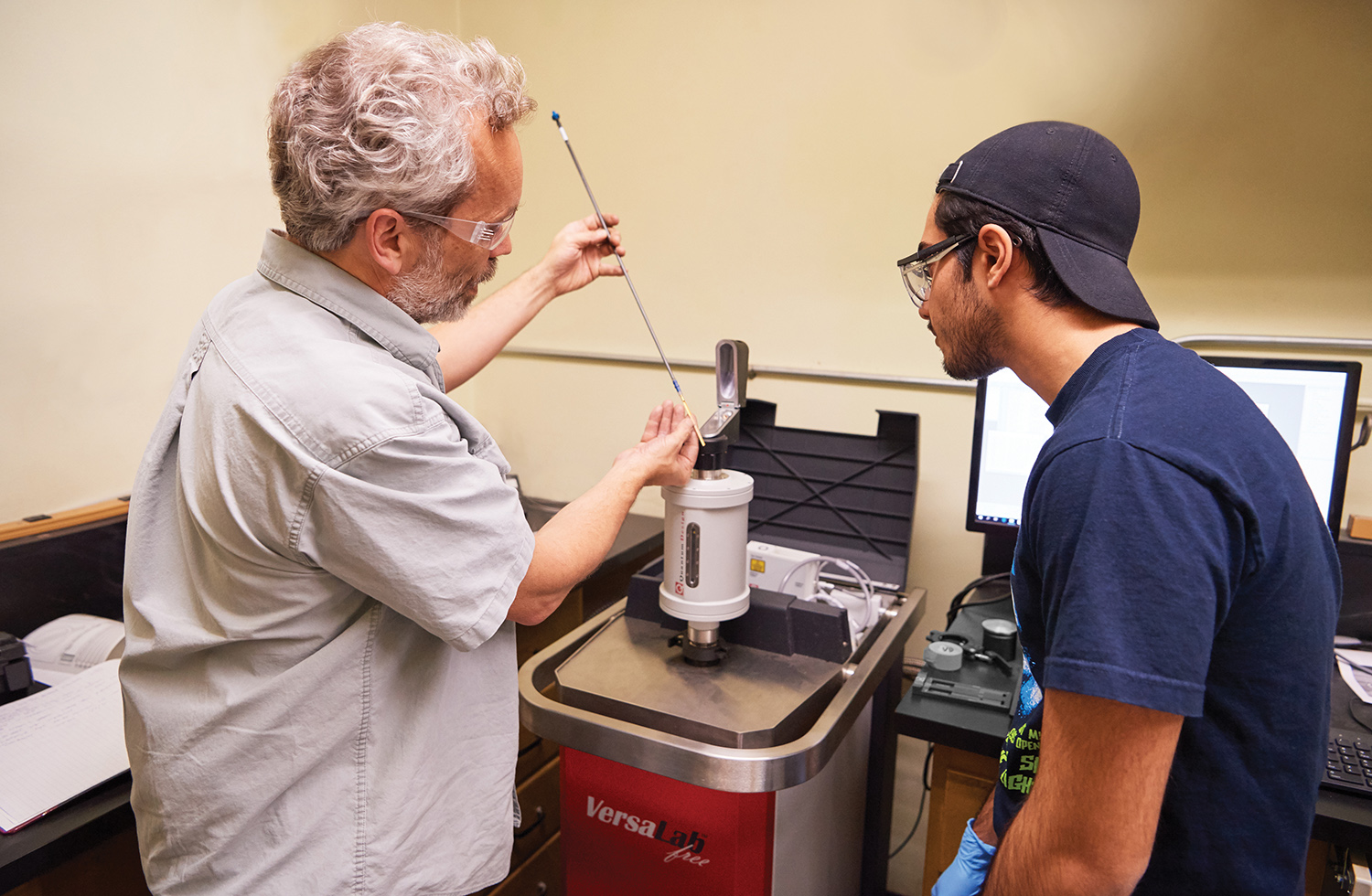
David Brook is an Assistant Professor in the Department of Chemistry at San José State University, within the College of Science. He serves as a Principal Investigator with the SJSU Research Foundation, actively leading a research program focused on the design and investigation of novel molecular materials with switchable electronic and magnetic properties. His research centers on metallo-organic compounds whose magnetic states can be toggled by external stimuli such as temperature and light. These systems are studied using physical property measurement systems across a wide temperature range (50K to 400K). The long-term goals include applications in molecular-scale information storage, quantum computing, and advanced sensors. Dr. Brook integrates students at all levels into his research team, providing hands-on experience in chemical synthesis, material characterization, and data analysis. His students regularly present their findings at national and international conferences, including meetings of the American Chemical Society and the International Chemical Congress of Pacific Basin Societies. Several of his former students have pursued graduate studies at institutions such as UC Irvine, UCLA, UC San Diego, McGill University, and the University of Nebraska, while others have entered industry roles at companies like Apple and Gilead. One student, Arshia Hamzehpour Savojbalaghi, expressed an ambition to become a clinician-scientist through an M.D.-Ph.D. program, inspired by research in Brook’s lab. Research Area: Molecular Magnetic Materials Key Techniques: Physical Property Measurement, Synthesis of Metallo-organic Compounds Applications: Quantum Information, Molecular Electronics Dr. Brook’s work is supported through the SJSU Research Foundation, indicating active grant involvement and sponsored research. His lab functions as a student-centered research environment fostering innovation and professional development in chemistry and materials science.
Prof. Dr. Arnold Driessen is a world-renowned Professor of Molecular Microbiology at the Faculty of Science and Engineering , University of Groningen . Since 2009, he has been a member of the Royal Netherlands Academy of Arts and Sciences (KNAW), reflecting his exceptional scientific contributions. Chair of Molecular Microbiology research unit Director of Groningen Biomolecular Sciences and Biotechnology Institute International pioneer in transport proteins and lipid biosynthesis Research Focus Driessen's groundbreaking work spans: Nanoscale analysis of membrane transport proteins Lipid biosynthesis in extremophiles Genetic engineering of yeast/fungi for industrial fermentation Origin of life studies from single-cell ancestors Development of light-switchable antibiotics Scientific Impact 500+ peer-reviewed publications (42,000+ citations) 10 patents in biotechnological applications 424 articles in specialized journals 26 chapters in academic books 39 review articles synthesizing key research areas Scientific Awards Knight in the Order of the Netherlands Lion (2025) ISE Lifetime Achievement Award (2024) Multiple international fellowships Mentorship & Leadership Under his leadership: Molecular Microbiology group received top ratings for research quality Mentored 89 PhD students and 40+ postdocs Played key role in public-private antibiotic resistance partnerships Developed photopharmacology with Nobel laureate Ben Feringa
Guillem Aromí Bedmar is a University Professor in the Department of Inorganic and Organic Chemistry at the Faculty of Chemistry, University of Barcelona. He serves as Director of the Institute of Nanoscience and Nanotechnology (IN2UB) and Science Coordinator for the Catalan Agency for Management of University and Research Grants (AGAUR). His academic training includes a Bachelor's Degree in Chemistry from the University of Barcelona (1994), an Ingénieur Chimiste from EHICS Strasbourg (1994), and a Ph.D. in Inorganic Chemistry from Indiana University (1999). University of Barcelona: Bachelor's Degree in Chemistry (1994) EHICS Strasbourg: Ingénieur Chimiste (1994) Indiana University: Ph.D. in Inorganic Chemistry (1999) Prof. Aromí pioneers molecular spin-based quantum computing, focusing on synthesis of coordination complexes and supramolecular assemblies for spintronics, spin crossover, single-molecule magnetism, and photo-responsive quantum devices. His seminal work established molecular qubits and quantum gates, with recent breakthroughs in light-switchable qugates and multi-qubit systems (6-qubit protocols). His research bridges chemistry, physics, and quantum information science , developing molecular platforms for next-generation quantum processors. Analysis of his 15 most recent publications reveals a dominant focus on heterometallic lanthanide complexes for quantum computing applications (70% of articles), with growing emphasis on error correction protocols and multi-qubit architectures . His work consistently integrates spin-crossover phenomena with photo-responsive elements to create externally controllable quantum systems, positioning molecular spintronics at the forefront of quantum information hardware development. Key recognitions include: Three-time recipient of the ICREA Academia Award (2008, 2013, 2018) ERC Starting Grant (ERC-2010-StG-258060) for quantum computing research Prof. Aromí has secured >4.3 MEUR as PI from EU, Spanish, and Catalan grants, including FATMOLS (EU FET-OPEN), SUMO (QUANTERA NET), and Quantum Communications Complementary Plan. His mentoring record spans seven doctoral theses, ten postdocs, and numerous master's students. As Director of IN2UB (re-elected 2022), he oversees one of UB's largest research institutes and leads acquisition of major infrastructure like Spain's only PULSED EPR spectrometer. He leads the Lab of Molecular Design (LabMolDesign), evolving from his foundational Group of Magnetism and Functional Molecules (GMMF). His international leadership includes chairing MOLMAT2012, representing Catalan Chemical Society at EuChemS, and delivering 77+ invited talks worldwide.
Mohan Srinivasarao is a full Professor in the School of Materials Science and Engineering at the Georgia Institute of Technology (College of Engineering). He is an elected Fellow of the American Association for the Advancement of Science (AAAS), the American Physical Society (APS) and the National Academy of Inventors (NAI). Education Ph.D. in Chemistry, Carnegie Mellon University, 1990 M.S. in Polymer Science, Carnegie Mellon University, 1985 M.Sc. in Applied Chemistry, PSG College of Technology (University of Madras, India), 1981 B.Sc. in Applied Science, Madurai University, India, 1979 Research Interests Srinivasarao’s research integrates polymer and liquid-crystal physics with nano-optics and advanced characterization. His group explores the physical chemistry of polymers , rheology and rheo-optics of liquid-crystalline fluids , and optical properties of nematic and chromonic liquid crystals . A major thrust is bio-inspired nano-optics , elucidating how butterfly wings, beetle cuticles and bird feathers produce structural color. The laboratory employs confocal microscopy, photon-tunneling microscopy, polarized Raman spectroscopy and other light-scattering techniques to quantify order, defects and dynamics across length scales from molecular to macroscopic. Recent Publication Trends Between 2010 and 2024, Srinivasarao has published extensively on lyotropic chromonic liquid crystals , organic semiconducting polymers , flexible organic electronics , and biomimetic photonic structures . Recurring themes include spontaneous emergence of chirality, defect topology under confinement, orientation control in conjugated polymers, and hierarchical optical materials inspired by beetles and butterflies. Scientific Honors Fellow, American Association for the Advancement of Science (AAAS) Fellow, American Physical Society (APS) Member/Fellow, National Academy of Inventors (NAI) Research Group & Collaborations Srinivasarao leads the Mohan Srinivasarao Group , whose members investigate multi-scale structure–property relationships in soft and biological materials. Collaborative projects span Georgia Tech’s interdisciplinary centers and leverage facilities for advanced microscopy, scattering and device fabrication. Contact: mohan@mse.gatech.edu