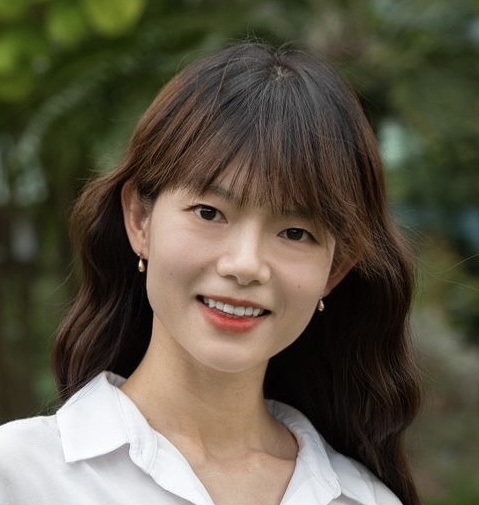
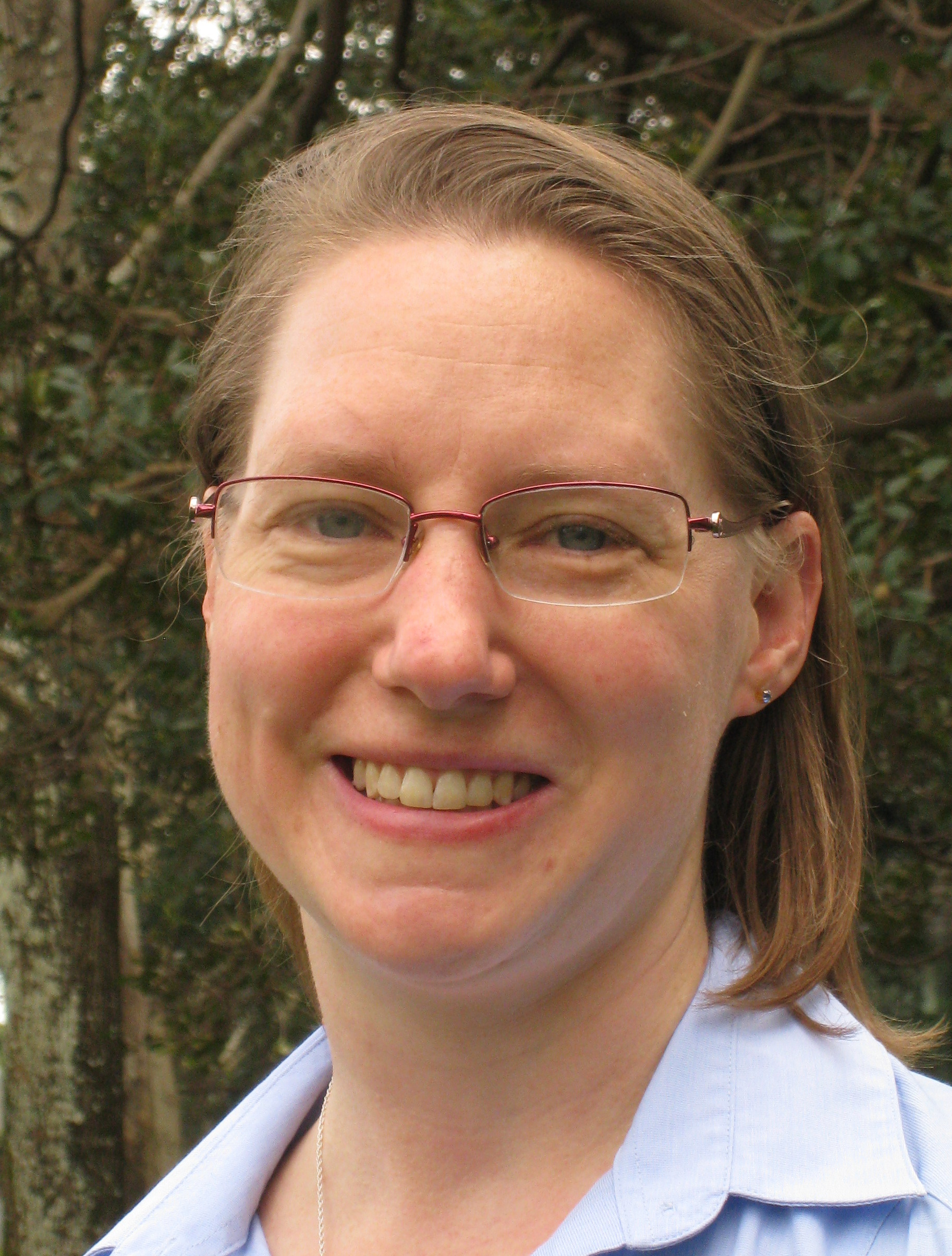
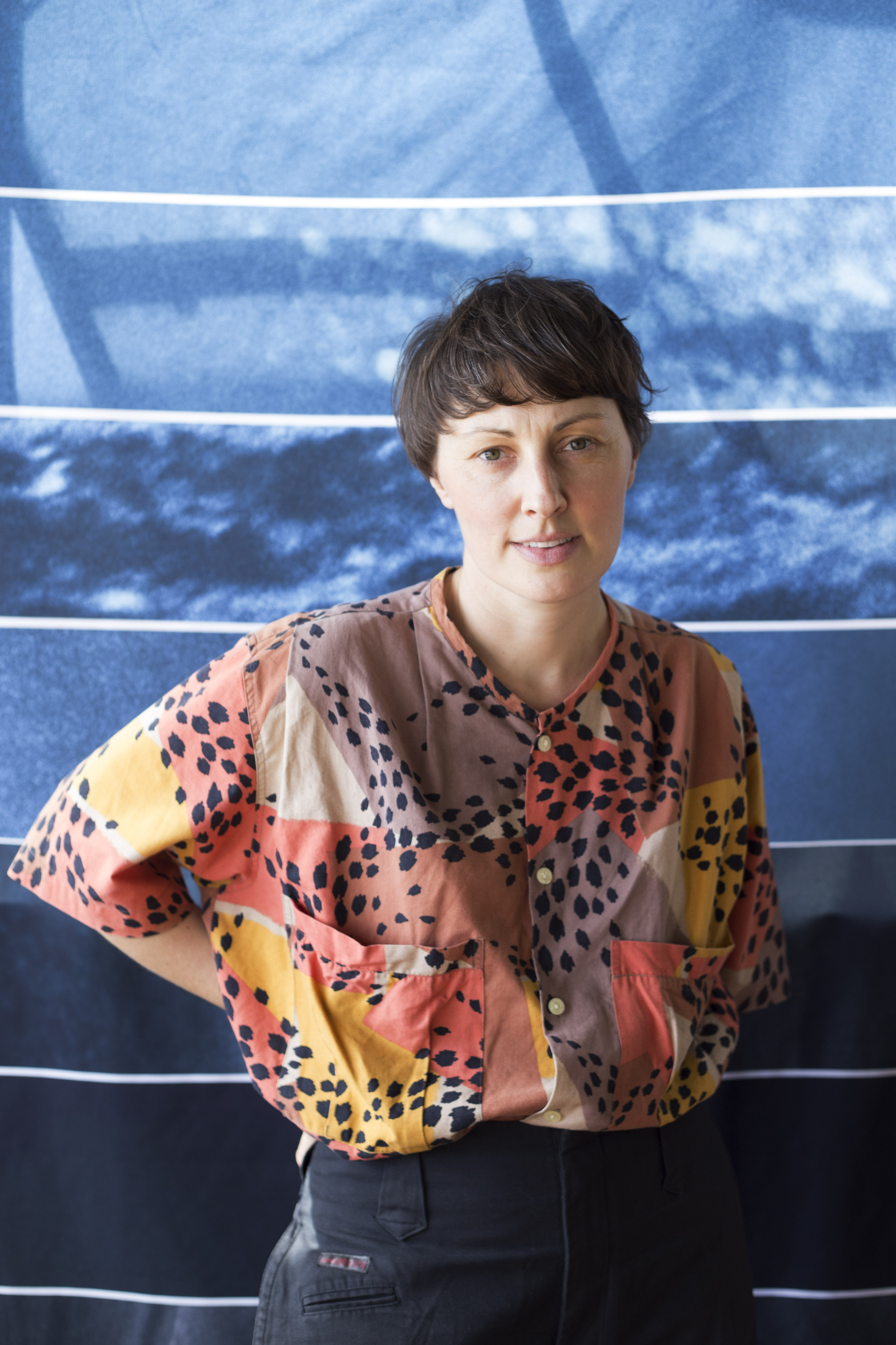
Professor Hongdong Li is a Tenured Professor at the School of Computing, Australian National University (ANU), within the College of Engineering and Computer Science. His research focuses on 3D Computer Vision, Machine Learning, and their applications in dynamic environments. He has held visiting roles at Carnegie Mellon University and has contributed to significant projects like the Australia Bionic Eyes initiative. Education: PhD (Electrical Engineering). Research Interests : 3D Computer Vision fundamentals and applied AI systems Learning-based 3D perception for plant sciences Robot navigation in unfamiliar environments Awards : Marr Prize Honourable Mention CVPR Best Paper Award Advising & Grants : Supervised 40+ PhD students, with funding from ARC, CSIRO, Microsoft, and firms like OPPO/Tencent. Active in projects such as bushfire detection via video analytics and sign language translation systems. Labs/Teams : Co-founder of the Australian Centre for Robotic Vision (ACRV). Collaborates globally on cross-view localization and autonomous systems.
Jan de Gier is a Professor at the School of Mathematics and Statistics, The University of Melbourne . He is also the Founding Director of MATRIX , Australia’s residential research institute in the mathematical sciences, and a former Deputy Director and Chief Investigator in the Australian Research Council Centre of Excellence for Mathematical and Statistical Frontiers (ACEMS) . Additionally, he co-founded the Australian and New Zealand Association for Mathematical Physics (ANZAMP) in 2011 and served as its inaugural Chair. His research focuses on solvable lattice models at the intersection of mathematical physics and statistical mechanics . Key areas include the application of quantum integrability , algebraic structures like the Yang-Baxter equation, Hecke algebras, and quantum groups, as well as analytical methods such as complex analysis and elliptic curves. His work bridges pure and applied mathematics through connections between enumerative combinatorics , representation theory , and real-world phenomena like traffic flow modeling via exclusion processes . The 15 most recent articles reflect his expertise in integrable systems , non-equilibrium statistical mechanics , and algebraic combinatorics . Topics span Macdonald polynomials , stochastic duality , quantum spin chains , and traffic modeling , with methodologies involving matrix product forms , exact solutions , and critical phenomena analysis. He has contributed to editorial efforts through the AustMS Gazette and MATRIX Annals, and has been involved in public science communication via opinion pieces on mathematics funding and applications. His work emphasizes the importance of fundamental research in driving technological innovation, as highlighted in media articles discussing pi calculation , zero-knowledge proofs , and mathematics education .
Dr. Yi Huang is a Senior Lecturer in Climate Science at the School of Geography, Earth and Atmospheric Sciences , University of Melbourne . She holds a Ph.D. in Mathematical Sciences General from Monash University , where her work focused on cloud and precipitation systems over the Southern Ocean. Her research addresses fundamental questions in atmospheric processes, Earth's energy budget, and water cycle dynamics. She specializes in cloud-climate interactions, precipitation systems, geographical variability in atmospheric phenomena, and the application of field observations, remote-sensing data, and numerical modeling to improve weather and climate predictions. The recent Google Scholar articles suggest interdisciplinary work in solar cell materials and semiconductor physics, though this is not explicitly detailed in her official bio. The scientific awards section is currently empty due to no explicit mentions in the provided text. She has not been described as advising students or participating in specific lab teams in the scraped content.
Professor Arcot Sowmya is a distinguished academic at the University of New South Wales, serving as Professor in the School of Computer Science and Engineering. With a strong background in both computer science and mathematics, she has established herself as a leading researcher in machine learning and computer vision applications, particularly in medical imaging and diagnostics. Dr. Sowmya earned her PhD in Computer Science from the Indian Institute of Technology, Bombay, along with an MTech in Computer Science, MSc in Mathematics, and BSc in Mathematics from the same institution. Her academic journey has positioned her at the intersection of theoretical computer science and practical medical applications. Her research interests span multiple domains with a primary focus on Machine Learning for Computer Vision . She has made significant contributions to learning object models, feature extraction, segmentation, and recognition techniques. Her work extends into medical image analysis, computer-aided diagnostics, high-resolution remote sensing, and biomedical informatics. More recently, she has applied similar techniques to social sciences domains, developing improved forecasting models for genocide and politicide. Her earlier work also includes contributions to real-time, concurrent, and embedded systems. Analyzing her recent publications reveals a strong trend toward medical applications of computer vision and deep learning. Her work spans from OCT-based glaucoma diagnosis to tumor segmentation, lung disease detection, and breast cancer prognosis. She has successfully bridged computer science with clinical medicine, developing practical tools for disease diagnosis and prediction that incorporate explainable AI approaches. Professor Sowmya's collaborative approach is evident in her extensive publication record across multiple journals and conferences. She has worked with researchers from diverse fields including ophthalmology, oncology, neurology, and public health, demonstrating the interdisciplinary nature of her research. Her laboratory work focuses on developing robust deep learning architectures for medical image analysis, with particular attention to segmentation networks, transformer models, and multimodal data fusion techniques. Her team has developed specialized networks for lung segmentation, tumor detection, and disease classification that address specific challenges in medical imaging.
Associate Professor Judy Hart is a materials scientist at the School of Materials Science & Engineering, UNSW Sydney , specializing in the development of semiconducting materials for renewable energy applications. Her work integrates computational (DFT) and experimental approaches to understand composition-property relationships in systems like solid solutions , heterostructures , and doped materials for photocatalysis and solar cells . She leads projects funded by ARC Discovery and Linkage grants , including work on photo-electro-catalysis systems and stabilizing ceramic materials . Education: PhD in Materials Engineering (Monash University, 2007), BEng (Materials) (Monash, 2002) Professional Experience: Senior Lecturer (UNSW, 2017–), Lecturer (UNSW, 2013–2017), University of Bristol (2007–2012) Research Interests Her research focuses on designing materials for renewable energy , particularly photoelectrochemical water splitting and organic oxidation reactions . Key areas include Density Functional Theory (DFT) , defect engineering , band gap tuning , and nanostructured materials . She investigates ferroelectric polarization effects , metal oxide heterostructures , and stability of battery components , with applications in hydrogen production , CO2 conversion , and advanced battery materials . Scientific Awards Ramsay Memorial Fellowship (University of Bristol, 2007–2009) Teaching Contributions She is co-author of the 1st Australian & New Zealand edition of "Materials Science and Engineering: An Introduction" , and teaches courses on computational materials science , corrosion-resistant surfaces , mechanical behavior of metals , and materials design .
Professor Nick Paul is a marine scientist at the University of the Sunshine Coast (UniSC), leading applied research in seaweed and algae for sustainable product development. He holds a PhD and BSc (Hons) from UNSW and a Graduate Certificate in Tertiary Education Management from the University of Melbourne. His work focuses on seaweed aquaculture innovations, including waste-to-resource biotechnology, functional foods, and environmental remediation. He leads international projects funded by organizations like ACIAR, CSIRO, and Advance Queensland. Research interests include seaweed-based solutions for livestock health, wastewater treatment, and sustainable aquaculture expansion near the Great Barrier Reef. He has pioneered commercial land-based seaweed farming and developed intellectual property in this field. Awards include the 2015 UNAA World Environment Day Award for Sustainable Water Management and the 2015 Queensland Water Innovation Forum Best Paper. He serves on the Asian Fisheries Society Council and Fiji’s National Seaweed Taskforce. Key publications span seaweed cultivation methods, marine genomics, and socio-economic impacts of aquaculture in the Pacific. Grants total over A$3.7 million for projects like diversifying Pacific Island seaweed industries and improving Indonesian seaweed production.
Professor Yue Rong is a Full Professor at Curtin University's Department of Electrical and Computer Engineering, within the School of Electrical Engineering, Computing and Mathematical Sciences. He holds editorial roles at IEEE Transactions on Signal Processing and IEEE Wireless Communications Letters. His research focuses on signal processing for communications, underwater acoustic systems, wireless networks, and healthcare IoT. Rong has authored over 140 journal and conference papers and received multiple awards, including the 2010 Young Researcher of the Year Award. Education: B.E. (Electrical Engineering), Shanghai Jiao Tong University (1999) M.Sc. (Electrical Engineering), University of Duisburg-Essen (2002) Ph.D. (Electrical Engineering), Darmstadt University of Technology (2005) Research Interests: Rong's work spans cooperative MIMO communications, underwater acoustic systems, OFDM modulation, radar-based healthcare monitoring, and secure wireless protocols. His innovations include adaptive modulation schemes for underwater environments and radar-based vital signs detection. Recent trends in his publications emphasize AI-driven signal processing for healthcare IoT and underwater optical communication systems. Awards: Best Paper Awards (WCSP 2011, APCOMM 2010) Chinese Government Award (2004) DAAD/ABB Fellowship (2001-2002) Grants & Labs: His research is supported by grants focusing on UAV-enabled data collection and underwater network optimization. He leads projects in the Distributed Data Fusion and Emerging Technologies (DDFE) lab, advancing radar-cardiography and wearable health monitoring systems.
Kaye Morgan is an Associate Professor in the School of Physics and Astronomy at Monash University, specializing in X-ray imaging technologies with applications in medical and respiratory research. She holds an Australian Research Council Future Fellowship and has held prestigious positions including a Hans Fischer Fellowship at Technische Universität München. Her research focuses on advancing X-ray optics methodologies, particularly phase contrast X-ray imaging (PCXI) and dark-field imaging, to enhance resolution, speed, and sensitivity. These techniques are applied to study airway health in cystic fibrosis and other respiratory diseases, using synchrotron facilities like SPring-8 and the Munich Compact Light Source. She has pioneered single-grid imaging and propagation-based dark-field approaches, enabling real-time visualization of lung dynamics and treatment efficacy. Morgan leads multiple high-impact projects funded by ARC and international collaborations, with over 85 publications in journals like Optics Express and Scientific Reports. Her work contributes to UN Sustainable Development Goals related to health and innovation. Key achievements include developing lab-based X-ray sources for clinical translation and quantifying lung microstructure through advanced imaging algorithms.
Dr. Hung Yew Mun is an Associate Professor and Interim Head of the Mechanical Engineering program at Monash University Malaysia’s Malaysia School of Engineering. His expertise spans heat transfer, thermodynamics, and fluid dynamics, with a focus on micro-scale phenomena, phase-change heat transfer, and graphene-based materials. He teaches courses including MEC3454/MEC4408 (Thermodynamics and Heat Transfer) and MEC4416 (Momentum, Energy & Mass Transport). Dr. Hung’s research addresses advanced cooling solutions for electronics, energy storage, and sustainable materials. Education: PhD in Mechanical Engineering from University of Multimedia, Malaysia (2010). Research Interests: Micro-scale heat transfer, phase-change mechanisms, graphene nanostructures, and applications in thermal management. His work contributes to UN SDG goals related to affordable and clean energy (SDG7) and industry innovation (SDG9). Recent Projects: Includes studies on MXene-biochar composites for energy storage, graphene-enhanced devices for electronics cooling, and multiscale modeling of postharvest fruit water transport. He has led/co-investigated 12 projects since 2013, emphasizing interdisciplinary collaboration. Publications: Over 100 peer-reviewed articles, with recent focus on graphene-mediated heat transfer enhancement, plasma-activated cooling, and nanofluid applications. His work addresses both fundamental mechanisms and industrial applications. Labs/Teams: Active in thermal engineering and nanomaterials research groups, collaborating with institutions globally on sustainable energy and advanced materials.
Dr. Stephen Warren-Smith is a Senior Research Fellow at the Future Industries Institute, University of South Australia (UniSA), where he conducts cutting-edge research in optical fiber technology and photonics. He is affiliated with the Laser Physics and Photonic Devices Laboratories within UniSA STEM (Science, Technology, Engineering and Mathematics), and serves as a Research Degree Supervisor for graduate students. Dr. Warren-Smith's primary research interests span optical fiber technology, photonics, and biosensors, with a particular focus on developing novel fiber optic sensing platforms for biomedical and environmental applications. His work encompasses microstructured optical fibers, fluorescence sensing, and the integration of machine learning techniques for enhanced sensor performance. He has made significant contributions to the fields of harmonic generation in optical fibers, NV center-based quantum sensing, and multimode fiber applications. Analysis of Dr. Warren-Smith's recent publications reveals a strong trend toward developing sophisticated fiber optic sensing platforms with diverse applications. His work demonstrates increasing integration of advanced materials (like diamond with NV centers) and computational methods (particularly deep learning) to overcome traditional limitations in optical sensing. The research spans fundamental physics of light-matter interactions in fibers to practical applications in medical diagnostics, environmental monitoring, and industrial process control. A notable pattern is the development of multi-parameter sensing capabilities within single fiber platforms, enabling simultaneous measurement of various physical and chemical properties. Dr. Warren-Smith has secured significant research funding including ARC Future Fellowships (FT200100154), ARC Discovery Projects (DP190102896), and support from the Australian National Fabrication Facility (Optofab Node) utilizing Commonwealth and South Australian State Government resources. His research has received substantial citation counts, with several papers cited multiple times in Web of Science and Scopus. Dr. Warren-Smith leads research activities within the Laser Physics and Photonic Devices Laboratories at UniSA STEM. His team specializes in the design, fabrication, and characterization of advanced optical fiber devices, with particular expertise in microstructured optical fibers, suspended core fibers, and integrated photonic sensing platforms. The laboratory maintains strong connections with the Australian National Fabrication Facility (Optofab Node) for advanced device fabrication capabilities and collaborates extensively with institutions including RMIT University, University of Melbourne, University of Adelaide, and international partners in China.
Dr. Chuan Khoo is a Lecturer in the Department of Design at Monash University, specializing in interaction design, digital media, and physical computing. He holds a PhD from RMIT University and an MFA from the Rhode Island School of Design. His work explores the dual edges of technology through projects like Touchstone (interactive public art) and Lumogram , which interrogate the relationship between humans and digital systems. Khoo’s research focuses on 'slow data'—design perspectives that critically engage with digital augmentation. He has exhibited internationally and developed tools like the mote mini , an IoT microcontroller for design students. His academic roles include teaching at RMIT and heading the Interaction Design program at Nanyang Polytechnic, Singapore. Key projects include When Echoes Find Light (2019), an interactive public bench installation, and Slow Data in the Age of Digital Things , his PhD work critiquing tech velocity. He co-designed the Alfred Health Universal Design Principles project (2024) and received a 2024 DIA Award shortlist for Lumogram . Khoo maintains Technologies for Interactivity , an open-source resource for physical computing, and collaborates globally on projects blending art, tech, and critical design.
Associate Professor Darrin Verhagen is an award-winning sound designer and composer at RMIT University's School of Design, where he teaches in the Sound Design specialization within the Digital Media Program and directs the Audiokinetic Experiments (AkE) Lab. His academic work bridges creative practice with scientific inquiry into multisensory perception. Verhagen's research centers on the neurobiology of aesthetic experience, particularly exploring how sound interacts with vision, movement, and vibration. His work in the AkE Lab utilizes motion simulators, 4D cinema seating, and light to create installations that investigate the relationship between hearing, vision, movement and vibration. His academic background includes postgraduate research on musical extremes - lowercase sound for his Masters and Noise for his Doctorate. His creative output spans sound design for contemporary dance, theatre, installation, film, television and computer games. Verhagen has released over 20 albums internationally and performs audiovisual live shows globally. He was founder and curator of Dorobo records, which showcased Australian sound art for 15 years. Industry collaborations include work with Melbourne Theatre Company, Malthouse, Chunky Move, Australian Dance Theatre, and others. Notable awards include multiple Green Room Awards for Sound Design, Australian Academy of Cinema & Television Arts award finalist status, APRA Art Music awards finalist for experimental music, RMIT Research Award for technical innovation, and RMIT Teaching Award for excellence in teaching practice. Verhagen's supervision projects reveal a trajectory toward increasingly sophisticated explorations of sound in relation to space, perception, and human experience, with recent work focusing on transdisciplinary design, spatial sound applications, distributed audio systems, and vocal ecology. His work consistently bridges artistic practice with technological innovation and scientific inquiry into perceptual phenomena.
Dr. Hannah Schunker is a Senior Lecturer in the School of Information and Physical Sciences at the University of Newcastle. She holds an ARC Future Fellowship (2022–2026) and is a Research Advantage Women in Research Fellow. Her expertise lies in solar and stellar physics, focusing on helioseismology and asteroseismology to study the solar dynamo and magnetic field dynamics. She previously worked at the Max Planck Institute for Solar System Research in Germany. Education: Doctor of Philosophy, Monash University Bachelor of Science, University of Adelaide Research Interests: Dr. Schunker investigates the Sun's magnetic field, solar dynamo mechanisms, and space weather impacts. Her work includes analyzing solar oscillations, magnetic flux emergence, and asteroseismology of Sun-like stars. She discovered the 'Schunker Effect,' where helioseismic waves are perturbed by sunspot magnetic fields. Key Contributions: Developed methods to predict space weather by analyzing active region emergence. Advanced understanding of subsurface flows and magnetic field interactions. Contributed to the PLATO mission for exoplanet and stellar asteroseismology studies. Awards & Grants: ARC Future Fellowship (2022) ABC Science collaborations (e.g., 'Solar Storms,' 'Fusion') Claire Corani Prize (1999) Teaching & Supervision: Lectures include Advanced Physics II , Introduction to Astronomy , and Photonics . She coordinates multidisciplinary laboratory research projects. Labs/Teams: Active in solar physics research groups within the University of Newcastle and collaborates internationally on helioseismology and asteroseismology projects.
Dr. Izabela Pluta is an accomplished artist and academic at the University of New South Wales, Faculty of Arts, Design & Architecture, School of Art & Design. With a PhD from the University of Wollongong (2017), an MFA from UNSW Art & Design (2009), and undergraduate studies in Fine Art from the University of Newcastle (2002), she has established herself as a significant voice in contemporary photographic practice. Her research interests focus on expanded photographic practices that explore concepts of place, theories central to photography's role in society, and photographic modes of production that challenge the materiality of images. She investigates the effects of globalization and diasporas through migration, drawing from personal experience as a migrant to Australia. Her work spans collage, film-based photography, sculpture, installation, and video, characterized by processes of fragmentation, dislocation, and reconfiguration. Pluta's creative output has been featured in numerous significant exhibitions including the Museum of Warsaw (2024), Art Gallery of New South Wales (2019), University of Queensland Art Museum (2022), and Artspace Sydney (2018). Her work explores the intersection of photography with time, memory, and place, utilizing unstable materials like light-sensitive photo paper to reflect on impermanence. Creative Australia grants Qantas Foundation Contemporary Art Award Freedman Foundation Traveling Scholarship Ian Potter Cultural Grant As a dedicated educator, Pluta supervises practice-led MFA and PhD candidates, guiding students through projects that explore diverse themes from geology in contemporary art to coloniality in material practices. Her fieldwork-based approach has taken her to underwater sites like the Dwejra Azure Window in Malta and the Yonaguni Island structures in Japan, informing her sustained meditations on the embodied experience of place.
Professor Stan Skafidas is a leading academic at the University of Melbourne , holding the Professor of Nanoelectronics title in the Department of Electrical and Electronic Engineering under the Faculty of Engineering and Information Technology. He serves as Deputy Dean, Engagement and maintains an honorary professorial fellowship in the Department of Medicine. Education: PhD (University of Melbourne, 1997) Masters (Research) (University of Melbourne) Bachelors Degree (University of Melbourne) Research Interests: Nanoelectronics for biomedical applications Printable electronics and graphene technology Wireless communication systems Medical diagnostics and biosensor development Cognitive technology for dementia care Scientific Achievements: Awards: Fellow of Australian Academy of Technological Sciences and Engineering (ATSE) (2012) Richard Newton Award for Research Excellence (2009) INNOVIC 'Innovation Excellence' (2009) Fellow of Institution of Engineers of Australia (2007) Patents: Adaptive Frequency Hopping (US Patent 7027418) - foundational for Bluetooth robustness High-isolation Transmit/Receive Switch on CMOS (2009) Approach for managing communications channels (multiple patents) Commercialization: Co-founded Bandspeed (acquired by Broadcom) Co-founded Nitero (acquired by AMD) Recent Publications focus on printable electronics (475+ publications), with trends in wearable biosensors, 60GHz wireless systems, and dementia care technology. His 2025 work on nanomaterials for biosensors and 3D printed CMOS circuits demonstrates his interdisciplinary approach.