Professor Hongdong Li is a Tenured Professor at the School of Computing, Australian National University (ANU), within the College of Engineering and Computer Science. His research focuses on 3D Computer Vision, Machine Learning, and their applications in dynamic environments. He has held visiting roles at Carnegie Mellon University and has contributed to significant projects like the Australia Bionic Eyes initiative. Education: PhD (Electrical Engineering). Research Interests : 3D Computer Vision fundamentals and applied AI systems Learning-based 3D perception for plant sciences Robot navigation in unfamiliar environments Awards : Marr Prize Honourable Mention CVPR Best Paper Award Advising & Grants : Supervised 40+ PhD students, with funding from ARC, CSIRO, Microsoft, and firms like OPPO/Tencent. Active in projects such as bushfire detection via video analytics and sign language translation systems. Labs/Teams : Co-founder of the Australian Centre for Robotic Vision (ACRV). Collaborates globally on cross-view localization and autonomous systems.
Professor Arcot Sowmya is a distinguished academic at the University of New South Wales, serving as Professor in the School of Computer Science and Engineering. With a strong background in both computer science and mathematics, she has established herself as a leading researcher in machine learning and computer vision applications, particularly in medical imaging and diagnostics. Dr. Sowmya earned her PhD in Computer Science from the Indian Institute of Technology, Bombay, along with an MTech in Computer Science, MSc in Mathematics, and BSc in Mathematics from the same institution. Her academic journey has positioned her at the intersection of theoretical computer science and practical medical applications. Her research interests span multiple domains with a primary focus on Machine Learning for Computer Vision . She has made significant contributions to learning object models, feature extraction, segmentation, and recognition techniques. Her work extends into medical image analysis, computer-aided diagnostics, high-resolution remote sensing, and biomedical informatics. More recently, she has applied similar techniques to social sciences domains, developing improved forecasting models for genocide and politicide. Her earlier work also includes contributions to real-time, concurrent, and embedded systems. Analyzing her recent publications reveals a strong trend toward medical applications of computer vision and deep learning. Her work spans from OCT-based glaucoma diagnosis to tumor segmentation, lung disease detection, and breast cancer prognosis. She has successfully bridged computer science with clinical medicine, developing practical tools for disease diagnosis and prediction that incorporate explainable AI approaches. Professor Sowmya's collaborative approach is evident in her extensive publication record across multiple journals and conferences. She has worked with researchers from diverse fields including ophthalmology, oncology, neurology, and public health, demonstrating the interdisciplinary nature of her research. Her laboratory work focuses on developing robust deep learning architectures for medical image analysis, with particular attention to segmentation networks, transformer models, and multimodal data fusion techniques. Her team has developed specialized networks for lung segmentation, tumor detection, and disease classification that address specific challenges in medical imaging.
Professor Yue Rong is a Full Professor at Curtin University's Department of Electrical and Computer Engineering, within the School of Electrical Engineering, Computing and Mathematical Sciences. He holds editorial roles at IEEE Transactions on Signal Processing and IEEE Wireless Communications Letters. His research focuses on signal processing for communications, underwater acoustic systems, wireless networks, and healthcare IoT. Rong has authored over 140 journal and conference papers and received multiple awards, including the 2010 Young Researcher of the Year Award. Education: B.E. (Electrical Engineering), Shanghai Jiao Tong University (1999) M.Sc. (Electrical Engineering), University of Duisburg-Essen (2002) Ph.D. (Electrical Engineering), Darmstadt University of Technology (2005) Research Interests: Rong's work spans cooperative MIMO communications, underwater acoustic systems, OFDM modulation, radar-based healthcare monitoring, and secure wireless protocols. His innovations include adaptive modulation schemes for underwater environments and radar-based vital signs detection. Recent trends in his publications emphasize AI-driven signal processing for healthcare IoT and underwater optical communication systems. Awards: Best Paper Awards (WCSP 2011, APCOMM 2010) Chinese Government Award (2004) DAAD/ABB Fellowship (2001-2002) Grants & Labs: His research is supported by grants focusing on UAV-enabled data collection and underwater network optimization. He leads projects in the Distributed Data Fusion and Emerging Technologies (DDFE) lab, advancing radar-cardiography and wearable health monitoring systems.
Kaye Morgan is an Associate Professor in the School of Physics and Astronomy at Monash University, specializing in X-ray imaging technologies with applications in medical and respiratory research. She holds an Australian Research Council Future Fellowship and has held prestigious positions including a Hans Fischer Fellowship at Technische Universität München. Her research focuses on advancing X-ray optics methodologies, particularly phase contrast X-ray imaging (PCXI) and dark-field imaging, to enhance resolution, speed, and sensitivity. These techniques are applied to study airway health in cystic fibrosis and other respiratory diseases, using synchrotron facilities like SPring-8 and the Munich Compact Light Source. She has pioneered single-grid imaging and propagation-based dark-field approaches, enabling real-time visualization of lung dynamics and treatment efficacy. Morgan leads multiple high-impact projects funded by ARC and international collaborations, with over 85 publications in journals like Optics Express and Scientific Reports. Her work contributes to UN Sustainable Development Goals related to health and innovation. Key achievements include developing lab-based X-ray sources for clinical translation and quantifying lung microstructure through advanced imaging algorithms.
Dr. Hung Yew Mun is an Associate Professor and Interim Head of the Mechanical Engineering program at Monash University Malaysia’s Malaysia School of Engineering. His expertise spans heat transfer, thermodynamics, and fluid dynamics, with a focus on micro-scale phenomena, phase-change heat transfer, and graphene-based materials. He teaches courses including MEC3454/MEC4408 (Thermodynamics and Heat Transfer) and MEC4416 (Momentum, Energy & Mass Transport). Dr. Hung’s research addresses advanced cooling solutions for electronics, energy storage, and sustainable materials. Education: PhD in Mechanical Engineering from University of Multimedia, Malaysia (2010). Research Interests: Micro-scale heat transfer, phase-change mechanisms, graphene nanostructures, and applications in thermal management. His work contributes to UN SDG goals related to affordable and clean energy (SDG7) and industry innovation (SDG9). Recent Projects: Includes studies on MXene-biochar composites for energy storage, graphene-enhanced devices for electronics cooling, and multiscale modeling of postharvest fruit water transport. He has led/co-investigated 12 projects since 2013, emphasizing interdisciplinary collaboration. Publications: Over 100 peer-reviewed articles, with recent focus on graphene-mediated heat transfer enhancement, plasma-activated cooling, and nanofluid applications. His work addresses both fundamental mechanisms and industrial applications. Labs/Teams: Active in thermal engineering and nanomaterials research groups, collaborating with institutions globally on sustainable energy and advanced materials.
Dr. Stephen Warren-Smith is a Senior Research Fellow at the Future Industries Institute, University of South Australia (UniSA), where he conducts cutting-edge research in optical fiber technology and photonics. He is affiliated with the Laser Physics and Photonic Devices Laboratories within UniSA STEM (Science, Technology, Engineering and Mathematics), and serves as a Research Degree Supervisor for graduate students. Dr. Warren-Smith's primary research interests span optical fiber technology, photonics, and biosensors, with a particular focus on developing novel fiber optic sensing platforms for biomedical and environmental applications. His work encompasses microstructured optical fibers, fluorescence sensing, and the integration of machine learning techniques for enhanced sensor performance. He has made significant contributions to the fields of harmonic generation in optical fibers, NV center-based quantum sensing, and multimode fiber applications. Analysis of Dr. Warren-Smith's recent publications reveals a strong trend toward developing sophisticated fiber optic sensing platforms with diverse applications. His work demonstrates increasing integration of advanced materials (like diamond with NV centers) and computational methods (particularly deep learning) to overcome traditional limitations in optical sensing. The research spans fundamental physics of light-matter interactions in fibers to practical applications in medical diagnostics, environmental monitoring, and industrial process control. A notable pattern is the development of multi-parameter sensing capabilities within single fiber platforms, enabling simultaneous measurement of various physical and chemical properties. Dr. Warren-Smith has secured significant research funding including ARC Future Fellowships (FT200100154), ARC Discovery Projects (DP190102896), and support from the Australian National Fabrication Facility (Optofab Node) utilizing Commonwealth and South Australian State Government resources. His research has received substantial citation counts, with several papers cited multiple times in Web of Science and Scopus. Dr. Warren-Smith leads research activities within the Laser Physics and Photonic Devices Laboratories at UniSA STEM. His team specializes in the design, fabrication, and characterization of advanced optical fiber devices, with particular expertise in microstructured optical fibers, suspended core fibers, and integrated photonic sensing platforms. The laboratory maintains strong connections with the Australian National Fabrication Facility (Optofab Node) for advanced device fabrication capabilities and collaborates extensively with institutions including RMIT University, University of Melbourne, University of Adelaide, and international partners in China.
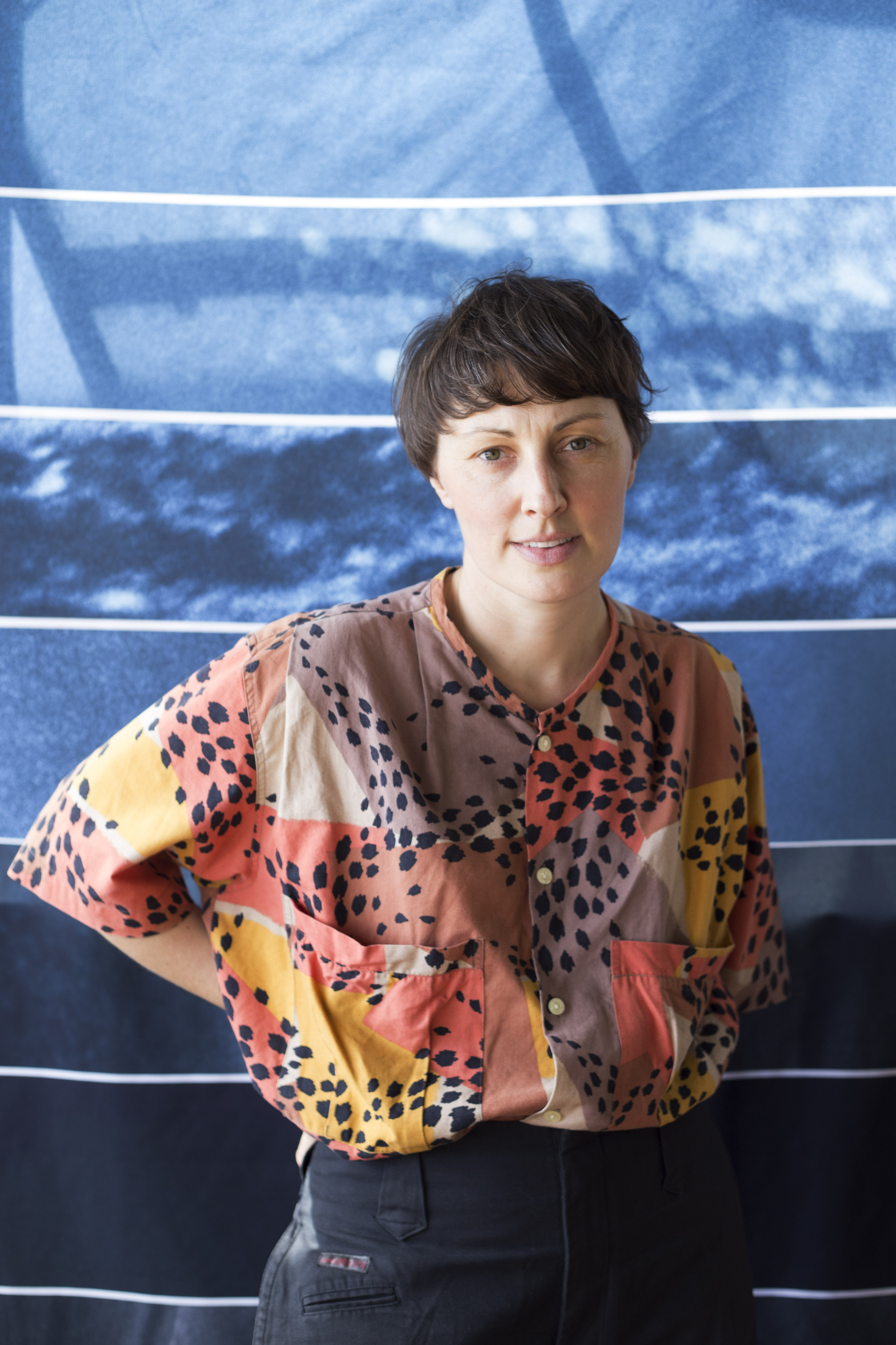
Dr. Izabela Pluta is an accomplished artist and academic at the University of New South Wales, Faculty of Arts, Design & Architecture, School of Art & Design. With a PhD from the University of Wollongong (2017), an MFA from UNSW Art & Design (2009), and undergraduate studies in Fine Art from the University of Newcastle (2002), she has established herself as a significant voice in contemporary photographic practice. Her research interests focus on expanded photographic practices that explore concepts of place, theories central to photography's role in society, and photographic modes of production that challenge the materiality of images. She investigates the effects of globalization and diasporas through migration, drawing from personal experience as a migrant to Australia. Her work spans collage, film-based photography, sculpture, installation, and video, characterized by processes of fragmentation, dislocation, and reconfiguration. Pluta's creative output has been featured in numerous significant exhibitions including the Museum of Warsaw (2024), Art Gallery of New South Wales (2019), University of Queensland Art Museum (2022), and Artspace Sydney (2018). Her work explores the intersection of photography with time, memory, and place, utilizing unstable materials like light-sensitive photo paper to reflect on impermanence. Creative Australia grants Qantas Foundation Contemporary Art Award Freedman Foundation Traveling Scholarship Ian Potter Cultural Grant As a dedicated educator, Pluta supervises practice-led MFA and PhD candidates, guiding students through projects that explore diverse themes from geology in contemporary art to coloniality in material practices. Her fieldwork-based approach has taken her to underwater sites like the Dwejra Azure Window in Malta and the Yonaguni Island structures in Japan, informing her sustained meditations on the embodied experience of place.
Dr Mickael Mounaix is a Research Fellow at the School of Electrical Engineering and Computer Science, University of Queensland. His research focuses on controlling the spatial and temporal properties of light through complex disordered materials (e.g., multimode fibers, biological tissues). He leads projects on optical time reversal, spatiotemporal beam shaping, and nonlinear light propagation. Key achievements include demonstrating time-reversed optical waves (Nature Communications, 2020) and controlling light delivery in multimode fibers (Nature Communications, 2019). His work has been featured in Phys.org and highlighted in international conferences like CLEO and ECOC. Education background: Ph.D. in Physics (university unspecified). Collaborations include Nokia Bell Labs, Crawford Hill Labs, and international institutions. His lab employs spatial light modulators and advanced software techniques for light manipulation. A fully funded Ph.D. project is currently available. Research interests span photonics applications in biomedical imaging and telecommunications, with a focus on overcoming scattering limitations in complex media. Recent innovations include programmable spatiotemporal exotic beams (2025) and high-dimensional light tomography (2023). His work bridges theoretical optics with experimental photonics, addressing challenges in light delivery and control. Media and outreach: UQ News press releases, YouTube abstracts, and pedagogical conference presentations (e.g., 75-minute CLEO 2020 talk). No explicit awards listed, but publications in top-tier journals highlight his contributions. Advising: No listed students yet. Grants: Not explicitly detailed in provided texts. Lab/teams: Focus on transmission matrix methods, spatiotemporal engineering, and optical time reversal systems. Ongoing projects include developing optical time reversers and analyzing multimode fiber characteristics without coherence (Referenceless 2023 work).
Dr. Chamith Wijenayake is a Senior Lecturer - Teaching Focused at the School of Electrical Engineering and Computer Science, University of Queensland. He holds a PhD in Electrical and Computer Engineering from the University of Akron (2014) and a BSc (Hons) in Electronic and Telecommunications Engineering from the University of Moratuwa, Sri Lanka (2007). His research focuses on multidimensional signal processing, digital hardware architectures, FPGA-based systems, machine learning accelerators, and engineering education. He has received notable awards, including the 2011 Outstanding Student Research Award and the 2014 IEEE Circuits and Systems Pre-Doctoral Award. Education: BSc (First Class Honours) from University of Moratuwa (2007), PhD from University of Akron (2014). His doctoral work contributed to advancements in signal processing and hardware architectures. Research interests span multidimensional signal processing, FPGA-based system design, and engineering education innovations. He develops low-complexity algorithms for light field processing and multidimensional filters for imaging, sensing, and biomedical applications. His work emphasizes practical implementations in hardware accelerators and educational technologies. Outstanding Student Research Award, University of Akron, 2011 IEEE Circuits and Systems Pre-Doctoral Award, 2014 Teaching and Advising: Focuses on blended learning approaches and project-based instruction in electrical engineering. Prior roles include Lecturer at UNSW Sydney (2015–2019). No explicit student advisee records listed. Grants and collaborations are not detailed in provided texts. Labs/Teams: Involved in multidisciplinary projects integrating signal processing with hardware design, though specific lab affiliations are not specified.
Professor Boris Kuhlmey is a Professor at the School of Physics, University of Sydney, and a member of the Sydney Nano Institute. His research focuses on metamaterials, photonic crystals, and terahertz technology, with applications in imaging, waveguides, and energy transfer. He has authored the book Foundations of Photonic Crystal Fibres and over 100 peer-reviewed publications. Key projects include developing terahertz imaging techniques, exploring light sails for interstellar travel, and advancing metamaterial fabrication through fiber-drawing methods. His work bridges fundamental physics with practical applications, spanning photonics, nanotechnology, and aerospace engineering. Notable contributions include subwavelength imaging via virtual superlensing and 3D-printed terahertz couplers that improve signal quality. He leads grants on superconducting cavities for quantum coupling and nanostructured textiles for sustainable energy solutions. Professor Kuhlmey collaborates widely, with recent conference presentations at META Conferences and SPIE events. His research has been featured in Science & Vie , Universe Today , and New Scientist , highlighting breakthroughs in invisibility cloaks and stable lightsail propulsion systems.
Professor Tara Murphy serves as the Head of School of Physics at the University of Sydney and is a Chief Investigator in the ARC Centre of Excellence for Gravitational Wave Discovery. Her leadership position within one of Australia's premier academic institutions places her at the forefront of astronomical research and academic administration in the field of physics. Professor Murphy's research focuses on extreme astronomical objects that change rapidly on human timescales, specifically in the domain of radio transients. She leads the Variables and Slow Transients (VAST) project on the Australian SKA Pathfinder Telescope, where her team aims to detect radio emission from distant explosive events such as supernovae and gamma-ray bursts, as well as objects in our local neighborhood like flaring stars and potentially exoplanets. Her work aligns with the Faculty of Science Research Strengths in Understanding the Universe, Fundamental Laws of Nature, Earth and Space Exploration and Technologies, and Data and Decisions. She has pioneered radio follow-up of gravitational wave events detected by LIGO, achieving the first detection of radio emission from a binary neutron star merger GW170817. Analysis of Professor Murphy's recent publications reveals a strong emphasis on radio transient phenomena, gravitational wave follow-up observations, and the development of survey techniques using the Australian SKA Pathfinder (ASKAP). Her work spans multiple astronomical subfields including pulsar astronomy, tidal disruption events, fast radio bursts, and gamma-ray burst afterglows. The VAST survey and RACS (Rapid ASKAP Continuum Survey) projects form the backbone of her observational work, with numerous publications detailing discoveries of new radio transients, pulsars, and other variable phenomena. Professor Murphy actively mentors the next generation of astronomers, currently supervising multiple PhD students including Ashna GULATI, Qichen HUANG, Mali LAND-STRYKOWSKI, Joshua LEE, Vasudev MITTAL, Oliver OAYDA, Kovi ROSE, and Kavya SHAJI. Her students work on diverse projects ranging from radio follow-up of gravitational wave events to testing the cosmological principle and searching for unusual radio transients. Her research program is closely tied to major astronomical facilities including the Australian SKA Pathfinder telescope and the ARC Centre of Excellence for Gravitational Wave Discovery. Through her leadership of the VAST project and Australian efforts in gravitational wave follow-up, she has established a significant research team focused on time-domain radio astronomy, contributing substantially to our understanding of the dynamic radio sky.
Professor Alistair Poore serves as Head of the School of Biological, Earth and Environmental Sciences at the University of New South Wales. With a PhD from UNSW (1999) and BSc(Hons) from Monash University (1992), he has established himself as a leading marine ecologist focusing on coastal ecosystems. His research program spans multiple interconnected themes: Ecology and evolution of interactions among marine organisms Impacts of herbivores on plant communities Human impacts on coastal marine ecosystems Adaptation of marine organisms to environmental stress Use of citizen science data for biodiversity monitoring Professor Poore's recent publications demonstrate a strong focus on threatened seagrass ecosystems, particularly Posidonia australis, examining responses to climate change, tropicalization, and physical disturbance. His work increasingly integrates citizen science approaches, using recreational diver photographs and other unconventional data sources for ecological monitoring. The research shows a progression from fundamental ecological theory toward applied conservation solutions, with extensive international collaborations across Australian, Pacific, and global marine environments. Scientific recognition includes: Elected Fellow of the Royal Society of New South Wales (2020) Provasoli Award from the Phycological Society of America (2014) Citation for Outstanding Contributions to Student Learning (2013) UNSW Vice Chancellor's Award for Teaching Excellence (2012) Professor Poore actively supervises PhD students working on diverse marine topics including amphibian detection using DNA, bluebottle behavior, artificial light impacts, seagrass restoration, and reef monitoring. His teaching portfolio includes BEES2041 Data Analysis for Life and Earth Scientists, BIOS2031 Biology of Invertebrates, and BIOS3091 Marine and Aquatic Ecology, complemented by freely available Environmental Computing tutorials. His research bridges fundamental ecological questions with practical conservation applications, particularly in Australian coastal environments, with growing emphasis on how climate change reshapes marine biodiversity and ecosystem function through processes like tropicalization and habitat fragmentation.
Scott A. Read is a Professor in the School of Optometry at Queensland University of Technology's Faculty of Health. He is a leading researcher in the field of myopia development and control, with extensive expertise in ocular biometry, choroidal thickness measurements, and optical coherence tomography applications. His work bridges basic vision science and clinical optometry, focusing on understanding the mechanisms of eye growth and developing strategies for myopia management. Dr. Read's research program centers on myopia development and control, with particular emphasis on choroidal thickness dynamics, ocular biometry changes during visual tasks, and the effects of light exposure on eye growth. His work reveals that the choroid plays a critical role as an optical signal transducer in eye growth regulation, with significant diurnal variations and responses to visual stimuli. He has extensively documented how myopic defocus, accommodation, and light exposure patterns influence choroidal thickness and axial elongation in children and young adults. His research has established important links between outdoor light exposure and reduced myopia progression, contributing significantly to evidence-based myopia control strategies. Analysis of Dr. Read's recent publications shows a strong focus on advanced imaging techniques, particularly optical coherence tomography and its applications in measuring choroidal thickness, vascular changes, and biomechanical properties of the eye. His work increasingly incorporates artificial intelligence methods for image analysis while maintaining a strong clinical orientation toward understanding myopia mechanisms and developing effective control strategies. His research spans from fundamental investigations of visual processing pathways to clinical trials of myopia control interventions like atropine therapy. Dr. Read has been instrumental in several major collaborative efforts, including the International Myopia Institute reports that have shaped global understanding of myopia mechanisms and control strategies. His work has been foundational in establishing the choroid's role as a key tissue in eye growth regulation and myopia development. Through his laboratory at QUT, Dr. Read mentors numerous PhD students and early-career researchers, fostering the next generation of vision scientists. His research team employs a multidisciplinary approach combining optometry, ophthalmology, biomedical engineering, and data science to address critical questions in myopia research. Current projects focus on understanding the mechanisms of atropine's myopia control effects, developing advanced imaging biomarkers for myopia progression, and investigating the impact of modern visual environments on eye development.
Assoc. Professor Jun Tong is affiliated with the School of Electrical, Computer and Telecommunications Engineering at the University of Wollongong. He holds a PhD from City University of Hong Kong and specializes in signal processing for communication systems and instrumentation, focusing on robust, low-complexity algorithms for high-dimensional signals and imperfect models. His research enhances spectrum/energy efficiency in challenging environments. Research Interests: Signal processing applications in communication systems, MIMO and 5G/6G technologies, optical systems, machine learning for signal processing, and sensor networks. He has published extensively in top-tier journals like IEEE Transactions and conferences such as ICC and MWP. Teaching & Supervision: Teaches Digital Signal Processing, Engineering Electromagnetics, and Digital Hardware. Supervises PhD/Master’s projects on topics like 6G wireless communication, MIMO systems, and light-field imaging. Current students are researching areas such as ODDM modulation and sub-THz communications. Funding & Grants: Secured grants including the Advancement and Equity Grants Scheme for Research (AEGiS) for multi-modal defect detection in manufacturing. Previously led projects on UOW-UESTC collaborations. Service & Leadership: Member of the IEEE. Actively involved in academic leadership and curriculum development within his school.
Dr. Daria Smirnova is a Professor at the Department of Fundamental & Theoretical Physics, Australian National University (ANU). Her research focuses on topological photonics, nonlinear optics, and dielectric metasurfaces. She leads projects such as 'Topological wave manipulation in hybrid integrated platforms' and 'Ultrafast Infrared Spectroscopy Facility', demonstrating expertise in advanced photonic systems and quantum technologies. Her key research interests include: Designing topological photonic structures for robust light control Nonlinear optical phenomena in metasurfaces and nanophotonic systems Multipolar light-matter interactions in dielectric nanostructures Machine learning applications for optimizing photonic systems Recent work highlights include broadband infrared imaging with silicon metasurfaces, identification of topological lattice properties via machine learning, and exploration of Floquet-engineered materials. Her publications reflect interdisciplinary collaborations in nanophotonics, quantum optics, and applied physics. Dr. Smirnova has secured significant funding through ANU initiatives and leads a research group advancing photonic technologies. Her work integrates theoretical modeling with experimental validation, producing impactful contributions to optical engineering and materials science.