- Nanobioscience
- Nano-electronics
- Nano-biotechnology
- +۳ مورد دیگر
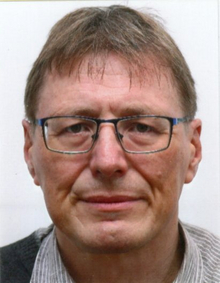
Takashi Tanii is a Professor at Waseda University's School of Fundamental Science and Engineering within the Faculty of Science and Engineering. He holds a Doctor of Engineering degree from Waseda University and maintains an active research program as evidenced by his homepage at http://www.tanii.nano.waseda.ac.jp. His research spans multiple interdisciplinary fields at the intersection of physics, engineering, and biology. Professor Tanii's primary research interests focus on Nanobioscience , with specific expertise in Nano-electronics and Nano-biotechnology . His work demonstrates a strong integration of quantum physics principles with biological applications, particularly in the areas of quantum sensing using diamond nitrogen-vacancy centers and neural network analysis. His research also extends to cell adhesion studies, TiO 2 photocatalysis, and single ion implantation techniques for quantum device fabrication. An analysis of his 15 most recent publications reveals a consistent trend toward quantum technologies and biophysical applications . His work on diamond nitrogen-vacancy centers for quantum sensing, particularly for nuclear spin detection, represents cutting-edge research in quantum information processing. Simultaneously, his investigations into neuronal networks and cell adhesion mechanisms demonstrate a strong commitment to understanding biological systems at the nanoscale. The interdisciplinary nature of his research bridges physics, engineering, and life sciences, with potential applications in quantum computing, neural engineering, and biomedical diagnostics. Professor Tanii is an active member of several professional societies including the Japanese Neural Network Society, Architectural Institute of Japan, Japan Society of Applied Physics, and Japan Surface Science Society, reflecting the breadth of his research interests. His work has resulted in 114 publications with 1,627 citations and an h-index of 23, indicating significant impact in his fields of study. While specific grant information is not detailed in the provided text, his consistent publication record across multiple high-impact journals suggests sustained research funding. His laboratory appears to operate at the intersection of quantum physics and biophysics, with research teams likely comprising physicists, engineers, and biologists working collaboratively. The integration of techniques from quantum sensing, microfabrication, and cellular neuroscience suggests a highly interdisciplinary research environment focused on pushing the boundaries of nanoscale measurement and manipulation technologies.