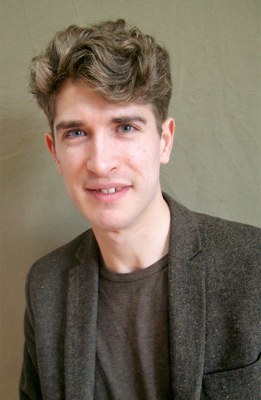
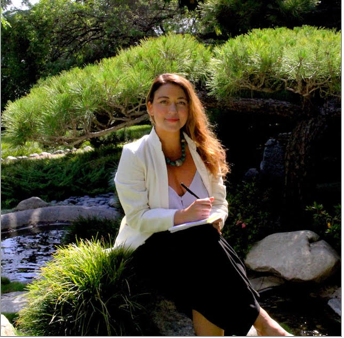
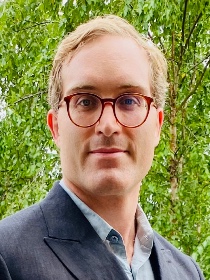
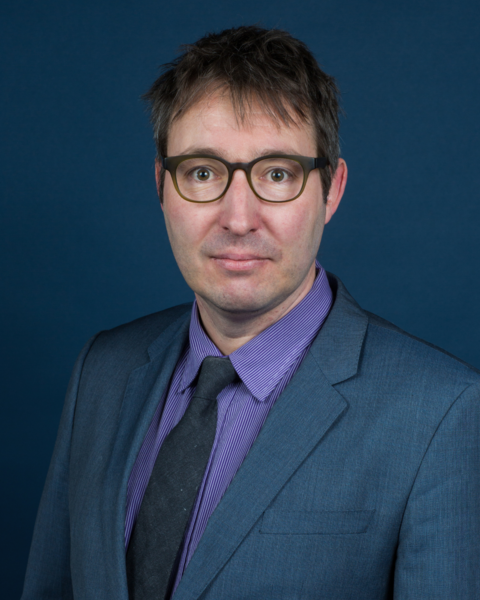
Dr. Victor Kempf is a postdoctoral researcher at the Institut für Philosophie , Humboldt-Universität zu Berlin, since March 2025. He completed his PhD at Goethe-Universität Frankfurt in 2017 and focuses on social and political philosophy from a critical theory perspective.
Mascha C. van der Voort is a Full Professor at the University of Twente's Faculty of Engineering Technology, Department of Human Centered Design. Her work focuses on transdisciplinary design methodologies, inclusive technology, and sustainability. She has contributed over 180 research outputs since 1996, with notable contributions to empathy-driven design for neurodiverse populations and climate-resilient infrastructure solutions. Expertise includes: Design Theory, User-Centered Design, Automation in Design, and Sustainability. Recipient of the Best Paper Award at the 10th International Conference on Design, User Experience and Usability (2021). Active in academic governance, serving as Chair of the Faculty of Engineering Technology Board since 2021. Her research integrates transdisciplinary collaboration, with recent work exploring futures studies and co-speculation methodologies. She has supervised 18 graduate students and contributed to datasets addressing river research communication and autistic lifeworld-informed technology design.
Lesley Gourlay is a Professor of Education at the IOE - Culture, Communication & Media , part of University College London . She has held leadership roles including Director of the Academic Writing Centre (2010-2020) and Head of the Department of Culture, Communication and Media (2014-2018). Research Focus: Science and Technology Studies in Education, Posthuman Theory, Sociomaterialism, Digital Engagement Awards: Leverhulme Major Research Fellowship (2021-2025) for 'The Datafied University' Her publications explore postdigital education, algorithmic governance, and digital performativity. Recent work includes the open-access monograph The University and the Algorithmic Gaze (2025) and co-editing the Palgrave Handbook of Science and Technology Studies in Education . She is currently working on two forthcoming monographs: The University and the Writing Machine and Weave: The Making of Meaning . Lesley's scientific contributions analyze digital education through postphenomenological, sociomaterial, and posthumanist lenses. Key themes include learning analytics, AI's role in education, and the materiality of digital practices. Her work challenges binary distinctions between online/campus education and human/nonhuman agency. Collaboration Network: Extensive co-authorships with scholars like Petar Jandrić, Clara O’Shea, and Martin Oliver. She co-organizes the UK-wide Digital University Network and contributes to journals such as Postdigital Science and Education and Educational Philosophy and Theory .
Associate Professor James Andrew Phillips is a faculty member in the Department of Philosophy within the School of Humanities and Languages at the University of New South Wales (UNSW). He has been at UNSW since 2006, initially serving as a Vice-Chancellor's postdoctoral fellow, followed by an ARC Australian Research Fellow from 2007-2011, before assuming his current combined research-teaching position. His educational background includes undergraduate studies at the University of Queensland, an MA in Comparative Literature and Critical Theory from Monash University, and a PhD in Philosophy from the University of Tasmania (2002). During his doctoral studies, he spent time as an OeAD scholar in Innsbruck and a DAAD scholar in Potsdam. He has also been a visiting research fellow at the Institute for Advanced Studies in the Humanities at the University of Edinburgh and a resident associate at the National Humanities Center in North Carolina. Phillips' research focuses on aesthetics, phenomenology, film and philosophy, political theory, literary criticism, and British and Irish literature. His current book project explores the philosophy of fiction, drawing on concepts of 'world' in Kant and Heidegger. He has translated two significant philosophical works: Christoph Menke's Tragic Play: Irony and Theater from Sophocles to Beckett (2009) and Alexander García Düttmann's Philosophy of Exaggeration (2007). His recent publications demonstrate a strong focus on the intersection of philosophy, aesthetics, and cinema, with particular attention to phenomenological approaches to film studies and the political dimensions of aesthetic experience. His work bridges continental philosophy with contemporary cultural analysis, creating connections between historical philosophical traditions and modern artistic practices. Philosophy Group Convenor Research Committee Member - School of Humanities and Languages Phillips currently supervises PhD candidate Finnegan Hassey (on Arendt's concept of nationalism, jointly with Jess Whyte) and MA student Sofia Kartavtseva (on Sade and aesthetics). He teaches political philosophy, aesthetics, and the history of German philosophy, with planned courses for 2025 including ARTS3368 'Modern European Philosophy' and ARTS2384 'Political Philosophy'.
Rovincer Najjuma is a Lecturer in Digital Education and the Global South at the University of Edinburgh's Moray House School of Education and Sport, affiliated with the Centre for Research in Digital Education. His research focuses on digital education ecosystems, intersectionality frameworks, and leveraging technologies to enhance access for marginalized populations in post-conflict regions and the Global South. Education: PhD in Education; Master of Education in Curriculum Design; Postgraduate Diplomas in ICT in Education and Education; Bachelor of Social Science (Political Science & Public Administration). Research explores digital education policy, mobile learning, refugee education, and generative AI applications. He has pioneered digital professional development programs in Africa, including designing Makerere University's first fully online Masters in Instructional Design Technology. Grants include Royal Society of Edinburgh funding (2024-2025), USAID/Resilient Africa Network grants (2021-2024), and Commonwealth Academic Fellowships. Key collaborations include work with University of Oxford on mobile technologies in teacher preparation, University of Stellenbosch's Emerging Scholars Initiative, and UNICEF-funded projects on non-state schools in Uganda.
James Dodd is a Professor of Philosophy at The New School for Social Research, specializing in phenomenology, existential philosophy, and political thought. He holds a PhD from Boston University (1996). His research focuses on Husserl, Heidegger, and Jan Patočka, exploring themes like violence, sacrifice, and the interplay between history and philosophy. Dodd has authored major works including *The Heresies of Jan Patocka* (2023), *Phenomenological Reflections on Violence* (2017), and co-edited *The New Yearbook for Phenomenology and Phenomenological Philosophy* (2015). Education: PhD Philosophy, Boston University (1996) His work bridges philosophical inquiry with interdisciplinary questions, examining how fundamental questions like 'What is truth?' and 'What is the world?' unify diverse academic disciplines. Recent scholarship emphasizes phenomenological approaches to architecture, violence, and political resistance, particularly through Patočka’s lens. He critiques modernity’s ethical and political crises while advocating for philosophy’s role in holistic education. Publications span over 30 years, with notable contributions to Husserl studies, war philosophy, and phenomenological ethics. His 2023 book reinterprets Patočka’s hermeneutics, while 2021 articles analyze war’s philosophical dimensions. Dodd also engages with historical violence, memory, and the lifeworld’s role in scientific understanding. Awards: None explicitly listed Teaching includes courses on phenomenology, early Chinese philosophy, and Nietzsche. He mentors students through independent studies and senior projects, emphasizing critical thinking across disciplines. Dodd’s editorial work amplifies underrepresented voices in phenomenology and political philosophy. Labs/Teams: Collaborates with international scholars on Patočka’s legacy and phenomenological ethics, contributing to Routledge, Springer, and Brill publications. His research group explores interdisciplinary applications of phenomenology in architecture, violence studies, and historical consciousness.
Mikaela Vasstrøm (b.1977) is an Associate Professor at the Department of Global Development and Planning, University of Agder. She holds a PhD from the University of Copenhagen and leads significant research projects including the Norwegian Research Council-funded WINDPLAN initiative, which analyzes social acceptance and governance challenges in onshore wind power development across Norway, Scotland, and Denmark. She co-leads work packages in the WINDREG project focusing on procedural justice and knowledge co-production for energy transitions. Her research examines: Just energy transitions and energy democracy Governance challenges in renewable energy deployment Public participation in environmental conflicts Local/regional development implications of energy policies She co-directs UiA's participation in the Empowered Futures research school, developing PhD-level expertise in energy policy frameworks. Publications focus on wind energy governance, policy legitimacy, and spatial planning conflicts, with consistent themes of: Energy justice in policy design Local government capacity in energy transitions Participatory approaches in sustainability planning Research group affiliations include: Energy and Society Urban and Regional Planning (URPLAN)
Dr. Kara Miller is an Assistant Professor of Applied Anthropology in the Department of Anthropology at California State University - Long Beach (CSULB). Her work focuses on medical anthropology, body politics, and eco-social well-being, employing holistic approaches to address health equity through ethnography and empowerment-based methodologies. Education: PhD in Anthropology, University of California, Riverside (2017) MA in Anthropology, Louisiana State University (2010) BA in Anthropology & Applied Visual Arts, North Carolina State University (2006) Research Interests: Dr. Miller investigates embodied ecologies, toxic industrial practices, and health sovereignty. Her projects include studies on reproductive health policies in East Africa, mental health systems in New Orleans, migrant healthcare access in California, and a NIH-funded study on integrative medicine in Uganda. She emphasizes feminist epistemologies, health humanities, and critical social theory to explore how bodies interact with lifeworlds and environmental conditions. Teaching: She teaches courses such as Practicing Anthropology, Applied Anthropology, Ethnographic Methods, and Health and Healing. Past courses include Biological Approaches to Medical Anthropology and Embodied Futures. Current Projects: Dr. Miller’s ongoing work examines local environmental entanglements and community-based conservation strategies, linking embodiment to ecological health and justice.
P.J. (Peter) Verovsek, PhD is an Assistant Professor in History and Theory of European Integration at the University of Groningen's Faculty of Arts. His research focuses on European integration, memory studies, and critical theory, with particular emphasis on Jürgen Habermas and 20th-century intellectual history. He holds a PhD from Yale University and previously taught at the University of Sheffield. Verovsek is a Book Reviews Editor for Contemporary Political Theory and serves on Slovenia's Quality Assurance Agency Executive Council. Education: PhD, MPhil, MA in Political Science, Yale University (2007-2013) A.B., Summa cum laude, Dartmouth College (2002-2006) Research Interests: Verovsek examines collective memory, democratic theory, and the role of public intellectuals. His monograph Memory and the Future of Europe (2020) explores post-World War II integration dynamics. He is currently completing an intellectual biography of Jürgen Habermas, analyzing his public engagement and the role of scholars in modern democracy. Recent Work Trends: His articles critically engage Habermas’s work alongside Lyotard and Foucault, reinterpreting modernity debates. Themes of European crisis governance, generational leadership shifts, and transitional justice frequently appear in his scholarship. Awards & Fellowships: British Academy mid-Career Fellowship (2019-2021) DAAD Graduate Fellowship (2010-2011) Fulbright Research Fellowship (2006-2007) Service & Outreach: Verovsek advises Slovenia’s higher education accreditation body and contributes to public discourse via outlets like Social Europe and Europzine . He reviews for leading journals and serves on editorial boards of interdisciplinary political science publications. Labs/Teams: Affiliated with the Center for International Relations Research (CIRR) and collaborates on projects about critical theory’s contemporary relevance.
Prof. Dr. Clarissa Vierke is a specialist in Swahili Language and Literature at the University of Bayreuth , with a focus on literary connections across the Indian Ocean and African continent. She was awarded the German National Merit Foundation scholarship during her studies in African Languages, Social Anthropology, and Literatures in African Languages at Bayreuth and Leiden. Academic Degrees : Doctorate in African Studies (2010, Bayreuth), Studies in African Studies (1999-2005, Bayreuth/Leiden) Her research spans historical Swahili manuscripts (18th-19th century), contemporary poetry (hiphop, newspaper poetry), and aesthetic practices that examine how poetic form shapes lifeworlds. She leads the project Poetry as Aesthetic Practice (Madagascar/Tanzania) and contributes to manuscript studies and decolonial aesthetics . Recent publications include co-edited volumes on African Artistic Practices (2024), Decolonial Aesthetics (2023), and Travelling Texts (2020). She serves on editorial boards for journals like Matatu and Swahili Forum . Scientific Awards : Wissenschaftspreis (University of Bayreuth, 2012), Heinz-Maier-Leibnitz-Prize (DFG, 2012) Prof. Vierke is Chairperson of the Afrophone Caucus of the African Literature Association (2015–present) and organizes the annual Swahili Colloquium . Her work bridges precolonial and contemporary Swahili traditions, emphasizing textual mobility and multilingual contexts .
Dr. Benjamin Baumann is an Assistant Professor at Heidelberg University's Institute of Anthropology since April 2020, where he coordinates the MA program in Sociocultural Anthropology. Previously, he served as lecturer and research associate at Humboldt-Universität zu Berlin's Department of Southeast Asian Studies for a decade. His research integrates Anthropology Religious Studies Cultural Studies Media Studies with focus on Rural Thailand-Cambodia border regions Human-Nonhuman relationships Termite mound cults Queer ritual specialists Social ontology in the Global South . Recent publications analyze Chthonic coexistence in Thailand Decolonial translation practices Development narratives in Southeast Asia Spirit possession professionalization Gender and enchantment in religious contexts . His work appears in Thailand Review , South East Asia Research , and edited volumes like Stone Masters and Monsters: A Companion . Scientific recognition includes 2018 Humboldt-Prize for Excellence in Teaching 2017 Harvard Society of Fellows nomination 2010 Rudolf Virchow Prize nomination
Amanda Lagerkvist is a Professor at Uppsala University's Department of Informatics and Media, and a founder of Existential Media Studies . She leads the Uppsala Informatics and Media Hub for Digital Existence and the research program BioMe: Existential Challenges and Ethical Imperatives of Biometric AI in Everyday Lifeworlds (2020-2024) within WASP-HS. Her work intersects existential philosophy with digital culture , focusing on themes like disability , selfhood , datafication , and AI imaginaries . She has authored key works including Existential Media: A Media Theory of the Limit Situation (OUP, 2022) and Media and Memory in New Shanghai (Palgrave Macmillan, 2013). Recent publications (2020-2025) analyze existential ethics in AI , biometric vulnerabilities , and digital environmental data . Her 15 most recent articles address topics like AI as existential media , digital afterlife ethics , and limit situations in digital culture , reflecting her interdisciplinary approach combining media studies, philosophy, and ethics. Scientific Awards: Wallenberg Academy Fellow (2013) Research Grants and Collaborations: Currently heading the RJ project Dismedia (2023-2025) and participating in the national At the End of the World programme (2023-2028). She collaborates on INTIMATE AI (2023-2026) and hosts the Assistive AI, Disability and Norms of Being Human sabbatical project (2023). She co-leads the The Mediated Planet (2020-2025) with KTH.
Karen Drake, an Associate Professor at Osgoode Hall Law School (York University), specializes in Anishinaabe constitutionalism and law, Indigenous-state legal interplay, and Canadian law impacting Indigenous peoples. She has taught and researched property law, dispute resolution (civil procedure/Indigenous methods), and legal epistemologies. Education : BA (Hons) in Philosophy (Lakehead University), MA in Philosophy (Queen’s University), JD and LLM (University of Toronto) Her work focuses on Indigenous law revitalization, governance grounded in Anishinaabe lifeworlds, and language preservation through Anishinaabemowin learning. She has collaborated extensively with Anishinaabe elders and communities. Drake previously served as Osgoode’s Associate Dean (Students) (2020-2023) and co-founded the Lakehead Law Journal as a founding Co-Editor in Chief. Her professional practice includes roles at Cassels Brock & Blackwell LLP, Ontario Court of Appeal clerkship, and Indigenous rights-focused legal work at Ericksons LLP. She has advised Canada’s Department of Justice, Ontario’s Ministry of Indigenous Relations, and the National Judicial Institute, and held leadership roles such as Commissioner of the Ontario Human Rights Commission and board member of the Indigenous Bar Association. Scientific Awards : Osgoode Legal and Literary Society Equity Award (2018) Osgoode Hall Law School Teaching Award (2019)
Mathias Risse is the Berthold Beitz Professor in Human Rights, Global Affairs and Philosophy at Harvard Kennedy School (HKS), where he also directs the Carr-Ryan Center for Human Rights and the Program on the Ethics of Emerging Technologies. He teaches at HKS, Harvard College, and the Harvard Extension School, and is affiliated with the Philosophy Department and the Weatherhead Center for International Affairs. Education & Career: Risse earned his PhD from Princeton University (2000) and previously taught at Yale University. He has held visiting roles at the National University of Singapore, NYU Abu Dhabi, and Leuphana University (Germany). He joined Harvard in 2002 and currently resides in Somerville, MA. Research Focus: His work bridges political philosophy and technology ethics, addressing global justice, human rights, climate change, and the societal impacts of AI. Key themes include Indigenous philosophies, digital governance, and ethical trade frameworks. Recent books include Political Theory of the Digital Age (2023) and On Trade Justice (2019). Awards & Leadership: Risse organizes international conferences fostering cross-cultural collaboration, directs the McCloy Fellowship program for German students, and co-hosts the Carr Center’s Justice Matters podcast. His writings on race, protest, and technology ethics have shaped public discourse. Grants & Outreach: He advises on AI ethics, climate policy, and global governance. Recent projects include analyses of solar geoengineering, Indigenous rights frameworks, and the societal implications of advanced AI systems. Labs/Teams: Central roles in the Edmond J. Safra Center for Ethics, the Carr Center for Human Rights Policy, and interdisciplinary initiatives on emerging technologies.
Dr Caroline Ellis-Hill is a Senior Lecturer in Qualitative Research at Bournemouth University, based in the Bournemouth Gateway Building. Her work focuses on lifeworld-led approaches to healthcare and social care, emphasizing humanistic practices that prioritize subjective experience and wellbeing. She specializes in qualitative research methods, including narrative inquiry, phenomenology, and arts-based methodologies. Her current research includes the Stroke Odysseys project (Wellcome Trust-funded SHAPER initiative) exploring performance arts in stroke rehabilitation, and the InnovateDignity EU project training future leaders in dignified elder care. Past studies include the HeART of Stroke feasibility trial of arts interventions post-stroke and the Humanising Services leadership strategy to enhance dignity in care. Key research interests: lifeworld-led healthcare, embodied knowing, narrative approaches, identity transformation in disability, and arts-based interventions. She contributes to UN SDGs 3 (Good Health) and 10 (Reduced Inequalities). Dr Ellis-Hill advises 15 PhD students through the InnovateDignity network. Her research has been published in journals like Scandinavian Journal of Caring Sciences, International Journal of Qualitative Studies on Health and Well-being, and Neuropsychological Rehabilitation.