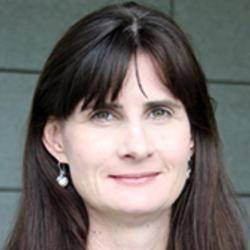
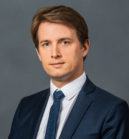
Tone Stangeland Kaufman is a Professor of Practical Theology at MF University College of Theology, Religion and Society . Her research focuses on ecclesiology, homiletics, Christian spirituality, and qualitative methodologies , with an emphasis on reflexivity and normativity in empirical theological research. She leads the Scandinavian research project Priests' Learning in Practice (PLP) , examining newly graduated priests' transition to professional roles in Norway, Sweden, and Denmark. Her educational background includes a PhD (2011) from MF with a dissertation on Nordic clergy spirituality. She has held roles as a part-time parish priest (2012–2015) and served on committees like the Interchurch Council Theological Committee (2020–present) and the American Academy of Religion Practical Theology Group (co-chair since 2013). Her work bridges pastoral practice and academic rigor, with a focus on youth theology, religious education, and the digital transformation of worship. Key publications include studies on digitally mediated preaching , confession practices , and Ignatian spirituality in prisons . Her 2021 book Forkynnelse for barn og voksne analyzes confirmation rituals, while recent work explores postcolonial perspectives in practical theology. She teaches courses on homiletics, practical theology methodology, and postmodern religious practices. Professional networks include leadership roles in Societas Homiletica , the Nordic Network for Homiletics , and the Ecclesiology and Ethnography group. Her research often integrates material culture, digital media, and intergenerational dynamics to address contemporary challenges in Christian practice and institutional life.
Dario Spini is a Professor of Social Psychology at the Institute of Psychology within the Faculty of Social and Political Sciences at the University of Lausanne. He is a leading expert in life course research, focusing on vulnerability dynamics, aging processes, and identity resilience. From 2010 to 2022, he directed the National Center of Competence in Research LIVES, an interdisciplinary consortium involving over 130 researchers across 11 Swiss institutions. Life course development and vulnerability Resilience mechanisms in aging populations Longitudinal and comparative methodologies Social inclusion of older adults Meso-level life course analysis His editorial work includes co-editing Withstanding Vulnerability throughout Adult Life (2023), which consolidates decades of research on life course resilience. His publications span methodological advancements in longitudinal studies, sociocultural analyses of institutional trust, and interdisciplinary frameworks for aging research.
Anne E. Winkler is Professor of Economics at the University of Missouri–St. Louis (UMSL), within the Department of Economics in the College of Arts and Sciences. She has been a faculty member since 1989 and served as Department Chair from 2015 to 2021. She is also a Research Fellow at IZA (Institute of Labor Economics). Her research focuses on the economics of gender , the economics of the family , and welfare and poverty . She is widely recognized for co-authoring the 9th edition of The Economics of Women, Men and Work (Oxford University Press, 2022), a leading textbook in gender and labor economics. Her work bridges economic theory with social policy, contributing to broader understanding of labor market disparities and family dynamics. Her recent publications reflect a consistent focus on gender, labor supply, household economics, and policy evaluation. Spanning journals such as Journal of Human Resources , Demography , and Management Science , her research integrates labor economics with demography, public policy, and urban economics, demonstrating interdisciplinary impact. Prof. Winkler has held leadership roles in professional associations, including serving as 2nd Vice President of the Midwest Economics Association, President of the St. Louis Chapter of NABE, and member of the AEA’s Committee on the Status of Women in the Economics Profession (CSWEP). She currently serves on the editorial board of Social Science Quarterly . She regularly teaches courses in labor economics, econometrics, and microeconomics at both undergraduate and graduate levels. While specific advising or grant details are not listed, her long-standing academic engagement and textbook authorship indicate extensive mentorship and curriculum influence. She is affiliated with research teams through IZA and contributes to academic discourse via editorial and professional service. Her sustained scholarship supports ongoing work in gender equity and labor policy.
Mohammad Amjadi Kashani is an Assistant Professor of Mechanical Engineering at Arkansas Tech University's College of STEM Engineering & Computer Sciences. His research focuses on fatigue and fracture mechanics of polymers and composite materials, with expertise in multiaxial fatigue, damage mechanics, and machine learning applications in fatigue analysis. Education: MS (Sharif University of Technology), PhD (University of Memphis) His work addresses fatigue life prediction of injection-molded composites, thermoplastic fatigue behavior under various stresses, and mechanical modeling of HDPE polymers. Recent studies incorporate notch effects, creep-fatigue interactions, and additive manufacturing techniques. Amjadi teaches courses in mechanical design, machine dynamics, finite element analysis, and advanced fatigue topics. He emphasizes hands-on learning and adaptive teaching strategies to accommodate diverse student needs.
Ann-Kathrin Bretfeld-Wolf serves as an Associate Professor in the Department of Language, Art and Culture at Diakonova University College, where she is a core member of the Research Group for Religion, Beliefs and Ethics (RLE). Her primary responsibilities include teaching Religion, Worldview and Ethics (RLE) across multiple bachelor's programs, with specific course-responsibility for BMSRL1023 and BMSRL2023 during the 2024-2025 academic year while also instructing BKNSRL2023, BHSRL2023, and BDBUL1002. She further contributes to the BA program in Early Childhood Teacher Education with an Emphasis on Multicultural Understanding as the coordinator for Society, Religion, Worldview and Ethics (SRLE) courses. Educational Background: PhD in Religious Studies, NTNU Trondheim, 2023 MA in Religious Studies, Ruhr University Bochum, 2012 BA in Religious Studies and German Language & Literature, Ruhr University Bochum, 2010 Research Focus: Bretfeld-Wolf's scholarship critically examines South Asian religious history through narrative analysis and postcolonial frameworks, with concentrated expertise in Buddhist textual traditions. Her work investigates how religious stories—particularly Buddha Gotama's life narrative—undergo cross-cultural adaptation in Norwegian kindergarten settings and children's literature, highlighting power dynamics in multicultural education. She also explores historical intersections between religion and print culture in colonial Sri Lanka and contemporary civil society roles of Thai-Buddhist centers. Publication Trends: Her scholarly output reveals a cohesive trajectory across Buddhist studies in South/Southeast Asia, emphasizing narrative adaptation as a lens for understanding religious agency. Key themes include decolonizing religious historiography (evident in her Pāli textual research), resistance to missionary influence through print media, and Buddhist contributions to civil society. The recurring focus on Norway's multicultural educational landscape demonstrates applied relevance of historical/religious analysis to modern pedagogical challenges. Scientific Awards: No awards, fellowships, or medals are documented in the source materials. Advising and Grants: While actively teaching undergraduate courses, no evidence of graduate student supervision (PhD/Master's) or externally funded research grants appears in the provided texts. Her dissemination activities include academic lectures on Buddhist narrative adaptation in early childhood education, suggesting knowledge mobilization priorities. Research Infrastructure: She operates within Diakonova's Research Group for Religion, Beliefs and Ethics (RLE), which provides the organizational context for her investigations into religious ethics, worldview pluralism, and multicultural pedagogy in Norwegian educational institutions.
Karen Lee Ashcraft is a tenured Professor in the Department of Communication at the University of Colorado Boulder , where she has held appointments since earning her Ph.D. in 1998. Her research interrogates how gender, race, and sexuality shape organizational life across diverse contexts including commercial aviation, academic labor, and social services. Ph.D., University of Colorado Boulder (1998) B.A., California State University-Hayward (1993) As a leading scholar in critical organizational communication , Ashcraft develops theories that bridge feminist critique, affect studies, and new materialism to analyze workplace identity, power dynamics, and alternative organizing forms. Her work has redefined concepts like the 'glass slipper' – a framework explaining how bodily associations create professional privilege. Award-winning author of 23 publications over the past decade, Ashcraft’s research spans books like Wronged and Dangerous: Viral Masculinity and the Populist Pandemic (2022) and The Work of Communication (2017) to 15+ peer-reviewed articles. Her scholarship appears in top journals including Academy of Management Review , Communication Theory , and Organization Studies . 2020 ICA Fellow 2020 Fredric M. Jablin Award 2014 AMR Best Paper Award 2021/2006/2004 National Communication Association Awards Currently teaching courses on Gender and Communication (undergraduate to doctoral levels), Ashcraft mentors students in critical theory and qualitative research while contributing to international academic discourse through engagements in Australia, Europe, and Asia. Her recent work examines affective forces in digital organizing and far-right populism.
Dr Zhe Wang is a Senior Lecturer at the School of Information and Communication Technology, Griffith University, focusing on artificial intelligence, knowledge graphs, and semantic technologies. He earned his PhD in Computer Science from Griffith University (2011) and previously worked as a Research Fellow at the University of Oxford (2011-2013) on ontology-based systems. Research: Specializes in knowledge graph construction, rule mining for explainable AI, and integrating machine learning with logical reasoning. Led development of the scalable RLvLR rule-mining system and contributed to the HermiT ontology reasoner. Teaching: Instructs undergraduate and postgraduate courses including Introduction to Artificial Intelligence, Secure Development Operations, and Software Engineering Fundamentals. Grants: Funded by Australia's Economic Accelerator Ignite Grant (2025) for AI-driven marine life survey systems and Office of National Intelligence projects (2021-2022). Publications: Active in top venues like AAAI, ICASSP, and ISWC, with recent work on temporal knowledge graph reasoning, auction design algorithms, and neurosymbolic AI systems.
Kathleen Liddell is the Herschel Smith Senior Lecturer of Intellectual Property Law at the University of Cambridge, where she serves as the Founding Director of the Cambridge Centre for Law, Medicine and Life Sciences and is a member of the Cambridge Centre for IP and Information Law. She holds degrees including a D.Phil from Oxford, LLB (hons) and BSc from Melbourne, and an MBioeth from Monash. With experience in both academic and practical legal settings, including private practice and public sector legal services for a health department, Dr. Liddell brings a comprehensive perspective to her interdisciplinary work at the intersection of law, medicine, and technology. Dr. Liddell's educational background reflects her interdisciplinary approach: D.Phil in Law from the University of Oxford, focusing on regulation of controversial genetic technologies in morally pluralist societies LLB (hons) and BSc from the University of Melbourne MBioeth from Monash University Her research focuses on health, medicine and society, with particular emphasis on intellectual property frameworks that govern medical innovation. Dr. Liddell examines how intellectual property rights both help and hinder the translation of medical discoveries into effective clinical treatments, and how these frameworks could be modified to be more effective and just. She leads international collaborations investigating intellectual property law across five key areas of bioinnovation: pharmaceutical repurposing, antibiotics, biologics, rare diseases, and machine-learning based precision medicine. Her work also addresses legal challenges in pre-mortem interventions for organ transplantation, regulatory gaps in healthcare, and the application of theoretical insights from regulatory and political theory to biomedical controversies. Dr. Liddell employs diverse legal methodologies including statutory and case law analysis, normative analysis drawing on moral philosophy, regulatory theory, empirical investigations (interviews, surveys, patent mapping), and expert meetings. She has made significant contributions to understanding the impact of patent law on life sciences innovation, particularly regarding genetic technologies, precision medicine, and diagnostic tools. Her notable scientific contributions include: Principal investigator for a major research project on intellectual property rights, precision medicine and genomic medicine (2015-2018) International collaborations on intellectual property law in bioinnovation Empirical studies on the impact of patent law on medical innovation Research on regulatory frameworks for emerging health technologies Analysis of legal implications for organ transplantation and antimicrobial resistance Dr. Liddell actively supervises research theses at all levels, including PhD students, and teaches across various courses including Law and Ethics of Medicine, Law, Medicine and Life Sciences, Intellectual Property, and the Law PhD Research Methodologies course. She also serves as a Senior Fellow at the University of Melbourne, teaching 'Law and Emerging Health Technologies.' Her research has significant practical applications, informing policy development in areas such as: Intellectual property frameworks for medical innovation Regulation of diagnostics and pharmaceuticals Legal aspects of precision medicine and genomic medicine Machine learning applications in healthcare Stem cell and regenerative medicine Gene editing technologies
Sylvain Catherine is an Assistant Professor of Finance at the Wharton School of the University of Pennsylvania. His primary research focuses on Household Finance , Public Finance , and Corporate Finance , with particular interest in entrepreneurial risk, life-cycle portfolio choices, and social insurance programs. Current position: Assistant Professor of Finance at Wharton School Primary research areas: Entrepreneurial economics, portfolio risk modeling, wealth inequality Teaching: Courses on venture capital, empirical corporate finance methods, and independent study His publications include: 2022 : 'Keeping Options Open: What Motivates Entrepreneurs?' (Journal of Financial Economics) analyzing entrepreneurial exit options and risk-aversion 2021 : 'Countercyclical Income Risk and Portfolio Choices over the Life-Cycle' (Review of Financial Studies) examining stock market participation patterns 2020 : 'Relaxing Household Liquidity Constraints through Social Security' (Journal of Public Economics) assessing social safety nets during the pandemic He teaches courses on: Venture Capital & Finance of Innovation (FNCE2500/FNCE7500) Empirical Methods in Corporate Finance (FNCE9260) Independent Study (FNCE3990) Contact: scath@wharton.upenn.edu | Office: Steinberg-Dietrich Hall, Philadelphia
Fiona Jane Dowling is a Professor of Pedagogy at the Department of Sport and Social Sciences , Norwegian School of Sport Sciences . With a background in physical education, qualitative research, and social justice, she has contributed extensively to teacher education and sport sociology through research, teaching, and scholarly publications. Education: PhD in Physical Education Teacher Life Histories, Norwegian School of Sport Sciences (1998) MSc, Loughborough University (1989) Research Interests: Dowling’s research spans physical education pedagogy , narrative inquiry , gender and race in sport , and teacher professional development . She explores how identity, equity, and inclusion are shaped within educational and sporting contexts, with a particular focus on marginalized groups such as ethnic minorities, refugees, and women in sport. Her work often employs qualitative methodologies , especially narrative inquiry , to give voice to teachers, students, and families. She has examined how discourses around race, gender, and inclusion are constructed and enacted in policy and practice, particularly in physical education and youth sport. Recent Publications Trends: Dowling’s recent publications focus on children’s rights in sport , ethnic inclusion in sport policy , and qualitative research in sport studies . Her scholarly output reflects a consistent engagement with critical social issues in education and sport, using discourse analysis and narrative methods to interrogate systemic inequities and advocate for transformative pedagogies. Scientific Contributions: Co-editor of the book Equity and Difference in Physical Education, Youth Sport and Health: A Narrative Approach (Routledge, 2012) Contributor to multiple international handbooks and edited volumes on physical education and sport pedagogy Published over 50 peer-reviewed articles and book chapters Teaching and Supervision: Dowling teaches courses in sport sociology , pedagogy , physical activity and health , research methodology , and qualitative methods . She has supervised numerous master’s and doctoral students and is actively involved in curriculum development and teacher training programs. Current Projects: International study on teacher educators’ and teachers’ perspectives on whiteness, race, and anti-racism in physical education and sport (funded by the British Academy) Investigation of sport and physical activity provision for unaccompanied minor asylum seekers Contact: Email: fionajd@nih.no Phone: +47 23 26 24 16 Mobile: +47 92 40 43 32
Anastasija Arechvo is an Honorary Senior Lecturer at King's College London and Consultant in Fetal Medicine across King’s College Hospital NHS Foundation Trust, Queen’s Hospital (Barking, Havering and Redbridge University Hospitals NHS Trust), and Luton & Dunstable University Hospital (Bedfordshire Hospitals NHS Foundation Trust). She serves as School Lead for Academic Partnerships within King's School of Life Course & Population Sciences, driving global educational collaborations. Her educational background includes: Master’s degree in Genomic Medicine from Queen Mary University of London Currently pursuing Master’s in Global Health at King's College London Dr. Arechvo's research centers on fetal brain development and pregnancy complications, leading the Neurosonography clinic for comprehensive fetal brain assessment across three hospitals. Her work spans pre-eclampsia, gestational diabetes, stillbirth, and AI applications in maternal healthcare, conducted in close collaboration with Professor Kypros Nicolaides' team at the Harris Birthright Research Centre for Fetal Medicine. Recent publications reveal a strong focus on socioeconomic determinants of pregnancy outcomes and AI-driven predictive modeling, exemplified by the EMBRACE project—a global initiative revolutionizing maternal-child health through artificial intelligence interventions. Dr. Arechvo actively supervises PhD, MSc, and BSc students alongside research fellows through King's College London, St George’s University of London, and the Fetal Medicine Foundation. Her academic partnership initiatives strategically enhance educational delivery across institutional networks while advancing fetal medicine service development. She directs the Neurosonography clinic network and collaborates with the Harris Birthright Research Centre, focusing on clinical innovation in fetal brain assessment and pregnancy complication management across multiple NHS Trusts.
Agneszka Kiełkiewicz-Janowiak is a University Professor at Adam Mickiewicz University's Faculty of English in Poznań, Poland, with over 40 years of academic leadership. Holding a D.Litt. in English linguistics (2002), she directs research at the intersection of sociolinguistics, healthcare communication, and language policy reform. Educational Background: MA in English, Adam Mickiewicz University (1984) Ph.D. in English, Adam Mickiewicz University (1990) D.Litt. in English linguistics, Adam Mickiewicz University (2002) Research Focus: Her work critically examines language variation across social strata , specializing in gender dynamics in Polish , age-related communication patterns , and cross-cultural healthcare discourse . Recent projects analyze euphemisms in aging narratives, linguistic adaptation of Polish migrants in the UK, and feminist language reforms. She employs discourse analysis to expose power structures in medical consultations and public debates. Scholarly Evolution: Publications from 2015-2024 reveal a strategic pivot toward medical sociolinguistics (doctor-patient communication in migration contexts) and language policy activism (gender-neutral language advocacy). This trajectory demonstrates applied linguistics addressing healthcare disparities and sociopolitical change, particularly through analysis of online medical forums and institutional communication. Honors: National Ministerial Research Award (1997) Dual Rector's Prizes for Administrative Leadership (2010, 2012) National Board of Education Medal (2013) University Gold Service Medal (2017) Project Leadership: She secured €500k+ in international funding (Norwegian Financial Instrument) for the ADOPOLNOR Media project studying adolescent health communication. As principal organizer of the Erasmus Summer School (2014) and COMET 2025 conference, she builds global networks bridging linguistics and medical humanities. Academic Citizenship: Serving on editorial boards of Poznań Studies in Contemporary Linguistics and Advances in Historical Sociolinguistics since 2005/2013, she has shaped discourse through guest-edited special issues (2012) and co-organization of 12+ Poznań Linguistic Meetings. Her conference leadership creates platforms for emerging scholars in medical communication research.
Sylvia H. Ley, PhD, RD, serves as a tenure-track Assistant Professor in the Department of Epidemiology at Tulane University's Celia Scott Weatherhead School of Public Health and Tropical Medicine. She teaches Epidemiologic Methods I and III while mentoring PhD and MS students in chronic disease research. Her educational background includes: Postdoctoral training at Harvard T.H. Chan School of Public Health focusing on large-scale cohort studies Doctoral studies in maternal and infant nutrition and clinical epidemiology at University of Toronto Registered Dietitian certification from Sunnybrook Health Sciences Centre Dr. Ley's research centers on life-course strategies for chronic disease prevention , with emphasis on nutrition , diabetes progression , and cardiovascular risk in women. Her work investigates how reproductive factors (menarche timing, lactation, gestational diabetes), sleep patterns , and dietary behaviors influence long-term metabolic outcomes across the lifespan. She employs advanced epidemiological methods in major cohort studies including NHANES and the Bogalusa Heart Study. Analysis of her recent publications reveals consistent focus on sex-specific disease pathways and developmental origins of health , particularly examining how early-life exposures manifest as cardiometabolic disorders decades later. Her work bridges clinical epidemiology with nutritional science to identify modifiable risk factors. Dr. Ley actively mentors graduate students including Santos MP, Mullen AJ, and Siebach MK. Her research receives continuous funding from major agencies including NIH, NSF, and CIHR, supporting her 80+ peer-reviewed publications that have accumulated over 14,000 citations. She serves in leadership roles as Past-Chair of Nutritional Epidemiology for the American Society for Nutrition, Associate Editor for the American Journal of Clinical Nutrition, and co-Chair of the Women's Interprofessional Network for the American Diabetes Association.
Bryan L. Sykes is an Associate Professor at Cornell University , with joint appointments in the Department of Sociology and the Jeb E. Brooks School of Public Policy . He also holds affiliate roles at multiple research centers, including the Center for Demography and Ecology (CDE) at the University of Wisconsin-Madison and the Berkeley Population Center at the University of California-Berkeley. Education: PhD in Sociology and Demography from University of California-Berkeley; BS in Sociology from University of Wisconsin-Madison His research spans demography , criminology , and social inequality , focusing on how institutions and policies shape disadvantage. He leads a $1.61M RCT on monetary sanctions' effects in California courts and develops innovative demographic methods to address inequality in incarceration, fertility, and mortality data. Recent publications emphasize global health metrics , criminal justice reform , and methodological advancements . He serves as Senior Associate Editor for Science Advances and previously held editorial roles at PLoS One and Sociological Perspectives .
Professor Huw Williams is a leading academic in Clinical Neuropsychology at the University of Exeter and Co-Director of the Centre for Clinical Neuropsychology Research (CCNR). His work bridges traumatic brain injury (TBI), criminology, and policy reform, with a focus on neuroimaging, emotion processing, and justice system integration. Co-Director, Centre for Clinical Neuropsychology Research (Exeter) Professor of Clinical Neuropsychology (2021-present) Former roles: Senior Lecturer (2004-2007), Associate Professor (2007-2021) Collaborations: Child Brain Injury Trust, British Psychological Society, UN agencies Research spans brain injury in youth justice populations , police trauma , and elite athletes , with policy impacts on prison healthcare, TBI screening, and economic cost analysis. His 2015-2017 work on TBI in young offenders and 2020-2025 studies on neurodevelopmental profiles highlight cross-disciplinary intersections. Scientific recognition : Fellow of the British Psychological Society (2019) Barbra Wilson Lifetime Achievement Award (2019) Editorial leadership: Special issue on TBI & Crime (Journal of Head Trauma Rehabilitation 2015, 2017 Lancet Neurology contributor)