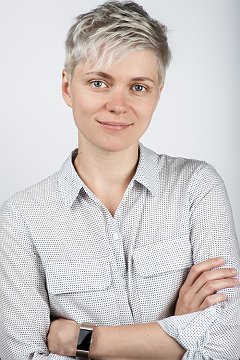
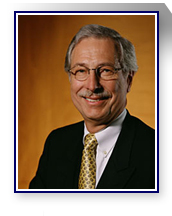
Olga Sorkine-Hornung is a Professor of Computer Science at ETH Zurich and head of the Institute of Visual Computing. She leads the Interactive Geometry Lab, focusing on theoretical and practical advancements in digital content creation, geometry processing, and shape modeling. Current position: ETH Zurich, Department of Computer Science Previous roles: Courant Institute (NYU), Technical University of Berlin Education: BSc and PhD from Tel Aviv University, postdoc at TU Berlin Her research spans shape representation, digital fabrication, computer animation, and fundamental geometry processing. Key contributions include Laplacian surface editing, as-rigid-as-possible deformation, and generalized winding numbers. She works on applications in VR, AR, and autonomous systems. Awards include Test of Time Awards (2024), ACM Fellow (2020), ERC Consolidator Grant (2020), and EUROGRAPHICS Young Researcher Award (2008). She has supervised numerous students and co-developed software libraries like libigl and Instant Meshes . Co-chair roles for SIGGRAPH, Eurographics, and Pacific Graphics Editorial board member for ACM Transactions on Graphics and other journals Keynote speaker at VMV, CVPR, and SIAM conferences Her work bridges mathematical rigor with practical implementation, advancing computer graphics and geometry processing through intuitive algorithms that maintain surface detail while enabling efficient computation.
April Yi Wang is a tenure-track Assistant Professor in the Department of Computer Science at ETH Zürich, where she directs the Programming, Education, and Computer-Human Interaction Lab (PEACH Lab). She is a core faculty member at the Institute for Intelligent Interactive Systems and associated with the ETH AI Center. Wang is also an active member of ETH HCI and Swiss CHI communities, contributing significantly to human-computer interaction and educational technology research. Dr. Wang's educational background includes: Ph.D. in Information Science from University of Michigan (2023), advised by Steve Oney and Christopher Brooks M.Sc. in Computer Science from Simon Fraser University (2018), advised by Parmit Chilana B.Eng in Computer Science from Zhejiang University (2016) Dr. Wang's research focuses on human-centered approaches to programming and data science. Her work reimagines programming as a form of literature that communicates with both machines and people, exploring creative representations like text, shapes, animations, and everyday objects. She investigates how to make programming more natural and intuitive through literate programming environments, with applications in professional and educational contexts. Her research spans human-computer interaction, educational technology, and AI-assisted programming tools. Analysis of Dr. Wang's recent publications reveals a strong focus on AI-enhanced educational tools, particularly for programming and data literacy. Her work increasingly integrates large language models to scaffold learning while maintaining user agency. There's a clear trajectory toward developing situated learning approaches that connect abstract concepts to real-world contexts through augmented reality and tangible interfaces. Her research bridges HCI, education, and AI to create more accessible and engaging technical learning experiences. Dr. Wang has received numerous prestigious awards including: 2023 Gary M. Olson Award and Honourable Mention Award at ACM CHI 2022 Rising Stars in EECS and Heidelberg Laureate Forum Young Researcher 2020 Best Short Paper Award at IEEE VL/HCC and Honourable Mention at ACM CHI 2019 Best Paper Award at ACM CSCW Dr. Wang actively mentors students through thesis projects at ETH Zürich, supervising numerous bachelor's and master's students on topics ranging from AI-assisted programming to data literacy tools. Her lab, PEACH Lab, has secured funding including the recent innovedum funding for the Coducate project. She serves on program committees for major conferences including CHI and UIST, and regularly reviews for top HCI and education journals. The PEACH Lab, directed by Dr. Wang, focuses on creating expressive, intelligent, and human-centered systems that make technical topics more accessible. The lab explores textual, visual, and embodied representations for programming, with emphasis on enhancing communication, collaboration, and learning. Current research directions include balancing automation with user agency, supporting diverse learning needs, and developing tools for interdisciplinary technical communication.
Min Yen Kan is an Associate Professor and Vice Dean of Undergraduate Studies at the National University of Singapore's School of Computing, Department of Computer Science. With a PhD from Columbia University (2002), he leads the Web Information Retrieval / Natural Language Processing Group (WING.NUS) and serves as ACL Ethics Committee co-chair. His research spans Natural Language Processing , Large Language Models , Digital Libraries , and Information Retrieval , with specific focus on scientific discourse analysis, fact verification, and multimodal systems. Current projects include Scholarly Document Information Extraction (TRL 6), Task-Oriented Dialogue Systems (TRL 4), and Recommendation Systems (TRL 5). Recent publications reveal strong trends in LLM limitations (bias, hallucination, evaluation), conversational recommendation systems , and misinformation detection . His work consistently bridges theoretical NLP with real-world applications in digital libraries and scientific communication. Award highlights include: CIKM 2019 Best Paper Award ACL Distinguished Service Awards Vannevar Bush Best Paper Award (JCDL 2012) ACM Distinguished Speaker designation Kan mentors PhD students with placements at Google and USTC, and serves as associate editor for Information Retrieval and survey editor for Journal of AI Research . His lab WING.NUS develops practical tools like SciWING for scientific document processing and FANG for fake news detection. Media engagements include commentary on AI regulations in Southeast Asia and workforce implications in the AI era.
Johnny Golding is a Professor at the Royal College of Art (RCA), School of Arts & Humanities. His career spans roles such as Director of the Centre for Fine Art Research at Birmingham City University, Professor of Philosophy in the Visual Arts & Communication Technologies (2000–2012), and honorary Professorship in Philosophy and Imaging at Dundee School of Art (2009). Born in New York, he holds a PhD from the Universities of Toronto and Cambridge. Education : - PhD in Philosophy from the Universities of Toronto and Cambridge. - Earlier studies in Toronto and New York. Research Interests : Golding’s work explores post-Newtonian analytics, new materialisms, and the erotics of sense as 'radical matter.' His interdisciplinary approach bridges art, philosophy, and 'wild sciences' like AI, robotics, and quantum theory. Key themes include data proliferation's societal impact, emergent systems, and the interplay between art and technology. Recent Articles & Projects : Focus on Data Loam (2020), exploring future knowledge systems through art and science collaborations. Recent works address radical empathy, distributed intelligence, and the ethics of AI. His 2018 opera Entanglement: The Opera and installations like Of The Thick and the Raw exemplify his practice-led philosophy. Grants & Leadership : - Led the Data Loam project (FWF-PEEK funded), involving over 20 artists and scholars. - PI for AiDesign Labs on generative AI at RCA. Labs & Collaborations : - Radical Matter Lab (2017–2018), a pedagogical experiment at RCA. - Collaborations with institutions like the University of Applied Arts Vienna and the British Library.
Andrew Head is an Assistant Professor at the University of Pennsylvania in the Computer and Information Science department. His research focuses on human-computer interaction, programming, and reading, particularly in developing technology for interactive reading and reasoning. He advises PhD students Alyssa Hwang, Hita Kambhamettu, Litao Yan, Jeffrey Tao, and Jessica Shi, and co-leads the Penn Human-Computer Interaction (Penn HCI) group with Danaé Metaxa. His work is published in top venues like ACM CHI, UIST, and ICSE. Research Interests: Andrew's work bridges interactive systems with programming environments, aiming to enhance how scientists and programmers interact with their tools. Key areas include AI-assisted code understanding, math notation accessibility, and medical note interpretation through interactivity. He employs user studies to identify needs and builds interactive systems to address them. Recent Article Trends: His publications emphasize systems-centric HCI approaches, integrating AI into code and document interfaces. Topics span code explanation (e.g., Ivie), property-based testing (e.g., Tyche), math notation augmentation (e.g., FreeForm), and medical informatics (e.g., Explainable Notes). Recent work also explores notebook environments (e.g., Bolt-on, Tyche) and literate programming (e.g., Colaroid). Scientific Awards: Distinguished Paper Award, ICSE 2024 Best Paper Awards at CHI (2024, 2023, 2022, 2019), UIST (2023, 2018), and others. Nominated for Best Paper at CHI 2023 and VL/HCC 2015. Advising & Grants: Andrew advises multiple PhD students and has secured significant grants, including a $1M NSF award for 'Property-based Testing for the People' (2024). His group collaborates with Penn’s MindCORE center and teams like PLClub and PennNLP. Labs & Teams: He co-leads the Penn HCI group, which works closely with other Penn research teams and labs. The group focuses on creating interactive tools that enhance scientific and programming workflows, supported by grants and cross-institutional partnerships.
Roswitha Skare is a Professor of Documentation Science at the Department of Language and Culture, UiT The Arctic University of Norway, within the Faculty of Humanities, Social Sciences and Teacher Education. She is actively engaged in research and teaching, focusing on documentation studies, public libraries, archives, museums (LAM sector), digitalization, and film history. Her research interests include: Documentation and document theory Paratext and digital documents Public libraries and their role in society Libraries and social media Migration and refugee services in libraries Film history, especially silent films and early documentaries Cultural memory and Sámi cultural resilience Institutional convergence in cultural policy Her recent publications (2019–2025) reveal a strong focus on public libraries during and after the Covid-19 pandemic, the role of libraries in supporting immigrants and refugees, theoretical developments in document studies, and historical film analysis—particularly Robert Flaherty’s Nanook of the North . She frequently collaborates with scholars such as Andreas Vårheim, Noah Lenstra, and Sigrid Stokstad. Her work appears in journals like Journal of Documentation , Library & Information Science Research , and Proceedings from the Document Academy . Roswitha Skare teaches courses such as: MDV-1001: Multimediale dokumenter: Historie, teori og analyse MDV-1203: Bibliotek og formidling MDV-1207: Dokumentinstitusjoner og digitalisering MDV-1206: Prosjektoppgave i bibliotek- og dokumentasjonsvitenskap She supervises bachelor’s, project, and master’s students in library and documentation science. She is a member of the research group Engaging Conflicts in a Digital Era (ENCODE) and participates in projects such as LAMCOM – Libraries, archives, and museums in the community and SAMCOM - Sámi cultural centers as community and cultural resilience infrastructure , which explore the societal roles of cultural institutions and Indigenous resilience. No scientific awards are listed in the provided text.
James Hankins is Professor of History in the Department of History at Harvard University's Faculty of Arts and Sciences, located at Robinson Hall 206, 35 Quincy Street, Cambridge, MA 02138. A leading scholar in Renaissance intellectual history, his work focuses on the intersection of political thought, philosophy, and classical traditions within 15th-16th century Europe. His research centers on Renaissance political thought, the history of philosophy, and classical tradition reception, with emphasis on Italian humanism and virtue politics. As Founder and General Editor of the I Tatti Renaissance Library (Harvard University Press) and Associate Editor of the Catalogus Translationum et Commentariorum, he has shaped critical editions and scholarly resources. He is currently completing The Virtue Politics of the Italian Humanists and recently launched The Pratrizi Project on Francesco Patrizi's political theory. Publications reveal sustained engagement with Renaissance philosophy through critical editions, monographs, and editorial projects spanning five decades. Key themes include Platonic theology, civic humanism, and classical philosophy recovery, demonstrating methodological rigor in intellectual history and textual scholarship across European Renaissance contexts. He actively participates in the Harvard Colloquium for Intellectual History. Information regarding students, grants, scientific awards, and laboratory affiliations was not provided in source materials.
Nadia Polikarpova is an Associate Professor in the Department of Computer Science and Engineering at the University of California, San Diego . She earned her PhD from ETH Zurich in 2014 under Bertrand Meyer , followed by postdoctoral research at MIT CSAIL with Armando Solar-Lezama . Her academic contributions have been recognized with prestigious awards including the 2020 Sloan Fellowship , 2020 Intel Rising Stars Award , and 2020 NSF CAREER Award . Polikarpova's research focuses on program synthesis , program verification , and type systems . She leads the Programming Systems group at UCSD and contributes to the IFIP Working Group 2.8 on Functional Programming since 2022. Her work spans foundational research and practical tools, including projects like Synquid , SuSLik , and Laurel that combine formal methods with machine learning for code generation. Her recent publications in venues like OOPSLA , NeurIPS , and ICFP reveal trends in AI-assisted programming , live programming environments , and formal verification . She has advised numerous PhD and Master’s students including Shraddha Barke , Zheng Guo , and Tristan Knoth , many of whom have moved to prominent academic and industry positions. Notable artifacts from her lab include tools like ColDeco for spreadsheet inspection and Superfusion for eliminating intermediate data structures. 2020 : Sloan Fellow 2020 : Intel Rising Stars Award 2020 : NSF CAREER Award 2021 : Distinguished Paper at POPL 2023 : Distinguished Artifact at PLDI 2023 : Distinguished Paper at OOPSLA Polikarpova actively contributes to academic service, serving on program committees for PLDI , POPL , and OOPSLA , and co-chairing the OOPSLA Review Committee in 2023. She has delivered keynotes at APLAS'20 and PLDI'24 , emphasizing the integration of large language models with formal methods.
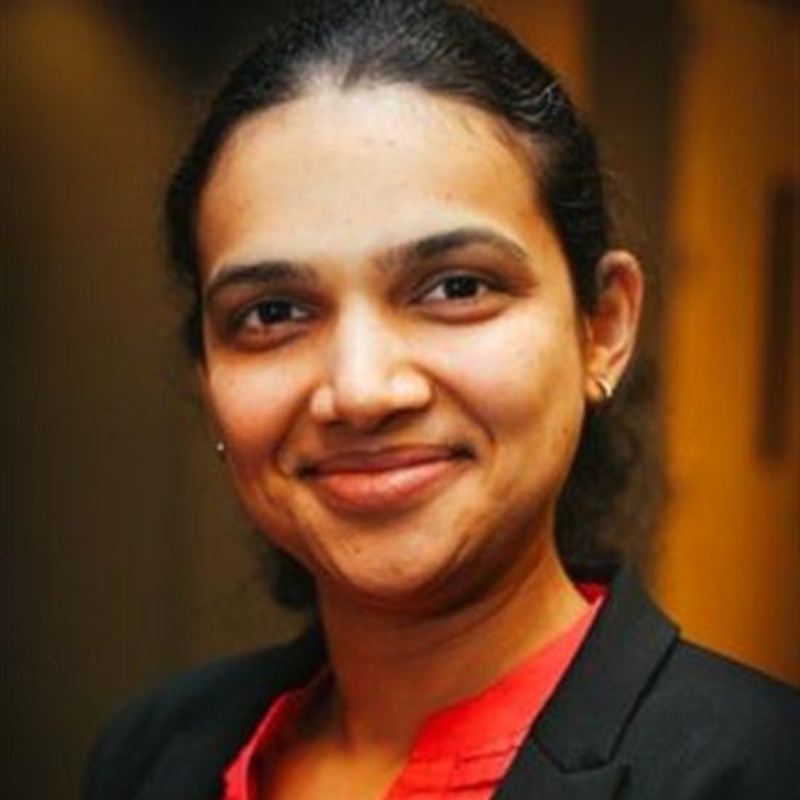
Rashmi Vinayak is an Associate Professor in the Computer Science Department at Carnegie Mellon University, with a courtesy appointment in the Electrical and Computer Engineering Department. She is a member of both the Systems group and Theory group at CMU and leads TheSys research group. She is also affiliated with the Parallel Data Lab (PDL). Her educational background includes a Ph.D. from UC Berkeley in 2016, followed by postdoctoral studies at the same institution. Rashmi's research spans the intersection of computer/networked systems and information/coding theory. Her current focus is on robustness and resource efficiency in data systems across storage, communication, and computation. Key thrusts include storage systems, caching systems, and systems for machine learning. Her work on SIEVE, a cache eviction algorithm, has been widely adopted by industry including VMware, Google, Redpanda, and numerous open source libraries. Her recent publications demonstrate a strong trend toward practical systems research with theoretical foundations, particularly in caching algorithms, storage systems, and machine learning infrastructure. Many of her papers have received best paper awards and industry adoption. Notable awards include: Sloan Research Fellowship (2023) IEEE Information Theory Society Goldsmith Lecturer (2023) NSF CAREER Award (2020) Multiple USENIX NSDI Community (Best Paper) Awards VMware Systems Research Award (2021) Facebook and Google Research Awards Rashmi has supervised numerous PhD, Master's, and undergraduate students, many of whom have gone on to prestigious positions at Harvard, Google, Meta, and other leading institutions. Her research has been generously funded by NSF, Sloan Foundation, Open Compute Project, Google, Facebook/Meta, VMware, and Amazon Web Services. She actively collaborates with industry partners including Google, Microsoft, NetApp, Facebook, Cisco, Intel and Cloudera. She leads TheSys research group which focuses on designing next-generation data systems that are robust, efficient, and performant. The group takes a multi-disciplinary approach spanning computer systems, information theory, and machine learning.
Dr. James D. Foley is a Professor in the College of Computing and the School of Electrical and Computer Engineering at Georgia Institute of Technology. He holds the Stephen Fleming Chair in Telecommunications. He earned his Ph.D. in Computer Information and Control Engineering from the University of Michigan and a BSEE from Lehigh University, where he was inducted into Phi Beta Kappa, Tau Beta Pi, and Eta Kappa Nu. Founded the Graphics, Visualization & Usability (GVU) Center at Georgia Tech, ranked #1 in graphics and user interaction. Directed Mitsubishi Electric Research Lab and later served as CEO of Mitsubishi Electric ITA. Executive Director of Yamacraw, Georgia's broadband development initiative. His research focuses on computer graphics, human-computer interaction (HCI), visualization, and user interface design. He co-authored foundational textbooks like Interactive Computer Graphics , translated into multiple languages. Professional leadership includes Chair of the Computing Research Association (CRA), Fellowships with ACM and IEEE, and the ACM/SIGGRAPH Stephen Coons Award. He advised over 30 graduate students and led numerous conferences, panels, and editorial roles in top journals. Contributions span academia and industry, including roles in NSF workshops, JTEC studies on HCI in Japan, and advisory boards for institutions like MIT and Lehigh University.
Christian Boldsen Knudsen serves as a Visiting Assistant Professor at the University of Copenhagen, affiliated with Copenhagen University Library. His institutional email (sund.ku.dk) indicates association with the Faculty of Health Sciences despite his geological research focus, suggesting a specialized academic support role. His research centers on Precambrian geology with emphasis on gold-hosting environments in southern West Greenland. Key interests include supracrustal rock analysis, mineral deposit formation, and Archean geological processes, as evidenced by his fieldwork on Storø island. This work bridges economic geology and regional tectonic studies. Knudsen's publication record demonstrates expertise in Greenland's Precambrian basement complexes, particularly lithological controls on gold mineralization. His research integrates field geology with ore deposit modeling within ancient cratonic settings. No scientific awards or honors were documented in available sources. Information regarding student supervision, research grants, or collaborative teams is not publicly accessible. His library affiliation implies potential contributions to academic information services rather than conventional laboratory-based research.
Arthur Weststeijn is an Assistant Professor in Political History at Utrecht University, specializing in the history of the Dutch Republic and its colonial empire, the history and contemporary politics of Italy, and the history of Spain and Latin America. He is affiliated with the Department of History and Art History within the Humanities faculty and is part of the Research Institute for History and Art History, focusing on International and Political History. Dr. Weststeijn's educational background includes: PhD in History, European University Institute, Florence (2010) RMA in History, European University Institute, Florence (2006) MA in Philosophy, University of Amsterdam (2005) MA in History, University of Amsterdam (2004) Erasmus Exchange, Universidad de Sevilla (2000-2001) His research focuses on the intellectual history of power, particularly examining ideas that express and contest political authority through two main themes: colonialism (how ideas have shaped European colonialism and resistance against it) and republicanism (how resistance to autocratic rule has given rise to ideas of liberty, citizenship, and democracy). His work spans early-modern Dutch colonialism, anticolonial thought, the history of democracy, and connections between ancient and modern forms of settler colonialism. He has published extensively on early modern republicanism, the political uses of classical heritage, and the making of modern Italy. Weststeijn's scholarly output demonstrates a consistent focus on the intersections between political thought, colonial history, and republican theory. His work often examines how historical ideas continue to shape contemporary political discourse, particularly regarding democracy, citizenship, and colonial legacies. He frequently engages with both European and transatlantic intellectual traditions, showing particular expertise in Dutch and Italian political thought. His notable awards and fellowships include: Fellow, Huntington Library, San Marino, California (Summer 2022) Fellow, John Carter Brown Library, Providence, Rhode Island (Spring 2019) Director of Historical Studies, Royal Netherlands Institute in Rome (2011-2017) Dr. Weststeijn has served as a visiting researcher at prestigious institutions including the Cambridge Centre for Political Thought, University of Southern California, University of Wisconsin at Madison, and University of Padua. He frequently appears as an expert commentator on Italian culture and politics in Dutch media and maintains an active public intellectual presence. He is involved in multiple research initiatives including the IOS research themes on Contesting Governance, Futures of Democracy, and Longtermism and Institutional Change. His work often involves interdisciplinary collaboration with archaeologists, classicists, and scholars from various humanities disciplines.
Olle Sköld is a Senior Lecturer at the Department of ABM (Archives, Libraries, and Museums) at Uppsala University. He is also the Head of the Department of ABM and holds an Associate Professor position in Library and Information Science. His research spans digital humanities, documentation practices, knowledge production, and digital preservation, with a particular focus on archaeological data processes and virtual world communities. Archaeological data documentation and reuse Digital game preservation Paradata theory and applications Information practices in social media His recent publications explore paradata in data papers, literacy challenges in research data management, and trust technologies like blockchain in digital archives. Olle is involved in the CAPTURE project, investigating documentation workflows for archaeological data. He has contributed to the Master's Programme in Digital Humanities at Uppsala University, blending digital humanities with library and information science education.
University of North Carolina at Chapel HillUnited States
Lucia Binotti is a Professor of Spanish and Digital Humanities at the University of North Carolina at Chapel Hill (UNC-CH), with dual affiliations in the Department of Romance Studies and interdisciplinary Digital Humanities initiatives. She serves as Graduate Advisor for Hispanic Linguistics and Director of the Honors Study Abroad Program in Rome. Her work bridges traditional philology with cutting-edge digital scholarship, emphasizing immersive learning experiences through virtual reality (VR) and augmented reality (AR) technologies. Binotti holds a Ph.D. from UC Santa Barbara (1990), an MA (1985), and a BA (1984) in Romance Philology from the Università degli Studi di Pisa. Her research focuses on linguistic identity, cultural heritage preservation, and innovative educational platforms like Amirabilia—the world’s first experiential learning platform. Notable projects include nXimena (healthcare training for Latinx abuse survivors) and Entiendelo (a linguistic/cultural navigation app for Latinx communities). Her scholarly interests span Early Modern Spanish literature, digital humanities applications, and the intersection of technology with social justice. She has directed grants totaling over $500K for projects involving AR/VR integration in education, including collaborations with the UNC Health Science Library and NCSU’s DELTA initiative. Recent awards include the John K. Walsh Award (2010) and Digital Innovation Fellow status (2014). Grants & Leadership: CFE-Lenovo Technology Grants (2018–2019) for AR/VR expansion iLRN 2020 International Co-Chair XR Faculty Learning Community Leader (UNC) Teaching: Courses span from introductory Hispanic literature to advanced topics like medieval intellectual history and digital humanities methodologies. Binotti’s work emphasizes ‘place, presence, and perspective’ in Cyber-Humanities education, particularly addressing marginalized communities through technology-driven solutions.
David Bawden is a Professor in the Department of Library and Information Science (CityLIS) at City, University of London. With a publication record spanning over two decades, he has established himself as a leading scholar in information science, particularly known for his work on the philosophical foundations of information, knowledge organization, and information behavior. His research frequently intersects with Luciano Floridi's Philosophy of Information, which he has applied to library and information science theory and practice. Bawden's research interests focus on the theoretical underpinnings of information science, including information behavior, information literacy, knowledge organization, and the philosophical dimensions of information. His work often explores the conceptual frameworks that shape how we understand information in both physical and digital environments. He has made significant contributions to understanding information privacy through a philosophical lens and has examined temporal aspects of information in contemporary society. His recent publications demonstrate a continued focus on theoretical developments in information science, with particular attention to the implications of Floridi's work for library and information practice. Bawden's scholarship shows a consistent trajectory from examining historical aspects of information to contemporary challenges in the digital age, maintaining a strong theoretical orientation throughout. As a frequent collaborator with Lyn Robinson (also at City, University of London), Bawden has co-authored numerous papers exploring transitions between concepts of information across different domains, information overload, and the philosophical foundations of information science. His work has appeared in leading journals including the Journal of Documentation, Journal of the Association for Information Science and Technology, and Information Research. Bawden has been actively involved in the CityLIS program, contributing to innovative approaches to information science education including the development of curricula addressing data librarianship and the 'onlife' nature of contemporary information experience. His scholarship reflects a deep commitment to advancing the theoretical foundations of the field while maintaining relevance to practical information challenges.