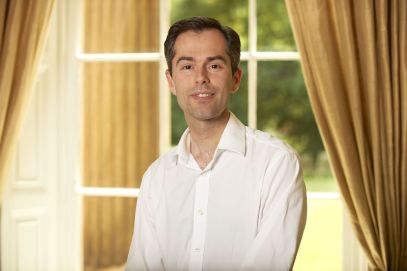
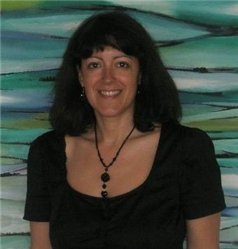
Andrea Vedaldi is a Professor of Computer Vision and Machine Learning at the University of Oxford's Department of Engineering Science, affiliated with the Visual Geometry Group (VGG). He specializes in unsupervised methods for understanding images and videos, focusing on 3D geometry and semantics. His research bridges foundational AI and practical applications, with contributions to generative models, neural fields, and self-supervised learning. Education: PhD in Computer Science (2008), University of California, Los Angeles MSc in Computer Science (2005), UCLA BSc in Information Engineering (2003), University of Padua Research Interests: Unsupervised learning, 3D perception, generative AI, neural rendering, and scalable vision systems. His work emphasizes ethical, responsible AI aligned with ERC-funded projects like UNION (ERC Consolidator Grant). Key Contributions: Co-developer of VLFeat and MatConvNet libraries Leader in 3D reconstruction and diffusion models (e.g., CatFree3D) Recipient of the PAMI Thomas S. Huang Prize and multiple best paper awards Grants & Service: Principal Investigator on £2.3M ERC Consolidator Grant (UNION) Co-organizer of major conferences (ECCV 2020 Program Chair, CVPR 2023 Area Chair) Reviewer for top journals/conferences (PAMI, CVPR, NeurIPS) Labs & Teams: VGG Group at Oxford, collaborating on projects like Meta 3D Gen and Common Objects in 3D (CO3D).
Johnny Golding is a Professor at the Royal College of Art (RCA), School of Arts & Humanities. His career spans roles such as Director of the Centre for Fine Art Research at Birmingham City University, Professor of Philosophy in the Visual Arts & Communication Technologies (2000–2012), and honorary Professorship in Philosophy and Imaging at Dundee School of Art (2009). Born in New York, he holds a PhD from the Universities of Toronto and Cambridge. Education : - PhD in Philosophy from the Universities of Toronto and Cambridge. - Earlier studies in Toronto and New York. Research Interests : Golding’s work explores post-Newtonian analytics, new materialisms, and the erotics of sense as 'radical matter.' His interdisciplinary approach bridges art, philosophy, and 'wild sciences' like AI, robotics, and quantum theory. Key themes include data proliferation's societal impact, emergent systems, and the interplay between art and technology. Recent Articles & Projects : Focus on Data Loam (2020), exploring future knowledge systems through art and science collaborations. Recent works address radical empathy, distributed intelligence, and the ethics of AI. His 2018 opera Entanglement: The Opera and installations like Of The Thick and the Raw exemplify his practice-led philosophy. Grants & Leadership : - Led the Data Loam project (FWF-PEEK funded), involving over 20 artists and scholars. - PI for AiDesign Labs on generative AI at RCA. Labs & Collaborations : - Radical Matter Lab (2017–2018), a pedagogical experiment at RCA. - Collaborations with institutions like the University of Applied Arts Vienna and the British Library.
Dr Sean Fear is a Lecturer in International History at the School of History, University of Leeds , specializing in Vietnamese history, the Cold War, and U.S. foreign relations. He advises the Independence Palace Museum in Ho Chi Minh City on a landmark exhibition about South Vietnam's political and cultural history (1967–1975), a project funded by Leeds' Faculty of Arts and supported by design firm Thincdesign. Fear’s research focuses on domestic politics and foreign diplomacy during the Vietnam War, drawing on Vietnamese-language archives and oral histories. Education: PhD (Cornell University), BA (University of Toronto) Visiting Roles: Visiting Professor at Fulbright University (2022–23) Fellowships: Dartmouth College, NYU Cold War Center, McGill University His forthcoming book (Harvard UP) analyzes the collapse of South Vietnam’s legitimacy, leveraging underutilized Vietnamese sources. Fear collaborates internationally with institutions like the British Library and the Social Sciences and Humanities Research Council of Canada. He supervises MA/PhD students on topics including decolonization, Cold War geopolitics, and post-war memory. Key Projects: Independence Palace Museum exhibit (since 2019) Research on Vietnamese state-building and U.S. influence Contributions to Cambridge History of the Vietnam War (AAP-award winning) Awards: His work earned two Association of American Publishers awards for the Cambridge History collaboration. Grants include Leeds' Research Innovation Service funding to finalize the museum exhibit’s physical design.
Dr Henry Moss is a Researcher at the Department of Applied Mathematics and Theoretical Physics within the School of Physical Sciences at the University of Cambridge. His work focuses on machine learning applications in climate modeling, Bayesian optimization, and Gaussian processes, bridging computational mathematics with environmental science and chemistry. His research interests include: Bayesian optimization for environmental and chemical systems Reinforcement learning in climate modeling Gaussian processes for molecular property prediction High-throughput machine learning in scientific domains Interpretable AI for coastal flooding prediction Hybrid ML-physics modeling Dr Moss's publications highlight his contributions to federated learning for climate models, sparse Gaussian process techniques, and multi-objective optimization frameworks. These works span applications in weather prediction, chemical engineering, and oceanography. Email: hwm26@cam.ac.uk
Jakob Foerster is an Associate Professor at the University of Oxford's Department of Engineering Science and a Supernumerary Fellow at St Anne's College. He leads the FLAIR lab, focusing on multi-agent reinforcement learning (MARL), human-AI coordination, and AI foundational research. Previously, he was a Research Scientist at Facebook AI Research (FAIR) and holds a DPhil from Oxford. His work has been cited over 5,000 times and includes seminal contributions like QMIX and the Hanabi Challenge. Research interests span compute-efficient scaling of AI, MARL applications in finance and bio, and ethical AI. He actively collaborates across academia and industry, co-organizing workshops like NeurIPS' Emergent Communication. His lab emphasizes open-ended RL, environment design, and scalable algorithms. Notable awards include the CIFAR AI Chair (2019) and NeurIPS Best Paper Runner-Up (2018). Current efforts include FLAIR's research on zero-shot coordination and the JaxMARL framework. He advises students in Oxford's Engineering DPhil and AIMS CDT programs.
Professor Sara Baker is a Professor of Developmental Psychology and Education at the University of Cambridge's Faculty of Education and a Fellow at Darwin College, where she served as Vice Master from 2021-2024. She is also a 2022 Senior Fellow in the Science of Learning with UNESCO-IBE/IBRO. Her work bridges cognitive science and educational practice, focusing on how children develop executive functions and self-regulation skills. Baker leads the Early Years Library project, co-founded the Research Centre for Play in Education, Development and Learning (PEDAL), and is a founding member of the Global Executive Functions Initiative. Sara Baker specializes in the science of learning, with research aimed at improving children's lives by identifying factors at home and school that support their agency over learning. Her work emphasizes developing executive functions and self-regulation through playful learning approaches. She uses lab-based experiments and collaborates with educators to translate cognitive science research into educational contexts. Her research spans multiple countries including the UK, USA, Mexico, Denmark, Slovakia, South Korea, Ghana, Rwanda, Nigeria, Kenya, South Africa, and more, reflecting a strong commitment to culturally relevant and globally applicable educational practices. Analysis of Professor Baker's recent publications reveals a strong focus on executive functions, self-regulation, and playful learning across diverse cultural contexts. Her work increasingly addresses cultural adaptation of assessment tools and educational practices, particularly for Global Majority countries. There's a clear trajectory from basic cognitive research toward practical applications in educational settings, with growing emphasis on teacher training, culturally relevant assessment, and the role of play in early childhood development. Her interdisciplinary approach connects developmental psychology, educational theory, and practical classroom applications. 2022 Senior Fellow in the Science of Learning with UNESCO-IBE/IBRO Professor Baker leads the doctoral program in the Faculty of Education and serves as an Academic Project Director in the School of Humanities and Social Sciences. She is the Cambridge academic lead on the Close the Gap partnership between Cambridge and Oxford, focused on postgraduate widening participation. Her research has been funded by prestigious organizations including the Newton Trust, Cambridge Humanities Research Grant, Economic and Social Research Council, LEGO Foundation, Nuffield Foundation, and Office for Students/Research England. She actively supervises doctoral students and seeks highly motivated candidates for October 2026 entry whose research aligns with her focus areas. Professor Baker co-founded and is actively involved with the Research Centre for Play in Education, Development and Learning (PEDAL), which investigates how children's play affects their development. She leads the Early Years Library project, a curated collection of evidence-based practices for early years educators, and is a founding member of the Global Executive Functions Initiative. Her work with the Connections international professional learning network focuses on self-regulation, while the Close the Gap project addresses widening participation in postgraduate education between Oxford and Cambridge.
Peter Pietzuch is a Professor in the Department of Computing at Imperial College London, where he leads the Large-Scale Data & Systems (LSDS) group. He also serves as the Director of Research and is a Visiting Researcher at Microsoft Research Cambridge. Pietzuch holds a Ph.D. from the University of Cambridge and a B.A. from Girton College. His research spans distributed systems, cloud computing, big data processing, and systems security. Key interests include: Scalable architectures for cloud-native applications Efficient stream processing and machine learning systems Trusted execution environments and secure cloud infrastructure Optimization of serverless computing and distributed databases His recent publications focus on adaptive machine learning frameworks, secure cloud resource management, and high-performance stream processing systems. Trends show strong emphasis on hardware-software co-design, confidential computing, and fault-tolerant architectures. Awards include: Best Paper Award at Middleware'03 He actively advises PhD students and secures grants for projects like Faasm (serverless computing) and Teechain (blockchain security). His LSDS group collaborates with industry partners including Microsoft Research. Pietzuch teaches undergraduate and graduate courses including Scalable Systems for the Cloud and Operating Systems . He co-founded the ACM DEBS conference and serves on steering committees for EuroSys and Middleware.
David Bawden is a Professor in the Department of Library and Information Science (CityLIS) at City, University of London. With a publication record spanning over two decades, he has established himself as a leading scholar in information science, particularly known for his work on the philosophical foundations of information, knowledge organization, and information behavior. His research frequently intersects with Luciano Floridi's Philosophy of Information, which he has applied to library and information science theory and practice. Bawden's research interests focus on the theoretical underpinnings of information science, including information behavior, information literacy, knowledge organization, and the philosophical dimensions of information. His work often explores the conceptual frameworks that shape how we understand information in both physical and digital environments. He has made significant contributions to understanding information privacy through a philosophical lens and has examined temporal aspects of information in contemporary society. His recent publications demonstrate a continued focus on theoretical developments in information science, with particular attention to the implications of Floridi's work for library and information practice. Bawden's scholarship shows a consistent trajectory from examining historical aspects of information to contemporary challenges in the digital age, maintaining a strong theoretical orientation throughout. As a frequent collaborator with Lyn Robinson (also at City, University of London), Bawden has co-authored numerous papers exploring transitions between concepts of information across different domains, information overload, and the philosophical foundations of information science. His work has appeared in leading journals including the Journal of Documentation, Journal of the Association for Information Science and Technology, and Information Research. Bawden has been actively involved in the CityLIS program, contributing to innovative approaches to information science education including the development of curricula addressing data librarianship and the 'onlife' nature of contemporary information experience. His scholarship reflects a deep commitment to advancing the theoretical foundations of the field while maintaining relevance to practical information challenges.
Richard McKay is a part-time Research Fellow in the Department of History and Philosophy of Science at the University of Cambridge and serves as Director of Studies for History and Philosophy of Science at Magdalene College. He has held prestigious fellowships from the Wellcome Trust and the ESRC, and he divides his professional life between academic research and private practice as an International Coach Federation-certified career, academic and life coach. Research Interests: Twentieth-century history of medicine and public health History of sexuality and sexually transmitted infections History of HIV/AIDS Use of visual sources in medical history His current Wellcome-supported project, ‘Before HIV: Homosex and Venereal Disease, c.1939–1984’ , explores how healthcare workers and gay men in Canada, the United States and England came to understand the role of men who have sex with men in STI transmission during the mid-twentieth century. Publications & Scholarly Impact: Across monographs, peer-reviewed articles and book chapters, McKay interrogates the social construction of the “Patient Zero” myth, the pre-history of HIV, and the visual cultures surrounding AIDS-related illnesses such as Kaposi’s sarcoma. His 2017 monograph Patient Zero and the Making of the AIDS Epidemic has become a key reference in HIV historiography. Awards & Fellowships: Wellcome Trust Research Fellowship (current) ESRC Postdoctoral Fellowship, King’s College London Teaching & Advising: As Director of Studies at Magdalene College, McKay guides undergraduate students in History and Philosophy of Science. He has also contributed pedagogical modules to the U.S. National Library of Medicine’s online exhibition Surviving and Thriving: AIDS, Politics, and Culture . Professional Activities: Aside from his academic appointments, McKay maintains an active coaching practice accredited by the International Coach Federation, supporting academic and professional clients worldwide.
Rosa Andujar is a Senior Lecturer in Liberal Arts at King's College London, where she is affiliated with both the Department of Liberal Arts and the Department of Classics within the Faculty of Arts & Humanities. She serves as Editor of the American Journal of Philology and holds positions on the editorial boards of Brazilian journals Nuntius Antiquus and PhaoS - Revista de Estudos Clássicos. Dr. Andujar was elected to the Program Committee of the Society for Classical Studies for a three-year term (2022-2025), serving as Vice President for Program and Chair from 2023-2025. Her research focuses on two complementary areas: Ancient Greek tragedy, particularly the tragic chorus and its performance capabilities Global receptions of Greek drama, with special emphasis on Latin America and the Caribbean Dr. Andujar's work examines how engagements with Graeco-Roman antiquity intersect with questions of gender, race, class, and national identity. She has particular expertise in Cuban adaptations of Greek tragedy and Latinx receptions of classical drama, exploring how these cultural encounters create new narratives that challenge traditional understandings of classical reception. Her research has been recognized with prestigious awards including the 2020 London Hellenic Prize for 'The Greek Trilogy of Luis Alfaro' and the 2022 AJP Best Article Prize. She has secured significant research funding from the Loeb Classical Library Foundation, British Academy, A. G. Leventis Foundation, Harvard Center for Hellenic Studies, Andrew W. Mellon Foundation, and Fundación BBVA. Dr. Andujar's current research projects include 'The Cambridge Companion to Classics and Race' (edited volume), 'La Puerta Electra/The Electra Door' (critical bilingual anthology of Cuban rewritings), and 'Tragedy and Revolución' (monograph on Greek drama in Caribbean cultural history), supported by recent fellowships from the Loeb Classical Library Foundation and British Academy. She is actively involved in academic service as Editor of the American Journal of Philology, co-editor of the 'Classics and the Postcolonial' book series for Routledge, and Advisory Board member of 'Hesperides: Classics in the Luso-Hispanic World.' Her external examining work for the University of Birmingham (2018-2023) demonstrates her commitment to academic standards across institutions.
Lesley Gourlay is a Professor of Education at the IOE - Culture, Communication & Media , part of University College London . She has held leadership roles including Director of the Academic Writing Centre (2010-2020) and Head of the Department of Culture, Communication and Media (2014-2018). Research Focus: Science and Technology Studies in Education, Posthuman Theory, Sociomaterialism, Digital Engagement Awards: Leverhulme Major Research Fellowship (2021-2025) for 'The Datafied University' Her publications explore postdigital education, algorithmic governance, and digital performativity. Recent work includes the open-access monograph The University and the Algorithmic Gaze (2025) and co-editing the Palgrave Handbook of Science and Technology Studies in Education . She is currently working on two forthcoming monographs: The University and the Writing Machine and Weave: The Making of Meaning . Lesley's scientific contributions analyze digital education through postphenomenological, sociomaterial, and posthumanist lenses. Key themes include learning analytics, AI's role in education, and the materiality of digital practices. Her work challenges binary distinctions between online/campus education and human/nonhuman agency. Collaboration Network: Extensive co-authorships with scholars like Petar Jandrić, Clara O’Shea, and Martin Oliver. She co-organizes the UK-wide Digital University Network and contributes to journals such as Postdigital Science and Education and Educational Philosophy and Theory .
Dr David Pratt is a Fellow in History at Downing College, University of Cambridge , where he also serves as Archivist and Keeper of Art and Artefacts. His academic career focuses on early medieval political thought and court culture, particularly in Anglo-Saxon England and the Carolingian world. Academic Rank: Research Fellow Honors: FRHistS (Fellow of the Royal Historical Society) Research Interests center on the political ideology of King Alfred the Great, the origins of English coronation rituals, and broader themes of kingship, law, and social order in the later Anglo-Saxon period. His comparative approach highlights interactions between Anglo-Saxon and European medieval traditions. Recent Publications include English Coronation Ordines in the Ninth and Early Tenth Centuries (2023) and studies on Alfredian texts, taxation systems, and monastic reform. These works emphasize textual analysis, royal authority, and cross-cultural influences. Scientific Awards: FRHistS
London School of Economics and Political Science (LSE)United Kingdom
Susana Mourato is Professor of Environmental Economics at the Department of Geography and Environment at the London School of Economics and Political Science (LSE). She joined LSE in 2008 after ten years at Imperial College London. In 2021, she became the Vice President and Pro-Vice Chancellor (Research) at LSE. She also holds positions as Visiting Reader at Imperial College London and Honorary Senior Fellow at CSERGE (University of East Anglia). Professor Mourato is an expert in environmental economics and the application of economic valuation techniques to measure environmental change and social value. Professor Mourato's research focuses on valuing natural wealth and creating markets for ecosystem services, perceptions and preferences for low-carbon energy technologies, environmental valuation methods and applications, and the relationship between life satisfaction and the environment. Her work spans the fields of environmental economics, wellbeing economics, and behavioral environmental economics. She has conducted extensive research on ecosystem services, wildlife conservation, air and water pollution, chemicals, climate change, low carbon technologies, and cultural heritage, testing and applying economic valuation techniques to these diverse areas. Her recent publications show a strong trend toward integrating behavioral economics with traditional environmental valuation techniques. She has published extensively on the links between subjective wellbeing and environmental quality, as well as the application of economic valuation methods to inform environmental policy. Her work often involves interdisciplinary collaborations across economics, ecology, and social sciences, with significant policy impact through government advisory roles and international organizations. Member of Culture & Heritage Capital Advisory Board (UK Department for Digital, Culture, Media & Sport) Associate of the Grantham Research Institute on Climate Change and the Environment Former Academic Director of LSE Summer School Former Head of Department (2017-2020) Professor Mourato has worked on more than 45 research projects and consultancies for research councils, government, industry, charities, and international organizations. She currently leads projects for the OECD evaluating the impact of chemicals on IQ, for LSE Middle East Centre estimating preferences for climate change policies in the Gulf Region, and for water conservation in Kuwait. Her research has informed policy development in multiple countries and international contexts.
Prof Andrew Pettegree is the Bishop Wardlaw Professor at the School of History, University of St Andrews. His research focuses on the European Reformation, history of communication, and the history of the book. He leads a research group that completed the Universal Short Title Catalogue, analyzing books published before 1650. Key publications include The Book in the Renaissance and The Invention of News . He has held roles such as Vice-President of the Royal Historical Society and founded monograph series like St Andrews Studies in Reformation History . Education: BA, DPhil, and MA from the University of Oxford. Research interests span Reformation media strategies, Dutch Republic book culture, and early modern print networks. Awards include the Goldsmith Prize and fellowships. He supervises PhD students in Reformation and Book History. Key projects include studies on Luther’s media tactics and the Dutch Golden Age book trade. Grants supported work on medical publishing and the Universal Short Title Catalogue. He leads the St Andrews Reformation Studies Institute and collaborates on global book history initiatives. His work bridges academic research with public engagement, emphasizing the role of print in shaping modern society.
Christophe Viavattene is an Associate Professor of Environmental Sustainability at Middlesex University , specializing in flood risk management and urban resilience. He has spent 17 years at the Flood Hazard Research Centre , leading interdisciplinary research across economic and physical sciences in water and flood risk. Research Focus: Flood vulnerability (coastal, urban, fluvial), GIS tools (INDRA model), Multi-Coloured Manual (MCM) methodology, mental health impacts of flooding, groundwater flood risk in arid regions, and air quality risk assessment. Teaching: Programme Leader for the MSc Sustainability and Environmental Management , teaching problem-based sustainability, GIS, and environmental monitoring. Key Collaborations: EU FP7 RISC-KIT, EU CONHAZ, Environment Agency UK projects. Recent Publications: Bayesian flood models, coastal hotspots analysis, and groundwater flood damage methodologies. His work bridges academic research with practical applications, including flood storage compensation frameworks and vulnerability indicator libraries.