- History of Russia in modern times
- Historiography and source studies of Russian history
- Methodology of historical research
- +۵ مورد دیگر
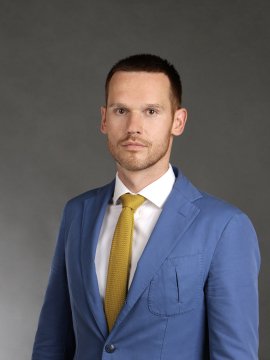
Orlov Igor Borisovich is a distinguished Professor and Deputy Head of the Department of Politics and Management at the Faculty of Social Sciences, National Research University Higher School of Economics (HSE). He also serves as Head of the Scientific and Educational Laboratory for Research in the Field of Business Communications and as Professor in the Department of Theory and Practice of Interaction between Business and Government at HSE University. With over 33 years of academic experience and working at HSE since 2002, Professor Orlov has established himself as a leading scholar in Russian political history and Soviet studies. Professor Orlov received his education at Kharkiv State University named after A.M. Gorky, where he graduated with honors in 1990 with a specialty in "History" and qualification as "Historian. Teacher of history and social science." He earned his Doctor of Historical Sciences degree in 2000 and was awarded the academic title of Professor in 2002. His professional development includes numerous advanced training certificates from HSE and other institutions, focusing on electronic library resources, Russian statehood methodology, and public communications. Professor Orlov's research focuses primarily on Russian political history, particularly the history of Russia in modern times (since the 20th century), historiography and source studies of Russian history, and methodology of historical research. His scholarly work explores the continuity between imperial, Soviet, and post-Soviet Russian statehood, Soviet everyday life, and the history of tourism in the USSR as a form of cultural diplomacy. His recent publications demonstrate a growing interest in the institutionalization of political concepts and the historical foundations of contemporary Russian political culture. Analysis of Professor Orlov's most recent publications reveals a consistent scholarly trajectory centered on Russian historical and political development. His work bridges historical analysis with contemporary political science, particularly examining how historical legacies shape current Russian political institutions and culture. A significant portion of his research focuses on Soviet international relations through the lens of tourism and cultural exchanges, revealing how seemingly mundane activities served as important channels for political communication and diplomacy during the Cold War era. Honorary certificate of the President of the Russian Federation (June 2025) Honorary certificate of the Faculty of Social Sciences of HSE University (April 2024) Multiple thank-you letters from HSE rectors and vice-rectors (2021-2020) Medal "Recognition - 15 years of successful work" of HSE University (June 2019) Honorary certificate of the Ministry of Education and Science of the Russian Federation (August 2017) Best teacher awards (2022, 2015-2016, 2011-2013) Winner of the competition of the best Russian-language scientific works of HSE employees (2021) Professor Orlov has been actively involved in mentoring students, supervising diploma theses at HSE University across multiple departments. He has served on numerous editorial boards of academic journals including as editor-in-chief of "Business. Society. Power" since 2017. His teaching portfolio is extensive, covering courses such as History of Russia, History of Russia in Modern Times, and Fundamentals of Russian Statehood across various HSE campuses and departments, demonstrating his commitment to interdisciplinary education and broad academic engagement. As Head of the Scientific and Educational Laboratory for Research in the Field of Business Communications, Professor Orlov leads a research team focused on the intersection of business, government, and society. His laboratory serves as a hub for collaborative research projects examining historical and contemporary aspects of Russian state-business relations, with particular attention to communication patterns and institutional frameworks that shape these interactions.