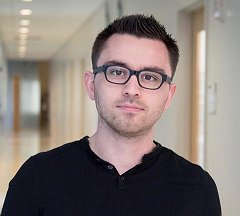
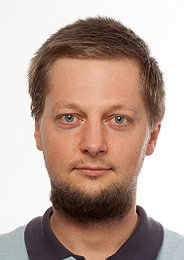
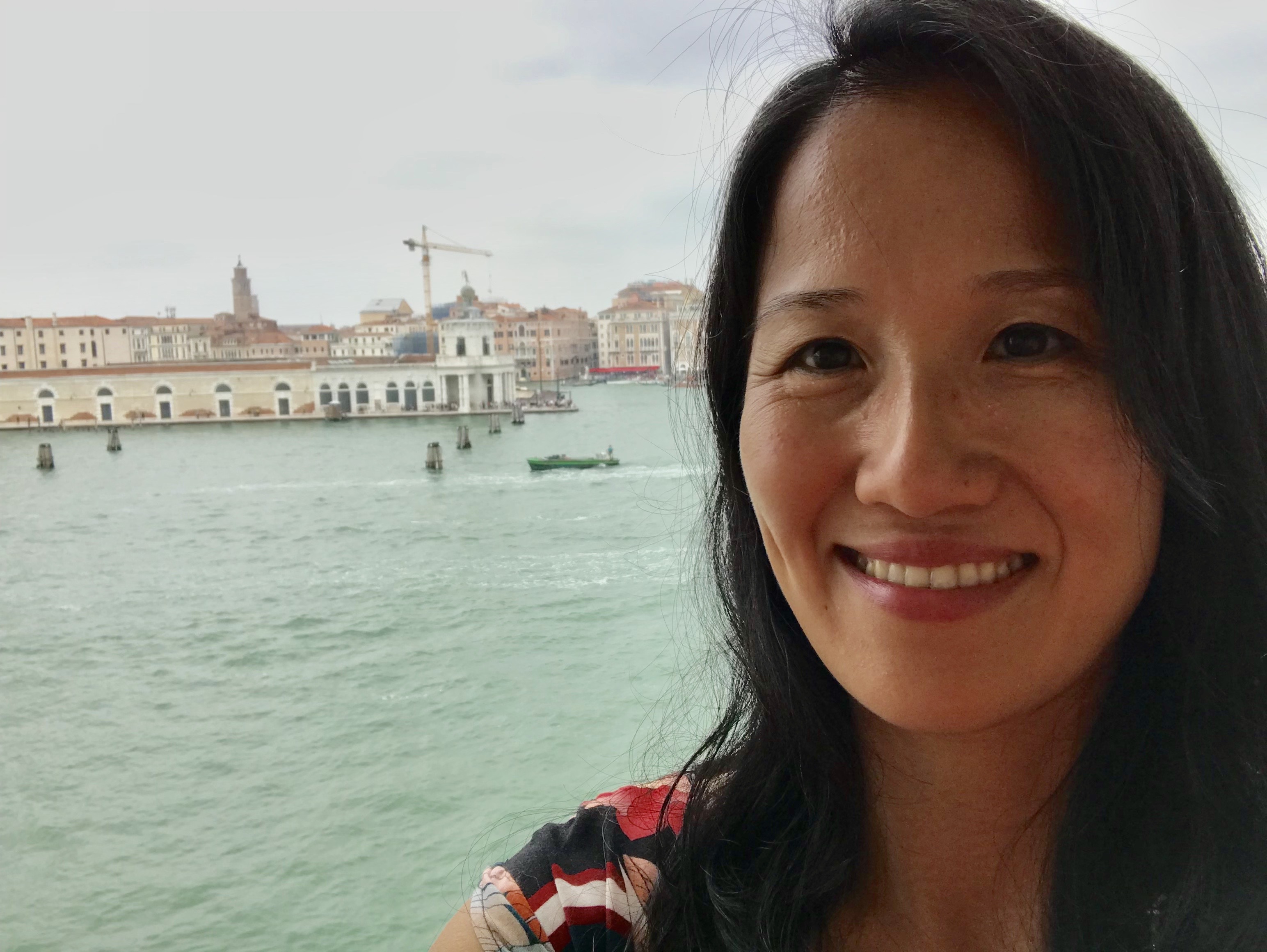
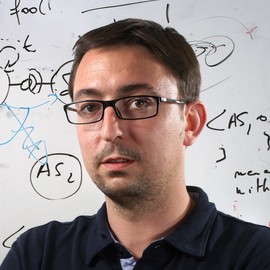
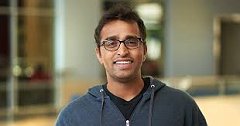
Deian Stefan is an Associate Professor at the University of California San Diego (UCSD) in the Department of Computer Science and Engineering . His research spans security , programming languages , and systems , with a focus on building principled and practical secure systems. He has served as a co-founder and Chief Scientist at Intrinsic (acquired by VMWare) and contributed to standards bodies like the W3C WebAppSec and Node.js Security Working Groups . His research interests include: Secure Systems : Web frameworks, browser designs, sandboxing, runtime systems Language-Based Security : Constant-time programming, memory safety, information flow control Verification : Security verification, static/symbolic analysis tools WebAssembly and JavaScript JITs security Deian Stefan has received multiple scientific awards , including several Distinguished Paper Awards at venues like POPL, ICFP, and USENIX Security, as well as the IEEE Cybersecurity Award for Practice (2022) and CSAW 2020 First Place for Applied Research. He has taught courses on Computer Security (CSE 127, CSE 227) and advanced topics in Building Secure Systems (CSE 291) using Rust, WebAssembly, and blockchain security. His work has been supported by collaborations with industry and academia, including projects like RLBox and COWL .
Cezary Kaliszyk is a Professor in Theoretical Computer Science at the University of Melbourne, previously affiliated with the University of Innsbruck. He is actively involved in research and leadership in formal methods, automated reasoning, and machine learning for theorem proving. Research Interests: Automated Reasoning and Interactive Theorem Proving Formalized Mathematics and Proof Automation Machine Learning for Logic and Theorem Proving Integration of AI with Proof Assistants (Coq, Isabelle) Dependent Type Theory and Higher-Order Logic His recent publications (2023–2025) span topics in dependently-typed logic, learning for proof guidance, formalization of surreal numbers, and blockchain-based formal methods. The works consistently bridge formal logic with machine learning, emphasizing automation, explainability, and cross-system integration. Scientific Leadership and Projects: Principal Investigator, ERC project FormalWeb3 Lead Developer, CoqHammer , Tactician , ProofWeb WG5 Leader, COST Action EuroProofNet (until 2024) Contributor to HOL(y)Hammer , Isabelle Enigma He supervises multiple PhD students and has mentored several graduates in formal methods and AI. He teaches courses in theoretical computer science, logic, and machine learning. There are no listed awards in the provided data, but his extensive publication record and project leadership indicate significant recognition in the field. Labs and Research Groups: He leads a research group focused on formal methods and learning-based reasoning, collaborating internationally on projects involving proof automation, formal libraries, and semantic technologies.
Pauline Lemaigre-Gaffier is a Lecturer in Modern History at the University of Versailles Saint-Quentin-en-Yvelines (UVSQ), affiliated with the Institute of Cultural and International Studies (IECI) and the Department of History. She co-leads the VoCriPat project (2023–present) and participates in the DIM PAMIR committee (2022–present) and ANR ACADEC project (2022–present). Her research focuses on European court societies (festivals, ceremonies, urban interactions) Cultural history (material culture, documentary writings) Political history (public finance, administrative practices) Economic history (privileges and businesses) Heritage sciences Her 15 most recent publications explore topics like archival practices in early modern Europe French court administration of the arts economic networks of privileged enterprises royal household logistics spanning 2015–2024, with upcoming works on economic history and heritage sciences in 2025. She has received the Benabou Prize (2012) and was a Thiers Foundation scholarship holder (2009–2010) . Her career includes editorial roles at Entre-Temps (2021–2023) and educational management for the 'Music, Performance, and Heritage' degree (2014–2016). She collaborates with institutions like the Centre de recherche du Château de Versailles and the Heritage Sciences Foundation.
Paolo D'Iorio is an Exceptional Research Director at the Centre National de la Recherche Scientifique (CNRS) working at the École Normale Supérieure in Paris, where he heads the "Nietzsche and his time" and "Digital Humanities" research teams. He previously served as director of the Institute of Modern Texts and Manuscripts (ITEM) from 2014 to 2023 and currently serves as president of the international HyperNietzsche research group, which brings together 81 Nietzsche scholars from 16 countries as well as representatives from 10 major national scientific associations devoted to Nietzsche studies. Holding a doctorate in philosophy from the Scuola Normale Superiore in Pisa and qualified to direct research at the University of Nice, D'Iorio has built a distinguished career spanning traditional Nietzsche scholarship and digital humanities innovation. His academic journey includes leading a multidisciplinary research group at the University of Munich (2002-2005) after receiving the Sofja Kovalevskaja Prize, and affiliations with the University of Oxford (2007-2011) as a visiting fellow at the Oxford Internet Institute. His research focuses on two complementary domains: (1) the interpretation of Nietzsche's philosophy, particularly examining cosmology, the eternal return, Greek philosophy, gnoseology, and the genesis of the free spirit philosophy; and (2) scholarly publishing on the Web, where he has pioneered digital infrastructures for humanities scholarship. He is the founder and editor of Nietzsche Source, providing both facsimile and critical digital editions of Nietzsche's complete works. D'Iorio's publications reflect his dual expertise, with 120 publications including 21 books, 2 digital editions of Nietzsche's complete works, 92 articles, and 6 reviews published in 10 languages across 14 countries. His work shows a consistent trajectory from traditional Nietzsche studies toward increasingly sophisticated digital scholarly infrastructure. Among his significant honors are the Sofja Kovalevskaja Prize from the Alexander von Humboldt Foundation and the German Ministry of Research, and recognition in the European Young Investigator Award competition. He has supervised numerous doctoral students and postdoctoral researchers throughout his career. Currently leading major research initiatives including "Tristes Tropiques Numérique" and "Anatole France Source," D'Iorio continues to bridge traditional humanities scholarship with cutting-edge digital methods, maintaining an active teaching presence through seminars at École Normale Supérieure and international visiting professorships.
Ana Paulina Lee is an Assistant Professor of Writing and Digital Humanities in the Comparative Literature, English, and Creative Writing Department at the American University of Paris. She joined AUP in 2025 after teaching Latin American literature and culture at Columbia University for eight years and serving as a Mellon Postdoctoral Fellow at Tulane University. Her interdisciplinary scholarship bridges literature, history, law, and urban studies with particular focus on marginalized narratives in the Americas. Ph.D. from University of Southern California M.A. from New York University B.A. from Binghamton University Professor Lee's research examines how stories—archival, fictional, oral—shape legal imagination, social life, and urban experience in the Americas. She specializes in the intersections of magic, law, and literature in Latin America, with particular focus on Asian and African diasporas in Brazil. Her work traces how narrative functions as both historical record and catalyst for social transformation, exploring themes of slavery, emancipation, colonial legacies, and urban memory. She approaches these topics through interdisciplinary lenses combining literary analysis with histories of labor, migration, and performance. Lee's recent publications reveal a consistent focus on marginalized narratives and their impact on social structures. Her scholarship connects legal history with cultural production, showing how magical thinking and narrative practices shape urban spaces and social relations. Works like 'Urban Sorcery, Segregation, and Spectacle in Twentieth-Century Rio de Janeiro' and 'Black Magic City' demonstrate her innovative approach to understanding the relationship between occult logics and legal frameworks in Brazilian contexts. Her research on diasporic communities, particularly Chinese and Japanese experiences in Latin America, contributes significantly to transnational and comparative race studies. David B. Larson Fellowship in Health and Spirituality, Kluge Center, United States Library of Congress (2025-2026) National Endowment for the Humanities Fellowship (2025) Social Sciences Research Council, Inaugural Recipient of Interdisciplinary Projects in the Social Sciences (2020-2023) Institute for Ideas and Imagination Fellowship, Columbia University in Paris, France (2021-2022) Provost's Tsunoda Senior Fellowship, Visiting Scholar, Waseda University, Tokyo, Japan (2019) Heyman Center Fellow, The Heyman Center for the Humanities, Columbia University (2017-2018) Fulbright, Lisbon, Portugal (2013-2014) Professor Lee's scholarly activities have been generously supported by major research grants from the National Endowment for the Humanities, the Social Sciences Research Council, and the Library of Congress. Her work demonstrates a commitment to interdisciplinary approaches that bridge humanities and social sciences, particularly through projects examining intersections of race, migration, and cultural production in the Americas. Her publication 'Socially Engaged Oral History Pedagogy Amid the COVID-19 Pandemic' indicates a strong commitment to innovative teaching methods and community-based research. While specific details about current advisees aren't provided, her research program suggests engagement with graduate students interested in diaspora studies, urban history, and literary-cultural analysis. Though not explicitly mentioned in the available information, Professor Lee's research on urban spaces, magic, and law in Brazil likely involves collaborative work with scholars across disciplines. Her participation in centers like the Institute for Ideas and Imagination at Columbia University suggests engagement with interdisciplinary research communities focused on global cultural production and social transformation. Her work contributes to ongoing conversations about how narrative practices shape legal frameworks and social structures in the Americas, particularly regarding racial formation and diasporic experiences.
Bernhard Rumpe is a Professor and Chair of Software Engineering at the Department of Computer Science 3, RWTH Aachen University, Germany. He leads a research group focused on model-based software engineering, domain-specific languages, and digital twins, with strong industrial collaborations and applications in embedded systems, AI, IoT, and autonomous vehicles. His research centers on improving software development through model-driven engineering, generative techniques, and formal modeling using UML, SysML, and the MontiCore language workbench. Key interests include digital twins, variability modeling, model composition, and the integration of cyber-physical systems with information systems. The recent publications highlight a consistent focus on model-driven digitalization, language workbenches, and system integration. Trends show increasing emphasis on digital twins in manufacturing and societal systems, formal verification of model transformations, and educational applications of model-driven low-code platforms. His work bridges theoretical foundations with industrial applicability. Keynote Speaker, OOPSLE 2025 General Chair, GPCE 2023 Session Chair, MODELS 2020 Program Committee Member, SLE, GPCE, ICSE, ECMFA He advises master’s and doctoral students and leads a vibrant research team that has successfully executed over 100 research projects. His group develops foundational tools like MontiCore and applies them in industrial contexts, contributing to software quality and developer efficiency. No formal grants are listed, but sustained project funding is evident. He is involved in several research labs and teams centered around the Software Engineering Chair at RWTH Aachen, focusing on language workbenches, model-driven development, and digital twin systems. The team actively contributes to open research through publications, tools, and industrial partnerships.
Benoit Combemale is a Full Professor of Software Engineering at the University of Rennes , currently on leave as Research Director at Inria . He is affiliated with the DiverSE research team (joint between IRISA and Inria) and the SM@RT team at IRIT. He serves as Editor-in-Chief of the Springer-Nature journal Software and Systems Modeling (SoSyM) and holds leadership roles in academic conferences like ACM SIGPLAN Intl. Conference on Software Language Engineering and MODELS . Education : Habilitation (2015) and PhD (2008) in Software Engineering from University of Rennes and University of Toulouse, respectively. Research : Focuses on Model-Driven Engineering , Digital Twins , and ICT for Sustainability , with applications in cyber-physical systems, scientific computing, and industrial systems. Recent Publications highlight trends in digital twin modeling, energy-aware software engineering, polyglot programming, and formal verification for heterogeneous systems. His scientific awards include: Editor-in-Chief of SoSyM Steering Committee member of ACM SIGPLAN Intl. Conference on Software Language Engineering General Chair for ICT4S 2023 and MODELS 2016 PC Chair for MODELS 2024, ECMFA 2019, and SLE 2014 Coordinator of Dagstuhl Seminars and Bellairs workshops Advising includes 30+ students in topics ranging from digital twin engineering to software testing and language design. He leads the GEMOC Initiative and contributes to projects like SciHook and GEMOC Studio .
Kiwon Um is a tenured Assistant Professor in the Computer Graphics group at Télécom Paris, France, since October 2019. He focuses on physics-based simulations and data-driven approaches using deep learning, with an emphasis on human visual perception in computer graphics and engineering applications. Education: Ph.D. in Computer Science and Engineering from Korea University His research explores effective simulation of natural phenomena through refined data utilization and develops reliable data acquisition methods for machine learning. He also investigates perceptual evaluation of simulations to advance numerical method understanding. Recent work trends include: (1) turbulence modeling with machine learning integration, (2) elastic material simulation stability, (3) fluid dynamics optimization, and (4) differentiable physics frameworks. His publications range from 2008 to 2025, covering topics like SPH solvers, porous shell simulations, and numerical method validation.
Gaël Thomas is a Senior Researcher at Inria Saclay and a part-time Professor at École Polytechnique. He leads the Benagil team, a joint initiative between Inria and Telecom SudParis/IP Paris. His research focuses on virtualization, operating systems, concurrency, and runtime systems, with an emphasis on improving system performance and safety. He holds a PhD and Habilitation from Sorbonne Université and has extensive academic experience, including roles as a Professor at Telecom SudParis (2014–2023) and an Associate Professor at UPMC (2006–2014). Education: PhD in Computer Science, 2005, UPMC Sorbonne Université Habilitation à Diriger les Recherches (HDR), 2012, UPMC Sorbonne Université MSc in Computer Science, 2001, MIAIF Program Research Interests: Gaël’s work spans virtualization techniques, NUMA architecture optimization, garbage collection scalability, lock-free algorithms, and persistent memory systems. He has pioneered solutions like J-NVM for Java NVMM and NumaGiC for big data systems. Grants & Awards: Principal Investigator of DiVA (PEPR Cloud, 868k€) and Maplurinum (ANR PRC, 184k€) Contributions to VMKit and infra-web-cours development Labs/Teams: Benagil Team (Inria/Telecom SudParis) focuses on systems and runtime optimization.
Pierre Marquis is a distinguished Professor of Computer Science at Université d'Artois , affiliated with the Centre de Recherche en Informatique de Lens (CRIL-CNRS, UMR 8188) . Since December 2024, he has served as the vice-president for research and doctoral studies at Université d'Artois. His research focuses on Artificial Intelligence , particularly knowledge representation , automated reasoning , inconsistency handling , and knowledge compilation , with recent emphasis on Explainable AI (XAI) . Research Interests: Marquis's work spans foundational AI topics including abduction , induction , belief revision , and preference modeling . He has pioneered knowledge compilation techniques to optimize AI tasks and developed frameworks for reasoning under inconsistency through paraconsistent logics and argumentation. His EXPEKTATION chair (2020-2026) under France's national AI program drives his current focus on interpretable machine learning models. Scientific Awards: 2025: CNRS Silver Medal 2022: AAIA Fellow 2017: Senior Member of Institut Universitaire de France (IUF) 2009: EurAI (ECCAI) Fellow Doctoral Students: Mentoring Clément Lens (critical patient monitoring systems) and Mehdi Sabiri (data-knowledge integration for AI explanations). Collaborating with students like Louenas Bounia (formal XAI models) and Romain Wallon (pseudo-Boolean constraints). Grants & Projects: Leads the EXPEKTATION research chair (2020-2026) and participates in ANR PING/ACK (2019-2023), ANR THEMIS (2021-2025), CNRS IRP MAKC (2020-2024), and H2020 TAILOR (2020-2024). Previously led PIA4 MAIA (2023-2032) and Pint (2022-2023). Labs & Teams: Active in CRIL-CNRS, contributing to PyXAI (Python XAI library) and d4 (model counting), while mentoring teams on consensus belief merging and dynamic constraint processing .
Antoine Doucet is a Full Professor at the University of La Rochelle, where he teaches in the Computer Science department of the University Institute of Technology (IUT). He conducts his research at the Computer Science, Image and Interaction Laboratory (L3i) within the 'Images and Content' team, which he has led since 2015. He is also a member of the Franco-Vietnamese laboratory ICTLab and serves as Director of the ICT Department at the University of Science and Technology of Hanoi since 2016. His research focuses on information retrieval, natural language processing, text mining, and artificial intelligence, with emphasis on automatic analysis of text in all forms across languages. His work prioritizes generic methods that work across languages without relying on language-specific linguistic resources. This approach is particularly valuable for under-resourced languages and noisy texts from sources like social media or OCR output. As coordinator of the Horizon 2020 NewsEye project, he led efforts to improve access to European historical newspapers through semantic enrichment and advanced search capabilities. His research has practical applications in epidemic surveillance, document fraud detection, and historical content analysis. The NewsEye project involved 11 teams across Europe, including 3 national libraries and multiple research groups. Best paper award from IMIA Yearbook 2016 (among 1,272 candidates) Best paper award at HCI International with Ilona Nawrot Press coverage for ACL 2013 paper in major publications Recipient of French scientific excellence award (Prime d'Excellence Scientifique) Doucet actively supervises PhD and Master's students, with recent advisees including Chloé Artaud (Document fraud detection), Paul Martin (Photograph Time-Stamping), Ilona Nawrot (Temporal and Multilingual Text Analysis), and Gaël Lejeune (Multilingual Epidemic Surveillance). His research has been funded through multiple projects including ANR Digistory, AmeliOCR, PHC Nusantara, and USTH SWARMS. He has also coordinated significant European projects like NewsEye and Embeddia. At L3i, he leads a research group of approximately 40 persons focused on Images and Digital Content. His work bridges theoretical advances in multilingual text processing with practical applications in historical document analysis, epidemic surveillance, and document security.
William Marx is a Professor of Comparative Literatures at the Collège de France since 2019. Born in Villeneuve-lès-Avignon in 1966, he studied at the École normale supérieure and earned his doctoral degree from the University of Paris-Sorbonne in 2000. He has taught at universities in France, the United States, and Japan, and has been recognized with numerous prestigious awards including membership in Academia Europaea and honors from the Académie française. His research focuses on the long-term evolution of aesthetic systems and the status of literature from Antiquity to the present day, examining how these vary across cultures. He has made significant contributions to genetic criticism and manuscript editing, particularly through his work on Paul Valéry and T.S. Eliot. Marx's scholarly work demonstrates a consistent trajectory exploring the nature of literature, literary canons, and mental libraries. His publications span from Birth of Modern Criticism (2002) to his most recent Libraries of the Mind (2025), revealing a deep engagement with how literature functions across cultural boundaries and historical periods. His research shows particular interest in defamiliarization processes and transcultural literary systems. His scientific recognition includes: Member of Academia Europaea Laureate of Académie française Laureate of Académie des sciences morales et politiques Chevalier de l'ordre des Arts et des Lettres Honorary member of Institut universitaire de France Laureate of International Francqui Professor chair Marx regularly delivers lectures worldwide, engaging with institutions across Europe, Asia, and Africa on topics related to world literature and comparative approaches to textual analysis. His work bridges traditional literary scholarship with innovative approaches to understanding literature's global dimensions.
Théo Winterhalter is a researcher at INRIA Saclay and a member of the Laboratory of Mathematics and Computer Science (LMF) at ENS Paris-Saclay . He previously held a postdoctoral position at the Max Planck Institute for Security and Privacy (MPI-SP) and completed his PhD at the Gallinette research team in Nantes, supervised by Nicolas Tabareau and Matthieu Sozeau. Education PhD in Computer Science, 2017–2020, University of Nantes (Gallinette/Inria) MSc in Computer Science, École Normale Supérieure de Rennes Research interests include type theory , proof assistants , formal verification , and dependent types . He actively works on improving the safety and usability of proof assistants like Rocq (formerly Coq), focusing on rewrite rules, erasure, and cryptographic verification. His work often involves formalizing results within proof assistants and developing tools for verified programming. Contributions span conferences like POPL, ICFP, CPP, and TYPES. Recent projects include foundational verification of high-speed cryptography ( The Last Yard ), type-preserving rewrite rules ( The Rewster ), and modular cryptographic proofs ( SSProve ). His publications emphasize formal methods and computational assumptions in type theory. Teaching includes the Proof Assistants course at MPRI , a joint master’s program. He co-supervises PhD students like Yann Leray and has mentored interns on topics such as erased data implementation and Autosubst tooling. Labs and Teams : Deducteam (INRIA Saclay) – Developing deduction tools and formal verification LMF (ENS Paris-Saclay) – Laboratory for Mathematics and Computer Science Gallinette (former) – Team at INRIA Nantes MetaCoq Project – Collaborative effort on Coq verification
Aravind Machiry is an Assistant Professor at Purdue University's Electrical and Computer Engineering Department and a founding member of the Purdue Systems and Software Security (PurS3) Lab . His research focuses on system security, particularly vulnerability detection, prevention, and secure system development using static/dynamic program analysis, fuzzing, type systems, and machine learning. Designing practical solutions for software and embedded system security Recipient of NSF CAREER and Amazon Research awards Active participant in SPLASH 2025 as OOPSLA Review Committee member His recent work includes automated vulnerability detection in embedded software, spatial memory safety enhancements, and security analysis of GitHub workflows. He has received recognition for his research through multiple distinguished paper awards and industry funding. Selected scientific awards include NSF CAREER Award (2024) Amazon Research Award (2022) Test of Time Award at FSE 2023 for DynoDroid Distinguished Paper Award at OOPSLA 2022 for 3c Qualcomm Innovation Fellowship (2025) His research team has developed frameworks like ARGUS for taint analysis of CI/CD workflows and FuzzUEr for UEFI interface fuzzing, discovering hundreds of critical vulnerabilities in open-source projects and thousands of command injection flaws in GitHub repositories.
Thomas Degueule is a CNRS researcher in the Software Engineering group at LaBRI (Bordeaux, France). His research focuses on software evolution , modularity , and comprehension , with a particular emphasis on software libraries , APIs , software ecosystems , and domain-specific languages (DSLs) . Prior to his current role, he worked as a postdoctoral researcher at CWI (Amsterdam) and earned his PhD at IRISA (Rennes, France). Research Themes : Software evolution, API analysis, dependency management, empirical software engineering, DSL engineering Projects : ANR JCJC ALIEN (PI), H2020 CROSSMINER (WP leader), ALE (associate member), LEOC Clarity (member), ANR INS GEMOC (member), ITEA2 MERgE (member) Software Tools : Roseau, Maracas, BreakBot, Melange, Eclipse GEMOC Studio, K3, Alex, Scava His recent publications highlight trends in API breaking changes , dependency evolution , DSL interoperability , and automated software analysis (see articles list for details). He also contributes to software education through tools like MOON and Immediate Feedback for Jupyter Notebooks. Thomas has supervised PhD students including Gustave Monce (University of Bordeaux), Lina Ochoa (now assistant professor at Eindhoven University), Corentin Latappy (post-doc at University of Bordeaux), and Christophe Casseau (lecturer at University of Bordeaux). He actively participates in academic service, serving on program committees for conferences such as ICSE , ASE , ICSME , ISSTA , and SLE , and organizing workshops like SLEBoK and MLE 2021 .