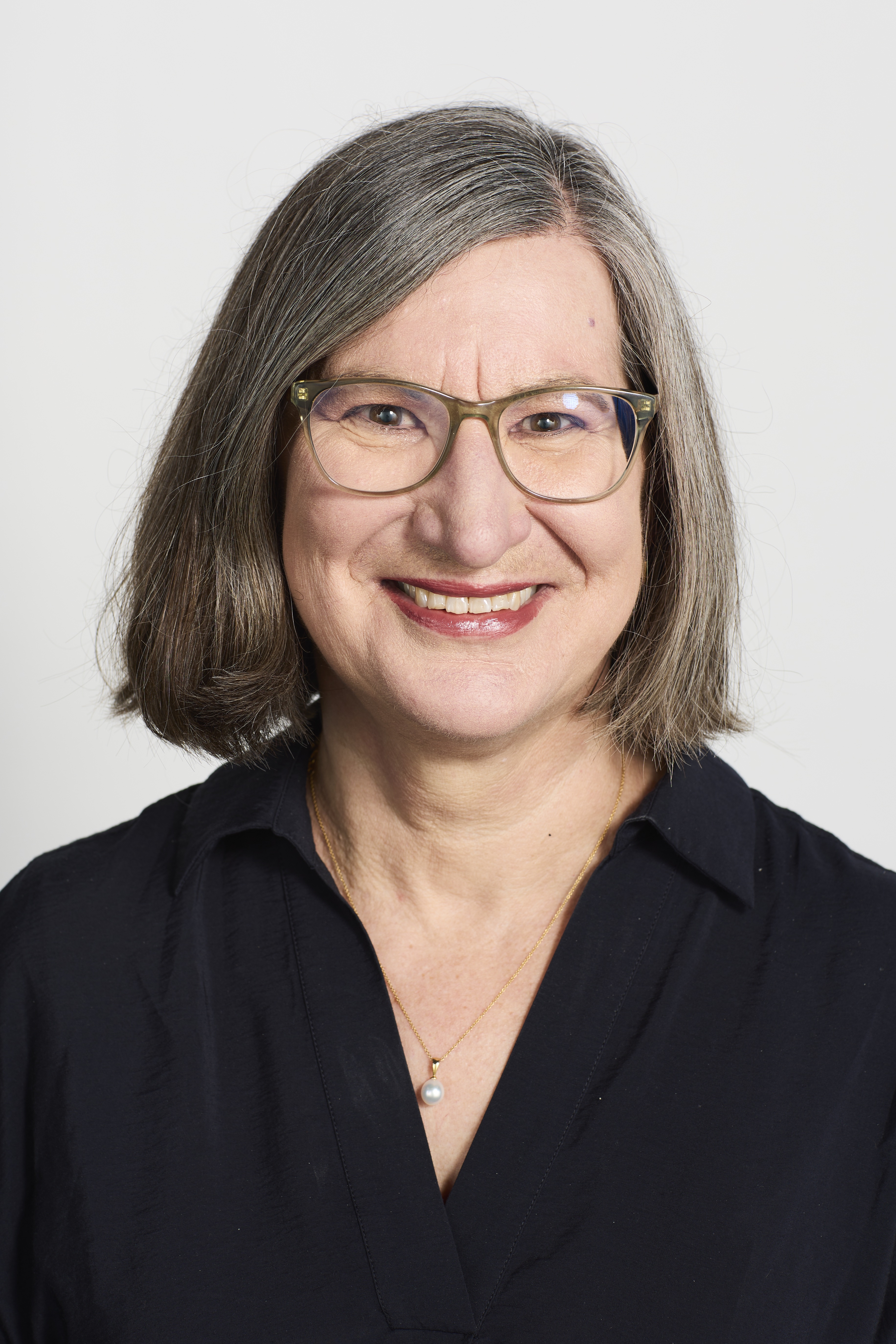
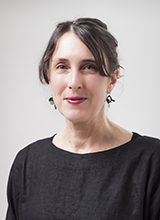
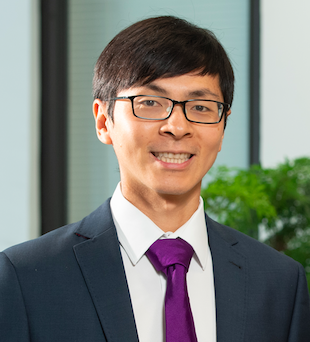
Professor Kathy Bowrey is a leading academic in Intellectual Property Law at UNSW Sydney's Faculty of Law. Her work explores laws shaping knowledge creation, technology, and culture, with expertise in IP, Indigenous rights, and open research advocacy. She holds a Doctor of Juridical Studies from the University of Sydney and a BA LLB from Macquarie University. Her research focuses on historical and contemporary IP frameworks, including their impact on creators, Indigenous communities, and global innovation systems. Notable projects include the ARC-funded 'Producing, Managing and Owning Knowledge in the 21st Century University' (2019–2022), which shaped Australia's open research policies. Awards include the 2022 ANZLHS Book Prize for *Copyright, Creativity, Big Media & Cultural Value* and fellowships at the State Library of NSW and Museum of Applied Arts and Sciences. She co-authored *Adventures in Childhood* (2023), examining IP in toy and media industries, and *David Unaipon* (2023), exploring Indigenous innovation. Professor Bowrey co-leads the International Society for the History and Theory of Intellectual Property (ISHTIP) and advises on national research policies. Her grants include ARC Discovery Projects on Australian copyright history and IP commercialization.
Robyn Fox is an Associate Lecturer in the School of Education and Tertiary Access at the University of the Sunshine Coast (UniSC), Australia, teaching in Bachelor of Education (Secondary)/Bachelor of Recreation and Outdoor Environmental Studies programs with emphasis on foundational outdoor studies and paddling-based engagement methods. Her educational qualifications are: MAIntEd, Endicott College MA, DipEd, LaTrobe University BA, LaTrobe University Her research centers on sustainability integration and ecological literacy in outdoor education, driven by her planned PhD investigating embedded sustainable practices. She champions experiential learning through natural environments to foster environmental consciousness and climate-responsive pedagogy. Analysis of her 2022-2025 publications reveals dominant themes in climate change education within outdoor contexts, featuring innovative approaches like near-peer teaching and nature journaling while addressing eco-anxiety and Indigenous knowledge systems. Her scholarship consistently advocates for curriculum transformation toward ecological stewardship and climate action. Robyn actively involves students in community initiatives: Collaborated with Thai army and Regent’s School students to rebuild tsunami-damaged homes in Thailand (2004) Established sports programs between Khartoum International Community School and local institutions in Sudan Coordinated orphanage library setup with Luanda International School in Angola Current participant in Alexandra Headland Community Association’s foreshore regeneration projects
Professor George Buchanan is a leading researcher in human-computer interaction and digital libraries at RMIT University . His work bridges information science, digital humanities, and health informatics, focusing on usability in sensitive contexts like healthcare and misinformation. Deputy Dean, Research at RMIT University Former Director, University of Melbourne iSchool Research Interests: Digital information interaction Health and aging informatics Disinformation analysis Mobile interface design Digital library systems Key Contributions: Developed mobile web usability benchmarks, spatial hypertext tools, and thermal feedback interfaces. Currently seeking PhD students for 2025 projects on digital browsing and view change dynamics. Awards: Over twenty best paper awards and Honorary Life Fellow of the Royal Society of Arts. Advising: Accepting Masters/PhD supervision in information interaction and digital health domains.
Vijini Mallawaarachchi is a Research Fellow in Bioinformatics at Flinders University's Flinders Accelerator for Microbiome Exploration (FAME). His research focuses on developing computational methods for metagenomic analysis, particularly viral genome recovery from metagenomes. He holds a PhD in Computer Science from the Australian National University (2022) and a BSc in Computer Science and Engineering (Honours) from the University of Moratuwa, Sri Lanka (2018). Education: Doctor of Philosophy (Computer Science), Australian National University, 2018–2022 Bachelor of Science (Computer Science & Engineering, Honours), University of Moratuwa, 2014–2018 Research Interests: Metagenomics, algorithms for genome recovery, bacteriophage discovery, machine learning applications in bioinformatics, and software engineering for computational biology. His work emphasizes leveraging assembly graphs and computational models to analyze microbial communities and viral genomes. Grants & Awards: 2025: National Computational Merit Allocation Scheme Grant (Co-CI) - A$412,000 2025: ARC Discovery Projects Grant (Co-CI) - A$685,781 2024: Outstanding PhD Thesis Award (ABACBS) 2023: Australian Society for Microbiology Early Career Award Professional Engagement: Active member of ISMB, ISVM, ACM, IEEE, ABACBS, ASM, and RSE AU/NZ. Supervises HDR and Honours students in bioinformatics and computational biology. Labs & Tools: Leads projects at FAME, developed tools like GraphBin, Phables, and ConDiGA for metagenomic analysis. Collaborates on open-source initiatives like the cogent3 Python APIs.
Ben Mather is a Research Fellow in the School of Geosciences at The University of Sydney, specializing in geodynamic modeling and Earth system processes. He leads the EarthByte Group's efforts to integrate numerical models with geophysical data, focusing on volcanic systems, groundwater dynamics, and critical mineral exploration. His work bridges geoscience and climate change mitigation strategies, influencing national and international policy discussions. Education: PhD in Earth Science, The University of Melbourne (2016) Bachelor of Science (Hons), Monash University (2011) Diploma of Film and Television, Monash University (2010) Research Interests: Enigmatic volcanic activity patterns and their tectonic drivers Groundwater flow pathways under climate extremes Carbon sequestration via tectonic processes Development of open-source geodynamic tools like Stripy and PyCurious Notable Projects: Project Volcanoes Downunder: Investigating volcanic chains in the Tasman Sea Groundwater modeling for southeastern Australia's aquifers Thermal structure studies in Ireland and Australia using Bayesian inversion His computational frameworks, built on PETSc and Python, enable large-scale simulations of Earth's thermal and hydrological systems. Mather actively engages in public science communication through media interviews and educational workshops.
Associate Professor Andrea Bubenik is an expert in Renaissance and Baroque art, specializing in early modern visual culture. She holds dual affiliations at the University of Queensland: as an Associate Professor in the School of Communication and Arts' Department of Art History, and as an affiliate of three interdisciplinary research centers (Centre for Architecture, Theory, Criticism and History; Centre for Critical and Creative Writing; Research Centre in Creative Arts and Human Flourishing). Her research focuses on printmaking, art-science intersections, court cultures, and reception histories of iconic artworks. She served as Director of the UQ Node of the ARC Centre of Excellence for the History of Emotions (2019–2022). Her recent publications include monographs like *Reframing Albrecht Dürer* (2013, AAANZ award winner) and edited volumes such as *The Persistence of Melancholia in Art and Culture* (2019). She has curated major exhibitions like *Ecstasy: Baroque and Beyond* (2017) and *Five Centuries of Melancholia* (2014), both at the UQ Art Museum. Public engagement includes annual art history courses at QAGOMA and international lectures in Australia, Canada, and Europe. Education: PhD in Art History (not explicitly detailed, but extensive international fellowships at institutions like the Warburg Institute and the Huntington Library) Teaching: Supervised over 20 Honours, MPhil, and PhD students; developed an undergraduate Venice study abroad program Labs/Teams: Collaborates with the Digital Futures Lab and multiple art institutions Her research grants include funding from AIAH/AAANZ for her upcoming monograph *Living Pictures: The Renaissance Artist-Scientist*, exploring Dürer and Leonardo’s natural studies. Awards include the AAANZ Best Book Prize (2014).
Professor Jenny Mortimer is a Professor of Plant Synthetic Biology at the University of Adelaide's School of Agriculture, Food and Wine, and Interim Deputy Director of The Waite Research Institute. She holds affiliate roles at Lawrence Berkeley National Laboratory and the Joint BioEnergy Institute (JBEI) in the USA. Her research focuses on engineering plant cell walls for sustainable biofuels and crops, with a particular emphasis on synthetic biology applications for space agriculture (via the ARC Centre of Excellence Plants for Space) and resilient field crops (ARC Training Centre for Future Crops Development). Education: PhD from Cambridge University, followed by postdoctoral work in the UK, Japan (RIKEN), and the USA (Berkeley Lab). Research interests span plant cell metabolism, complex glycosylation, and bioeconomy development. Projects include reengineering plant cell walls for biofuel production (JBEI), enhancing plant-microbiome interactions (US DoE-funded m-CAFES), and developing Australian feedstocks for biojetfuel (ARC Research Hub). Key awards include World Economic Forum Young Scientist (2016/17) and 2023 Australian Society of Plant Sciences representative for 'Science Meets Parliament.' She is a handling editor for Plant Cell Physiology and The Plant Journal, and actively engages in public outreach. Grants include leadership in ARC-funded initiatives and collaborations with the US DoE. Supervision opportunities are available for Honours projects focusing on duckweed growth analysis and glycosyltransferase characterization. Labs/teams: The Waite Research Institute, JBEI, and ARC-funded collaborations.
Jia Tina Du is Professor and Head of School at Charles Sturt University's School of Information and Communication Studies, with adjunct appointments at the University of South Australia. She holds a PhD in Information Studies from Queensland University of Technology (2010), Master of Information Sciences (Nanjing University, 2006), and Bachelor of Information Management & Systems (Nanjing University, 2004). Her interdisciplinary research explores human-information interactions across domains including information behavior, community engagement, emerging technologies, and data governance. Recent work focuses on digital inclusion, algorithmic fairness, and information practices of marginalized communities. Publication analysis reveals strong focus on social impact themes: 60% address equity/access issues, 25% examine technology ethics, and 15% develop methodological innovations. Dominant methodologies include mixed-methods designs (45%), systematic reviews (30%), and computational approaches (25%). Australian Research Council DECRA Fellowship ASIS&T Distinguished Member (2023) National Field Leader in Library & Information Science (2020) 6 Best Paper Awards Winnovation Award Leads the Information and Innovation Lab supervising 22 PhD completions and 8 current candidates. Research has attracted AUD$1.9M+ in competitive funding. Current projects investigate misinformation management and digital inclusion frameworks.
Professor Dinh Phung is the Head of the Department of Data Science & AI at Monash University. His research focuses on machine learning, deep learning, generative AI, and robust AI systems. He has authored over 250 publications, with applications in NLP, computer vision, digital health, and cybersecurity. Phung holds a PhD and BSc(Hons) in Computer Science from Curtin University. He leads major projects like 'Can Machines Unlearn?' and 'Trustworthy Generative AI', funded by the Australian Research Council and the Department of Defence. Education: Doctor of Philosophy, Computer Science, Curtin University (2005) Bachelor of Science (Honours), Computer Science, Curtin University (2001) Research Interests: Machine learning, deep learning, and generative models Optimal transport and Bayesian methods Robust and trustworthy AI Applications in digital health, cybersecurity, and autism research Key Projects (2023–2029): Can Machines Unlearn? (2025–2029): Safety in AI Trustworthy Generative AI (2024–2026): Foundation models Robust Machine Learning via Optimal Transport (2023–2025) Awards and Grants: Australian Research Council grants for AI safety and robustness Department of Defence funding for robust learning systems Collaborations: Global partnerships in AI ethics, cybersecurity, and healthcare. Active advisory roles, including with the Victorian Parliamentary Library.
Dr Kirstin Mills is Senior Lecturer and Director of the Master of Research and Graduate Diploma of Research in the Faculty of Arts at Macquarie University. She holds a PhD and a BA (Hons, First Class) in Literature from Macquarie University, with her doctoral thesis entitled "Imagined Worlds: the Role of Dreams, Space, and the Supernatural in the Evolution of Victorian Fantasy" (2014). She has led the design and implementation of innovative graduate research programs including the Graduate Diploma of Research which launched in 2025. Dr Mills earned her PhD in English Literature from Macquarie University with a thesis examining dreams, space, and the supernatural in Victorian fantasy literature. Her undergraduate honors work focused on psychology and epic fantasy in Beowulf and Tolkien. She maintains active involvement in academic leadership through positions on the University's Graduate Research Management Committee and as Deputy Chair of the Faculty of Arts Research Training Committee. Dr Mills' research specializes in Gothic and fantastic literature with particular focus on the long nineteenth century and its twenty-first century adaptations. Her work explores intersections between Gothic literature and historical, cultural, and technological contexts, examining representations of space, the supernatural, and the sciences of the mind. This includes studies of nineteenth-century theories of dreams and consciousness, Victorian mathematical concepts of the fourth dimension, digital adaptations of Gothic literature, Gothic animal studies, and gender in Gothic narratives. She has published on authors ranging from Samuel Taylor Coleridge and Mary Shelley to contemporary digital vampire texts. Analysis of Dr Mills' recent publications reveals a strong interdisciplinary approach connecting Gothic studies with science, psychology, and digital media. Her work spans Victorian Gothic and the occult, Frankenstein and undead sciences, and theories of dreaming in Romantic literature. She consistently examines how literature engages with scientific concepts of life, death, and consciousness, demonstrating expertise in both historical context and contemporary adaptations. Editor of "Advances in Nineteenth-Century Research" (Routledge/Taylor and Francis) Series Editor for the "International Nineteenth-Century Studies Association Book Series" with Clemson University Press Board Member of the Australasian Horror Studies Network Board Member of the International Nineteenth-Century Studies Association Dr Mills supervises PhD and Master of Research students in Gothic and fantastic literature and their adaptations. She has developed curriculum for advanced research training units including FOAR8010 Research Writing, FOAR8020 Research Theory, and FOAR8030 Research Methods. Her teaching philosophy emphasizes interdisciplinary connection, creative thinking, and building supportive academic communities. She has presented on research supervision at conferences and contributes to professional development for researchers. Dr Mills maintains active engagement with both academic and public communities. She contributes regularly to Macquarie's "The Lighthouse" magazine with articles on Dracula, Wednesday, Beetlejuice, Jane Eyre, Frankenstein, and Victorian-era TV shows. She provides commentary for newspapers, has been interviewed on ABC and 2SER Radio about ghost stories and adaptations, and speaks at public events including at the State Library of New South Wales. She appears regularly on the "From the Lighthouse" podcast and serves as an accredited Mental Health First Aider and member of Macquarie's Ally Network.
Amir Aryani is an Associate Professor at the School of Business, Law and Entrepreneurship , Swinburne University of Technology . He leads the Social Data Analytics (SoDA) Lab within the Social Innovation Research Institute , focusing on data-driven solutions for health and social challenges. His work involves large-scale cross-institutional projects with international collaborators including the British Library , ORCID , and NIH . Research Focus: Data modeling, real-time analytics, and information retrieval for social-good initiatives Collaborations: CERN, Data Archiving and Networked Services (DANS), and Global Information Systems (GESIS) His research explores data science applications in mental health, community resilience, and sustainable development. Key trends in his publications include: Mapping research to United Nations Sustainable Development Goals Developing hybrid expert-finding models using NLP and graph algorithms Creating interoperable research graphs for cross-platform discovery Assessing social impact of data projects in non-profit sectors Amir is actively involved in PhD supervision and has secured funding from Australian Research Council , National Health and Medical Research Council , and philanthropic foundations . He also contributes to community data projects through the SoDA Lab , which builds tools for social connection analysis and humanitarian response optimization.
Dr. Kylie Budge is a Senior Research Fellow (Urban Living and Society) and Adjunct Researcher at Western Sydney University's Institute for Culture and Society. Her research focuses on intersections of technology, culture, and society, with emphases on digital/material cultures of art/design, cultural institutions, and social media engagement. She holds a PhD from the University of Melbourne (2014) and a Master of Arts in Education from Macquarie University (1998). Her work critically examines how creative producers, audiences, and social media shape urban spaces and cultural narratives. Key themes include visual culture's role in identity construction via platforms like Instagram, and the evolving role of museums in digital engagement. She previously worked in Australia and Japan within universities and the GLAM sector (Galleries, Libraries, Archives, Museums). Publications span journals like Australian Geographer , Continuum , and Curator: The Museum Journal , reflecting interdisciplinary engagement with cultural geography, media studies, and art education. Research highlights include analyzing 'makerspaces' as urban innovation hubs and the agency of museum objects in digital contexts. Dr. Budge serves on the Advisory Board of the Australasian Consortium of Humanities Research Centres, reflecting her commitment to advancing cultural research networks.
Dr. Nektarios Karanikas is an Associate Professor in Health, Safety & Environment at Queensland University of Technology (QUT), Australia, affiliated with the School of Public Health & Social Work. He holds a BSc from the Hellenic Air Force Academy, MSc from Cranfield University, and a Doctorate from Middlesex University. His career spans academia, military service (18 years in the Hellenic Air Force), and industry. He specializes in occupational health and safety (OHS), human factors, safety management systems, and systemic hazard analysis. His research integrates public health, management, engineering, and psychology perspectives, yielding over 47 journal articles and 36 conference papers. Key projects include collaborations with organizations like Hutchinson Builders and Lloyd’s Register Foundation. He currently supervises five PhD students and has led academic accreditations for QUT’s OHS programs recognized by IOSH. Professional memberships include Fellowships with the Australian Institute of Health & Safety and the Royal Aeronautical Society. Recent publications focus on new safety paradigms, ergonomic interventions, and integrating health promotion with workplace safety. His work emphasizes real-world impact, including AI-driven ergonomic assessments and policy contributions to Safe Work Australia. Grants and industry partnerships underpin his research, addressing challenges in construction, aviation, and healthcare sectors. Teaching includes postgraduate OHS units like PUN500 and PUP116, emphasizing authentic industry-informed assessments. He promotes safety education through workshops, editorial roles, and invited talks, advocating for safer work environments globally.
Dr. Yao-Tai Li is a Senior Lecturer in Sociology and Social Policy at UNSW's School of Social Sciences. He holds a PhD from UC San Diego, with prior roles including Assistant Professor at Hong Kong Baptist University (HKBU, 2017–2021). His research focuses on race/ethnicity, migration, contentious politics, and social media analysis, with a particular emphasis on East Asian diasporas and Hong Kong's sociopolitical dynamics. Education: PhD (UC San Diego), MA and BA (National Taiwan University). Awards include the Dean’s Award for Early Career Research (UNSW, 2024) and data journalism accolades for his Hong Kong Lennon Wall documentation. He advises PhD and master’s students on topics ranging from border regimes to queer activism. Key projects include tracking rhetorical shifts in Chinese-Australian community responses to racism since 1973, and analyzing Hong Kong's protest movements through urban sociology and data activism lenses. Active in 45+ journals as a reviewer/editor, and holds leadership roles in migration studies (ISA RC31) and policy initiatives. Grants include UNSW's ADA Seed Funding (2024), National Library of Australia grants (2023), and Hong Kong RGC Early Career support (2020–21). His forthcoming book *Protest Walls* (CUP, 2025) examines physical/digital protest spaces in transnational contexts.
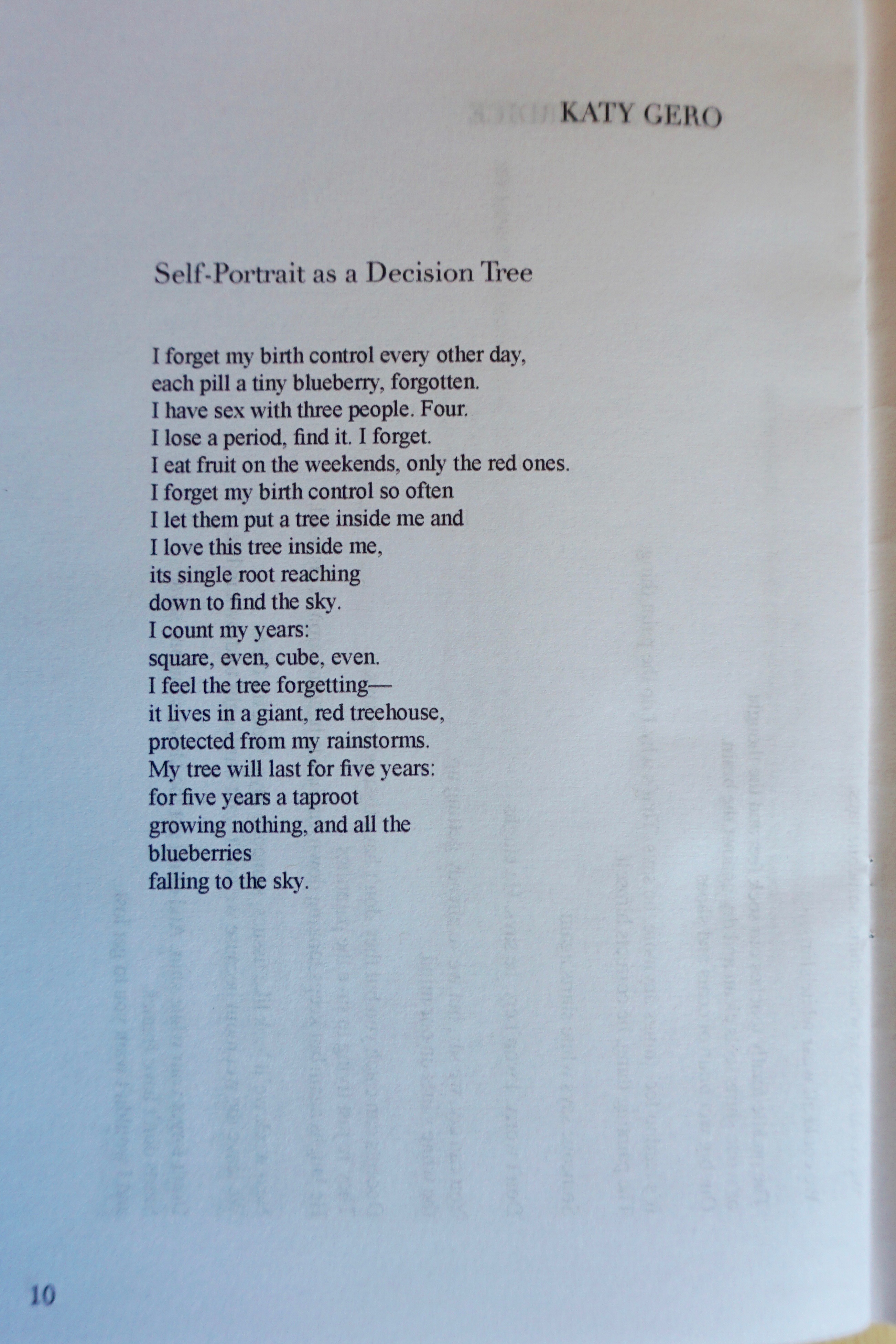
Katy Ilonka Gero is a Lecturer at the School of Computer Science, University of Sydney , with prior postdoctoral roles at Harvard University and the Library Innovation Lab. She holds a PhD in Computer Science from Columbia University (2022) and a BS in Mechanical Engineering from MIT (2017). Education : PhD in Computer Science (Columbia University, 2022); BS in Mechanical Engineering (MIT, 2017) Her research focuses on Human-Computer Interaction in creative domains, particularly how language models impact creative practice, ownership, and learning . She develops community-driven AI models through co-design with creative communities and investigates ethical data governance practices. Recent work includes designing interactive writing tools for metaphor creation and exploring the social dynamics of AI support in writing . The 15 most recent articles reflect trends in AI-augmented creativity (Metaphoria, CHI 2019), AI ethics (Nature Machine Intelligence 2023), and human-AI collaboration (CHI 2020 Best Paper). These works span language model evaluation , creative ownership , and technical innovations in soft robotics (2012) and science communication (2021). Scientific Awards : NSF Graduate Research Fellowship Brown Institute for Media Innovation Grant Amazon Research Award Best Paper - CHI 2025 Honorable Mention - CHI 2024 Best Paper - CHI 2020 As a poet and essayist , she co-edits Ensemble Park , a human-computer co-writing magazine, and authored the dynamic poetry book The Anxiety of Conception (2025). Her grants include support from the National Science Foundation , Brown Institute , and Amazon . For technical details, visit her personal website or GitHub.