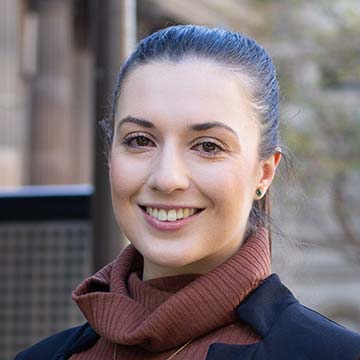
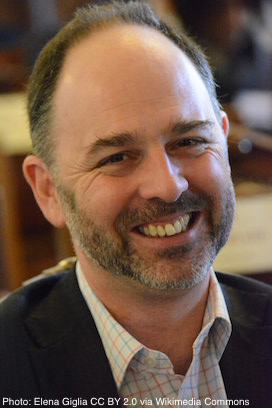
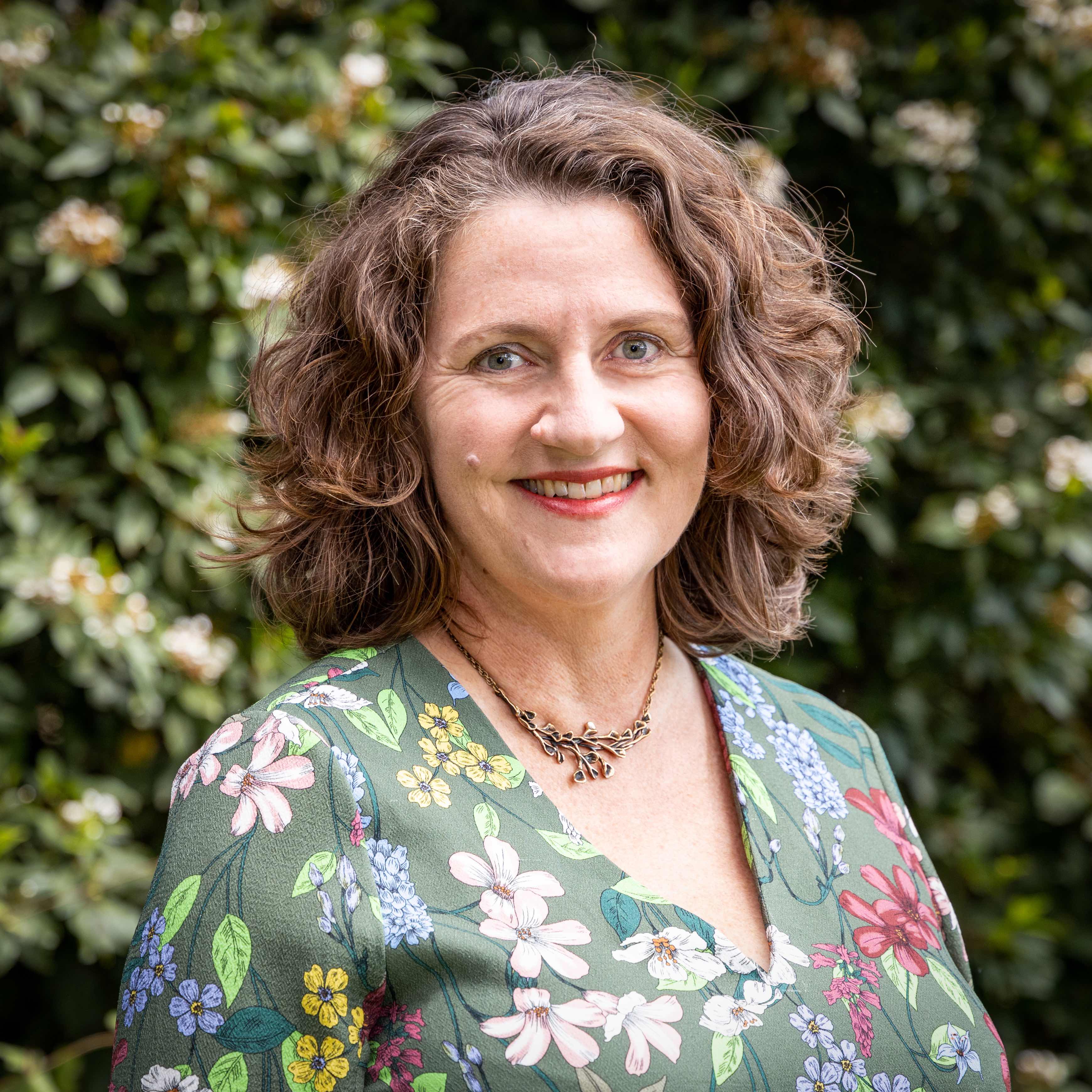
Dr. Angela Finn is a Senior Lecturer at RMIT University in the Department of Fashion & Textiles , City Campus, Australia. With expertise in sustainable fashion design , fashion manufacturing , and practice-led research , she focuses on design methodology and knowledge transfer in fashion education. Teaching Interests : Fashion Design, Sustainable Fashion & Textiles, Design/Research Methodology Research Emphasis : Sustainable design strategies, technological integration in textiles, historical design adaptation Her 15 most recent publications explore themes like minimization in fashion design , luxury sustainability , and virtual teaching resources . Key subtopics include zero-waste design , regional manufacturing , and UV-protective textiles for health applications. Supervision Availability : Open to mentoring Masters or PhD students in sustainable fashion and textiles research.
Professor Philip Hider is a Professor in Information and Communication Studies at Charles Sturt University, where he leads research in the Libraries Research Group. His work focuses on information organization, metadata, and library science, with significant contributions to cataloging policy, knowledge organization, and library classification systems. He has conducted research for major institutions including the National Library Board of Singapore, National Library of Australia, State Library of Victoria, and Australian government's Office for Learning and Teaching. Hider's research expertise spans information organization, knowledge organization, metadata systems, information retrieval, and library science. His work examines the theoretical and practical applications of cataloging standards, bibliographic control, and knowledge organization systems across various contexts including academic libraries, public libraries, and digital environments. A significant portion of his recent work investigates the impact of the COVID-19 pandemic on library services, the evolution of genre classification systems, and the role of metadata in digital resource discovery. Hider's publication record demonstrates consistent scholarly output with over 113 research outputs spanning from 1997 to 2025. His recent work shows a strong focus on practical applications of knowledge organization in contemporary library settings, with particular emphasis on Australian library contexts, public library services, and the challenges of cataloging emerging digital formats like YouTube videos. His research often employs comparative methodologies, examining differences between professional cataloging practices and social cataloging systems. Professor Hider serves as an active contributor to the library and information science field through his editorial work, including serving as Program Committee Chair for RAILS (Research Applications in Library and Information Science) and contributing to major journals in the field. His research group at Charles Sturt University focuses on key issues affecting library and information services, examining ways to improve library collections and understanding the evolving role of libraries in contemporary society.
Asim Qayyum is a Senior Lecturer at Charles Sturt University's School of Information & Communication Studies, where he leads the Libraries Research Group. With over two decades of experience in library and information science, his work bridges academic research and professional practice through ongoing projects with ACT libraries and other library sectors across Australia. His educational background includes a PhD from the University of Toronto specializing in Information and Knowledge Management, an undergraduate degree in Electrical Engineering, and an MBA with a focus on Management Information Systems. His career path transitioned from engineering and business analysis to library science practice and academia, with previous positions at the University of Toronto and the University of Puerto Rico's School of Information Sciences. Dr. Qayyum's research focuses on evaluating library impact on communities, information practices of diverse populations including refugees and young adults, online academic reading behaviors, and knowledge management in library settings. His work examines how library and information services can be improved and enhanced to meet evolving community needs in contemporary society. Recent projects have investigated supervision styles in LIS education, service delivery costing for public libraries, and the role of libraries in supporting underserved populations. His publication record spans nearly 60 research outputs from 2002-2024, with consistent scholarly productivity including recent articles on diversity in library hiring practices, community engagement through library programming, and knowledge management in the Australasian region. His work demonstrates strong methodological diversity with both qualitative and quantitative approaches. Faculty's competitive research award (2010) Professional Excellence award (2016) Outstanding Paper for 2013, Journal of Documentation Best paper prize from ASIS&T New England chapter (2004) Research grant from OCLC (2007) As an educator, Dr. Qayyum supervises PhD students and contributes to curriculum development in library and information studies. He serves on the Faculty of Arts and Education Human Ethics Committee and maintains active collaborations with library professionals across Australia and internationally. His current research continues to strengthen the connection between academic research and professional library practice, ensuring libraries maintain their vital role in creating informed and information-literate communities.
Navid Constantinou is a Senior Lecturer at The University of Melbourne, specializing in Climate & Ocean Geoscience. His research focuses on physical oceanography, geophysical fluid dynamics, and climate modeling, with a particular emphasis on machine learning applications in these fields. He is affiliated with the University of Melbourne and contributes to collaborative projects like Oceananigans.jl and regional-mom6. Research Interests: His work explores ocean circulation dynamics, fluid mechanics, and the interplay between atmospheric and oceanic systems. Key areas include surface wave effects, turbulence decay, and parameterization of ocean mixing processes. He actively develops computational tools to enhance climate modeling accuracy and resolution. Publications: His recent work addresses topics like meridional heat transport in the Atlantic, GPU-based ocean modeling, and the impact of climate change on Antarctic currents. These studies often involve interdisciplinary collaborations with institutions like MIT and the Scripps Institution of Oceanography. Awards: While no explicit awards are listed, his research has been highlighted in prominent journals and media outlets like The Conversation and Nature Climate Change . Advising & Grants: He supervises students such as Dhruv Bhagtani and collaborates on projects funded by initiatives like the Australian Research Council. His software contributions, including OceanBioME.jl and SpeedyWeather.jl, underscore his commitment to advancing computational methods in geosciences. Labs/Teams: Involved in global climate modeling teams and open-source software development communities focused on ocean and atmospheric dynamics.
Carolyn Strange is a Professor and former Head of the School of History at the Australian National University (ANU). She holds adjunct and visiting professorships at Murdoch University and the University of Toronto. Her research focuses on legal, social, and cultural history, particularly crime and justice, gender studies, and environmental history. She has taught at institutions in Canada, the U.S., and Australia, and her work bridges academia with public engagement through museum exhibitions and symposia. Strange has been awarded prestigious fellowships at Warwick, Macquarie, and Sydney Universities, and is a Fellow of both the Academy of Social Sciences and the Australian Academy of the Humanities. Her research has been supported by grants from the Australian Research Council and others, including a five-year strategic grant for a cross-campus network on the History and Legacies of Violence. She currently leads a working group on Coercive Control funded by the ANU Gender Institute. Her research interests span gendered homicide, capital punishment, and historical memory. Recent projects include analyzing inter-gender homicide in NSW and examining public attitudes toward coercive control. She has published extensively on crime, justice, and gender in Canadian, Australian, and British contexts. Strange’s teaching expertise includes graduate training, having founded ANU’s Cross-Cultural Research and History graduate programs. She has also served as an external assessor for Hong Kong’s Lingnan University History Department and curates exhibitions linking history with contemporary issues. Key achievements include the 2013 ‘Researcher of the Year’ award from the New York State Archives and a 2014 Huntington Library Fellowship. Her work often involves interdisciplinary collaboration with scholars in law, environmental science, and media studies.
Dr Jessica O'Leary is a Research Fellow at the Gender and Women's History Research Centre within the Institute for Humanities and Social Sciences at Australian Catholic University. She specializes in gender and cultural history of the early modern period, with a focus on global encounters, colonization, and intercultural dialogues in the Portuguese Empire and Japan. In 2024, she will hold the Harold S. Williams Fellow in Japanese Studies at the National Library of Australia. Her research explores women and children in Jesuit missions, cultural transfer through diplomacy, and emotional landscapes of early modern encounters. Current projects include collaborative initiatives on women in the Global Portuguese Empire, child slaveries in the early modern world, and gender dynamics in Japanese Christianity. Scientific Awards: Philippa Maddern ECR Publication Prize (2024) Harold S. Williams Fellow in Japanese Studies (2024) DAAD Bilateral Exchange Award (2023) RSA Kristeller Fellow (2022) Maria Sibylla Merian Junior Fellow (2022) ACIS Publishing Grant (2021) Royal Studies Journal Prize (2018) Monash Masters' Prize (2017) Cassamarca Scholarship (2016) DAAD Award (2016) Dr O'Leary contributes to public engagement through platforms like The Conversation and Medieval Warfare Magazine. Her recent publications in Renaissance Quarterly and Past & Present examine gendered colonization, missionary practices, and emotional histories, with a monograph on Renaissance masculinities and diplomacy published in 2024.
Niloufer Selvadurai is Professor and Director of Research & Innovation at Macquarie Law School, where she also co-directs the Data Horizons Research Centre and co-chairs the Australian Law Associate Deans Research Network. A technology law scholar focusing on AI regulation, she examines how laws can calibrate technological innovation benefits and risks. Her interdisciplinary research collaborates with computing, engineering, finance, and health fields. Key leadership roles and recognitions include: Co-Director, Data Horizons Research Centre Program Leader for 'AI and Law' at Centre for Applied AI 2022 Australian Legal Education Award for Excellence in Graduate Research Supervision 2023 Higher Degree Research Supervisor of the Year Her publications extensively cover AI governance, digital finance, copyright, and smart contracts law, with recent work examining AI inventorship and regulatory frameworks for central bank digital currencies.
Professor Cameron Neylon is a leading academic in the field of Research Communication at Curtin University’s Centre for Culture and Technology . With an international reputation as an Open Access activist and scholarly communication strategist , he combines empirical science expertise with systemic change advocacy. His work spans open data , research policy , and digital scholarship , advising global institutions and governments. 2012–2015 : Advocacy Director, Public Library of Science (PLOS) 2005–2012 : Senior Scientist, ISIS Neutron Scattering Facility, UK 2001–2009 : Lecturer in Combinatorial Chemistry, University of Southampton Neylon’s research focuses on the intersection of systems theory , design methodologies , and open science . He explores how digital networks and open practices can reshape knowledge creation , research metrics , and institutional policy . His recent projects include Curtin’s New Models of Publishing and global open access performance analysis . His publications since 2012 emphasize open science infrastructure , data integrity , and equitable research systems . Articles like Open Access Research Outputs Receive More Diverse Citations (2024) and A User-Friendly Dashboard for Tracking Global Open Access Performance (2023) reflect his commitment to measurable, inclusive scholarly systems. 2012 : Fellow of the Open Forum Academy 2010 : SPARC Innovator Award for Panton Principles 2010 : Blue Obelisk for Open Data Contributions Neylon has held leadership roles in organizations such as Crossref and ImpactStory , and currently serves on the Future of Research Communication and E-scholarship board. His work integrates neutron scattering , bioinformatics , and policy design to address systemic challenges in academic practice.
Assoc Prof Geraldine Torrisi is the Deputy Head of School (Learning & Teaching) at the School of Information and Communication Technology at Griffith University. With a PhD in Educational Studies and degrees in Science (Physics/Mathematics) and Education, she focuses on Human-Computer Interaction (HCI) , User Experience , and Learning Theory . She is a Senior Fellow of the Higher Education Academy and Griffith Learning and Teaching Academy . Education: PhD in Educational Studies (Griffith University) Masters of Educational Studies (James Cook University) Bachelor of Education (Secondary Science and Maths) (James Cook University) Bachelor of Science (Physics/Mathematics) (James Cook University) Research Interests include Interactive Digital Media , Educational Technology , and Data Literacy . Her 2025 book chapters explore AI's role in education, while 2024-2023 articles address data literacy frameworks and hybrid teaching models. Scientific Awards include Griffith Award for Excellence in Teaching (2011) , Excellence in Teaching Award (2015) , and Senior Fellow of the Higher Education Academy (2018) . She also received multiple Group Learning and Teaching Commendations (2009, 2017, 2019). Grants include The Dignity Project (2024-2025), Promoting Renewable Energy Adoption (2022-2025), and Smart Environmental Sensing (2022-2023). She supervises PhD students on topics like Human-Machine Teaming and Instructional AR Design .
Associate Professor Robert Nordon is a faculty member at UNSW Sydney's Graduate School of Biomedical Engineering. He holds an MB BS, BMedSci, and PhD, with research focusing on advanced manufacturing and medical technologies. Since 2016, he has secured over $5M in research grants for projects in point-of-care diagnostics, cell/gene therapy manufacturing, and stem cell science. Research interests span three primary domains: Developing microfluidic single-use disposables for scalable clinical cell production Modeling cardiovascular development using stem cell-based microfluidic systems Creating computational tools for single-cell analysis and lineage tracking His publications (2017-2024) demonstrate strong emphasis on microfluidic device engineering, stem cell dynamics, and biomaterials development. Recurring themes include hematopoietic stem cell expansion, cardiac cell behavior, and peptide-based biomaterials. Significant grants include: ARC Linkage Grant LP160100570: Scaling microfluidics for cell manufacture (2016-2019) ARC Linkage Grant LP160100573: 3D microstructures for medical devices (2016-2019) ARC Linkage Grant LP190100029: Electrophoretic cell sorters (2020-2023) CRC-P: Microbioreactor for affordable cell/gene therapy (2021-2023) Current research trainees include Farzaneh Ziaee and Eric Du.
Dr Toby Burrows is a Senior Honorary Research Fellow in the School of Humanities at The University of Western Australia. He holds a BA from the University of Western Australia, an MA from the University of London, a PhD from the University of Western Australia, and a Graduate Diploma in Library Studies from the Western Australian Institute of Technology. His primary research focuses on digital humanities, medieval manuscript studies, and the history of cultural heritage collections. Burrows has directed major projects such as the internationally funded 'Mapping Manuscript Migrations' (2017–2020) and the ARC Linkage Project 'Collecting the West' (2016–2021). He has also held visiting fellowships at institutions including the University of Pennsylvania and King's College London. His expertise includes Linked Open Data, medieval manuscript curation, and the design of e-research infrastructure. Current projects include the 'Mobilising Dutch East India Company collections' (2023–2027) and the Humanities Networked Infrastructure (HuNI). Burrows has contributed to over 100 peer-reviewed publications and datasets, including works on computational historical research and the role of serendipity in knowledge organization systems. He has served on editorial boards for journals like Journal of Open Humanities Data and advised on open access policies for European research. Burrows' grants include Australian Research Council funding for projects on digital humanities infrastructure and cultural heritage digitization. He has also managed significant data archives, such as the Western Australian node of the Australian Data Archive. His work aligns with UN Sustainable Development Goals related to cultural preservation and knowledge sharing.
Dr. Asolina Braun is a Senior Research Fellow at the Department of Biochemistry & Molecular Biology, Monash University. She actively supervises PhD students and contributes to research in Skin Immunology Psoriasis Pathogenesis Immunopeptidomics Tissue-Resident Memory T Cells . Education : Biology, Hannover Medical School Doctoral Degree in Immunology (Hannover Medical School, Germany, 2011–2014) Postdoctoral Fellowship with Francis Carbone and Thomas Gebhardt (Germany, 2014–2018) Research Focus : Her work explores HLA-Cw6-dependent antigen presentation and TRM cell survival factors in psoriasis, aiming to develop tolerization strategies for autoinflammatory skin diseases. She also pioneered tactile science communication methods for psoriasis outreach. Key Projects : Leading Psoriasis Antigen Triggers (2023–2025) Investigating Influenza Immune Cross-Protection (2024–2027) Validating HLA-Cw6 Antigen Presentation (2020–2022) Awards & Roles : DFG Fellowship Treasurer, Australian and New Zealand Society for Immunology (2018–2022) Executive Committee Member Collaborations span institutions in Australia, Germany, and Denmark, with expertise in flow cytometry , mass spectrometry , and MHC-peptide interactions .
Prof. Katherine Bode is a Professor of Literary and Textual Studies at the School of Literature, Languages & Linguistics, Australian National University (ANU). She leads research in computational literary studies, digital humanities, and Australian literary history. Her work bridges traditional literary scholarship with computational methods, focusing on digitized archives like 19th- and 20th-century newspapers. Education: PhD in English (University of Queensland, 2006); BA (Hons), PhD, Grad Cert in Education. Prior roles include ARC Postdoctoral Fellow at Sydney University and Lecturer at the University of Tasmania. She directed ANU’s Digital Humanities Hub (2011–2013) and has held ARC grants for projects on newspaper fiction and Irishness in Australian literature. From 2018–2023, she was an ARC Future Fellow exploring computing, reading, and writing in literary studies. Research Interests : Digital Humanities, computational methods for literary analysis, Australian literary history, book history, and publishing studies. Her work emphasizes data-rich approaches to cultural history and the ethical implications of AI in humanities research. Publications : Over 50 scholarly works, including books like A World of Fiction (2018) and Reading by Numbers (2012). Recent projects include analyzing global literary patterns in digitized newspapers and examining the intersection of AI with literary studies. Awards : Fellow of the Australian Academy of Humanities (2019); multiple ARC grants, including a 2023 Discovery Grant for Irishness in Australian literature. Grants & Projects : Currently leads projects like Close Relations: Irishness in Australian Literature (2023–2026) and Read all about it: Digital participation in Australian newspaper fiction (2021–2025). Prior grants include a 2020 Special Research Initiative on 20th-century newspapers. Labs/Teams : Associated with ANU’s Digital Humanities Hub and collaborates internationally on computational literary studies and AI ethics.
Dr Zeke Ahern is a Research Fellow in Transport Engineering and Planning at Queensland University of Technology (QUT), affiliated with the School of Civil & Environmental Engineering. He holds a PhD from QUT. His research focuses on transportation safety, crash frequency modeling, and optimization of public transit systems. Dr Ahern’s work emphasizes multi-objective frameworks for analyzing crash data, improving safety infrastructure, and enhancing urban mobility through advanced statistical and computational methods. He has collaborated on projects involving raised safety platforms, parking payment behavior, and integrated bus route design. His publications reflect contributions to transportation engineering, traffic safety, and data-driven decision-making in civil infrastructure. Research Interests: Dr Ahern’s primary areas include crash frequency modeling, transportation safety infrastructure evaluation, and the application of optimization algorithms (e.g., simulated annealing, metaheuristics) to transportation problems. He develops tools like the Metacountregressor Python package to assist in analyzing count data models, bridging software engineering and transportation research. Publications highlight trends in data-driven safety analysis and infrastructure optimization. His work spans both theoretical advancements (e.g., hypothesis testing for crash models) and practical applications (e.g., raised platform effectiveness reviews). Recent efforts emphasize integrating multiple objectives into transportation planning, such as balancing safety, efficiency, and cost-effectiveness.
Christine Erbe is a John Curtin Distinguished Professor at Curtin University's School of Earth and Planetary Sciences, within the Faculty of Science and Engineering. She holds a PhD in Geophysics and has extensive experience spanning academia, government, industry, and education. Her research focuses on underwater acoustics, marine mammal bioacoustics, and the impacts of anthropogenic noise on marine ecosystems. She is a Fellow of the Acoustical Society of America and former Chair of its Animal Bioacoustics committee. Education: PhD in Geophysics, University of British Columbia (1997) MSc in Physics, University of Dortmund (1993) BSc in Physics, University of Dortmund (1989) Grad. Dip. Ed. in Mathematics/Science Education, Queensland University of Technology (2007) Research Interests: Characterization of marine soundscapes Effects of noise on marine fauna behavior and physiology Sound propagation modeling in oceans Development of acoustic mitigation strategies Awards & Roles: Fellow, Acoustical Society of America Former ISO representative for underwater noise standards Her work includes pioneering studies on vessel noise impacts, passive acoustic monitoring, and the global library of underwater biological sounds (GLUBS). She leads the Centre for Marine Science & Technology and collaborates internationally on marine conservation and policy.