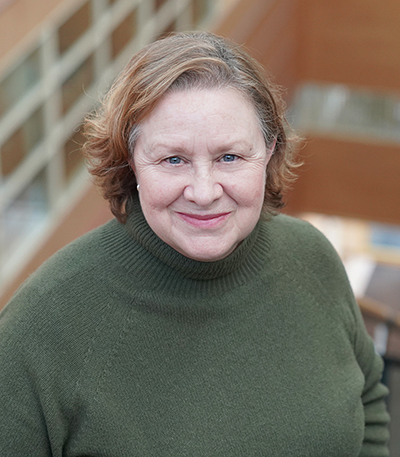
Palmyre Pierroux is a Professor at the Department of Education, University of Oslo, specializing in learning practices across formal and informal education contexts. She leads research projects such as ‘Cultural Heritage Mediascapes’ and ‘Making Museums Relevant,’ focusing on digital media’s role in museums and schools. Her work bridges art, science, and architecture through design-based methods. Education: Dr. Polit., Master of Arts (Art History), Bachelor of Applied Arts (Environmental Design) Key Research Areas: Museum education, citizen science/humanities, digital learning environments, and participatory democracy in cultural institutions. Research emphasizes visitor engagement, collaborative learning, and knowledge co-creation. Over 40 publications span museum pedagogy, digital tools, and participatory practices. Supervised four PhD students exploring topics like maker spaces, ethical education through games, and museum learning. Active in grants including挪威研究委员会-funded projects and UiO strategic initiatives. Collaborates internationally on initiatives like the Museum Interaction Studies program with University of Tennessee.
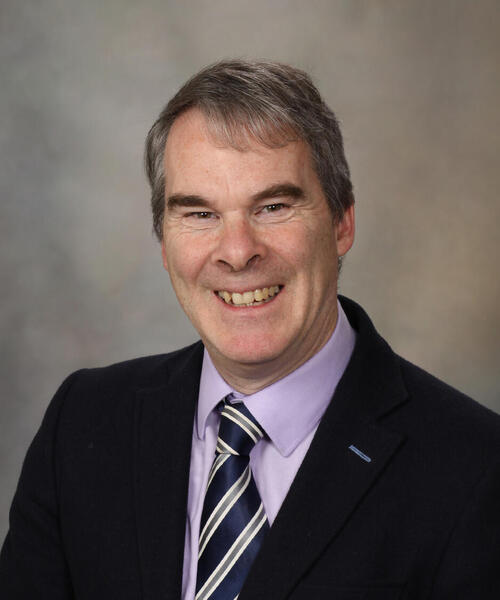
Richard G. Vile, Ph.D., is a Professor of Immunology at Mayo Clinic in Rochester, Minnesota, with primary appointments as Consultant in the Department of Molecular Medicine and joint appointment in the Department of Immunology. He is also the Richard M. Schulze Family Foundation Professor, an honor awarded in 2008. His research is centered on developing innovative cancer immunotherapies, particularly through oncolytic virotherapy, CAR T-cell therapy, and combination strategies with radiotherapy. Dr. Vile’s research focuses on stimulating antitumor immune responses using murine immune-competent models and syngeneic tumors. His work spans multiple cancer types, including melanoma, prostate cancer, glioma, brain metastases, and hepatocellular carcinoma. A major innovation from his lab is engineering vesicular stomatitis virus (VSV) to express tumor antigen libraries, enhancing immune recognition and destruction of tumors. His recent publications reveal a strong emphasis on enhancing CAR T-cell efficacy, overcoming immune evasion, and combining oncolytic viruses with checkpoint inhibitors. These studies highlight his leadership in advancing immunovirotherapeutic strategies for solid tumors, particularly through genetic engineering of viral vectors and immune cell therapies. The Richard M. Schulze Family Foundation Professor (2008) Dr. Vile has secured substantial research funding from the National Cancer Institute and the National Institute of Allergy and Infectious Diseases, supporting active projects into 2026. He is directly involved in clinical translation, including an ongoing trial for hepatocellular carcinoma using a VSV-based therapy. He mentors a research team and collaborates internationally, particularly with researchers in the UK. His lab is part of the Mayo Clinic Comprehensive Cancer Center and the David F. and Margaret T. Grohne Cancer Immunology and Immunotherapeutics Program.
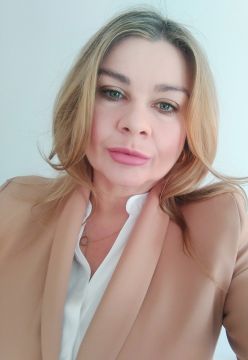
Anita Has-Tokarz is a Professor at the Department of Information Science, Bibliology and Media Education within the Faculty of Political Science and Journalism at Maria Curie-Skłodowska University (UMCS) in Lublin, Poland. As Kierownik Katedry (Head of Department) since 2019, she focuses on book culture , media studies , and information architecture , particularly in children's and youth media contexts. Professor at UMCS Research on book-market mediatization Coordinator of international projects Expert in media education Research Interests span transmedia narratives , digital libraries , cookbook historiography , and generational media reception . Her work examines how digital culture transforms reading practices and library functions, with a focus on Alpha generation behaviors. Scientific Contributions : Bronze Medal for Long Service (2009) Medal of the National Education Commission (2021) Bronze Cross of Merit (2023) Homo Didacticus UMCS title (2022) 550th Anniversary Medal of Lublin Voivodeship (2024) She organizes international conferences like Ksi@żka w Mediach - Media w Ksi@żce and co-edits academic journals. Her scientific collaborations include institutions in Sweden, Canada, and Ukraine, with advisory roles in the International Visegrad Fund.
Dr. Carlos Menguiano Rodríguez is a Lecturer at the University of the Balearic Islands, Faculty of Education, within the Department of Specific Didactics and Pedagogy. His academic work is centered on educational theory, history of education, and pedagogical practices, with a focus on teacher training and social education contexts. His research is closely tied to the Consolidated R+D+I Group History of Education Studies (GEDHE) , reflecting a sustained engagement with historical and theoretical dimensions of education systems. He teaches across multiple programs including Early Childhood Education, Pedagogy, and Social Education, both on-campus and online. Dr. Menguiano’s teaching portfolio includes courses such as Contemporary Educational Thinking and Contexts , Evolution and Consolidation of Education Systems , and Social-Educational Dynamization in Museums and Libraries . He also supervises practicum placements and final degree projects, contributing significantly to student mentorship and professional development. His expertise spans educational policy, curriculum design, and interdisciplinary applications of pedagogy in cultural institutions. Although no specific publications or awards are listed in the available data, his active teaching and research group membership indicate ongoing scholarly contribution. ORCID Profile : Available ResearcherID Profile : Available Scopus Profile : Available Dialnet Profile : Available Dr. Menguiano advises students through practical placements and final projects in Social Education and Pedagogy, playing a key role in academic supervision and professional integration. He is based in office C-100, first floor, Guillem Cifre de Colonya building. He is involved with research structures focused on the history and philosophy of education, contributing to a broader understanding of educational systems’ evolution. His work emphasizes the application of educational theory in real-world settings such as museums and libraries.
Jonathan L. Zittrain is the George Bemis Professor of International Law at Harvard Law School, Professor of Public Policy at Harvard Kennedy School, and Professor of Computer Science at Harvard School of Engineering and Applied Sciences. He directs Harvard Law School Library and co-founded the Berkman Klein Center for Internet & Society. Multi-disciplinary affiliation across law, policy, and engineering schools Director of Assembly Program for tech policy solutions Champion of Caselaw Access Project expanding legal data availability His research focuses on AI ethics , digital property control , cryptography regulation , user privacy frameworks , and Internet architecture intermediaries . Recent work examines AI policy through the California Report and large-scale text dataset curation for Harvard Library. Notable awards include: Fellow, American Academy of Arts and Sciences World Economic Forum Young Global Leader EFF Board of Directors member
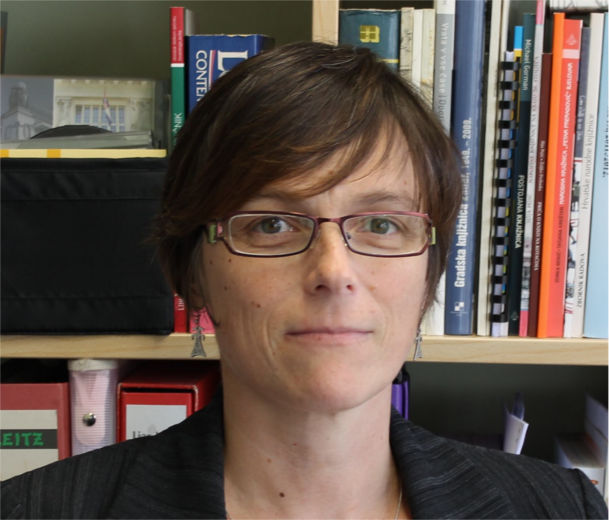
Dr. Martina Dragija Ivanović is an Associate Professor at the Department of Information Sciences and Technologies, University of Zadar. She specializes in library management, information institution governance, and the sociology of books and reading. Her research focuses on collection development, evaluation of information services, and critical librarianship. She teaches courses including Library Business Operations , Information Society , and Public Libraries Management . Her scientific interests include exploring reading behaviors, digital legacy preservation, and cultural heritage digitization through citizen science. Notable projects involve crowdsourcing transcription of Glagolitic manuscripts and assessing public library impacts on rural communities. She actively participates in academic initiatives promoting information literacy and inclusive research methodologies. Dr. Ivanović has collaborated on international projects like the DARIAH-HR initiative and contributed to academic conferences on library science and digital humanities. Her work emphasizes bridging theoretical research with practical applications in library services and education.
Elisa Tattersall Wallin holds a PhD in Library and Information Science from the Swedish School of Library and Information Science, affiliated with the University of Borås. Her research focuses on information practices, digital cultures, and reading habits, particularly exploring how climate change information circulates online and the evolving landscape of audiobook consumption among young adults. She teaches courses on research methods, thesis writing, and digital information practices. Her 2022 doctoral thesis Sound Reading investigated audiobook practices through a temporal and spatial lens, analyzing subscription platforms like streaming services. This work earned her the iSchools doctoral dissertation award (runner-up, 2023). She actively engages in collaborative projects such as the Mistra Environmental Communication initiative, studying public engagement with renewable energy topics. Her publications span academic journals and edited volumes, addressing themes like climate change communication, audiobook infrastructure, and digital literacy. She contributes to initiatives like the Programming Historian to democratize digital research tools.
Christian Fibich is a Researcher and Lecturer at the Department of Electronic Engineering, University of Applied Sciences Technikum Wien, Austria. He leads the Research Group Embedded Systems, focusing on FPGA reliability and high-level synthesis. His roles include project management for R&D initiatives like VECS (2013-2018), INES (2018-2023), and the 2024 Drohnentechnik integration project. Fibich holds an MSc in Embedded Systems from Technikum Wien and has been active in the field since 2010. Research interests include fault-tolerant FPGA design, reliability analysis of SRAM-based FPGAs, and high-level synthesis optimization. His work emphasizes practical applications of open-source tools and automated design exploration. Recent projects explore temperature-dependent fault effects and drone integration in academic programs. Publications span FPGA reliability, fault injection methods, and embedded systems design, with a focus on open-source IP cores and hardware security. His contributions include Fiji (a fault injection tool) and HLShield (a reliability framework for HLS).
Carolyn J. Brown is an Assistant Professor and Deputy Director of the Peter W. Rodino, Jr. Law Library Center for Information and Technology at Seton Hall University School of Law. She oversees library operations and teaches Advanced Legal Research and contributes to the Appellate Advocacy program. Her professional experience includes roles as a Reference Librarian and Adjunct Professor at Brooklyn Law School, Head of Access Services at Benjamin N. Cardozo School of Law, and Outreach and Reference Librarian at Nova Southeastern Shepard Broad Law Center. Education: J.D., The Pennsylvania State University - Dickinson School of Law (2013) M.L.I.S., Pratt Institute (2010) B.A. in Psychology with Criminal Justice emphasis, Seton Hall University (2002) Research & Professional Activities: Brown focuses on legal research methodologies, library technology integration in legal education, and law library management. She actively participates in the American Association of Law Libraries, contributing to committees that shape standards in legal information services. Awards: None explicitly listed. Grants & Advising: No grants or student advising records mentioned. Her professional contributions include operational leadership and curriculum development in legal research education. Labs/Teams: Oversees the Peter W. Rodino, Jr. Law Library Center, a hub for legal information technology and resource management within Seton Hall Law School.
Emily J. M. Knox serves as Interim Dean and Professor at the University of Illinois Urbana-Champaign’s School of Information Sciences. Her research focuses on intellectual freedom, censorship, information ethics, and library policies. She holds a PhD from Rutgers University and a Master’s from the UIUC iSchool, with undergraduate degrees from Smith College and the University of Chicago Divinity School. Education: PhD, Communication, Information, and Library Studies, Rutgers University MSLIS, School of Information Sciences, UIUC B.A., Religious Studies, Smith College A.M., Religious Studies, University of Chicago Divinity School Dr. Knox’s work bridges theory and practice, examining how censorship impacts marginalized communities and advocating for equitable information access. Her landmark books include *Book Banning in 21st Century America* and *Foundations of Intellectual Freedom*, the latter winning the 2023 Eli M. Oboler Prize. She regularly testifies before legislative bodies and advises the National Coalition Against Censorship. Her teaching excellence has been recognized repeatedly, including the 2024 ALISE Excellence in Teaching Award. Current courses include practicum and independent study modules. Awards Highlight: 2024 Campus Excellence in Public Engagement Award 2023 Illinois Library Luminary 2022 Chicagoan of the Year for Books WISE Instructor of the Year (2015) As editor of the *Journal of Intellectual Freedom and Privacy*, she amplifies discourse on privacy rights and censorship dynamics. Her research team, Mapping Information Access, measures barriers to information in public institutions.
Pooran Memari is a CNRS Researcher at the Laboratoire d'Informatique de l'École Polytechnique (LIX), UMR CNRS 7161, Institut Polytechnique de Paris, and an Affiliate Professor (part-time) at École Polytechnique. She leads research in geometric modeling within the GeomeriX team at LIX-Inria, focusing on theoretical foundations and applications in accessibility and neurocognition. Her academic journey includes: HDR (Habilitation à diriger des recherches), Institut Polytechnique de Paris, 2024 Ph.D. in Geometric Modeling, INRIA Sophia-Antipolis, 2010 Master in Image and Geometry, University of Nice-Sophia Antipolis, 2006 Engineering Degree, École Polytechnique, 2005 Bachelor in Mathematics, Sharif University of Technology, 2002 Dr. Memari's research bridges geometric modeling, computational geometry, and computer graphics with real-world impact. She pioneers techniques in shape representation, point pattern synthesis, and surface reconstruction, advancing proximity encoding and clustering algorithms. Her work extends to accessibility applications—developing geometric models for visually impaired navigation through multisensory perception—and neurocognition validation via tactile interfaces. This interdisciplinary approach integrates theoretical rigor with practical tools like the CGAL library. Recent publications (2024-2019) reveal a cohesive trajectory in geometric processing: advancing point pattern synthesis through image-based editing (Patternshop), stability-incorporated neighborhood graphs (SING), and multi-class disk distributions; innovating surface reconstruction via Voronoi-based methods (BallMerge); and expanding applications to virtual worlds simulation and neurocognitive accessibility. Key themes include bridging discrete geometry operators with high-dimensional data analysis and translating theoretical insights into tools for visual computing. Dr. Memari actively mentors the next generation of researchers, advising eight PhD students on topics ranging from generalized Voronoi diagrams to neurocognition-driven tactile navigation. She coordinates Computer Science Projects for École Polytechnique's Bachelor program since 2019 and co-leads the Interaction, Graphics & Design master's program at IP-Paris. Her leadership extends to editorial roles at Computer Graphics Forum and Graphical Models Journal, alongside prominent conference positions including SGP Program Co-Chair (2023) and Eurographics STARs Co-Chair (2025). As a core GeomeriX team member, she drives collaborative projects in geometric modeling and virtual environments. She coordinates the LIX Seminar since May 2025 and serves on the French Eurographics Chapter board, fostering community engagement through initiatives like the IGD master's program and Eurographics symposia.
Neville Sanjana is an Associate Professor at the Department of Neuroscience , NYU Grossman School of Medicine , with a joint affiliation at the New York Genome Center . His academic journey began with a PhD at Massachusetts Institute of Technology . Research Interests in genome engineering, CRISPR technology, and functional genomics focus on: Dissecting noncoding genomic elements across cancers Developing high-throughput CRISPR screening methods Engineering therapies for neurological and genetic diseases Understanding transcriptional regulation in neuronal differentiation Recent Articles span cancer genomics, synthetic biology, and CRISPR-based diagnostics, with a thematic emphasis on: Drug resistance mechanisms in melanoma Noncoding element function in disease Advancements in base and prime editing Applications in immunotherapy and hemoglobin disorders Scientific Honors : NIH Director's New Innovator Award Sidney Kimmel Scholars Program DARPA Young Faculty Award Simons Foundation Autism Research Initiative Melanoma Research Alliance Young Investigator Award Teaching : In Spring 2022, he taught Special Topics: Genome Engineering (BIOL-UA 920) at NYU Biology, covering CRISPR evolution, gene therapies, and ethical implications of genome editing. Lab Operations : The Sanjana Lab operates from two locations - NY Genome Center (101 Avenue of the Americas, 4th floor, New York, NY 10013) and NYU Biology (755 Brown, 100 Washington Sq East, New York, NY 10003).
Christina Smylitopoulos serves as a Professor of Art History within the School of Fine Art and Music at the University of Guelph, where she has earned recognition as an award-winning researcher and educator. Her scholarly work critically examines eighteenth- and nineteenth-century art and visual culture, explores the pedagogical applications of arts-based methodologies, and investigates the material culture of heavy metal music. Her research centers on the latter half of the early modern period (mid-seventeenth century to 1830s), encompassing the European Age of Exploration, Enlightenment, Revolutionary Wars, and Napoleonic conflicts. She analyzes artistic movements including High Renaissance, Baroque, Rococo, Neoclassicism, and Romanticism while challenging conventional stylistic frameworks through interdisciplinary approaches. Professor Smylitopoulos has received significant professional recognition: Post-Secondary Art Educator of the Year (2023-24) from the Ontario Art Education Association UGFA Distinguished Professor Award for Excellence in Teaching (2019) College of Arts Teaching Excellence Award (2014) Her research program is supported by competitive funding from: Social Sciences and Humanities Research Council (SSHRC Insight Grant, Insight Development Grant, Connection Grant) Ontario Ministry of Science, Research, and Innovation Lewis Walpole Library Huntington Library Swann Foundation for Caricature and Cartoon (Library of Congress) Houghton Library at Harvard Prior to her current position, she held a Postdoctoral Research Associate appointment at the Yale Centre for British Art. As an active faculty member, she mentors students in art historical scholarship while advancing innovative research at the intersection of historical art practices and contemporary cultural phenomena.
Lisa Ciresi is an Associate Professor of Art History in the Department of English, the Arts & Interdisciplinary Studies at the University of South Carolina Beaufort (USCB), affiliated with the School of Humanities & Social Sciences. She is based in Library Room 253 on the Bluffton campus and teaches a range of courses in Western art history. Her research focuses on sacred and devotional art of the High Middle Ages, particularly the liturgical use and symbolic significance of medieval reliquaries and their architectural contexts. She has conducted extensive research in Germany, including a post-doctoral fellowship with DAAD and a research associate position at the University of Hamburg. Her recent publication, 'Maria Ecclesia: The Aachen Marienschrein as an alternate body for the Virgin Mary,' explores the theological embodiment in medieval reliquaries. She is currently working on a manuscript titled 'Foundations of a sacred empire: the 13th Century Cerational site of Charlemagne in Aachen' under contract with Brill Academic Publishers. Lisa Ciresi earned her PhD in Art History from Rutgers University in 2003, following an MA (1997) and BA (1989) from the same institution. She was awarded a Fulbright Scholarship and a DAAD post-doctoral fellowship for her research in Germany. Scientific Awards: Fulbright Scholar (Germany) Post-doctoral Fellowship from German Academic Exchange Program (DAAD) She advises independent studies and mentors students through ARTH B299, and is actively involved in community outreach by delivering public lectures for the Osher Lifelong Learning Institute (OLLI) and local communities in Beaufort, Bluffton, and Hilton Head Island. She contributes to continuing education and public engagement in the arts. Her teaching includes foundational and advanced courses such as: ARTH B105 - History of Western Art I ARTH B106 - History of Western Art II ARTH B315 - History of Medieval Art ARTH B320 - History of Italian Renaissance Art ARTH B335 - History of 20th Century Art ARTH B390a - Topics in Art History: Beaufort Three Centuries ARTH B299 - Independent Study
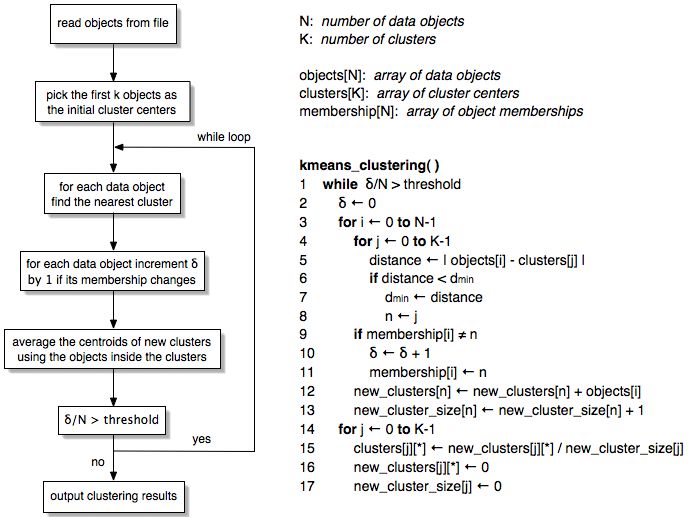
Wei-keng Liao is a Research Professor in the Department of Electrical Engineering and Computer Science at Northwestern University's McCormick School of Engineering. His research spans high-performance computing with a focus on parallel and distributed systems. Dr. Liao's research interests include parallel and distributed file I/O and storage system design, data mining algorithm design and their parallelization, data management for large-scale scientific applications, and computational model design for large-scale applications on parallel and distributed environments. He is a key contributor to the Parallel netCDF project, which provides parallel I/O capabilities for scientific applications. His recent work shows strong trends in high-performance computing infrastructure, particularly in optimizing I/O systems for scientific applications, parallel data clustering algorithms, and machine learning acceleration in distributed environments. His publications span computational science, parallel computing, and data-intensive applications across various scientific domains including materials science, astrophysics, and healthcare. Best Paper Award at IEEE International Conference on Cluster Computing (2016) for Parallel DTFE Surface Density Field Reconstruction Dr. Liao has supervised numerous research projects funded by DOE, NSF, NASA, and Argonne National Laboratory, with recent work focusing on data libraries for exascale science, machine learning-driven resilience for extreme-scale systems, and scalable data clustering for scientific computing. He leads research on the Parallel K-means Data Clustering software package and is a principal developer of Parallel netCDF. His work connects multiple research groups through the Center for Ultra-scale Computing and Information Security (CUCIS) at Northwestern University, where he collaborates with scientists across disciplines to develop scalable computing solutions for complex scientific problems.