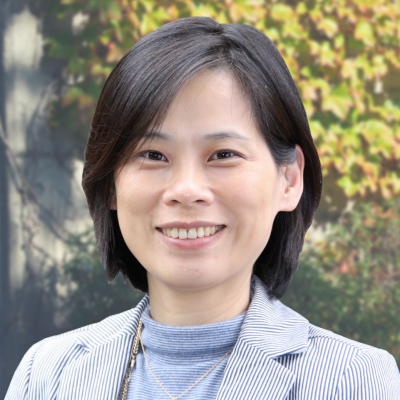
André Brodtkorb is a Professor and Head of the Department of Information Technology at Oslo Metropolitan University. His research spans applied mathematics, numerical analysis, and computational science, focusing on physics simulations and GPU computing. He advocates for open and reproducible research and is actively involved in education and societal engagement through the Academy of Young Researchers (2024-2028). Research Interests: His work integrates applied mathematics and computer science to develop high-performance simulations for environmental phenomena, including ocean currents, volcanic ash dispersion, and coastal flooding. He specializes in GPU-accelerated parallel computing, finite-volume methods, and Python-based scientific programming. Publication Trends: Recent articles highlight advancements in GPU computing efficiency, ocean modeling, and inverse ash transport modeling for volcanic plume forecasting. His research bridges computational methods with real-world environmental challenges. Scientific Awards: Member of the Academy of Young Researchers (2024-2028) Contact Information: Office: Pilestredet 35, 0166 Oslo Phone: +47 456 19 070 (Mobile), +47 672 35 924 (Office) Email: andre.brodtkorb@oslomet.no
Sampath Kannan is the Henry Salvatori Professor in the Department of Computer and Information Science at the University of Pennsylvania's School of Engineering and Applied Science. His research spans Algorithmic Fairness Combinatorial Algorithms Program Reliability Streaming Computation Computational Biology . His work focuses on theoretical computer science and its applications, particularly in ensuring correctness through program analysis, developing algorithms for massive data sets, and addressing bioinformatics challenges like evolutionary tree reconstruction. Recent publications highlight interdisciplinary efforts in oncology (2025) , game theory (2024) , and fairness in machine learning (2023) . Notable awards include Fellow of the AAAS (2019) Test of Time Award, Runtime Verification (2019) Penn India Research and Engagement Fund (2018) Fellow of the ACM (2013) ACM SIGACT Distinguished Service Award (2012) . He has also received advising recognitions like the Outstanding Faculty Advising Award (2005) and Ford Foundation 'Best Advisor' (2004). He has advised PhD students Eshwar Ram Arunachaleswaran Yiqiao Bao Anubhav Baweja and taught courses including CIS 677 - Advanced Topics in Algorithms & Complexity and GCB 537 - Advanced Computational Biology .
Janaynne Carvalho do Amaral is a Postdoctoral Research Associate at the School of Information Sciences, University of Illinois at Urbana-Champaign, specializing in scholarly communication and public engagement in research. Her work bridges academic publishing with democratic science practices through innovative peer review models. Her academic credentials include a PhD in Information Science from the Federal University of Rio de Janeiro/Brazilian Institute of Information in Science and Technology and a Master's in Social Anthropology from the Federal University of Goias, Brazil. Dr. Amaral's research centers on transforming scholarly communication through open peer review systems and public participation mechanisms. She examines knowledge exchange between scientists and communities, emphasizing diversity, social justice, and equitable information access. Her scholarship addresses critical gaps in science communication while promoting inclusive publishing ecosystems. Analysis of her publication trajectory reveals growing emphasis on metascience and participatory knowledge production. Recent work explores identity dynamics in peer review and structural reforms for democratizing academic publishing, reflecting interdisciplinary connections between information science, social anthropology, and science policy. Her scholarly recognition includes: List of Teachers Ranked as Excellent, University of Illinois (Spring 2023) Metascience 2023 Conference Travel Award for plenary presentation on public manuscript commenting NISO Plus Scholarship Program (January 2023) Society for Scholarly Publishing Fellowship (December 2022) Sponsored Scholar at Ninth International Congress on Peer Review (September 2022) Dr. Amaral actively contributes to editorial communities through the Society for Scholarly Publishing and serves as course instructor for Libraries Info and Society. Her grant activities include multiple competitive fellowships supporting conference participation and scholarly publishing initiatives, with ongoing leadership in diversity-focused publishing reforms.
Andrew J. Parkes is an Assistant Professor (Lecturer) in Operational Research and Computer Science at the University of Nottingham , affiliated with the School of Computer Science and the COL research group (formerly ASAP). He has been a member of the LANCS Initiative's executive committee and co-organized multiple streams at international conferences like OR61, EURO 2019, and OR60. His research spans optimization techniques, heuristic methods, and applications in timetabling and financial modeling.
Professor Hubert Izdebski is a distinguished academic and legal expert at SWPS University of Social Sciences and Humanities in Warsaw, where he serves as Director of the Institute of Law and Head of the Department of Public and International Law at the Faculty of Law. As a corresponding member of the Polish Academy of Sciences and recent reappointee to the Scientific Council of the National Library for the 2024-2030 term, Professor Izdebski has established himself as a leading figure in Polish legal academia and practice. Professor Izdebski specializes in public law and its intersection with civil law , with research focusing on axiology and the origins of legal solutions, public governance issues, administrative law, and constitutional law. His scholarly work explores the philosophical foundations of legal systems while maintaining practical relevance to contemporary legal challenges. He has made significant contributions to legal theory, philosophy of law, and legal ethics, examining how value systems shape legal frameworks and decision-making processes in modern governance. His extensive publication record includes numerous commentaries on the Polish Constitution covering various articles and provisions, with his most recent works analyzing Articles 188, 190, 191, 194 (2024), Article 75 (2023), Articles 6, 70, 73 (2022), and Articles 149, 152, 153 (2021). These publications demonstrate his deep engagement with constitutional interpretation and the evolving nature of Poland's fundamental legal document. His research consistently bridges theoretical legal philosophy with practical constitutional implementation. Knight's Cross of the Order of Polonia Restituta (for outstanding achievements in teaching and educational work) Officer's Cross of the Order of Polonia Restituta (for contributions to public activity and strengthening the rule of law) Badge of Honour for services to local government PTWK Centenary Diploma Professor Izdebski has played a pivotal role in shaping Polish legislation, having co-authored laws on local government and higher education. He participated in public administration reform during the 1990s, drafted Warsaw's second local government law (1994), co-authored the higher education law draft (1989-90), and contributed to legislation on public benefit activities and volunteerism (1995-2003). Most recently, he led SWPS University's expert team that won the competition to develop detailed assumptions for the new higher education law (the "Act 2.0" project). At SWPS University, he teaches jurisprudence, theory and philosophy of law, and legal ethics, mentoring the next generation of legal professionals. As Director of the Institute of Law, Professor Izdebski leads a vibrant research community focused on contemporary legal challenges. His institute serves as a hub for interdisciplinary legal research, bringing together scholars from various legal disciplines to address complex issues in public governance, constitutional interpretation, and legal reform. The institute regularly collaborates with governmental bodies, judicial institutions, and international legal organizations on research projects and policy development initiatives.
Dr. Eamon C Armstrong serves as Clinical Associate Professor and Clerkship Director in the Department of Family and Community Medicine at the University of Arizona College of Medicine. Based at the BUMG Alvernon Family Medicine Clinic and Residency Program, he provides patient care while supervising residents and medical students in Tucson. His career spans institutions across the United States and South Africa, with board certification in Family Medicine through the American Board of Family Medicine. His educational foundation includes: MD from University of Witwatersrand, Johannesburg (1987) MS in International Primary Health Care from University of London (2012) Family Medicine Residency at Highland Hospitals/University of Rochester (1997) Faculty Development Fellowship at University of Wisconsin (1998) Dr. Armstrong's research centers on patient-centered evidence-based medicine (EBM) at the point of care, emphasizing just-in-time clinical decision support using electronic health records. He integrates the biopsychosocial model into resident training to enhance patient-centered clinical methods. His work explores EBM curriculum interventions' impact on physician performance and patient outcomes, with strong focus on organizational change and guideline implementation in primary care settings. Scholarly output reveals consistent EBM innovation since 1998, with publications addressing clinical question formulation, database selection, and practical implementation strategies. His work bridges theoretical evidence with frontline practice, particularly in fracture prevention, cardiovascular care, and vaccine policy. His teaching excellence is recognized through: Graduating Resident Class Faculty Award for Excellence in Teaching (2024) Multiple Faculty Awards for Excellence in Teaching (2024, 2022-2020) Teacher of the Year Award in Family Medicine (2004, 2001) Vice-Chancellor’s team teaching award (2013) Headley White Clinical Teacher of the Year (2002) As Clerkship Director, Dr. Armstrong mentors students through Family Medicine Clerkships (FCM 813C) and Topics courses (FCM 896U), emphasizing real-patient EBM application. His Pool Trust Grant for the EPOC Project demonstrates successful grant acquisition for point-of-care evidence systems. He cultivates resident-as-teacher skills through interactive workshops while maintaining active clinical practice. Dr. Armstrong contributes to the University of Arizona Family Medicine Residency Program's educational framework at Alvernon Clinic, focusing on biopsychosocial integration and evidence-based decision making in diverse clinical scenarios.
Herbjørn Andresen is a Professor at the Faculty of Social Sciences , Oslo Metropolitan University , specializing in Archivistics, Library and Information Science . His research spans digital archives, public law, and the intersection of technology and governance. Research Interests : Digital archiving paradigms, algorithmic records, data protection, e-government, and the sociocultural role of libraries/archives. Key Publications : Focus on digital transformation of archival systems, legislative harmonization, and ethical challenges in data management. Research Groups : Active member of Information in Use (INFUSE) , contributing to records management discourse. Books : Arkivlova. Lovkommentar (2024) on Norwegian archival law.
Ida Uppstrøm Berg serves as Associate Professor in the Department of Archivistics, Library and Information Science at Oslo Metropolitan University's Faculty of Social Sciences. Her research critically examines private-public collaborations within Norway's art sector, focusing on how political dynamics influence cultural policy implementation and institutional legitimacy. Educational background: PhD from University of Oslo (2016) on National Museum legitimacy work Her research interests span art sociology, cultural policy, and ALM disciplines, with specific focus on private art collectors' motivations, museum governance controversies, and the impact of private wealth on public cultural institutions. Recent work analyzes Norwegian case studies including the National Museum's partnership with Fredriksen Family Art Company and Ekeberg Sculpture Park development. Analysis of her 2020-2025 publications reveals consistent methodological approaches using qualitative analysis to investigate tensions between democratic cultural access and elite private interests. Key thematic threads include status dynamics in art philanthropy, director perspectives on collaboration trade-offs, and local political controversies in public art projects. Scientific awards: None documented in available materials. Berg actively contributes to the "Information, Culture and Society" research group and completed the POLYCUL project investigating why cultural policy goals fail due to sectoral interest politics. Her dissemination includes OsloMet research news articles and conference presentations on Norwegian cultural sector dynamics.
Annisa Puspa Kirana is a Ph.D. candidate and researcher at the Department of Geo-information Processing (ITC-GIP), Faculty of Geo-Information Science and Earth Observation (ITC), University of Twente. She is a Lecturer in the Department of Information Technology at State Polytechnic of Malang, currently on study leave to focus on her Ph.D. research. Her work integrates Artificial Intelligence , Computer Vision , and Geospatial Analytics to analyze satellite/aerial imagery for Climate Change Mitigation , Disaster Monitoring , and Resource Management . PhD in Geo-Information Science @ University of Twente (Netherlands) Master of Computer Science @ IPB University (Indonesia) Her research emphasizes Deep Learning applications in Earth Observation, including Vision-Language Models and Agentic AI for multimodal data analysis. She collaborates with interdisciplinary teams , government agencies , and industry partners . Selected Publications Trends: Focus on AI agents , LLMs , VLMs , and Vision Transformers for geospatial and environmental applications Technical tutorials on Streamlit , TalkToEBM , and LangChain integration Conceptual breakdowns of agentic vs. agent-based systems , interpretability in AI , and prompt engineering Scientific Awards: LPDP Awardee (Indonesian Endowment Fund for Education) Microsoft Certified Educator She actively mentors students in AI/geospatial fields and advocates for open-source science and ethical AI practices in environmental decision-making. Her work bridges academic research and practical policy tools .
Dr. Neda Nikolić is an Associate Professor at the Department of Industrial Management within the Faculty of Technical Sciences at the University of Kragujevac, Serbia. With over 15 years of academic service since joining in 2006, she has established herself as a prominent researcher in industrial management, environmental protection, and disaster risk management. Her academic journey began with a degree from the Faculty of Management in Belgrade in 2000, followed by master's studies at the Technical Faculty in Čačak (completed in 2009), and culminating in a doctoral dissertation defended in 2016 at the Faculty of Organizational Sciences in Belgrade. Dr. Nikolić's research interests focus on the intersection of industrial management and environmental sustainability, particularly examining waste management systems, recycling processes, human resources in local government, and disaster risk reduction. Her work demonstrates a consistent thread connecting management principles with environmental protection and sustainable development practices. She has made significant contributions to understanding how local governments can optimize their environmental performance through strategic decision-making and human resource development. Analysis of her 15 most recent publications reveals a clear evolution from traditional industrial management topics toward more complex interdisciplinary research at the intersection of environmental science, public administration, and risk management. Her work increasingly addresses contemporary challenges including pandemic response, nuclear risk perception, and digital transformation in environmental management. The geographic focus remains primarily on Serbia and the broader Central and Southeast European region, with practical applications for local government implementation. Best paper award at ECOS2011 among 330 submissions from 47 countries Member of editorial board for International Journal of Disaster Risk Management President of scientific sector of Serbian Association for Recycling, Decontamination, and Demolition Member of Scientific-Professional Society for Risk Management in Emergency Situations Dr. Nikolić actively contributes to academic governance as a member of the Teaching-Scientific Council at the Faculty of Technical Sciences, Čačak. Her previous service includes roles as secretary of the Department of Industrial Management and membership on both the Self-Evaluation Commission and Library Commission. Her research has practical applications in local government operations, particularly in environmental management and disaster preparedness, with several publications focusing on capacity development for Serbian municipalities.
Signe Braut serves as Senior Lecturer in Norwegian Language Didactics at NTNU's Department of Teacher Education within the Faculty of Social and Educational Sciences. Holding a master's degree in Nordic literary studies from NTNU, she brings extensive classroom experience from junior high school, upper secondary school, and adult education to her academic role. Education: Master's degree in Nordic literary studies, Norwegian University of Science and Technology Research Focus: Her work centers on children's literature, youth literature, and graphic literature through the lens of literature didactics and reading pedagogy. She critically examines gender theory applications, folkloristics, and New Norwegian (Nynorsk) implementation in educational contexts, with particular attention to the kindergarten-school transition and literacy development frameworks. Publication Trends: Recent works analyze contemporary Norwegian language education challenges including literary canon debates, school library resource allocation, and minority language preservation. Her scholarship consistently bridges theoretical literary analysis with practical classroom applications, especially regarding gender representation in youth literature and inclusive reading instruction. Academic Engagement: As co-organizer of Nynorsk inspiration days with Trønderlaget and active member of both the Research Group for Literature and Society and CLEAR (Children's Literature Education And Research), she connects research with teacher development. Her teaching portfolio spans primary teacher education courses on children's literature, Norwegian language didactics, and literacy development across multiple educational levels.
Hans Bauer is a researcher at the Institute for East and Southeast European Studies (Regensburg), specializing in digital humanities , historical cartography , and library science . He has worked on projects like GeoPortOst and OstDok , focusing on open access, georeferencing, and digital collection management. His career spans roles in corporate history, education, and library sectors since the early 2000s. MA in Slavic studies and history of Eastern/Southeastern Europe (LMU Munich, 2003) Current role: Research associate at IOS, managing digital collections and Polonica library Pioneering work on map metadata, open science, and spatial information retrieval Bauer’s research bridges library innovation and historical scholarship , particularly through georeferenced maps and open access initiatives. His work transforms archival materials into accessible digital resources, emphasizing interdisciplinary collaboration and metadata-driven discovery. Recent publications and lectures address trends in digital humanities , cartographic digitization , and research data management . He co-edits the open-access journal e-Perimetron , focusing on cartography and digital technologies. Projects like GeoPortOst highlight his expertise in linking historical maps with modern spatial analysis tools. Bauer actively contributes to library education through workshops on Zotero, KI-tools, and open science practices. He advocates for libraries as dynamic hubs for research support, emphasizing transparency, digital preservation, and user-centric services.
Gilberto Lara, Ph.D. , is an Assistant Professor in the Department of Bilingual and Bicultural Studies at the University of Texas at San Antonio (UTSA), within the College of Education and Human Development. With over 16 years of experience in dual-language and ESL education, his work bridges pedagogy, cultural equity, and literacy development for emergent bilinguals. Education: Ph.D. in Bilingual/Bicultural Education (UT Austin), M.Ed. and B.S. in Education (Boise State University) with concentrations in Bilingual Education and ESL Methods. Research Focus: Investigates pedagogical practices in dual-language/EL classrooms, emphasizing community cultural wealth and multicultural children's literature . His studies address raciolinguistic ideologies, teacher identity, and equity in education for marginalized communities. Article Trends: Recent publications analyze translanguaging in family contexts, post-pandemic pedagogical shifts, and systemic barriers in bilingual education. He integrates STEM and biliteracy, while critiquing children's literature for cultural relevance and social justice themes. Scientific Awards 2017 STAR Fellow, Literacy Research Association 2016 Second Place Outstanding Dissertation Award, National Association of Bilingual Association Grants & Collaborations: Though not explicitly listed, his work on equity and teacher education implies participation in federally funded initiatives. His book, The Reading Turn-Around with Emergent Bilinguals , codifies years of classroom and research experience.
Amery Wu serves as Associate Professor and ECPS Graduate Advisor for Admissions and Scholarship at the University of British Columbia's Faculty of Education, specifically within the Department of Educational and Counselling Psychology, and Special Education. Based in Scarfe Library Block 287, Dr. Wu specializes in advanced quantitative methods for educational and psychological measurement. Dr. Wu's research focuses on applied statistical modeling in educational contexts, with particular expertise in test item performance analysis , globalization of testing through internet platforms , and longitudinal assessment methodologies . Their scholarly work bridges psychometrics with practical educational applications, examining how test design impacts diverse learner populations across international contexts. Key methodological contributions include innovations in mixed-effects modeling, differential item functioning analysis, and validation frameworks for complex assessment systems. Recent publications demonstrate a clear trajectory toward integrating response process data with performance outcomes , particularly through Bayesian modeling and advanced visualization techniques for online assessments. The research consistently addresses measurement challenges in high-stakes contexts including immigration language testing (CELPIP), health literacy instruments, and inclusive classroom models. Dr. Wu's work emphasizes the ecological validity of assessments within their sociocultural contexts. Teaching responsibilities include core methodology courses: EPSE 423 (Assessment of Classroom Learning), EPSE 481 (Introduction to Research in Education), EPSE 482 (Statistics for Educational Research), EPSE 483 (Reading Educational Research), and advanced graduate courses EPSE 592 (Experimental Designs) and EPSE 596 (Correlational Analysis). As Graduate Advisor for Admissions and Scholarship, Dr. Wu shapes the quantitative training of future educational researchers.
Krzysztof Walczak is a Professor at the Department of Information Technology, University of Economics in Poznan. His work bridges Information and Communication Technology (75%) with Management and Quality Studies (25%). 2020–Present: Professor 2010–2020: Assistant Professor 2001: Doctorate Research focuses on Virtual & Augmented Reality applications in education, industry, and cultural heritage. Key themes include semantic modeling for adaptive XR interfaces, 3D content creation for marketing, and AI integration in immersive environments. Recent work explores: Generative AI ethics in education Industry 4.0 VR training systems Financial data visualization in AR Green digital transition policies As a scientific leader, he has published 70+ works and supervised 110+ research activities. His Hirsch index (approx. 25) reflects significant impact in semantic XR systems and 3D web technologies.