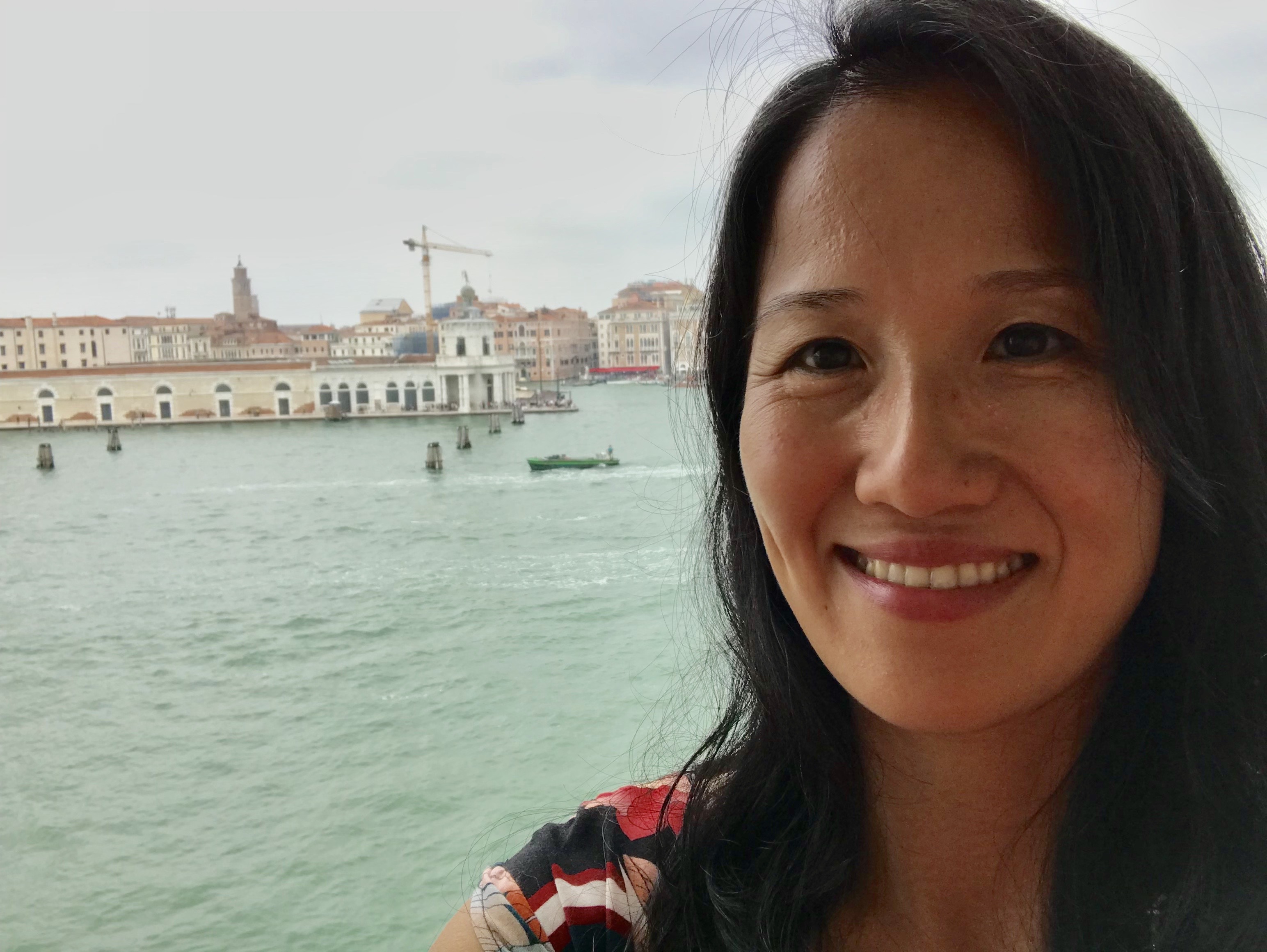
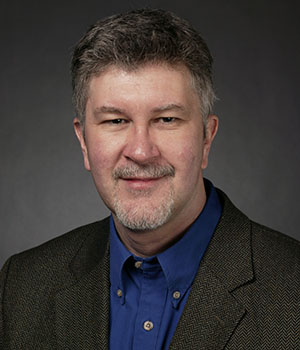
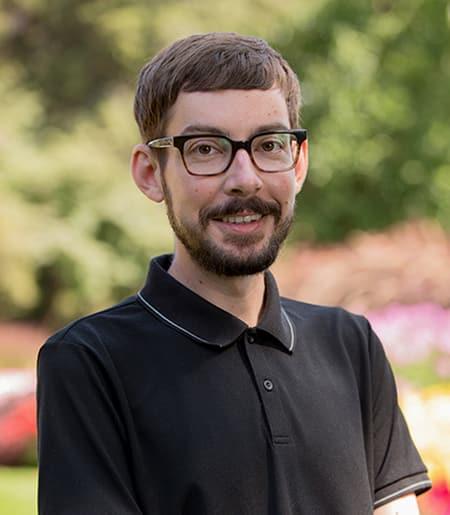
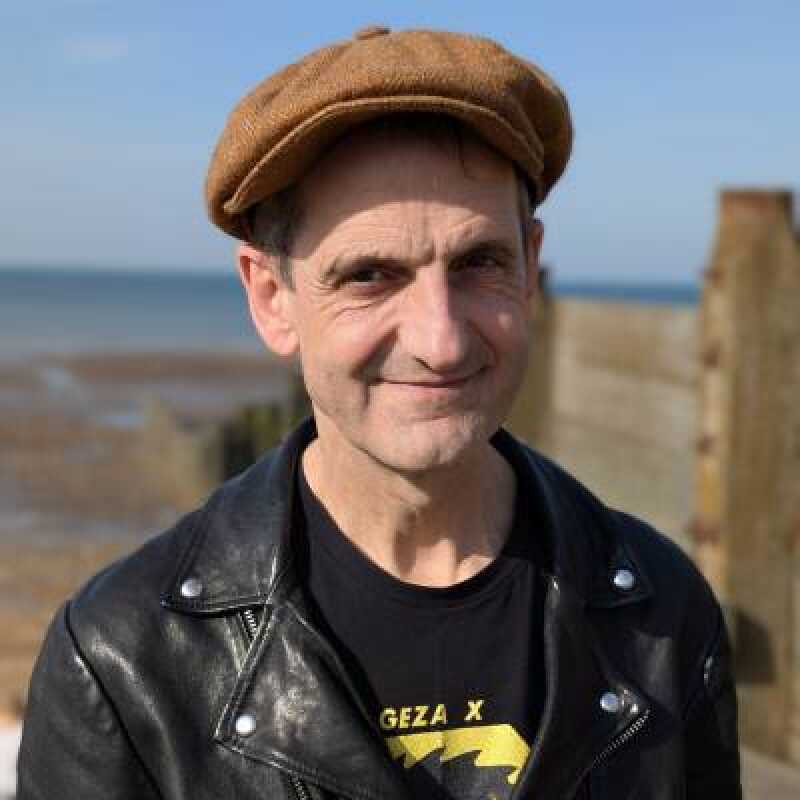
Professor Caroline Rae at Cardiff University is a leading scholar in 20th-century French music , with a focus on composers like Debussy, Messiaen, Jolivet, and Boulez. She also specializes in the musical writings of Alejo Carpentier and Franco-Latin American cultural interactions . Her research combines archival studies, performance practice, and pianism. Education : DPhil (Oxford), MA (Oxon), Dipl. Mus (Hanover), ARCM Her research projects include monographs on André Jolivet and Debussy’s Préludes , supported by the British Academy and AHRC . Recent publications span books on Carpentier, Debussy, and Stravinsky’s reception in France. As Co-Director of CFMR , she has organized international symposia with institutions like the Institut Français and Paul Sacher Foundation . Scientific awards include the Chevalier de l'Ordre des Arts et des Lettres (2018), Cardiff University Research Fellowship (2018-2019), and a French Government Scholarship (1982-1983). She has served on juries for the BBC Young Musician Competition and Wales International Piano Competition . As a pianist , she studied under Dame Fanny Waterman , Yvonne Loriod-Messiaen , and Karl-Heinz Kämmerling , and performs lecture-recitals linking her research. She has advised orchestras like the Philharmonia Orchestra and BBC National Orchestra of Wales on festival programming.
Pauline Lemaigre-Gaffier is a Lecturer in Modern History at the University of Versailles Saint-Quentin-en-Yvelines (UVSQ), affiliated with the Institute of Cultural and International Studies (IECI) and the Department of History. She co-leads the VoCriPat project (2023–present) and participates in the DIM PAMIR committee (2022–present) and ANR ACADEC project (2022–present). Her research focuses on European court societies (festivals, ceremonies, urban interactions) Cultural history (material culture, documentary writings) Political history (public finance, administrative practices) Economic history (privileges and businesses) Heritage sciences Her 15 most recent publications explore topics like archival practices in early modern Europe French court administration of the arts economic networks of privileged enterprises royal household logistics spanning 2015–2024, with upcoming works on economic history and heritage sciences in 2025. She has received the Benabou Prize (2012) and was a Thiers Foundation scholarship holder (2009–2010) . Her career includes editorial roles at Entre-Temps (2021–2023) and educational management for the 'Music, Performance, and Heritage' degree (2014–2016). She collaborates with institutions like the Centre de recherche du Château de Versailles and the Heritage Sciences Foundation.
Ana Paulina Lee is an Assistant Professor of Writing and Digital Humanities in the Comparative Literature, English, and Creative Writing Department at the American University of Paris. She joined AUP in 2025 after teaching Latin American literature and culture at Columbia University for eight years and serving as a Mellon Postdoctoral Fellow at Tulane University. Her interdisciplinary scholarship bridges literature, history, law, and urban studies with particular focus on marginalized narratives in the Americas. Ph.D. from University of Southern California M.A. from New York University B.A. from Binghamton University Professor Lee's research examines how stories—archival, fictional, oral—shape legal imagination, social life, and urban experience in the Americas. She specializes in the intersections of magic, law, and literature in Latin America, with particular focus on Asian and African diasporas in Brazil. Her work traces how narrative functions as both historical record and catalyst for social transformation, exploring themes of slavery, emancipation, colonial legacies, and urban memory. She approaches these topics through interdisciplinary lenses combining literary analysis with histories of labor, migration, and performance. Lee's recent publications reveal a consistent focus on marginalized narratives and their impact on social structures. Her scholarship connects legal history with cultural production, showing how magical thinking and narrative practices shape urban spaces and social relations. Works like 'Urban Sorcery, Segregation, and Spectacle in Twentieth-Century Rio de Janeiro' and 'Black Magic City' demonstrate her innovative approach to understanding the relationship between occult logics and legal frameworks in Brazilian contexts. Her research on diasporic communities, particularly Chinese and Japanese experiences in Latin America, contributes significantly to transnational and comparative race studies. David B. Larson Fellowship in Health and Spirituality, Kluge Center, United States Library of Congress (2025-2026) National Endowment for the Humanities Fellowship (2025) Social Sciences Research Council, Inaugural Recipient of Interdisciplinary Projects in the Social Sciences (2020-2023) Institute for Ideas and Imagination Fellowship, Columbia University in Paris, France (2021-2022) Provost's Tsunoda Senior Fellowship, Visiting Scholar, Waseda University, Tokyo, Japan (2019) Heyman Center Fellow, The Heyman Center for the Humanities, Columbia University (2017-2018) Fulbright, Lisbon, Portugal (2013-2014) Professor Lee's scholarly activities have been generously supported by major research grants from the National Endowment for the Humanities, the Social Sciences Research Council, and the Library of Congress. Her work demonstrates a commitment to interdisciplinary approaches that bridge humanities and social sciences, particularly through projects examining intersections of race, migration, and cultural production in the Americas. Her publication 'Socially Engaged Oral History Pedagogy Amid the COVID-19 Pandemic' indicates a strong commitment to innovative teaching methods and community-based research. While specific details about current advisees aren't provided, her research program suggests engagement with graduate students interested in diaspora studies, urban history, and literary-cultural analysis. Though not explicitly mentioned in the available information, Professor Lee's research on urban spaces, magic, and law in Brazil likely involves collaborative work with scholars across disciplines. Her participation in centers like the Institute for Ideas and Imagination at Columbia University suggests engagement with interdisciplinary research communities focused on global cultural production and social transformation. Her work contributes to ongoing conversations about how narrative practices shape legal frameworks and social structures in the Americas, particularly regarding racial formation and diasporic experiences.
Professor Alison Lumsden holds the Regius Chair of English Literature at the University of Aberdeen, within the School of Language, Literature, Music and Visual Culture, part of the College of Arts and Social Sciences. She is a leading scholar in Scottish literature, particularly known for her expertise on Walter Scott, 19th-century Scottish fiction, and textual editing. MA (Hons), University of Aberdeen PhD, University of Edinburgh Her research focuses on Walter Scott, Scottish Romanticism, Scottish women’s writing, and textual scholarship. She is General Editor of the Edinburgh Edition of the Waverley Novels and lead editor of a major scholarly edition of Walter Scott’s poetry. She co-directs the Walter Scott Research Centre at the University of Aberdeen and has published extensively on Scott, Robert Louis Stevenson, Nan Shepherd, and Lewis Grassic Gibbon. Her recent publications span from 2025 to 2006, showing a sustained scholarly engagement with Scottish literary culture. The articles reflect a consistent focus on Walter Scott, textual analysis, Romanticism, and Scottish identity, with increasing attention to editorial methodology, cultural memory, and reception history. Topics include Scott’s poetry, narrative techniques, journalism, and representation of the Highlands. Grants from the British Academy Grants from the Carnegie Trust for the Universities of Scotland President of the Association for Scottish Literary Studies (2015–2019) Honorary Librarian of Scott’s Library at Abbotsford Trustee of the Abbotsford Trust Alison Lumsden supervises PhD theses on 19th-century Scottish writing, Scottish women’s writing, and textual editing, often drawing on the Bernard C. Lloyd Walter Scott Collection. She has collaborated with the Universities of Glasgow, Edinburgh, Stirling, and Mainz on workshops and seminars. She is active on editorial boards including Studies in Scottish Literature and advisory boards for the Oxford Edition of Burns and the New Edinburgh Edition of Stevenson. She leads the Walter Scott Poetry Edition Project, supported by private donations and prior grants, and is involved in public engagement through The Conversation and the 'Writing the North' partnership with Orkney and Shetland writers.
Thomas P. Balázs is an Associate Professor in the Department of English at the University of Tennessee at Chattanooga . He specializes in Creative Writing , Speculative Fiction , and Comics and Graphic Novels , blending literary craft with cultural and religious commentary. His teaching extends to Western Humanities , British Literature , and Modernism , with a focus on psychoanalytic themes in literature. Research Focus: Balázs explores intersections of Jewish identity, antisemitism, and cultural memory through fiction and nonfiction. His work often critiques contemporary societal issues, such as in Art Over Man: The Roger Waters Test Case (2024) and The Nihilism of Antisemitism (2023). Publications: He has authored the short story collection Omicron Ceti III (2012) and contributed to anthologies like Horror Library and journals such as Tablet Magazine and Quillette . His narratives frequently merge supernatural elements with Jewish theological concepts. Engagement: Balázs participates in literary conferences (e.g., StokerCon, Meacham Writers Conference) and community events, often discussing diversity in comics and horror fiction. His Substack features biweekly reflections on culture and identity.
Demmy Verbeke serves as Senior Lecturer in Open Research at KU Leuven's Faculty of Arts while simultaneously holding leadership positions within KU Leuven Libraries. He heads Artes, the department responsible for collections and services for Humanities and Social Sciences, contributing to the strategic leadership of KU Leuven Libraries as a whole through his membership on the management team. Verbeke earned his PhD in Linguistics and Literature: Latin and Greek from KU Leuven in 2005 with a dissertation on Latin letters and poems in 16th-century music editions. Prior to joining the library in 2012, he worked as a project manager in the heritage sector and as a postdoctoral researcher focusing on Renaissance humanism in the Low Countries and British Isles, multilingualism, book history, and the classical tradition. His research centers on scholarly communication and digital scholarship in the humanities, with particular emphasis on non-profit and community-driven forms of academic publishing. Verbeke's work explores how libraries can adapt to evolving scholarly communication models while maintaining equitable access to knowledge. He investigates the role of academic libraries in supporting open science infrastructure and sustainable publishing models that serve scholarly communities rather than commercial interests. Analysis of his recent publications reveals a consistent focus on transformative library practices, open access funding models, and the evolving role of academic libraries in scholarly communication. His work spans theoretical examinations of open scholarship principles and practical implementations of fair open access initiatives, with growing attention to cybersecurity challenges facing digital library infrastructure. Verbeke actively contributes to open science governance as a member of KU Leuven's Open Science Task Force, coordinator of the Open Science working group on scholarly publishing futures, and co-manager of the KU Leuven Fund for Fair Open Access. He serves on national and international advisory boards including Open Library of Humanities and Open Book Collective, demonstrating significant influence in shaping open access infrastructure. As head of Artes, he leads library services specifically tailored to humanities scholars while advancing digital scholarship initiatives. His dual appointment uniquely positions him to bridge library practice and academic research, fostering collaborations between library professionals and humanities scholars to develop innovative research support services that address the specific needs of humanities scholarship in the digital age.
Thomas Fulton is a Professor of English at Rutgers University since 2003. He specializes in early modern English literature with emphases on John Milton, William Shakespeare, and intersections of politics, religion, and book history. His research examines how biblical interpretation shaped literary and political thought in the Renaissance. Key works include Historical Milton (2010), The Book of Books (2021), and co-edited volumes like The Bible on the Shakespearean Stage (2018). He has held prestigious fellowships from the Folger Library, NEH, and Beinecke Library. Teaching highlights include leading a travel course to London's Royal Shakespeare Company and courses on Renaissance drama and political theory. Awards include the Goheen Prize and MLA's Best Special Award. Education: PhD Yale University, BA University of Wisconsin-Madison. Research interests span early modern manuscript culture, Reformation print networks, and the performative dimensions of religious texts. Current projects explore adversarial reading practices and gendered interpretations in early modern literature.
Steven Miller is a Senior Lecturer Emeritus in the School of Information Studies at the University of Wisconsin-Milwaukee. His work focuses on information/knowledge organization, metadata, linked data, and cataloging. He retired in 2016 but continues teaching a continuing education course on Linked Data for Beginners and is updating his seminal book on metadata. Education: MLIS, University of Wisconsin-Milwaukee (Library & Information Science), 1990 MA, Marquette University (Theology), 1986 BA, University of Iowa (English; Classical Greek & Latin), 1976 All but dissertation for PhD, Marquette University (Religious Studies), 1987 Research interests include metadata standards, digital collections, and linked data ontologies. His publications emphasize practical guidance for librarians and information professionals. He has contributed to national professional organizations and developed workshop materials for the Library of Congress and OCLC. Post-retirement activities include writing, conference presentations, and personal pursuits such as classical Greek studies, classical music, and travel.
Erik Born is an Assistant Professor in the Department of German Studies at Cornell University's College of Arts and Sciences, with active affiliations in Media Studies, Medieval Studies, Performing and Media Arts, and Visual Studies programs. His academic credentials include: PhD in German Studies and Medieval Studies (with Designated Emphasis in Film & Media Studies) from the University of California, Berkeley BA in Fundamentals: Issues & Texts from the University of Chicago Born's research centers on transhistorical connections across literary, media, and cultural studies, critically examining relations between 'old media' and 'new media' from manuscripts to digital networks. His work spans medieval media theory, early German science fiction, cinema history, and speculative media philosophy, evidenced by current book project 'Wireless Futures, 1900/2000/2100' reinterpreting historical precursors to mobile connectivity and upcoming research on 'Premodern Cultural Techniques' analyzing premodern reading/writing practices. Publication analysis reveals consistent interdisciplinary methodology bridging German Studies, Medieval Studies, and Film & Media Studies through media archaeology and cultural techniques frameworks. His scholarship demonstrates chronological range from medieval manuscript culture to digital networks while maintaining focus on German-language contexts and transhistorical media continuity. As an engaged member of Cornell's interdisciplinary academic ecosystem, Born contributes to multiple programs fostering innovative cross-disciplinary research in media and cultural studies.
Paula Schneider serves as Teacher for Special Tasks at the University of Art and Design Offenbach am Main , heading their book and paper workshop since 2020. She studied Book Art at Burg Giebichenstein Halle (2013-2019) and previously taught at Bezalel Academy (2017-2020). Her work bridges bookbinding , literary experimentation , and archival research through installations, artist books, and public interventions. Education : 2019: Diploma in Book Art, Burg Giebichenstein University of Halle Teaching : 2020–present: Lecturer for special tasks at HfG Offenbach 2017–2020: Annual courses at Bezalel Academy for Arts and Design, Jerusalem Screen printing tutor during studies Her artistic research explores narrative structures , time perception , and memory systems through works like Inner Monologue (2018) and Mio Mnemotop (2021). Recent projects include Night Frost (2024) examining textual accumulation and Cloudburst Working on the Textberg (2024) using mining metaphors for textual analysis. She examines book formats (e.g., leporello, monotypes, screen printing) to interrogate knowledge preservation (Rabaraababaraba, 2015) and urban observation (Praise of the Gate, 2023). Notable exhibitions include Because We Are Young (2021) analyzing GDR industrial history and Between (2019) at Halle/Leipzig Airport, which required mobile audience engagement with audio pieces about airport soundscapes. Her works have been featured in Text3 and Spin n errei tours. Contact: schneider@hfg-offenbach.de | Workshop: +49 69.80059-245 | Office: +49 69.80059-106
Dr David Milsom is a Senior Lecturer in Music at the University of Huddersfield , specializing in performance practice and historical violin techniques. He coordinates classical performance studies and teaches both performance and musicology. University of Sheffield: BMus (1st Class), MMus, PhD His research focuses on 19th-century violin performing practices , including acoustic recordings analysis and annotated score studies. Recent projects explore Brahms and Franck violin sonatas through historically informed approaches. David leads the Historical Performance Research Group and collaborates on digital performance projects via the MMT YouTube channel. He co-founded the professional Brigantes Orchestra and period instrument group Four's Company . Scientific Awards Edison Fellowship (British Library, 2003) AHRC Fellowship (2006) He serves as external examiner for Royal Birmingham Conservatoire and Leeds Conservatoire, and actively supervises PhD students while integrating research into undergraduate teaching.
Piers Gelly is an Assistant Professor in the Department of English at the University of Virginia, where he teaches Writing and Rhetoric courses. His work bridges creative writing, pedagogy, and social justice, with a focus on labor organizing and digital technologies. MFA in Fiction, University of Virginia (2019) BA in College of Letters, Wesleyan University (2013) His research explores intersections of generative AI in education, podcast production, labor studies, and collaborative authorship. He co-organizes the Writing With Sound speaker series, collaborating with experts like Avery Trufelman and Sarah Larson. Recent projects include curating a student-union collaboration exhibition at UVA’s Small Special Collections Library (2024) and investigating AI ethics in pedagogy. His publications span Literary Hub , The Point , and The Stinging Fly . Key grants include the Thrive Grant (2025), Learning Technology Incubator Grant (2024), and Active Archive Fellowship (2021). Thrive Grant (2025) Learning Technology Incubator Grant (2024) Active Archive Fellowship (2021) Henfield Prize for Fiction (2019) He collaborates extensively with labor unions in Charlottesville and mentors students through podcast projects and collective curatorial efforts.
Katherine R. Larson is a Professor at the University of Toronto Scarborough (UTSC) and Vice-Dean of Teaching, Learning, and Undergraduate Programs. Her academic work bridges Early Modern Literature, Gender Studies, and Musicology through groundbreaking research on 16th-17th century women’s writing, embodiment, and song culture. Current projects: Special issue of Sidney Journal , The Post-Pandemic University (Routledge), and Cambridge Companion to Mary Wroth Collaborative initiatives: Co-developer of Early Modern Songscapes digital platform with Sarah Williams and Scott Trudell Research Focus: Integrates feminist theory with textual analysis of early modern poetry, drama, and musical practices. Key themes include gendered soundscapes, spatial production of songs, and critical pedagogy innovations. Awards: John Charles Polanyi Prize for Literature Rhodes Scholarship 2014 Co-Editor Recognition from Society for the Study of Early Modern Women Grant Support: Funded by SSHRC, Connaught Foundation, Folger Shakespeare Library, and Jackman Humanities Institute.
Richard Schoch is a Professor at Queen's University Belfast's School of Arts, English and Languages, specializing in theatre historiography, Shakespeare in performance, and cultural history. He leads major research initiatives like the AHRC-funded 'Performing Restoration Shakespeare' (2017-2020), collaborating with Shakespeare's Globe and Folger Shakespeare Library. His work includes acclaimed monographs such as Writing the History of the British Stage, 1660-1900 (2016) and Shakespeare's House (2023). Schoch has received prestigious awards including the Leverhulme Fellowship and Royal Irish Academy membership. Research Interests: Schoch's work spans Restoration theatre, Victorian melodrama, and performance historiography. He explores how historical contexts shape theatrical practices, particularly through practice-based research. His recent focus includes Sir William Davenant's contributions to early modern theatre and Sondheim's cultural impact. Grants & Projects: He secured £1.2M+ through AHRC grants, directing projects at Shakespeare's Globe and Folger Library. His work bridges academia and public engagement, with numerous media appearances and YouTube videos viewed over 40,000 times. Labs/Teams: Collaborates with international scholars via the 'Performing Restoration Shakespeare' network, editorial boards of Shakespeare Quarterly , and Folger Institute.
Dr. Oliver Double is a Senior Lecturer in Comic and Popular Performance at the University of Kent, where he has taught since 1999. He specializes in stand-up comedy, alternative comedy, and variety theatre, with a focus on first-person audience engagement and historical analysis. As Deputy Head of School, he contributes to academic leadership while maintaining an active research profile. Established the British Stand-Up Comedy Archive (BSUCA) at Templeman Library, Canterbury Interviews Editor of Comedy Studies journal His research explores direct performer-audience dynamics, including works on Karl Valentin, Brechtian cabaret, and punk rock's theatrical dimensions. Key themes include comedy's sociocultural impact, performance authenticity, and the transformation of personal experiences into material. Recent publications analyze Laura Lexx's mental health narratives, tracing terminology origins of stand-up, and examining rehearsal processes. His teaching integrates archival resources and performance theory, preparing students for careers in comedy and related fields. Active in public scholarship, he contributes to documentaries and maintains an ongoing creative practice through the Funny Rabbit comedy club and solo performances like Break a Leg (2015) and Saint Pancreas (2006).