Olle Sköld is a Senior Lecturer at the Department of ABM (Archives, Libraries, and Museums) at Uppsala University. He is also the Head of the Department of ABM and holds an Associate Professor position in Library and Information Science. His research spans digital humanities, documentation practices, knowledge production, and digital preservation, with a particular focus on archaeological data processes and virtual world communities. Archaeological data documentation and reuse Digital game preservation Paradata theory and applications Information practices in social media His recent publications explore paradata in data papers, literacy challenges in research data management, and trust technologies like blockchain in digital archives. Olle is involved in the CAPTURE project, investigating documentation workflows for archaeological data. He has contributed to the Master's Programme in Digital Humanities at Uppsala University, blending digital humanities with library and information science education.
Professor Isto Huvila is a leading scholar at Uppsala University's Department of ABM (Archives, Libraries, and Museums) within the Faculty of Humanities. His academic profile spans information science, digital humanities, and cultural heritage studies with a distinctive focus on documentation practices and information management across diverse contexts. His research interests encompass: Information and knowledge management Social and participatory information practices Documentation and paradata theory Digital humanities and archaeological information systems Health information and e-health services Open data and research data management Recent scholarly output reveals a strong trajectory toward understanding information practices across multiple domains. A significant portion of his work examines paradata in archaeological contexts through the CAPTURE project, investigating how documentation of data creation processes can enhance research transparency and data reuse. He also conducts extensive research on digital inclusion among older adults and immigrant populations regarding e-health services, analyzing both experiences and expectations of these user groups. Professor Huvila publishes in high-impact journals including Journal of Documentation, Information Research, Journal of the Association for Information Science and Technology, and Journal of Medical Internet Research. His interdisciplinary approach connects information science with archaeology, health informatics, and digital humanities, yielding practical insights for improving documentation standards, research data management, and e-health service design. His 2025 book 'Paradata: Documenting Data Creation, Curation and Use' represents a major contribution to the field, alongside influential review articles like 'Trends in information behavior research, 2016-2022' in the Annual Review of Information Science and Technology. His work bridges theoretical and practical concerns in information science, making substantive contributions to both academic knowledge and real-world applications in cultural heritage institutions and healthcare information systems.
Olof Sundin is Professor of Information Studies at Lund University's Department of Arts and Cultural Sciences, where he serves as Manager of Research and Research Education at the Division of ALM, Digital Cultures and Publishing Studies. He coordinates the research node Dīcit: Disinformation, Conspiracy Theories, and Infrastructures of Information. His research examines sociomaterial configurations and control mechanisms of digital information, focusing on: Disinformation dynamics and generative AI's impact on expertise/trust Search engine functionality in everyday contexts Media/information literacy as infrastructural meaning-making Evolution of information-seeking behaviors in AI-driven environments Recent publications demonstrate strong focus on AI's transformative impact on information literacy practices, source evaluation frameworks, and emerging digital market behaviors. His work consistently intersects technology, society, and epistemological concerns. Awards include: Best paper award (2025) Källkritikpriset: The golden magnifying glass 2023 (National award from Swedish Internet Foundation) Sundin leads multiple research initiatives: RE-SEARCH project (Swedish Research Council): Analyzing youth information-seeking in AI-infused educational environments 'Who is the Expert?' project (Crafoord Foundation): Investigating generative AI's impact on expertise and evidence Lund lead for 'The Digital Welfare State' project Member of Nordic Disinformation Resilience Network He coordinates the Dīcit research node and leads doctoral education in Information Studies, teaching courses on digital libraries and information institutions.
Sara Tanderup Linkis serves as Senior Lecturer in Publishing Studies and Associate Professor in Digital Cultures at Lund University's Department of Arts and Cultural Sciences, Faculty of Humanities and Theology. Her academic work bridges literary scholarship with contemporary digital media analysis, focusing on how technological transformations reshape literary production, distribution, and consumption. Her research program centers on several interconnected domains: Audio literature and audiobook culture in the digital age Intermediality and transmedia storytelling practices Serial narrative forms across media platforms Social media literary communities, particularly BookTok Publishing economics in the streaming era Memory representation in contemporary literature Dr. Linkis's recent publications reveal a methodological commitment to interdisciplinary approaches, combining publishing studies, literary theory, sound studies, and digital culture analysis. Her work demonstrates how literary experiences are being fundamentally reshaped by audio formats and social media platforms, with particular attention to the material and economic dimensions of these transformations. Her scholarly contributions have been recognized through: Inga och John Hains Stiftelse för Vetenskaplig Humanistisk Forskning stipend (2024) International postdoctoral funding from the Independent Research Fund Denmark (2018-2020) As a research leader, Dr. Linkis currently directs the Swedish Research Council-funded project "Between Sound and Text: Production, Content and Experiences of Multimodal Audio Literature" (2024-2026) and contributes to the multi-year project "Lyssningsnjutningar: Sexuell hälsa och ljudfiktion i den digitala intimitetens tid" (2024-2028). She actively supervises doctoral research, including M. Uhlmann Lindberg's work on Swedish self-publishing history. Dr. Linkis maintains an active presence in both academic and public discourse, regularly contributing to media discussions about literary trends and participating in international research networks focused on digital literary cultures and publishing studies.
Björn Hammarfelt is a Professor at the Swedish School of Library and Information Science (SSLIS), part of the Faculty of Librarianship, Information, Education and IT at the University of Borås. His research focuses on scholarly communication, governance of science, and the organization of research, with a strong emphasis on bibliometrics and its societal implications. He supervises doctoral students in interdisciplinary projects, including collaborations with Chalmers University and Lund University. Hammarfelt’s work critically examines the role of metrics in academic evaluation, exploring how bibliometric indicators shape research practices, career trajectories, and institutional policies. He has led major projects such as the ERC-funded PASSIM (Patents as Scientific Information) and investigates historical case studies like the Soviet Institute of Scientific Information (VINITI). His research bridges information science, sociology of science, and policy analysis, advocating for balanced evaluation systems that preserve academic autonomy. His publications analyze trends in open access, citation practices, and disciplinary evolution. Key themes include the impact of metrics on academic culture, the historical development of information systems, and the challenges of interdisciplinary research evaluation. Hammarfelt actively contributes to debates on academic governance, emphasizing the need for reflective, humanistic approaches to science policy.
Liane Colonna is an Assistant Professor in Law and Information Technology at the Department of Law, Stockholm University , where she investigates ethical and legal challenges arising from AI-driven practices in higher education. She also engages in methodologically oriented research at the intersection of AI and Law, contributing to the Wallenberg AI, Autonomous Systems and Software Program – Humanities and Society. Additionally, Liane serves as the director of the Swedish Law and Informatics Research Institute (IRI) and is a member of the New York Bar since 2008. Primary Affiliation: Department of Law, Stockholm University Institute Leadership: Director, Swedish Law and Informatics Research Institute (IRI) Professional Status: Member of the New York Bar Research Interests: Ethical and legal challenges of AI in higher education Methodological approaches in AI and Law Data protection and privacy by design Regulatory frameworks for AI and emerging technologies Privacy implications of lifelogging and health IoT International data governance and surveillance law Publications demonstrate expertise in AI regulation, GDPR compliance, and privacy-preserving technologies, particularly for assisted living and educational contexts. Her work bridges technical implementation with legal accountability, emphasizing human oversight and ethical design.
Joacim Hansson is a Professor of Library and Information Science at Linnaeus University, Sweden. He teaches at doctoral and master's levels in Library and Information Science and the Digital Humanities program. His research focuses on Knowledge Organization (classification research), Document Studies (digital representation of cultural heritage), and Library Research (institutional identity of libraries). He is affiliated with the Centre for Digital Humanities and the Critical Knowledge Organization Research Group. He serves on editorial boards for journals like Journal of Librarianship and Information Science and is a Senior Associate Fellow at the International Institute of Hermeneutics. His work explores the intersection of classification systems, cultural heritage, and political influences on libraries. He has led projects such as 'Cultivating Information, Organizing Culture' and contributes to initiatives like EUniWell (European University for Well-Being). His publications analyze topics like bibliographic classification's societal role, public libraries in political turmoil, and Jewish library systems' philosophical foundations. He has authored books including Dewey och de svenska biblioteken and De ordnade böckernas folk . His research underscores libraries' democratic roles and the ethical dimensions of information organization. Education: Holds a PhD in Library and Information Science from Gothenburg University (1999) and a licentiate in library studies (1998). His doctoral work examined Swedish library classification systems' societal discourses. Grants and Projects: Leads the 'Cultivating Information' project and contributes to the ReSource graduate school on digital source criticism. Collaborates internationally on classification and cultural heritage digitization.
Dr. Ahmed Taiye Mohammed holds a Postdoctoral research fellowship at Linnaeus University's Department of Cultural Sciences, Faculty of Arts and Humanities in Växjö, Sweden. He earned his Master's and PhD from Northern University of Malaysia (UUM) with a thesis on text anomaly detection. His research focuses on Digital Humanities (DH), AI applications in education, and computational thinking for non-engineers. He teaches courses like Digital Humanities Research Methods, Programming for DH, and AI in Healthcare. Key research projects include InKuiS (innovative cultural entrepreneurship) and AI for ISP (supporting academic writing via ChatGPT). He collaborates with Linnaeus University Centre for Data Intensive Sciences (DISA) on e-health initiatives. Recent publications explore AI in K-12 education, automated library classification, and text mining for archaeology. His work spans AI ethics, DH methodologies, and interdisciplinary applications of computational tools. Teaching responsibilities include over 10 courses at undergraduate/master's levels, emphasizing practical skills in DH technologies. Active in developing AI-based educational tools like CHAT4ISP-AI and exploring generative AI for academic writing support. Research also involves social media ecosystems, data mining practices, and satellite image classification using SVM techniques.
Sofia Lindström Sol is an academic researcher affiliated with the Swedish School of Library and Information Science at the University of Borås. Her work focuses on intersections between cultural policy, artistic careers, work-life balance, and the societal impact of the arts. She holds a doctoral degree in 2016 with a thesis titled (Un)bearable freedom. Exploring the becoming of the artist in education, work and family life . Her research spans topics such as cultural democracy, artistic freedom in organizational contexts, and participatory strategies in public cultural institutions. Lindström Sol’s recent work emphasizes the role of arts in addressing societal challenges like social exclusion, community regeneration, and equity. She has contributed to policy frameworks through collaborative projects like AMASS, producing actionable recommendations for European policymakers. Lindström Sol’s publications analyze how cultural institutions navigate tensions between professional rationalities and participatory ideals, particularly in Sweden and Europe. She critiques traditional cultural policy paradigms while proposing innovative approaches to integrate cultural and social policies. Her work often employs qualitative methods such as reflexive dialogues and case studies to explore ethical dilemmas and institutional practices.
Amin Jalali is an Associate Professor of Computer and Systems Sciences at Stockholm University, specializing in business process modeling, analysis, and management. He is affiliated with the Department of Computer and Systems Sciences within the Faculty of Social Sciences, where he serves as a board member and manages three graduate courses: Business Process Design and Intelligence, Business Process and Case Management, and Data Warehousing. Institution: Stockholm University Department: Department of Computer and Systems Sciences (DSV) Research Groups: Natural Language Processing Research Group and PRECIS (Process, Requirements, Enterprise, Capability, Information Systems modelling) His research focuses on business process analysis through model-based and data-driven techniques, with particular emphasis on process simulation, process mining, event knowledge graphs, and object-centric process mining. He has led numerous research projects across healthcare, education, and finance domains. His work includes significant contributions to the development of NLP methods involving large language models, with focus on privacy, explainability, and domain adaptation. Jalali's research output shows a strong trend toward practical applications of process mining techniques, particularly in healthcare contexts like drug-drug interaction analysis and elderly care. More recently, his work has expanded into blockchain applications for fraud detection, motor imagery signal classification, and advanced object-centric process mining approaches. His publications span both theoretical contributions to business process management frameworks and practical implementations in real-world settings. He has extensive industry experience in designing and implementing Business Intelligence and Big Data Analytics solutions, which informs his academic work and teaching approach. His research has been published consistently from 2012 through 2024, demonstrating sustained scholarly productivity in his field. Dr. Jalali has contributed significantly to the development of tools and libraries for process mining, including the dfgcompare library for process variant analysis and implementations for object-centric process mining. His work bridges academic research with practical applications, particularly evident in healthcare projects like the DDIs-Graph system for identifying drug-drug interactions.
Jens Eriksson is a Researcher and Librarian at the University Library of Uppsala University, affiliated with the Department of Scholarly Communication. He holds a Ph.D. in History of Ideas and Learning and focuses on publishing practices, open science initiatives, and historical studies of academic communication. His work bridges the intersection of scholarly publishing, intellectual history, and institutional knowledge management. Education: Phil. Ph.D. in History of Ideas and Learning. Research Interests : • Modern publishing systems and open access models • Historical analysis of print culture and piracy • Academic library roles in contemporary research ecosystems • Methodologies for scholarly communication Notable Contributions : 2024 paper on evolving roles of PhD researchers in academic libraries 2016 monograph re-evaluating German print piracy dynamics Contact: Carolina Rediviva, Uppsala University Library | +46 18-471 68 67
Professor Stefan Cronholm at the University of Borås leads the InnovationLab research group and oversees the Trade & IT research area within the Department of Information Technology. With over 150 publications, his work spans AI management, design science research, IT service management, and lifelong learning pedagogy. Research Interests: Artificial Intelligence Applications Design Science Methodologies IT Service Management Frameworks Digital Innovation Systems Human-Centered AI Design Educational Technology Development Publication Trends: Recent work focuses on hybrid decision support systems, AI integration in service recovery, and epistemological foundations of design science research. Longitudinal studies examine lifelong learning frameworks and IT service management optimization. Scientific Recognition: 2013 Best IT Service Management Project 2010 Best Theoretical Paper Award (ACIS conference) 2005 Best Paper Award (ISECON conference) As a doctoral supervisor and developer of educational materials, he has guided over 200 master's and bachelor's theses while maintaining active roles in the Swedish Information Systems Academy and institutional leadership councils.
Admeire Da Silva Santos Sundström is a Senior Lecturer in Library and Information Science (LIS) at the Department of Cultural Sciences, Linnaeus University (LNU), where she teaches both campus and distance LIS bachelor's programs. Her pedagogical focus includes Knowledge Organization , Cataloging and Metadata , and Library Ethics . Research Groups: Critical Knowledge Organization Research Group Projects: Ethical issues in digitizing indigenous collections at Världskulturmuseet Her research examines ethical and cultural dimensions in knowledge organization systems, particularly through decolonial practices. Recent publications analyze: Classificatory logic in Booktube communities (2023) Decolonial ethics in museum digitization (2023) Bibliographic collecting history (2020) Bookshelf tour categorization (2019) Fiction film information organization (2019) She contributes to LIS education through both theoretical and applied research, with a particular emphasis on digital preservation and cultural representation in information systems.
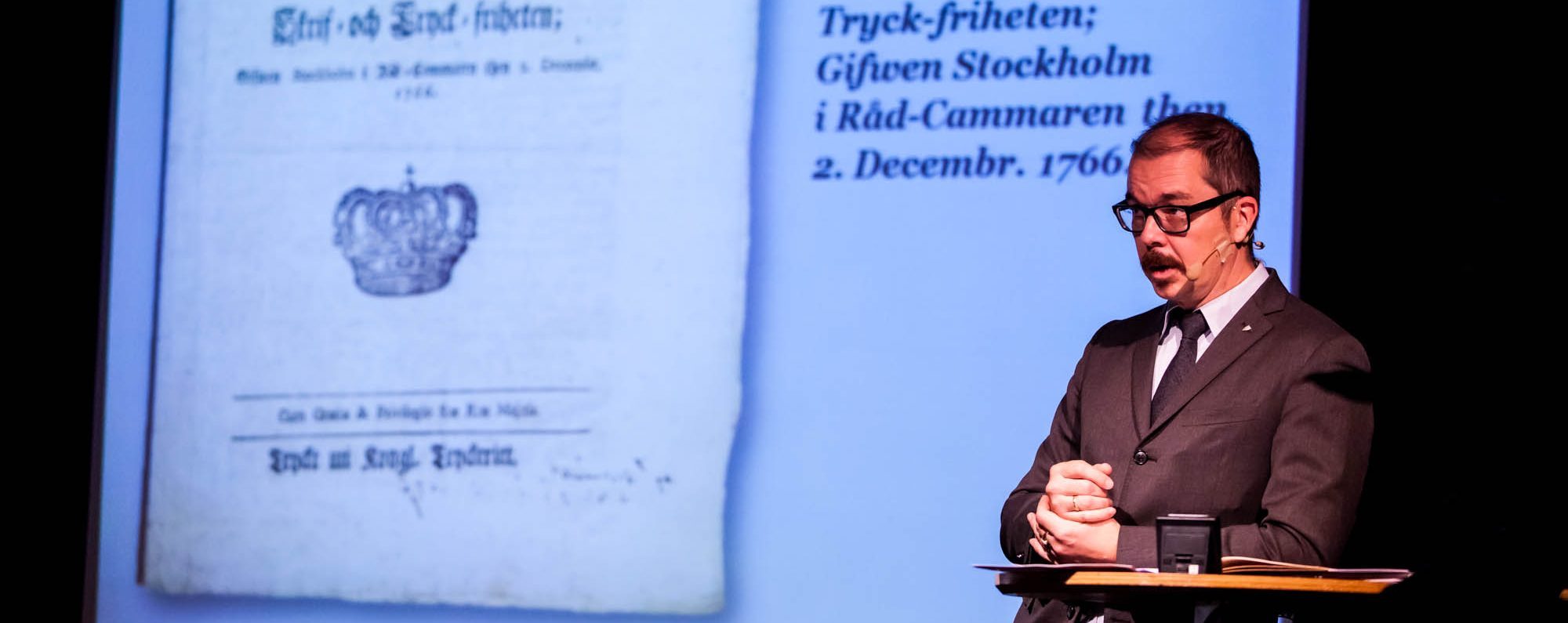
Jonas Nordin serves as Professor of Book and Library History and Assistant Head of Department with responsibility for research and doctoral education at Lund University's Department of Arts and Cultural Sciences, where he also manages the Division of Book History. His academic career spans multiple prestigious institutions, including Stockholm University where he holds an associate professorship in history, and the Royal Library/The National Library of Sweden where he worked from 2007-2018. Nordin earned his PhD in history from Stockholm University, establishing the foundation for his specialized expertise in early modern European history. His educational trajectory has uniquely positioned him to examine the complex interplay between political structures, cultural production, and knowledge dissemination during transformative historical periods. Nordin's research program centers on the critical intersection of book history, library history, and political history during the 17th and 18th centuries, with particular emphasis on Scandinavian contexts. His groundbreaking work on Sweden's Freedom of the Press Ordinance of 1766 has established him as a leading authority on early press freedom developments. Nordin frequently employs a methodological approach that combines political history with cultural history, revealing how visual representations, censorship mechanisms, and intellectual networks shaped national identity formation. His extensive scholarship on Erik Dahlbergh's Suecia antiqua et hodierna demonstrates his commitment to reevaluating historical works beyond simplistic characterizations of propaganda, instead revealing their complex historical significance. Analysis of Nordin's recent scholarly output reveals a consistent interdisciplinary focus spanning history, law, political science, and cultural studies. His publications demonstrate remarkable depth in examining the historical development of freedom of expression, particularly through multiple angles on Sweden's pioneering 1766 legislation. A distinctive feature of his work is the seamless integration of visual culture analysis with political history, as evidenced by his studies of Dahlbergh's topographical works and private library collections. Nordin's research also extends to scholarly networks of the Linnaean era and the complex relationship between Sweden and Finland before 1809, showcasing his ability to connect micro-historical studies with broader historical narratives. Principal investigator for Royal Library's Suecia antiqua et hodierna digitization project (2011-2016) Author of successful UNESCO World Heritage nomination for Swedish Freedom of the Press Ordinance (2023 designation) President of the Swedish Society for Eighteenth-Century Studies Co-editor of significant volumes including 'Media and Mediation in the Eighteenth Century' and 'The Baltic Battle of Books' As Manager of Research and Research Education, Nordin oversees doctoral programs and research activities within his department. His teaching portfolio includes ABMM50 (Library and Information Studies), BBHK02 (Book History), ETNK02 (Ethnology), ILHK03 (History of Ideas), and MUVK02 (Musicology). Beyond his institutional responsibilities, Nordin actively engages with public history through media appearances, including participation in SVT's 'History of Sweden' series and contributions to digital archives like the 'Visiteurs de Versailles' database. Nordin's scholarly approach bridges traditional historical methods with digital humanities techniques, exemplified by his creation of a seamless digital wallpaper of all Suecia antiqua et hodierna images. His current research directions suggest continued exploration of media and mediation in the eighteenth century, with potential expansion into innovative digital approaches to historical materials and deeper examination of connections between visual culture, political power, and intellectual networks.
Nasrine Olson is a researcher at the Department of Library and Information Science, University of Borås. She serves as Director of INCLUDE - Center for Inclusion Research and coordinates the Horizon Europe MuseIT project, focusing on inclusive digital heritage technologies. Her work bridges accessibility research, human-centered design, and cultural heritage preservation.