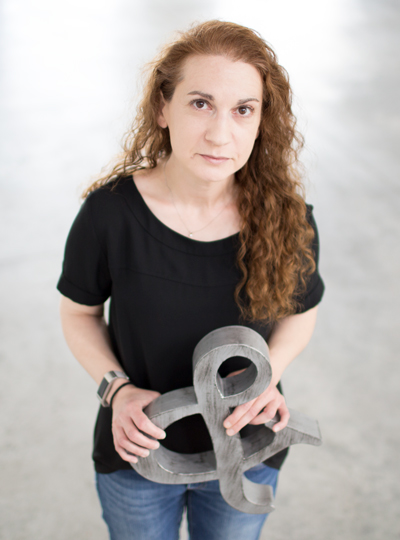
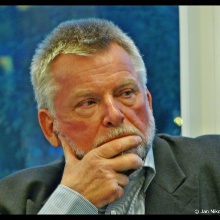
Monica Berlin was the Richard & Sophie D. Henke Distinguished Professor of English at Knox College, serving from 1998 until her passing in 2022. She held leadership roles as Chair of the Department of English and Associate Director of the Program in Creative Writing. Her academic background includes a B.A. in English Writing (1995, Knox College), M.A. in Literature and Composition (1998, Western Illinois University), and M.F.A. in Poetry (2002, Vermont College). Her research focuses on creative writing (poetry, nonfiction, fiction) and modern/contemporary American literature. She has published extensively in literary journals and anthologies, earning major awards like the Crab Orchard Poetry Series Open (2018) and New Measure Poetry Prize (2013). Her collaborative work with Beth Marzoni has been widely recognized in literary circles. Beyond academia, Berlin directed The Space (a literary center) and spearheaded digital archives like A Map of Voices: The Knox Writers' House . She contributed to campus governance as a member of the Faculty Personnel Committee and engaged with the community through roles at the Galesburg Public Library and literary festivals. Students praise her ability to guide them in refining their craft, emphasizing the 'elusive mechanics of writing.' Her legacy includes fostering literary innovation and accessibility in education and public spaces.
Celestine Mendler-Dünner is a Principal Investigator at the ELLIS Institute in Tübingen, co-affiliated with the Max Planck Institute for Intelligent Systems and the Tübingen AI Center. She leads the Algorithms and Society research group, focusing on machine learning in social contexts and the role of prediction in digital economies. Her work bridges theoretical machine learning with practical societal impact, developing tools for safe, reliable, and equitable AI ecosystems. Her educational background includes a PhD from ETH Zurich in collaboration with IBM Research, followed by an SNSF postdoctoral fellowship at UC Berkeley hosted by Moritz Hardt. She was previously a group leader at the Max Planck Institute for Intelligent Systems before joining the ELLIS Institute. Mendler-Dünner's research spans several interconnected themes including performative prediction (where predictions change the behavior they aim to predict), algorithmic collective action (how participants can steer AI systems toward common goals), and the role of LLMs in social science research. Her work combines theoretical foundations with practical implementations, addressing challenges in interactive machine learning, optimization in dynamic environments, and context-specific evaluation of AI systems. She particularly examines how algorithmic predictions mediate services and platforms at societal scale, exploring concepts of economic power in digital markets. Her publication record shows a clear evolution from system-aware machine learning algorithms (including foundational work on IBM Snap ML) toward increasingly sociotechnical questions at the intersection of machine learning, economics, and policy. Recent work focuses on measuring performative power in digital economies, evaluating LLMs as risk scores, and developing frameworks for algorithmic collective action in recommender systems and labor markets. Among her notable recognitions are the ETH Medal for her dissertation, the IBM Research Division Award, the Fritz Kutter Award, and the IBM Eminence and Excellence Award. She is an ELLIS Scholar, a fellow of the Elisabeth-Schiemann-Kolleg, and affiliated with several prestigious research programs including the International Max Planck Research School for Intelligent Systems and the Max Planck ETH Center for Learning Systems. ETH Medal (dissertation award) IBM Research Division Award Fritz Kutter Award IBM Eminence and Excellence Award SNSF Early Postdoc Mobility Fellowship Mendler-Dünner actively mentors the next generation of researchers, advising PhD student Patrik Wolf and supervising research interns including Joachim Baumann, Haiqing Zhu, and Anna Badalyan, as well as Master's student Dorothee Sigg. She serves as core faculty for the International Max Planck Research School and associated faculty for the Max Planck ETH Center for Learning Systems. Her group has secured significant research funding through fellowships and institutional support, enabling work on projects like Powermeter (measuring search engine influence) and Snap ML (resource-efficient machine learning library with over 1 million PyPI downloads). She leads the Algorithms and Society research group, which examines machine learning as part of broader sociotechnical ecosystems. The group explores human-population interactions with algorithmic systems and incorporates these insights into learning system fundamentals. Current projects include investigating economic incentives in digital platforms, developing tools for systematic LLM evaluation in social science contexts, and creating frameworks for collective action in algorithmic systems. Mendler-Dünner also co-organizes the Algorithmic Collective Action workshop at NeurIPS 2025, demonstrating her leadership in emerging research directions at the AI-society interface.
Roles & Affiliations: Ikhlas Khan serves as Director of the National Center for Natural Products Research (NCNPR), Distinguished Professor, and Research Professor of Pharmacognosy at the University of Mississippi's School of Pharmacy. He also leads the FDA Program and coordinates natural products research across multiple initiatives, including the Sino-US TCM Research Center and the Center for Research of Indian Systems of Medicine (CRISM). Education: B.Sc. Chemistry (1980) - Aligarh Muslim University, India M.Sc. Organic Chemistry (1982) - Aligarh Muslim University, India Ph.D. Pharmacy (1987) - Ludwig-Maximilians-Universität, Munich Postdoctoral Studies - Swiss Federal Institute of Technology (ETH), Zurich Research Focus: Dr. Khan specializes in natural products research with emphasis on: Phytomedicine: Standardization of herbal products via analytical fingerprinting, pesticide/herbicide residue analysis, and bioanalytical quality control. Drug Discovery: Isolation of bioactive natural products, development of analytical methods for phytochemical characterization, and chiral separation techniques. Metabolism Studies: Role of metabolism in drug/natural product activity, particularly in aminoquinoline antimalarials. His work bridges academia, industry, and regulatory bodies, shaping policies for botanical supplements. Key Contributions: Over 850 peer-reviewed publications and leadership in high-impact projects like the FDA Center of Excellence. His lab pioneered methods to combat herbal product adulteration and safety issues. Awards & Recognition: UM Distinguished Professor Award (2018) Wiley Award (AOAC International, 2018) Qihuang International Prize (2017) Honoris Causa Doctorate (University of Hamdard, 2012) Labs & Collaborations: Directs the NCNPR, a global leader in natural products research, and collaborates with institutions worldwide. His team develops technologies for herbal product authentication and drug metabolism studies.
Johnny Golding is a Professor at the Royal College of Art (RCA), School of Arts & Humanities. His career spans roles such as Director of the Centre for Fine Art Research at Birmingham City University, Professor of Philosophy in the Visual Arts & Communication Technologies (2000–2012), and honorary Professorship in Philosophy and Imaging at Dundee School of Art (2009). Born in New York, he holds a PhD from the Universities of Toronto and Cambridge. Education : - PhD in Philosophy from the Universities of Toronto and Cambridge. - Earlier studies in Toronto and New York. Research Interests : Golding’s work explores post-Newtonian analytics, new materialisms, and the erotics of sense as 'radical matter.' His interdisciplinary approach bridges art, philosophy, and 'wild sciences' like AI, robotics, and quantum theory. Key themes include data proliferation's societal impact, emergent systems, and the interplay between art and technology. Recent Articles & Projects : Focus on Data Loam (2020), exploring future knowledge systems through art and science collaborations. Recent works address radical empathy, distributed intelligence, and the ethics of AI. His 2018 opera Entanglement: The Opera and installations like Of The Thick and the Raw exemplify his practice-led philosophy. Grants & Leadership : - Led the Data Loam project (FWF-PEEK funded), involving over 20 artists and scholars. - PI for AiDesign Labs on generative AI at RCA. Labs & Collaborations : - Radical Matter Lab (2017–2018), a pedagogical experiment at RCA. - Collaborations with institutions like the University of Applied Arts Vienna and the British Library.
David Arbesú is Professor of Spanish at the University of South Florida, serving as Head of the Spanish Section and Graduate Program Director for the MA in Spanish within the Department of World Languages. He has presented at over 70 national and international conferences on medieval and Golden Age Spanish literature. His research specializes in manuscript studies, codicology, and palaeography, with significant contributions to Golden Age textual scholarship and Florida colonial history. Arbesú has discovered key historical manuscripts including Pedro Menéndez de Avilés' conquest records and legal proceedings concerning colonial Florida, demonstrating interdisciplinary expertise in literary analysis and historical documentation. Recent publications (2018-2023) reveal sustained focus on critical editions of medieval Spanish texts like Sendebar and Libro de los gatos , alongside colonial Florida manuscripts. His work consistently bridges philological precision with historical context, producing authoritative editions that illuminate textual transmission and cultural frameworks of Iberian literature. Arbesú serves on the Editorial Board of Harvard UP’s Dumbarton Oaks’ Medieval Library Spanish Series and as Book Review Editor for La corónica: A Journal of Medieval Hispanic Languages, Literatures, and Cultures , maintaining active leadership in scholarly publication standards.
Dr Melanie Brunner is a Lecturer in Medieval Studies at the University of Leeds, affiliated with the School of History and the Institute for Medieval Studies. She holds a PhD in Medieval Studies from the University of Leeds and an MA in History and English from Universität Augsburg. Her research focuses on late medieval ecclesiastical history, papal administration, and the history of mendicant orders, particularly the Franciscans. She has contributed to major projects like the International Medieval Bibliography and led research networks such as the DFG-Netzwerk Imitation and Stilus Curiae. Her work explores political culture of the Avignon papacy, canon law dynamics, and religious reform movements. Education: PhD (Medieval Studies, University of Leeds), MA (History and English, Universität Augsburg). Professional affiliations include the Ecclesiastical History Society and Mediävistenverband. She supervises doctoral students in areas like Franciscan history, papal politics, and medieval book culture. Current projects include editorial direction of the International Medieval Bibliography and leadership of the MA Medieval Studies program. Research Interests: Late medieval papal governance, mendicant orders' institutional development, theological debates on poverty, and decision-making mechanisms in the Avignon Curia. She examines how theology, law, and political strategy intersected in medieval church administration. Advising & Grants: Supervises 4 current PhD students and has completed 6 theses. Involvement with EU-funded COST Action IS1301 and White Rose Collaboration Fund projects. Collaborates internationally with institutions like the Sächsische Akademie der Wissenschaften and Universität Zürich. Labs/Teams: Core member of research groups including Galleries, Libraries, Archives, and Museums (GLAM) and Politics, Diplomacy, and International History at Leeds. Active in interdisciplinary medieval studies networks.
Dr. Nanpeng Yu is a Full Professor at the University of California, Riverside , serving as Vice Chair and Graduate Advisor in the Department of Electrical and Computer Engineering . He maintains cooperative faculty affiliations with the Department of Computer Science and Department of Statistics , and directs the Energy, Economics, and Environment Research Center at UCR. Education : B.S. in Electrical Engineering from Tsinghua University (2006), M.S. in Electrical Engineering and Economics, and Ph.D. from Iowa State University (2010) Prior Industry Experience : Senior Power System Planner and Project Manager at Southern California Edison (2011-2014) Dr. Yu’s research bridges smart grid technologies , data-driven optimization , and machine learning for energy systems. Key areas include voltage control , renewable energy integration , transportation electrification , and grid resilience . His recent work focuses on physics-informed graph learning for unit commitment problems and adversarial purification in power system classifiers. The AI-Energy Nexus Laboratory under Dr. Yu has produced impactful publications in Applied Energy , IEEE Transactions on Power Systems , and Transportation Research series, covering topics like heavy-duty EV charging infrastructure and dynamic distribution network reconfiguration . Lab members have won the American-Made Digitizing Utilities Grand Prize ($300,000) from the U.S. DOE. Leadership Roles : Chair, IEEE Power and Energy Society Distribution System Operation and Planning Subcommittee Chair, IEEE Power and Energy Society Working Group on Data-Driven Modeling for Power Distribution Networks Associate Editor, IEEE Transactions on Smart Grid and IEEE Power Engineering Letters Scientific Awards : Regents Faculty Fellowship Regents Faculty Development Award Multiple IEEE Best Paper Awards
Marcela Echeverri Muñoz is an Associate Professor in the Department of History at Yale University, affiliated with the Faculty of Arts and Sciences. Her scholarship bridges history, anthropology, and political theory, with a focus on Latin America, the Atlantic World, and the Spanish Empire. She is recognized for her interdisciplinary approach to understanding political subjectivities, state formation, and social transformation during the Age of Revolutions. PhD in Latin American and Caribbean History, New York University, 2008 MA in History of the Hispanic World, Fundación MAPFRE-Tavera and CSIC, Madrid, 2006 MA in Social and Political Theory, The New School for Social Research, 2001 BA in Anthropology, Universidad de los Andes, Bogotá, 1997 Her research centers on the interplay of race, gender, law, and political theory in colonial and 19th-century Latin America. She investigates how enslaved and Indigenous peoples navigated imperial and republican transitions, particularly through royalist affiliations. Her work challenges peripheral narratives of Spanish America in Atlantic slavery studies, positioning the region as a central site of abolitionist and constitutional experimentation. The trends in her recent publications reveal a sustained focus on slavery, abolition, and political transformation in the Spanish American mainland. She analyzes how anti-slavery movements were intertwined with republicanism, citizenship, and state formation, especially in Gran Colombia. Her scholarship spans legal history, Atlantic processes, and transimperial dynamics, often highlighting marginalized voices in revolutionary contexts. She frequently contributes to major reference works and edited volumes on Atlantic revolutions and Latin American independence. Her scientific awards and fellowships reflect her standing in the field: James Alexander Robertson Prize Michael Jiménez Prize Bolton-Johnson Prize Honorable Mention Yale Heyman Prize for Outstanding Scholarly Publication Alexander von Humboldt Research Fellowship MacMillan Research Fellow, Yale Mellon Residential Fellow, CUNY NEH Summer Institute Participant, Johns Hopkins Fellowships from John Carter Brown Library, CSIC, Fundación Mapfre, and Instituto Colombiano de Antropología e Historia Echeverri has secured significant research grants from Harvard’s Atlantic History Seminar, CUNY Research Foundation, and Yale. She has co-edited special issues on Gran Colombian history and Spanish American abolition, and led key academic initiatives including the Race and Slavery in the Atlantic World Working Group and the Early Modern Empires Workshop at Yale. Though student advising is not explicitly detailed, her role as a senior scholar implies mentorship of graduate students. She is affiliated with several research networks and has been a visiting scholar at institutions such as Freie Universität Berlin. Her ongoing book project on Gran Colombian slavery underscores her commitment to redefining the hemispheric significance of Latin American abolition. She remains an active contributor to both scholarly and pedagogical conversations in Atlantic and Latin American history.
Robyn Fox is an Associate Lecturer in the School of Education and Tertiary Access at the University of the Sunshine Coast (UniSC), Australia, teaching in Bachelor of Education (Secondary)/Bachelor of Recreation and Outdoor Environmental Studies programs with emphasis on foundational outdoor studies and paddling-based engagement methods. Her educational qualifications are: MAIntEd, Endicott College MA, DipEd, LaTrobe University BA, LaTrobe University Her research centers on sustainability integration and ecological literacy in outdoor education, driven by her planned PhD investigating embedded sustainable practices. She champions experiential learning through natural environments to foster environmental consciousness and climate-responsive pedagogy. Analysis of her 2022-2025 publications reveals dominant themes in climate change education within outdoor contexts, featuring innovative approaches like near-peer teaching and nature journaling while addressing eco-anxiety and Indigenous knowledge systems. Her scholarship consistently advocates for curriculum transformation toward ecological stewardship and climate action. Robyn actively involves students in community initiatives: Collaborated with Thai army and Regent’s School students to rebuild tsunami-damaged homes in Thailand (2004) Established sports programs between Khartoum International Community School and local institutions in Sudan Coordinated orphanage library setup with Luanda International School in Angola Current participant in Alexandra Headland Community Association’s foreshore regeneration projects
Noah D. Gardiner serves as Associate Professor and Director of Undergraduate Studies in the Department of Religious Studies at the University of South Carolina's College of Arts and Sciences. His academic journey includes a Ph.D. in Near Eastern Studies from the University of Michigan (2014), followed by positions as Lecturer in Islamic Studies at Michigan and a postdoctoral fellowship at Annemarie Schimmel Kolleg, Rheinische Friedrich-Wilhelms Universität Bonn. Gardiner's scholarly focus centers on Islamic thought and culture with particular emphasis on Sufism, esotericism, occult sciences, and manuscript culture in the 12th-15th century Arabic-speaking Mediterranean. His research explores the 'science of letters and names' (ʿilm al-huruf wa-al-asmaʾ), religious cosmology, and apocalypticism, examining how mystical ideas move between religious margins and centers. His work reveals significant connections between Islamic occult traditions and other esoteric systems like Jewish Kabbalah. His extensive publication record includes the monograph Ibn Khaldūn versus the Occultists at Barqūq's Court (2020), co-editing the special issue Islamicate Occultism: New Perspectives (2017), and numerous articles in leading journals. His current research focuses on the 13th-century Sufi occultist Aḥmad al-Būnī and the broader occult renaissance in 14th-15th century Cairo. Gardiner actively contributes to the scholarly community through his role as co-organizer of the international online workshop 'Islamic Occult Studies on the Rise' and administrator of the scholarly resource site islamicoccult.org, which showcases emerging scholarship in Islamic esotericism. He teaches courses spanning foundational religion studies to specialized topics including Islam, Qur'an, Hadith, Islamic Theology, Sufism, and Religion and the Fantastic.
Dr. James D. Foley is a Professor in the College of Computing and the School of Electrical and Computer Engineering at Georgia Institute of Technology. He holds the Stephen Fleming Chair in Telecommunications. He earned his Ph.D. in Computer Information and Control Engineering from the University of Michigan and a BSEE from Lehigh University, where he was inducted into Phi Beta Kappa, Tau Beta Pi, and Eta Kappa Nu. Founded the Graphics, Visualization & Usability (GVU) Center at Georgia Tech, ranked #1 in graphics and user interaction. Directed Mitsubishi Electric Research Lab and later served as CEO of Mitsubishi Electric ITA. Executive Director of Yamacraw, Georgia's broadband development initiative. His research focuses on computer graphics, human-computer interaction (HCI), visualization, and user interface design. He co-authored foundational textbooks like Interactive Computer Graphics , translated into multiple languages. Professional leadership includes Chair of the Computing Research Association (CRA), Fellowships with ACM and IEEE, and the ACM/SIGGRAPH Stephen Coons Award. He advised over 30 graduate students and led numerous conferences, panels, and editorial roles in top journals. Contributions span academia and industry, including roles in NSF workshops, JTEC studies on HCI in Japan, and advisory boards for institutions like MIT and Lehigh University.
Susan Schreibman serves as Full Professor and Key Domain Chair of Digital Arts and Culture within the Faculty of Arts and Social Sciences at Maastricht University. She concurrently holds board positions at the National Library of Ireland and Research School Media Studies, and serves as Academic Editor for the University of Illinois Press. Her research centers on computationally-driven analysis of digital archives, cultural innovation, and participatory engagement design, with core specializations in Digital Humanities, Media Studies, Literary Modernism, and Irish Cultural Studies. She pioneers methodologies for remediating analog publication modalities into born-digital paradigms while critically examining their societal impact. Analysis of her 2022-2025 publications reveals dominant trends in 3D digital scholarship (particularly multimodal historical narratives like the Battle of Mount Street Bridge project), feminist approaches to digital humanities infrastructure, and social justice applications in archival systems. Her work consistently bridges technical innovation with cultural critique across heritage, education, and gender studies contexts. No scientific awards were documented in the source materials. Professor Schreibman leads significant research initiatives including PURE3D Contested Memories and #dariahTeach, indicating active grant-funded collaborations though specific funding sources remain unmentioned. Her editorial role for University of Illinois Press and co-edited volumes like Feminist Digital Humanities: Intersections in Practice (2025) demonstrate scholarly leadership. She directs the PURE3D project developing 3D reconstructions of historical events, contributes to the #dariahTeach digital humanities education platform, and participates in the IGNITE initiative advancing digital scholarly practices. These efforts operate within Maastricht University's Faculty of Arts and Social Sciences infrastructure with external partnerships at cultural institutions like the National Library of Ireland.
Gerhard Hirschfeld is an Honorary Professor at the Department of History, University of Stuttgart, and has served as Director of the Bibliothek für Zeitgeschichte since 1989. His research focuses on Social and Cultural History of World War I , Comparative Occupation History of World War II , 20th Century Netherlands History , and Academic Emigration post-1933 . He has been a Fellow of the Netherlands Institute of Advanced Studies in the Humanities and Social Sciences (1996/1997, 2006/2007) Fellow of the German Historical Institute London and held leadership roles including Chair of the German Committee for the History of WWII (1991–2000) and President of the International Committee for the History of WWII (2000–2010). His publications span monographs, edited volumes, and essays on occupation policies, collaboration, and exile studies. Recent works emphasize the media representation of WWI , continuity of nationalist rhetoric , and ethical dimensions of historical taboos . He contributes to journals like Zeithistorische Forschungen and Tijdschrift voor Geschiedenis . Scientific awards include Fellowships at NIAS and DHIL Editorial leadership in academic series like Zeit der Weltkriege and Schriften der Bibliothek für Zeitgeschichte and advocacy for interdisciplinary war studies.
Arthur Weststeijn is an Assistant Professor in Political History at Utrecht University, specializing in the history of the Dutch Republic and its colonial empire, the history and contemporary politics of Italy, and the history of Spain and Latin America. He is affiliated with the Department of History and Art History within the Humanities faculty and is part of the Research Institute for History and Art History, focusing on International and Political History. Dr. Weststeijn's educational background includes: PhD in History, European University Institute, Florence (2010) RMA in History, European University Institute, Florence (2006) MA in Philosophy, University of Amsterdam (2005) MA in History, University of Amsterdam (2004) Erasmus Exchange, Universidad de Sevilla (2000-2001) His research focuses on the intellectual history of power, particularly examining ideas that express and contest political authority through two main themes: colonialism (how ideas have shaped European colonialism and resistance against it) and republicanism (how resistance to autocratic rule has given rise to ideas of liberty, citizenship, and democracy). His work spans early-modern Dutch colonialism, anticolonial thought, the history of democracy, and connections between ancient and modern forms of settler colonialism. He has published extensively on early modern republicanism, the political uses of classical heritage, and the making of modern Italy. Weststeijn's scholarly output demonstrates a consistent focus on the intersections between political thought, colonial history, and republican theory. His work often examines how historical ideas continue to shape contemporary political discourse, particularly regarding democracy, citizenship, and colonial legacies. He frequently engages with both European and transatlantic intellectual traditions, showing particular expertise in Dutch and Italian political thought. His notable awards and fellowships include: Fellow, Huntington Library, San Marino, California (Summer 2022) Fellow, John Carter Brown Library, Providence, Rhode Island (Spring 2019) Director of Historical Studies, Royal Netherlands Institute in Rome (2011-2017) Dr. Weststeijn has served as a visiting researcher at prestigious institutions including the Cambridge Centre for Political Thought, University of Southern California, University of Wisconsin at Madison, and University of Padua. He frequently appears as an expert commentator on Italian culture and politics in Dutch media and maintains an active public intellectual presence. He is involved in multiple research initiatives including the IOS research themes on Contesting Governance, Futures of Democracy, and Longtermism and Institutional Change. His work often involves interdisciplinary collaboration with archaeologists, classicists, and scholars from various humanities disciplines.
Lucia Binotti is a Professor of Spanish and Digital Humanities at the University of North Carolina at Chapel Hill (UNC-CH), with dual affiliations in the Department of Romance Studies and interdisciplinary Digital Humanities initiatives. She serves as Graduate Advisor for Hispanic Linguistics and Director of the Honors Study Abroad Program in Rome. Her work bridges traditional philology with cutting-edge digital scholarship, emphasizing immersive learning experiences through virtual reality (VR) and augmented reality (AR) technologies. Binotti holds a Ph.D. from UC Santa Barbara (1990), an MA (1985), and a BA (1984) in Romance Philology from the Università degli Studi di Pisa. Her research focuses on linguistic identity, cultural heritage preservation, and innovative educational platforms like Amirabilia—the world’s first experiential learning platform. Notable projects include nXimena (healthcare training for Latinx abuse survivors) and Entiendelo (a linguistic/cultural navigation app for Latinx communities). Her scholarly interests span Early Modern Spanish literature, digital humanities applications, and the intersection of technology with social justice. She has directed grants totaling over $500K for projects involving AR/VR integration in education, including collaborations with the UNC Health Science Library and NCSU’s DELTA initiative. Recent awards include the John K. Walsh Award (2010) and Digital Innovation Fellow status (2014). Grants & Leadership: CFE-Lenovo Technology Grants (2018–2019) for AR/VR expansion iLRN 2020 International Co-Chair XR Faculty Learning Community Leader (UNC) Teaching: Courses span from introductory Hispanic literature to advanced topics like medieval intellectual history and digital humanities methodologies. Binotti’s work emphasizes ‘place, presence, and perspective’ in Cyber-Humanities education, particularly addressing marginalized communities through technology-driven solutions.