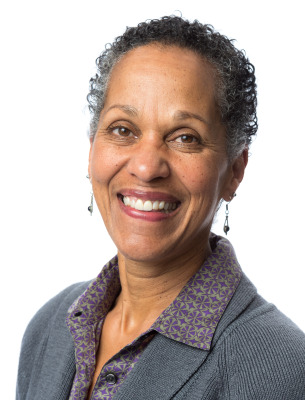
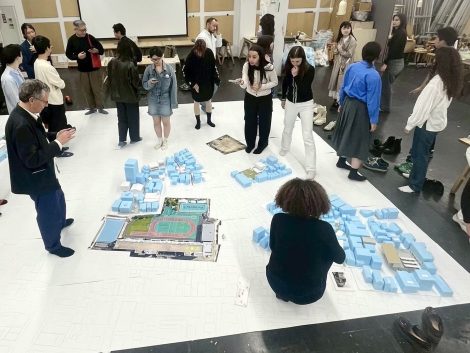
Professor Susannah Quinsee is the Vice President (Digital and Student Experience) and Senior Diversity Ambassador for Race Equality at City, University of London. She leads on digital transformation, student experience, post-pandemic educational strategies, curriculum design, and staff development. Her team oversees Library Services, Learning Enhancement, Digital Education, and collaborations across academic divisions. She is a Lego Serious Play facilitator, integrating creative methods into leadership and change management. Previously, she served as Director of Learning Development and Chair in Learning and Teaching Development. Her expertise spans online learning, student support, and large-scale institutional change. Key roles include National Teaching Fellow (2011), Learning and Teaching Excellence Ambassador (2017), and Visiting Professor at the University of Northampton. She has advised national agencies like AdvanceHE and authored widely on educational leadership, playful pedagogy, and digital strategies. Her research focuses on playful leadership and change management, addressing how institutions adapt to evolving educational landscapes. Awards include the National Teaching Fellowship and HEA Principal Fellowship, reflecting her contributions to teaching excellence and professional development.
Danette Day is an Associate Professor in the Education Department at Fitchburg State University. With over 30 years of experience in diverse educational settings, she specializes in school leadership, diversity pedagogy, educational psychology, curriculum development, and cultural competency. Her teaching includes courses like FYE Seminar: Cultivating Resilience and Developing Culturally Proficient Educators for a Democratic Society . Ed.D. in Teacher Education and School Improvement (2014), University of Massachusetts Amherst CAGS in Educational Leadership and Management (2007), Fitchburg State College M.Ed. in Instructional Technology (1999), Lesley University M.A. in Teaching (1990), Simmons College Research Focus : Danette investigates cultural proficiency , student sense of belonging , and mindfulness-based inclusive practices . She co-led a NSF DRK12 proposal (2020) on mindfulness in Early College High Schools and studied library access for underrepresented students via a 2020-21 Special Projects Grant. Contributions : As a Faculty Academy member, she redesigned curriculum for active learning. Her publications span topics like social justice in statistics education, mindfulness in classrooms, and leadership feedback mechanisms. 2020-2021 Special Projects Grant (collaboration with Connie Strittmatter) Faculty Academy, Fitchburg State University (1st cohort)
Yongjoo Park is an Assistant Professor in the Department of Computer Science at the University of Illinois at Urbana-Champaign (UIUC), affiliated with the Grainger College of Engineering. He leads research in data-intensive AI systems as a member of the Data and Information Systems (DAIS) lab, focusing on novel data systems that bridge database theory and practical AI applications. His work emphasizes open-source contributions through GitHub and direct societal impact. Research interests center on systems for data-intensive AI , particularly efficient Retrieval-Augmented Generation (RAG) systems for exploratory AI, data science versioning, and in-storage computing. Key projects include Kishu (the world's first undoable Jupyter notebook with time-travel capabilities), CARE (a causal-relational system for structured/unstructured data), and AirDB/AirIndex (serverless transactions and automatic index optimization). His group develops tools enabling scalable, optimized AI workflows from storage layers to LLM inference. Recent publications reveal a strong focus on interactive data systems (85% of recent work), with significant contributions to notebook environments (Kishu), vector databases (ISCA'25), and RAG optimization. Awards highlight technical innovation, including SIGMOD 2025 Best Demo Award and NSF CAREER funding. His open-source philosophy drives GitHub releases of all major systems. SIGMOD 2025 Best Demo Award (Kishu) NSF CAREER Award (Novel data science systems) SIGMOD'23 Best Artifact Award Honorable Mention (DeepOLA) IBM-Illinois Project Selection (VectorDB/RAG) Mentorship spans 12 current PhD/MS students and 6 graduated advisees, including Supawit Chockchowwat (now Postdoc at Google, future Assistant Professor at CMKL University). He teaches advanced courses like CS511 (Advanced Data Management) and recruits 1-2 new PhD students annually, prioritizing data systems research. His lab emphasizes diversity, individual respect, and concrete outcomes in a collaborative workspace.
Dr. Anett Hoppe is a research staff member at the Leibniz Information Centre for Science and Technology (TIB) in Hannover, Germany, where she works in the Visual Analytics research group. Her research focuses on the intersection of artificial intelligence, education technology, and information science, with particular emphasis on how people learn through search processes and educational video consumption. Dr. Hoppe completed her academic journey with: Ph.D. in Semantic Web technologies for online user profiles from the University of Burgundy, Dijon, France Her primary research interests span Search as Learning, software-based support for scientific reproducibility, and ethical considerations in computer-based decision making. She investigates how visual elements, reading sequences, and AI technologies impact knowledge acquisition during web search and educational video consumption. Her work bridges human-computer interaction, educational psychology, and information retrieval to create more effective learning experiences, with recent publications examining the role of large language models, vision-language models, and visual complexity in educational contexts. Analysis of her recent publications (2024-2025) reveals a strong interdisciplinary focus combining computer science, educational psychology, and information science. Her research examines video-based learning effectiveness, knowledge gain prediction, educational resource discovery, and the impact of visual elements on learning outcomes. She consistently explores how AI technologies can be leveraged to enhance educational experiences while maintaining attention to ethical considerations and scientific reproducibility. Dr. Hoppe maintains active collaborations with researchers across multiple institutions, with frequent co-authorship patterns indicating strong research partnerships, particularly with Ralph Ewerth and other members of the Visual Analytics group at TIB. Her work supports TIB's mission to advance knowledge infrastructure and scholarly communication through innovative technological solutions while directly addressing practical challenges in educational technology and information retrieval.
Prof. Dr. Tobias Gemmeke is a University Professor at RWTH Aachen University's Faculty of Electrical Engineering and Information Technology, leading the Chair of Integrated Digital Systems and Circuit Design. His work focuses on neuromorphic computing, hardware accelerators, and energy-efficient electronics. He has pioneered advancements in FPGA-based computational neuroscience simulators, neuromorphic processor architectures, and sensor integration for industrial and medical applications. Research interests include time-domain computing, ReRAM reliability, and co-optimization of neural networks with hardware. Notable contributions include the neuroAIx framework for accelerated neuroscience simulations and energy-efficient ASIC designs for post-quantum cryptography. He actively explores memristive devices and domain generalization techniques for edge computing. Recent publications highlight innovations in spiking neural networks, sensor systems for plain bearings, and time-domain compute-in-memory engines. His work bridges theoretical neuroscience with practical hardware implementations, emphasizing scalability and real-time performance.
Niamh Pattwell is Associate Professor and Head of School at the School of English, Drama and Film, University College Dublin. She holds a PhD from Trinity College Dublin and has been a faculty member at UCD since 2004, progressing from Lecturer in Old and Middle English to her current role. Her academic leadership extends to curriculum development, postgraduate teaching, and serving on university committees, including the Board of Trustees for UCD Volunteer Overseas. Her educational background includes a BA, H.Dip.Ed., H.Dip.T.Rel.Ed., and MA from University College Cork, and a PhD from Trinity College Dublin. She taught secondary school in Co. Wexford and Co. Cork before transitioning to higher education, holding teaching fellowships at Queen’s University Belfast and Trinity College Dublin. Niamh Pattwell's research focuses on the circulation and transmission of vernacular religious prose in the late Middle Ages. She has developed expertise in codicology, palaeography, and manuscript fragment studies, particularly through her work with Marsh's Library and the Index of Middle English Prose at Trinity College Dublin. Her scholarship explores the production, readership, and theological context of both orthodox and Wycliffite texts. Her recent publications show a consistent focus on Middle English religious prose, manuscript provenance, and the material culture of books. She has contributed to the Year's Work in English Studies and published on fragments, personal notebooks, and devotional texts, reflecting a deep engagement with the material and spiritual dimensions of medieval manuscripts. National Digital Learning Resources Award (2012) Broad Curriculum Post-doctoral Teaching Fellow, Trinity College Dublin (2003–2004) Irish Research Council for the Humanities and Social Sciences Postgraduate Scholarship (1999–2002) Niamh Pattwell has successfully supervised postgraduate students to MA and PhD completion and has led curriculum innovation at UCD, including the development of research-based modules on medieval manuscript fragments. She has secured internal research grants such as the HoS Research Support Scheme and has been actively involved in organizing major academic events, including the Early Book Society Biennial Conference in 2019 and 2023. Her teaching includes modules on King Arthur, medieval literature, and animal narratives, emphasizing student engagement with primary texts. She collaborates with institutions such as Marsh's Library and Trinity College Dublin and has contributed to public engagement through radio appearances and public lectures. Her work bridges academic research, teaching innovation, and cultural heritage preservation.
Claudia Berger is a Visiting Assistant Professor at the School of Information, Pratt Institute, and serves as the Digital Humanities Librarian at Sarah Lawrence College. They are actively engaged in digital scholarship, critical making, and interdisciplinary research at the intersection of libraries, technology, and the humanities. Education: MSLIS and Advanced Certificate in Digital Humanities, School of Information, Pratt Institute MA in Classics & Ancient History, University of Exeter BA in Electronic Media & Art and Classics, Bard College at Simon’s Rock Their research focuses on innovative methodologies in digital humanities, particularly data physicalization, digital environmental humanities, and critical engagement with data through craft and tactile experiences. They explore how digital tools can be reimagined through embodied and inclusive practices, often integrating queer perspectives and ecological awareness into scholarly work. Their recent publications reflect a strong trend toward interdisciplinary making, environmental justice, and pedagogical innovation in library and information science. Themes include countermapping, plant-human relations, craft-based digital scholarship, and inclusive professional identity formation. Their work bridges technical practice with critical theory, emphasizing accessibility and material engagement. Professional Service: Editor, dh+lib and dh+lib Review Deputy Secretary, Association for Computers and the Humanities (ACH) Former Librarian, The Mellon Foundation (supporting research in higher learning, arts and culture, public knowledge, and humanities in place) Claudia Berger is deeply involved in mentoring and shaping the future of information professionals through curriculum analysis, editorial work, and collaborative projects. While no formal grants or advising relationships are listed, their leadership in digital humanities education and community-building initiatives demonstrates significant scholarly impact. They maintain an active public research presence through a Zotero repository on physical data visualization.
Pratyush Mishra is an Assistant Professor in the Department of Computer and Information Science at the University of Pennsylvania's School of Engineering and Applied Science, where he is a member of the Security and Privacy Laboratory. His academic career bridges theoretical cryptography with practical implementations in secure computation systems. University of Pennsylvania (Current) UC Berkeley (Alma Mater) Dr. Mishra's research focuses on cryptography and computer security, particularly zkSNARKs, secure computation, and cryptographic proof systems. His work enables efficient privacy-preserving systems through innovations in zero-knowledge proofs and verifiable computation. He is a co-author and co-maintainer of the arkworks ecosystem, which provides foundational libraries for zkSNARK implementations used across industry and academia. His recent publications demonstrate significant contributions to proof accumulation, delegation-friendly zkSNARKs, and scalable zero-knowledge systems. These works appear consistently in top-tier security and cryptography venues including CRYPTO, IEEE S&P, and USENIX Security. ACM SIGSAC Doctoral Dissertation Award Runner-Up (2022) Dr. Mishra serves on prestigious program committees including IEEE S&P (2023-2026), CRYPTO (2023, 2025), and FC (2025). He currently advises five PhD students and teaches advanced cryptography courses covering both theoretical foundations and practical implementations of cryptographic systems. His research has practical impact through his role as founding scientist at Aleo, a startup based on his Zexe research project.
Keigo Kobayashi is an Associate Professor at Waseda University's Faculty of Science and Engineering, School of Creative Science and Engineering, Department of Architecture. He has served in this position since 2016, previously holding the rank of Assistant Professor from 2012 to 2016. His professional journey includes significant experience at the Office for Metropolitan Architecture (OMA) in Rotterdam, where he worked as a Senior Architect and Project Architect from 2007 to 2012. His educational background includes a Master of Architecture II from Harvard University's Graduate School of Design (2005), a Master of Architecture from Waseda University's Graduate School of Science and Engineering (2003), and a Bachelor's degree in Architecture from Waseda University's School of Science and Engineering (2002). Kobayashi's research focuses on architectural planning and city planning, with particular interests in food-related architecture, spatial behavior, and sustainable design. His work explores the intersection of architecture with everyday life, examining how spatial configurations influence human behavior and community formation. Recent research has investigated food systems in urban contexts, playful approaches to spatial design, and the relationship between architectural form and environmental performance. His publications demonstrate a strong focus on practical applications of architectural theory, with projects spanning from food truck design in Shodoshima to zero-energy housing solutions and innovative approaches to architectural education. His work shows a consistent interest in how architecture can respond to contemporary social challenges while maintaining theoretical rigor. Excellence in Concrete Construction Award 2019, American Concrete Institute (ACI), Qatar National Library / OMA Kobayashi actively contributes to architectural education through various committee memberships, including serving as Chief of the Subcommittee on Strategies for International Compatibility in Architectural Education at the Architectural Institute of Japan and leading the Caberra Accord Correspondence Subcommittee at the Japan Accreditation Board for Engineering Education. His teaching portfolio at Waseda University is extensive, covering architectural design studios from undergraduate to doctoral levels. He leads several research initiatives, including the Wakusei Project in Tosa, Kochi, NPO PLAT (Platform for Architectural Thinking), and the European Thinkbelt/McDonald's Radio University project which represents an innovative approach to architectural education and community engagement, particularly in contexts of migration and cultural exchange.
Professor Caroline Rae at Cardiff University is a leading scholar in 20th-century French music , with a focus on composers like Debussy, Messiaen, Jolivet, and Boulez. She also specializes in the musical writings of Alejo Carpentier and Franco-Latin American cultural interactions . Her research combines archival studies, performance practice, and pianism. Education : DPhil (Oxford), MA (Oxon), Dipl. Mus (Hanover), ARCM Her research projects include monographs on André Jolivet and Debussy’s Préludes , supported by the British Academy and AHRC . Recent publications span books on Carpentier, Debussy, and Stravinsky’s reception in France. As Co-Director of CFMR , she has organized international symposia with institutions like the Institut Français and Paul Sacher Foundation . Scientific awards include the Chevalier de l'Ordre des Arts et des Lettres (2018), Cardiff University Research Fellowship (2018-2019), and a French Government Scholarship (1982-1983). She has served on juries for the BBC Young Musician Competition and Wales International Piano Competition . As a pianist , she studied under Dame Fanny Waterman , Yvonne Loriod-Messiaen , and Karl-Heinz Kämmerling , and performs lecture-recitals linking her research. She has advised orchestras like the Philharmonia Orchestra and BBC National Orchestra of Wales on festival programming.
Panruo Wu is an Associate Professor in the Department of Computer Science at the University of Houston (UH). He joined UH in 2018 as an Assistant Professor, transitioning to his current rank. His research focuses on high-performance computing, numerical algorithms, parallel and distributed systems, and fault tolerance. He holds a Ph.D. in Computer Science from the University of California, Riverside (2016), advised by Zizhong Chen, and a B.S. in Mathematics from the University of Science and Technology of China (USTC). Research Interests: His work spans high-performance computing, numerical linear algebra, GPU acceleration, fault-tolerant systems, and scalable machine learning. Key projects include LATER (Linear Algebra on Tensor Cores), LibKernel (a scalable kernel machine framework), and Wukong (a serverless parallel computing framework). He emphasizes energy-efficient and hardware-aware algorithms. Publications: Dr. Wu's recent work includes advancements in QR factorization using tensor cores, symmetric eigenvalue decomposition optimizations, and fault-tolerant algorithms for heterogeneous systems. His research often addresses computational challenges in big data and exascale computing. Awards & Grants: Received NSF Grant No. 2146509. His work on high-accuracy matrix computations was a Best Paper Nominee at HPDC'20. He has authored over 30 peer-reviewed publications in top venues like SC, ICS, and IEEE TPDS. Students & Advising: Advises PhD students including Shaoshuai Zhang, Ruchi Shah, Benjamin Carver, and Ao Wang. His students have contributed to projects like LibKernel and fault-tolerant linear algebra libraries. Labs & Collaborations: Leads research in UH's high-performance computing group, collaborating with institutions like Jack Dongarra's Innovative Computing Lab (University of Tennessee) and industry partners on exascale computing initiatives.
David Germano is Professor of Tibetan and Buddhist Studies at the University of Virginia's College of Arts & Sciences, Department of Religious Studies. He also holds a Clinical Professor appointment in Nursing and serves as Director of multiple centers including the Tibet Center, the Contemplative Sciences Center, and SHANTI (Social Sciences, Humanities, and Arts Network of Technological Initiatives). Since 2000, he has directed the Tibetan and Himalayan Library, establishing himself as a leading figure in Tibetan studies and digital humanities. Germano earned his B.A. from Notre Dame University in 1984 and completed his Ph.D. at the University of Wisconsin in 1992. His academic career at UVA progressed from Assistant Professor (1992-1998), to Associate Professor (1998-2011), and finally to Professor (2011-present). His research focuses on the Nyingma and Bön lineages of Tibetan Buddhism, particularly tantric traditions and Buddhist philosophy from the eighth to fifteenth centuries. He also studies Tibetan history and literature, contemporary Tibet (especially regarding religion, education, and technology), and digital humanities. Germano is particularly interested in engaged scholarship that inserts higher education into a socially transformative role across various sectors. Germano's publications reveal a consistent focus on Tibetan Buddhist traditions, with particular emphasis on Dzogchen (Great Perfection) teachings, visionary movements, and the intersection of traditional practices with contemporary contexts. His work spans religious studies, anthropology, digital humanities, and Tibetan cultural studies, demonstrating interdisciplinary approaches to understanding Tibetan Buddhism and its modern manifestations. As a leader in digital humanities, Germano has pioneered numerous initiatives including the Tibetan and Himalayan Digital Library, the Tibetan Unicode Project, the Tibetan Literary Encyclopedia, and the Tibetan Language Learning Resources initiative. He has also co-directed the UVa-Machik Geotourism Initiative and the Tibetan and Himalayan Historical GIS project, demonstrating his commitment to innovative approaches for preserving and disseminating Tibetan knowledge.
Margaret Carlyle is an Assistant Professor in the Department of History and Sociology at the Irving K. Barber Faculty of Arts and Social Sciences, University of British Columbia Okanagan. She is a graduate student supervisor and member of UBCO’s Science and Technology Studies (STS) Collective. Her academic journey includes postdoctoral research at the University of Chicago and University of Cambridge, and a Visiting Assistant Professor role at the University of Minnesota. Research Interests: Carlyle specializes in the history of medicine, science, and technology within early modern France and transatlantic contexts. Her work examines women’s roles as experimentalists, artisans, and translators in scientific knowledge formation, utilizing archival and museum sources. Key themes include scientific imaging, medical technologies, gender and women’s studies, and the intersection of race and science in the French Atlantic World. Selected Articles: Recent publications analyze Enlightenment anatomy education, reproductive technologies, and transnational scientific networks. Her research spans topics from midwifery training to fetal representation in media, reflecting interdisciplinary engagement with medical humanities and material culture. Scientific Awards: SSHRC Insight Development Grant (2021–2023) UBCO Curricular Innovation Grant (2023) CIHR Project Grant (2023–2027) Molina Fellow at Huntington Library (2014) Teaching & Public Engagement: Offers courses on science and empire, reproductive technologies, and pandemics. Created the SSHRC-funded Reproductive Technologies podcast and co-curated the University of Chicago’s 'Fetus in Utero' digital exhibition. Collaborates on medical education tools for chronic gynecological pain.
Sunny Stalter-Pace serves as the Hargis Professor of American Literature in Auburn University's College of Liberal Arts, English Department. A specialist in modernist performance, literature, and urban space, she authored Imitation Artist: Gertrude Hoffmann's Life in Vaudeville and Dance (2020) and is currently completing a cultural history of the New York Hippodrome. Her work bridges academic research with public engagement through blogs, interviews, and collaborations with institutions like the Library of Congress. Her educational foundation includes: Ph.D. in English, Rutgers University (2007) M.A. in English, Rutgers University (2003) B.A. in English and French, Loyola University Chicago (1997), magna cum laude Stalter-Pace's research interrogates intersections of mobility, gender, and performance in 20th-century American culture. She examines how vaudeville, subway systems, and theatrical spectacles shaped public identity, with particular attention to women's experiences and spatial politics. Her methodology combines literary analysis, archival research, and visual studies to reveal how imitation and movement function as cultural forces. Current projects explore aquatic performances at the New York Hippodrome and the legacy of vaudeville producer Gertrude Hoffmann. Her 15 most recent publications demonstrate an evolving trajectory from subway systems ( Underground Movements , 2013) toward aquatic spectacles and vaudeville legacies, consistently centered on New York City's infrastructure. This body of work establishes mobility studies as a critical lens for understanding modernism, revealing how transportation networks and performance venues structured social interactions. Her interdisciplinary approach connects theater history, gender studies, and urban theory to uncover marginalized narratives in American cultural production. Key recognitions include: Harry Ransom Center Fellowship (2020) New York Public Library Short-Term Research Fellowship (2020) Alabama Humanities Foundation Grant (2014) College of Liberal Arts Excellence in Teaching Award nomination (2011) Multiple research fellowships from 2003-2017 Stalter-Pace has secured substantial funding for archival research through fellowships from the NEH, MLA, and university grants. She serves on Biographer’s International Organization's program committee and curated the 'Common Grounds' exhibition at Auburn's Jule Collins Smith Museum. Her teaching innovations include the first-year seminar 'Thinking Through the Arts' and courses on contemporary drama that integrate Hamilton into American literature pedagogy. As Book Review Editor for Transfers: Interdisciplinary Journal of Mobility Studies , she shaped scholarly discourse in mobility studies. Through her Hippodrome research blog and collaborations with the New York Public Library, Stalter-Pace transforms specialized scholarship into accessible public history. Her Library of Congress presentation on Albertina Rasch and the Hippodrome exemplifies her commitment to bridging academic research with community engagement, while ongoing interviews and blog posts extend her work beyond traditional academic boundaries.
Aldo Gangemi is a Full Professor in the Department of Philosophy at the University of Bologna, specializing in Informatics (INFO-01/A). His research integrates Semantic Technologies, Natural Language Processing, Data Science, and Cognitive Science to address challenges in knowledge representation, ontology engineering, and cultural heritage informatics. He co-founded the STLab at ISTC-CNR and DHARC at the University of Bologna, and is on leave from Sorbonne Paris Nord University (Computer Science Lab - LIPN). Scientific roles include serving as area chair for Web Semantics , editorial board member for Semantic Web and Applied Ontology , and conference chairs for major events like WWW2015 and ESWC2018. He has led European projects such as GALEN, WonderWeb, NeOn, and MARIO, and developed software tools like FRED, Aemoo, and Framester. Research interests focus on semantic technologies, knowledge patterns, and applications in humanities, medicine, law, and fisheries. Over 250 peer-reviewed publications span these areas, with emphasis on ontology-based knowledge integration, multimodal reasoning, and ethical AI. His work bridges cognitive science and technological innovation, particularly in virtual reality's societal applications and cultural heritage preservation. Notable contributions include the PRIVAFRAME knowledge graph for sensitive data, the ImageSchemaNet ontology for embodied cognition, and the Sandra neuro-symbolic reasoner. His interdisciplinary approach addresses challenges in AI ethics, creative systems, and citizen-driven data curation.