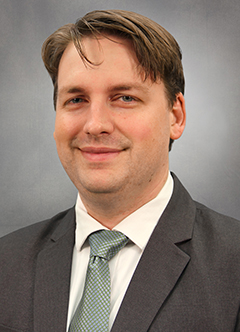
Kirk Roberts, PhD, is an Associate Professor in the Department of Health Data Science and Artificial Intelligence at the McWilliams School of Biomedical Informatics, UTHealth Houston. He specializes in Natural Language Processing (NLP), with a focus on clinical information extraction, spatial information extraction, and medical information retrieval. His work bridges computer science, medicine, linguistics, and machine learning to improve accessibility and usability of biomedical data. Education: PhD (2013) and MS (2009) in Computer Science from the University of Texas at Dallas; BS (2005) in Computer Science from Georgia Institute of Technology. Research emphasizes NLP applications for healthcare, including question-answering systems, EHR analysis, and spatial relation extraction. He leads the TREC Clinical Decision Support track and has been recognized with a National Library of Medicine Career Development Award. His contributions span over 20 peer-reviewed publications in journals like JAMIA and conferences such as ACL and AMIA. Key areas include: advancing clinical decision support via NLP, optimizing biomedical literature retrieval, and improving health data dissemination through natural language systems.
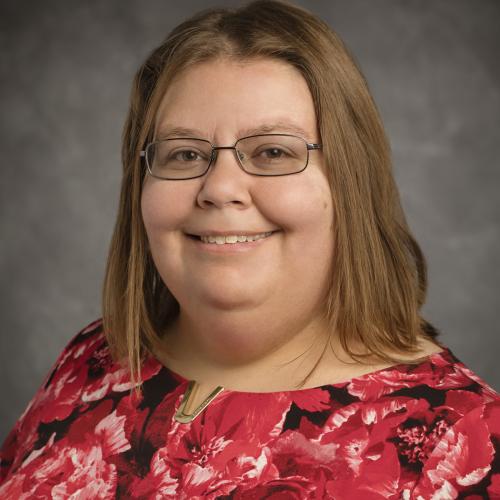
Jodi Schneider is an Associate Professor at the University of Illinois Urbana-Champaign , with affiliate appointments at the Beckman Institute , Health Care Engineering Systems Center , European Union Center , and Center for Health Informatics . She directs the Information Quality Lab and focuses on the science of science through argumentation and evidence analysis. PhD in Informatics (National University of Ireland, Galway) M.S. in Library and Information Science (UIUC) M.A. in Mathematics (UT-Austin) B.A. in Liberal Arts (St. John's College) Her research examines how scientific controversies persist through citation patterns, the role of knowledge brokers in public policy, and information quality in biomedical contexts. She has developed semantic frameworks for micropublications and knowledge maintenance in digital libraries. Recent publications include citation integrity studies in Scientometrics , retraction indexing in STI Conference , and argumentation mining in Human Language Technologies . Collaborative projects span institutions like Harvard Radcliffe Institute and RWTH Aachen . NSF CAREER Award IMLS Early Career Award Senior Member, Association of Computing Machinery Marie Curie Fellow She advises graduate students in information quality and knowledge representation , with funding from the Alfred P. Sloan Foundation , NIH , and European Commission . Her lab develops tools to combat scientific misinformation and improve public health informatics .
Scott E. Miller is Senior Biodiversity Advisor, Senior Research Entomologist, and Curator of Lepidoptera at the Smithsonian's National Museum of Natural History. He has held numerous leadership positions including Deputy Under Secretary for Collections and Interdisciplinary Support, Deputy Under Secretary for Science, Associate Director for Science at the Smithsonian's National Zoological Park, and Interim Director of Smithsonian Libraries and Archives. Prior to the Smithsonian, he held leadership roles at the International Centre of Insect Physiology and Ecology in Nairobi, Kenya, and the Bishop Museum in Honolulu, Hawaii. Miller earned his BS from the University of California at Santa Barbara and his PhD from Harvard University. His academic journey has been marked by significant contributions to entomology and biodiversity research. Dr. Miller's research focuses on the integration of systematics, ecology, biogeography and conservation of insects and plants. His current work uses museum-based taxonomy and systematics to mobilize biodiversity information to empower ecology, conservation, and agriculture. Major research themes include moth systematics, biogeography and phylogenomics (particularly Dalceridae, Geometridae, and other families), insect food web and ecology projects in Papua New Guinea, Kenya and elsewhere, and building DNA reference libraries from museum vouchers for ecological applications. He has been instrumental in developing DNA-based identification tools through initiatives like the Consortium for the Barcode of Life. His recent publications demonstrate a strong focus on biodiversity informatics, DNA barcoding, and the application of museum collections to contemporary ecological questions. Miller's work spans tropical ecology, systematics, and the development of new methodologies for biodiversity assessment, with significant fieldwork conducted in Papua New Guinea, Kenya, and other biodiversity hotspots. Dr. Miller has contributed significantly to scientific infrastructure development, including co-chairing the US Government's Interagency Working Group on Scientific Collections and helping establish the Consortium for the Barcode of Life. His leadership extends to international scientific collaboration and the development of research centers like Mpala Research Centre in Kenya. As Senior Biodiversity Advisor, he oversees major initiatives that connect museum collections with contemporary biodiversity challenges. His laboratory and team focus on leveraging the extensive moth collections at NMNH for phylogenomic studies and ecological applications, working closely with international collaborators on projects spanning multiple continents.
Besiki Stvilia is a Professor in the School of Information at Florida State University's College of Communication and Information. He holds a Ph.D. and M.S. in Library and Information Science from the University of Illinois at Urbana-Champaign, along with an M.S. in Applied Mathematics from Tbilisi State University. His research focuses on data quality assurance, digital curation, social informatics, and knowledge organization. He has led projects on research data management, metadata frameworks, and collaborative data practices in scientific communities. Stvilia has taught courses including LIS 6205 (Information Behavior), LIS 5263 (Information Retrieval Theory), and LIS 5787 (Metadata Practices). His funded research includes grants on data quality infrastructure for repositories, researcher identity curation, and mobile wellness application behavior studies. His work emphasizes bridging theoretical models with practical applications in digital libraries and academic systems. His research spans topics like GenAI credibility assessment, ontology development for data repositories, and user engagement with social Q&A platforms. He has advised multiple collaborative projects involving interdisciplinary teams and has published extensively in journals like Journal of Documentation and Information Processing & Management .
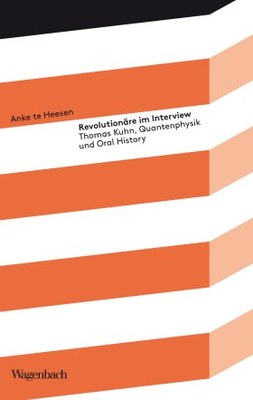
Professor Anke te Heesen is Chair of the History of Science with a focus on the history of education and the organization of knowledge in the 19th and 20th centuries at Humboldt-Universität zu Berlin. She has held this position since 2011 and is also the spokesperson (since 2024) of the DFG Center for Advanced Studies 'Applied Humanities – Politics and Genealogy,' alongside Professor Viktoria Tkaczyk. Previously, she served as Professor for Empirical Cultural Studies at the University of Tübingen (2008-2011) and founding director of the Museum of the University of Tübingen (2006-2008). Her academic career includes research positions at the Max Planck Institute for the History of Science in Berlin (1999-2006), the German Hygiene Museum Dresden (1998-1999), and the Research Center for the European Enlightenment (1996-1997). Professor te Heesen's research spans multiple interconnected fields including the history of humanities, natural history in the early modern period, museum and exhibition history, organization and notation methods of sciences, and the relationship between science and art. She has a particular interest in how knowledge is formed, organized, and presented through various material and institutional practices. Her work often examines the intersection of academic knowledge production with material culture, focusing on objects, collections, and exhibition practices as sites of knowledge formation. Her recent publications reveal a strong focus on the history of interviews as research methodology, the development of exhibition catalogs as scholarly monographs, and the material history of knowledge practices. The analysis of her 15 most recent articles shows consistent engagement with themes of materiality, the organization of knowledge, and the historical development of scholarly practices, particularly in the humanities. Her work frequently bridges historical analysis with contemporary scholarly concerns about knowledge production and dissemination. Spokesperson of the DFG Centre for Advanced Studies 'Applied Humanities: Genealogy and Politics' (since 2024) Senior Fellow, Collegium Helveticum, Zurich (WS 2023/24) Visiting Scholar, Max Planck Institute for History of Science (since 2021) Dibner Research Fellowship, Huntington Library (2020) Senior Research Fellowship, Lichtenberg Kolleg (2020) Professor te Heesen has held significant leadership roles including Ombudsperson of Humboldt University of Berlin (since April 2024) and Head of the Commission for Studies and Teaching at the Institute of History (since April 2024). She serves on multiple advisory boards including the Scientific Advisory Board of the project 'Serious Donations' at the Museum of Natural History in Berlin (since 2020), the DFG Review Board for History (2020-2024), and the Robert K. Merton Center for Science Studies at Humboldt University (since 2019). She is also a member of the editorial boards of several scholarly journals including Reports on the History of Science and History of Science and Humanities. Her work extends to museum practice and curation, with significant contributions to understanding how universities can leverage their collections to create meaningful educational experiences that connect historical context with contemporary research. She has initiated important publication series including 'Sonderdruck' (since 2016) and 'Minima Literatur- und Wissensgeschichte kleiner Formen' (since 2020).
Meredith Laxton is a Professor of Sequential Art at the Savannah College of Art and Design (SCAD) since 2024. She holds an M.F.A. in Sequential Art from SCAD and a B.A. in Art and Design from North Carolina State University. Her career includes roles as a career adviser (2023), teaching assistant (2018), and graduate mentor at SCAD (2017–18). She co-created the SAVAGE FST zine festival in 2023 and has been a freelance comic artist for publishers like PageTurner Graphic Novels and Humanoids LLC. Laxton’s work spans graphic novels, concept art, and multimedia design, with notable contributions to projects like Wait Till Helen Comes and MPLS Sound . Her research interests focus on sequential art pedagogy, visual storytelling, and the intersection of comics with community engagement. She has exhibited in international shows such as Lacoste’s Sketchbook Showcase (2018) and won awards including the Black-Eyed Susan Book Award nomination (2023) and the Gertrude M. Cox Award (2012). Laxton actively participates in comic conventions like San Diego Comic-Con (2020) and Heroes Convention (2018–2022), advocating for diversity in comic art and fostering connections between creators and audiences. Her professional portfolio includes roles as a concept artist at Puny Human Games (2014–2018) and multimedia designer for NCSU-DELTA (2011–2014). She has also served as an Artist in Residence at Neighborhood Comics (2021) and contributed to trade shows like S.P.I.C.E. (2024) and SPX (2022). Laxton’s interdisciplinary approach bridges traditional art, digital media, and educational outreach.
Speer Morgan is a Professor in the Department of English at the University of Missouri and Editor of The Missouri Review. He holds a B.A. from the University of Arkansas and conducted graduate studies at Stanford University. His expertise lies in creative writing and fiction, with a focus on historical narratives and regional American literature. He has authored five novels and multiple short story collections, including works recognized with awards such as the American Book Award and NEA Fellowships. Morgan's research interests span creative writing pedagogy, narrative techniques, and interdisciplinary approaches to literature. He has served on prestigious panels like the National Endowment for the Arts Literature Panel and the Library of Congress Prize for American Fiction committee. His editorial work at The Missouri Review has highlighted both fiction and poetry, featuring works by notable writers. He has also contributed to literary conferences and workshops, including the Sewanee Writers Conference from 2000 to 2023. Education: B.A., University of Arkansas; Graduate Studies at Stanford University Awards: American Book Award, NEA Fellowship, Foreword Magazine Silver Award Key Contributions: Editor of The Missouri Review for 34+ years, author of seven books Professional Roles: Visiting Writer at Universities of Texas and Arkansas, member of literary prize committees
Prof. Jacco van Ossenbruggen is a Full Professor in Intelligent Information Systems at Vrije Universiteit Amsterdam (VU), affiliated with the Network Institute. He serves on the Management Board of ODISSEI, a national research infrastructure for social sciences and economics. His academic background includes a PhD in Computer Science (2001) from VU’s Faculty of Science, focusing on hypermedia processing. Research Interests: His work centers on cultural AI, FAIR data principles, ontology engineering, and semantic web technologies. Key areas include inclusive cultural heritage metadata, bias mitigation in AI systems, and knowledge discovery via linked data. Recent projects involve leveraging large language models (LLMs) for metadata enrichment and ontology construction. Key Contributions: He leads initiatives like the Cultural AI Lab, exploring AI applications for cultural heritage. His research bridges technical innovations (e.g., semantic integration of restricted-access data) with societal impacts (e.g., ethical AI frameworks for public-sector applications). Developed frameworks for evaluating entity alignment in knowledge graphs Pioneered FAIR-aligned data management plans for scientific communities Designed tools like Alter Heritage for collaborative metadata curation Grants & Projects: Principal Investigator of the ODISSEI Portal project (2020–2024), advancing open data infrastructures. Active in funding initiatives promoting reproducible research and ethical data practices. Labs/Teams: Cultural AI Lab at VU, focusing on AI-driven solutions for cultural heritage preservation and accessibility.
Janice N. Harrington is the Clayton and Thelma Kirkpatrick Professor of English at the University of Illinois, affiliated with the University Library. Her expertise spans poetry, children's literature, and creative writing with a focus on African American Studies and multicultural themes. She has authored numerous poetry collections and children’s books, including biographical works on pioneering figures such as Horace Pippin and Charles S. Parker. Her research explores intersections of history, identity, and artistry, with publications featured in prestigious journals like Georgia Review , Callaloo , and Poetry . Harrington’s work has garnered acclaim through awards such as the Guggenheim Fellowship and the Anisfield-Wolf Book Award. She collaborates with illustrators to produce educational and culturally significant works for young audiences. Her creative outputs reflect a deep engagement with marginalized narratives, blending historical accuracy with poetic innovation. Media highlights include coverage of her biography on Horace Pippin and recognition of her contributions to children’s literature.
R. Luke DuBois is an Associate Professor and Co-Chair of the Technology, Culture and Society Department at the NYU Tandon School of Engineering, where he also directs the Integrated Design & Media program and the Brooklyn Experimental Media Center. He holds a DMA in music composition from Columbia University and is a renowned artist, composer, and performer whose work explores intersections between technology, sound, and visual media. His research focuses on digital media, human-computer interaction, and emerging technologies applied to artistic expression and accessibility. Key roles include directing the SONYC initiative (addressing urban noise pollution via AI) and leading the NYU Ability Project (advancing disability studies through technology). He has collaborated with institutions like the Smithsonian and artists such as Maya Lin, and his work has been exhibited globally, including at the Sundance Film Festival and the Aspen Institute. DuBois co-developed the Jitter software suite for real-time data manipulation and performs in avant-garde groups like Bioluminescence and Fair Use. His artistic practice combines time-lapse phonography, interactive installations, and interdisciplinary projects that critique cultural ephemera while advancing accessibility in STEM and the arts. Recent contributions include browser-based tools for accessible music notation (SoundCells) and sonification techniques for calculus education. He serves on the Board of the ISSUE Project Room and has been featured in major publications like the New York Times and TED Conference talks.
Julie Nelson Davis is a Professor in the Department of History of Art at the University of Pennsylvania, specializing in East Asian arts from 1600 to the present with a focus on early modern Japan. She is a leading authority on ukiyo-e (woodblock prints and illustrated books) and has authored three influential books on the subject. Key Publications: Utamaro and Spectacle of Beauty (2007/2021), Partners in Print (2015), and Picturing the Floating World (2021) Curatorial Work: Guest-curated "Arthur Tress and the Japanese Illustrated Book" (2022) at the Kislak Center, University of Pennsylvania Libraries Teaching: Course I-85: Japanese Prints and Illustrated Books in Context Her research examines the intersection of commercial art markets, collaborative production practices, and the social context of ukiyo-e . Recent work explores the global reception of Japanese prints and their material culture. She focuses on how artistic networks in early modern Japan shaped visual narratives and aesthetic innovation. Professor Davis has curated exhibitions that bridge historical Japanese printmaking traditions with contemporary interpretations, including her 2022 collaboration with the Kislak Center. Her scholarship emphasizes interdisciplinary approaches to understanding print culture through economic, social, and technical lenses.
Megan R Sapp-Nelson holds the position of Professor and Head of the Grainger Engineering Library Information Center at the University of Illinois' University Library. Her work focuses on advancing data and information literacy, data management practices, and academic library initiatives. She actively collaborates on research addressing institutional data practices, belongingness in academia, and interdisciplinary education. Her research interests span data literacy training, library outreach programs, professional skill development, and the role of academic libraries in fostering equitable research environments. Sapp-Nelson has contributed to initiatives like the Research Data Management Toolkit and graduate-level data curation courses. Her scholarly outputs emphasize practical applications of data management in academic settings, bridging gaps between researchers and library resources. Collaborations include work with institutions on improving data literacy and addressing systemic barriers in higher education. Labs/Teams: Lead researcher at the Grainger Engineering Library Information Center, contributing to library innovation and data service models.
Seamus Ross is an Honorary Professor at the School of Humanities, University of Glasgow, with a career spanning over two decades in digital preservation, digital libraries, and data curation. He has led and collaborated on numerous European initiatives, including the DL.org and BlogForever projects, focusing on policy interoperability, genre classification, and digital repository auditing. University of Glasgow School of Humanities His research explores the intersection of digital preservation, cultural heritage, and information management, emphasizing automated genre classification, metadata extraction, and sustainable digital libraries. He has also investigated user perspectives in digital information communication and developed frameworks for assessing digital preservation infrastructures. Recent publications highlight his contributions to digital preservation strategies, including analyses of storage formats, spam filtering, and preservation methodologies. These works reflect his expertise in digital forensics , metadata standards , and repository auditing . Seamus has collaborated extensively with researchers like Yunhyong Kim and Piero Innocenti, co-authoring studies on genre classification, digital policy, and significant properties in web archiving. While no specific awards are listed, his involvement in foundational projects like DELOS and ERPANET underscores his influence in the field.
Dr. Kathryn Kaiser is an Assistant Professor in the Department of Health Behavior at the University of Alabama at Birmingham (UAB) School of Public Health. She holds concurrent appointments in multiple research centers including the Center for Clinical and Translational Science and the Nutrition Obesity Research Center (NORC). Her research focuses on meta-research methodologies, race/sex disparities in obesity, systematic reviews of nutrition interventions, and advancing FAIR data principles for scientific communication. Education: B.S. Microbiology (Texas A&M), B.S. Medical Technology (University of Texas Health Science Center), Ph.D. in Health Psychology (University of North Texas Health Science Center). Postdoctoral training in Vascular Biology/Hypertension at UAB. Extensive background in medical diagnostics instrumentation and laboratory science prior to academia. Research Interests: Systematic review methodologies, FAIR data standards, obesity disparities with a focus on neuroendocrine mechanisms, and translational research in bariatric surgery outcomes. Specializes in methodological rigor for clinical trials and evidence synthesis. Grants: NIH-funded projects on FAIR principles implementation, dairy intake research, obesity energetics, and lifespan studies. Recent grants include $2.1M for metadata education programs and $1.8M for knowledge mapping initiatives. Awards: Recognized as 2015 Top Reviewer for American Journal of Preventive Medicine. Serves as Associate Editor for Frontiers in Nutrition. Active member of Cochrane Collaboration and multiple professional societies. Teaching: Graduate courses in Health Program Evaluation, Psychophysiology, and Systematic Review Design. Supervises doctoral students in health behavior research through 30+ dissertation committees since 2011. Labs/Teams: Key contributor to UAB's Nutrition Obesity Research Center (NORC) and Center for Outcomes and Effectiveness Research (COERE). Collaborates with international metadata initiatives like Metadata 2020 and science dialogue mapping projects.
Professor Peter Flügel is Chair of the Centre of Jaina Studies and Professor of the Study of Religions and Philosophies at SOAS University of London. His extensive research covers Jain history, anthropology, sociology, ritual practices, and comparative philosophy. Education: Dr Phil (Johannes Gutenberg-Universität Mainz) MA (Johannes Gutenberg-Universität Mainz) Flügel's research encompasses Jain schools and sects, relic stūpas, Jaina-Vaiṣṇava syncretism, socio-political history of the Jain tradition, and questions of pluralism and non-violence. He specializes in the material culture of Jain mendicant traditions and Jain legal history. Flügel has directed numerous research projects funded by the British Academy, Leverhulme Trust, and AHRC, including 'Jaina Rituals of Death', 'Jaina-Prosopography', and 'Exploratory Survey of the Jaina Heritage in Pakistan'. His publications demonstrate extensive archival research and fieldwork focused on Jain religious practices across South Asia. Scientific Awards: Ācārya Tulsī Anekānt Sammān (1999) International Pravartinī Pārvatī Jain Award (2010) Jewel of the Jain World Award (2012) Flügel convenes the Annual Jaina Studies Workshops at SOAS and serves as editor of the International Journal of Jain Studies. He maintains international collaborations with universities in Lund, Lille, and Ghent, and research partnerships with institutions in India and Germany.