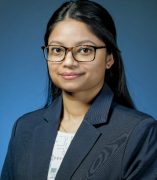
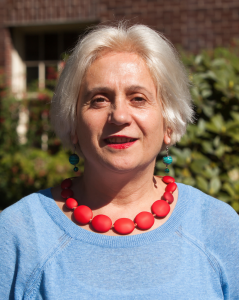
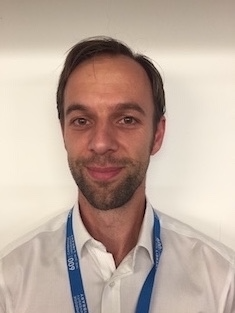
Shweta Yadav is an Assistant Professor in the Department of Computer Science at the University of Illinois Chicago (UIC). Prior to this, she was a Bridge to the Faculty (B2F) fellow at UIC and a postdoctoral research fellow at the U.S. National Library of Medicine, NIH. She holds a Ph.D. in Computer Science from the Indian Institute of Technology Patna, India. Education: Ph.D. in Computer Science, Indian Institute of Technology Patna, India Research Interests Her research focuses on the intersection of Natural Language Processing (NLP), Healthcare Informatics, Biomedical Text Mining, and Computational Social Science. She develops machine learning algorithms to advance AI applications in healthcare, particularly in medical document summarization , disease progression modeling , and health outcome prediction using electronic health records and social media data. Her work emphasizes interdisciplinary collaboration to address real-world healthcare challenges. Recent Publications Her recent publications highlight advancements in Multimodal Mental Health Analysis , Perspective-aware Healthcare Summarization , and Biomedical Relation Extraction . She employs techniques like Transformer models , Contrastive Learning , and Attention Frameworks to tackle low-resource settings and extract insights from complex data sources.
Annachiara Ruospo is a Assistant Professor at the Department of Control and Computer Engineering (DAUIN) at Politecnico di Torino. She holds a Fixed-Term Researcher position under Italian Law 240/10, art.24-A, and is actively involved in teaching and research projects. Research Interests : AI Safety, Reliability of AI Systems, Testing of Digital Circuits, Statistical Reliability Investigations. Her recent research focuses on hardware reliability for AI systems , including fault injection methodologies, quantized neural networks, and side-channel vulnerabilities. She collaborates on EU-funded projects like REACT and commercial contracts such as TC4xx NVM Test Strategies . Scientific Awards : None explicitly mentioned. Supervised Students : Antonio Porsia (PhD candidate, Reliability and Security of AI-Based Systems) and Vittorio Turco (PhD candidate, Reliability Evaluation and Hardening of AI Accelerators). She contributes to AI hardware security through patents like A Shannon-Hartley-Based Approach to Measure the Criticality of Synaptic Weights and actively participates in conferences such as the IEEE Latin American Test Symposium and IEEE VLSI Test Symposium .
Vania Ceccato is a Professor at the Academy of Police Work, University of Borås, specializing in environmental criminology and situational crime prevention. She leads the international Nätverket Säkraplatser network, fostering collaboration between academia and practice for sustainable safety. Her research bridges urban design, rural criminology, and transit security, with a focus on inclusive safety measures. Her recent publications include studies on transit worker safety in Stockholm’s metro resilient urban design for climate and crime prevention LGBTQI+ safety in transportation rural-urban shooting patterns innovative survey methodologies Her work aligns with United Nations SDGs 9, 11, and 13, emphasizing how environmental criminology can drive sustainable, equitable urban development.
Prof. Dr.-Ing. Marc Reichenbach serves as the Chair of Integrated Systems at the Institute for Applied Microelectronics and Data Technology at the University of Rostock. His office is located at Albert-Einstein-Straße 26, 18059 Rostock, Room 102 (1st floor), with contact information including telephone (0381) 498 7270 and email marc.reichenbach@uni-rostock.de. Professor Reichenbach's research focuses on the intersection of hardware design and artificial intelligence, with particular expertise in memory technologies and computing architectures. His work spans several key areas: Development of specialized computer architectures for deep learning applications Advanced VLSI design and CPU architecture Emerging memory technologies, particularly RRAM (Resistive Random-Access Memory) FPGA-based acceleration systems Hardware implementations for neural networks and AI applications Analysis of Professor Reichenbach's recent publications (2023-2025) reveals a strong focus on memory computing technologies, particularly RRAM-based systems. His work demonstrates expertise across multiple dimensions of computer architecture including ASIC design, FPGA acceleration, and novel memory systems. The publications show a clear trajectory toward implementing AI and machine learning capabilities directly in hardware, with applications ranging from edge computing to satellite systems. A significant portion of his recent work addresses the challenges of implementing neural networks using emerging memory technologies, focusing on efficiency, reliability, and performance optimization. Professor Reichenbach teaches several advanced courses including: Computer architectures for deep learning applications Project seminar Embedded Systems Advanced VLSI Design (Advanced CPU Design) His research group appears to be actively engaged in several cutting-edge projects related to hardware acceleration for AI applications, memory computing, and embedded systems design. The group collaborates on projects involving digital twins for hardware systems, real-time operating systems for heterogeneous architectures, and specialized computing systems for various applications from medical devices to drone technology.
Kristina Shiroma is an Assistant Professor at the School of Information Studies , Louisiana State University. Her work bridges health information , aging , and community engagement , focusing on advancing health justice through eHealth literacy interventions. PhD in Information Studies, University of Texas at Austin (2023) MLS, Texas Woman’s University (2017) BA in Literary Studies, University of Texas at Dallas (2011) Her research explores aging populations' interactions with health information , emphasizing cultural contexts and digital equity. She has led projects funded by the NIA and NSF , collaborating with libraries and senior centers to improve health outcomes for older adults. Kristina’s recent publications highlight eHealth literacy frameworks, trust in public health information during crises, and community-driven health interventions . Her work integrates interdisciplinary methods from information science, gerontology, and public health. University Continuing Graduate Fellowship, University of Texas at Austin (2022-2023) Bruton Fellowship, University of Texas at Austin (2021) Texas Aging and Longevity Center Graduate Student Award (2019) She actively contributes to professional communities as iDSA Writing Retreat Organizer and former iSchool Doctoral Student Association President , advocating for inclusive approaches in aging and health informatics.
Heghine Hakobyan serves as the Slavic Librarian and REEES Instructor within the Schnitzer School of Global Studies and Languages at the University of Oregon, specializing in Russian East European and Eurasian Studies resources and pedagogy. Her dual role bridges academic instruction and specialized library curation for Slavic-language materials. Her professional expertise centers on Slavic Studies, Russian Language and Literature, East European Studies, and Eurasian Studies, where she supports scholarly research through both instructional engagement and library resource management. As a subject specialist, she facilitates access to critical materials for students and faculty exploring these regions. Available for consultation during Friday office hours (11:00 AM–12:30 PM) in Knight Library (Office 121), she maintains direct academic engagement with the university community through her instructional and librarian responsibilities.
Professor Şaban NAZLIOĞLU is a faculty member at Pamukkale University, Department of International Trade & Finance, Faculty of Economics and Administrative Sciences, Denizli-Turkey. He has been serving as a Professor since 2018, following previous roles as Associate Professor (2012-2018), Assistant Professor (2011-2012), and Research Associate (2010-2011) at the same institution. He has extensive experience in academic administration, having served as Chair of the Department of Econometrics (2011-2014, 2016-2018) and Coordinator of the Scientific Research Projects Unit (2016-2018). Dr. NAZLIOĞLU received his undergraduate education at Erciyes University, Faculty of Economics and Administrative Sciences, Department of Management (2002), followed by a Master's degree in Economic Policy (2006) and PhD in Economic Policy (2010), both from Erciyes University's Institute of Social Sciences. His research interests center on applied econometrics, panel data econometrics, agricultural economics, commodity prices, and international trade. He has developed innovative methodological approaches in panel stationarity testing with gradual structural shifts, contributing significantly to the field of econometrics. His work bridges theoretical econometric developments with practical applications in energy markets, agricultural economics, and international finance. Dr. NAZLIOĞLU's research has resulted in numerous publications in high-impact journals, with a focus on panel data methods, unit root testing, causality analysis, and their applications to energy, agricultural, and financial markets. His work demonstrates a consistent pattern of methodological innovation applied to substantive economic questions, particularly in emerging markets and international contexts. TÜBA (Turkish Academy of Sciences) "The Outstanding Young Scientists Award (GEBIP)-2015" TÜBİTAK (Scientific and Technological Research Council of Turkey) "Incentive Award-2015" Pamukkale University Social Sciences "Science Award-2016" Pamukkale University Social Sciences "Research Performance Award-2012" Dr. NAZLIOĞLU has supervised numerous graduate students and has been actively involved in research projects, including "A New Panel Unit Root Test with Gradual Structural Shifts" (TÜBİTAK-SOBAG 1001/Project No: 215K086) and "Are Commodity Price Shocks Temporary or Permanent? A New Perspective with Panel Unit Root Analysis" (TÜBA-GEBİP 2015). He has served as a referee for prestigious journals including Agricultural Economics, Economic Modelling, Energy Economics, and others. He is an active member of professional organizations such as the International Association for Applied Econometrics (IAAE), International Trade and Finance Association, and Society for the Study of Emerging Markets. He has developed the GAUSS TSPD Library for Time Series and Panel Data Methods, which is publicly available on GitHub. This library covers several unit root, co-integration & causality tests, demonstrating his commitment to sharing methodological tools with the broader research community.
Kim Phillips is a Researcher at the University of Cambridge, affiliated with the Taylor-Schechter Genizah Research Unit. Her work focuses on the development and transmission of the Hebrew Bible, Jewish Biblical exegesis, and Aramaic Bible translations. Education: M.A. in Mathematics and Hebrew Studies (1st class) from University of Cambridge, PGDip in Theology (Distinction) from University of Wales, M.Phil. in Old Testament Studies (Distinction) from University of Cambridge, and Ph.D. in Hebrew Bible from University of Cambridge Her research centers on Masoretic materials and biblical texts from the Genizah collection. Her doctoral thesis, supervised by Professor Nicholas de Lange, analyzed Abraham Ibn Ezra's exegesis of Isaiah 40-66. She contributes to the study of ancient scriptural traditions through meticulous analysis of fragmented manuscripts. For general inquiries, contact the Cambridge University Library at library@lib.cam.ac.uk or +44 (0) 1223 333000.
Patrick Desrosiers serves as an Adjunct Professor in the Department of Physics, Physical Engineering and Optics within Université Laval's Faculty of Science and Engineering, while conducting neuroscience research at the CERVO Brain Research Center. He co-directs Dynamica, a multidisciplinary complex systems research group, and participates in UNIQUE (neuroscience-AI integration) and CIMMUL (mathematical modeling applications). His academic training spans physics and mathematics at Université Laval, the University of Melbourne, and CEA-Saclay. Dr. Desrosiers' research centers on mathematical and computational neuroscience , with signature contributions in dimensionality reduction and network resilience analysis . His work bridges biological and artificial neural networks , zebrafish brain mapping , and neurovascular coupling using advanced techniques from spectral graph theory , random matrix theory , and dynamical systems . Current investigations focus on neural decoding under chronic stress and structural-functional relationships in brain networks. Analysis of his 2023-2025 publications reveals three dominant trajectories: (1) Low-dimensional representations for predicting cognitive decline and neural dynamics, (2) Network reconstruction methodologies applied to neuroscience and biodiversity, and (3) Development of computational tools like NeuroTorch for neural data analysis. His work consistently integrates mathematical rigor with biological relevance across species and scales. His recognition includes: Professeur étoile prize for exceptional teaching (Faculty of Science and Engineering, Université Laval, 2018) As Dynamica co-director, he mentors a research team comprising Antoine Légaré, Arthur Légaré, Benjamin Claveau, Jordan Charest, Marziyeh Pourmousavi, Pierre-Luc Larouche, Vincent Savard, Vincent Thibeault, and Zahra Yazdani. His collaborative framework connects physics, mathematics, and neuroscience to address fundamental questions in neural network organization, with funding evident through sustained publication output and lab operations. Dynamica Lab ( https://dynamicalab.github.io/ ) serves as the operational hub for his interdisciplinary research, maintaining active collaboration with CERVO Brain Research Center and international institutions.
Professor Rochelle C Dreyfuss of the University of Cambridge, Faculty of Law, is a leading scholar in intellectual property law with a focus on international dimensions of patenting, trade secrets, and access to medicines. Her work bridges legal theory with practical implications for global innovation policy. Key research areas: TRIPS Agreement implementation Genetic material patenting Transnational IP dispute resolution Business method patent economics Trade secrecy and national security Global health policy impacts Her recent publications examine: Post-Brexit IP frameworks (2018) Experimental use defense in biotech (2017) Specialized patent adjudication (2017) Max Planck IP principles (2013) DNA patenting ethics (2013) Contact: Squire Law Library , Cambridge CB3 9DZ
Bessie Flores Zaldivar is an Assistant Professor of English at Quinnipiac University , where she teaches First-Year Writing and Fiction Writing. A writer and educator from Tegucigalpa, Honduras, she holds an MFA in Fiction from Virginia Tech. Education: MFA, Virginia Polytechnic Institute & State University Her research and creative work focus on literary fiction, with a particular emphasis on young adult narratives and cultural storytelling. Her debut YA novel Libertad (Penguin Random House, 2024) explores themes of identity and resilience in 1980s Honduras. The novel Libertad represents her contributions to Young Adult Literature, blending historical context with personal growth narratives. While specific academic articles are not listed, her work aligns with broader fields of literary analysis and creative writing pedagogy. Scientific Awards: Publishers Weekly Best Book of the Year Chicago's Public Library Best Book of the Year Zaldivar is actively involved in academic advising and curriculum development, fostering student engagement in poetry and fiction writing. Recent initiatives include organizing writing competitions to showcase student creativity.
Isobel Barnes is an Associate Professor and Senior Statistician at the Cancer Epidemiology Unit (CEU) within the University of Oxford. She earned her PhD in Statistics and joined the CEU in 2010, focusing on cancer epidemiology and population health research. Her research explores: Cancer screening efficacy, particularly in extending breast screening age ranges (AgeX trial). Risk factors for cancer in diverse ethnic groups. Epidemiological studies of cervical and breast cancer. Large-scale cohort studies like the Million Women Study (1.3 million participants). Recent publications highlight her expertise in cancer risk modeling, dietary epidemiology, and methodological advances in genomics. She also contributes to understanding mammographic screening sensitivity and historical ecological sustainability through statistical analysis.
Leila De Floriani is a Professor at the University of Maryland, with appointments in the Department of Geographical Sciences and the University of Maryland Institute for Advanced Computer Studies (UMIACS). She previously served as a professor at the University of Genova (Italy) since 1990, where she developed Italy's first undergraduate and graduate curricula in computer graphics and directed the Ph.D. program in Computer Science for eight years. Her professional activities include serving as the 2020 President of the IEEE Computer Society and currently as IEEE Division VIII Director for 2023-24. Professor De Floriani's research spans geometric modeling, data visualization, spatial data representation and processing, computer graphics, shape analysis, and topological data analysis. Her work focuses on developing mathematical models and algorithms for representing, analyzing, and visualizing complex spatial data, particularly through hierarchical models, mesh-based representations, and topology-based approaches. Her research group, the GeoVis group, investigates applications in terrain modeling, environmental data analysis, and forest structure mapping using LiDAR technology. Analysis of her recent publications reveals a strong focus on terrain representation and processing, with increasing emphasis on topological data analysis, machine learning integration, and efficient algorithms for large-scale spatial data. Her work bridges theoretical foundations in computational topology with practical applications in geospatial sciences, demonstrating consistent innovation in data structures and visualization techniques. Scientific Awards & Recognitions Fellow of IEEE (2016) for contributions to geometric modeling and scientific visualization Fellow of International Association for Pattern Recognition (IAPR) (1998) for contributions to geometric modeling and image analysis Fellow of Eurographics Association (2020) for outstanding contributions to computer graphics and visualization Pioneer of Solid Modeling Association (2017) for seminal work in solid and feature-based modeling Inducted Member of IEEE Visualization Academy (2020) IEEE Computer Society Golden Medal Award (2018) Inducted Member of IEEE Honor Society Eta Kappa Nu (2019) Multiple best paper awards at major conferences including Shape Modeling International (2015), IEEE/EG Symposium on Volume and Point-Based Graphics (2008), and ACM SIGSPATIAL (2008) Professor De Floriani has successfully advised numerous PhD students including Xin Xu, Yunting Song, and Noel Dyer, whose recent dissertations focused on topology-based individual tree mapping, efficient terrain analysis, and bathymetric data visualization respectively. Her research has been funded by prestigious agencies including the National Science Foundation, NASA, and the European Commission. As the leader of the UMD GeoVis group, she oversees a research program that develops open-source tools for spatial data analysis available on GitHub, with current projects focusing on forest point cloud processing and topology-based geospatial data visualization. The GeoVis group, affiliated with the Department of Geographical Sciences, UMIACS, and the Center for Geospatial Information Sciences, maintains a strong collaborative environment with ongoing projects in geometric modeling, spatial data structures, topology-based machine learning, and mesh-based terrain modeling. The group has received recent funding from NASA's HPOSS program for developing an open-source library for forest point cloud processing based on topological data analysis.
Dinesh Manocha is a Distinguished University Professor of Computer Science at the University of Maryland, with joint appointments in the Department of Electrical and Computer Engineering and the University of Maryland Institute for Advanced Computer Studies (UMIACS). He is also affiliated with the Maryland Robotics Center and the Institute for Systems Research. His educational background includes a Ph.D. in Computer Science from the University of California at Berkeley (1992) and a B. Tech in Computer Science and Engineering from the Indian Institute of Technology, Delhi, India (1987). Professor Manocha's research spans multiple domains with significant emphasis on: Computer Graphics and Visualization Robotics and Motion Planning Virtual and Augmented Reality Systems Geometric Computing Algorithms AI Applications for Autonomous Systems High Performance Computing His extensive publication record shows consistent innovation in multi-agent navigation, collision avoidance algorithms, and applications in virtual environments. Recent work focuses on trajectory prediction for autonomous vehicles and physics-based simulation for immersive experiences, with algorithms integrated into industry-standard systems like ROS (Robot Operating System). Among his numerous honors, Professor Manocha is recognized as: ACM, IEEE, AAAS, and AAAI Fellow Member of the IEEE VGTC Virtual Reality Academy Recipient of the Pierre Bézier Award from the Solid Modeling Association University of Maryland Distinguished University Professor Multiple best paper awards across premier conferences He has supervised 54 PhD students throughout his career and currently advises numerous graduate researchers. His research has attracted significant funding from NSF, Google, Amazon, Facebook, and industry partners. Notably, he co-founded Impulsonic, a company developing physics-based audio simulation technologies acquired by Valve Corporation in 2016. Professor Manocha leads the GAMMA research group, which continues to advance geometric algorithms with applications across multiple disciplines.
Tore Slaatta is a Professor of Media Studies at the University of Oslo (UiO) and holds a Professor II position at the Department of Archives, Library and Information Science (ABI) at Oslo Metropolitan University (OsloMet). He is also an Honorary Research Fellow at the Centre for Cultural Policy Research at the University of Glasgow. With extensive experience in media and cultural research, he has led major projects for institutions like the Research Council of Norway, the Norwegian Media Authority, and the Fritt Ord Foundation.