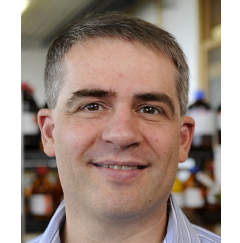
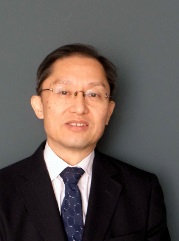
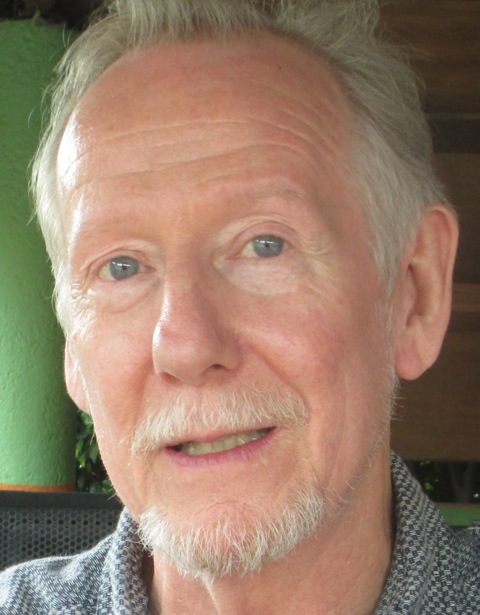
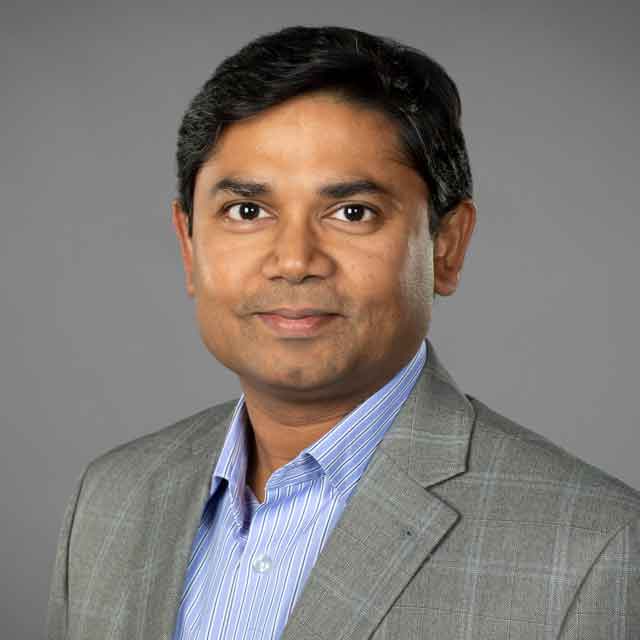
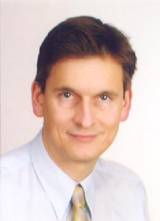
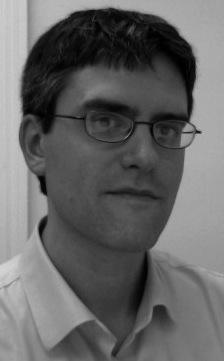
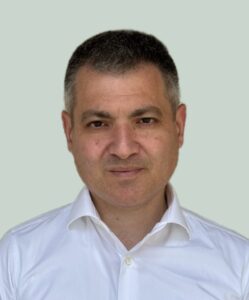
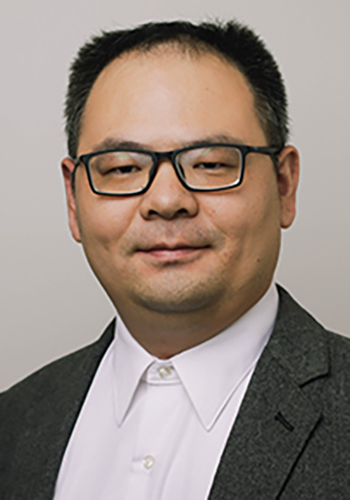
Dr. Norbert Jux is an Adjunct Professor at the Department of Chemistry and Pharmacy, Friedrich-Alexander-University Erlangen-Nürnberg (FAU), associated with Prof. Dr. Hirsch's Chair of Organic Chemistry II. His research focuses on advanced molecular architectures involving nanographenes, porphyrins, and their conjugates for applications in materials science and photophysics. Research Highlights: Specializes in π-extended conjugates, supramolecular complexation, and regiocontrolled synthesis of polycyclic aromatic systems. Recent Work: Explores helical nanographenes, panchromatic absorption materials, and electron transfer mechanisms in hybrid systems. Collaborations: Works with teams in synthetic chemistry, photophysical characterization, and surface science. Email: norbert.jux@fau.de | Lab Website
Eva Eriksson is an Associate Professor at Aarhus University, affiliated with the School of Communication and Culture and the Department of Digital Design and Information Studies. Her work bridges design, technology, and social values, focusing on participatory and human-centered approaches. Her research interests center on Human-Computer Interaction (HCI) , Participatory Design , and Design for Sustainability . She explores how co-design methods can empower youth, support children with learning differences like dyscalculia, and integrate more-than-human perspectives—considering non-human actors such as nature and technology—in design processes. Her work emphasizes ethical, inclusive, and reflective design practices. The recent publications highlight a strong trend in co-design with youth , XR and AR for education , sustainable technology , and methodological innovation in design research . These works span case studies, scoping reviews, and conceptual provocations, often published in top-tier venues like CHI and Interacting with Computers . Honourable Mention Award at CHI 2020 Honorable Mention, Design Space, CHI 2021 Most Cited Paper of 2021, International Journal of Child-Computer Interaction Eva Eriksson leads and contributes to externally funded research projects such as COMPILE (focused on dyscalculia and AR) and MOVA (on more-than-human values in design education), supported by the Independent Research Fund Denmark and Erasmus+. She supervises student projects and teaches courses such as Co-design and Bachelor Project . She also serves on international PhD examination and evaluation panels, demonstrating her active role in the global academic community. She is a core member of the Center for Computational Thinking & Design (CCTD) , a multidisciplinary research center at Aarhus University that fosters innovation in design, education, and technology.
Małgorzata Michalska is an Assistant Professor at the Institute of Ethnology and Cultural Anthropology, Faculty of Historical and Pedagogical Sciences, University of Wrocław. Her research spans anthropology of ethnicity, religion, folklore, and migration, with a focus on Polish communities in Central/Eastern Europe and Czech-Polish borderlands. Research Interests: Anthropology of ethnicity: Polish minorities, migrations, and cultural diversity in Lower Silesia. Anthropology of religion: Sacred architecture, religious movements, and interfaith dynamics. Folklore and environmental traditions in contemporary contexts. History of Polish ethnology, particularly pre-war Lviv academic circles. Her publications analyze Polish-Czech borderlands, ethnological societies, and migration patterns. Recent work includes studies on the Polish Ethnological Society's history and cultural interpretations of historical photography in Lower Silesia. Editorial & Projects: Editor-in-Chief of Ethnographic Works and Materials (Polish Ethnological Society). Editorial board member for Národopisný věstník (Czech Republic), Notatnik Skansenowski (Opole Village Museum), and Library of Polish Ethnography (Polish Academy of Sciences). Co-organizer of the 2020–2021 conference "Transrelational Ethnography" (funded by Poland's Ministry of Science). Memberships: Polish Ethnological Society (Vice-President, 2005–2015) and Polish-Czech Scientific Society.
Katsuro Inoue is a Professor at Ritsumeikan University within the College of Information Science and Engineering. He holds a Dr. degree of Engineering from Osaka University (1984) and specializes in Software Engineering with a focus on Program Analysis , Code Clone Detection , Software Ecosystem Analysis , and Process Modeling . His work includes developing systems like CCFinder for code clone analysis and SPARS for software component significance ranking. Research Interests Program Analysis: Code Clone Analysis, Origin and Evolution Analysis, Software Ecosystems, Bug Detection, Analysis Tools and Algorithms Program Reuse: Code Search Engines, Program Archives, Searching Mechanisms Software Process: Process Modeling, Process Centered Environments, Process-Based Metrics, Quality Standards Key Publications Code Clone Analysis (2021), Library Dependency Updates (2018), Code Clone Tracking in Open Source (2012), Distributed Code Clone Detection (2007), Software Component Significance Ranking (2005), Compiler Garbage Collection (1991), Code History Tracking (2012) Professional Activities Program Committee Member in over 20 conferences (ICSE, IWPSE, PROFES) Editorial Board Member for IEEE Transactions on Software Engineering Co-Chair of multiple workshops (IWSC, IWPSE) Reviewer for SEC Journal Teaching Course: System Architect Course Developed course materials for Compiler Design and Language Processing Created exam problems and optimization examples for language processing courses
Katherine R. Larson is a Professor at the University of Toronto Scarborough (UTSC) and Vice-Dean of Teaching, Learning, and Undergraduate Programs. Her academic work bridges Early Modern Literature, Gender Studies, and Musicology through groundbreaking research on 16th-17th century women’s writing, embodiment, and song culture. Current projects: Special issue of Sidney Journal , The Post-Pandemic University (Routledge), and Cambridge Companion to Mary Wroth Collaborative initiatives: Co-developer of Early Modern Songscapes digital platform with Sarah Williams and Scott Trudell Research Focus: Integrates feminist theory with textual analysis of early modern poetry, drama, and musical practices. Key themes include gendered soundscapes, spatial production of songs, and critical pedagogy innovations. Awards: John Charles Polanyi Prize for Literature Rhodes Scholarship 2014 Co-Editor Recognition from Society for the Study of Early Modern Women Grant Support: Funded by SSHRC, Connaught Foundation, Folger Shakespeare Library, and Jackman Humanities Institute.
Carl Lindahl is a Professor at the University of Houston's Department of English, specializing in folk narrative, medieval folklore, and disaster response ethnography. His work explores Cajun, Appalachian, and Haitian folk cultures, focusing on covert power dynamics and traditional healing strategies. Education: Ph.D. and M.A. from Indiana University, B.A. from Harvard University Research Interests: Lindahl investigates how folk cultures preserve and transmit knowledge through oral traditions, festivals, and survival strategies during crises. His projects bridge folklore studies with disaster anthropology, emphasizing community resilience and self-documentation. Scientific Awards: Fellow of the American Folklore Society Fulbright Distinguished Scholar Alcée Fortier Award University of Houston Teaching Excellence Award Projects & Grants: Founder of Surviving Katrina and Rita in Houston (SKRH), organizer of the Rockefeller Foundation Bellagio Conference on survivor-centered disaster recovery, and developer of Sivivan pou Sivivan in Haiti. His grants support cross-cultural disaster response initiatives.
Shamik Sengupta is the Ralph E. and Rose A. Hoeper Professor at the University of Nevada, Reno (UNR) , where he serves as Professor in the Department of Computer Science & Engineering and Executive Director of the Cybersecurity Center . He holds a PhD in Computer Science from the University of Central Florida (2007) and a BE in Computer Science from Jadavpur University (2002). IEEE Senior Member Director, UNR Cybersecurity Center NSF CAREER Award Recipient
Charles Gillan is a Senior Lecturer at Queen's University Belfast's School of Electronics, Electrical Engineering and Computer Science, affiliated with the High Performance and Distributed Computing department and the Institute of Electronics, Communications & Information Technology. His research bridges HPC systems, AI applications in healthcare, and computational physics. Key projects include managing ICU patient care via neural networks, exascale-ready mathematical packages, and edge computing architectures. Research interests focus on high-performance computing (HPC), quantum computing, real-time data analytics, and electron-molecule scattering simulations. Notable contributions include developing microserver architectures for edge analytics and advancing AI-driven clinical decision support systems. Gillan has collaborated on interdisciplinary projects like food authenticity testing using spectroscopy and improving ventilator management in intensive care units. Publications span AI in healthcare, HPC system design, and computational methods for physics problems. He has secured funding for initiatives such as the KTP partnership with Foods Connected Ltd and the HANDHELD olfactory detection project. Gillan's work emphasizes practical applications of advanced computing across healthcare, engineering, and cybersecurity domains.
Professor Kalpana Shankar is a Full Professor at the School of Information and Communication Studies at University College Dublin (UCD). She holds roles such as former Head of School (2015-2018) and Co-Director of the UCD Centre for Digital Policy. Her research focuses on data management, peer review processes, research evaluation, and digital policy, with notable projects funded by Science Foundation Ireland, the Irish Research Council, and the U.S. National Science Foundation. Key contributions include studies on the sustainability of social science data archives and peer review at SFI. Education: PhD in Library and Information Science from UCLA, postdoctoral fellowships at UCLA (Center for Embedded Networked Sensing) and NIH (Science Policy). Professional Roles: Editor-in-Chief of Online Information Review , member of the Royal Irish Academy’s Equity Diversity and Inclusion committee, and representative on the National Open Research Forum (NORF). Teaching: Coordinator for UCD’s MSc/Diploma in Digital Policy and PhD supervision in critical data studies, open data, and research evaluation. Research Interests: Sociotechnical imaginaries of data, peer review fairness, digital policy frameworks, and the impact of pandemic responses on academia. Awards include the 2020 UCD College of Social Sciences and Law Teaching Excellence Award.
Prof. Dr. Thomas Ludwig is the Director of the German Climate Computing Center (DKRZ) and a Professor at the Universität Hamburg. He holds a doctoral degree and habilitation from the Technische Universität München, with expertise in High-Performance Computing (HPC), energy efficiency, and data storage systems. His research focuses on optimizing parallel systems, storage technologies, and computational efficiency for climate science applications. He leads projects like AIMES and PeCoH, advancing HPC storage and energy-aware computing. Education: Doctoral degree and habilitation from TU München (1988–2001). Chair in Parallel Computing at Universität Heidelberg (2001–2009). Research Interests: HPC, data reduction techniques, energy-efficient systems, parallel I/O optimization, and climate modeling infrastructure. Recent Research Trends: His work emphasizes storage system efficiency, machine learning in HPC, and convergence between HPC and Big Data. Key contributions include frameworks for portability (Vecpar), automated performance tools, and energy-aware storage solutions. Awards: Some publications received recognition, e.g., a Best Paper award in 2014 for work on energy efficiency. However, no personal awards are explicitly listed. Advising & Grants: Supervised numerous theses in HPC, I/O optimization, and energy efficiency. Leads major projects funded by national and international initiatives. Labs/Teams: Heads the DKRZ team providing supercomputing and data management for climate research, collaborating with global institutions like the University of Hamburg and European research networks.
Matthew T. Rutz is an Associate Professor and Chair of Egyptology and Assyriology at Brown University. His research focuses on Assyriology, specializing in Akkadian and Sumerian texts from the second millennium BCE, Late Bronze Age Syria, and ancient Mesopotamian intellectual history. He holds a PhD in Cuneiform Studies from the University of Pennsylvania (2008) and has been affiliated with institutions like the University of Pennsylvania Museum and the British Museum. His notable works include Bodies of Knowledge in Ancient Mesopotamia (2013) and co-editing Archaeologies of Text (2014). Awards include the Richard B. Salomon Faculty Research Award and fellowships from the Kolb Foundation and Penn Museum. He teaches courses on Akkadian language, Mesopotamian history, and ancient religious texts, and is active in professional societies like the American Oriental Society. Rutz’s research integrates textual analysis with archaeological context, emphasizing the materiality of cuneiform tablets and their role in ancient knowledge systems. His work bridges Assyriology with archaeology, ethics of textual preservation, and interdisciplinary studies of ancient Near Eastern cultures.
Paolo Trunfio is a Professor of Computer Engineering at the University of Calabria, Italy, and co-founder of DtoK Lab S.r.l., an academic spin-off focused on data analysis and distributed systems. He holds a Ph.D. and is affiliated with the DIMES Department, specializing in big data, cloud computing, and high-performance computing (HPC). His research emphasizes scalable data analysis frameworks, edge-cloud continuum solutions, and machine learning applications for social media and disaster monitoring. Trunfio serves as an Associate Editor for ACM Computing Surveys and Journal of Big Data , and is on the editorial boards of several journals including Future Generation Computer Systems . He has authored four influential books, including Programming Big Data Applications (2024) and Data Analysis in the Cloud (2015). His work spans distributed systems, IoT-based smart objects, and exascale computing. Notable projects include the EU-funded eFlows4HPC and ASPIDE initiatives, which focus on HPC workflows and exascale programming models. Trunfio’s publications (over 200 papers) address topics like social media analytics, energy-efficient P2P networks, and parallel data mining. He leads research in urgent computing for disaster response, edge-cloud integration for urban mobility, and AI-driven data analysis. His contributions to cloud frameworks (e.g., JS4Cloud, ParSoDA) and HPC libraries (e.g., DCEx) highlight his expertise in bridging theory and practice in distributed computing ecosystems.
Lorenzo DiTommaso serves as Professor in the Department of Religions and Cultures at Concordia University, Montreal, where he has progressed from Assistant Professor (2004) to full Professor (2013), including service as Department Chair. His academic home encompasses Jewish Studies and Christianity programs, with biennial teaching of the graduate religion and popular culture seminar. Ph.D. in Religious Studies, McMaster University (2002) Postdoctoral Fellow, Yale University Divinity School (2001-03) NEH Postdoctoral Fellow, Center for Medieval and Renaissance Studies, Saint Louis University (2003-04) DiTommaso's research constitutes a comprehensive exploration of apocalyptic speculation across temporal and cultural boundaries, from ancient Near Eastern traditions to contemporary digital media. His work uniquely bridges textual scholarship on biblical apocrypha and medieval manuscripts with cutting-edge analysis of apocalyptic expression in video games, anime, and popular music. The intellectual scope spans apocalyptic historiography , manuscript studies , apocalyptic and millenarian movements , and religion in contemporary media , with distinctive expertise in Japanese cultural intersections. His methodological approach combines rigorous textual analysis with interdisciplinary cultural theory, particularly examining how apocalyptic frameworks shape human responses to crisis across historical periods. Analysis of his recent publications reveals a pronounced shift toward contemporary apocalyptic manifestations, with nearly half of his 2021-2024 output focusing on digital media, video games, and modern cultural phenomena. Simultaneously, he maintains deep engagement with medieval manuscript traditions and early Jewish-Christian apocalyptic literature, demonstrating remarkable versatility across historical periods. The thematic through-line remains apocalyptic determinism versus human agency , examined through diverse lenses from ancient prophecy to interactive gaming environments. Bibliographical Society of America - Pine Tree Foundation Fellowship in Hispanic Bibliography (2019) Nicky Carpenter Fellow in Manuscript Studies Marilyn Hollinshead Visiting Scholar (2023) Research Fellow at Herzog August Bibliothek (2024) DiTommaso has supervised over 20 graduate students since 2019 across diverse apocalyptic topics including disability studies in biblical interpretation, Satanism in virtual communities, and environmental apocalypse in radical movements. His research has been continuously supported by four major SSHRC grants (2004-07, 2007-11, 2011-16, 2018-24), supplemented by specialized fellowships at premier manuscript repositories including the Vatican Film Library, Herzog August Bibliothek, and special collections at Michigan State and Minnesota universities. He co-organizes the biennial 'Through a Glass Darkly' Symposium on Apocalyptic with Colin McAllister, now in its eighth year, rotating between Colorado Springs and Montreal. The 'Through a Glass Darkly' symposium serves as his primary collaborative platform, fostering international scholarly exchange on apocalyptic themes. He maintains active research partnerships with institutions including the Enoch Seminar and Azrieli Institute for Israel Studies, while leveraging special collections access at major libraries for manuscript-based projects. Current work on apocalyptic comic art involves collaboration with special collections at Michigan State and Minnesota universities, demonstrating his commitment to bridging traditional textual scholarship with contemporary cultural analysis.
Kevin W. Hamlen is the Louis A. Beecherl, Jr. Distinguished Professor in the Department of Computer Science at the University of Texas at Dallas. He serves as Executive Director of UT Dallas' Cyber Security Research and Education Institute. His research focuses on language-based security , binary software hardening , cyberdeception , and formal program verification . He has received multiple grants from agencies like AFOSR, NSF, DARPA, and industry partners including Lockheed Martin and Intel. PhD and MS from Cornell University BS from Carnegie Mellon University His research explores automated approaches to software security through techniques like binary disassembly , control-flow integrity , and honey-patching . He has pioneered methods for malware defense and cloud/web/mobile security . Recent work examines adaptive cyberdeception and GPU-based security frameworks . His publications span binary code manipulation , malware mitigation , and blockchain security . Key awards include the NSF IUCRC Technology Breakthrough Award and two CSAW Best Paper 2nd Prizes . He advises numerous PhD students, many of whom now work at Google, IBM, and Microsoft. His book Autonomous Cyber Deception (Springer, 2019) with Ehab Al-Shaer and Cliff Wang provides comprehensive coverage of adaptive cyberdeception strategies.
Dr. Lei Fan is an Assistant Professor in the Department of Engineering Technology at the University of Houston, with a joint appointment in the Electrical and Computer Engineering (ECE) Department. His research focuses on power system operations, optimization algorithms, quantum computing, and energy storage systems. He holds a Ph.D. from the University of Florida and a B.S. from Hefei University of Technology. Education: Ph.D., University of Florida B.S., Hefei University of Technology Research Interests: Dr. Fan’s work bridges theoretical optimization and practical energy systems, including quantum algorithms for power grid management, battery storage planning, and distributed quantum computing architectures. His LORE (Learning & Operations Research & Energy) lab explores cutting-edge applications in teleoperation, satellite networks, and environmental monitoring. Publications: Recent work emphasizes quantum computing’s role in solving complex optimization problems, such as entanglement routing in satellite networks and distributed hydrogen-power systems. His research also integrates machine learning for methane plume detection and hyperspectral imaging. Labs/Teams: He leads the LORE lab, advancing interdisciplinary research in energy systems and quantum technologies.