Dr David Milsom is a Senior Lecturer in Music at the University of Huddersfield , specializing in performance practice and historical violin techniques. He coordinates classical performance studies and teaches both performance and musicology. University of Sheffield: BMus (1st Class), MMus, PhD His research focuses on 19th-century violin performing practices , including acoustic recordings analysis and annotated score studies. Recent projects explore Brahms and Franck violin sonatas through historically informed approaches. David leads the Historical Performance Research Group and collaborates on digital performance projects via the MMT YouTube channel. He co-founded the professional Brigantes Orchestra and period instrument group Four's Company . Scientific Awards Edison Fellowship (British Library, 2003) AHRC Fellowship (2006) He serves as external examiner for Royal Birmingham Conservatoire and Leeds Conservatoire, and actively supervises PhD students while integrating research into undergraduate teaching.
Ivan Drpić is an Associate Professor in the Department of the History of Art at the University of Pennsylvania, School of Arts and Sciences. A specialist in Byzantine and medieval art, he focuses on the material culture of Southeastern Europe, particularly the interplay between text, image, and subjectivity from the 11th to 15th centuries. Education: Ph.D., Harvard University, 2011 M.A., Harvard University, 2005 B.A., University of Belgrade, 2002 His research centers on medieval aesthetics, theories of the image, the agency of art objects, and cultural interactions between Byzantium and the Slavic world. He explores how inscriptions, particularly epigrams, function as integral components of artworks, shaping devotional practices and personal identity. His work bridges art history, literary studies, and religious studies. Drpić's recent publications focus on the enkolpion , verse inscriptions, and imperial patronage, revealing deep connections between materiality, selfhood, and piety in Byzantine culture. His scholarship demonstrates a consistent trend toward interdisciplinary analysis of small-scale devotional objects and textual practices. Scientific Awards: Runciman Prize (2017) David E. Finley Fellowship, National Gallery of Art Fellowship, Dumbarton Oaks Research Library NEH Fellowship He has held research fellowships at major institutions, contributing to significant scholarly projects. While no specific grants are listed, his affiliations with Dumbarton Oaks, NEH, and the National Gallery of Art indicate sustained external funding. He advises graduate students and is an active member of the core faculty in the History of Art department. Drpić previously taught at the University of Washington (2011–2017) before joining Penn. He is not part of any named lab or research center, but his independent research projects, such as The Enkolpion: Object and Self in Medieval Byzantium , reflect deep scholarly inquiry into the material and spiritual dimensions of medieval art.
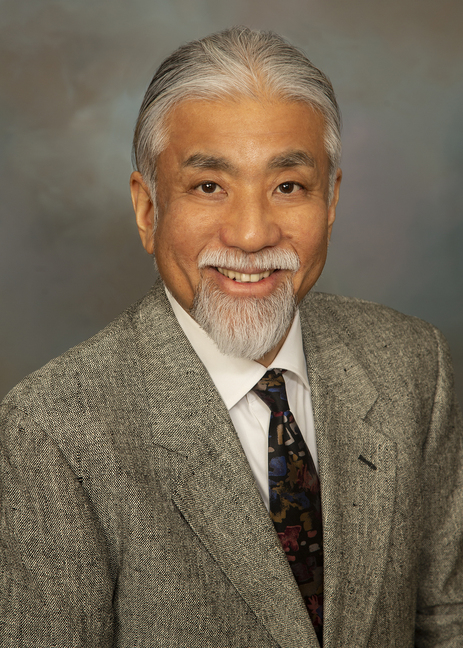
Naoki Saito is a Professor in the Department of Mathematics at the University of California, Davis, and the Director of the UC Davis TETRAPODS Institute of Data Science (UCD4IDS). His research lies at the intersection of applied mathematics, signal processing, and data science, with a focus on multiscale analysis and harmonic analysis on graphs and networks. His research interests include Applied and Computational Harmonic Analysis , Graph Signal Processing , Multiscale Transforms , Wavelets , Spectral Graph Theory , and Mathematical Data Representation . He develops theoretical frameworks and practical algorithms for analyzing complex datasets, particularly through the use of Laplacian eigenfunctions and multiscale basis dictionaries. The recent publications reflect a strong trend toward graph-based signal processing , scattering transforms , and topological data analysis . His work emphasizes the construction of natural, adaptive bases for signals on graphs and simplicial complexes, enabling efficient and interpretable data analysis. The integration of harmonic analysis with machine learning techniques is a recurring theme. Although no specific scientific awards are listed in the provided texts, his sustained scholarly output and leadership in the field are evident. Dr. Saito advises a number of students and postdoctoral researchers, including J. Irion, Y. Shao, H. Li, and others. His research has been supported by various grants, though specific funding sources are not detailed in the provided materials. He leads the UCD4IDS, a research institute focused on data science, indicating active involvement in collaborative, interdisciplinary research and academic leadership.
Prof. Joachim Schöberl is a faculty member at TU Wien's Faculty of Mathematics and Geoinformation, leading the Scientific Computing and Modelling research group. His academic career includes roles as a university professor (Univ.Prof.) with engineering and technical doctorates (Dipl.-Ing., Dr.techn.). Research focuses on advanced numerical methods, including finite element methods, computational fluid dynamics, and partial differential equations. He has pioneered high-order schemes for fluid-structure interaction, shell mechanics, and electromagnetic simulations. Notable contributions include the NGSolve finite element library and innovative approaches to curvature approximation in discrete geometry. Recent work emphasizes nonlinear elasticity modeling, fractional diffusion problems, and shape optimization for biomembranes. His team collaborates on projects like metascreen upscaling, micromorphic continuum models, and eddy current simulations in laminated materials. Prof. Schöberl advises PhD students researching mixed finite element methods, fractional operators, and computational mechanics. His lab develops open-source tools for high-performance scientific computing.
Dr. Shannon Miller serves as Dean of the College of Humanities and the Arts and Professor of English and Comparative Literature at San José State University, an urban institution serving 33,000 students. She oversees 500 faculty/staff across 8 academic departments, 2 schools, 3 centers, and the Hammer Theatre Center, managing a $24M annual budget while sponsoring 500+ cultural/intellectual events yearly. Educational background: B.A. in English, Dartmouth College M.A. and Ph.D. (1991) in Renaissance Literature, UC Santa Barbara Her research interrogates Renaissance English literary production through gendered frameworks, specializing in John Milton's theological constructions and marginalized voices of seventeenth-century women writers. This work critically examines how gender ideologies shaped textual authority in early modern England, revealing intersections between literary canon formation and patriarchal power structures. Notable recognitions: Folger Shakespeare Library Fellowship Tanner Humanities Center Fellowship John Carter Brown Library Fellowship British Bibliographical Society Fellowship Administratively, Miller pioneered project-based curriculum reforms and implemented Stretch English in First-Year Writing. She secured $4.8M for the Martha Heasley Cox Center for Steinbeck Studies and leads SJSU's Hammer Theatre Center collaboration with San José. Her leadership emphasizes humanities as essential infrastructure for technological ethics and social mobility. The college's "Borderlands" and "Deep Humanities & Arts" initiatives under her direction integrate migration studies and digital ethics across disciplines, transforming classroom learning into community-engaged praxis through theater, philosophy, and visual arts.
Osman Kabadayı is an Associate Professor at Kırşehir Ahi Evran University's Faculty of Arts and Sciences, Department of Turkish Language and Literature. Born in 1981, he completed his education at Kırıkkale University (BA, 2003), Erciyes University (MA non-thesis, 2004), Kırıkkale University (MA thesis, 2007), and earned his PhD from Gazi University in 2020. His international experience includes a five-year position at Abay Kazakh National Pedagogical University and research at the Kazakh Academy of Sciences. His research focuses on North-Western (Kipchak) Turkish Dialects and Literatures , with emphasis on historical linguistics, Kazakh language evolution, manuscript studies, and Turkic cultural heritage. He employs comparative methods to analyze linguistic features across Turkic languages, particularly examining lexical development and grammatical structures in historical contexts. Secondary interests include folklore documentation, orthographic reforms, and digital preservation of Turkic manuscripts. Publications demonstrate strong focus on Kazakh philology (45% of recent works), historical linguistics (30%), and manuscript studies (25%), with recurring examination of equestrian terminology, funerary inscriptions, and Islamic texts. Research consistently bridges ancient Turkic traditions with contemporary linguistic phenomena. Awards & Recognition: Science Encouragement Award (Kırşehir Ahi Evran University, 2023) Certificate of Appreciation from Kazakh Embassy (2021) Plaque for academic service (Ahi Evran University, 2010) Academic Leadership: Advises six PhD students on topics including Kazakh philology and linguistic anthropology. Secured multiple grants: Archaeographic Research in Kazakhstan (2025) Turkic Renaissance intellectual history project (2021-2022) National Library of Kazakhstan manuscript cataloging (2018-2019) Co-authored 6-volume Common Turkic History (2018-2019)
Piers Gelly is an Assistant Professor in the Department of English at the University of Virginia, where he teaches Writing and Rhetoric courses. His work bridges creative writing, pedagogy, and social justice, with a focus on labor organizing and digital technologies. MFA in Fiction, University of Virginia (2019) BA in College of Letters, Wesleyan University (2013) His research explores intersections of generative AI in education, podcast production, labor studies, and collaborative authorship. He co-organizes the Writing With Sound speaker series, collaborating with experts like Avery Trufelman and Sarah Larson. Recent projects include curating a student-union collaboration exhibition at UVA’s Small Special Collections Library (2024) and investigating AI ethics in pedagogy. His publications span Literary Hub , The Point , and The Stinging Fly . Key grants include the Thrive Grant (2025), Learning Technology Incubator Grant (2024), and Active Archive Fellowship (2021). Thrive Grant (2025) Learning Technology Incubator Grant (2024) Active Archive Fellowship (2021) Henfield Prize for Fiction (2019) He collaborates extensively with labor unions in Charlottesville and mentors students through podcast projects and collective curatorial efforts.
Nikita Kavokine serves as Tenure Track Assistant Professor at École Polytechnique Fédérale de Lausanne (EPFL) within the School of Basic Sciences . His dual appointments span the Institute of Chemical Sciences and Engineering (ISIC) and the School of Chemical Sciences and Engineering (SCGC) , where he leads the Quantum Plumbing Lab (LNQ) and contributes to graduate teaching. Based at Building CH A2 398 in Lausanne, he maintains active research and instructional roles across EPFL's chemistry and chemical engineering programs. His research pioneers quantum nanofluidics and nanoscale transport phenomena , focusing on electron-ion coupling mechanisms in confined geometries. Key investigations include quantum friction in water-carbon interfaces, hydroelectric energy conversion through nanochannels, and plasmon-hydron resonances in two-dimensional materials. His work bridges condensed matter physics, electrochemistry, and fluid dynamics to develop fundamental principles for next-generation nanofluidic devices and quantum sensors. Analysis of his 15 most recent publications (2023-2025) reveals three dominant research thrusts: quantum-enhanced energy conversion (evident in hydroelectric drag and electron cooling studies), non-classical ion transport (including ionic Coulomb blockade and interaction confinement), and emergent quantum hydrodynamics (momentum tunneling, collective modes). These publications consistently integrate advanced numerical methods with nanoscale experimental systems, establishing new paradigms for solid-liquid quantum interactions. Kavokine currently supervises three PhD students: Gispert Peter , Lu Hao , and Rigaux Killian David . His teaching portfolio includes graduate courses in Statistical Mechanics for Chemistry and Nanofluidics , emphasizing theoretical frameworks for many-particle systems and nanoscale fluid dynamics. Research funding supports his laboratory's exploration of quantum effects in nanofluidic channels, though specific grant details are not provided in source materials. The Quantum Plumbing Lab (LNQ) operates at the forefront of nanoscale quantum transport research, utilizing advanced nanofabrication and characterization techniques to probe electron-ion coupling phenomena. The lab's interdisciplinary team combines expertise in quantum physics, electrochemistry, and fluid dynamics to investigate fundamental limits of energy conversion and transport at atomic scales, with particular focus on graphene-based systems and angstrom-scale confinement.
Song Jun-myeong is a Professor at Seoul National University (SNU) College of Pharmacy, specializing in Analytical Pharmacology and Nanomedicine. He has held leadership roles including Director of the Library and Information Center at SNU College of Pharmacy and Director of the Korean Biochip Society. Bachelor of Science, Sogang University (1991) Master of Science, Sogang University (1993) Ph.D., Kyushu University (1997) His research focuses on tumor clearing imaging, 3D bioprinting, drug analysis, and photodynamic therapy. He utilizes quantum dot-based imaging and single-cell cytometry for cancer diagnostics and drug mechanism studies. Analysis of his publications reveals a consistent emphasis on nanotechnology applications for pharmacological research, particularly in cancer diagnostics, drug resistance mechanisms, and antimicrobial nanomaterials. His work bridges analytical chemistry with biomedical applications. He serves on multiple scientific advisory boards and committees, including the Korean Society for Biotechnology and Bioengineering and the Pharmacist National Examination Question Development Committee. Song leads the Laboratory for Nanomedicine at SNU College of Pharmacy, advancing technologies in quantum dot imaging and nanomaterial synthesis for pharmaceutical applications.
Dr. Georgiana Ifrim is an Associate Professor at the School of Computer Science, University College Dublin , where she serves as Director of Graduate Research and Co-Lead of the SFI Centre for Research Training in Machine Learning (ML-Labs). She holds concurrent appointments as an SFI Funded Investigator at the Insight Centre for Data Analytics and VistaMilk SFI Research Centre . Her academic journey includes postdoctoral research at Insight Centre, Cork Constraint Computation Centre (4C), and Aarhus University's Bioinformatics Research Centre (BiRC). Education: BSc in Computer Science, University of Bucharest, Romania MSc and PhD in Informatics, Max-Planck Institute for Informatics, Germany Dr. Ifrim specializes in scalable predictive modeling for diverse applications including: Sequence learning (DNA analysis, time series) Real-time prediction for streaming data (news/social media, energy) Interpretable machine learning models Knowledge graph exploitation (WordNet/Yago, Naga) Wearable sensor data analysis (sports science, health monitoring) Energy price forecasting for sustainable systems Her recent publications focus on time series explainability (TSHAP, tsCaptum), multivariate analysis (scalable channel selection), and healthcare applications (fall detection, walking speed estimation). Key contributions include open-source tools like SEQL (sequence learner) and Twitter-Topics (event detection). Scientific Awards: Winner of SNOW@WWW14 Data Challenge As Director of Graduate Research, she oversees advanced academic training while leading funded projects at the intersection of machine learning , real-time analytics , and domain-specific applications in agriculture, healthcare, and digital journalism. Her research group maintains active GitHub repositories with open-source implementations.
Mark Overmyer-Velázquez serves as Dean and Chief Administrative Officer at UConn Hartford and holds a professorship in Latino & Latin American Studies. He is also a Faculty Associate at the Human Rights Institute and a UConn Honors Faculty Fellow. Previously, he served as Research Professor at the Leonel Fernández Center for Latin American Studies at the University of Jordan (2014-2018) and as Co-chair for the Latino Studies Section of the Latin American Studies Association (2012-2014). His research interests center on transnational migration between Mexico and the United States, Modern Mexico, U.S. Latino/a studies, and Las Américas. His scholarly work examines economic and political imperialism, human rights, migration, cultural nationalism, political membership, gender relations, race and racism, identity formation, religion, labor, immigration law, and the arts. He approaches these topics through historical analysis with special emphasis on the history of Greater Mexico, including the Mexico/US border and the Mexican diaspora. Overmyer-Velázquez's publications reveal a consistent evolution from regional Mexican history toward broader transnational and global migration patterns. His early work focused on Porfirian Oaxaca and visual culture, then expanded to Mexico-US migration history, and most recently to global Latin(o) American diasporas extending beyond the traditional US-centric framework to include movements within the Global South and across the Pacific and Atlantic oceans. 2007 Best Book Prize, New England Council on Latin American Studies Finalist, 2007 Urban History Association Kenneth Jackson Award 2009 American Library Association Booklist Editors' Choice Winner Latin American Studies Association, Latino Studies Section Outstanding Article Award 2014 Finalist, Conference on Latin American History, Vanderwood Article Prize, 2014 Choice Academic Title Award His academic leadership extends beyond traditional scholarly work through service on the West Hartford Board of Education (2011-2017), where he applied his historical training to educational policy. He has received numerous prestigious fellowships including a Fulbright Visiting Scholar award, Howard Foundation Fellowship, Peggy Rockefeller Visiting Scholar position at Harvard, and an Andrew W. Mellon Postdoctoral Fellowship. His editorial work, particularly on the two-volume series Latino America: State by State, demonstrates his commitment to documenting the historical significance of growing Latin(o) American populations throughout the United States.
Sunah Chung is an Assistant Professor of Literacy Education at the Department of Literacy, Early Childhood, and Special Education within the College of Education at the University of Northern Iowa. Her work focuses on children's literacy development through engagement with children's literature, particularly informational picturebooks and biographies, with additional emphasis on supporting English language learners. PhD in Curriculum and Instruction from University of Illinois at Chicago B.A. in English Language Education from Chung-Ang University Her research explores equity and inclusivity in children's literature, multimodal literacy support for bilingual learners, and disciplinary knowledge development through visual texts. She actively bridges theory and practice by leading initiatives like the UNI America Reads Book Club and the Science of Reading Lab. Recent publications analyze power dynamics in biographies, multimodal strategies for immigrant families, and cross-cultural responses to Indigenous incarceration narratives. She co-edits studies on Chinese nonfiction picturebooks and children's visual literacy interpretation. Current projects include: UNI America Reads Book Club (after-school program for 4th graders) Science of Reading Lab (maker-space for pre-service teachers)
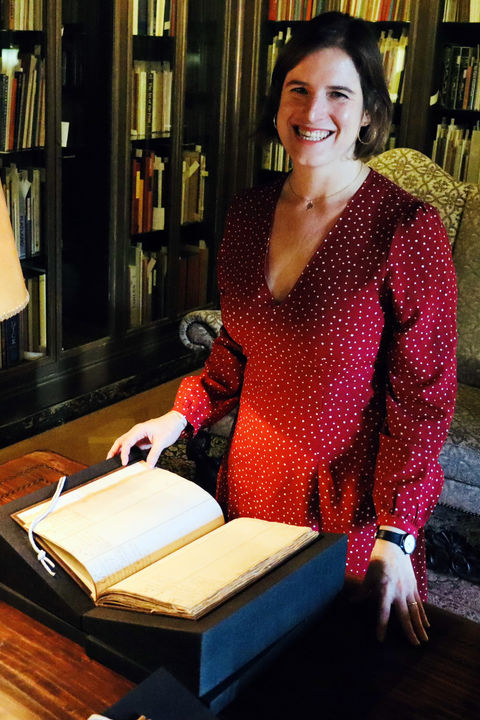
Marissa Nicosia is an Associate Professor of Renaissance Literature in the English Department at Penn State Abington, part of the Pennsylvania State University system. She also serves as an Associate Professor in the Writing Program. Her academic work bridges literary studies, food history, and digital humanities, making significant contributions to our understanding of early modern English culture through innovative interdisciplinary approaches that combine textual analysis with practical experimentation. Dr. Nicosia received her Ph.D. in English from the University of Pennsylvania in 2014 and her B.A. in English Literature and Creative Writing from Barnard College, Columbia University in 2007, where she was elected to Phi Beta Kappa. Before joining Penn State Abington, she taught at Scripps College, the University of Pennsylvania, and the University of the Arts in Philadelphia. Her research focuses on the intersections of early modern English literature, food studies, book history, and political theory. Dr. Nicosia examines how literary texts and historical documents reveal cultural practices, particularly around food and temporality. Her methodology combines historical formalism and critical bibliography to uncover how early modern writers engaged with questions of time, politics, and material culture. She has developed innovative approaches that bridge academic scholarship with public engagement through recipe reconstruction and digital humanities projects. Dr. Nicosia's publications demonstrate a consistent engagement with how historical texts can inform contemporary understanding across multiple formats. Her work spans academic monographs, edited collections, peer-reviewed articles, and public-facing digital humanities projects. She has established herself as a leader in bringing early modern studies to broader audiences through accessible scholarship that connects historical practices to modern experiences in meaningful ways. Franklin Research Grant, American Philosophical Society, 2024-2025 Dibner Research Fellow in the History of Science and Technology, The Huntington Library, 2024-2025 Faculty Senate Outstanding Research Award, Penn State Abington, 2023 Margaret Hannay Fellow, Folger Shakespeare Library, 2022-2023 Ogontz '65 Career Development Professorship, Penn State Abington, 2021-2023 Resident Scholar, Penn State Humanities Institute, 2022 Chief Ogontz Award, Penn State Abington, 2022 President's Award for Engagement with Students, Penn State, 2022 Dr. Nicosia has secured significant grant funding for her research, including a Summer Stipend from the National Endowment for the Humanities (2021) and the Pennsylvania Grants for Open and Affordable Learning (2021-2022). Her innovative teaching approaches have been recognized with multiple awards, including the President's Award for Engagement with Students from Penn State (2022) and the Faculty Senate Outstanding Teaching Award at Penn State Abington (2018). She has mentored numerous undergraduate students through research projects, particularly through her 'What's in a Recipe?' initiative that engages students with early modern manuscript transcription. Her public humanities project 'Cooking in the Archives' has gained national recognition, being featured in the Washington Post, HuffPost: Taste, Edible Philly, CNN.com, and on Talk of Iowa (NPR). This initiative curates transcribed and updated recipes from early modern English household manuscripts, creating a valuable resource for food historians, students, culinary enthusiasts, and the general public. The project has attracted approximately 300,000 visitors and demonstrates Dr. Nicosia's commitment to making academic research accessible and engaging for diverse audiences.
Eva Eriksson is an Associate Professor at Aarhus University, affiliated with the School of Communication and Culture and the Department of Digital Design and Information Studies. Her work bridges design, technology, and social values, focusing on participatory and human-centered approaches. Her research interests center on Human-Computer Interaction (HCI) , Participatory Design , and Design for Sustainability . She explores how co-design methods can empower youth, support children with learning differences like dyscalculia, and integrate more-than-human perspectives—considering non-human actors such as nature and technology—in design processes. Her work emphasizes ethical, inclusive, and reflective design practices. The recent publications highlight a strong trend in co-design with youth , XR and AR for education , sustainable technology , and methodological innovation in design research . These works span case studies, scoping reviews, and conceptual provocations, often published in top-tier venues like CHI and Interacting with Computers . Honourable Mention Award at CHI 2020 Honorable Mention, Design Space, CHI 2021 Most Cited Paper of 2021, International Journal of Child-Computer Interaction Eva Eriksson leads and contributes to externally funded research projects such as COMPILE (focused on dyscalculia and AR) and MOVA (on more-than-human values in design education), supported by the Independent Research Fund Denmark and Erasmus+. She supervises student projects and teaches courses such as Co-design and Bachelor Project . She also serves on international PhD examination and evaluation panels, demonstrating her active role in the global academic community. She is a core member of the Center for Computational Thinking & Design (CCTD) , a multidisciplinary research center at Aarhus University that fosters innovation in design, education, and technology.
Małgorzata Michalska is an Assistant Professor at the Institute of Ethnology and Cultural Anthropology, Faculty of Historical and Pedagogical Sciences, University of Wrocław. Her research spans anthropology of ethnicity, religion, folklore, and migration, with a focus on Polish communities in Central/Eastern Europe and Czech-Polish borderlands. Research Interests: Anthropology of ethnicity: Polish minorities, migrations, and cultural diversity in Lower Silesia. Anthropology of religion: Sacred architecture, religious movements, and interfaith dynamics. Folklore and environmental traditions in contemporary contexts. History of Polish ethnology, particularly pre-war Lviv academic circles. Her publications analyze Polish-Czech borderlands, ethnological societies, and migration patterns. Recent work includes studies on the Polish Ethnological Society's history and cultural interpretations of historical photography in Lower Silesia. Editorial & Projects: Editor-in-Chief of Ethnographic Works and Materials (Polish Ethnological Society). Editorial board member for Národopisný věstník (Czech Republic), Notatnik Skansenowski (Opole Village Museum), and Library of Polish Ethnography (Polish Academy of Sciences). Co-organizer of the 2020–2021 conference "Transrelational Ethnography" (funded by Poland's Ministry of Science). Memberships: Polish Ethnological Society (Vice-President, 2005–2015) and Polish-Czech Scientific Society.