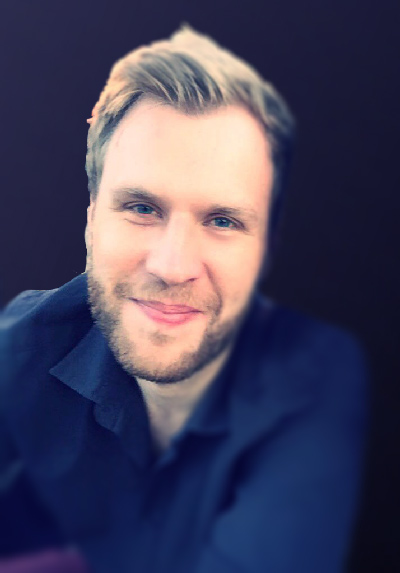
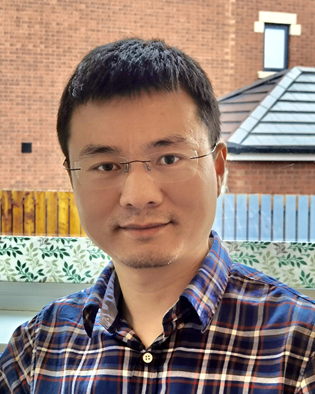
Dr. Jean-Luc Zarader is a Professor at Sorbonne University's Faculty of Engineering , serving as Deputy Director of the UFR of Engineering. Based at ISIR (Institute of Intelligent Systems and Robotics) in Paris, his research focuses on speech processing , neural networks , and binaural sound localization with applications in humanoid robotics and aircraft diagnostics. Key research areas: Speech coding, Nonlinear signal processing, Humanoid auditory systems, Fault diagnosis Active collaborations with teams: ACIDE, MLIA, IRIS Research Trends (2017-1996): 2017-2012: Whale bioacoustics, Aircraft diagnostics, Binaural localization 2007-2000: Speaker verification, Predictive coding, Neural network applications 1999-1996: Doppler lidar analysis, Speech compression His scientific contributions span multiple disciplines, including: Neural network optimization for signal processing Acoustic feature extraction Humanoid robot perception systems Aerospace fault detection Bioacoustic pattern recognition
Sheila Sutjipto is a Postdoctoral Research Fellow at the School of Mechanical and Mechatronic Engineering, University of Technology Sydney (UTS). Her research focuses on robotics, virtual reality, and human-robot interaction, with applications in mining safety, assistive technology, and industrial automation. She has published extensively in top robotics conferences and journals, demonstrating expertise in teleoperation systems, digital twin technology, and sensor fusion for robotic applications. Dr. Sutjipto's research spans multiple domains of robotics and human-computer interaction. Her work particularly emphasizes virtual reality interfaces for robot teleoperation , digital twin technology for industrial applications , and multi-modal perception systems . She has made significant contributions to mining safety through rock scaling robotics, assistive technology for visually impaired individuals, and haptic feedback systems for industrial robots. Her interdisciplinary approach integrates mechanical engineering, computer vision, and human factors to develop intuitive and safe robotic systems. Dr. Sutjipto's recent publications demonstrate a strong trajectory toward practical applications of robotics in challenging environments. Her work on digital twin-based teleoperated rock scaling robots addresses critical safety issues in mining operations. She has also pioneered multi-modal perception systems combining RGB, event cameras, and LiDAR for assistive robotics. A consistent theme across her publications is enhancing human-robot interaction through intuitive interfaces, whether via virtual reality, haptic feedback, or annotation-assisted control systems. Dr. Sutjipto has been involved in several funded research projects, including the HALO rock scaling robot project (stages 2 and 3), IntelliForce Tooling for hydraulic safety, and integration of live surround video for VR digital twins. She has collaborated with industry partners like Ausdrill and BTP Parts Pty Ltd. Her grant history shows a strong industry-academia collaboration focused on practical robotics applications. Dr. Sutjipto appears to be part of the robotics research group at UTS's School of Mechanical and Mechatronic Engineering. Her collaborations suggest involvement with teams focused on mining robotics, assistive technology, and industrial automation. She frequently collaborates with researchers like G. Paul, D.T. Le, and K. Nguyen, demonstrating strong interdisciplinary teamwork across engineering disciplines.
Dr. Jun Li is a Senior Lecturer at the School of Computer Science, Faculty of Engineering and Information Technology, University of Technology Sydney (UTS), Australia. He received his Ph.D. in Computer Science from Queen Mary University of London in 2009 and is affiliated with the Australian Artificial Intelligence Institute (AAII) at UTS. His research spans multiple domains within artificial intelligence, with primary focus on Machine Learning applications in computer vision and 3D geometry. Dr. Li has published extensively in high-impact journals including IEEE Transactions (TPAMI, TIP, TNNSLS) and Pattern Recognition, with recent work expanding into interdisciplinary research in earth science and marine applications. His research output demonstrates consistent productivity with numerous publications each year across diverse AI application areas. Dr. Li's work shows strong thematic progression from foundational computer vision techniques to applied interdisciplinary research. Early work focused on face hallucination and video super-resolution, while more recent publications address environmental applications using Graph Neural Networks for wave prediction and damage classification for disaster response. His research consistently bridges theoretical AI advances with practical real-world applications across healthcare, autonomous systems, and environmental science. AI to assist disaster emergency response (2023-2026) Applying Generative Adversarial Network in Medical Image Analysis (2020-2021) Big Massive Open Online Course (MOOC) Data Retrieval (2017-2020) As an educator, Dr. Li teaches core courses including '31005 Machine Learning' and '32513 Advanced Data Analytics Algorithms' at UTS, and is available for Masters Research and PhD student supervision, contributing to the development of next-generation AI researchers.
Professor Dominic Thewlis is a faculty member at the University of Adelaide within the Faculty of Health and Medical Sciences , specifically in the Surgical Specialities department. He leads the Centre for Orthopaedic & Trauma Research , which integrates molecular biology, biomechanics, and clinical research focused on the human musculoskeletal system. His research expertise lies in biomechanics of orthopaedic disease and injury , utilizing biomechanical modeling , medical imaging , wearable sensors , and patient-reported outcome measures . Research projects available for students include statistical shape modeling of joints , muscle activation mapping , and gait analysis using deep learning . Recent publications highlight his work on hip and knee arthroplasty , fatigue monitoring in athletes , and LiDAR-based musculoskeletal modeling . His research spans finite element analysis, gait coordination, and clinical decision-making frameworks. Awards and honors include the NHMRC R.D. Wright Fellowship (2017-2021) and the current ARC Future Fellowship (2024-2028) . He has served as Past President of ANZORS and contributes to editorial boards of leading journals in orthopaedics and biomechanics. Professor Thewlis supervises Masters and PhD students and collaborates with industry partners and Defence for applied research funding. Facilities include the Adelaide Health and Medical Sciences building and Royal Adelaide Hospital outpatient departments .
Felix Heide is a Professor of Computer Science at Princeton University , where he leads the Princeton Computational Imaging Lab . He also serves as Head of AI at Torc Robotics , focusing on full autonomy stacks for self-driving trucks. His research sits at the intersection of optics , machine learning , and computer vision , addressing imaging challenges in harsh environments like dense fog, ultra-low/high illumination, and scattering media. Ph.D. in Computer Science from the University of British Columbia Postdoctoral research at Stanford University His work on computational imaging spans physics-based vision, non-line-of-sight imaging , end-to-end camera design , and robust sensor fusion . He has pioneered techniques for inverse neural rendering , nanophotonic optics , and light-speed AI through optical computing. His recent papers in Nature Machine Intelligence , Science Advances , and top conferences ( SIGGRAPH , CVPR , ICCV ) focus on: Adverse weather imaging (fog, snow, rain) Multi-sensor fusion (LiDAR, radar, gated cameras) Light transport through scattering media Optical metasurfaces and diffractive optics End-to-end optimization of imaging pipelines Event-based vision and polarization cues He has received prestigious awards including the SIGGRAPH Significant New Researcher Award , Sloan Research Fellowship , and Packard Fellowship . His lab's open-source code and datasets enable real-world applications in autonomous driving, microscopy, and augmented reality.
Franck Davoine is a CNRS Senior Researcher (equivalent to Full Professor) at the LIRIS Laboratory (UMR 5205) affiliated with INSA Lyon, where he coordinates the Imagine research team and contributes to environmental transition initiatives. His career spans 25+ years across France, Sweden, and China, including roles at Heudiasyc Lab (UTC), LIAMA Beijing, and Peking University. His research integrates computer vision , autonomous systems , and deep learning , with emphasis on: Sensor fusion for LiDAR and event cameras Real-time perception in autonomous vehicles Uncertainty modeling using Dempster-Shafer theory Self-supervised depth estimation He has supervised 14 PhD students and 21+ interns, with current projects funded by ANR (e.g., ANNAPOLIS for autonomous navigation). Awards include: Most Influential Paper over the Decade (2023) Grenoble INP PhD Thesis Prize (1995) Recent publications focus on neural networks for calibration, depth estimation, and event-based vision, reflecting his lab's work on efficient embedded systems for robotics.
David Taylor is Professor of Geography at the National University of Singapore, specializing in environmental change in tropical systems. His research examines complex interactions between climate, ecosystems, and human activities across Southeast Asia. Research interests center on: Carbon dynamics of peat swamp forests and blue carbon ecosystems Climate change impacts on aquatic systems and biodiversity Transboundary environmental governance frameworks Sustainable land management in developing tropical nations Integration of paleoenvironmental records with contemporary monitoring Recent publications demonstrate consistent focus on climate solutions in Southeast Asia, with themes spanning: Peatland conservation as major carbon mitigation strategy Advanced remote sensing for forest biomass quantification Community-based approaches to ecosystem restoration Policy instruments for emission reduction Historical climate-human ecosystem interactions
Dr. Chongfeng Wei is an Associate Professor (University Senior Lecturer) at the James Watt School of Engineering, University of Glasgow. Prior to joining the University of Glasgow, he was a lecturer at Queen's University Belfast. His research focuses on intelligent vehicles, autonomous systems, and human-robot interaction, with applications in transportation and robotics. Dr. Wei's research spans several key areas in autonomous systems and vehicle dynamics: Decision-making and Planning of Intelligent Vehicles Collective Autonomy: Perception and Planning Robotic System Design and Dynamical Control Dynamics and Control of Mechanical Systems Human Behaviour Study and Prediction His recent publications demonstrate a strong focus on human-vehicle interaction, with particular emphasis on pedestrian-vehicle interactions, decision-making frameworks, and control strategies for autonomous systems. His work often combines AI technologies, bio-designs, and first principles of dynamics and control to create smarter or human-acceptable autonomous systems. Dr. Wei serves as an Associate Editor for several prestigious journals including IEEE Transactions on Intelligent Transportation Systems (TITS), IEEE Transactions on Vehicular Technology (TVT), IEEE Transactions on Intelligent Vehicles (TIV), IEEE Open Journal of Intelligent Transportation Systems (OJ-ITS), and Frontiers on AI and Robotics. He actively supervises PhD students and postdoctoral researchers, with current projects focusing on vision-based 3D flow prediction, pedestrian interaction modeling, and multimodal interaction for behavior prediction in autonomous driving.
Pascal Vasseur is a University Professor at the University of Picardie Jules Verne (UPJV) in the Faculty of Sciences, Computer Science Department. He leads the Robotics Perception group within the MIS Laboratory (Modeling, Information and Systems) and serves as a member of the National University Council (Section 61) since 2016. Additionally, he has been an Associate Editor for IEEE Robotics and Automation Letters since 2016, demonstrating his significant standing in the robotics research community. Professor Vasseur's research focuses on robotics perception systems, with particular expertise in vision (including omnidirectional and event-based cameras), Lidar, and Radar technologies. His work addresses fundamental challenges in pose estimation, mapping, and localization for robotics and automotive applications. His recent publications show a strong emphasis on advanced sensor technologies, multi-sensor calibration techniques, and practical implementations for autonomous systems. His publication record demonstrates consistent high-impact research output, with numerous articles in top robotics and computer vision venues including IEEE Robotics and Automation Letters, IEEE Transactions on Intelligent Vehicles, and CVPR. He has also authored two comprehensive books on Omnidirectional Vision (2023-2024), establishing himself as a leading expert in this specialized area of computer vision. Professor Vasseur has coordinated multiple significant research projects including ANR projects CaViAR and pLaTINUM, the international DrAACaR project, and PHC STAR and AMADEUS projects. He currently serves as scientific officer for the ANR CLARA Project, continuing his leadership in advancing robotics perception research. His research group actively contributes to solving practical challenges in automotive vision systems, drone navigation, and forest environment mapping, with applications spanning autonomous vehicles, robotics navigation, and environmental monitoring systems. The group's work bridges theoretical advances in computer vision with real-world robotics implementations.
Douglas Pritchard is an Associate Professor at Robert Gordon University's Scott Sutherland School of Architecture with extensive expertise in digital documentation of architectural heritage. He also serves as a Lecturer at Johns Hopkins University and previously held an Honorary Research Fellowship at the University of Glasgow (2013-2019). His professional network spans international institutions including University of Rome Sapienza where he served as Visiting Professor (2019), and organizations like CyArk and CERN where he has contributed to major documentation projects. Dr. Pritchard's research focuses on reality capture technologies for built heritage documentation, with particular expertise in terrestrial laser scanning, photogrammetry, and immersive presentation systems. His work bridges technical precision with practical applications for heritage conservation, creating digital records that serve both preservation and public engagement purposes. He has directed documentation projects at multiple UNESCO World Heritage sites including Aachen Cathedral, Cologne Cathedral, and has been instrumental in the Scottish Ten Project. His recent publications (2023-2024) demonstrate a continued focus on refining documentation methodologies for complex heritage structures, particularly the Aachen Cathedral project which showcases integrated approaches combining multiple digital technologies. His work contributes significantly to establishing quality standards in 3D digitization of cultural heritage. Dr. Pritchard's professional recognition includes: Co-Chair of Our World Heritage Initiative (2020-2021) Co-Chair of Association for Preservation Technology (2020) Key contributor to European Commission Study on 3D digitisation quality (2021) Multiple keynote speaking engagements at international heritage technology conferences Media features in Wired Magazine, New York Times, and Discovery Channel As both an academic researcher and practitioner, Dr. Pritchard maintains active involvement in advancing documentation standards while applying these techniques to real-world heritage conservation challenges. His work exemplifies the integration of academic research with practical applications in cultural heritage preservation.
Xiaobai Liu is an Assistant Professor in the Department of Computer Science at San Diego State University, College of Sciences. His research bridges Computer Vision, Machine Learning, and Computational Statistics, with applications in Clinic Diagnosis, Sports, Transportation, Surveillance, and Video Games. Education: PhD in Computer Science from HuaZhong University of Science and Technology (2012) His research focuses on image parsing, video analysis, and deep learning techniques for 3D reconstruction, object tracking, and marine mammal detection. Recent publications highlight advancements in LiDAR generation, scene text recognition, and automated spectrogram processing. Notable grants include NSF-funded projects on autonomous vehicle safety simulations, marine mammal classification, and AI-driven recycling systems. He has advised over 30 students in real estate analytics, robotics, and computer vision projects. Scientific Awards: 2018 San Diego State University President’s Excellence Award
Dr. I. Aulika is a Senior Researcher at the Institute of Solid State Physics, University of Latvia, where she leads research in the Thin Films Laboratory. Her work focuses on optical tactile sensing (particularly the OptoSkin technology), OLED materials, and smart window materials. Dr. Aulika has over 64 publications with more than 8,000 reads and 346 citations, demonstrating significant impact in her field. She actively participates in major European research projects including Sestosenso and SWEB, and serves as a representative for ISSP UL's industry collaboration platform Materize across several European countries. Dr. Aulika's research interests span multiple cutting-edge areas in materials science and optical engineering. She specializes in spectroscopic ellipsometry for material characterization, optical modeling , and the development of innovative materials including rare-earth metal oxy-hydrides (Y, Gd, Dy and Er), YO, Y2O3, Ga2O3, and ZnO2. Her work on Direct ToF tactile sensing aims to revolutionize touch perception in robotics, while her research on OLED materials contributes to advancements in display technology. Additionally, she investigates photochromic materials and transparent conducting oxides for smart window applications, demonstrating a versatile research portfolio that bridges fundamental science with practical applications. Dr. Aulika's publication record shows a consistent focus on thin film characterization and optical properties, with recent work increasingly centered on optical tactile sensors and OLED materials. Her most recent articles (2024-2025) demonstrate expertise in spectroscopic ellipsometry applied to organic thin films, phase transitions in OLED stacks, and material effects in direct Time-of-Flight sensing systems. She has made significant contributions to understanding yttrium-based photochromic materials and transparent conducting coatings, with applications ranging from robotics to energy-efficient windows. Dr. Aulika has received notable recognition for her work, including: UNESCO L'ORÉAL Latvian National Fellowship for Women in Science (2008) Multiple European Social Funds Scholarships (2006-2008) As a Project Manager at the Institute of Solid State Physics, Dr. Aulika is involved in new R&D idea development, project writing and evaluation, and establishing industrial and academic partnerships. She serves as a local contact point for proposal writing and execution, and represents ISSP UL's industry collaboration platform Materize in Italy, France, Spain, and Switzerland. Her leadership extends to developing lecture materials for MSc physics students on applications of piezoelectric materials, demonstrating her commitment to education alongside research. Dr. Aulika leads the Thin Films Laboratory at the Institute of Solid State Physics, University of Latvia, where her team focuses on point of darkness modeling for biomedical sensor applications, spectroscopic ellipsometry, optical modeling, and thin film technologies. The laboratory's work on innovative materials, particularly rare-earth metal oxy-hydrides, supports cutting-edge research in optical tactile sensing, OLEDs, and smart windows. Through projects like Sestosenso and SWEB, her lab bridges fundamental research with practical applications in robotics, display technology, and energy-efficient building materials.