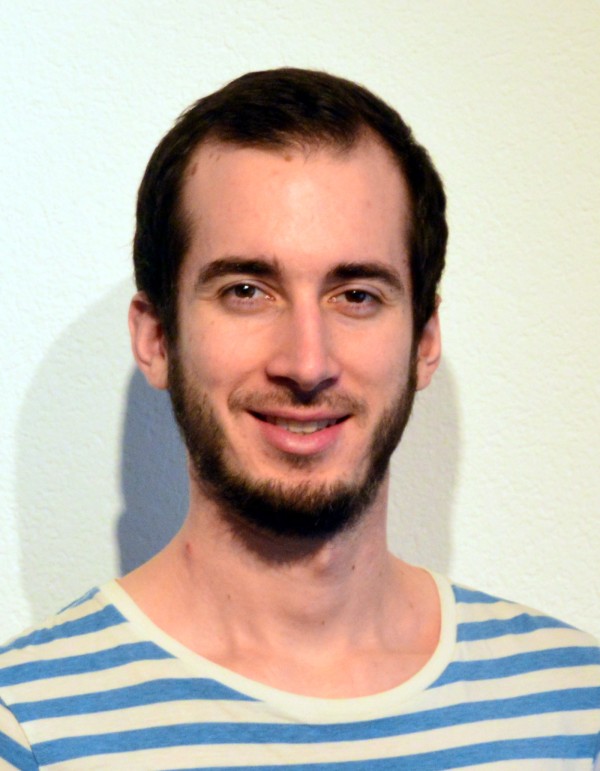
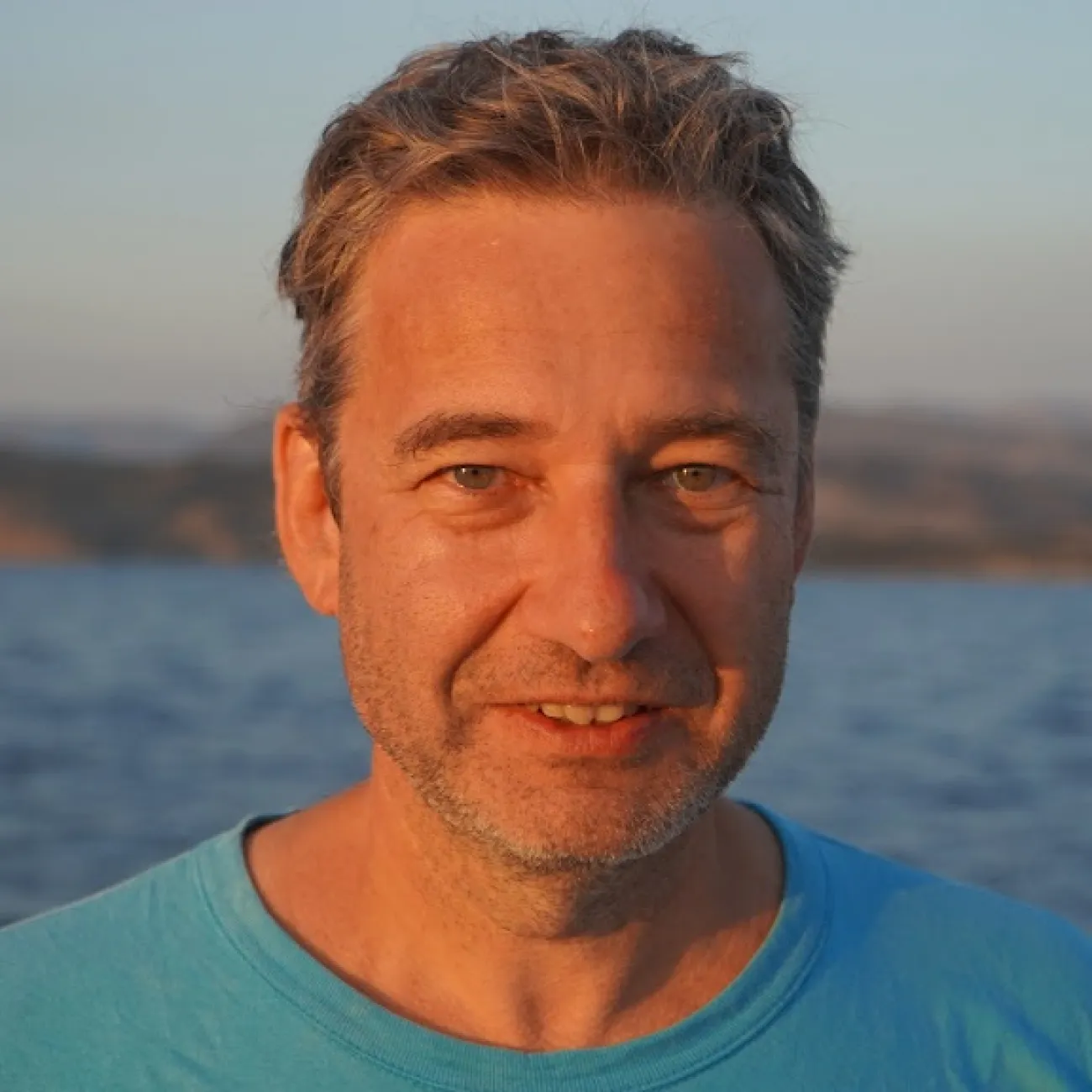
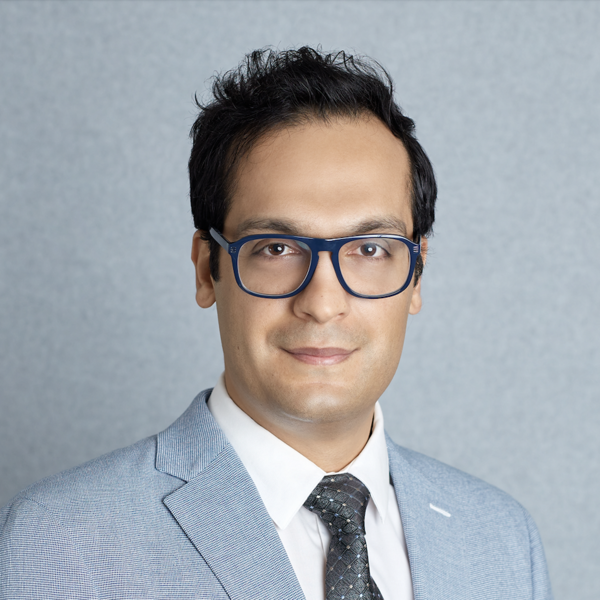
Gabriel Leen serves as a Senior Research Fellow in the Department of Electronic and Computer Engineering within the Faculty of Science and Engineering at the University of Limerick. His research integrates optical engineering, acoustics, and biomedical applications to develop advanced sensing technologies for medical diagnostics and industrial processes. Dr. Leen's primary research focuses on optical fiber sensor systems for pressure, temperature, and refractive index measurements, with significant applications in urodynamic analysis, radiotherapy dosimetry, and respiratory monitoring. His pioneering work in acoustic levitation enables contactless sample manipulation for X-ray crystallography, reducing sample consumption while enabling time-resolved structural studies of biological macromolecules. This interdisciplinary approach bridges physics, engineering, and clinical medicine through innovative device fabrication and signal processing techniques. Analysis of his recent publications (2023-2025) reveals three dominant research trajectories: 1) Acoustic droplet manipulation systems for X-ray light sources enabling new crystallography methodologies; 2) Miniaturized optical fiber sensors with biocompatible designs for in vivo medical applications; and 3) Laser-based processing techniques for flexible electronics and sensor fabrication. These themes demonstrate consistent innovation in translating fundamental physical principles into practical biomedical instrumentation with clinical impact.
João Cabral is a Professor of Soft Matter Engineering at Imperial College London's Department of Chemical Engineering, serving as Associate Director of the Institute for Molecular Science and Engineering (IMSE) and co-chair of the department's Equality, Diversity & Culture Committee. His research focuses on complex fluids, sustainable materials, and industry collaboration, supported by a Procter & Gamble/Royal Academy of Engineering research chair. He holds a physics background from Instituto Superior Técnico (IST) in Lisbon, with postgraduate work at KTH Stockholm, Laboratoire Léon Brillouin (Paris), and a PhD from Imperial College London. His career includes a National Institute of Standards and Technology (NIST) postdoc in Washington, D.C., emphasizing translational research and industrial partnerships. Research interests include polymer thermodynamics, surfactant systems, and microemulsion behavior, with applications in biomimetic materials and sustainable manufacturing. Cabral advocates for LGBTQ+ inclusion in STEM, leveraging Imperial’s supportive environment to mentor students while balancing personal and professional life. His work bridges fundamental science with industrial innovation, addressing challenges in materials science and energy transition.
Ulrich Krieger is a Lecturer at the Department of Environmental Systems Science, ETH Zurich, and serves as the Group Leader at the Institute for Atmospheric and Climate Science since 1999. He has held this role continuously and took a sabbatical at Harvard University in 2016. His research focuses on aerosol microphysics, chemistry, and optical properties using single particle levitation techniques, with an emphasis on feedback mechanisms between microphysical and chemical processes in the condensed phase. He is also developing novel methodologies coupling these techniques with mass spectrometry. Ulrich holds academic qualifications including a Ph.D. in Physics from the Technical University of Berlin (1994), a Diploma in Physics from the University of Würzburg (1989), and a Master of Science from the State University of New York at Albany (1986). Prior to joining ETH Zurich, he worked as a Research Assistant at the Max-Planck-Institute for Chemistry in Mainz from 1995 to 1999. He is actively involved in academic governance, currently serving as Chair of the Commission for Atmospheric Chemistry and Physics (ACP) under the Swiss Academy of Sciences (sc|nat+) since 2017. His research contributes to advancing understanding of aerosol behavior in environmental and climate contexts, with particular attention to photochemistry and thermodynamic/kinetic interactions. Advising: No formal advisees listed Grants: No specific grants mentioned Ulrich leads the research group at the Institute for Atmospheric and Climate Science, ETH Zurich, which specializes in experimental and analytical approaches to atmospheric aerosol studies. The group's work integrates advanced instrumentation and interdisciplinary methodologies to address complex environmental science challenges.
Dr. Marcel Müller is a Lecturer at ETH Zürich's Department of Environmental Systems Science, affiliated with the Institute for Biogeochemistry and Pollutant Dynamics. He holds a Teaching Diploma in Chemistry (2022), a doctorate from ETH Zürich (2019-2022), an MSc ETH in Chemistry (2019), and a BSc ETH in Chemistry (2017). His research focuses on aerosol chemistry, specifically investigating how chemical reactions influence aerosol physicochemical properties and their environmental impacts. Current work involves experimental setups analyzing aged aerosol particles using electrodynamic balance-mass spectrometry under controlled conditions to study atmospheric reaction pathways. Müller's publications predominantly explore atmospheric chemistry (5 recent articles), with specialization in fatty acid ozonolysis kinetics, aerosol oxidation mechanisms, and computational modeling of multiphase systems. His work consistently employs advanced mass spectrometry techniques to characterize particle aging processes. He coordinates teaching for the Biogeochemistry & Pollutant Dynamics major, develops curricula, and supports interdisciplinary courses. Additional roles include organizing the IBP PhD Congress and coordinating the CAS ETH in Climate Innovation program.
Lorenzo Magrini is a Postdoctoral Scholar at Stanford University, affiliated with the Physics Research Group led by Giorgio Gratta. His work focuses on quantum optics, optomechanics, and fundamental physics experiments at the micron scale. Key research areas include dark matter detection via quantum sensing, precision measurements of matter neutrality, and levitated nanoparticle systems. Research Interests: Quantum Optics and Optomechanics Dark Matter Detection Levitated Nanoparticle Dynamics Quantum Control and Thermodynamics Precision Gravity Experiments Recent publications (2021–2024) emphasize advancements in levitated systems, quantum control protocols, and micron-scale physics. His work bridges quantum mechanics and experimental particle physics, exploring novel interactions and subatomic phenomena. No scientific awards are explicitly mentioned in available texts. Labs/Teams: Core member of the Physics Research Group Giorgio Gratta at Stanford’s Department of Physics.
Yuqi Zhu is a Postdoctoral Scholar at Stanford University's Physics Research Group under Professor Giorgio Gratta, specializing in experimental particle and atomic physics. Their research focuses on dark matter detection, quantum optics, and ultracold molecular systems. Affiliation: Stanford University, Physics Research Group Yuqi Zhu's research spans Particle Physics , Quantum Optics , and Atomic Physics , with significant contributions to dark matter axion searches and ultracold molecular trapping. Key methodologies include HAYSTAC-phase II experiments, Rydberg-state spectroscopy, and precision force sensors for micron-scale interaction studies. Recent publications highlight work on dark matter haloscope experiments , quantum-enhanced detection systems , optical dipole trapping , and ultracold molecular cooling . Their 2025 article on HAYSTAC phase II represents cutting-edge dark matter detection research, while 2024 studies explore new physics at micron scales using levitated microspheres and vector force sensors. Yuqi Zhu contributes to experimental advancements in quantum metrology and molecular trapping , including 2023 studies on squeezed-state receivers and synthetic axion injection techniques. Their 2022-2021 work optimized Rydberg-state spectroscopy and radio-frequency magneto-optical trapping of 87Rb atoms. Current research involves developing high-efficiency molecular trapping systems for SrF molecules, with 2016-2020 publications detailing laser cooling, optical dipole traps, and magnetic confinement methods. Yuqi Zhu's team affiliation includes Stanford's Giorgio Gratta Research Group, focused on fundamental physics experiments.
Dr. Peter Hilz is a Researcher affiliated with the Faculty of Physics at Ludwig-Maximilians-Universität München (LMU), collaborating with the IOQ Jena - LMU München initiative. His responsibilities focus on Laser Ion Acceleration , including targetry, transport, instrumentation, and modeling. He also works on DLC Foils and Micro Target Levitation using Paul Trap technology. His expertise contributes to advanced experimental setups and data analysis in high-energy physics. He is part of the LS Parodi research group and can be contacted via P.Hilz@gsi.de . While no formal academic awards or student advisement are listed, his technical contributions to laser-driven acceleration and material science are central to his role.
Prof. Matthias Kraume is a Professor at the Technical University of Berlin (TU Berlin), affiliated with Faculty III - Process Sciences and the Institute of Process Engineering , specifically leading the FG Verfahrenstechnik research group. His research focuses on CFD simulation, multiphase processes, membrane bioreactors, and reactor design, with contributions to the Collaborative Research Centre InPROMPT (2009). He served as a former member of the UniCat Executive Board (2012–2017), contributing to Research Fields D1/D2 (2012–2017) and C2/C3/C4 (2007–2011). His work spans projects like multiphase processes, biological systems, and renewable resources optimization. Notably, he coordinated the InPROMPT project on integrated fluid multiphase systems. Publications emphasize CFD-DEM coupling, reactor optimization, and biocatalyst screening. His group’s work has been recognized through awards for students like Gregor Wehinger, who became a junior professor under his mentorship. Kraume’s team collaborates on energy-efficient biogas systems, viscoelastic fluid dynamics, and automated process control in stirred reactors. Current research includes advanced CFD modeling for fluidized beds, bioreactor design, and sustainable process intensification. He oversees lab activities at TU Berlin’s FG Verfahrenstechnik , with affiliations to industry partnerships for biogas and catalytic technologies.
Prof. Derek F. Kimball is a faculty member at California State University – East Bay in the Department of Physics. He specializes in experimental atomic physics and nonlinear optics, focusing on precision tests of fundamental laws and searches for exotic spin-dependent interactions linked to dark matter or dark energy. Kimball established the first externally funded physics research program at CSU East Bay and has mentored over 60 undergraduates, with many advancing to graduate programs and three securing NSF Graduate Research Fellowships. Ph.D., University of California at Berkeley (2005), under Dmitry Budker Co-authored books: Atomic Physics (Oxford, 2008) and Optical Magnetometry (Cambridge, 2013) His research spans quantum sensing for dark matter and gravitational waves, utilizing atomic magnetometry and comagnetometers. He contributes to global projects like GNOME (Global Network of Optical Magnetometers) and SNIPE (Search for Non-Interacting Particles Experiment). Recent publications explore ultralight dark matter, spin-gravity couplings, and axionlike particle detection. Kimball’s awards include the 2011-12 George and Miriam Phillips Outstanding Professor, the 2019 Spitzer Distinguished Science Faculty Award, and 2018 election as an American Physical Society Fellow. He served as Department Chair (2011-14, 2016) and currently chairs the APS Topical Group on Precision Measurements (2020-21).
Matthew R. Stoneking is the Alice G. Chapman Professor of Physics at Lawrence University, where he has served since 1997. His research focuses on experimental plasma physics, particularly the magnetic confinement of pure electron plasmas and the creation of electron-positron pair plasmas. He leads the APEX collaboration, developing advanced levitated dipole traps and collaborating internationally with institutions like the Max Planck Institute for Plasma Physics. His work integrates superconducting magnet technology, FPGA stabilization, and positron beam manipulation to explore fundamental plasma behaviors. Education: BA in Physics from Carleton College and PhD in Physics from the University of Wisconsin-Madison. His research interests span non-neutral plasmas, magnetic confinement engineering, and laboratory astrophysics. Key projects include the construction of the APEX-LD trap and the development of diagnostic techniques using gamma-ray annihilation signatures. Research trends in his articles emphasize advancing pair plasma confinement, optimizing magnetic trap designs, and understanding plasma behavior under extreme conditions. Collaborations with global teams aim to bridge theoretical models with experimental validation. His work contributes to both plasma physics and astrophysics by simulating conditions found in cosmic environments. Despite no explicit awards listed, his sustained contributions to experimental plasma physics highlight significant academic impact. Advising emphasizes student involvement in cutting-edge experiments, while grants likely support APEX infrastructure and international collaborations. His laboratory at Lawrence University serves as a hub for innovative plasma research, complemented by advanced facilities at partner institutions. Current projects include refining superconducting coil levitation, improving positron injection efficiency, and exploring thermal equilibrium dynamics in curved magnetic fields. Future work aims to achieve long-lived electron-positron plasmas, with potential applications in fundamental physics and energy research.
Pardeep Kumar is a Research Fellow at the Max Planck Institute for the Science of Light , focusing on quantum optomechanics, atomic physics, and nanotechnology. His research explores fundamental aspects of light-matter interactions, including quantum memory, superfluid rotation sensing, and valley polarization control. He contributes to groundbreaking studies on Bose-Einstein condensates, optomechanical systems, and ultrafast phenomena in graphene. Key research directions include: Optomechanical detection of persistent currents and solitons in bosonic ring condensates Phase-adaptive cooling of levitated nanoparticles Quantum sensing beyond standard limits using atomic superfluids Ultrafast optical control of valley polarization in 2D materials His work bridges quantum optics with condensed matter physics, advancing applications in quantum technologies and nanoscale systems. While no specific awards or grants are listed, his contributions to cavity optomechanics and nanophotonics reflect significant scientific impact.
Professor Alexander Belyaev is a distinguished theoretical physicist at the University of Southampton, holding a position as Professor of Physics in the School of Physics and Astronomy. He is an active member of both the Southampton High Energy Physics (SHEP) group and the Southampton Theory Astrophysics and Gravity (STAG) Research Centre. Belyaev maintains strong connections with major international research facilities, serving as a full member of the CMS collaboration at CERN since 2007, and previously contributing to the DØ collaboration at Fermilab from 1996 to 2004. Professor Belyaev's educational background includes: Graduated from Moscow State University in 1993 Obtained PhD from Moscow State University in 1996 Professor Belyaev's research focuses on the theory and phenomenology of elementary particle physics and cosmology beyond the Standard Model. His work spans supersymmetry, extra dimensions, technicolor, and their connections to Dark Matter. He has pioneered innovative computational approaches to bridge theoretical physics and experimental verification. His research program investigates various theoretical frameworks that could explain Dark Matter phenomena, including extra-dimensional theories and those involving dynamical symmetry breaking. Belyaev leads projects connecting collider and cosmological exploration of Dark Matter models, aiming to establish foundations for uncovering underlying theories. An analysis of Professor Belyaev's recent publications reveals a strong focus on Dark Matter phenomenology, Higgs physics, and Beyond Standard Model scenarios. His work increasingly examines connections between collider signatures and cosmological observations, particularly regarding Dark Matter. There's a noticeable emphasis on developing computational tools and frameworks to systematically explore theoretical models. His research frequently involves collaborations with both theoretical and experimental physicists across multiple institutions, reflecting the interdisciplinary nature of modern particle physics research. Professor Belyaev has received significant recognition for his contributions to the field: Co-author of "The Basics of Nuclear and Particle Physics" textbook (2021) with Prof. Douglas Ross One of three developers of the CalcHEP computational package Pioneer of the High Energy Physics Model Database (HEPMDB) project (2011) Professor Belyaev actively supervises PhD students and has led multiple research projects funded by prestigious organizations including the Science and Technology Facilities Council (STFC), Royal Society, and Leverhulme Trust. His current research includes the "Ulbricht - Constraining Modified Newtonian Dynamics via Magnetically Levitated Particles" project and "New Frontiers In Particle Physics, Cosmology And Gravity." He has previously led projects such as "Probing Dark Matter at the Large Hadron Collider," "Dictionary of LHC Signatures," and "Senior Res Fellowship - Collider-Cosmo-DM," demonstrating sustained research excellence and funding success across multiple areas of theoretical physics. Professor Belyaev is deeply involved with the Southampton High Energy Physics (SHEP) group and the Southampton Theory Astrophysics and Gravity (STAG) Research Centre. His work with the CalcHEP package and HEPMDB project has created important infrastructure for the broader particle physics community. Through his leadership in these computational initiatives and his active participation in the CMS collaboration at CERN, Belyaev maintains strong connections between theoretical development and experimental verification in high-energy physics.
Dr. Asier Marzo Pérez is Professor at the Public University of Navarre and principal investigator at the Smart Cities Institute, where he leads research on novel interactive interfaces. A 2022 recipient of the prestigious European Research Council Starting Grant (€1.5 million), his 'InteVol' project develops reach-through volumetric displays enabling direct manipulation of 3D holograms. His work combines acoustic levitation, holography, particle tracking, and AI to create systems where users physically interact with mid-air projections. Applications span CAD visualization, surgical planning, and collaborative design, with prototypes demonstrated internationally. Dr. Marzo founded the UpnaLab research group developing open-source interactive devices. His innovations have been featured by BBC, Discovery Channel, and Nature Videos.
Aref Hashemi is a Visiting Assistant Professor in the Department of Applied & Computational Mathematics & Statistics at the University of Notre Dame (2024–Present). Previously, he served as an Assistant Professor/Courant Instructor at New York University’s Courant Institute of Mathematical Sciences (2021–2023). He holds a PhD from the University of California Davis (2021), an MS from Sharif University of Technology (2013), and a BS in Chemical Engineering from Shiraz University (2010). His research integrates engineering and applied mathematics to explore theoretical and computational problems in mathematical physics, with a focus on electrokinetic phenomena in micro/nano-fluidic systems and spatiotemporal ratchets. Key themes include asymmetric rectified electric fields (AREFs), nonantiperiodic potentials, and their applications in nanochannel conductivity and colloidal dynamics. Publications highlight advancements in fluid dynamics modeling, computational methods for confined geometries, and experimental validation of electrokinetic phenomena. His work bridges theoretical frameworks with practical applications, such as optimizing nanoscale fluidic systems and understanding long-range electrostatic effects in liquids. No scientific awards are listed, though his contributions to electrokinetic theory are notable. His research is supported by computational fluid dynamics (CFD) simulations and analytical approaches, with applications spanning materials science, microfluidics, and nanotechnology.
Alex Sushkov is an Associate Professor in the Department of Physics at Boston University with joint appointments in Electrical & Computer Engineering and Materials Science. His lab develops quantum sensors using nitrogen-vacancy centers in diamond for precision measurements in fundamental physics, including dark matter detection and condensed matter studies. Research includes the Cosmic Axion Spin Precession Experiment (CASPEr), using nuclear magnetic resonance to detect axion dark matter, and nanoscale magnetic imaging of materials. Recent work explores levitated ferromagnets for ultralight dark matter detection and spin dynamics in disordered systems. Publications focus on quantum sensing methodologies applied to particle physics, with experiments conducted at cryogenic temperatures using custom RF circuits and magnetic shielding. The CASPEr project represents a major tabletop-scale approach to dark matter research.