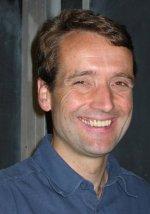
Prof. Dr. Nikolaus A. Adams is a full professor and Chair of Aerodynamics and Fluid Mechanics at the Technical University of Munich (TUM), affiliated with the TUM School of Engineering and Design. Born in 1963, he holds a doctorate from TUM (1993) and habilitation from ETH Zurich (1999). His research focuses on numerical methods, turbulent flows, microfluidics, and multiphase systems. He has held leadership roles, including Dean of the Faculty of Mechanical Engineering since 2023 and Vice Dean (2015–2016). Education: PhD from TUM (1993), habilitation from ETH Zurich (1999) Research interests include aerodynamics, fluid-structure interaction, and numerical techniques for compressible flows. His work spans high-speed aerodynamics and computational fluid dynamics (CFD). Awards include ERC Advanced Grants (GENUFASD 2023, NANOSHOCK 2015), the Gordon Bell Prize (2013), and Fellow of the American Physical Society (2011). Grants and leadership: Spokesperson of DFG SFB/TRR 40 (2008–2020), co-author of 'Large-Eddy Simulation for Compressible Flows' (2009), and editorial roles in J. Comput. Phys.
Christof Paar is a Professor of Embedded Security at Ruhr University Bochum's Faculty of Computer Science. His work focuses on hardware security, cryptography, and embedded systems security. He leads the Embedded Security Group within the CASE Cluster of Excellence (Cyber Security in the Age of Large-Scale Attacks), addressing cutting-edge challenges in hardware Trojans, side-channel attacks, and cryptographic engineering. His research spans FPGA and IoT security, with contributions to physical-layer security, wireless jamming defenses, and tamper-resistant systems. Research Interests: Paar's expertise lies in hardware-software co-design for security, with a focus on embedded systems. His work includes analyzing vulnerabilities in FPGAs, developing countermeasures against side-channel attacks, and exploring physical-layer security mechanisms. He also investigates the human factors in hardware reverse engineering and the implications of adversarial machine learning on security systems. Notable Work: Recent publications highlight breakthroughs in detecting hardware Trojans across CMOS generations, breaking industry-standard IP protection mechanisms (IEEE 1735), and proposing novel defenses like IRShield against adversarial wireless sensing. His group actively contributes to standards for secure embedded systems and IoT devices, emphasizing practical implementations.
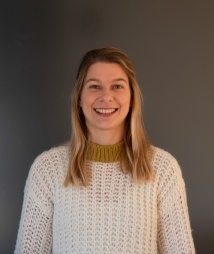
Fabian Fritz holds an M.Sc. degree and works at the Technical University of Munich (TUM) within the Chair of Aerodynamics and Fluid Mechanics . His research focuses on computational fluid dynamics (CFD) and numerical simulation of multiphase flows, particularly using Smoothed Particle Hydrodynamics (SPH) . He collaborates on projects like PBF-LB/M (additive manufacturing) and contributes to Lagrangian fluid mechanics benchmarking frameworks. Research Trends: His publications emphasize numerical methods (SPH, level-set, finite-volume), multiphase flow modeling , heat transfer , and thermoacoustic stability . Recent work includes hardware-agnostic code optimization and adaptive mesh refinement techniques. Education: Completed a master’s thesis on Diffusive-Interface Modeling of Multiphase Flows with Surface-Tension Effects , supervised by P.D. Dr.-Ing. habil. Stefan Adami.
Yen-Chi Chen is an Associate Professor in the Department of Statistics at the University of Washington. He also holds positions as a Data Science Fellow at the UW eScience Institute and as a co-investigator and statistician at the National Alzheimer's Coordinating Center. His academic career spans multiple interdisciplinary fields including statistics, data science, and astrostatistics. Chen's educational background includes a Ph.D. from Carnegie Mellon University, where he received prestigious awards including the Umesh K. Gavasakar Thesis Award (2017) and the William S. Dietrich II Presidential Ph.D. Fellowship Award (2015). His research focuses on nonparametric statistics, topological data analysis, missing data methodologies, cluster analysis, manifold learning, and applications in large-scale structure analysis and astrostatistics. Chen has made significant contributions to the development of statistical methods for analyzing cosmic web structures, GPS data, and causal inference with continuous treatments. His work bridges theoretical statistics with practical applications in astronomy, neuroscience, and public health. Analysis of his recent publications reveals a strong emphasis on developing novel statistical frameworks for complex data structures, particularly focusing on density-based methods, manifold learning, and approaches that address challenges in missing data and causal inference without standard assumptions. ASA Noether Early Career Scholar Award, American Statistical Association (2022) CAREER Award, National Science Foundation (2022-2027) Umesh K. Gavasakar Thesis Award, Carnegie Mellon University (2017) William S. Dietrich II Presidential Ph.D. Fellowship Award, Carnegie Mellon University (2015) Chen has advised numerous graduate students across multiple publications, with a focus on developing new statistical methodologies. His research has been supported by major funding agencies including the National Science Foundation and the National Institutes of Health. He is actively involved in several research groups including the UW Geometric Data Analysis Group, the UW Center for Statistics and the Social Sciences, and the National Alzheimer's Coordinating Center.
Lucio Baccaro is Director at the Max Planck Institute for the Study of Societies (MPIfG) and was Full Professor of Macrosociology at the University of Geneva, where he also served as Deputy Dean for Research (2016–2020). He has held academic positions at MIT, Case Western Reserve University, and visiting roles at the University of Turin and the University of Vienna. His primary affiliations are with MPIfG and the University of Geneva, both central to his research in political economy and sociology. Education: PhD in Management and Political Science, Massachusetts Institute of Technology (MIT), 1999 Doctorate in Labor Law and Industrial Relations, University of Pavia, 1997 Master of Business Administration, Stoa' (IRI-MIT joint venture), 1991 Laurea in Philosophy, summa cum laude, University "La Sapienza", Rome, 1989 Lucio Baccaro’s research focuses on comparative political economy, labor relations, global worker rights, and deliberative governance . His work integrates economic sociology and political sociology to analyze institutional change, social dialogue, and the impact of globalization on labor and welfare systems. He has led major comparative studies on employment models, pension reforms, and international labor standards. His scholarship emphasizes the interplay between institutions, ideas, and power in shaping economic governance. His recent publications reveal a consistent focus on institutional change, deliberative processes, labor market reforms, and global justice . Themes include path dependence in international organizations, the transformation of collective bargaining, and the role of expertise in democratic governance. His interdisciplinary approach bridges sociology, political science, and economics, with strong methodological rigor in comparative and qualitative analysis. Scientific Awards and Honors: Honorary Professor, University of Duisburg-Essen (2023) Professeur honoraire, University of Geneva (2020) International Geneva Award (2011) Outstanding Young Scholar Award, IRRA (2003) Founder's Prize, SASE (2001) Maurice F. Strong Career Development Chair, MIT (2006–2009) Multiple fellowships from SSRC, Harvard, MIT, and CUNY Alfiere del Lavoro, awarded by the President of Italy (1984) Advising and Grants: While specific student advisees are not listed, Baccaro has supervised research and mentored scholars through his roles at MPIfG and the University of Geneva. He has secured substantial research funding, including grants from the Swiss National Science Foundation (SNF) and the Swiss Network for International Studies (SNIS), supporting projects on post-Fordist growth models, employment policy, and deliberative governance. His leadership in co-principal investigator roles highlights his collaborative research approach and institutional influence. Labs and Research Teams: As Director at MPIfG, Baccaro leads a major research institute focused on the study of societal and economic institutions. He has been instrumental in shaping research agendas on political economy and governance, fostering interdisciplinary collaboration and international scholarly exchange.
Prof. Daniel Große serves as Professor at the Institute for Complex Systems (ICS) within Johannes Kepler University Linz, Austria, while maintaining a dual affiliation with the German Research Center for Artificial Intelligence (DFKI) in Bremen. His research centers on Electronic Design Automation (EDA), specializing in verification, debugging, and synthesis of complex hardware/software systems through advanced virtual prototyping techniques. His primary research domains include Formal Verification , Hardware Verification , and Virtual Prototyping , with significant contributions to RISC-V architecture development and embedded systems validation. Current projects like PaSVer (automotive electronics), AUTOASSERT (analog-digital verification), and VerSys (RISC-V software platforms) demonstrate his focus on bridging simulation and formal methods for safety-critical applications. Recent publications reveal accelerating trends in metamorphic testing for embedded graphics libraries and RISC-V vector extensions, alongside innovations in waveform analysis tools like Surfer. His work increasingly integrates AI-assisted verification while maintaining rigorous formal methods foundations. Prof. Große actively supervises student research, having guided Lucas Klemmer's PhD thesis and nine Bachelor theses on topics ranging from RISC-V processor design to transaction visualization. His projects including SATiSFy (autonomous vehicle security) and CONVERS (complex system design automation) secure substantial research funding from academic and industry partners. He leads the Institute for Complex Systems' development of open-source tools such as RISC-V VP++ and contributes to international standards through program committee roles at DATE, ICCAD, and RISC-V Summit Europe.
Max Pellert is a computational social scientist and cognitive scientist with faculty appointments at multiple institutions. Since 2022, he has served as an Assistant Professor at the Chair for Data Science in the Economic and Social Sciences at the University of Mannheim . He previously held an interim Professor position at the University of Konstanz and an Assistant Researcher role at Sony Computer Science Laboratories Rome. His work bridges computational methods with social science theory. Education M.Sc., University of Vienna (2017) in Middle European interdisciplinary Master's program in Cognitive Science (with distinction) Ph.D., Medical University of Vienna (2022) in Medical Informatics, Biostatistics & Complex Systems Research interests center on Computational Social Science , Digital Traces , and Natural Language Processing for emotion and sentiment analysis. He develops Temporal Adapters for tracking longitudinal emotional patterns and FAULTANA pipeline for polarization studies. His AI Psychometrics framework assesses personality-like traits in large language models. Recent publications include: (1) 2025 ACL work on political bias in LLMs; (2) 2025 ICWSM study of temporal emotion analysis; (3) 2024 Perspectives on Psychological Science paper on LLM psychometrics; (4) 2024 PNAS Nexus polarization analysis; (5) 2023 Emotion cross-cultural study of pandemic emotions. Scientific Awards Habilitation candidate status at University of Mannheim Teaching includes IS 616: Large Scale Data Analysis , IS 809: Advanced Text Mining Lab , and IS 723: Data Science Seminar at master’s and PhD levels. His Barcelona Supercomputing Center role focuses on principal investigator duties for computational social science projects.
Daniel Geiger is a Professor and Chairholder of Organization Studies at the University of Hamburg , Faculty of Economics and Social Sciences, Department of Social Economics. He has previously held professorial positions at the University of Kaiserslautern and the University of Linz. He earned his PhD from Freie Universität Berlin and conducted postdoctoral research at the University of Liverpool. He is an internationally recognized scholar in organization theory, with a focus on organizational routines, crisis management, and practice-based research. Education: Dipl.-Kfm. in Business Administration, Freie Universität Berlin; PhD in Management, Freie Universität Berlin (2005); Habilitation, University of Linz (2009). Professional Experience: Professor, University of Hamburg (2013–present); Professor, University of Kaiserslautern (2010–2013); Assistant/Associate Professor, University of Linz (2007–2009); Research Fellow, University of Liverpool (2005–2007). Prof. Geiger’s research centers on the dynamics of organizational routines in crisis and emergency contexts. He employs ethnographic methods and has collaborated with organizations such as the Uganda Red Cross, Feuerwehr Hamburg, and Technisches Hilfswerk. His work explores how time, space, and paradox shape coordination in extreme situations. His recent publications reveal a deepening focus on temporal elasticity, granularity in routine studies, and multi-actor dynamics in legitimacy repair and crisis response. He has contributed significantly to journals like Administrative Science Quarterly , Organization Studies , and Organization Science . His scientific contributions have been recognized with awards including the Douglas McGregor Memorial Award (2010) and the Best Paper Award for Young Scholars (2009). He serves on the editorial boards of Organization Studies , Management Learning , and European Management Journal , and is an active member of EGOS, including its Executive Board and Standing Working Group on Managing in Extreme Contexts. Prof. Geiger has advised several doctoral students and junior researchers, including Dr. Iris Seidemann and Pia Geisemann. He has led international research projects and held visiting appointments at the University of California, Irvine, and the Uganda Management Institute. His work combines theoretical rigor with practical relevance, particularly in humanitarian and emergency management contexts.
Prof. Dr. sc. techn. ETH Oliver Staadt is Full Professor of Computer Science and Chair of Visual Computing at the University of Rostock , Germany. Since 2023 he also serves as Director of the Institute for Visual and Analytic Computing within the Faculty of Computer Science and Electrical Engineering . Previously he was Dean (2016–2018) and Vice Dean (2010–2016) of the same faculty. Education Ph.D. in Computer Science, ETH Zürich (2001) M.Sc. in Computer Science, TU Darmstadt (1994) Research Interests Prof. Staadt’s research spans virtual and augmented reality , computer graphics , visualization , telepresence , immersive analytics , and human–computer interaction . A particular focus lies on real-time rendering and display technologies for large high-resolution display systems, depth-image enhancement for RGB-D sensors, and interaction techniques that leverage spatial cognition and eye-tracking. His work is frequently applied to collaborative settings and microgravity environments, including experiments aboard parabolic flights and the International Space Station. Recent Publication Trends Between 2019 and 2021 his output centers on foveated rendering , AR viewpoint guidance , collaborative analytics on wall-sized displays , and embodied interaction metaphors . Earlier work addressed bandwidth-efficient telepresence, depth-image filtering, and physically-based animation. The corpus reveals a steady evolution from fundamental graphics algorithms toward applied immersive systems. Scientific Awards & Honors Fellow of the Eurographics Association Associate Editor, IEEE Transactions on Visualization and Computer Graphics (past) Associate Editor, Computers & Graphics (past) Associate Editor, Computer Animation and Virtual Worlds (past) Associate Editor, Frontiers in Virtual Reality (current) Chair, Expert Group on Virtual & Augmented Reality, German Informatics Society (2013–2020) Advising & Funding He has successfully supervised more than ten PhD graduates whose dissertations range from collision detection and physically-based animation to 3D interaction in microgravity and predictive user modeling. Current PhD researchers include Bipul Mohanto, Mana Takhsha, and Sven Kluge. His projects are supported by national and EU programs such as EVOCATION, SMOOTH, ARGuide, 3DPick, DIVA, and Telepresence. Labs & Teams Prof. Staadt leads the Visual Computing Group at Rostock, operating state-of-the-art facilities including large tiled display walls, VR/AR laboratories, and motion-capture systems. The institute hosts interdisciplinary collaborations with partners in visualization, computer vision, psychology, and aerospace engineering.
Professor Dr. Martin Grepl is a faculty member at RWTH Aachen University, where he holds the Lehr- und Forschungsgebiet Optimierung mit partiellen Differentialgleichungen (Teaching and Research Area in Optimization with Partial Differential Equations). He has been affiliated with RWTH Aachen since 2009, first as a Professor (W1) and since 2014 as a Professor (W2). Education: Diplom-Ingenieur (Aerospace Engineering), University of Stuttgart (2000) Master of Science (Mechanical Engineering), MIT (2001) Doctor of Philosophy (Mechanical Engineering), MIT (2005) His research focuses on numerical methods for partial differential equations (PDEs) , particularly model order reduction , reduced basis methods , finite element methods , and optimal control for parametrized PDEs. He also investigates parameter estimation , inverse problems , and control constraints in elliptic and parabolic PDE systems. The scientific awards he has received include the Studienstiftung des deutschen Volkes (1997-2000), a Fellowship from the Dr. Jürgen Ulderup-Stiftung (1998-1999), and the Lehrpreis der Fachschaft Mathematik/Physik/Informatik (2011). His work spans applications in manufacturing , medical physics , and fluid dynamics , as evidenced by his patents and collaborative research. His publications demonstrate expertise in reduced basis methods for nonaffine/nonlinear PDEs , trust region optimization , and error bounds for real-time and many-query scenarios. His collaborations often involve interdisciplinary applications, including thermal conduction , welding processes , and glomerular filtration modeling .
Rupert Klein is a Professor at Freie Universität Berlin in the Department of Mathematics and Computer Science , specializing in Geophysical Fluid Dynamics . His research spans atmospheric dynamics, numerical methods, and gas dynamics of combustion. Research Interests : Geophysical Fluid Dynamics and Atmospheric Modeling Multiscale Asymptotic Analysis Wave Propagation and Turbulence Combustion and Pressure Gain Combustion Climate Dynamics and Data Assimilation Scientific Awards : DRS Award for Excellent Supervision (2014) ECMWF Fellowship (renewed 2017) His recent work includes multiscale models for atmospheric flows, vortex dynamics, and combustion processes. Key collaborations involve DFG SPP 1276, CRC 1029 (TurbIn), and CRC 1114 (SCCS) projects. He contributes to numerical methods for low-Mach-number flows and geophysical simulations.
Dr. Nina Berlinger is a researcher and educator specializing in mathematics education at the University of Münster. She is actively involved in teaching courses related to primary school mathematics education, inclusive teaching practices, and the development of mathematical talents in young children. Her work focuses on creating inclusive learning environments that cater to diverse student needs while fostering mathematical excellence. Dr. Berlinger's research interests center on inclusive mathematics education and the identification and nurturing of mathematical talents in primary school children. She has developed approaches for natural differentiation in mathematics classrooms, allowing all students to engage with challenging mathematical content at their appropriate level. Her work emphasizes creating open, substantial problem fields that provide opportunities for mathematical exploration regardless of students' prior knowledge or abilities. She investigates how spatial reasoning relates to mathematical talent development in young children and develops practical teaching strategies for educators. Her publications reveal a strong focus on inclusive mathematics education, with particular emphasis on how to design classroom settings that simultaneously support students with varying abilities while challenging mathematically talented children. She has contributed significantly to the understanding of natural differentiation in mathematics classrooms and has developed practical teaching materials like the "Mathematische Weltreise" station learning concept. Her work often bridges theory and practice, providing concrete examples like the "Wege in Manhattan" problem that demonstrate how open mathematical problems can create inclusive learning opportunities. Dr. Berlinger has received recognition through numerous publications in mathematics education journals and has presented her work at various national conferences. Her collaborative projects, particularly the "Inklusiver Mathematikunterricht" initiative, demonstrate her commitment to translating research into practical classroom applications. She actively supervises bachelor's theses and teaches multiple courses each semester, including lectures on "Lernende und Mathematik" (Learners and Mathematics) and specialized seminars on differentiating mathematics instruction for primary school children, with particular attention to mathematically talented students. She also leads seminars on promoting mathematically talented children through the MaZ (Math Center Münster) program. Dr. Berlinger is part of a research team working on inclusive mathematics education, collaborating with colleagues like Prof. Dr. Daniel Frischemeier, Prof. Dr. Marcus Nührenbörger, and Dr. Marcus Veber. Together, they have developed comprehensive approaches to inclusive mathematics teaching and teacher education.
Professor Caterina Zeppieri is a faculty member at the Institute for Analysis and Numerics within the Faculty of Mathematics and Computer Science at the University of Münster, Germany. She serves as an investigator in Mathematics Münster and specializes in optimization and calculus of variations. Her research spans multiple collaborative projects within the Excellence Cluster EXC 2044. Her primary research interests focus on Calculus of Variations , Homogenization Theory , and Free-Discontinuity Problems , with significant contributions to the mathematical understanding of material science phenomena. Her work bridges theoretical mathematics with practical applications in material modeling, fracture mechanics, and multi-scale analysis. She has developed sophisticated mathematical frameworks for understanding stochastic homogenization, phase-field approximations, and gradient damage models in heterogeneous materials. Analysis of her recent publications reveals a consistent trajectory toward increasingly complex multi-scale problems involving randomness and discontinuities. Her work demonstrates deep connections between Γ-convergence theory, stochastic processes, and applications to material science, particularly in modeling fracture phenomena and composite materials. A notable trend is her development of global methods that unify deterministic and stochastic approaches to homogenization problems. Zeppieri actively contributes to teaching at the University of Münster, regularly offering courses on Partial Differential Equations, Calculus of Variations, and Advanced Topics in Mathematical Modeling. Her teaching spans both undergraduate and graduate levels, including specialized seminars on cutting-edge research topics in her field. She is deeply involved in the EXC 2044 collaborative research center, particularly in project units C1 (Evolution and asymptotics), C2 (Multi-scale phenomena and macroscopic structures), and C3 (Interacting particle systems and phase transitions), where she contributes her expertise in variational methods and homogenization to multi-disciplinary research efforts.
Nico Leonhardt is a Researcher at the University of Leipzig's Faculty of Educational Science, specifically in the Department of Pedagogy with a Focus on Intellectual Disability. He works at the Institute for Special Education and coordinates key projects focused on inclusive education development. His current office is located in House 5, Marschnerstraße 29d/e, Room 158, Leipzig. His educational background includes: PhD candidate at the Faculty of Educational Science, University of Leipzig (2023-2025) Master of Education - Special Education Teacher Training from University of Leipzig (2012-2015) B.A. in Rehabilitation and Integration Pedagogy from University of Leipzig (2009-2012) Leonhardt's research focuses on inclusive school development and social space orientation, inclusion-sensitive university development, participatory research and teaching, ableism, educational equity, and artificial intelligence. His work critically examines power structures in educational settings and advocates for student-centered, participatory approaches to inclusive education. He explores how educational institutions can better serve students with intellectual disabilities through social space orientation and child rights-based approaches. His research often addresses the intersection of disability studies with critical pedagogy, examining how ableism manifests in educational systems and how to develop more equitable alternatives. His publications show a strong trend toward practical applications of inclusive education theory, with a focus on ableism in school settings, participatory teaching methods, and the intersection of educational equity with emerging technologies like AI. His work spans from theoretical explorations of ableism in educational contexts to practical handbooks for inclusive school development. The research demonstrates a consistent focus on participatory methodologies, social justice, and critical analysis of power structures in education. Leonhardt has coordinated the QuaBIS project (Qualification of Education and Inclusion Officers in Saxony) since 2018 and worked on the InSide project (Inclusion in Social Spaces) from 2020-2023. He has established international collaborations, including a significant partnership with Universidad National de Cordobá in Argentina starting in June 2024. His teaching activities span numerous topics related to inclusive education, disability studies, and participatory approaches, with presentations at international conferences through 2025. His work spans multiple educational contexts: School development in challenging educational environments University-level inclusive education initiatives Teacher training for inclusive practices Critical analysis of ableism in educational settings Participatory research methodologies across educational levels International comparative studies on inclusive education
Yannis Kevrekidis is a Professor at Princeton University with a distinguished career in computational mathematics and chemical engineering. He is currently a Hans Fischer Senior Fellow at the Technical University of Munich (TUM-IAS) and has held visiting positions at institutions like the Zuse Institute Berlin and Caltech. Education : National Technical University of Athens (Chemical Engineering) University of Minnesota (PhD in dynamical systems) Research Interests : Equation-Free and Variable-Free Modeling Complex Systems Dynamics Multiscale Computation Integration of Machine Learning with Scientific Computing Pattern Formation & Instability Analysis Key Article Trends : Advanced data-driven modeling of dynamical systems Manifold learning for reaction coordinates Projective integration methods Coarse-grained modeling across disciplines Applications in epidemiology, neuroscience, and fluid dynamics Scientific Awards : Guggenheim Fellowship Humboldt Research Award Computing in Chemical Engineering Award (AIChE) Bodossaki Academic Award Allan P. Colburn Award Collaborations : Extensive international collaborations with institutions in Germany, Austria, and the UK Key role in the Complex Systems Modeling and Computation focus group at TUM-IAS