Dr. Penina Axelrad is a University of Colorado Distinguished Professor and Joseph T. Negler Professor of Aerospace Engineering Sciences at the University of Colorado Boulder. She has held academic roles since 1992, serving as Department Chair from 2012–2017. A member of the National Academy of Engineering since 2019, her research focuses on GNSS technology, satellite navigation, and remote sensing applications. She has authored over 223 publications and secured $17.5M in research grants. Education: Ph.D., Aeronautics and Astronautics, Stanford University, 1991 S.M., Aeronautical and Astronautical Engineering, MIT, 1986 S.B., Aeronautical Engineering (Avionics Option), MIT, 1985 Research Interests: Global Navigation Satellite Systems (GNSS), multipath mitigation, GNSS reflectometry, orbital dynamics, and quantum sensing for Earth science. Her work bridges astrodynamics, satellite navigation, and environmental monitoring. Awards: Member, National Academy of Engineering (2019) Women In Aerospace Educator Award (2016) Institute of Navigation Samuel Burka Award (2012) AIAA Summerfield Book Award (2011) Advising & Grants: Advised numerous students (no names listed) and led major grants including NASA Quantum Pathways Institute and Sentinel-6 orbit determination projects. Active in Institute of Navigation leadership roles. Labs/Teams: Colorado Center for Astrodynamics Research (CCAR), Quantum Pathways Institute, and collaborative efforts on CubeSat atomic clock experiments.
Juan Baeza is a Senior Lecturer in Health Policy at King's Business School, King's College London. He holds a PhD from the University of Kent, an MSc from the London School of Economics, and a BA from Goldsmiths, University of London. His research focuses on health policy analysis, particularly examining the impact of health reforms on medical professions and health systems globally, with a focus on the UK's NHS, as well as Chile, Mexico, Russia, Sweden, Poland, and Australia. Affiliations: King's Business School, Department of Public Services Management and Organisation. Education: PhD in Health Policy (University of Kent, 2002), MSc in Economics (LSE, 1993), BA in Social Sciences (Goldsmiths, 1990). Research Interests: Baeza's work explores professional relations within healthcare, healthcare reform, evidence-based practice, and organizational change. He emphasizes how health policies are translated into actionable practices by healthcare professionals and how medical professions influence policy development and implementation. Recent Articles Trends: His publications highlight themes such as integrated care collaboration, the role of evidence in healthcare decision-making, and the governance of pluralist healthcare systems. Recent work includes analyses of pandemic discourse (e.g., Brazil's response to COVID-19) and the reconfiguration of health services in England. Grants & Projects: Co-investigator in projects like the AI-assisted fetal ultrasound trial (NIHR-funded) and studies on stroke care implementation across Europe. Teaching & Leadership: Teaches health policy modules, directs the intercalated BSc in Healthcare Management, and leads executive education programs. Labs/Teams: Active in the Integrated Care Systems (ICS) Research-Practice Network, organizing workshops on healthcare collaboration and prevention strategies.
Jiehong Lou is an Assistant Research Professor and Assistant Research Director at the Center for Global Sustainability (CGS) within the University of Maryland School of Public Policy. Her expertise spans climate finance, energy economics, environmental policy, and transportation equity. She holds a PhD in policy sciences from the University of Maryland, with additional degrees in public policy and applied economics from the same institution, and a BA in public policy from Tongji University in China. Her research focuses on mobilizing private climate finance, corporate motivations for carbon investments, evaluating co-benefits of climate projects, and analyzing disparities in transportation and energy accessibility. She previously served as a postdoctoral fellow with the Maryland Transportation Institute. Her work often integrates interdisciplinary approaches, combining economic modeling with policy analysis to address global sustainability challenges. Lou has contributed to high-ambition climate pathways for countries like Indonesia, South Korea, and China, emphasizing equitable transitions and policy reforms. She co-authored studies on EV infrastructure equity, coal phaseout strategies, and the socioeconomic impacts of energy policies. Her recent projects include analyzing renewable energy investment needs in China and Indonesia’s decarbonization pathways. Lou collaborates with international organizations and policymakers, bridging academic research with practical climate solutions. Her work is published in journals like npj Climate Action and peer-reviewed energy policy outlets, with a focus on actionable insights for policymakers and stakeholders.
Soner Sonmezoglu is an Assistant Professor of Electrical and Computer Engineering at Northeastern University's College of Engineering. His research focuses on implantable and wearable medical devices enabled by advanced microelectronics and microfabrication for neurological, diagnostic, and therapeutic applications. He leads the Sonmezoglu Lab and has secured major grants including a $13M ARPA-H award for developing photoacoustic imaging systems for early lung cancer detection. Education: PhD in Electrical and Computer Engineering, UC Davis (2017) BSc and MSc in Electrical Engineering with a minor in Solid-State Physics, Middle East Technical University (2010-2012) Postdoctoral Researcher, UC Berkeley EECS (pre-2022) Research Interests: His work spans integrated circuits, micro/nano electromechanical systems (M/NEMS), neural interfaces, and medical device integration. Key projects include ultrasonic wireless neural interfaces and millimeter-scale oxygen sensors for deep-tissue monitoring. Current initiatives include the PAIL project for lung cancer diagnostics. Awards: UC Davis Graduate Division Fellowship Scientific and Technical Research Council of Turkey Graduate Fellowship Grants & Collaborations: Principal Investigator of ARPA-H's $13M PAIL initiative. Active in the Institute for NanoSystems Innovation, contributing to chip-level technology advancements. Labs/Teams: Directs the Sonmezoglu Lab at Northeastern, focusing on next-generation biomedical device innovation through interdisciplinary microsystems engineering.
Professor Richard Bellamy is a leading scholar in political science and constitutional theory at University College London (UCL) and serves as a Senior Fellow at the Hertie School, Berlin. He holds a PhD from the University of Cambridge and has held visiting positions across Europe and Australia. Doctor of Philosophy , University of Cambridge (1983) MA Cantab , University of Cambridge (1979) His research spans democratic theory , republicanism , constitutionalism , and EU studies , with a focus on Italian political thought and global ethics . His recent articles explore rule of law , data ethics , and EU differentiated integration . He has authored over 150 publications and 11 monographs, including the acclaimed Political Constitutionalism . Key awards include: Fellow of the British Academy (2022) 2016 PADEMIA Research Award Serena Medal (2012) David and Elaine Spitz Prize (2009) Fellow of the Academy of Social Sciences (2008) Member, Academia Europaea (2024) Bellamy has supervised 24 PhD students and led major Leverhulme , ESRC , and European Commission projects. His current work includes Defending the Political Constitution (Oxford UP) and The Democratic Prince (political leadership study). He co-edits The Cambridge Companion to Constitutional Theory and The Cambridge Dictionary of Political Thought .
Dr. Isabella Kasselstrand is a Senior Lecturer in the Department of Sociology at the University of Aberdeen, part of the School of Social Science. She holds a PhD in Sociology from the University of Edinburgh (2014) and has prior faculty roles at California State University, Bakersfield (Associate Professor) and Pitzer College (Visiting Position). Her research focuses on secularization, secularity, and nonreligious identities, employing quantitative and mixed-methods approaches with a regional emphasis on Northern Europe, particularly Scandinavia and Scotland. Key research areas include religious indifference, immigration impacts on religiosity, social trust dynamics, and cultural religion practices. She co-authored the book Beyond Doubt: The Secularization of Society (2023) and serves as Co-Editor of Secularism & Nonreligion , and on editorial boards of Sociology of Religion and Journal for the Scientific Study of Religion . She also holds the role of Publications Officer for the British Sociological Association's Sociology of Religion Study Group. Teaching expertise includes research methods, social inequality, and introductory sociology courses at both undergraduate and postgraduate levels. Her recent publications analyze trends in secular spirituality, public perceptions of women's empowerment, and comparative secularization patterns. She actively supervises PhD students focusing on quantitative methods and secularization themes.
Helen Suh is a Professor at Tufts University, jointly appointed in the departments of Civil and Environmental Engineering and Community Health . As an internationally-recognized expert in air pollution health effects, she combines environmental epidemiology , exposure science , and data analytics to investigate how pollutants impact human health. Sc.D. , Harvard University (1993) M.S. , Harvard University (1990) S.B. , Massachusetts Institute of Technology (1985) Her research focuses on three areas: air pollutant impacts on cognitive performance and child development , multi-pollutant health effects , and GIS-based spatio-temporal modeling for epidemiological studies. Recent publications highlight her work on PM2.5 measurement error correction , hormonal disruptions in pregnancy , and machine learning applications in environmental health analysis. Current trends include: Advanced statistical methods for exposure assessment Multi-omics approaches to cardiometabolic health International comparative studies (e.g., Tehran, Puerto Rico) Long-term mortality analysis in Medicare populations Pollution-immune system interactions in vulnerable groups Policy-relevant modeling for air quality standards Helen Suh has served as an Associate Editor for the Journal of Exposure Science and Environmental Epidemiology and advised major U.S. and international health organizations. Her work spans over 150 publications and integrates multidisciplinary team leadership in environmental health science. Her laboratory develops large-scale data analytics tools and spatio-temporal exposure models to support population-level health research. Current projects include air pollution and aging cohorts , urban environmental noise measurement , and epigenetic responses to pollutants .
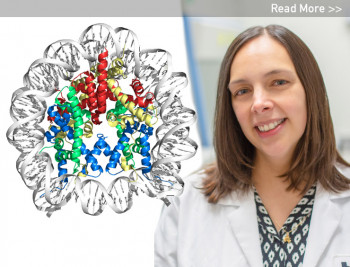
Dr. Sheena D'Arcy is an Associate Professor in the Department of Chemistry and Biochemistry at the University of Texas at Dallas (UT Dallas), affiliated with the School of Natural Sciences and Mathematics. Her research focuses on structural biology, protein dynamics, and the molecular mechanisms of gene transcription, particularly involving histone chaperones and nuclear transport proteins. She holds a PhD in Structural Biology from the University of Cambridge (2008) and a BS in Biochemistry and Biology from the University of Sydney (2003). Her work employs advanced techniques like hydrogen-deuterium exchange mass spectrometry (HDX-MS) and structural biology to investigate protein-RNA interactions, nucleosome assembly, and enzyme evolution. She leads the D'Arcy Lab, which explores topics such as TRAMP complex function, RanGTP signaling in histone transport, and conserved viral epitopes in coronaviruses. Dr. D'Arcy received a NIH ESI-MIRA grant (R35GM133751) to study nucleosome assembly mechanisms. Her research bridges molecular-level interactions with cellular processes, contributing to understanding epigenetic regulation and viral pathogenesis. She is currently not accepting undergraduate students but actively mentors graduate researchers in structural biology and biochemistry.
Kyprianos Papadimitriou is a Researcher at the Microprocessor and Hardware Laboratory within the School of Electrical and Computer Engineering at the Technical University of Crete . He holds a PhD in Electronic and Computer Engineering (2012) and has been involved in teaching laboratory courses such as Logic Design , Computer Architecture , and VLSI/ASIC Circuit Design . Research Areas : His work spans Reconfigurable Systems , Hardware Design , Computer Architecture , RFID Systems , and Real-Time Systems . He has developed innovative approaches in FPGA-based dynamic reconfiguration, MPSoC security, and 3D stereo vision for surveillance. Key Trends : Runtime reconfiguration for FPGAs Security frameworks for NoC-based MPSoCs Low-cost embedded vision systems Optimization of reconfiguration overhead Hardware task scheduling methodologies Genetic algorithm implementations on FPGAs Scientific Contributions : 1 USA patent (2005) Co-author of VLSI-SoC 2013 paper nominated for 1st Prize Active member of scientific committees (FPL, ReConFig) Peer reviewer for IEEE, Elsevier, and Springer journals Session chair at IEEE CNS and HPCC conferences Grants & Projects : Participated in competitive European and national programs, serving as scientific manager, coordinator, and technical coordinator. Developed spin-off company (2003-2005) to commercialize master's thesis research. Laboratory & Teaching : Affiliated with the Microprocessor and Hardware Laboratory , focusing on practical training in digital systems, processor-based systems, and VLSI design.
Arianto Patunru is a Research Fellow at the Arndt-Corden Department of Economics within the Crawford School of Public Policy at the Australian National University (ANU). He joined ANU in 2012 and holds a PhD from the University of Illinois at Urbana-Champaign. His roles include coordinating the ANU Indonesia Project, overseeing policy engagements such as the Australia-Indonesia High Level Policy Dialogue, and managing the Indonesia Project on COVID-19 initiatives. Patunru previously headed the Institute for Economic and Social Research (LPEM-FEUI) in Jakarta and taught economics at Universitas Indonesia. His research focuses on international trade, economic development, globalization, and policy analysis. He has published in journals like the American Journal of Agricultural Economics , Journal of Development Studies , and Bulletin of Indonesian Economic Studies , where he serves as an editor. Patunru frequently contributes to policy debates through op-eds in platforms like East Asia Forum and The Conversation , addressing issues such as Indonesia’s economic strategy, trade policies, and climate change. Key research themes include the impact of economic reforms (e.g., Indonesia’s Omnibus Law), trade policy dynamics, and the role of foreign investment. He has explored topics like labor share declines in manufacturing, environmental policy challenges, and vaccination strategies during the pandemic. Patunru’s work bridges academic analysis with practical policy advice, emphasizing Indonesia’s integration into global value chains and the need for balanced economic strategies.
Terese Johannessen serves as an Associate Professor in the Department of Health and Nursing Sciences at the University of Agder (UiA), Norway. Her academic work focuses on quality improvement, leadership development, and implementation science within healthcare settings, particularly in nursing homes and home care services. Dr. Johannessen's research primarily centers on understanding quality and safety in long-term care environments. Her work investigates contextual factors influencing healthcare quality, leadership interventions for improvement, and the conceptualization of 'quality' among healthcare providers. She employs qualitative methodologies to explore managers' experiences, implementation challenges, and the development of practical tools for frontline staff. Her research has significant implications for improving care delivery in nursing homes and home care services through evidence-based leadership approaches. Analysis of Dr. Johannessen's publication record reveals a strong thematic focus on the SAFE-LEAD project, a comprehensive research initiative examining leadership interventions for quality and safety in nursing homes and home care. Her work spans multiple dimensions including intervention design, implementation challenges, contextual mapping, and evaluation of leadership approaches across different healthcare settings. The research demonstrates a methodological preference for qualitative and mixed-methods approaches to capture the complex realities of healthcare improvement work. Dr. Johannessen collaborates extensively with researchers including Siri Wiig, Eline Ree, and Ingunn Aase, primarily through the SHARE Centre for Resilience in Healthcare at the University of Stavanger. Her work bridges academic research and practical application in healthcare settings, with significant contributions to understanding how quality improvement efforts can be effectively implemented in real-world contexts. Her research portfolio demonstrates consistent productivity with multiple publications annually, showing progression from foundational studies on contextual factors to the development and testing of specific leadership interventions. The SAFE-LEAD project represents a cohesive research program addressing critical challenges in long-term care quality and safety through systematic investigation and practical tool development.
Daniele Caramani is a Full Professor of Comparative Politics at the University of Zurich's Faculty of Philosophy, Institute of Political Science, where he holds the Chair of Comparative Politics since 2014. He also serves as the Ernst B. Haas Chair at the European University Institute in Florence, directing the European Governance and Politics Programme at the Robert Schuman Centre for Advanced Studies (currently on leave from UZH). His teaching includes courses on Comparative Politics, Political Systems and Theories, Political Representation, and Reforming Representative Democracy. His educational background includes a baccalauréat from the Lycée International de Saint-Germain-en-Laye, followed by BA and MA degrees from the University of Geneva, and a Ph.D. from the European University Institute in Florence. He attended methods summer schools at Essex and Michigan. Caramani's research focuses on comparative and historical political science with emphasis on political cleavages, electoral geography, party systems, European integration, and globalization. His work often employs quantitative time series reaching back to the 19th century, examining mass democratization, state formation, nationalism, and industrialization. He is particularly known for analyzing the interplay between territorial and functional cleavages at national, European, and global levels. His recent publications reveal a clear trajectory from national party systems (The Nationalization of Politics, 2004) to European integration (The Europeanization of Politics, 2015) and now to global cleavages (with his ERC Advanced Grant project GLOBAL). His current work examines technocratic representation, populist challenges, and the evolution of global political alignments using automated text analysis of historical documents dating back to 1843. Stein Rokkan Prize for Comparative Social Science Research (2004) Lijphart-Przeworski-Verba Dataset Award from Comparative Politics section of the American Political Science Association (2012) Vincent Wright Memorial Prize for best article in West European Politics (2006) Caramani has directed major research projects including the ERC Advanced Grant project GLOBAL analyzing global cleavages. He has been instrumental in developing significant datasets like the Constituency-Level Elections Archive (CLEA), which received the APSA award in 2012 and now covers over 2,025 elections from 180 countries with GeoReferenced Electoral Districts. His academic leadership extends to editing the comprehensive textbook Comparative Politics (Oxford University Press, sixth edition, 2023). As Director of the European Governance and Politics Programme at the European University Institute, Caramani leads research on European integration and governance. He also co-directs the Constituency-Level Elections Archive (CLEA), a major resource for electoral studies that includes historical maps from 74 countries. His work continues Stein Rokkan's legacy in comparative social science, as evidenced by his 2023 Stein Rokkan Memorial Lecture.
Stuart Reeves is an Associate Professor at the School of Computer Science, University of Nottingham, UK. He is a member of the Mixed Reality Lab, Horizon research institute, Centre for Doctoral Training (CDT), and Social Interaction and Technology (SIT) Special Interest Group. Reeves serves as an elected member of the University of Nottingham Senate with his term extending until 2026. His academic career spans over two decades with significant contributions to human-computer interaction, particularly focusing on social and collaborative technologies in real-world contexts. Reeves' research interests primarily focus on human-computer interaction, collaborative computing, design research, and the application of ethnomethodology and conversation analysis (EMCA) to technology studies. His work examines how people interact with diverse interactive devices and systems in real-world situations and places, with particular attention to public spaces, video gaming contexts, and collaborative work environments. Reeves has developed significant expertise in understanding spectatorship within interactive spaces and the 'work' involved in technological engagements. His publication record demonstrates consistent high-impact contributions to the field, with recent research focusing on robots and AI technologies in action, particularly examining how autonomous robots interact with humans in public streets. Reeves has received multiple prestigious awards including the HRI 2024 Best Paper Award for his work on public robot encounters and previous Best Paper Awards at CHI 2005 and CHI 2008. HRI 2024 Best Paper Award for 'Encountering autonomous robots on public streets' CHI 2015 Honourable Mention Award CHI 2008 Best Paper Award CHI 2005 Best Paper Award CHI 2012 Honourable Mention Award CHI 2020 Best Paper Award Reeves has secured substantial research funding including an EPSRC Early Career Fellowship, multiple EPSRC grants, and international collaborations. His teaching responsibilities include undergraduate and postgraduate supervision across various computer science modules, with a focus on sensor-based systems and software design principles. He maintains an active presence in the research community through publications, conference participation, and his Medium page where he shares insights on research methodology and practice.
Professor Jing Meng is a leading academic at University College London's Bartlett School of Sustainable Construction, holding the position since 2023 after progressing from Lecturer (2019-2021) to Associate Professor (2021-2023). She concurrently serves as a fellow at the Cambridge Centre for Environment, Energy and Natural Resource Governance and maintains active editorial roles as Executive Editor of the Journal of Cleaner Production and Associate Editor for Journal of Geophysical Research: Atmospheres. Her research spans three interconnected domains: Energy Transitions and Technology Innovation (examining cost forecasts and structural emission declines in China), Climate Change Policies (analyzing South-South trade effects and multinational enterprise emissions), and Emission-Health-Socioeconomics Nexus (assessing air pollution impacts and integrated co-mitigation strategies). This interdisciplinary approach is reflected in her publication record across Nature family journals and PNAS. Analysis of her recent publications reveals a consistent focus on global carbon accounting methodologies, with increasing attention to subnational (city-level) analyses, health co-benefits of climate policies, and technological innovation pathways for hard-to-abate sectors. Her work frequently employs multi-regional input-output modeling to trace emissions through complex supply chains. AGU Global Environmental Change Early Career Award (2023) MIT Technology Review Innovators Under 35 Asia Pacific (2022) Clarivate Highly Cited Researcher (2020-2024) Nature Communications Top 50 Earth Sciences Article (2018) MDPI Emerging Sustainability Leader Award (2020) Environmental Research Letters Best Early Career Article (2017) Professor Meng has secured substantial funding from diverse sources including NERC, the British Council, Quadrature Climate Foundation, The Royal Society, and UCL internal grants. She leads an interdisciplinary research group focused on technology innovation and climate policy, with particular emphasis on China's role in global emissions systems. Her work directly supports Sustainable Development Goal 13 (Climate Action) through actionable policy insights.
Dr. Darren Elliott-Smith serves as Senior Lecturer in Film & Gender Studies within the Communications, Media and Culture department at the University of Stirling's Faculty of Arts and Humanities. He currently teaches across all levels in film, television and gender studies, and holds the position of Programme Director for the MLitt/MSc (Applied) in Gender Studies. His research focuses primarily on representations of queerness, gender, sexuality and psychoanalysis in horror film and television. This work extends to curation theory in film and visual art programming, cult and experimental film studies, adaptation studies, and queer theory. His scholarly output includes a monograph, numerous journal articles, and significant contributions to edited collections across multiple academic presses. Elliott-Smith's research output demonstrates a consistent focus on queer perspectives within horror media, with particular attention to marginalized identities and alternative cinematic narratives. His work bridges theoretical analysis with practical applications through videographic film projects and video essays. Tutor of the Year 2018 (University of Hertfordshire) Professionally, he maintains active roles as Fellow of the Higher Education Academy and Founding Member of BAFTSS Horror Studies Special Interest Group. His industry experience includes previous work as Film Curator and Programmer for the BFI, Mainline Pictures, The Odyssey Cinema, and as Film Manager for the Film Education Consortium for Hertfordshire (2007-2010). He is also recognized online as the Queer Horror Doctor through his digital presence. His academic journey includes a BA (Hons) in Communication Studies from the University of Sunderland, an MA in the History of Film and Visual Media from Birkbeck College, University of London, and a PhD in 'New Queer Horror in Film and Television' completed at Royal Holloway, University of London in 2013 under the supervision of Prof. Mandy Merck.