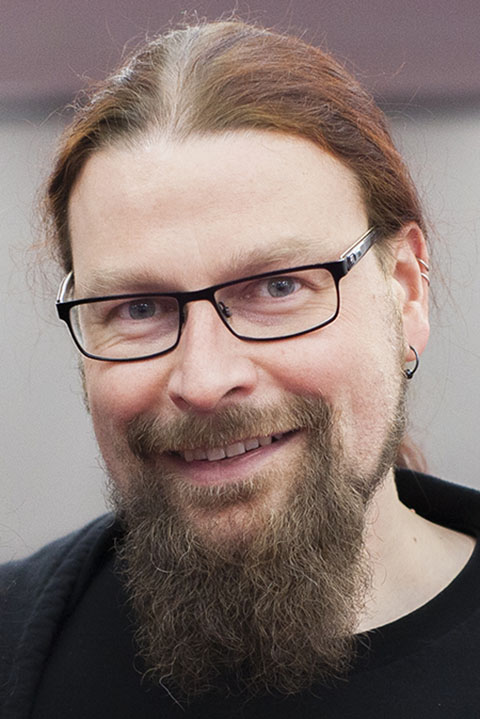
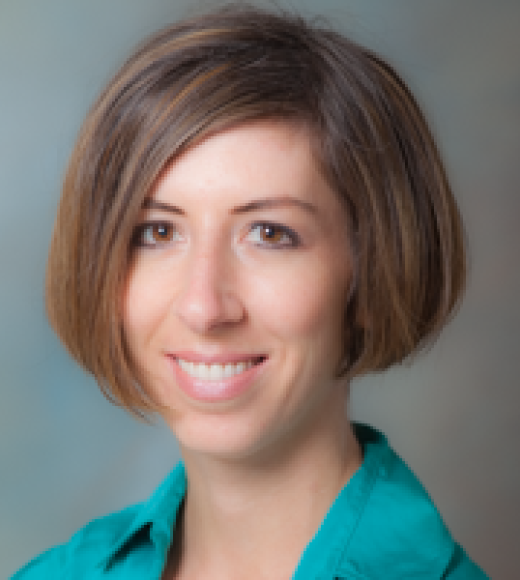
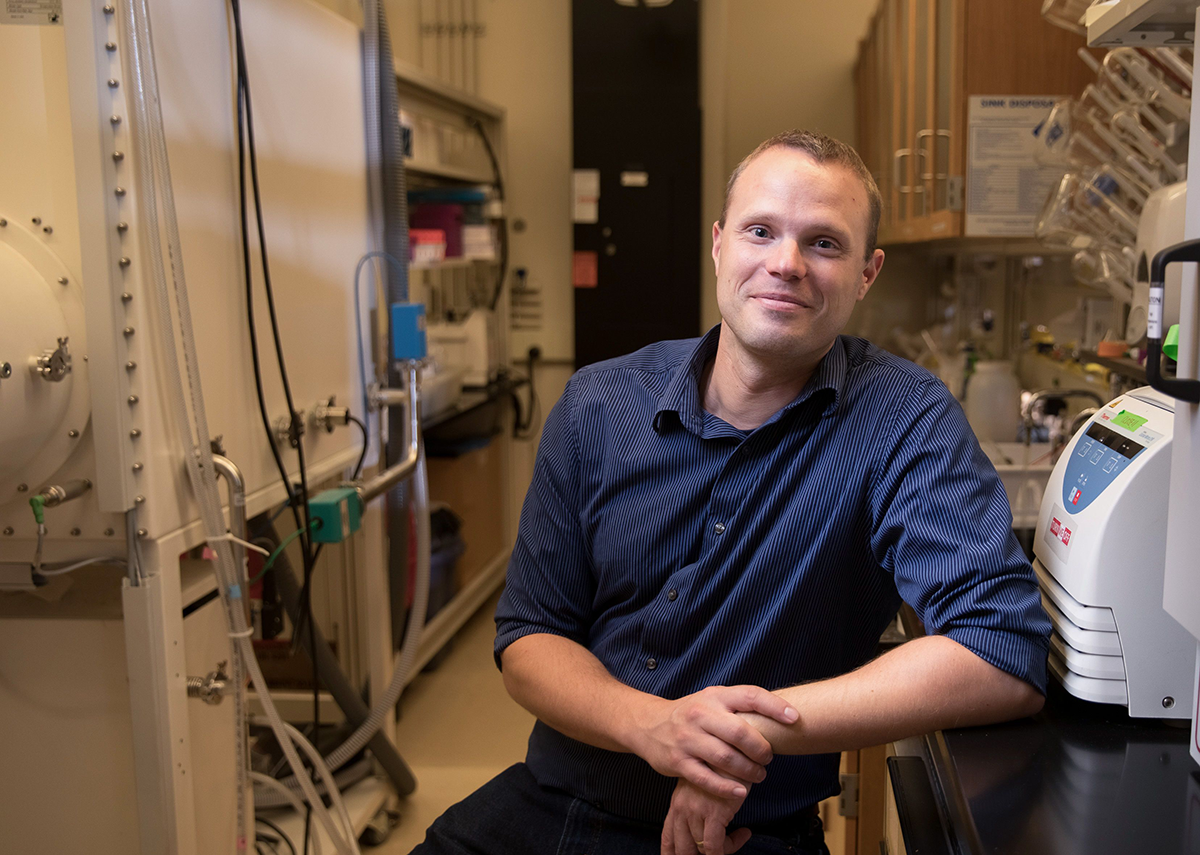
Robert Jenssen is a Professor in the Machine Learning Research Group at UiT The Arctic University of Norway and serves as the Director of Visual Intelligence , an 8-year Research Council of Norway-funded SFI center. His research focuses on solving societal challenges in healthcare, marine mapping, energy, and Earth observation through collaborations with industry and public stakeholders. Director, Visual Intelligence (SFI) Center Professor, UiT Adjunct Professor, Pioneer Centre for AI (University of Copenhagen) and Norwegian Computing Center His methodological expertise spans neural networks, information-theoretic learning, self-learning, and explainable AI (XAI). Recent work emphasizes multimodal learning, uncertainty estimation, and medical image analysis. Scientific awards include: Best Paper, Pattern Recognition Letters (2024) Dissertation Award, Norwegian AI Society (2023) Best Paper, Color and Visual Computing Symposium (2022) IEEE GRS Society Letters Prize (2013) Prize for Young Researchers, University of Tromsø (2007) He contributes to international leadership as a member of the Scientific Advisory Board (SAB) for the Max Planck Institute for Intelligent Systems, France's SequoIA AI Excellence Cluster, and Denmark's DIREC center.
Patrick Rinke serves as an Adjunct Professor in the Department of Applied Physics at Aalto University, Finland. His research bridges theoretical physics, materials science, and computational methodologies with a strong focus on machine learning applications. His computational work spans electronic structure theory, materials design, and atmospheric chemistry. Rinke's research integrates Bayesian optimization, active learning, and high-throughput computational screening to accelerate materials discovery, particularly in hybrid perovskites, catalysts, and biomaterials. Recent work demonstrates machine learning's transformative potential in predicting molecular properties, optimizing materials functionality, and solving complex physical chemistry problems. His scientific contributions have been recognized with multiple awards: Thesis Prize from the Institute of Physics (2003) DFG Research Scholarship (2007-2009) Outstanding Postdoctoral Achievement Award (2009) Outstanding Referee of Physical Review Letters (2014) August-Wilhelm Scheer Visiting Professorship (2017)
Frank L. Brown is a Professor of Chemistry & Biochemistry at the University of California, Santa Barbara, with a joint appointment in Physics and the Biomolecular Sciences & Engineering (BMSE) program. His research focuses on theoretical and computational studies at the interface of physical chemistry and biophysics, particularly biomembrane dynamics and spectroscopy. Dr. Brown received his B.S. in Chemistry and B.A. in Applied Mathematics from UC Berkeley, followed by a Ph.D. in Physical Chemistry from MIT. He has held postdoctoral appointments at UC San Diego and the University of Chicago before joining UCSB in 2001. He is the recipient of prestigious awards including the Alfred P. Sloan Research Fellowship and the Presidential Early Career Award in Science and Engineering. His laboratory employs tools from statistical mechanics, hydrodynamics, and quantum mechanics to study biomembrane structure, dynamics, and interactions with embedded proteins. Key research areas include lipid bilayer fluctuations, membrane protein diffusion, and interpretation of spectroscopic techniques like single-molecule fluorescence and neutron spin echo. Dr. Brown has mentored numerous graduate students and postdoctoral researchers, with notable alumni including Brian Camley, Max Watson, and Golan Bel. His research is supported by grants from agencies such as the National Science Foundation and the Department of Energy. He directs the Brown Research Group, which collaborates with institutions like the CNSI Center for Scientific Computing. His work bridges computational modeling and experimental biophysics, advancing understanding of membrane systems in health and disease.
Alison Ledgerwood is a Professor in the Department of Psychology at the University of California, Davis, and Principal Investigator of the Attitudes and Group Identity Lab. Her research examines how social context shapes attitudes and preferences, with a focus on open and inclusive scientific practices. Ph.D., Social Psychology, New York University (2008) M.A., Psychology, New York University (2006) B.A., Psychology, Amherst College (2003) Her research explores psychological distance , framing effects , and system justification theory , while methodologically advancing preregistration , collaborative science , and equity in publishing . She also investigates group identity dynamics and implicit/explicit bias measurement . Recent publications highlight her work on racial bias methodology , open science reform , and contextual framing . Awards include the 2024 Distinguished Service to the Society award, 2021 UC Davis Advising and Mentoring Award, and 2017 SPSP Service to the Field award. 2024 Distinguished Service to the Society, SPSP 2021 UC Davis Graduate Advising and Mentoring Award 2017 Service to the Field, SPSP Hellman Fellowship (2010-2011), UC Davis UC Davis Chancellor's Fellow APS Fellow SESP Fellow Ledgerwood advises on scientific integrity through roles like Chair of the Transparency and Openness Promotion (TOP) II Guidelines Task Force and Anti Colorism and Eurocentrism in Methods and Practices (ACEMAP) Task Force. Her lab fosters contextual evaluation studies and psychological distance frameworks .
Tom A.E. Oomen is a Full Professor in the Department of Control Systems Technology at the Eindhoven University of Technology (TU/e). He holds affiliations with the Mechanical Engineering School and the EAISI High Tech Systems institute. His research focuses on data-driven control, motion control of mechatronic systems, and system identification, with applications in industries like automotive, medical, and energy systems. Academically, he earned his MSc and PhD from TU/e, and held visiting positions at KTH (Sweden) and the University of Newcastle (Australia). He has received notable grants (NWO Veni/Vidi) and awards, including IEEE and Mechatronics Paper Prize recognition. Oomen is a Senior Member of the IEEE and serves as an Associate Editor for IFAC Mechatronics and IEEE Control Systems Letters. His work bridges fundamental research and industry collaboration, emphasizing advanced motion control and learning algorithms. Projects include PROACTHIS (projection-based control) and ML4CONTROL (AI-driven motion control). He has supervised 99+ works and contributed to over 500 research outputs.
Richard E. Mayer is a Distinguished Professor of Psychology at the University of California, Santa Barbara, affiliated with the College of Letters & Science. His work bridges cognition, instruction, and technology to advance understanding of how people learn and how to design effective educational interventions. Research focuses on multimedia learning , computer-supported learning environments , and computer games for learning Current projects examine immersive virtual reality, generative learning strategies, and social cues in online instruction Recipient of top honors: Thorndike Award, Scribner Award, and APA’s Distinguished Contribution Award Principal Investigator on grants from the Office of Naval Research , Institute of Education Sciences , and National Science Foundation He leads the Mayer Lab for Research on Learning and Instruction, which emphasizes learning for transfer —ensuring learners apply knowledge in new contexts. His research has established 12 instructional design principles for online learning environments.
Dr. Thomas Brodie is an Assistant Professor in 20th Century European History at the Department of History, University of Birmingham. His academic career spans prestigious institutions including Oxford University, University of Leeds, and Jesus College, Oxford before joining Birmingham in 2018. Education: DPhil in History (The University of Oxford, 2014) MSt in Modern British and European History (The University of Oxford, 2010) BA in History (The University of Oxford, 2009) Fellowship of the Higher Education Academy (2020) Postgraduate Certificate in Higher Education (University of Birmingham, 2020) Dr. Brodie specializes in Modern European history with particular focus on Germany during the Nazi era and post-war periods. His research examines the intersection of religion, society, and war, with special attention to Catholic communities in Germany during WWII and the subsequent evolution of mourning practices and memory culture. His work combines theological analysis with social and cultural history using previously unused archival materials from church, state, and private collections. His recent publications demonstrate a clear trajectory from examining wartime religious communities to post-war memory practices, showing his evolving scholarly interests in how societies process mass bereavement and construct collective memory. The articles primarily focus on German religious history during and after WWII, with increasing attention to spatial dimensions of mourning and commemoration. Scientific Awards: Runner-up award for the Wiener Library's Fraenkel Prize (2014) AHRC award for doctoral research Hanseatic Scholarship for archival research in Berlin and German cities Dr. Brodie teaches a range of undergraduate and postgraduate courses including 'The Rise and Fall of the Third Reich' and 'Life After Death: Culture, Memory and Power in Postwar Europe.' He supervises BA dissertations and welcomes PhD students working on Modern German history or thematic interests in religion, war, and memory in European contexts since 1800. His current research project examines German society's responses to bereavement during WWII and its aftermaths through personal diaries, letters, artistic representations, and war memorials.
Bradley D. Olsen is a full professor in the Department of Chemical Engineering at the Massachusetts Institute of Technology (MIT), where he leads research at the intersection of polymer science, soft matter physics, and bioengineering. His work focuses on designing materials for critical applications in biotechnology, hemostasis, and sustainable polymer development while advancing fundamental understanding of polymer network mechanics and self-assembly. Education: Ph.D. in Chemical Engineering, University of California Berkeley (2007) S.B. in Chemical Engineering, Massachusetts Institute of Technology (2003) Olsen's research spans protein-based materials, block copolymer phase behavior, and mechanochemical hydrogels. He has pioneered methods for quantifying polymer network topology, developing hemostatic nanoparticles, and creating bio-inspired materials for selective biomolecular transport and medical applications. His recent publications emphasize data-driven approaches to polymer characterization and educational outreach in materials science. Scientific Awards: American Physical Society (APS) Fellow (2023) Fulbright Amazonia Scholar (2023) Alexander and I. Michael Kasser Chair in Chemical Engineering (2021) ACS Macro Letters Young Investigator Award (2021) MIT Committed to Caring Honor (2019) AIChE Owens Corning Early Career Award (2019) APS Dillon Medal (2018) Kavli Emerging Leader in Chemistry (2017) ACS Polymer Division Fellow (2016) Camille Dreyfus-Teacher Scholar (2015) Alfred P. Sloan Research Fellow (2014) NSF Career Grant (2013) NIH Postdoctoral Fellowship (2008-2009) Hertz Fellow (2003-2007) Barry M. Goldwater Scholarship (2002) Olsen has received significant grant support including NSF Career (2013) and AFOSR (2012) awards. His teaching activities include innovative international outreach like the 2025 soccer-themed science camp in Brazil. The Olsen Group at MIT explores advanced materials with applications ranging from trauma care to sustainable polymers.
Timothy Hampton is a Professor of French and Comparative Literature at the University of California, Berkeley , and serves as Director of the Doreen B. Townsend Center for the Humanities . He was previously the Director of the Designated Emphasis in Renaissance and Early Modern Studies and co-chairs the Democracy, Free Speech, and Values study group. His research explores intersections of literature and politics , poetry and song , and the history of emotion and diplomacy in Renaissance and early modern periods. Recent projects include a 2022 France-Berkeley Fund grant on poetry translation and a Diebold Foundation grant for interdisciplinary cultural studies. Notable publications include Bob Dylan: How the Songs Work (2019) and Cheerfulness: A Literary and Cultural History (2022). Upcoming works address premodern colonialism and American education through memoir and cultural critique. His scholarship appears in MLN , Critical Inquiry , and public venues like Salon and Aeon/Psyche .
Laur Järv is an Associate Professor in Theoretical Physics at the University of Tartu, Faculty of Science and Technology, Institute of Physics. He has been serving as Associate Professor since 2021 and is currently the Head of the Laboratory of Theoretical Physics (since 2019). His academic career at the University of Tartu spans over 20 years, with progressive roles from Post-Doc to his current position. Dr. Järv received his education at the University of Tartu (B.Sc. in Fundamental Physics, 1996; M.Sc. in Theoretical Physics, 1998) and completed his Ph.D. in Mathematical Sciences at the University of Durham in 2002. His doctoral research focused on "The enhancon mechanism in string theory" under the supervision of Clifford V Johnson. Dr. Järv's primary research interests lie in gravitational physics and cosmology, with particular focus on modified theories of gravity including teleparallel gravity, scalar-tensor theories, and nonmetricity-based approaches. His work explores the cosmological implications of these theories, including inflationary models, black hole solutions, and gravitational wave propagation. His research bridges theoretical physics with observational cosmology, addressing fundamental questions about the nature of gravity and the evolution of the universe. His publication record demonstrates a strong focus on geometric foundations of gravity, with numerous high-impact papers in leading journals like Physical Review D and Classical and Quantum Gravity. Recent work shows increasing emphasis on alternative formulations of gravity (teleparallel, symmetric teleparallel) and their cosmological applications, often collaborating with international researchers in the field. Estonian National Research Award in exact sciences (2020) for the cycle of works "Extended geometric theories of gravity" with Manuel Hohmann and Margus Saal University of Tartu Badge of Distinction (2021) Best teaching staff in the UT Institute of Physics, recognized by students (2024) Letter of recognition for supervision of Joosep Lember's award-winning student work (2022) Dr. Järv has been actively involved in academic mentoring, serving as a supervisor for student research projects and as an opponent for PhD defenses internationally. He has organized multiple international conferences on gravitational physics in Tartu, establishing the university as a hub for research in modified gravity theories. As Head of the Laboratory of Theoretical Physics, he leads a research group focused on geometric foundations of gravity and cosmological applications. Dr. Järv's laboratory has become a recognized center for research on alternative gravity theories, particularly through the organization of the biennial "Geometric Foundations of Gravity" conference series since 2017, which has attracted leading researchers from around the world to Tartu.
Roland Theiss is an Adjunct Professor affiliated with Berkeley City College and the Department of Geography at the University of California, Berkeley. His research focuses on geomorphology and glaciology, particularly using finite element analysis to study glacier-bedrock interactions and their implications in a warming climate. He holds an M.A. in Geomorphology and a B.A. in Atmospheric Science, both from UC Berkeley. Education: Geomorphology M.A., UC Berkeley Atmospheric Science B.A., UC Berkeley Teaching Experience: Graduate Student Instructor for EPS 117 (Geomorphology), UC Berkeley (Fall 2021) Adjunct Professor for GEOG 1L & 1 (Intro Physical Geography Lab/Course), Berkeley City College (Spring 2018/Fall 2017) Graduate Student Instructor for GEOG 40 (Earth System Science) and ESPM 2 (The Biosphere), UC Berkeley (Spring 2016/Fall 2015) Research Interests: Glacier dynamics, rock mechanics, and fluid mechanics in Earth System Science contexts.
Dr. Soonja Choi is a Research Professor in the Comparative Psycholinguistics Group at the University of Vienna and Director of the Korean Studies Program at San Diego State University (SDSU), where she holds the title of Professor Emerita of Linguistics. She earned her Ph.D. in Linguistics from the University of Buffalo (1986) and holds advanced degrees from institutions in France and South Korea. Her research focuses on language and thought, semantics, spatial language, and Korean linguistics, with a particular emphasis on cross-linguistic studies of spatial categorization and its cognitive implications. Research Contributions: Her work has explored how language influences spatial perception and cognition, notably through long-term collaborations with the Max Planck Institute for Psycholinguistics and the National Science Foundation. Key contributions include studies on spatial term development in Korean/English children and cross-linguistic comparisons of spatial semantics between German, Korean, and English. Grants & Awards: Secured over $1.4M in grants including a EUR 600,000 Vienna Science Fund grant (2016-2020) and multiple NSF awards. Elected to the Academy of Europe (2019) as an Ordinary Member. Professional Roles: Served as Chair of SDSU's Department of Linguistics and Oriental Languages (1997-2000, 2001-2002), Graduate Advisor (multiple terms), and editorial board member for Language, Interaction, and Acquisition . Active in academic governance and international linguistic organizations.
Joey Williams is a Lecturer of Classics and Letters at the University of Oklahoma's Department of Classics and Letters. He specializes in Roman material culture, ancient colonialism, and landscapes of conflict/surveillance. Educated at the University at Buffalo (Ph.D. Mediterranean Archaeology), University of Arizona (M.A. Classical Archaeology), and Hendrix College (B.A. Anthropology/History), he has taught globally in the US, Switzerland, Portugal, and Italy. Ph.D.: Mediterranean Archaeology, University at Buffalo M.A.: Classical Archaeology, University of Arizona B.A.: Anthropology & History, Hendrix College His research focuses on Roman surveillance mechanisms in Portugal's Central Alentejo region, ceramic production, and the socio-cultural role of fish sauce. Active in fieldwork, he co-directs an archaeological excavation in Redondo, Portugal since 2010, and leads projects in Ostia Antica and Lugnano, Italy. His upcoming Ficulle project accepts OU student applications. Recent publications include a 2017 monograph on Roman surveillance and a 2022 chapter analyzing colonial landscapes through tower enclosures. His work intersects archaeology with imperialism studies, emphasizing material evidence of power dynamics. No academic awards are explicitly mentioned. Current projects involve legacy data analysis from Ostia Antica and pottery studies in Lugnano. Teaching includes Latin language courses, classical mythology, and advanced archaeology seminars.
Amina Mama is a Professor in the Department of Gender, Sexuality and Women's Studies at the University of California, Davis, where she contributes to interdisciplinary scholarship and teaching. She is also affiliated with the Geography Graduate Group, reflecting her cross-disciplinary academic engagement. Her work is housed in 1209 Hart Hall on the UC Davis campus. Her research focuses on feminist theory, gender and sexuality, and the role of academic inquiry in advancing social justice and community advocacy. She is particularly known for her work in African and postcolonial feminisms, critical race studies, and the politics of knowledge production. Her academic interests bridge gender studies with geographic and socio-political analyses. The available information does not include recent publications, but her scholarly profile suggests a strong emphasis on decolonial feminist thought, gender equity, and activism-oriented research. Her interdisciplinary affiliations indicate collaborative and integrative approaches to scholarship. There are no listed scientific awards in the provided text. Amina Mama advises students through her roles in Gender, Sexuality and Women's Studies and the Geography Graduate Group. While specific grants are not mentioned, her research focus suggests involvement in projects related to gender justice, feminist activism, and global South scholarship. She likely participates in interdisciplinary research initiatives and community-engaged scholarship. She is associated with the Gender, Sexuality and Women's Studies program and the Geography Graduate Group, both of which support collaborative research, graduate training, and public scholarship focused on equity and social change.
Ben Eischens is an Assistant Professor in the Department of Linguistics at UCLA. His work focuses on the intersection of phonology and phonetics, particularly in San Martín Peras Mixtec, an Otomanguean language spoken in Oaxaca, Mexico and diaspora communities. He holds a Ph.D. from UC Santa Cruz (2022) and collaborates extensively with Indigenous communities on language documentation and description. His research explores tone systems, laryngeal features, speech rate effects, and negative nominal structures, emphasizing empirical fieldwork and community partnerships. Recent work includes studies on vowel reduction, polar question formation, and the phonetic grounding of phonological theories. Eischens has presented at major conferences such as the International Congress of Phonetic Sciences (ICPhS), Annual Meeting on Phonology (AMP), and workshops on Languages of the Americas. His publications appear in journals like the International Journal of American Linguistics and Phonological Data & Analysis. He teaches courses in linguistic theory and field methods at UCLA, maintaining active research partnerships with San Martín Peras Mixtec community members. His work bridges theoretical linguistics with applied documentation, prioritizing Indigenous language revitalization efforts.