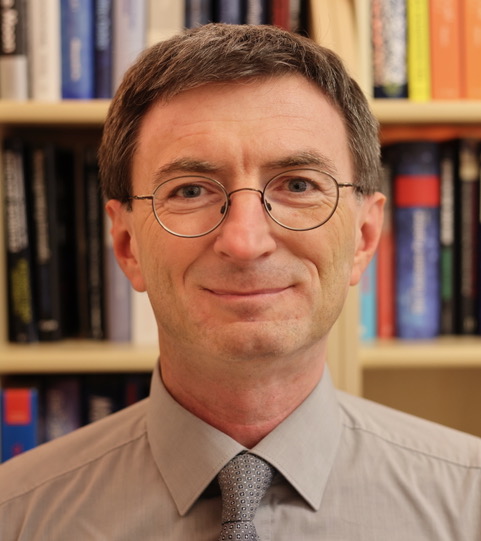
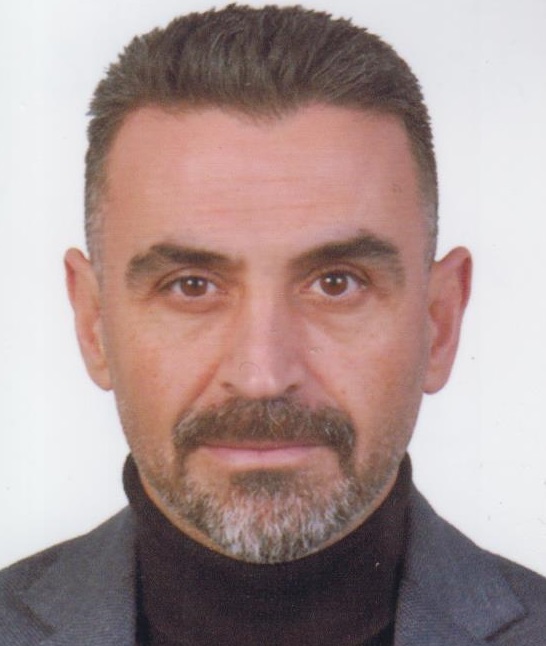
Prof. Dr.-Ing. Hakan Kayal serves as University Professor for Aerospace Engineering at the University of Würzburg, holding the Chair of Computer Science VIII (Space Technology) and chairing the Interdisciplinary Research Center for Extraterrestrial Studies (IFEX). His leadership bridges computer science and space systems engineering within the university's Institute of Computer Science. Research focuses on three synergistic domains: nanosatellite development for extraterrestrial missions (including the SONATE-2 6U platform demonstrating AI-driven onboard processing), scientific investigation of Unidentified Anomalous Phenomena (UAP) through the university's collaboration with the Federal Aviation Office, and spacecraft autonomy systems enabling higher mission independence. Current projects include the NEAlight mission (extended to develop the Apophis Interceptor concept for the 2029 asteroid flyby), VaMEx3-MarsSymphony for Mars exploration, and JMU Space Observatory initiatives. Publication trends reveal strong emphasis on asteroid defense strategies (particularly for Apophis), CubeSat-based UAP detection methodologies, and real-time AI processing in constrained space environments. His team actively engages students through ADS-B tracking, Meteosat App development, and Moon Base 2030 projects, while recent recognition includes co-authoring a landmark UAP review in Progress in Aerospace Sciences with 33 international scientists.
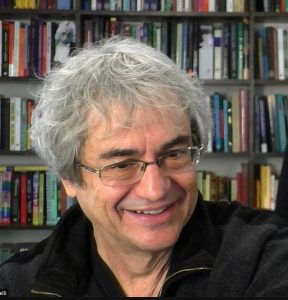
Carlo Rovelli is a Professeur de classe exceptionnelle in the Department of Physics at Aix-Marseille University, holding adjunct roles at Western University's Department of Philosophy and a Distinguished Visiting Research Chair at the Perimeter Institute. He founded the quantum gravity group at the Centre de Physique Théorique (CPT) and is an associate member of the Rotman Institute of Philosophy. His research focuses on loop quantum gravity, relational quantum mechanics, and the history/philosophy of science. He authored influential popular science books including Seven Brief Lessons on Physics (41 languages, 1M+ copies sold) and Helgoland: Making Sense of the Quantum Revolution . Rovelli's work bridges theoretical physics with philosophical inquiry, exploring foundational questions in quantum mechanics, spacetime structure, and the interpretation of physical theories. His recent publications address topics like quantum information theory, gauge symmetries, black hole evaporation, and cosmological implications of quantum gravity.
Dr. Zara Ersozlu is a Senior Lecturer in Mathematics Education within the School of Education at the University of Newcastle, Australia. With a distinguished international career spanning multiple continents, she has held academic positions at prestigious institutions including North Carolina State University (USA), Gazi and Gaziosmanpasa Universities (Turkey), National Taiwan Normal University (Taiwan), The University of Western Australia, Murdoch University, and Deakin University. Her academic journey includes tenured positions as an Associate Professor and leadership roles as Department Head and Chair in teacher education disciplines. Currently, she teaches undergraduate and postgraduate courses in mathematics education, including Effective Pedagogies in Primary Mathematics, K-6 Mathematics, K-6 Numeracy, and Digitally Supported Learning. Dr. Ersozlu earned her Doctor of Philosophy from Firat University in Turkey and her Master of Art from Sakarya University. Her extensive academic preparation is complemented by five years of practical teaching experience in public schools prior to entering academia. This blend of theoretical knowledge and practical classroom experience informs her approach to teacher education and educational research. At the broadest level, Dr. Ersozlu's research investigates solutions to real-life problems impacting people's well-being, success, and capacity to achieve. Her scholarly work spans primary and secondary mathematics education, the psychology of mathematics (including metacognition, self-regulation, and anxiety), cross-cultural educational studies, teacher education, virtual simulated learning environments, and educational assessment. She has increasingly focused on the transformative potential of AI and machine learning in education, exploring how these technologies alter teaching, learning, and research processes. Her methodological expertise encompasses both quantitative and qualitative approaches, allowing her to effectively analyze both small and large educational datasets. Analysis of Dr. Ersozlu's recent publications reveals a strong emphasis on mathematics anxiety, teacher education, and the integration of technology in learning environments. Her work demonstrates a consistent focus on practical applications of educational research to address real-world challenges in mathematics education. The interdisciplinary nature of her research connects educational psychology, technology integration, and cross-cultural perspectives, with particular attention to how these elements intersect in teacher preparation and student learning outcomes. 2023 ATEA Research Recognition Award from the Australian Teacher Education Association 2021 Fellow of the Higher Education Academy (Advance HE, UK) 2010 Fellowship Program for Postdoctoral Researchers from the Council of Higher Education of Turkey Dr. Ersozlu is deeply committed to mentoring the next generation of scholars, currently supervising four PhD students and having successfully guided ten students to completion. Her grant portfolio includes significant funding for projects such as Best Practice Guidelines for RPL in Initial Teacher Education Programs ($60,000), Exploring the Reciprocal Relationship Between Mathematics Anxiety and Mathematical Resilience ($2,599), and multiple conference travel awards. She serves as an Associate Editor for several prominent journals including the International Electronic Journal of Mathematics Education and as Editor for Interdisciplinary STEM Education. Her editorial work reflects her standing as a respected voice in mathematics education research. Dr. Ersozlu's academic leadership extends to her role in developing innovative teaching approaches that integrate virtual simulation technology and learning analytics. Her work with TeachLivE™, a mixed-reality classroom simulation platform, demonstrates her commitment to creating authentic learning experiences for teacher education students. Through these initiatives, she bridges the gap between educational theory and classroom practice, preparing future educators to effectively implement evidence-based teaching strategies in diverse learning environments.
Ana Paula Da Silva is a Research Fellow at the University of Sydney's Faculty of Science, specializing in coastal oceanography and eco-morphodynamics. Her work focuses on wave climate changes, sediment transport dynamics, coastal adaptation strategies, and Arctic coastal processes. She holds a Ph.D. from Griffith University (Australia) and conducted postdoctoral research at the University of Quebec (Canada), studying High Arctic coastal erosion. Currently, she investigates the Great Barrier Reef's eco-morphodynamics and projected coastal changes through 2100. Education Ph.D. in Coastal Oceanography, Griffith University, Australia (Focus: Fingal Headland sediment bypassing) MSc in Coastal Dynamics, UFSC, Brazil Bachelor (Hons) in Oceanography, UFSC, Brazil Research Interests Ana's research bridges climate science and coastal management, emphasizing: Climate-driven changes in wave regimes and sediment transport Headland bypassing mechanisms and coastal connectivity Arctic coastal morphodynamics impacted by glacier retreat Long-term coastal vulnerability assessments Media Engagement She has participated in science communications through: ABC Radio interviews (2021) explaining Fingal Head sand bypassing impacts Conversation article (2020) on disappearing Australian beaches Lab/Affiliation Affiliated with Sydney Southeast Asia Centre, contributing to interdisciplinary coastal research initiatives.
Dr. Janet Walkoe is an Associate Professor in the Department of Teaching and Learning, Policy and Leadership at the University of Maryland. Her work focuses on mathematics education, particularly algebra teaching and learning, and the role of teacher noticing in responsive instruction. She holds a Ph.D. in Learning Sciences from Northwestern University (2013), an MS in Mathematics from the University of Illinois at Chicago, and a BA in Mathematics from the University of Chicago. Before academia, she taught high school mathematics for a decade, earning National Board Certification. Her research emphasizes how teachers attend to student algebraic thinking during instruction and how pre-service teachers can develop noticing skills through video analysis. Key areas include teacher responsiveness, multimodal algebraic thinking, and computational thinking integration in mathematics education. She has led the NSF-funded CAREER grant (2020) exploring teacher noticing of student thinking, and co-authored influential works like Lenses for examining students’ mathematical thinking (2014), which earned an NCTM award. Notable Grants: NSF CAREER DRL 17-537 ($736,914), INFACT Subaward ($250k), Spencer Foundation Grant ($44k) Teaching: Courses include Interdisciplinary Teaching in Middle Grades (TLPL 423/424), Elementary Mathematics Education (EDCI 652), and Foundations of Mathematics Education (EDCI 751) Professional Development: Develops video-based tools for teacher reflection and computational thinking integration Walkoe advocates for culturally sustaining pedagogy and equity in teacher education. Her recent work bridges computational thinking with mathematics instruction, emphasizing interdisciplinary approaches to foster student engagement.
Vince Wright is a Sessional Academic in the School of Education at the Faculty of Education and Arts. His research focuses on mathematics education, pedagogical content knowledge, and the application of global perspectives in educational policy and curriculum design. He has contributed to understanding how teachers develop effective instructional strategies and how students engage with mathematical concepts such as ratios, geometry, and percentages. His work spans journal articles and book chapters, examining topics like metaphor-based problem-solving frameworks, diagnostic tools for geometric reasoning, and the role of demonstration lessons in teacher professional development. Wright's research emphasizes practical applications for improving mathematics teaching methods and aligning pedagogy with international evidence-based practices. While no formal academic awards are listed, his contributions to mathematics education research reflect a commitment to bridging theoretical frameworks with classroom realities. His collaborative projects include co-authored studies with educators like Ken Smith and Rose Knight, exploring diagnostic assessments and pre-service teacher training.
Dr. Marcel Mierwald is a researcher at the Department of History Didactics at Ruhr University Bochum, specializing in empirical studies of historical learning. He collaborates on the oral history project "People in Mining" and focuses on digital learning, epistemological beliefs, and language-sensitive history teaching. His work bridges theoretical frameworks with classroom practice. Education: Doctoral degree (2019) at Ruhr University Bochum; Master of Education in social studies and history (Free University of Berlin, 2012). Research Trends: His recent publications emphasize authenticity in learning materials, media comparison studies, and assessment tools for historical argumentation. Collaborations with Nicola Brauch and others highlight interdisciplinary approaches to history education. Scientific Awards: Doctoral scholarship from Professional School of Education (PSE) at Ruhr University Bochum (2013-2016). Teaching: Offers courses on subject didactics, practical semester preparation, and language-sensitive history teaching. Led seminars on migration history, the Weimar Republic, and National Socialism in school labs. Labs & Teams: Active in the Alfried Krupp Student Laboratory and Ruhr University Bochum's student laboratory for humanities, focusing on empirical history education research and innovative teaching methods.
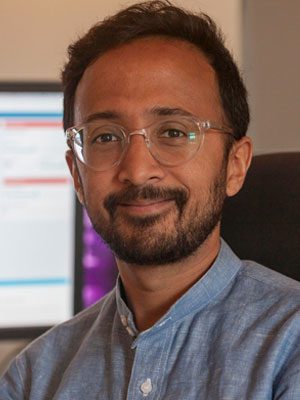
Ajay Pillarisetti is an Assistant Professor at the University of California, Berkeley's School of Public Health, Department of Environmental Health Sciences. His research focuses on the interplay between household energy use, air pollution exposure, health outcomes, and climate change in low- and middle-income countries. A graduate of UC Berkeley (PhD) and Emory University (MPH, BS), he has led global projects in India, Mongolia, Nepal, Guatemala, Peru, and Rwanda. PhD – Environmental Health Sciences, UC Berkeley MPH – Global Environmental Health, Emory University BS – Biology, Emory College His work employs low-cost air quality sensors, longitudinal surveys, and randomized controlled trials like the HAPIN study to assess health impacts of clean fuel interventions. Key subfields include exposure assessment, implementation science, pollution's metabolic effects, and policy-driven energy transitions. He collaborates with teams across four continents and has published extensively on household air pollution's multi-scale health burdens. Recent articles (2023–2025) highlight trends in quantifying PM2.5's health effects, optimizing sensor networks, and evaluating LPG interventions for maternal/child health. His studies span Guatemala's RESPIRE cohort, Rwanda's HAPIN trial, and India's community monitoring systems, addressing gaps in exposure-response modeling, biomarker analysis, and policy advocacy.
Mariel Borowitz is an Associate Professor at the Sam Nunn School of International Affairs, Georgia Institute of Technology, and a leading expert in international space policy. Her work examines the intersection of technology, security, and global governance, with a focus on remote sensing, Earth observation, and space sustainability. PhD in Public Policy, University of Maryland MA in International Science and Technology Policy, George Washington University BS in Aerospace Engineering, Massachusetts Institute of Technology Her research explores space security , commercialization of space , and data sharing policies , analyzing how nations balance economic, environmental, and strategic interests. Recent publications address cislunar governance, satellite health monitoring, and the role of weather satellites in diplomacy. She has received multiple research awards, including the Ivan Allen College Gold Star Faculty Research Award (2024, 2021), and her work is supported by NSF, DoD, and NASA grants. Ivan Allen College Gold Star Faculty Research Award, 2024 MGMWERX Space Case Study Prize Challenge, 2020 European Commission Travel Grant, 2014 Dr. Borowitz serves as Director of International Space Situational Awareness Engagement at the U.S. Office of Space Commerce and has advised Congress on space safety. She has contributed to media outlets like NPR, The Verge, and Science Magazine.
Tamara Sumner is a Professor at the Institute of Cognitive Science , University of Colorado. Her research focuses on leveraging AI and educational technology to improve teaching practices, particularly in STEM education, and fostering equitable learning opportunities. She co-leads the Institute for Student-AI Teaming (iSAT), reimagining AI's role in education. Her work emphasizes classroom discourse analysis, teacher professional development, and rural STEM pathways. Key research areas include: AI tools for automating feedback on teacher-student interactions Equity-focused learning analytics and visualizations Rural youth engagement in STEM through community partnerships Integration of computational thinking and sensor technologies in K-12 curricula Her recent articles highlight advancements in automated discourse analysis, equity-driven tools like the SEET system, and AI-augmented tutoring models. She has contributed to grants such as the BIGDATA: IA initiative (2018) and co-designed programs like DaSH Home for remote learning. Her work bridges research and practice, involving educators and communities in co-design processes. Current initiatives aim to address systemic inequities through technology, such as visual learning analytics for classroom reflection and STEM career pathways for underserved rural populations.
Iris Uffen is a Researcher and PhD Candidate at the University of Groningen's Faculty of Behavioural and Social Sciences, specifically within the Teacher Education department. She works at the Expertisecentrum Vakdidactiek Noord, focusing on Lesson Study research in the Dutch educational context and examining how this approach enhances professional dialogue between teachers and improves lesson quality. Uffen earned her MSc in Pedagogical Sciences at the University of Groningen (2011-2012), specializing in learning difficulties, with research on school-based consultation within EBD schools. She previously completed her BSc in Pedagogical Sciences at the same institution (2006-2011) and began her academic journey with journalism studies at Windesheim University of Applied Sciences (2005-2006). Her research primarily investigates three critical aspects of Lesson Study in the Netherlands: how it contributes to teacher work quality, how teachers learn during LS processes, and how facilitation influences these processes. Uffen employs detailed multi-perspective analysis of LS participants including team members, facilitators, and students to optimize LS for both teacher and student learning outcomes. Her work bridges educational theory with practical classroom applications, particularly through cultural-historical activity theory frameworks and facilitation techniques that stimulate in-depth professional dialogue among teachers. Uffen's publication record demonstrates a clear evolution from practical implementation studies to deeper theoretical explorations of teacher learning processes. Her recent work (2025) focuses on how facilitators influence teacher talk during post-research lesson discussions and how to facilitate meaningful conversations about teachers' understanding and attitudes toward Lesson Study. This research trajectory shows increasing sophistication in analyzing the nuanced mechanisms of teacher professional development. As a member of the PhD committee for WALS (2019), Uffen contributes to academic governance while continuing her research on teacher development in the north of the Netherlands. Her work with the Expertisecentrum Vakdidactiek Noord positions her at the intersection of educational research and practical school improvement initiatives, developing training programs for LS facilitators to enhance collaboration and inquiry-oriented teaching across Dutch educational institutions.
Mehmet Bardakçı is a Professor in the Department of Foreign Languages Education at Gaziantep University's Education Faculty. With a PhD in English Education (2010) and MA in English Teaching (2005) from Turkish universities, he specializes in English Language Teaching (ELT), vocabulary acquisition, and digital pedagogy. His research examines teacher professional development, assessment literacy, and intercultural sensitivity in language learning. Education: PhD (2010), MA (2005), BA (2000) in English Education Leadership: Former Dean Assistant (2018-2020), Department Head (2012-2013), Institute Deputy Director (2015-2018) Research Trends include e-learning models like e-FLIP (2021-2023) and digital education tools. His 21 peer-reviewed articles and 14 book chapters focus on vocabulary depth/breadth, grammar instruction, and teacher-student dynamics. Supervision spans 19 graduate theses on topics ranging from flipped classroom effectiveness to assessment literacy. He collaborates internationally through projects like e-FLIP and ExBEdu , both EU-funded initiatives completed between 2021-2023.
Dr. Christopher Kellermann serves as a Researcher at the Department of Education and Psychology, School Pedagogy and School Improvement Research group, Free University of Berlin since March 2020. His work centers on evidence-based school governance and leadership interventions to enhance teaching quality through structured feedback mechanisms. Education: Doctorate (Dr. phil.) in Education, Free University of Berlin (April 2023) M.A. in Education, TU Berlin (2012-2016) including exchange semester at Stockholm University (2013-2014) B.A. in Education, University of Münster (2008-2012) Research Focus: Kellermann's scholarship investigates how school principals' observational feedback impacts teacher development and student-perceived teaching quality. His methodology combines intervention studies with psychometric validation of assessment instruments, particularly examining goal orientation effects in feedback reception. Current projects include FEED-UB (funded by DFG) developing principal feedback protocols, and SteBis analyzing evidence-based educational governance in Germany. Publication Trends: His 2021-2024 output reveals concentrated expertise in feedback intervention design, with 70% of publications co-authored with Gärtner and Thiel. The research trajectory shows progression from instrument development (2021-2022) to efficacy testing (2022-2023), culminating in 2024's BERU observation manual. Cross-cutting themes include classroom observation standardization, leadership-practice connections, and student perspective integration in evaluation. Project Involvement: As core researcher in DFG-funded FEED-UB, he contributed to developing the BERU observation instrument and conducting randomized trials across Berlin schools. Additional engagements include K2teach (video-based learning facilities), SteBis (evidence-based governance), and Berlin-Brandenburg school quality initiatives through ISQ. His work bridges empirical research with practical school improvement frameworks.
Iza Marfisi is a Professor at the University of Le Mans where she became a University Professor in 2024 and was appointed Head of the IEIAH (Computer Environments for Human Learning) team in 2025. She works within the Claude Chappe Institute of Computer Science, focusing on developing educational technologies that empower teachers to create their own digital learning tools. Her research bridges computer science and educational theory to enhance teaching practices through accessible technology solutions, with particular emphasis on making advanced tools usable for non-technical educators. Marfisi's research spans Educational Technology, Serious Games for Education, Mobile Learning, and Extended Reality (XR), with a consistent focus on teacher-centered design. She develops "no-code" authoring tools enabling educators to create custom digital learning experiences deployable across various hardware platforms. Her work specifically targets situated learning with mobile devices, human-computer interactions for learning, and educational applications of mixed and extended reality. This approach democratizes access to advanced educational technologies by removing technical barriers for teachers. Analysis of her recent publications reveals a clear evolution from foundational mobile learning frameworks toward increasingly sophisticated integration of mixed reality and artificial intelligence in educational contexts. Her 2024-2025 work shows particular emphasis on generative AI for educational activity design, immersive pharmacology learning, and collaborative frameworks that connect multiple learning technologies. The publications consistently emphasize practical teacher needs, with many studies conducted in authentic educational settings rather than controlled laboratory environments. Marfisi actively supervises doctoral research across multiple dimensions of educational technology. Her current advisees explore artificial intelligence for mixed reality activity creation, mixed reality for professional training, free software approaches to serious games, and innovative interaction techniques for collaborative learning. Previous students have investigated mixed reality for fraction learning, educational game indexing systems, and mobile educational game design models. Her supervision portfolio demonstrates both depth in specific technical areas and breadth across the educational technology landscape. As Head of the IEIAH team at LIUM since 2025, Marfisi leads a research group focused on computer environments for human learning. She also serves on the Board of Directors for both the Serious Game Society and the IKIGAI association (Games for citizens), and was elected Deputy Director of Research at the Claude Chappe Institute of Computer Science since 2018. Her leadership extends to communications management for the IEIAH team and participation in the LIUM Laboratory Council (2022-2024), demonstrating significant institutional impact beyond her direct research contributions.
Professor Tadao MIO is a distinguished faculty member at Waseda University's Faculty of Education and Integrated Arts and Sciences and Graduate School of Education. With extensive experience in educational technology, he has made significant contributions to classroom evaluation methodologies, media teaching materials analysis, and information education. His professional journey spans multiple academic institutions and research initiatives focused on improving educational practices. Professor MIO's educational background includes: Master of Education from Naruto University of Education Graduate studies in School Education at Naruto University of Education (1988) Bachelor's degree in Education from Kyoto University of Education (1986) Professor MIO's research interests center on practical applications of educational technology in classroom settings. His work examines how to effectively implement active learning methodologies, evaluate teaching effectiveness, and integrate technology into educational practices. He has particularly focused on programming education for non-technical students and addressing the challenges educators face when implementing new teaching approaches. His research bridges theoretical frameworks with practical classroom applications, emphasizing sustainable teaching improvement. Professor MIO's publication record shows a clear progression toward addressing contemporary educational challenges, particularly in programming education and active learning implementation. His recent work demonstrates how classroom evaluation can inform teaching improvement and how educational technologies can be effectively integrated across different educational levels from early childhood through university education. His notable achievements include: WASEDA e-Teaching Award (2015) Japan Society for Educational Technology Paper Award (1998) Professor MIO has successfully led multiple research projects funded by the Japan Society for the Promotion of Science, focusing on sustainable active learning classrooms and methods for evaluating teaching effectiveness. His grant work emphasizes practical applications that can be implemented by university faculty to improve student learning outcomes. He has mentored numerous students who have contributed to educational technology research, particularly in programming education and classroom evaluation methods. Professor MIO actively participates in research teams developing new methodologies for classroom improvement and educational technology implementation. His current work focuses on connecting active learning experiences across educational levels to create more cohesive learning pathways for students, with particular attention to how early educational experiences shape later learning in technology-related fields.