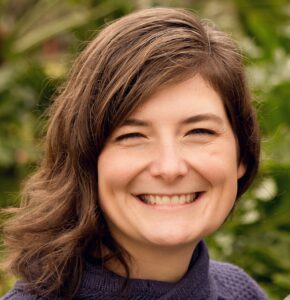
Elsie H. Shogren is an Assistant Professor in the Department of Biology at Wake Forest University. She earned her B.S. from Cornell University, Ph.D. from Kansas State University, and completed an NSF Postdoctoral Fellowship at the University of Rochester. Her research centers on understanding how environmental, behavioral, and genetic variation influences evolution and speciation in birds, with a focus on drivers of divergence and consequences of hybridization in closely related taxa. Using field observations, experiments, and genomic analyses, her research group tests hypotheses at multiple biological levels to determine factors defining species boundaries and evolutionary trajectories.
Dr. Ondi Crino is a Lecturer in the School of Biological Sciences at Flinders University, where she serves as Topic Coordinator for Introduction to Animal Behaviour (BIOL1711) and Animal Handling and Husbandry (BIOL2106). Her research examines the physiological mechanisms that regulate animal behavior, with a focus on understanding how conditions experienced during development shape endocrine responses that affect behavior and physiology across life history stages with consequences on fitness and life history strategies. Education PhD in Organismal Biology and Ecology, University of Montana (USA), 2013 Masters in Zoology, University of Florida (USA), 2008 Bachelors in Biology, Lewis & Clark College (USA), 2002 Research Focus Dr. Crino takes a whole organism approach by integrating studies of animal behavior and physiology to tackle large-scale questions at the nexus of behavioral ecology, physiological ecology, and evolutionary biology. Her work primarily investigates how developmental conditions shape endocrine responses that affect behavior and physiology across life history stages. She also examines the impact of anthropogenic disturbances on wild animals, contributing to conservation physiology with important applications for endangered species management. Dr. Crino works across taxonomic groups including birds, reptiles, mammals, and fish, with particular emphasis on birds and lizards. Publication Trends Dr. Crino's recent publications (2024-2025) demonstrate deepening integration of mitochondrial function with behavioral ecology. Her work increasingly explores how cellular energy production mechanisms relate to fitness outcomes and sexual selection. There's a clear pattern of examining both avian and reptilian models, with particular attention to how early environmental conditions affect stress responses, cognitive abilities, and reproductive strategies. Her research shows growing emphasis on conservation applications, particularly regarding anthropogenic disturbances on wildlife physiology and behavior. Teaching and Research Activities As Topic Coordinator for key courses in animal behavior and handling, Dr. Crino plays a significant role in training future biologists. Her teaching aligns closely with her research expertise, providing students with both theoretical knowledge and practical skills. She holds a Visiting Fellow position at Australian National University (since June 2023) and has published extensively since 2006, with increased output in recent years (5 publications in 2024 and 7 in 2025). Her work frequently appears in high-impact journals including Journal of Experimental Biology and Proceedings of the Royal Society B.
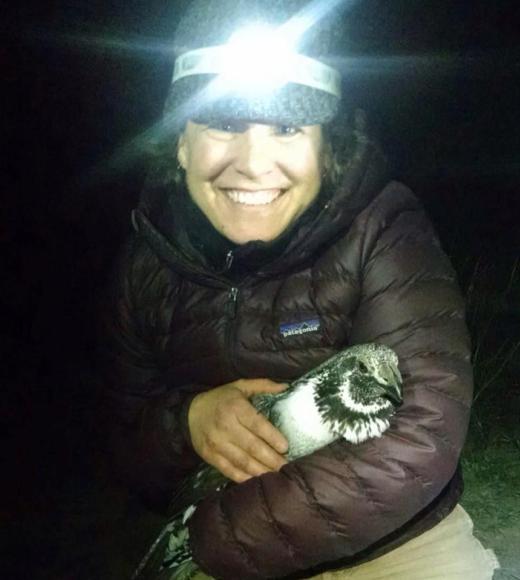
Gail Patricelli is a Professor in the Department of Evolution and Ecology at the University of California, Davis. Her research focuses on animal communication, sexual selection, and the impacts of anthropogenic activities like noise pollution on wildlife behavior and ecology. She employs innovative methods such as robotics, acoustic monitoring, and ecological observatory networks to study species like greater sage-grouse (Centrocercus urophasianus) and satin bowerbirds (Ptilonorhynchus violaceus). Her work bridges evolutionary biology, behavioral ecology, and conservation, with particular attention to how environmental changes affect mating systems and population dynamics. Patricelli’s research has examined how sage-grouse lekking behavior responds to habitat structure, social networks, and experimental noise pollution. She has pioneered the use of robotic females to study courtship negotiation and signal complexity in birds. Her studies on the physiological and behavioral effects of traffic noise on nestlings have advanced understanding of anthropogenic stressors in free-living populations. She also investigates the role of acoustic directionality and signal evolution in avian communication. Her lab’s interdisciplinary approach integrates field observations, experimental manipulations, and computational modeling to address questions in behavioral ecology. Key themes include sexual selection mechanisms, the evolution of communication systems, and conservation implications of human environmental impacts. Patricelli is affiliated with the Patricelli Lab at UCDavis and maintains an active research program supported by grants focused on biodiversity monitoring and sagebrush ecosystem management.
University of California, Los AngelesUnited States
Thomas B. Smith is a distinguished Research Professor in the Department of Ecology and Evolutionary Biology and the Institute of the Environment and Sustainability at UCLA. As a founding Co-Director of the Center for Tropical Research and the Congo Basin Institute in Cameroon, he has led interdisciplinary efforts in biodiversity conservation, evolutionary ecology, and climate change mitigation across tropical regions for over 35 years. His work spans Central and West Africa, the Amazon, and beyond. Research Focus: Tropical biodiversity, avian ecology, human-altered ecosystems, and climate change impacts. Awards: Recognized with multiple academic honors, though specific titles are not listed. Collaborations: Partnerships with National Geographic Society, International Institute for Tropical Agriculture, and global conservation teams.
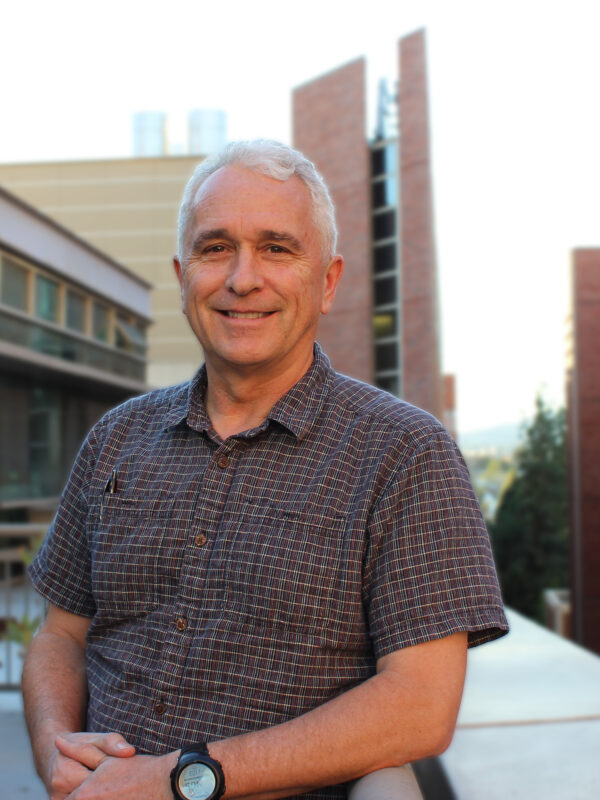
Gerald Borgia is a Professor in the Department of Biology at the University of Maryland's College of Computer, Mathematical and Natural Sciences, with affiliations at the Brain and Behavior Institute. His office is located in the Biology-Psychology Building (4239). He earned his Ph.D. in 1978 from the University of Michigan, specializing in the evolution of mate choice, social structure, and sociobiology. Borgia leads the Borgia Lab, which studies the evolution of mate choice and male display in nonresource-based mating systems, using bowerbirds as a model system. His research focuses on sexual selection, lek mating systems, complex male displays, female mate choice strategies, threat reduction in courtship, and the co-option of display traits. The lab maintains a long-term field site at Wallaby Creek in Australia for studying satin bowerbirds. Analysis of Borgia's recent publications shows consistent themes in sexual selection and animal communication. His work demonstrates increasing sophistication in experimental approaches, including robotic females, chemical manipulation of bowers, and cognitive testing. Recent articles focus on the role of cognitive ability in mating success, chemical signaling through bower paint, dynamic adjustment of male displays, and the relationship between aerobic capacity and sexual performance. Borgia actively advises graduate students and maintains a substantial research team. He recruits field assistants for Australian fieldwork and laboratory volunteers for video analysis. His NSF-funded research supports graduate students working on diverse projects including mate searching, juvenile display development, male-female signaling dynamics, and aerobic capacity studies. The lab collaborates with molecular systematists at the Smithsonian Institution and National Zoo.
Professor Terry Burke is a Chair in Molecular Ecology at the School of Biosciences, University of Sheffield (1998–present). He has held leadership roles including Head of the NERC Biomolecular Analysis Facility–Sheffield (1998–present) and Director of the NERC Biomolecular Analysis Facility (UK-wide) (2008–present). BSc (1979), University of Wales, Bangor PhD (1984), University of Nottingham His research focuses on mating systems, sexual selection , and genetic diversity in wild populations , with expertise in avian genetics and conservation genetics . Recent work explores gut microbiome dynamics , telomere inheritance , and supergenes in color polymorphism . His publications span evolutionary biology, genetics , and ecology , with recurring themes in sexual selection , parental care , and genetic adaptation . Awards include NERC, Royal Society, and Leverhulme Trust fellowships. NERC Postdoctoral Research Fellow Leverhulme Trust Research Fellow Chair, Molecular Ecology Prize Committee Editorial roles in journals like Molecular Ecology and Nature Communications
Dr. Zenon Czenze is a Senior Lecturer in Vertebrate Zoology at the School of Environmental and Rural Science, University of New England. His research focuses on comparative ecophysiology, examining how natural history traits and ecological factors influence thermoregulation in mammals and birds through field and laboratory studies. Education: B.Sc. (Honors) - Saint Mary's University (2011) M.Sc. - University of Winnipeg (2013) Ph.D. - University of Auckland (2018) Research explores three primary themes: impacts of heatwaves on small endotherms; thermal roost preferences in captive and free-ranging species; and natural pest control by bats in agricultural systems. His work integrates physiological measurements with ecological observations to understand climate change impacts on species like bats, birds, and marsupials. Recent publications demonstrate consistent focus on thermal adaptations across taxa, with emphasis on evaporative cooling mechanisms, heat tolerance limits, and seasonal thermoregulation strategies in arid-adapted species. Studies frequently employ innovative field techniques to measure physiological responses under natural conditions. Dr. Czenze leads a research group focused on vertebrate thermal ecology and welcomes new students interested in physiological ecology and conservation biology.
Joseph Tomkins is an Associate Professor at the School of Biological Sciences, The University of Western Australia. He holds a BSc (Hons) in Zoology from the University of Sheffield and a PhD from the University of Liverpool. His career spans fellowships from the Royal Society, ARC, and Forrest Research Foundation. Royal Society/UWA Fellowship (1997–2000) Royal Society University Research Fellowship (2000–2005) ARC Australian Research Fellowship (2005–2011) ARC Future Fellowship (2011–2015) Research Focus: Tomkins' work bridges fundamental and applied evolutionary biology, with emphasis on sexual selection , threshold traits , and experimental evolution . He explores the genetic architecture of sexually selected traits, allometry, and developmental integration, extending to human twinning through mathematical models and tick behavior under climate change. Current projects use experimental evolution in algae to study anisogamy evolution and climate adaptation . Scientific Awards: BBSRC David Philips Fellowship Royal Society University Research Fellowship ARC Australian Research Fellowship ARC Future Fellowship Grants & Leadership: He leads ARC-funded projects (DP 2017–2020, DP22 2022–2025) on sexual selection and anisogamy. He has coordinated teaching (2007–2014), chaired committees (Health and Safety, Research), and supervised 11 postgraduate students.
Jordan Karubian is a Professor at Tulane University's Department of Ecology & Evolutionary Biology, part of the School of Science & Engineering. His research focuses on Animal Behavior, Tropical Ecology, and Conservation, with a particular emphasis on avian behavior, ecological interactions, and biodiversity conservation in tropical ecosystems. He leads the Karubian Lab, collaborating with FCAT (a grassroots Ecuadorian NGO) and TIERA (Tulane's environmental research program) to bridge scientific research with community-driven conservation efforts. His work spans field studies in northwest Ecuador's Chocó biodiversity hotspot, examining topics such as lek mating systems, seed dispersal dynamics, and the impacts of environmental pollutants like lead on wildlife. He also investigates how habitat fragmentation and climate change affect avian populations and genetic diversity in tropical plants. Key collaborations include partnerships with FCAT for community-based conservation and TIERA for interdisciplinary environmental programs. His lab engages students and researchers in field courses and projects aimed at linking academic research with real-world environmental solutions. While no specific awards or advisees are listed, his extensive publication record reflects contributions to understanding ecological processes and conservation strategies in tropical regions. His research emphasizes both ecological and social dimensions of biodiversity preservation.
Bette Loiselle is a Professor at the University of Florida's Department of Wildlife Ecology and Conservation and serves as Director of the Tropical Conservation and Development Program within the Center for Latin American Studies. She has held leadership roles including Director of the Division of Environmental Biology at the National Science Foundation and Professor of Conservation Biology at the University of Missouri-St. Louis. Research focuses on tropical biodiversity, seed dispersal, lek-mating systems in birds, and impacts of hydroelectric dams Current projects include genomic studies of sexual selection and social-ecological system analyses Her work is funded by grants from the National Science Foundation, National Geographic Society, and other conservation-focused foundations. Loiselle holds a Ph.D. in Zoology from the University of Wisconsin-Madison.
Renata Durães Ribeiro is a Professor of Practice in Ecology and Evolutionary Biology at Tulane University, affiliated with the Stone Center. Her research focuses on avian ecology, Neotropical ornithology, and biodiversity conservation in tropical regions. She holds a Ph.D. from the University of Missouri-St. Louis and degrees from Universidade Federal de Minas Gerais, Brazil. Education: B.S. and M.S. in Ecology from Universidade Federal de Minas Gerais (1998-2001); Ph.D. in Ecology from University of Missouri-St. Louis (2001-2015). Her research explores avian behavioral ecology, particularly understory birds in Brazil and the effects of habitat disturbance on tropical biodiversity. She teaches courses such as Diversity of Life , Field Biology and Conservation in the Tropical Andes , and Contemporary Biology . Research Interests: Avian behavior, lekking systems, conservation strategies in Neotropical ecosystems, and the impacts of global environmental change on tropical species. Her work combines field studies with ecological modeling to address biodiversity preservation challenges. Publications: Focused on avian behavior, conservation biology, and tropical ecology. Key themes include lek dynamics, seed dispersal mechanisms, and the ecological consequences of habitat fragmentation. Recent work emphasizes interdisciplinary approaches to biodiversity management. Awards: AAUW Post-doctoral Fellowship (2014), CAPES Graduate Scholarship (2001–2015), Biotropica Excellence Award (2013). Professional Experience: Prior roles include Adjunct Instructor (2011–2016) and Visiting Scholar at UCLA (2008–2009). Her post-doctoral research (2014–2015) explored avian conservation strategies in Neotropical regions. She collaborates with global institutions on biodiversity projects and field conservation initiatives. Labs/Teams: Engaged in Tulane’s Stone Center research programs, focusing on Latin American environmental studies and tropical field biology.
Max Planck Institute for Biological IntelligenceGermany
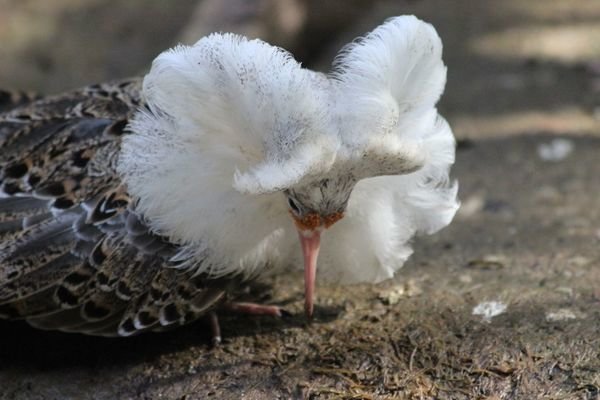
Clemens Küpper serves as a Max Planck Research Group Leader at the Max Planck Institute for Biological Intelligence, heading the Behavioural Genetics and Evolutionary Ecology group. His research investigates the evolution and maintenance of social behaviour in birds through integrated field observations and experimental approaches, focusing on mating systems and parental care strategies in species like ruffs and snowy plovers. Research Interests: Dr. Küpper's work centers on evolutionary ecology and behavioural genetics, examining how genetic, physiological, and ecological factors interact to produce behavioural diversity. His group emphasizes natural history documentation as foundational for understanding biological variation, with current projects exploring hormonal regulation in lekking birds and developmental trajectories of avian personalities. Publication Trends: Recent publications (2024-2025) demonstrate interdisciplinary integration of behavioural ecology, genetics, and developmental biology. Key studies include hormonal regulation mechanisms in ruffs (Science, 2025), personality stabilization in ruff chicks (Ethology, 2024), and camouflage strategies in snowy plover chicks (Behavioral Ecology and Sociobiology, 2024), revealing conserved principles in avian behavioural adaptation. Scientific Awards: No specific awards for Dr. Küpper were documented in available sources. Advising and Grants: Dr. Küpper has supervised: James Tolliver (PhD defended January 2025) Medardo Cruz-López (PhD defended June 2024 on 'Populations dynamics and MHC diversity in Snowy Plovers') His group secured the Bauer-Hollbach Stiftung postdoc grant (2025) for Kriszti Kupán's conservation management of coastal meadows and threatened ruffs, creating fieldwork opportunities for EU students. Research Group: The Behavioural Genetics and Evolutionary Ecology group conducts field-lab integrated research across European coastal meadows and Mexican habitats, with active projects on genetic-behavioural links in shorebirds. Current work expands into conservation applications of behavioural traits, leveraging long-term field datasets and molecular techniques.
Jason E. Bond is a Professor of Entomology at the University of California, Davis, leading the Bond Lab within the College of Agricultural and Environmental Sciences. His research focuses on arthropod diversity, systematics, and evolution, with an emphasis on spiders and their ecological roles. Bond's work integrates genomics, taxonomy, and field studies to advance understanding of biodiversity and conservation strategies for cryptic species. He actively engages in citizen science initiatives to bridge public engagement with scientific research. Key research themes include the evolution of mygalomorph spiders (e.g., trapdoor and tarantulas), speciation dynamics, and biogeographic patterns. Bond’s lab has described numerous new species and revised taxonomic classifications, contributing to global arthropod biodiversity inventories. His projects often involve collaborative efforts with institutions worldwide to address conservation challenges in endemic and threatened ecosystems. Bond supervises graduate students like Lacie Newton, whose work explores species delimitation in trapdoor spiders. His lab’s outreach programs, such as public naming campaigns for new species and educational events, emphasize science literacy and community involvement. Bond’s Twitter activity highlights his interdisciplinary collaborations and communication of scientific discoveries to broader audiences.
Dr. Jason Bond is a Professor and Schlinger Endowed Chair in the Department of Entomology and Nematology at the University of California, Davis. His research focuses on systematics, taxonomy, and evolutionary diversification of terrestrial arthropods, particularly spiders, millipedes, and beetles. He holds a B.S. from Western Carolina University and a Ph.D. in Evolutionary Systematics and Genetics from Virginia Tech (1999). Prior to UC Davis, he served as Director of the Auburn University Museum of Natural History and Chair of Biological Sciences at Auburn University. Research Overview : Bond’s lab investigates biodiversity discovery, conservation, and processes driving evolutionary diversification. Key projects include documenting new species, studying speciation patterns in spiders and beetles, and addressing conservation threats through phylogenomic analyses of millipedes and spiders. His work integrates molecular, morphological, and ecological approaches to explore biodiversity at multiple hierarchical levels. Grants & Collaborations : Major grants include collaborative studies on trapdoor spider phylogenomics, California Floristic Province biodiversity, and comparative systems in animal signaling. His lab also contributes to digitizing invertebrate collections to document biodiversity shifts. Labs & Resources : Bond Lab focuses on arthropod systematics and conservation. Their work is supported by the Academic Surge Building at UC Davis and leverages cutting-edge genomic tools for taxonomic and phylogenetic research.
Dr Ondi Crino is a Professor in the School of Biological Sciences at Flinders University , Australia, where she leads an integrative research programme that bridges behavioural ecology, physiological ecology and evolutionary biology. Research Focus Mechanisms by which developmental conditions shape endocrine systems and behaviour across life-history stages Consequences for fitness and life-history strategies in birds and lizards Glucocorticoid physiology and stress ecology Mitochondrial function as a mediator of sexual selection and performance Transgenerational and epigenetic effects of environmental stressors Impacts of anthropogenic change (traffic noise, climate change) on wildlife physiology Her whole-organism approach integrates field observations, experimental manipulations and cutting-edge physiological assays, providing a powerful framework for understanding how animals cope with environmental variability. Publications Snapshot Across nearly 40 peer-reviewed articles (2006–2023) plus several in review, Dr Crino’s work reveals consistent themes: developmental stress modulates glucocorticoid signalling, mitochondrial energetics underpin sexually selected traits, and early-life acoustic or thermal environments programme adult phenotypes. Studies span zebra finches, white-crowned sparrows, house finches, diamond doves, lizards and even invasive amphibians, underscoring broad ecological and evolutionary relevance. Scientific Recognition & Funding No specific awards, grants or fellowships are detailed in the supplied text. Research Team & Collaboration While the publication record shows extensive collaboration with colleagues such as Dr Kate Buchanan, Dr Simon Griffith, Dr Mylene Mariette and many others, no named students, laboratory or research group information is provided.