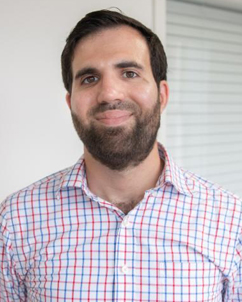
Nóra Wünsch-Nagy is an Assistant Professor at the Department of English Applied Linguistics , Eötvös Loránd University , where she teaches within the School of English and American Studies . Her work bridges social semiotics , multimodal literacy , and museum education , focusing on interdisciplinary pedagogical frameworks. Research Focus: Multimodal meaning-making, Legitimation Code Theory (LCT), academic literacy, and arts integration Teaching Approach: Embodied museum-based learning, genre-informed pedagogy Methodologies: Social semiotic analysis, semantic wave theory, curriculum development Recent publications examine digital multimodal composition, exhibition reviews as academic writing, and visual literacy development. Her work emphasizes explicit knowledge structuring through LCT and Systemic Functional Linguistics , connecting classroom pedagogy with museum-based learning environments. Key Collaborations: Dániel Horváth (art education collaboration) Network of international researchers in multimodality and LCT Professional Platforms: ResearchGate Profile Publications Repository
Dr Dominic Edsall serves as an Honorary Senior Research Fellow in the Department of Curriculum, Pedagogy and Assessment at the UCL Institute of Education. His current research investigates the impact of artificial intelligence on higher education and English as a Foreign Language (EFL) instruction, conducted in collaboration with Professor Sandra Leaton Gray. Appointed from September 2024 to September 2026, he maintains active scholarly output despite the non-salaried nature of his honorary position. His research centers on Learner Autonomy, TESOL, and Higher Education pedagogy, with specialized focus on Japanese university contexts. Key themes include the negotiation of learner autonomy by EFL teachers, transitions from dependent test-taking to autonomous learning, and critical challenges posed by AI in academic integrity. His work bridges theoretical frameworks like game theory and legitimation code theory with practical classroom applications, emphasizing sociocultural dimensions of education. Analysis of his 2023-2025 publications reveals a strategic pivot toward AI ethics in education, while maintaining core expertise in learner autonomy. The 2025 article on AI-based digital cheating exemplifies his timely intervention in emerging academic integrity crises, proposing ethical pedagogical responses rather than technical fixes. Earlier works establish foundational contributions to autonomy theory through Japanese EFL case studies and complexity-aware research methodologies. Dr Edsall explicitly states he cannot accept or supervise doctoral students in his current role. He is available for collaborative projects, conference speaking, consultancy, and journal reviewing. His professional background includes secondary science teaching in the UK and extensive EFL instruction in Japanese higher education, providing unique cross-disciplinary and cross-cultural perspectives.
Seth Lazar is a Professor of Philosophy at the Australian National University (ANU), holding roles as an Australian Research Council (ARC) Future Fellow and a Distinguished Research Fellow at the University of Oxford Institute for Ethics in AI. He leads the Machine Intelligence and Normative Theory (MINT) Lab, focusing on the ethical implications of AI and computing. His research spans AI governance, political philosophy, and the ethics of war, with a strong emphasis on normative frameworks for emerging technologies. Education: D.Phil. (Doctorate in Philosophy) M.Phil. BA (Honors) Research Interests: Lazar’s work bridges philosophy and technology, examining how AI structures social relations (the 'Algorithmic City') and governs digital interactions. He explores algorithmic power dynamics, communicative justice in the public sphere, and the ethical challenges posed by AI agents. His recent projects, funded by the ARC, Templeton World Charity Foundation, and others, address topics like AI safety, democratic values, and the moral responsibilities of AI systems. Key Contributions: Authored Connected by Code: How AI Structures and Governs the Ways We Relate (Oxford UP, 2023). Delivered the 2023 Tanner Lecture on AI and Human Values at Stanford University. Edited special issues on AI ethics for journals like Canadian Journal of Philosophy and Philosophical Studies . Awards & Grants: ARC Future Fellowship Templeton World Charity Foundation grants Schmidt Futures funding Insurance Australia Group collaborations Future Directions: Lazar advocates for 'agent advocates' to empower users over platform-controlled AI systems. His work on anticipatory AI ethics and normative theory seeks to ensure AI aligns with democratic and moral values, addressing risks like cyber threats and algorithmic bias.
Francesca Llodrà Grimalt is an Associate Professor of Civil Law at the University of the Balearic Islands, specializing in Balearic Civil Law. She teaches courses including Donations and Inheritances , Balearic Civil Law , and Final Degree Project in Law across multiple campuses including Mallorca, Menorca, and Ibiza. Her academic career spans over two decades, with a focus on the unique civil law traditions of the Balearic Islands. Dr. Llodrà Grimalt's research interests center on Civil Law with particular emphasis on Balearic Civil Law, Succession Law, Family Law, and Property Law. Her work explores the distinctive legal traditions of the Balearic Islands within the broader Spanish legal framework. She has made significant contributions to understanding how regional civil law interacts with national legislation, particularly in areas of succession, property rights, and family law. Her recent work has expanded into feminist legal theory, examining the relationship between maternal bonds and legal structures, as evidenced by her 2022 publication on maternal relationships as a source of law through 19th century Mallorcan poetry. Her scholarly output reveals consistent focus on Balearic Civil Law institutions, with particular attention to succession systems, property law, and legal frameworks specific to the Balearic Islands. Over the past decade, her research has evolved to include more theoretical approaches, connecting civil law with broader social and philosophical questions, particularly regarding gender and legal structures. Her publications demonstrate expertise in both practical legal applications and theoretical legal frameworks, bridging regional specificity with universal legal principles. Dr. Llodrà Grimalt has supervised numerous Final Degree Projects in Law and served as principal investigator for the National Program for Fundamental Non-Oriented Research project 'Civil Environmental Law: Comprehensive study of civil institutions that can fulfill an environmental purpose' (2011-2013). She was also a member of the Advisory Commission on Civil Law of the Balearic Islands (2009-2013), contributing to regional civil law development. Her international research experience includes postdoctoral stays at prestigious institutions including the Center of European and Comparative Law at Oxford University (2000, 2012, 2013), the Max Planck Institute of Intellectual Property in Munich (2001), the Center of European Private Law at the University of Münster (2003, 2004), and the Center of European Legal Studies at Cambridge University (2006). This international exposure has enriched her perspective on regional civil law within European contexts.
Martin Oudin serves as a Lecturer authorized to direct research at the University of Tours within the Faculty of Law, Economics and Social Sciences. He holds affiliation with the Department of Private Law and Legal History and the Institute of Interdisciplinary Legal Research (IRJI), while directing the Master's program in Corporate Law specializing in Commerce and Finance. Oudin earned his PhD in Law from the University of Paris XI - Sceaux in 2000, defending his thesis "The execution of the contract as a good father (The obligation of behavior in comparative civil law)" with "very honorable mention with congratulations." His academic journey reflects deep specialization in French civil law with international comparative perspectives. His research spans Competition and Distribution Law, Contract Law, International and Comparative Law, and General Legal Theory. Oudin investigates security obligations in contractual relationships, conflicts of subjective rights, and the boundaries of contract across legal systems. His work critically examines European regulatory frameworks' impact on commercial practices and family law, particularly regarding established business relationships and cross-border divorce proceedings. This scholarship demonstrates consistent engagement with both theoretical legal philosophy and practical jurisprudence. Analysis of his 2004-2011 publications reveals evolving focus from civil procedure and evidence law toward European/international dimensions. Early work addressed proof requirements and contractual execution within French civil code, while later research engaged with EU regulations on commercial relationships, international divorce, and UNIDROIT principles in lex mercatoria. His bilingual publications reflect active participation in transnational legal discourse. As a researcher authorized to direct PhD theses, Oudin supervises doctoral candidates while leading the Master's in Corporate Law program. His administrative responsibilities include curriculum development for commerce and finance specialization, though specific grant funding details remain unspecified in available records. Oudin maintains active affiliation with the Institute of Interdisciplinary Legal Research (IRJI), contributing to collaborative projects that bridge traditional legal disciplines and address contemporary challenges in European and global legal frameworks.
Dr Yaegan Doran is a Lecturer in the Department of Linguistics and a Research Fellow at the LCT Centre for Knowledge-Building, The University of Sydney. His work bridges Systemic Functional Linguistics (SFL) and Legitimation Code Theory (LCT) to explore language, semiosis, knowledge, and education. He holds a PhD from the University of Sydney and contributes to interdisciplinary research in educational linguistics, multimodality, and language and identity. Education: BA (Hons) and PhD from the University of Sydney Research: Focuses on functional grammar, discourse semantics, register, genre, semiotics and multimodality, knowledge, identity, and community Affiliations: Member of the Sydney Southeast Asia Centre Students: Supervises projects on multimodal discourse analysis, therapeutic communities, and Indonesian speakers' phonology His research emphasizes multimodal knowledge-building in science education, particularly physics and chemistry, through the interplay of language, mathematics, and images. Collaborative projects with Karl Maton and J.R. Martin address pedagogical strategies for scientific explanations and semantic profiling in history education. Selected grants include a 2011 NSW Department of Education-funded project on multimodal learning in physics. Publications span books, edited volumes, journal articles, and book chapters, with a focus on SFL methodologies and LCT applications.
Carol Delaney is an Associate Professor Emerita of Cultural and Social Anthropology at Stanford University. Her work bridges cultural anthropology with religious studies, focusing on symbolic systems within historical contexts and the intersection of power structures with cultural identity. She has conducted extensive research on Abrahamic religious kinship theories, maritime exploration motivations, and Turkish sociocultural dynamics. Her teaching emphasizes experiential learning approaches in anthropology. Education details are not explicitly provided in the text, but her publications indicate advanced academic training in anthropology and religious studies. She has held affiliations at Stanford University throughout her career, maintaining an active research profile until at least 2017. Her research interests include analyzing the emotional dimensions of fieldwork, investigating the symbolic meanings behind cultural practices, and exploring how historical narratives shape modern identities. Key themes across her work involve religious symbolism, colonial motivations, and gendered national identity formation. While no formal advising or grant information is listed, her mentorship and funding history may be inferred through her long-term academic contributions. No specific laboratories or research teams are mentioned, though her interdisciplinary approach suggests collaboration with theological and historical studies departments.
Daniel Greene is an Associate Professor in the College of Information at the University of Maryland , and serves as Vice President of the campus chapter of the American Association of University Professors. His work focuses on the futures of work , privacy, surveillance, and organizational change through interpretive social science methodologies. He holds a Ph.D. in American Studies from the University of Maryland. Research interests include technology and work dynamics, privacy governance, information institutions, race/gender inequality, and critical design ethics. His landmark book The Promise of Access (MIT Press, 2021) won the McGannon Book Award for its analysis of how poverty is framed through technological solutions like 'learn to code' initiatives. Current projects explore organizational exclusion via performance metrics and resistance strategies. Publications span topics from gig economies to AI ethics in policing, reflecting his interdisciplinary approach bridging information studies, sociology of work, and critical theory. He maintains an active online presence at dmgreene.net and is not currently accepting Ph.D. students.
Professor Sioux McKenna is the Director of the Centre for Postgraduate Studies at Rhodes University , South Africa. She specializes in higher education studies, focusing on academic literacies, institutional differentiation, and postgraduate education. Previously, she served as Director for the Centre for Higher Education Development at the University of KwaZulu-Natal and worked at Durban University of Technikon. Current Role : Director, Centre for Postgraduate Studies, Rhodes University Research Focus : Academic development, Legitimation Code Theory, curriculum design Her work emphasizes improving higher education practices through theoretical rigor and social inclusion. She co-edited the book Building Knowledge in Higher Education , which explores pedagogic innovations using Legitimation Code Theory across disciplines. McKenna also contributes to doctoral programmes, blending traditional supervision with seminars and online environments to foster scholarly communities. She has published widely on topics such as reflective writing, digital media in education, and staff development in higher education. Her research informs policies and practices aimed at addressing economic efficiency and social change imperatives in academia.
Will Amos is an Associate Professor at the School of Modern Languages and Cultures of the University of Warwick, UK. He holds a BA in French Studies, MA in Modern Languages, and PhD in Sociolinguistics from the University of Liverpool, and has held positions at Liverpool, Lancaster, and Lorraine (France). His expertise lies in linguistic landscapes , multilingualism , and language, gender, and sexuality , with a cross-disciplinary focus on social semiotics and behavioral psychology. Education : BA (University of Liverpool), MA (University of Liverpool), PhD (University of Liverpool) Key Research : He investigates identity performance through clothing, gender ideologies in school uniforms (UK, South Africa, Thailand), and the interplay between language and cultural identity in Toulouse, Corsica, and Liverpool. His methodologies combine qualitative and quantitative approaches, including the development of a standard canon of variables for empirical LL research. Publications : He co-edited The Bloomsbury Handbook of Linguistic Landscapes (2024), and has published on topics such as Occitan vitality in Toulouse, English in French advertising, and Corsican language visibility in non-official domains. Networks : Co-founder of the WE•ID Wearable Ideologies interdisciplinary network and member of the Languages in Coventry Research Group and Centre for Digital Enquiry at Warwick. Teaching : Supervises postgraduate work in sociolinguistics, multilingualism, and transcultural studies, teaching modules like Translation: Methods and Practice and Introduction to French Linguistics .
Martin Svendsen is a Lecturer at the Department of Business Administration , Stockholm University . His academic work bridges marketing , public relations , and organizational theory , with a unique focus on the consumption habits of criminals and ideological brand expression . Education: Bachelor of Arts in Art History Bachelor of Arts in Philosophy Master of Arts in Nordic Languages Doctor of Business Administration Research Interests: Explores parallels between fashion consumption and criminal behavior through identity theory Investigates brand ideology and its implicit/explicit strategic manifestations Focuses on self-concept in marginal societal groups Examines gender representations in contemporary advertising Develops cultural process models for brand attraction dynamics Teaching: Delivers courses in communication theory , marketing , and management sciences . Specializes in gender-related advertising analysis and organizational identity studies .
Sanna Strand is a project researcher at the Department of Social Sciences, Södertörn University, and a PostDoc in Economic History and International Relations at Stockholm University. Her research focuses on defense policy, militarization, and gender dynamics within military institutions across Sweden and Europe during the 20th and 21st centuries. Her research interests span Military recruitment and conscription Gendered politics of militarization Feminist security analysis Legitimacy of armed conflict State-military relations Marketing and institutional branding Her recent publications analyze Contemporary military recruitment testimonials (2024) Gendered conscription policies (2024) Militarization of Baltic Sea islands (2024) Historical shifts in military recruitment (2015–2024) Body politics in military marketing (2022) Gender and uniform design (2022) These works emphasize intersections of gender, institutional legitimacy, and militarization narratives. She has received funding from the Baltic Sea Foundation for her project 'From "Sea of Peace" to a "NATO Sea"? A feminist security analysis of the militarization of the Baltic Sea islands' (2024). Co-authors include Maria Stern, Saskia Stachowitsch, and Fia Sundevall.
Associate Professor Wendy Nielsen is an honorary fellow in the School of Education at the University of Wollongong, where she held an Associate Professorship from 2017 until her retirement in 2024. She earned her PhD in 2009 from the University of British Columbia. Her research focuses on educational technology’s role in science teaching, digital explanations as assessment tools, and teacher professional development. Key projects include an ARC-funded study on digital explanations in science education (2016–2018) and integrative reviews of nursing education frameworks. She currently supervises doctoral research on STEM pedagogy, teacher beliefs in mathematics education, and online learning dynamics. Notable contributions include co-editing Research in Science Education and leading initiatives like the Stephanie Alexander Kitchen Garden National Program evaluation. Research Interests: Digital pedagogies in primary science Teacher professional learning and accreditation Legitimation Code Theory applications Multimodal learning and assessment STEM education innovation Nursing and health education methodologies Funding & Projects: ARC Discovery Project: Digital explanations in science learning (2016–2018) NSW Department of Education grants for writing outcomes and STEM confidence Global Challenges Seed Funding: Blue carbon education tools Service & Leadership: Co-Editor-in-Chief, Research in Science Education Membership in ASERA (Australian Science Education Research Association) UOW Thesis Examination Committee (Chair) Teaching & Supervision: Supervises PhD/MPhil projects in science education, mathematics pedagogy, and environmental education Focus areas include preservice teacher confidence, online learning dynamics, and breastfeeding knowledge in nursing education
Helen Georgiou is a Senior Lecturer in the School of Education at the University of Wollongong, Australia. Her research focuses on enhancing student understanding in STEM disciplines, particularly through the lens of Legitimation Code Theory (LCT). She holds a PhD from The University of Sydney on student misconceptions in thermodynamics. Her work addresses curriculum design, teacher training, and gender representation in physics. Georgiou has led projects such as 'Developing Transferable Skills' (NSW Department of Education) and 'LIFT as we climb' (Department of Industry), focusing on STEM education and entrepreneurship. She supervises multiple higher-degree research students exploring topics like science teacher perceptions, blended learning adoption, and academic literacy in EFL contexts. Her research interests include diagnostic assessment techniques, multimodal learning tools (e.g., makerspaces), and peer observation in professional development. She contributes to policy debates through publications analyzing curriculum reforms and international science assessment outcomes. Key collaborations include the LCT Centre for Knowledge-Building (Associate Member since 2017) and interdisciplinary projects with nursing, architecture, and engineering disciplines. Her teaching focuses on preparing educators to address persistent student challenges in STEM through evidence-based practices.
Prof. Dr. iur. Margot Michel is a Professor at the University of Zurich's Faculty of Law, where she holds the Chair of Private Law, Comparative Law, Animal Welfare Law and Legal Philosophy. She is actively engaged in research and teaching across multiple legal domains including family law, medical law, and animal law. Her research interests span Family Law and Family Procedural Law, Medical Law, Personal Law, Disability Law, and particularly Animal Law where she has made significant contributions. Michel is pioneering work in the legal recognition of animals, exploring how legal frameworks can move beyond treating animals as mere property. Her habilitation thesis "Legal Community with Animals. A Search for Clues" (2024) represents a major contribution to this field. Michel's publication record shows a clear evolution from traditional family and medical law toward increasingly innovative work at the intersection of law and animal studies. Her recent publications demonstrate a sophisticated integration of legal theory, practical application, and ethical considerations, particularly in how legal systems can better accommodate non-human entities. She has been instrumental in establishing animal law as a legitimate academic discipline in Switzerland. She serves as co-editor of the Journal of Animal Law, Ethics and One Health (LEOH) since 2023 and is a member of the editorial board of FamPra.ch - Praxis des Familienrechts since 2022. Michel has organized and participated in numerous conferences including the "Animals in Switzerland, Japan and Beyond" symposium at the University of Zurich in March 2024. Co-editor, Journal of Animal Law, Ethics and One Health (LEOH) since 2023 Member of editorial board, FamPra.ch - Praxis des Familienrechts since 2022 Co-founder and leader, Center for Animal Law and Ethics (CALE) Participant in NRP 79 – Animals, Research and Society Michel leads the Center for Animal Law and Ethics (CALE) at the University of Zurich, which serves as a hub for interdisciplinary research connecting legal scholars with veterinarians, philosophers, and scientists. Through CALE, she has organized numerous workshops on the 3Rs principle (Replacement, Reduction, Refinement) in animal research and has been instrumental in developing university policies to accelerate animal replacement in research settings.