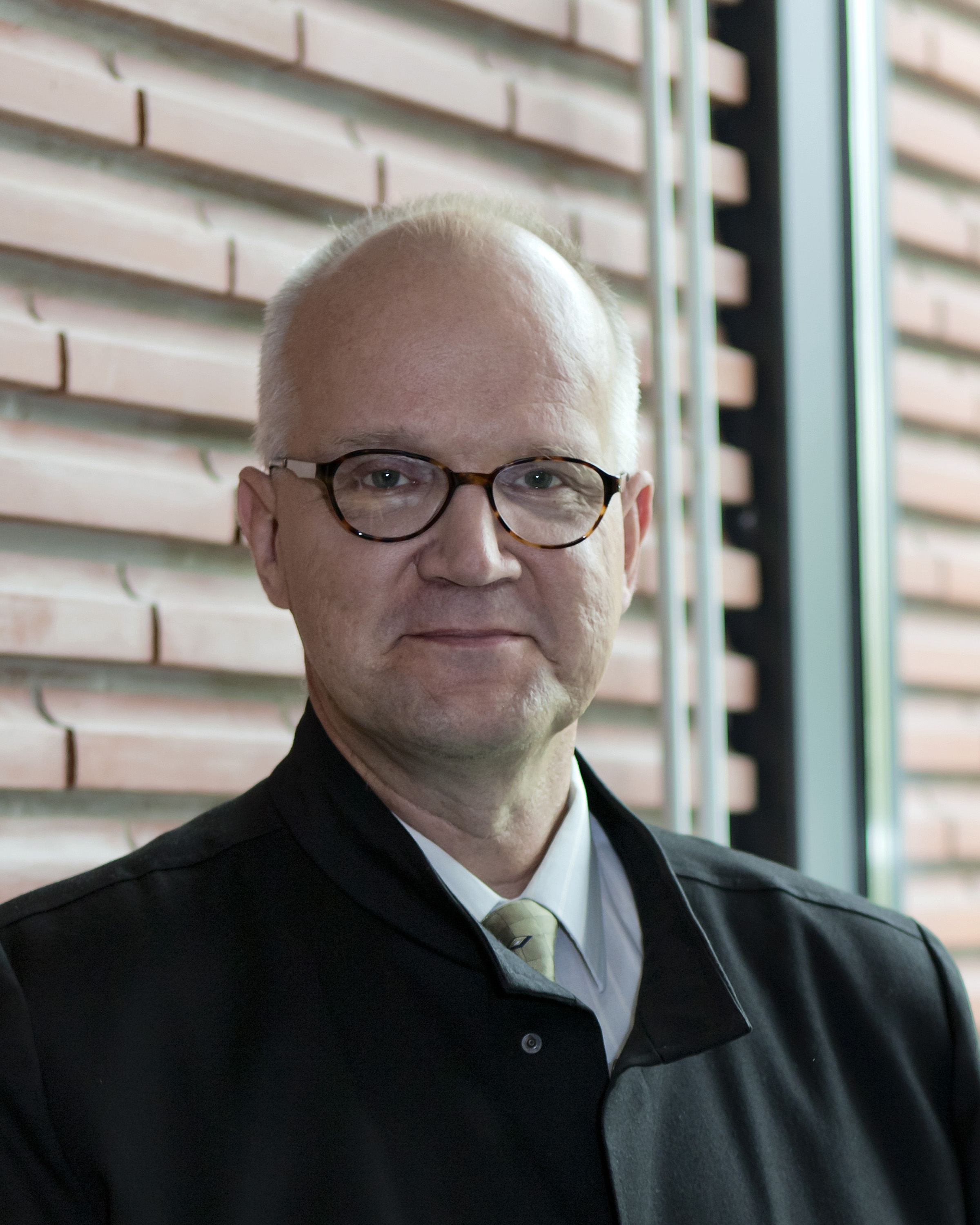
Susan Fino is a Professor at the College of Liberal Arts and Sciences, Wayne State University. Her research focuses on public law, American constitutional law, administrative law, and the role of state supreme courts. She holds a B.A. from Johns Hopkins University, an M.A. and Ph.D. from Rutgers University. She has received the President's Award for Excellence in Teaching. Her courses include American Government (PS1010) and Constitutional Law (PS5110/PS5120), taught across multiple terms from 2023 to 2025. Dr. Fino's research explores judicial federalism, state constitutional frameworks, and legal interpretations of rights. Her work analyzes topics like church-state relations, taxation provisions in state constitutions, and assisted suicide debates. She has written extensively on state supreme court dynamics, including landmark cases and institutional performance metrics. Her scholarship bridges legal theory with practical governance challenges at both state and federal levels. Her publications span over three decades, addressing evolving legal landscapes such as the Rehnquist Court’s federalism approach and technological impacts on criminal sentencing. She consistently engages with issues at the intersection of law, politics, and societal values.
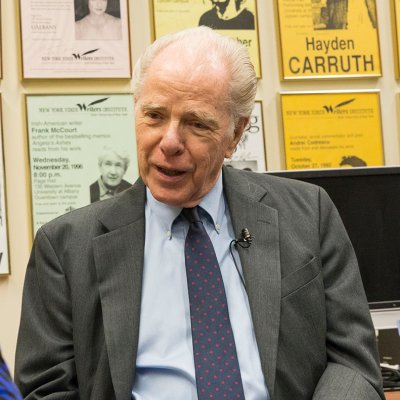
William Kennedy is a Professor in the English Department at the University at Albany, State University of New York. For over 40 years, he has crafted a body of literature centered on Albany, New York, creating what is known as the "Albany Cycle" of novels. His work has established Albany as a significant place in American literature, comparable to Joyce's Dublin and Bellow's Chicago. His educational background includes a BA from Siena College, following attendance at Public School 20 and Christian Brother's Academy. Professor Kennedy's creative work focuses on American fiction, particularly historical and urban narratives rooted in Albany's cultural and political landscape. His writing explores machine politics, family sagas, and the interplay between individual lives and historical events, rendering Albany's "outcasts and machine politicians, lowlifes and swells" with profound humanity. His narratives transform the city into a mythic capital of national memory. His publications consistently draw from Albany's history, with recurring themes of political corruption, redemption, and the resilience of marginalized communities. The "Albany Cycle" demonstrates his mastery in blending local history with universal human struggles across multiple literary forms. William Kennedy's distinguished honors include: John D. and Catherine T. MacArthur Foundation Fellowship Election to the American Academy of Arts and Letters National Endowment for the Arts Fellowship Regents Medal of Excellence from SUNY Governor's Arts Award Commander of the Order of Arts and Letters in France Election to the American Academy of Arts and Sciences As an educator, Kennedy taught creative writing and journalism at the University at Albany from 1974-1982 and Cornell University in 1982-83. His MacArthur Fellowship directly funded the creation of the New York State Writers Institute at Albany, with matching funds from the university and legislative support from Governor Cuomo. He has served on the New York State Council for the Humanities board and the Academy of Motion Picture Arts and Sciences. William Kennedy co-founded the New York State Writers Institute in 1984, which has grown into a major literary hub conducting statewide cultural and educational activities. The Institute remains central to his legacy, fostering literary arts through readings, workshops, and educational programs across New York.
Yu-Ru Lin is an Associate Professor at the School of Computing and Information, University of Pittsburgh, and serves as Research & Academic Director at the Institute for Cyber Law, Policy and Security (Pitt Cyber). She leads the Pitt Computational Social Dynamics Lab (PICSO Lab) and holds secondary appointments in Political Science, Computer Science, and the Intelligent Systems Program. PhD in Computer Science from Arizona State University Postdoctoral research at Harvard University and Northeastern University Her research focuses on computational approaches for: Networked social dynamics High-dimensional social information summarization Trust and distrust propagation Misinformation detection Policy diffusion analysis Recent publications span 2014-2020, covering: Social media crisis response Graph visualization techniques Policy diffusion patterns Misinformation mitigation Temporal topic modeling Scientific support includes: National Science Foundation (NSF) awards Minerva/ONR funding AFOSR grant for distrust modeling DARPA Understanding Group Biases program As director of PICSO Lab, she leads interdisciplinary research teams on: Digital accountability Urban mobility patterns Health informatics via crowdsourcing Trust-influence dynamics
Associate Professor Kiat Boon, Daniel SENG is a leading academic at the National University of Singapore (NUS), specializing in technology law and infocommunications law. He currently serves as Director of the LLM (Intellectual Property & Technology Law) program and IT Coordinator. Previously, he held roles as Director of Research at the Singapore Academy of Law (2001–2003), partner and head of technology practice at Rajah & Tann, and non-residential fellow at Stanford Law School’s Center for Legal Informatics (CodeX). His education includes a JSD and JSM from Stanford University, BCL (Oxford, Rupert Cross Prize recipient, 1994), and LLB (NUS with first-class honors). His research employs machine learning, NLP, and big data to analyze digital law challenges, particularly in copyright takedown notices and AI governance. Research interests span information technology law, empirical legal studies, quantitative research, and AI’s intersection with legal reasoning. He contributes to global legal reform via advisory roles at the World Intellectual Property Organization (WIPO), focusing on copyright exceptions, music licensing, and intermediary liability. Key awards include the 1994 Rupert Cross Prize. His work bridges law and technology through publications on digital evidence, metaverse legal frameworks, and AI’s impact on private law. He is actively involved in shaping Singapore’s legal infrastructure through government committees and academic initiatives.
Jennifer Wilcox is the Presidential Distinguished Professor of Chemical Engineering and Energy Policy at the University of Pennsylvania's School of Engineering and Applied Science. She holds the James H. Manning Chair and directs the Clean Energy Conversions Lab, which focuses on carbon management strategies to mitigate climate change. Wilcox also served as Principal Deputy Assistant Secretary of Fossil Energy and Carbon Management at the U.S. Department of Energy from January 2021. Her research spans carbon capture, utilization, and storage (CCUS), direct air capture (DAC), mineral carbonization, life cycle assessment, and techno-economic analysis of carbon management technologies. Wilcox's work examines both mitigation and adaptation strategies to minimize negative climate impacts associated with society's dependence on fossil fuels. She takes a multi-perspective approach that includes experimental work, materials characterization, geo-spatial analyses, systems modeling, and techno-economic analysis while considering environmental and social contexts. Wilcox's research has been featured in major publications including the first textbook on Carbon Capture and Storage, the California Getting to Neutral report, the CDR primer, Greenhouse Gas Removal Technologies, the State of CDR Volume 2, and the Roads to Removal report. Her work has received recognition including the DOE Secretary's Achievement Award for contributions to the Getting to Neutral report. Secretary's Achievement Award for work on the Getting to Neutral Report Principal Deputy Assistant Secretary of Fossil Energy and Carbon Management (2021) Author of the first textbook on Carbon Capture and Storage Lead contributor to the California Getting to Neutral report Co-author of the CDR primer with nearly 40 subject matter experts Wilcox mentors several PhD candidates and research associates including Maxwell Pisciotta, Shelvey Swett, Hélène Pilorgé, Shrey Patel, Aline Uwase, Katherine Vaz Gomes, and Abby Lunstrum. Her lab examines various carbon management strategies from technology development to deployment optimization, with a focus on maximizing climate change mitigation while minimizing adverse social and environmental impacts. The Clean Energy Conversions Lab tracks public funding for carbon management projects across the United States and analyzes lessons from recent legislation like the Bipartisan Infrastructure Law and Inflation Reduction Act to identify opportunities for carbon management.
Marina Agranov is Professor of Economics at the California Institute of Technology (Caltech), affiliated with the Division of Humanities and Social Sciences. She directs research through the Ronald and Maxine Linde Institute of Economic and Management Sciences, Center for Social Information Sciences (CSIS), and Center for Theoretical and Experimental Social Sciences (CTESS), and serves as Research Associate at the National Bureau of Economic Research (NBER). Her academic credentials include a B.A. from St. Petersburg State Technical University (1999), M.A. from Tel Aviv University (2004), and Ph.D. from New York University (2010). She joined Caltech as Assistant Professor in 2010 and was promoted to full Professor in 2017. Agranov's research pioneers experimental and behavioral economics, focusing on strategic decision-making in bargaining games, social learning environments, network interactions, and information dynamics. Her work examines how individuals form beliefs and navigate tensions between personal goals and collective outcomes, often using controlled laboratory experiments to test theoretical predictions about human behavior under uncertainty. Her recent publications reveal a consistent methodological approach: blending game-theoretic models with experimental validation to investigate communication effects, randomization preferences, and institutional design. Key trends include analyzing how uncertainty impacts committee negotiations, how complexity influences egalitarian outcomes in legislative bargaining, and how information structures shape social learning on networks. Her scientific recognition includes: Associated Students of Caltech (ASCIT) Teaching Award (2017-18) Professor Agranov's research has secured significant institutional support through Caltech centers and NBER affiliation, with findings featured in major economics journals and Caltech news coverage including "Decision by Committee: How Uncertainty Shapes Negotiations" (December 2024) and "Experimental Economics in Theory and Practice" (July 2023). Her work on committee decision-making under uncertainty has direct implications for institutional design in political and corporate governance. She actively contributes to Caltech's research ecosystem through CSIS and CTESS, which facilitate interdisciplinary collaborations in social sciences and experimental methodology development.
Laverne Jacobs, PhD, is a Full Professor at the University of Windsor's Faculty of Law where she holds the Research Chair in Disability Equality & Administrative Justice. She serves as the founder and Director of the Law, Disability & Social Change Project, a research and public policy center dedicated to fostering inclusive communities. Notably, Professor Jacobs was elected to the United Nations Committee on the Rights of Persons with Disabilities in 2022, becoming the first Canadian to serve on this UN Human Rights Treaty Body. She also serves as Co-Director of the Disability Rights Working Group at Berkeley Law's Center for Comparative Equality & Anti-Discrimination Law and previously held the position of Associate Dean (Research & Graduate Studies) for the Faculty of Law from 2018-2021. B.A. (Honours), McGill University, 1994 LL.B., McGill University, 1999 B.C.L., McGill University, 1999 Ph.D., Osgoode Hall Law School, York University, 2009 Professor Jacobs' research sits at the intersection of disability equality law and administrative law and justice, characterized by an interest in the everyday work of the administrative justice system and the lived experiences of people who use it, particularly persons with disabilities. Her work spans disability rights, administrative justice, human rights law, socio-legal theory, and empirical research methodologies. She has made significant contributions to understanding accessibility legislation, transportation inequality, post-secondary education access for students with disabilities, and the implementation of disability equality principles in administrative decision-making. Her scholarship bridges theoretical legal frameworks with practical applications, emphasizing citizen participation in policy development and the importance of inclusive design in legal systems. Analysis of Professor Jacobs' recent publications reveals a consistent focus on how administrative law can better serve persons with disabilities through inclusive design and accessible processes. Her work demonstrates growing attention to intersectional issues, particularly how women with disabilities experience administrative systems, and increasingly examines the implementation challenges of accessibility legislation across Canadian jurisdictions. She frequently employs empirical research methods to ground her legal analysis in real-world experiences of marginalized communities. Scientific Awards and Honors: Canadian Bar Association Touchstone Award (2021) Canadian Association of Law Teachers (CALT) Academic Excellence Award (2022) Hummingbird Award from the Disabled Women's Network of Canada (DaWN), 2022 Election to the United Nations Committee on the Rights of Persons with Disabilities (2022) Professor Jacobs has held significant leadership roles including service on the Board of Directors of the Income Security Advocacy Centre and the Canadian Institute for the Administration of Justice. Through her role as Director of the Law, Disability & Social Change Project, she has secured research funding to support policy-relevant scholarship on disability rights and administrative justice. Her work has influenced accessibility legislation development across Canada, particularly through her annotated version of the Accessible Canada Act. She provides expert consultation to government bodies and international organizations on disability rights implementation. The Law, Disability & Social Change Project serves as Professor Jacobs' primary research hub, bringing together interdisciplinary scholars, disability advocates, and policy makers to develop practical solutions for creating more inclusive legal and administrative systems. The project has produced numerous research reports, policy briefs, and public resources that translate academic research into actionable recommendations for improving accessibility and disability equality in Canadian society.
Daniel E. Ho holds multiple prestigious positions at Stanford University: William Benjamin Scott and Luna M. Scott Professor of Law Professor of Political Science Professor of Computer Science (by courtesy) Senior Fellow, Stanford Institute for Economic Policy Research Senior Fellow, Stanford Institute for Human-Centered Artificial Intelligence Faculty Fellow, Center for Advanced Study in the Behavioral Sciences He serves on the National Artificial Intelligence Advisory Commission (NAIAC), as Senior Advisor on Responsible AI at the U.S. Department of Labor, and as a Public Member of the Administrative Conference of the United States (ACUS). Ho earned his J.D. from Yale Law School and Ph.D. from Harvard University, completing a clerkship with Judge Stephen F. Williams on the U.S. Court of Appeals for the District of Columbia Circuit. His research bridges artificial intelligence, law, and public policy with emphasis on: Regulatory governance frameworks for AI systems Fairness and bias mitigation in algorithmic decision-making Environmental enforcement using satellite imagery and computer vision Methods for estimating racial disparities without direct demographic data Legal AI reliability and statutory research systems Analysis of his 2025 publications reveals a consistent focus on practical AI governance tools addressing real-world regulatory challenges. Key themes include developing benchmarks for legal applications, mitigating hallucination in legal AI tools, and creating systems for statutory research. His work demonstrates strong integration of technical AI methods with policy implementation, particularly in environmental enforcement and fairness assessment. As Director of the Regulation, Evaluation, and Governance Lab (RegLab), Ho leads interdisciplinary research partnerships with government agencies. While specific grant details aren't provided, RegLab's operational model indicates substantial research funding for policy-relevant AI projects. No student advisees are mentioned in available materials. Ho's leadership extends to national advisory roles where he shapes federal AI policy through evidence-based recommendations, particularly regarding environmental protection and civil rights enforcement mechanisms.
Anders Damgaard is an Associate Professor and Head of BSc studies at the Department of Environmental and Resource Engineering (DTU Sustain), Technical University of Denmark. His research focuses on environmental assessment methodologies, particularly Life Cycle Assessment (LCA), and their application to waste management systems, resource recovery, and policy development. He leads the development of LCA models like EASEWASTE/EASETECH and collaborates with institutions such as the Danish EPA and Nordic Council of Ministers. Key research areas include carbon footprints of waste treatment, textile waste composition, and additive impacts in plastics recycling. Education: Not explicitly stated in provided texts. Research Interests: Waste management optimization, circular economy frameworks, sustainable technologies, and policy-driven environmental assessments. His recent publications address topics such as carbon footprints of sewage sludge treatments, Nordic textile waste composition, and challenges in plastic additive inclusion in LCA studies. He supervises PhD students in projects involving lifecycle modeling, construction waste recycling, and consumer practices in circular economies. As part of DTU Sustain, he contributes to interdisciplinary teams advancing sustainable resource management and policy solutions.
Pepa Kostadinova Atanasova is a Tenure Track Assistant Professor in the Natural Language Processing Section of the Department of Computer Science , University of Copenhagen. She co-leads the CopeNLU group with Isabelle Augenstein and has special teaching duties for industry practitioners. Research Interests: Interpretability of Language Models Explainability Methods Factuality in Language Models Parametric Knowledge Analysis Human-AI Alignment Trustworthy AI Scientific Awards: Marie Skłodowska-Curie Fellowship ELLIS Best PhD Thesis Award Informatics Europe Best PhD Thesis Award Collaborations: Active in interdisciplinary research, including partnerships with Meta and Google, and a postdoctoral project combining language model explanations with trading behavior analysis.
Sandro Ambuehl is the UBS Foundation Assistant Professor of Behavioral Economics of Financial Markets at the Department of Economics, University of Zurich. He holds a PhD in Economics from Stanford University (2016) and previously served as Assistant Professor at the University of Toronto's Rotman School of Business. His research focuses on improving financial decision-making, ethical incentives in repugnant transactions (e.g., organ donation, clinical trials), and foundational decision theory. He employs experimental and theoretical methods, supported by grants like the Swiss National Science Foundation Starting Grant (2022) and the Alfred P. Sloan Foundation (2017). Education: PhD in Economics (Stanford University, 2016); previous roles include Assistant Professor at University of Toronto (Rotman School of Business and Department of Management, UTSC). Research Interests: Behavioral and experimental economics, financial decision-making interventions, ethical policies for repugnant transactions, and welfare economics. His work has been featured in outlets like the Wall Street Journal , Financial Times , and NPR . Articles highlight themes like paternalistic motivations, participation incentives in trials, and welfare state design. His 2021 American Economic Review paper on paternalism earned the Exeter Prize. Recent studies explore blind peer advice in finance and welfare state preferences through experiments. Awards include the Exeter Prize (2022), Alfred P. Sloan Grant (2017), and Swiss National Science Foundation support. Grants focus on behavioral welfare economics and policy interventions. Labs/Teams: Affiliated with the UBS Center for Economics in Society at UZH, contributing to interdisciplinary behavioral economics research.
Professor Christopher Carman is the Stevenson Professor of Citizenship at the University of Glasgow, holding a PhD from the University of Houston. He has served in leadership roles including Head of Subject (Politics & International Relations), Head of the School of Social and Political Sciences, and Deputy Head of the School. His research focuses on political representation, electoral processes, public opinion, and Scottish politics, with notable contributions to studies on the Scottish Parliament and rural-urban political divides. Carman has led the Scottish Election Study (SES) since 2011 and co-leads the NORFACE-funded RUDE project on European rural-urban dynamics. He also contributes to the Glasgow-Nankai Joint Graduate School and the Stevenson Trust, fostering citizenship education and democratic research. Education: PhD in Political Science, University of Houston (2000). Previous academic roles include professorships at the Universities of Strathclyde and Pittsburgh. Research Interests: Political representation alternatives (e.g., public petitions systems), electoral behavior, Scottish and UK politics, direct democracy, and comparative legislative politics. Recent work addresses rural-urban divides in Europe and political compromise in democratic systems. Key Projects: Scottish Election Study (SES), Rural and Urban Divide in Europe (RUDE), and studies on political scandals and multilevel governance. His publications span electoral studies, comparative politics, and political behavior, with a focus on institutional trust and democratic engagement. Grants and Funding: ESRC and NORFACE grants support his research. The Stevenson Trust supports his work on citizenship education and public lectures.
Sascha van Schendel is an Assistant Professor in Data Protection & Cybersecurity at the Department of Law & Markets, Erasmus School of Law, Erasmus University Rotterdam. She is affiliated with the Erasmus Centre of Law and Digitalization and contributes to the Sectorplan SSH-Breed research initiative on the influence of digitalization on work, prosperity, and entrepreneurship. Her research lies at the intersection of law, technology, and fundamental rights, with a focus on data protection, privacy, algorithmic governance, and the regulation of emerging technologies in public and environmental domains. She has published widely on topics including GDPR compliance, privacy by design, smart energy systems, AI in criminal justice, and the legal implications of predictive policing. The recent publications reflect a strong trend toward the regulation of data in public infrastructure (e.g., energy grids), algorithmic accountability in law enforcement, and the integration of legal and technical perspectives in privacy-preserving systems. Her work spans environmental law, criminal procedure, and digital constitutionalism, demonstrating interdisciplinary reach. Scientific Awards: No awards explicitly mentioned in the provided text. Advising and Grants: While no formal PhD or Master’s students are listed, Dr. van Schendel has been involved in significant research projects such as the NWO-funded Megamind project on smart energy grids, indicating experience with competitive grant funding. She actively collaborates with legal scholars and contributes to public policy debates, including responses to national legislation like the Dutch Cybersecurity Bill. Labs and Teams: She is a core member of the Erasmus Centre of Law and Digitalization, a research hub focusing on the legal challenges of digital transformation. Her work is embedded in interdisciplinary collaborations involving law, technology, and public policy experts.
Eero Hyvönen is a Professor of Computer Science at Aalto University and Director of the Helsinki Centre for Digital Humanities (HELDIG) at the University of Helsinki. He leads the Semantic Computing Research Group (SeCo), specializing in Semantic Web technologies and applications. Hyvönen holds an Adjunct Professor title at the University of Helsinki's Department of Computer Science. His work focuses on developing national-level semantic web infrastructure, with applications in digital humanities, cultural heritage, and AI. He has published over 500 research articles and books, receiving numerous awards including the Decoration of Knight, First Class, of the Order of the White Rose of Finland (2018). Hyvönen chairs editorial boards of journals like Semantic Web and serves on committees for major conferences. His research spans semantic web technologies, linked open data, and AI applications in cultural heritage domains. Key projects include Sampo portals (e.g., LetterSampo, OperaSampo) for cultural data analysis, ParliamentSampo for parliamentary data, and FindSampo for archaeological finds. His work emphasizes interdisciplinary collaboration, integrating law, history, and computing through initiatives like FIN-CLARIAH. Hyvönen advises doctoral and master's students, notably Annastiina Ahola and Jouni Tuominen, who have won awards under his supervision. He directs research infrastructures, chairs international boards, and actively contributes to open data policies and standards development.
Elliott Ash is an Associate Professor of Law, Economics, and Data Science at ETH Zurich's Center for Law & Economics. He holds a Ph.D. in Economics and J.D. from Columbia University, a B.A. in Economics, Government, and Philosophy from the University of Texas at Austin, and an LL.M. in International Criminal Law from the University of Amsterdam. His research focuses on empirical legal studies using econometrics, NLP, and ML, examining topics like judicial behavior, legislative impact, and AI-driven governance. He has been funded by the ERC, Swiss NSF, and others. Research Interests: Elliott explores automation of legal decisions, text-as-data analysis in law, and the intersection of AI with legal systems. He develops tools like BallotBot and LePaRD to enhance legal transparency and public understanding. His work bridges law, economics, and computer science, with publications in top journals like the American Economic Journal and Review of Economics and Statistics . Teaching: Courses include Building a Robot Judge , Natural Language Processing for Law , and Big Data for Public Policy . He co-organizes the Zurich Workshop in AI+Economics and Monash-Warwick-Zurich Text-as-Data Workshops. Awards: European Research Council Starting Grant, Swiss National Science Foundation Grant, and multiple grants from U.S. and Swiss institutions. His work has been featured in NPR , VoxEU , and Georgetown Law Journal . Labs/Teams: Leads the Swiss AI Initiative's Human-AI Alignment team, collaborates with the CEPR on Political Economy research, and serves as an Economic Journal Associate Editor.