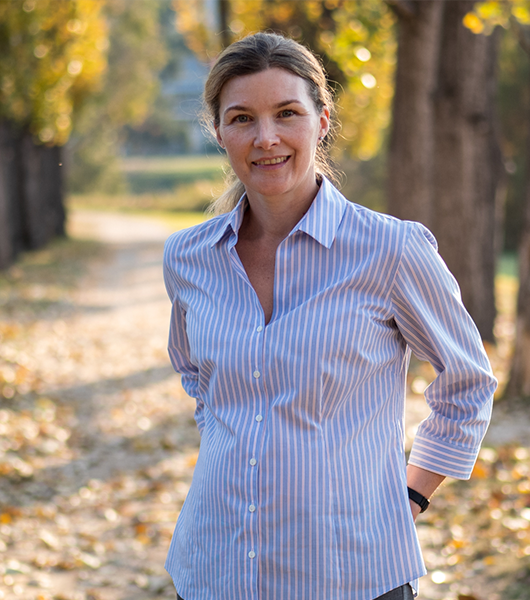
Susan Fino is a Professor at the College of Liberal Arts and Sciences, Wayne State University. Her research focuses on public law, American constitutional law, administrative law, and the role of state supreme courts. She holds a B.A. from Johns Hopkins University, an M.A. and Ph.D. from Rutgers University. She has received the President's Award for Excellence in Teaching. Her courses include American Government (PS1010) and Constitutional Law (PS5110/PS5120), taught across multiple terms from 2023 to 2025. Dr. Fino's research explores judicial federalism, state constitutional frameworks, and legal interpretations of rights. Her work analyzes topics like church-state relations, taxation provisions in state constitutions, and assisted suicide debates. She has written extensively on state supreme court dynamics, including landmark cases and institutional performance metrics. Her scholarship bridges legal theory with practical governance challenges at both state and federal levels. Her publications span over three decades, addressing evolving legal landscapes such as the Rehnquist Court’s federalism approach and technological impacts on criminal sentencing. She consistently engages with issues at the intersection of law, politics, and societal values.
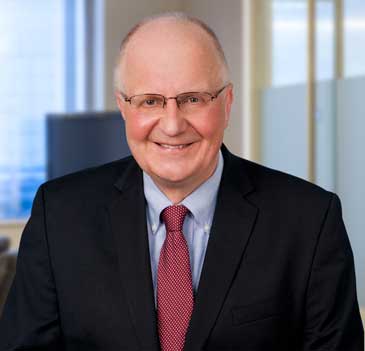
Elliott Ash is an Associate Professor of Law, Economics, and Data Science at ETH Zurich's Center for Law & Economics. He holds a Ph.D. in Economics and J.D. from Columbia University, a B.A. in Economics, Government, and Philosophy from the University of Texas at Austin, and an LL.M. in International Criminal Law from the University of Amsterdam. His research focuses on empirical legal studies using econometrics, NLP, and ML, examining topics like judicial behavior, legislative impact, and AI-driven governance. He has been funded by the ERC, Swiss NSF, and others. Research Interests: Elliott explores automation of legal decisions, text-as-data analysis in law, and the intersection of AI with legal systems. He develops tools like BallotBot and LePaRD to enhance legal transparency and public understanding. His work bridges law, economics, and computer science, with publications in top journals like the American Economic Journal and Review of Economics and Statistics . Teaching: Courses include Building a Robot Judge , Natural Language Processing for Law , and Big Data for Public Policy . He co-organizes the Zurich Workshop in AI+Economics and Monash-Warwick-Zurich Text-as-Data Workshops. Awards: European Research Council Starting Grant, Swiss National Science Foundation Grant, and multiple grants from U.S. and Swiss institutions. His work has been featured in NPR , VoxEU , and Georgetown Law Journal . Labs/Teams: Leads the Swiss AI Initiative's Human-AI Alignment team, collaborates with the CEPR on Political Economy research, and serves as an Economic Journal Associate Editor.
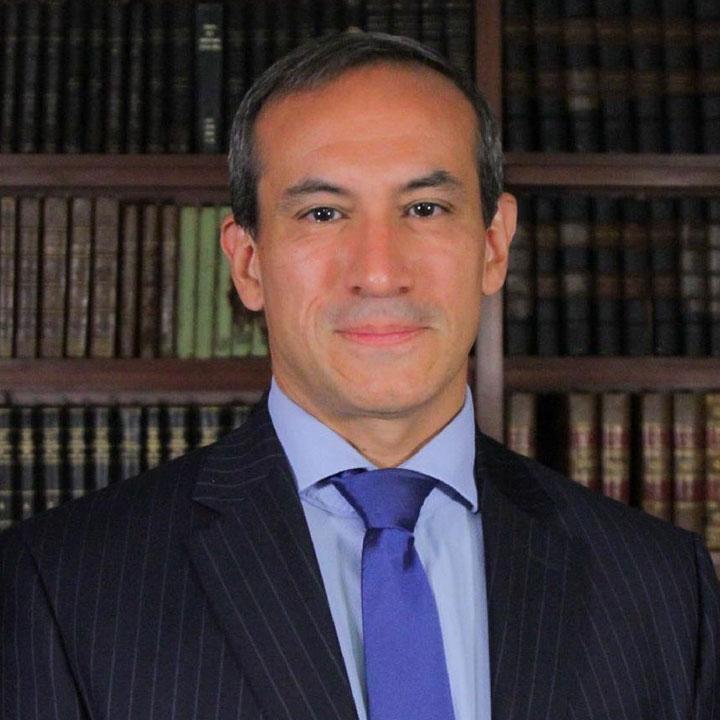
Michael Wara is a Senior Research Scholar at the Stanford Woods Institute for the Environment and Director of the Climate and Energy Policy Program. He holds a JD from Stanford Law School, a PhD in Ocean Sciences from UC Santa Cruz, and a BA from Columbia University. His work bridges legal, scientific, and policy domains to address climate and energy challenges through bipartisan technical assistance and research collaboration with economists, engineers, and scientists. His research focuses on carbon pricing mechanisms, energy innovation, and regulatory solutions for climate policy. He advises policymakers on designing effective laws and regulations, with particular expertise in international environmental treaties like the ozone and climate regimes. Wara also teaches courses on energy law, wildfire policy, and carbon taxation at Stanford Law School. Key contributions include analyzing the economic impacts of EPA regulations, evaluating California’s carbon market mechanisms, and advancing strategies to decarbonize building electrification. His interdisciplinary approach emphasizes practical solutions to global environmental challenges, leveraging Stanford’s expertise in energy systems and policy. Wara’s policy practicum courses engage students in real-world projects such as evaluating carbon pollution standards and wildfire management policies. His work frequently appears in peer-reviewed journals and media outlets like The Atlantic and New York Times , addressing topics like the Supreme Court’s EPA rulings and wildfire insurance issues.
Dr. Sarah F. Anzia is the Chancellor's Professor of Public Policy and Political Science at the University of California, Berkeley, with a joint affiliation at the Goldman School of Public Policy. She is also a Senior Fellow at the Niskanen Center and a Senior Fellow (adjunct) at the Hoover Institution. Her research bridges American politics, public policy, and subnational governance. Her work focuses on state and local government election timing and voter turnout interest group influence public-sector labor dynamics gender in electoral politics pension policy The 15 most recent publications highlight her expertise in historical labor movements policy feedback theory local taxation public-sector pension economics gender dynamics in electoral outcomes subnational institutional analysis Her studies often employ quantitative datasets spanning multiple decades of local government financial records and electoral patterns. Scientific recognition includes National Research Data Access via Goldman School working papers Senior Fellowships at Niskanen Center and Hoover Institution Endowed Chancellor's Professorship at UC Berkeley Key research contributions examine the interplay between business groups and labor unions in local governance structural determinants of senior citizen policy influence pension fund governance mechanisms historical development of local electoral institutions She received her PhD in political science from Stanford University and holds an MPP from the Harris School at the University of Chicago.
Dr. Amelia Simpson holds the position of Honorary Associate Professor at the Australian National University (ANU), specializing in constitutional law with a focus on discrimination principles and federalism. She earned her BA Hons and LLB Hons from ANU, followed by an LLM and JSD from Columbia University. She is a practicing Barrister and Solicitor in the High Court of Australia. Her research critically examines constitutional frameworks, particularly regarding state residence discrimination under Section 117 and interstate free trade jurisprudence. Her work has been cited in landmark High Court and Federal Court rulings, solidifying her reputation as a leading scholar in public law. Amelia’s contributions include co-authoring Hanks Australian Constitutional Law: Materials and Commentary (2016) and contributing to the Oxford Handbook of Australian Constitutional Law (2018). Her research on social equality and functionalist approaches to non-discrimination has advanced scholarly discourse on constitutional values. Notably, her 2017 paper Social Equality in Australia critiques the historical neglect of equality principles in constitutional interpretation. Her publications span constitutional doctrine, class actions reform, and environmental policy, reflecting her interdisciplinary approach. She ranks among Australia’s top 20 most prolific legal scholars in high-impact journals (2000–2010). Her work bridges theoretical analysis with practical legal challenges, influencing both academia and judicial practice.
Michael Morse is an Assistant Professor of Law at the University of Pennsylvania Carey Law School, with a secondary appointment in the Political Science Department. He holds a JD from Yale Law School and a PhD in Political Science from Harvard University. Prior to his current position, he was a Bigelow Fellow at the University of Chicago Law School and served as a law clerk for federal judges in Alabama and California. Morse specializes in voting rights, election administration, and criminal justice system reform, combining empirical methods with legal scholarship to address issues such as felony disenfranchisement, voter ID laws, and election integrity. His research has been published in top journals including the California Law Review , American Political Science Review , and Science Advances . Notable contributions include analyses of Florida’s Amendment 4, voter registration coordination via the Electronic Registration Information Center (ERIC), and studies on ballot design impacts. He has also written extensively on the election of local prosecutors and the role of fines/fees in criminal justice. Morse’s work frequently bridges legal and political science disciplines, emphasizing data-driven approaches to electoral systems. His recent focus on ‘lost votes by mail’ and privacy in election results underscores his commitment to advancing equitable and transparent electoral practices. He has been cited in media outlets like Slate , Vox , and NBC News for his accessible explanations of complex election-related issues. Scientific Recognition: Morse was recognized as a Bigelow Fellow at the University of Chicago Law School, a prestigious postdoctoral position supporting legal research.
Sara Chatfield is an Associate Professor of Political Science at the University of Denver's College of Arts, Humanities and Social Sciences, with additional affiliations in Gender and Women's Studies. Her work bridges American political development, gender politics, and methodological innovation in political science research. Dr. Chatfield earned her Ph.D. and MA in Political Science from the University of California, Berkeley (2014 and 2007 respectively), and her BA in Politics from Oberlin College (2006). Her research focuses on American political development with particular emphasis on gender and politics, public law, and political behavior. American Political Development Gender and Politics Women's Rights History Public Law Political Behavior Methodology and Causal Inference Her recent publications demonstrate a consistent focus on how gender shapes political institutions and processes across historical and contemporary contexts. Early work examined 19th century married women's economic rights reform, while more recent research investigates contemporary issues like bathroom access politics and gender disparities in political campaign staffing. Her scholarship often employs innovative methodological approaches to historical questions, bridging qualitative and quantitative traditions in political science. Dr. Chatfield teaches courses on American politics and law, including Constitutional Law I, Judicial Politics, and a freshman seminar on the politics of bathrooms. Her book In Her Own Name: The Politics of Women's Rights Before Suffrage (Columbia University Press, 2023) and her Cambridge Element The Politics of Bathroom Access and Exclusion in the United States (2024) represent significant contributions to understanding how gender shapes political institutions across historical periods.
Cesla Amarelle serves as Full Professor and Chairholder of Public Law and Migration Law at the University of Neuchâtel's Faculty of Law. Her academic leadership extends to co-directing the Swiss Center for Migration Law (CDM) and contributing to national research initiatives including the National Center of Competence in Research (NCCR) 'On the Move'. She concurrently holds significant public appointments as Chair of the Institute of European Law at the University of Fribourg and Federal Commissioner for Women's Issues, with recent expert designation to the Federal Round Table on signature collection integrity for 2024. Her academic foundation includes a law degree from the University of Lausanne (1996), LL.M. in European and International Economic Law from the University of Fribourg, and doctoral thesis from the University of Lausanne (2004). Her career progression at the University of Neuchâtel spans assistant professor (2009-2014), extraordinary professor (2015-2016), and full professor positions since 2016, complemented by earlier research roles at Swiss National Science Foundation and University of Fribourg. Professor Amarelle's research centers on migration law frameworks, human rights protections in asylum systems, and constitutional dimensions of European integration. Her work critically examines the intersection of migration governance with digital technologies, climate change impacts, and gender equality. Current projects analyze temporary protection regimes, non-refoulement principles in technological contexts, and the evolving relationship between Swiss migration law and European legal frameworks. Her scholarship consistently bridges theoretical legal analysis with practical policy implementation challenges. Her extensive publication record demonstrates evolving focus from foundational migration law codification toward contemporary challenges including digital discrimination, child rights in emergency contexts, and sustainable finance frameworks. Recent scholarship reflects increasing engagement with technological impacts on migration governance and the humanitarian dimensions of temporary protection systems, while maintaining rigorous analysis of constitutional and European law interfaces. Professor Amarelle actively contributes to academic and public discourse through leadership in the Swiss Center for Migration Law and participation in the NCCR 'On the Move' consortium. Her public service includes significant political roles as Vaud State Councilor for Education (2017-2022) and National Councilor (2011-2017), where she chaired key committees on political institutions and finance while representing Swiss higher education interests nationally. She maintains active engagement with professional associations including the Swiss Conference of Higher Education Institutions and Conference of Directors of Public Education.
Bruce Grohsgal serves as the Helen S. Balick Professor in Business Bankruptcy Law at Widener University Delaware Law School, where he joined the faculty in July 2014 after over 30 years of legal practice. His primary academic affiliation is with Widener University's Law School, where he teaches Bankruptcy, Contracts I and II, Secured Transactions, International Bankruptcy, and Financial Regulation. Prior to academia, he practiced at Pachulski Stang Ziehl & Jones, LLP in Wilmington, Delaware, representing major entities in high-profile bankruptcy cases including Solyndra, Global Home Products, and Trans World Airlines. Professor Grohsgal's research focuses on bankruptcy law with particular expertise in business restructuring, student loan dischargeability, and financial institution insolvency. His work critically examines the absolute priority rule, structured dismissals, and the legislative history behind student loan nondischargeability. He has extensively analyzed how bankruptcy courts handle debtor-creditor agreements, lease rejections, and the recharacterization of debt claims as equity. His scholarship consistently bridges theoretical legal analysis with practical restructuring challenges faced by practitioners. As Editor-in-Chief of the Norton Journal of Bankruptcy Law and Practice and the Norton Annual Survey of Bankruptcy Law, Grohsgal significantly influences bankruptcy scholarship. His recent publications (2020-2023) demonstrate a concentrated focus on student loan bankruptcy discharge mechanisms, evolving interpretations of the absolute priority rule, and procedural innovations in Chapter 11 cases. The articles reveal growing scholarly attention to consumer bankruptcy issues within traditionally corporate-focused bankruptcy scholarship. Professor Grohsgal actively engages with policy development through congressional testimony, including written submissions for H.R. 1667 (Financial Institution Bankruptcy Act of 2017). He directs the Institute of Delaware Corporate and Business Law and previously chaired the Delaware State Bar Association's Bankruptcy Section. His practical experience informs his academic work, particularly regarding first-day motions, asset sales in bankruptcy, and derivatives treatment in insolvency proceedings.
Antonia Agulló Agüero is a distinguished Professor at Pompeu Fabra University specializing in Financial and Tax Law. With a scholarly career spanning over four decades from 1980 to 2025, she has established herself as a leading authority in Spanish tax law with growing expertise in EU tax frameworks and public finance systems. Her academic contributions include 26 journal articles, 27 collaborative works, 15 books, and direction of 20 doctoral theses. Her research interests focus on Tax Law , Financial Law , and Public Finance , with particular expertise in EU Taxation, Local Government Finance, Constitutional Tax Law, and International Taxation. Her scholarly work demonstrates a clear evolution from foundational tax principles to complex contemporary issues including healthcare financing, cross-border taxation, and fiscal policy responses to economic crises. Analysis of her most recent publications (2016-2020) reveals increasing attention to healthcare financing mechanisms, EU tax harmonization challenges, and the constitutional dimensions of public spending. Her work bridges theoretical legal scholarship with practical policy applications, particularly in regional tax autonomy and fiscal federalism within Spain's autonomous communities framework. As a dedicated academic mentor, she has supervised 20 doctoral students whose research spans diverse tax law topics including international double taxation, public debt concepts, soft law in international taxation, and environmental taxation. Her students have gone on to contribute significantly to academic and professional tax discourse in Spain. Her scholarly infrastructure includes leadership in academic publications, participation in professional tax councils (notably the Barcelona Tax Council), and contributions to major tax law reforms including Spain's General Tax Law and Personal Income Tax legislation. Her work continues to influence tax policy development in Spain and EU member states.
David Almeling is a Lecturer at UC Berkeley School of Law where he teaches Trade Secret Law, while maintaining his primary role as a partner at O'Melveny & Myers LLP in San Francisco. He is widely recognized as one of the country's leading authorities in trade secret law, with Chambers USA ranking him in Band 1 (its highest category) among the top seven trade secret lawyers nationwide. His practice spans the full range of trade secret and employee mobility issues, from advising on protection programs to investigating alleged thefts to litigating trade secret cases in state and federal court. Mr. Almeling earned his J.D. from Duke University School of Law with high honors, where he was Order of the Coif, note editor of Duke Law Journal, and a member of the Moot Court Board. He completed his undergraduate studies at the University of Florida with highest honors as valedictorian and Phi Beta Kappa. His research interests focus on trade secret law, intellectual property strategy, and the intersection between patent and trade secret protection. He has published extensively on trade secret law, including the fourth edition of his book Trade Secret Law and Corporate Strategy (LexisNexis 2024) and numerous scholarly articles. His work demonstrates a consistent focus on practical applications of trade secret law for corporate strategy, with particular attention to identification of trade secrets, monetary remedies, and the relationship between trade secrets and noncompete agreements. Mr. Almeling has received numerous prestigious awards recognizing his expertise, including being named to the 'Hall of Fame' by The Legal 500 US for Trade Secrets (2023-2025), ranked in Band 1 by Chambers USA, and recognized by World Intellectual Property Review as Highly Recommended. He has also been named one of Law360's 'Rising Stars' and featured in The National Law Journal's list of 'Intellectual Property Trailblazers & Pioneers.' As Chair of O'Melveny's Trade Secret Group and Chair of the Sedona Conference Working Group on trade secrets, Mr. Almeling has significant leadership responsibilities in his field. He has testified before Congress on safeguarding trade secrets and serves as co-author of the 'Trade Secret Case Management Judicial Guide,' a 400-page treatise published by the Federal Judicial Center. His practice includes representing clients in high-stakes trade secret litigation resulting in significant settlements and victories, including a $22.5M settlement that would rank among the top-ten trade secret jury verdicts.
Tyler Simko is an Assistant Professor of Political Science at the University of Michigan, specializing in US state and local politics, political geography, and computational social science. His research focuses on understanding and addressing inequality in American public policy through innovative methodological approaches. Education: Ph.D. in Government, Harvard University (2024) A.B. in Politics, Princeton University Simko's research examines state and local politics in the United States with particular focus on political geography and subnational policymaking. His active research agendas include legislative redistricting ("gerrymandering"), local public meetings, school segregation, affordable housing, and data privacy. Methodologically, he develops new techniques in computational social science and machine learning to evaluate subnational inequality and how it can be reduced. His work regularly involves partnerships with federal, state, and local officials to improve the design of public policy. His recent publications demonstrate a strong focus on applying computational methods to address real-world policy challenges, particularly in school desegregation, redistricting, and local government transparency. His research often leverages large-scale data collection efforts, such as LocalView (the largest database of local government meetings in the US), to analyze patterns of political behavior and policy outcomes across different jurisdictions. Awards and Recognition: APSA 2024-25 Best Paper in Education Politics and Policy Award APSA 2024-25 Best Paper in Urban and Local Politics, Honorable Mention MPSA 2024 Robert H. Durr Award for "the best paper applying quantitative methods to a substantive problem" Derek C. Bok Award for Excellence in Graduate Student Teaching of Undergraduates (2023) Simko teaches graduate and undergraduate courses in American Politics and Political Methodology at the University of Michigan. His teaching experience spans multiple institutions, including Harvard University and Princeton University. He has designed innovative courses on US Local Policymaking, data science, and computational social science. As a Data Scientist at the Office of Evaluation Sciences, he partners with federal, state, and local officials to improve program design and reduce administrative burdens. He is a co-PI of the Algorithm-Assisted Redistricting Methodology (ALARM) Project and co-creator of LocalView, the largest audio, video, and text database of local government meetings in the United States. These projects represent significant contributions to the field of computational social science and provide valuable resources for researchers studying local governance and policy-making.
Maryellen Fullerton is the Suzanne J. and Norman Miles Professor of Law at Brooklyn Law School. She served as Interim Dean from 2018 to 2019. Her expertise spans asylum/refugee law, immigration, international law, human rights, civil procedure, and federal courts. She holds a J.D. from Antioch School of Law and a B.A. from Duke University. Fullerton’s research examines comparative refugee law, EU asylum systems, and U.S. policies. She has held distinguished visiting roles at institutions like National Taiwan University and the University of Trento (via Fulbright). Her scholarship includes co-authored casebooks on immigration and refugee law, and she founded the multilingual Refugee Law Reader. She has advised Human Rights Watch on missions in Germany, consulted for UNHCR, and supports Refugee Law Clinics in Eastern Europe. Awards include the Fulbright Scholar designation and German Marshall Fund Fellowship. Affiliations: Dennis J. Block Center for International Business Law, Brooklyn Law School International Human Rights Fellowship Program. Grants/Awards: Fulbright Scholar (multiple), German Marshall Fund Fellow, Distinguished Chair at University of Trento. Labs/Teams: Leads Refugee Law Reader project; collaborates with global human rights organizations.
Professor Imre S. Szalai is a leading scholar in arbitration law and dispute resolution, currently serving as Professor of Law at the Elisabeth Haub School of Law at Pace University. His expertise spans arbitration, litigation, professional responsibility, and legal ethics. He is nationally recognized for his work on the Federal Arbitration Act and its impact on civil justice. University: Pace University School: Elisabeth Haub School of Law Department: Dispute Resolution Academic Rank: Professor Education: Bachelor of Arts (BA), Yale University – Double Major in Economics and Classical Civilizations JD, Columbia University School of Law – Harlan Fiske Stone Scholar Research Interests: Professor Szalai specializes in the legal, historical, and ethical dimensions of arbitration. His work critically examines the expansion of forced arbitration in consumer and employment contexts, the erosion of trial rights, and the role of arbitration in undermining accountability. He explores the historical roots of the Federal Arbitration Act and advocates for reforms that restore fairness and consent in dispute resolution. His recent scholarship delves into emerging issues such as artificial intelligence in arbitration and the impact of pop culture on legal interpretation. Publication Trends: His recent publications (2022–2025) reflect a strong focus on contemporary challenges in arbitration law, including the #MeToo movement's influence on forced arbitration, AI-driven dispute resolution, the role of the Supreme Court in shaping arbitration policy, and high-profile cases involving Ticketmaster and Taylor Swift. His work combines doctrinal analysis, historical inquiry, and policy critique, often drawing from media and cultural references to make complex legal issues accessible. Scientific Awards: Harlan Fiske Stone Scholar, Columbia Law School Advising and Grants: Professor Szalai actively collaborates with students on amicus briefs and scholarly work. While specific grant funding is not detailed in the provided text, his extensive publication record and media engagements suggest sustained scholarly support. He mentors students in legal research, writing, and advocacy, particularly in the areas of arbitration and civil rights. Labs, Teams, and Initiatives: He maintains a public blog on arbitration law developments, where he analyzes recent court decisions, legislative changes, and policy debates. This platform serves as an educational resource and contributes to public discourse on arbitration reform. He also participates in academic and professional networks focused on dispute resolution and legal ethics.
Alyssa King is an Assistant Professor at the Faculty of Law, Queen's University, specializing in courts, comparative procedure, and issues of adjudicator legitimacy. Her research focuses on access to justice, federalism, arbitration, and the intersection of international law with domestic systems. She holds a PhD and JD from Yale University, an AB from Harvard University, and a Master 2 from the École des Hautes Études en Sciences Sociales. Previously, she clerked for U.S. federal judges and contributed to legal journals like the Yale Law Journal. Her work examines procedural harmonization, transnational judicial practices, and legal systems' interactions. Education: PhD in Law, Yale University (2018) Juris Doctor (JD), Yale Law School (2012) AB in Social Studies (magna cum laude), Harvard University (2008) Master 2, École des Hautes Études en Sciences Sociales Her research explores how adjudicators navigate legitimacy in cross-border contexts, including arbitration and federal systems. Key themes include procedural ethics, judicial mobility, and legal frameworks for pandemic responses. She teaches Contracts and actively engages with global legal challenges. Awards & Recognition: No specific awards mentioned in the provided texts. Advising & Grants: No advising roles or grants explicitly listed, though her research likely involves institutional support. Labs & Teams: Not specified in the provided information.