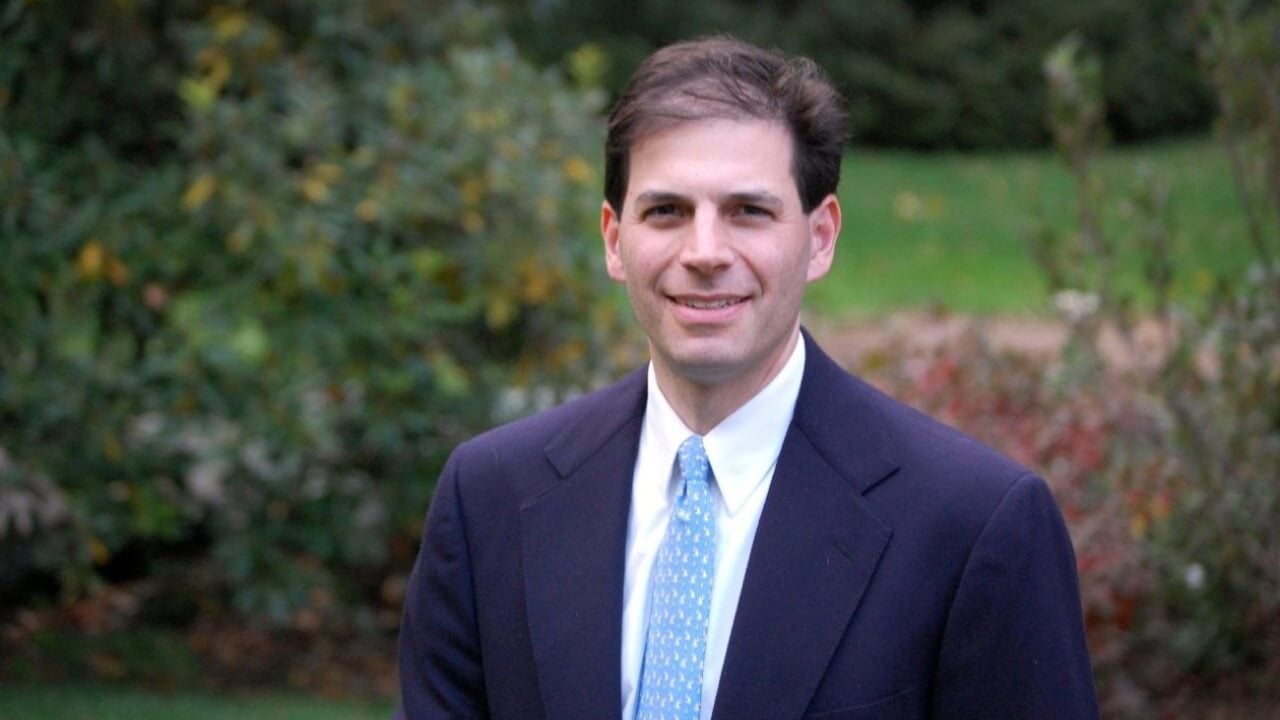
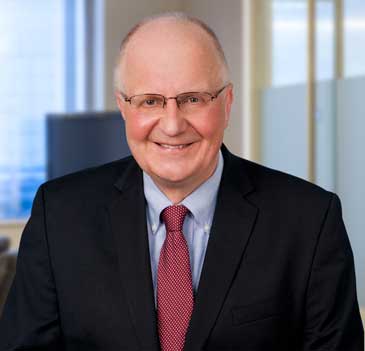
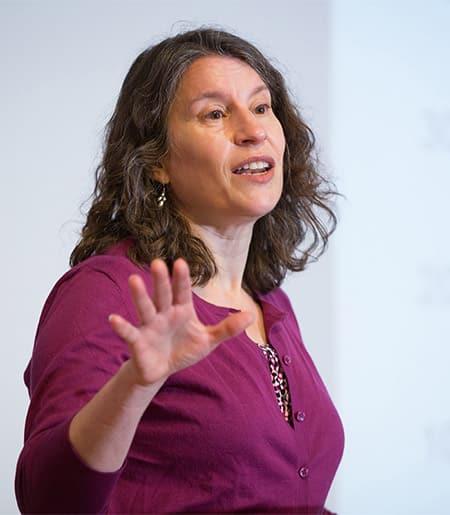
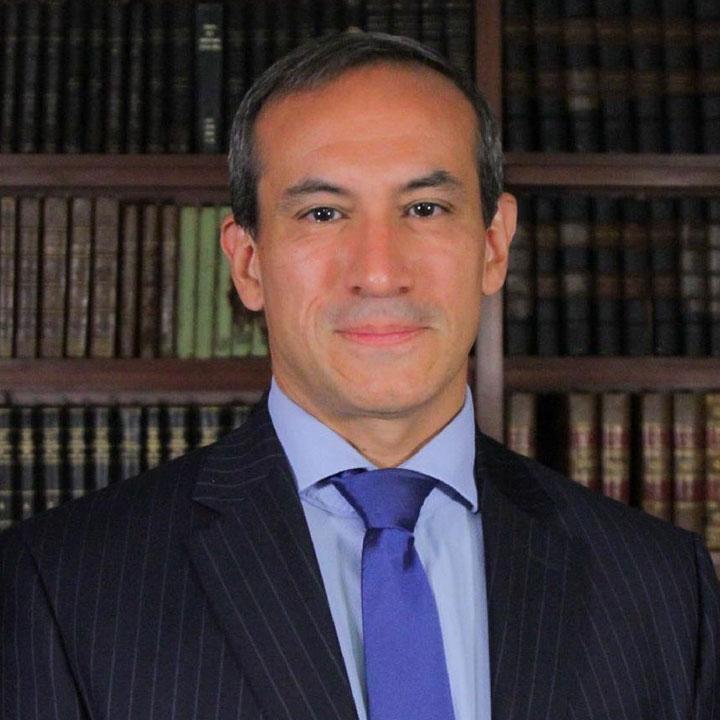
Jeffrey A. Cooper is a Professor of Law at Quinnipiac University School of Law , where he teaches courses in estate planning, wills and trusts, and taxation. He previously served as Associate Dean for Research and Faculty Development and is currently faculty adviser to the Quinnipiac Probate Law Journal . Education: AB from Harvard University, JD from Yale University, LLM from New York University Research Interests: His work focuses on tax policy , estate and gift taxation , and the intersection of federal tax law with state probate systems . He specializes in trust enforceability , uniform trust code , and historical analysis of tax legislation. Publications: Recent articles address perpetual trusts , state death tax decline , and curriculum reforms in estate planning education. His scholarship is widely published in national law journals and cited in casebooks. Scientific Awards: Academic Fellow, American College of Trust and Estate Counsel (ACTEC) Faculty Scholar, Quinnipiac University Professional Background: Before academia, Cooper practiced law for over a decade as a principal at Cummings & Lockwood, senior officer at United States Trust Company, and special counsel to Shipman & Goodwin. He also served as a senior adviser to Fiduciary Trust Company International.
Yu-Ru Lin is an Associate Professor at the School of Computing and Information, University of Pittsburgh, and serves as Research & Academic Director at the Institute for Cyber Law, Policy and Security (Pitt Cyber). She leads the Pitt Computational Social Dynamics Lab (PICSO Lab) and holds secondary appointments in Political Science, Computer Science, and the Intelligent Systems Program. PhD in Computer Science from Arizona State University Postdoctoral research at Harvard University and Northeastern University Her research focuses on computational approaches for: Networked social dynamics High-dimensional social information summarization Trust and distrust propagation Misinformation detection Policy diffusion analysis Recent publications span 2014-2020, covering: Social media crisis response Graph visualization techniques Policy diffusion patterns Misinformation mitigation Temporal topic modeling Scientific support includes: National Science Foundation (NSF) awards Minerva/ONR funding AFOSR grant for distrust modeling DARPA Understanding Group Biases program As director of PICSO Lab, she leads interdisciplinary research teams on: Digital accountability Urban mobility patterns Health informatics via crowdsourcing Trust-influence dynamics
Prof. Dr. Elisa Marie Hoven is a professor at the Faculty of Law, University of Leipzig, specializing in German and foreign criminal law, criminal procedural law, and commercial/media criminal law. She works at Burgstraße 21, Room 1.10, Leipzig. Education: Law at Free University Berlin, Radboud University Nijmegen, and University of Cambridge Professional Background: Legal clerkship in Berlin and at the International Criminal Court; visiting roles at Berkeley, Harvard, Sydney, and others Her research focuses on: Corporate criminal law (particularly corporate sanctions) Media criminal law and digitalization (hate speech) Sentencing law reform Anti-doping legislation Animal welfare criminal law Current third-party funded projects: "Gerechte Strafzumessung" (DFG-funded, analyzing sentencing practices and proposing reforms) "Hate Speech im Internet" (funded by German Federal Ministry of Justice, interdisciplinary collaboration with media studies and sociology) Scientific awards: Habilitation award from the University of Erlangen-Nuremberg Dissertation prize from the Free University of Berlin She leads the "Legal Lab Hate Speech" and founded the national Moot Court Strafrecht. Her work spans legal education, empirical research, and public science communication.
Bruce Grohsgal serves as the Helen S. Balick Professor in Business Bankruptcy Law at Widener University Delaware Law School, where he joined the faculty in July 2014 after over 30 years of legal practice. His primary academic affiliation is with Widener University's Law School, where he teaches Bankruptcy, Contracts I and II, Secured Transactions, International Bankruptcy, and Financial Regulation. Prior to academia, he practiced at Pachulski Stang Ziehl & Jones, LLP in Wilmington, Delaware, representing major entities in high-profile bankruptcy cases including Solyndra, Global Home Products, and Trans World Airlines. Professor Grohsgal's research focuses on bankruptcy law with particular expertise in business restructuring, student loan dischargeability, and financial institution insolvency. His work critically examines the absolute priority rule, structured dismissals, and the legislative history behind student loan nondischargeability. He has extensively analyzed how bankruptcy courts handle debtor-creditor agreements, lease rejections, and the recharacterization of debt claims as equity. His scholarship consistently bridges theoretical legal analysis with practical restructuring challenges faced by practitioners. As Editor-in-Chief of the Norton Journal of Bankruptcy Law and Practice and the Norton Annual Survey of Bankruptcy Law, Grohsgal significantly influences bankruptcy scholarship. His recent publications (2020-2023) demonstrate a concentrated focus on student loan bankruptcy discharge mechanisms, evolving interpretations of the absolute priority rule, and procedural innovations in Chapter 11 cases. The articles reveal growing scholarly attention to consumer bankruptcy issues within traditionally corporate-focused bankruptcy scholarship. Professor Grohsgal actively engages with policy development through congressional testimony, including written submissions for H.R. 1667 (Financial Institution Bankruptcy Act of 2017). He directs the Institute of Delaware Corporate and Business Law and previously chaired the Delaware State Bar Association's Bankruptcy Section. His practical experience informs his academic work, particularly regarding first-day motions, asset sales in bankruptcy, and derivatives treatment in insolvency proceedings.
Sharon Sassler is a Professor in the Department of Policy Analysis and Management at Cornell University's Brooks School of Public Policy. She joined the Cornell faculty in 2005 and holds a Ph.D. in Sociology/Demography from Brown University (1995). Her research examines life course transitions of young adults across education, work, relationships, and parenthood, with critical attention to gender, race/ethnicity, and social class disparities. Education: Post-Doctoral Fellowship, Johns Hopkins University, Department of Population Dynamics (1995-96) Ph.D. in Sociology/Demography, Brown University (1995) M.A. in Sociology/Demography, Brown University (1991) B.A. in English & American Literature and Politics, Brandeis University (1984) Professor Sassler's research spans two interconnected domains: family demography and STEM gender dynamics. In family studies, she investigates cohabitation, marriage, and non-marital childbearing through publications like Cohabitation Nation: Gender, Class, and the Remaking of Relationships (2017), which demonstrates how cohabitation patterns exacerbate family inequality. Her work reveals how union transitions affect maternal health, child educational outcomes, and relationship stability across racial and socioeconomic lines. Concurrently, she examines women's retention in STEM fields, analyzing gender wage gaps, occupational attrition, and the impact of family formation on career trajectories in science and engineering professions. Her 2022-2025 publications reveal intensifying focus on cross-national comparisons of union formation and STEM career dynamics, with growing attention to policy impacts. Notable trends include state abortion policy effects on pregnancy outcomes, the retreat from marriage among college-educated STEM professionals, and intersectional analyses of job search strategies. Her work consistently centers gendered power dynamics within cohabiting relationships while documenting how racial and class inequalities shape family formation and STEM participation. Scientific Awards: No specific awards mentioned in source materials Professor Sassler actively mentors through collaborative research projects like Collaborative Research: Early Career Transitions into STEM Employment (2014), indicating grant-funded work examining structural barriers for women in technical fields. Her extensive co-authorship network suggests significant graduate student supervision, though formal advisee lists aren't documented. She teaches core sociology courses including Population and Public Policy (SOC 2030) and Population Controversies in Europe (SOC 3620), connecting demographic theory with contemporary policy debates. Based in Martha Van Rensselaer Hall, she contributes to Cornell's interdisciplinary research ecosystem through affiliations with both the Sociology program and Policy Analysis and Management department, bridging demographic methods with public policy applications to address pressing social inequalities.
Lauren Ouziel is a Professor at Temple University Beasley School of Law, specializing in Criminal Law, Criminal Procedure, and Federal Criminal Law. She previously served as a Visiting Assistant Professor at Villanova University School of Law and spent eight years as a federal prosecutor in the U.S. Attorney’s Office. Her research examines institutional dynamics within the criminal justice system, focusing on how interactions between prosecutors, law enforcement, courts, and defense attorneys shape case outcomes, sentencing, and legitimacy. Education: J.D., Columbia Law School (James Kent Scholar, Harlan Fiske Stone Scholar) B.A. in History, Harvard University (cum laude) Clerkship for Judge Lewis Kaplan, U.S. District Court, Southern District of New York Research Interests: Professor Ouziel’s work addresses systemic issues in criminal justice, including federal enforcement strategies, white-collar crime prosecution, and the impact of bureaucratic processes on criminal outcomes. Her scholarship frequently explores how institutional relationships affect perceptions of fairness and legitimacy within the legal system. Publications: Her recent articles analyze topics such as federal corruption prosecutions, felony court procedures, and the role of bureaucracy in criminal justice reform. Her work has appeared in top-tier law journals like the Yale Law Journal and Virginia Law Review. Media Engagement: Ouziel is frequently cited in national and regional media, including the New York Times , Washington Post , and Philadelphia Inquirer , for her insights on criminal justice issues.
Isabel Grant is a Professor at the University of British Columbia’s Allard School of Law, specializing in criminal law, with a focus on violence against women, sexual assault, homicide, and mental health law. She holds degrees from the University of Toronto, Dalhousie University, and Yale Law School, and served as a law clerk to Supreme Court Justice Estey. Her research addresses gender-based violence, disability rights, and the impact of the Canadian Charter of Rights and Freedoms on legal frameworks. Grant has contributed to over 80 scholarly works and co-leads an SSHRC-funded project on sexual assault law reforms. She teaches courses on criminal law, sentencing, and mental health law. Grant’s work emphasizes feminist and disability justice perspectives, challenging systemic inequalities through litigation interventions in over 20 Supreme Court of Canada cases. Her recent scholarship critiques Bill C-7’s expansion of MAiD eligibility, arguing it entrenches ableism. Awards include the Royal Society of Canada Fellowship, UBC’s Killam Teaching Prize, and the 2025 University Killam Professor designation, UBC’s highest academic honor. Her research interests span criminal justice reform, gender and sexuality law, and the intersection of disability and legal rights. She collaborates with feminist and disability advocacy groups to shape policy and judicial outcomes. Key areas of focus include the ‘rough sex’ defense, consent frameworks, and sentencing disparities in intimate partner violence cases.
Dr. Darren Scott is a Professor in the School of Earth, Environment & Society at McMaster University, specializing in Geographic Information Science (GIScience) and teaching courses such as GIS Programming and Data Processing Using Python. He previously served as an Assistant Professor at the University of Louisville’s Department of Geography and Geosciences (1999–2002) and held a Visiting Research Professor position at the Swiss Federal Institute of Technology (Zurich) in 2008. His academic background includes a BA (Honors and Co-op) in Geography from Saint Mary’s University (1991), an MA from the University of Western Ontario (1994), and a PhD from McMaster University (2000). Dr. Scott’s research focuses on transportation systems, aging populations, GIScience innovations, and sustainable infrastructure. He has pioneered work in route choice modeling, transportation demand analysis, and the impact of demographic changes on mobility. In 2008, he established TransLAB, a research lab within his school, which explores advanced transportation topics using GPS and geospatial tools. His projects have been funded by major agencies like NSF, SSHRC, and NSERC, addressing issues ranging from electric vehicle adoption to flood resilience in emergency services. His teaching emphasizes Python programming and advanced GIS applications, reflecting his expertise in geospatial technologies. He has contributed to policy debates on urban sustainability, particularly regarding Canada’s Greenbelt legislation and telework trends during the pandemic. Despite no explicitly mentioned scientific awards, his extensive grant history and scholarly output highlight his impactful contributions to the field. Dr. Scott’s advising and grant activities center on interdisciplinary studies, including the McMaster Monitoring My Mobility Study (MacM3), which tracks mobility patterns of older adults. His work bridges transportation engineering, urban planning, and public health, often leveraging big data and GIS tools to analyze real-world scenarios in cities like Hamilton and Calgary.
Professor Imre S. Szalai is a leading scholar in arbitration law and dispute resolution, currently serving as Professor of Law at the Elisabeth Haub School of Law at Pace University. His expertise spans arbitration, litigation, professional responsibility, and legal ethics. He is nationally recognized for his work on the Federal Arbitration Act and its impact on civil justice. University: Pace University School: Elisabeth Haub School of Law Department: Dispute Resolution Academic Rank: Professor Education: Bachelor of Arts (BA), Yale University – Double Major in Economics and Classical Civilizations JD, Columbia University School of Law – Harlan Fiske Stone Scholar Research Interests: Professor Szalai specializes in the legal, historical, and ethical dimensions of arbitration. His work critically examines the expansion of forced arbitration in consumer and employment contexts, the erosion of trial rights, and the role of arbitration in undermining accountability. He explores the historical roots of the Federal Arbitration Act and advocates for reforms that restore fairness and consent in dispute resolution. His recent scholarship delves into emerging issues such as artificial intelligence in arbitration and the impact of pop culture on legal interpretation. Publication Trends: His recent publications (2022–2025) reflect a strong focus on contemporary challenges in arbitration law, including the #MeToo movement's influence on forced arbitration, AI-driven dispute resolution, the role of the Supreme Court in shaping arbitration policy, and high-profile cases involving Ticketmaster and Taylor Swift. His work combines doctrinal analysis, historical inquiry, and policy critique, often drawing from media and cultural references to make complex legal issues accessible. Scientific Awards: Harlan Fiske Stone Scholar, Columbia Law School Advising and Grants: Professor Szalai actively collaborates with students on amicus briefs and scholarly work. While specific grant funding is not detailed in the provided text, his extensive publication record and media engagements suggest sustained scholarly support. He mentors students in legal research, writing, and advocacy, particularly in the areas of arbitration and civil rights. Labs, Teams, and Initiatives: He maintains a public blog on arbitration law developments, where he analyzes recent court decisions, legislative changes, and policy debates. This platform serves as an educational resource and contributes to public discourse on arbitration reform. He also participates in academic and professional networks focused on dispute resolution and legal ethics.
Ewoud H. Hondius and Hans Christoph Grigoleit are leading professors in European contract law and private law harmonization. Ewoud H. Hondius is affiliated with Utrecht University - Faculty of Law and Molengraaff Institute for Private Law , while Hans Christoph Grigoleit is based at Ludwig Maximilians University of Munich - Faculty of Law . Their collaborative work focuses on equitable adjustment in contracts under changing circumstances and the convergence of European legal doctrines.
Laura Dolbow is an Associate Professor of Law at the University of Colorado Boulder, focusing on the intersection of patent law, health law, and administrative law. She holds a J.D. and B.A. from Vanderbilt University, where she won the Founder's Medal, and has held prestigious fellowships including the Sharswood Fellowship at the University of Pennsylvania Carey Law School. Key research areas: Pharmaceutical patent systems, Medicare price negotiation, FDA regulatory frameworks, and constitutional implications of administrative review bars Award-winning scholar: Recipient of the Burton Award for Legal Writing (2018) and Gellhorn-Sargentich Essay Competition (2017) Her recent scholarship analyzes how patent portfolios delay generic drug competition and inflate prices, particularly in the context of the Inflation Reduction Act's Medicare negotiation program. She examines procedural challenges to agency guidance under the Administrative Procedure Act and the constitutional limits of patent takings claims. Prominent publications: Michigan Law Review , Vanderbilt Law Review , Administrative Law Review Major policy contributions: FDA approval of birth control pills, mifepristone access litigation, and sovereign immunity in pharmaceutical patents
Garrett West is an Associate Professor of Law at Yale Law School , focusing on torts, remedies, federal courts, administrative law, constitutional interpretation, and doctrinal coherence. He received his J.D. from Yale Law School in 2018 and a B.A. from Hillsdale College in 2015. Prior to joining Yale, he practiced appellate litigation in Washington, D.C., and clerked for Judge Diarmuid O’Scannlain , Judge Thomas Griffith , and Justice Samuel Alito . Research Interests include integrating private law theory into public law, constitutional interpretation through doctrinal change, and analyzing the interplay between tort law and constitutional rights. His work addresses challenges in judicial oversight, administrative deference, and structural constitutional issues. Recent Scholarship explores the shadow docket, Bivens actions, Chevron waiver, congressional contempt, appointments clause distinctions, and constitutional torts. These publications reflect a trajectory toward refining judicial doctrines governing federal courts and administrative agencies. Contact: garrett.west@yale.edu | SSRN Profile
Richard Ekins is a Professor of Law and Constitutional Government at the University of Oxford, affiliated with St John's College and the Programme for the Foundations of Law and Constitutional Government. His research focuses on constitutional law, legal and political philosophy, with an emphasis on legislative intent, statutory interpretation, and self-government. He holds degrees from the University of Auckland (BA, LLB, BA Hons) and Oxford (BCL, MPhil, DPhil). Previously, he served as a Judge’s Clerk in New Zealand’s High Court, a Lecturer at Balliol College, and a Senior Lecturer at the University of Auckland. His work critiques judicial overreach and advocates for parliamentary sovereignty, emphasizing the moral and philosophical foundations of legal systems. Key publications include Legislated Rights: Securing Human Rights through Legislation (2018) and The Nature of Legislative Intent (2012). He leads Policy Exchange's Judicial Power Project and co-leads the Programme for the Foundations of Law and Constitutional Government. His articles address topics like Brexit’s constitutional dynamics, judicial power, and legislative authority. Ekins’ research integrates classical natural law theory, exploring how institutions enable self-governance. He challenges scepticism about legislative intent, arguing it is central to lawmaking. His writings highlight tensions between judicial review and democratic principles, advocating for a constitutional balance that prioritizes legislative autonomy.
Dr. Kate Griffith is the Jean McKelvey-Alice Grant Professor and Senior Associate Dean for Academic Affairs, Diversity, and Faculty Development at Cornell’s ILR School. She holds an affiliate role as an associate member of the Cornell Law Faculty and is a Research Fellow at NYU’s Center for Labor & Employment Law. Her research focuses on the intersection of immigration and workplace law, particularly for low-wage workers. A co-author of the seminal textbook Labor Law: Cases, Materials, and Problems , she has been widely published in top journals like California Law Review and Law & Social Inquiry . Recognized nationally for teaching excellence, she received Cornell’s Stephen H. Weiss Junior Fellow award (2018) and multiple MacIntyre Awards for exemplary teaching. Before academia, Griffith was a Skadden Fellow at the Workers’ Rights Law Center and a law clerk for Judge Rosemary Pooler of the U.S. Court of Appeals for the Second Circuit. Her legal education at NYU School of Law included distinguished scholarships (Root Tilden Public Interest, Sol D. Kapelsohn Prize) and global research as a Rotary and Fulbright Scholar in Mexico and El Salvador. Her work bridges labor law, immigration policy, and social justice, emphasizing marginalized workers’ rights. Griffith’s recent scholarship critiques joint-employer liability frameworks, advocates for worker centers’ legal recognition, and examines immigration policy’s impact on labor markets. Her 2023 article Centering Race in Studies of Low-Wage Immigrant Labor highlights systemic racial inequities. She frequently contributes to policy debates, including critiques of DOL’s proposed joint-employer rules and defenses of worker-center legal rights. Education: J.D., NYU School of Law (cum laude, Root Tilden Scholar) Professional Activities: Research on labor migration, policy analysis of gig economy, and advocacy for immigrant worker protections Her awards reflect both scholarly and pedagogical impact, including being named “Most Influential Faculty Member” by Merrill Presidential Scholars (four times). Griffith’s interdisciplinary approach integrates legal scholarship with practical advocacy, shaping modern labor law discourse.
Dr Dimitrios Kyritsis serves as a Reader (equivalent to Associate Professor) at the Essex Law School, University of Essex, where he has been a faculty member since 2020. His academic trajectory includes prior appointments as Associate Professor at the University of Reading (2014-2020), Lecturer at the University of Sheffield (2007-2014), and Hauser Global Law Fellow at New York University (2006-2007), establishing him as a prominent scholar in constitutional and legal theory with over 15 years of specialized expertise. Dr Kyritsis holds advanced qualifications from the University of Oxford, including DPhil, MPhil, and MJur degrees, complemented by an LLB from the University of Athens. His educational background provides a robust foundation for his interdisciplinary research at the intersection of law and philosophy. DPhil, University of Oxford MPhil, University of Oxford MJur, University of Oxford LLB, University of Athens His research critically examines legal and political philosophy , constitutional theory , and human rights law , with particular focus on the moral foundations of constitutional review, separation of powers dynamics, and the normative relationship between courts and legislatures. His work engages deeply with philosophical frameworks from Rawls and Williams while addressing contemporary challenges in democratic constitutionalism through rigorous theoretical analysis. Analysis of his 15 most recent journal publications (2025-2006) reveals consistent thematic development across constitutional law and legal philosophy. Key trajectories include the evolution of proportionality doctrine, legitimacy debates in judicial review, and reinterpretations of legislative intent within democratic theory. His scholarship demonstrates increasing engagement with global constitutional challenges while maintaining philosophical precision, particularly evident in his 2025 monograph Essays on Freedom and Proportionality . Dr Kyritsis has not been documented as receiving specific scientific awards in the provided materials. He maintains active supervision of doctoral candidates including Oguzcan Kutkan and Abdulrahman Musallam B Alhejaili, having recently guided Abdullah Abdulaziz M Almajed to completion in March 2024. His teaching portfolio spans foundational courses such as Human Rights: Theories and Applications (HU901), Public Law (LW103), and Jurisprudence (LW301), reflecting his commitment to integrating cutting-edge research with pedagogical excellence. While specific grant funding isn't referenced in available materials, his publication record demonstrates sustained research productivity through major academic presses including Oxford University Press and Hart Publishing. Dr Kyritsis's scholarly impact is anchored by two seminal monographs: Shared Authority: Courts and Legislatures in Legal Theory (2015) which reconceptualizes institutional relationships in constitutional democracies, and Where Our Protection Lies: Separation of Powers and Constitutional Review (2017) which provides a comprehensive theoretical framework for understanding constitutional safeguards against governmental overreach.