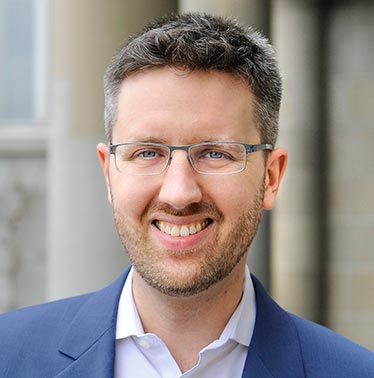
Jeffrey Monaghan is an Associate Professor at the Institute for Criminology and Criminal Justice (ICCJ) at Carleton University. He holds a Ph.D. in Sociology from Queen’s University and serves on the editorial board of Criminological Encounters . His research focuses on the intersections of policing, surveillance, and systemic inequality, with a particular emphasis on settler colonialism, Indigenous movements, and the global expansion of security practices. Monaghan teaches courses on criminological theories, policing, and justice frameworks. His work examines how security and policing practices criminalize marginalized communities, especially Indigenous peoples and social movements resisting extractive development. Key projects include analyses of counterterrorism strategies, disability injustice in criminal systems, and the securitization of Canadian foreign aid. He has authored/co-authored books like Security Aid: Canada and the Development Regime of Security and Policing Indigenous Movements , and edited volumes such as Protests in the Information Age . Monaghan’s research integrates critical criminology, colonial studies, and sociolegal analysis. He is cross-appointed to Carleton’s Department of Sociology and Anthropology and the School of Canadian and Indigenous Studies, amplifying interdisciplinary engagement with security governance and social justice issues.
Sakari Melander is a Professor at the Faculty of Law , University of Helsinki, specializing in Criminal Law , with a focus on constitutionalization, Europeanization, and sentencing policies. His work bridges theoretical criminal law with practical legislative and policy challenges. Key research areas include EU criminal law, constitutional constraints on criminal legislation, and general doctrines of criminal law. He has extensive experience in parliamentary legal consultation, providing expert opinions to Finland’s Legislative Committees (e.g., on immigration control, anti-corruption directives, and digital evidence handling). Recent publications address topics like EU corporate sanction policies, constitutionalization of criminal law, and reforms in Finnish sentencing systems. His 2025 article in the New Journal of European Criminal Law explores balancing administrative and criminal sanctions in the EU. Scientific awards include: Hilkka ja Otto Brusiin Foundation Thesis Prize (2001) Magister Bonus – Good Teacher Award (2014) Primustohtori Award (2010) Year’s Teacher (2010) Year’s Opponent (2008) He leads research projects such as Criminal Law Under Pressure: Differentiation and Harmonization (2012-2015) and Assessment of Human Trafficking Sanction Practices (2021-2022), and supervises doctoral theses on criminal law topics.
Susan L. Burns is a Professor at the University of Chicago, where she holds appointments in the Department of History, Department of East Asian Languages and Civilizations, and The College. She currently serves as Department Chair and Chair of the Undergraduate Studies Committee. Education: PhD, University of Chicago (1994) Her research focuses on Japan’s nineteenth-century social history, emphasizing intellectual and cultural practices, the intersection of medicine and public health, gender analysis, and legal discourses. She explores continuities between Japan’s early modern and modern eras, particularly how medical and legal frameworks shaped national identity. Recent publications span leprosy’s impact on citizenship, the rise of medical marketplaces, and gendered dimensions of reproductive health. Her digital humanities work on Mapping Medical Tokyo integrates GIS and text mining for historical analysis. Scientific Awards: Fulbright-Hays Fellowship IIE Fulbright Japan Foundation Japan Society for the Promotion of Science National Endowment for the Humanities She has secured grants for research on medical commodities, psychiatric practices, and the spatial dimensions of Meiji-era health policies. Her courses include Gender and Japanese History and Medicine and Culture in East Asia .
Dr. Winnie Yip is a Professor of the Practice of Global Health Policy and Economics at the Harvard T.H. Chan School of Public Health. She serves as Faculty Director of the China Health Partnership and recently concluded her role as Acting Director at Harvard's Fairbank Center for Chinese Studies. Previously, she was a Professor at the University of Oxford and led the Global Health Policy Program. She holds a PhD in Economics from MIT and a BA from UC Berkeley. Her research focuses on systemic healthcare interventions, policy design, and aging populations' impact on health systems. She collaborates closely with governments and international agencies like the World Bank and WHO, advising on reforms in Asia. Her work emphasizes equitable access, health system efficiency, and innovative eldercare solutions. Dr. Yip’s academic leadership includes roles as past President of the International Health Economics Association and editorial positions at journals like Social Science & Medicine . Her grants include funding from NSF, Bill & Melinda Gates Foundation, and EU Commission. Key areas of study include telemedicine, long-term care financing, and healthcare delivery in low-income regions.
Marina Agranov is Professor of Economics at the California Institute of Technology (Caltech), affiliated with the Division of Humanities and Social Sciences. She directs research through the Ronald and Maxine Linde Institute of Economic and Management Sciences, Center for Social Information Sciences (CSIS), and Center for Theoretical and Experimental Social Sciences (CTESS), and serves as Research Associate at the National Bureau of Economic Research (NBER). Her academic credentials include a B.A. from St. Petersburg State Technical University (1999), M.A. from Tel Aviv University (2004), and Ph.D. from New York University (2010). She joined Caltech as Assistant Professor in 2010 and was promoted to full Professor in 2017. Agranov's research pioneers experimental and behavioral economics, focusing on strategic decision-making in bargaining games, social learning environments, network interactions, and information dynamics. Her work examines how individuals form beliefs and navigate tensions between personal goals and collective outcomes, often using controlled laboratory experiments to test theoretical predictions about human behavior under uncertainty. Her recent publications reveal a consistent methodological approach: blending game-theoretic models with experimental validation to investigate communication effects, randomization preferences, and institutional design. Key trends include analyzing how uncertainty impacts committee negotiations, how complexity influences egalitarian outcomes in legislative bargaining, and how information structures shape social learning on networks. Her scientific recognition includes: Associated Students of Caltech (ASCIT) Teaching Award (2017-18) Professor Agranov's research has secured significant institutional support through Caltech centers and NBER affiliation, with findings featured in major economics journals and Caltech news coverage including "Decision by Committee: How Uncertainty Shapes Negotiations" (December 2024) and "Experimental Economics in Theory and Practice" (July 2023). Her work on committee decision-making under uncertainty has direct implications for institutional design in political and corporate governance. She actively contributes to Caltech's research ecosystem through CSIS and CTESS, which facilitate interdisciplinary collaborations in social sciences and experimental methodology development.
Chris Chesterfield is a Professor of Practice at Monash University's Monash Sustainable Development Institute (MSDI), specializing in water governance, urban planning, and sustainable development. He joined Monash in 2014 as part of the executive team at the Cooperative Research Centre for Water Sensitive Cities, leading strategic research on water system transformations. His work focuses on developing tools like the Water Sensitive Cities Index, adopted globally to drive policy and practice changes. He has held senior roles at Melbourne Water and the Office of Living Victoria, contributing to Melbourne's leadership in water-sensitive urban design. Chris chairs key committees including the Victorian Environmental Water Holder and the Birrarung Council (Yarra River advisory body). He leads projects on integrated water management and urban sustainability, collaborating with government agencies and international stakeholders. His research emphasizes governance frameworks for water-sensitive cities, policy reforms, and nature-based solutions. Chris has contributed to over 20 research outputs since 2002, with recent work focusing on urban water governance, river management, and policy integration. He actively advises government bodies such as the Victorian Planning Authority and Infrastructure Victoria, shaping legislative reforms and urban development strategies.
Laverne Jacobs, PhD, is a Full Professor at the University of Windsor's Faculty of Law where she holds the Research Chair in Disability Equality & Administrative Justice. She serves as the founder and Director of the Law, Disability & Social Change Project, a research and public policy center dedicated to fostering inclusive communities. Notably, Professor Jacobs was elected to the United Nations Committee on the Rights of Persons with Disabilities in 2022, becoming the first Canadian to serve on this UN Human Rights Treaty Body. She also serves as Co-Director of the Disability Rights Working Group at Berkeley Law's Center for Comparative Equality & Anti-Discrimination Law and previously held the position of Associate Dean (Research & Graduate Studies) for the Faculty of Law from 2018-2021. B.A. (Honours), McGill University, 1994 LL.B., McGill University, 1999 B.C.L., McGill University, 1999 Ph.D., Osgoode Hall Law School, York University, 2009 Professor Jacobs' research sits at the intersection of disability equality law and administrative law and justice, characterized by an interest in the everyday work of the administrative justice system and the lived experiences of people who use it, particularly persons with disabilities. Her work spans disability rights, administrative justice, human rights law, socio-legal theory, and empirical research methodologies. She has made significant contributions to understanding accessibility legislation, transportation inequality, post-secondary education access for students with disabilities, and the implementation of disability equality principles in administrative decision-making. Her scholarship bridges theoretical legal frameworks with practical applications, emphasizing citizen participation in policy development and the importance of inclusive design in legal systems. Analysis of Professor Jacobs' recent publications reveals a consistent focus on how administrative law can better serve persons with disabilities through inclusive design and accessible processes. Her work demonstrates growing attention to intersectional issues, particularly how women with disabilities experience administrative systems, and increasingly examines the implementation challenges of accessibility legislation across Canadian jurisdictions. She frequently employs empirical research methods to ground her legal analysis in real-world experiences of marginalized communities. Scientific Awards and Honors: Canadian Bar Association Touchstone Award (2021) Canadian Association of Law Teachers (CALT) Academic Excellence Award (2022) Hummingbird Award from the Disabled Women's Network of Canada (DaWN), 2022 Election to the United Nations Committee on the Rights of Persons with Disabilities (2022) Professor Jacobs has held significant leadership roles including service on the Board of Directors of the Income Security Advocacy Centre and the Canadian Institute for the Administration of Justice. Through her role as Director of the Law, Disability & Social Change Project, she has secured research funding to support policy-relevant scholarship on disability rights and administrative justice. Her work has influenced accessibility legislation development across Canada, particularly through her annotated version of the Accessible Canada Act. She provides expert consultation to government bodies and international organizations on disability rights implementation. The Law, Disability & Social Change Project serves as Professor Jacobs' primary research hub, bringing together interdisciplinary scholars, disability advocates, and policy makers to develop practical solutions for creating more inclusive legal and administrative systems. The project has produced numerous research reports, policy briefs, and public resources that translate academic research into actionable recommendations for improving accessibility and disability equality in Canadian society.
Daniel E. Ho holds multiple prestigious positions at Stanford University: William Benjamin Scott and Luna M. Scott Professor of Law Professor of Political Science Professor of Computer Science (by courtesy) Senior Fellow, Stanford Institute for Economic Policy Research Senior Fellow, Stanford Institute for Human-Centered Artificial Intelligence Faculty Fellow, Center for Advanced Study in the Behavioral Sciences He serves on the National Artificial Intelligence Advisory Commission (NAIAC), as Senior Advisor on Responsible AI at the U.S. Department of Labor, and as a Public Member of the Administrative Conference of the United States (ACUS). Ho earned his J.D. from Yale Law School and Ph.D. from Harvard University, completing a clerkship with Judge Stephen F. Williams on the U.S. Court of Appeals for the District of Columbia Circuit. His research bridges artificial intelligence, law, and public policy with emphasis on: Regulatory governance frameworks for AI systems Fairness and bias mitigation in algorithmic decision-making Environmental enforcement using satellite imagery and computer vision Methods for estimating racial disparities without direct demographic data Legal AI reliability and statutory research systems Analysis of his 2025 publications reveals a consistent focus on practical AI governance tools addressing real-world regulatory challenges. Key themes include developing benchmarks for legal applications, mitigating hallucination in legal AI tools, and creating systems for statutory research. His work demonstrates strong integration of technical AI methods with policy implementation, particularly in environmental enforcement and fairness assessment. As Director of the Regulation, Evaluation, and Governance Lab (RegLab), Ho leads interdisciplinary research partnerships with government agencies. While specific grant details aren't provided, RegLab's operational model indicates substantial research funding for policy-relevant AI projects. No student advisees are mentioned in available materials. Ho's leadership extends to national advisory roles where he shapes federal AI policy through evidence-based recommendations, particularly regarding environmental protection and civil rights enforcement mechanisms.
Alexander Trubowitz is a Postdoctoral Prize Research Fellow in Politics at Nuffield College, University of Oxford, conducting research in comparative and historical political economy. He completed his Ph.D. in Political Science at Yale University in 2025, focusing on labor market transformations in Western Europe. Education: B.A. in Classics and Political Science, Tufts University, 2017 (summa cum laude) Ph.D. in Political Science, Yale University, 2025 His research examines political responses to labor market risks from technological change in 20th-century Western European manufacturing, combining archival analysis of UK/Germany cases with quantitative studies of worker behavior during economic shocks and institutional drivers of inequality-reducing policies. His work bridges historical institutionalism and contemporary political economy. Recent publications demonstrate expertise in European political development, particularly through award-winning analysis of electoral system impacts in interwar France, reflecting methodological versatility across qualitative and quantitative approaches. Scientific Awards: 2024 Best Paper Award from APSA European Politics and Society section 2024 CQ Press Award from APSA Legislative Studies section Holds a competitive Postdoctoral Prize Fellowship at Oxford, with prior research appointments at the Cluster on the Politics of Inequality (University of Konstanz, 2021-2022) and Chair of Political Economy (University of Bonn, Fall 2023), indicating sustained engagement with leading European political economy research networks.
Airo Hino is a Professor at the Faculty of Political Science and Economics , Waseda University. He holds a Ph.D. in Government from the University of Essex and MA/BA in Political Science from Waseda University. His work spans Comparative Politics , Voting Behavior , and Political Communication , with a focus on populism , authoritarian values , and Twitter-based well-being indicators . Education: Ph.D. (University of Essex), MA/BA (Waseda University) His research explores electoral systems , party polarization , and social media's role in politics , including the development of the SWB-J index for measuring subjective well-being via Twitter. His 2021-2024 publications analyze populist attitudes, conspiracy theories, and electoral dynamics in Japan and global contexts. Scientific awards include: 2021 - Best Paper Award, International QCA Paper Development Workshop 2016 - Waseda Research Award (High-Impact Publication) 2015 - Okuma Memorial Academic Award 2015 - Best Article Award, Japanese Association of Electoral Studies He has received JSPS KAKENHI grants (2020-2025) for studies on political polarization and populism , and 2017-2022 grants for research on electoral system impacts .
Anders Damgaard is an Associate Professor and Head of BSc studies at the Department of Environmental and Resource Engineering (DTU Sustain), Technical University of Denmark. His research focuses on environmental assessment methodologies, particularly Life Cycle Assessment (LCA), and their application to waste management systems, resource recovery, and policy development. He leads the development of LCA models like EASEWASTE/EASETECH and collaborates with institutions such as the Danish EPA and Nordic Council of Ministers. Key research areas include carbon footprints of waste treatment, textile waste composition, and additive impacts in plastics recycling. Education: Not explicitly stated in provided texts. Research Interests: Waste management optimization, circular economy frameworks, sustainable technologies, and policy-driven environmental assessments. His recent publications address topics such as carbon footprints of sewage sludge treatments, Nordic textile waste composition, and challenges in plastic additive inclusion in LCA studies. He supervises PhD students in projects involving lifecycle modeling, construction waste recycling, and consumer practices in circular economies. As part of DTU Sustain, he contributes to interdisciplinary teams advancing sustainable resource management and policy solutions.
Dr Melanie Brunner is a Lecturer in Medieval Studies at the University of Leeds, affiliated with the School of History and the Institute for Medieval Studies. She holds a PhD in Medieval Studies from the University of Leeds and an MA in History and English from Universität Augsburg. Her research focuses on late medieval ecclesiastical history, papal administration, and the history of mendicant orders, particularly the Franciscans. She has contributed to major projects like the International Medieval Bibliography and led research networks such as the DFG-Netzwerk Imitation and Stilus Curiae. Her work explores political culture of the Avignon papacy, canon law dynamics, and religious reform movements. Education: PhD (Medieval Studies, University of Leeds), MA (History and English, Universität Augsburg). Professional affiliations include the Ecclesiastical History Society and Mediävistenverband. She supervises doctoral students in areas like Franciscan history, papal politics, and medieval book culture. Current projects include editorial direction of the International Medieval Bibliography and leadership of the MA Medieval Studies program. Research Interests: Late medieval papal governance, mendicant orders' institutional development, theological debates on poverty, and decision-making mechanisms in the Avignon Curia. She examines how theology, law, and political strategy intersected in medieval church administration. Advising & Grants: Supervises 4 current PhD students and has completed 6 theses. Involvement with EU-funded COST Action IS1301 and White Rose Collaboration Fund projects. Collaborates internationally with institutions like the Sächsische Akademie der Wissenschaften and Universität Zürich. Labs/Teams: Core member of research groups including Galleries, Libraries, Archives, and Museums (GLAM) and Politics, Diplomacy, and International History at Leeds. Active in interdisciplinary medieval studies networks.
Pepa Kostadinova Atanasova is a Tenure Track Assistant Professor in the Natural Language Processing Section of the Department of Computer Science , University of Copenhagen. She co-leads the CopeNLU group with Isabelle Augenstein and has special teaching duties for industry practitioners. Research Interests: Interpretability of Language Models Explainability Methods Factuality in Language Models Parametric Knowledge Analysis Human-AI Alignment Trustworthy AI Scientific Awards: Marie Skłodowska-Curie Fellowship ELLIS Best PhD Thesis Award Informatics Europe Best PhD Thesis Award Collaborations: Active in interdisciplinary research, including partnerships with Meta and Google, and a postdoctoral project combining language model explanations with trading behavior analysis.
Sandro Ambuehl is the UBS Foundation Assistant Professor of Behavioral Economics of Financial Markets at the Department of Economics, University of Zurich. He holds a PhD in Economics from Stanford University (2016) and previously served as Assistant Professor at the University of Toronto's Rotman School of Business. His research focuses on improving financial decision-making, ethical incentives in repugnant transactions (e.g., organ donation, clinical trials), and foundational decision theory. He employs experimental and theoretical methods, supported by grants like the Swiss National Science Foundation Starting Grant (2022) and the Alfred P. Sloan Foundation (2017). Education: PhD in Economics (Stanford University, 2016); previous roles include Assistant Professor at University of Toronto (Rotman School of Business and Department of Management, UTSC). Research Interests: Behavioral and experimental economics, financial decision-making interventions, ethical policies for repugnant transactions, and welfare economics. His work has been featured in outlets like the Wall Street Journal , Financial Times , and NPR . Articles highlight themes like paternalistic motivations, participation incentives in trials, and welfare state design. His 2021 American Economic Review paper on paternalism earned the Exeter Prize. Recent studies explore blind peer advice in finance and welfare state preferences through experiments. Awards include the Exeter Prize (2022), Alfred P. Sloan Grant (2017), and Swiss National Science Foundation support. Grants focus on behavioral welfare economics and policy interventions. Labs/Teams: Affiliated with the UBS Center for Economics in Society at UZH, contributing to interdisciplinary behavioral economics research.
Danielle T. Cooper is an Associate Professor at the University of New Haven , affiliated with the Henry C. Lee College of Criminal Justice and Forensic Sciences and the Criminal Justice Department . She also serves as the Director of Research for the Tow Youth Justice Institute and Chair of the Criminal Justice Undergraduate Committee . Education Ph.D. in Criminology, Law, & Society, University of Florida, 2015 M.A. in Criminology, Law, & Society, University of Florida, 2011 B.S. in Justice Systems, Truman State University, 2009 Dr. Cooper’s research focuses on youths and young adults , juvenile justice policy reform , sex offender registration policies , and police-community dynamics . Her work emphasizes restorative justice , systemic equity , and prevention strategies for marginalized communities. Recent publications explore diversion programs , economic impacts of sex offender registries , and media narratives in criminal justice . Her awards highlight contributions to diversity, equity, and inclusion , as well as leadership development . Scientific Awards 2019 Faculty of the Year Award 2021 MO-KAN-NE TRIO Achiever Alumni Award 2021 Faculty Excellence in DEI 2022 Martin Luther King, Jr. Vision Faculty Award 2024 RAND Pardee Fellowship She has secured grants for diversionary services and youth-police relations , and her media commentary addresses youth violence , census participation , and social justice .