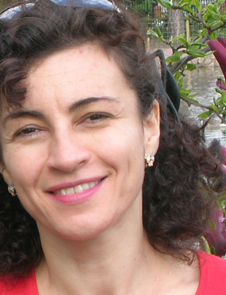
Professor Diana Inkpen is a faculty member at the School of Electrical Engineering and Computer Science, University of Ottawa. She holds a Ph.D. from the University of Toronto's Department of Computer Science and degrees from the Technical University of Cluj-Napoca, Romania (M.Sc. and B.Eng.). Her research focuses on computational linguistics, natural language processing (NLP), and artificial intelligence, with specialties in natural language understanding/generation, lexical semantics, and semantic web agents. Education: Ph.D., Computer Science, University of Toronto M.Sc., Computer Science and Engineering, Technical University of Cluj-Napoca B.Eng., Computer Science and Engineering, Technical University of Cluj-Napoca Affiliations: Director, NLP Lab Editor-in-Chief, Computational Intelligence journal Associate Editor, Natural Language Engineering journal Her research has led to roles such as program co-chair for AI 2012 and leadership in organizing international workshops. She has received funding from NSERC, SSHRC, and OCE, and was honored with a Visiting Professor title at the University of Wolverhampton, UK. Her teaching spans courses like Information Retrieval, Natural Language Processing, and Prolog programming. Professor Inkpen's work bridges NLP innovations with societal challenges, including mental health surveillance via social media analysis and bias mitigation in AI systems. She actively contributes to interdisciplinary projects, such as detecting hate speech and legal text entailment, while maintaining a global research network through collaborations and international conference involvement.
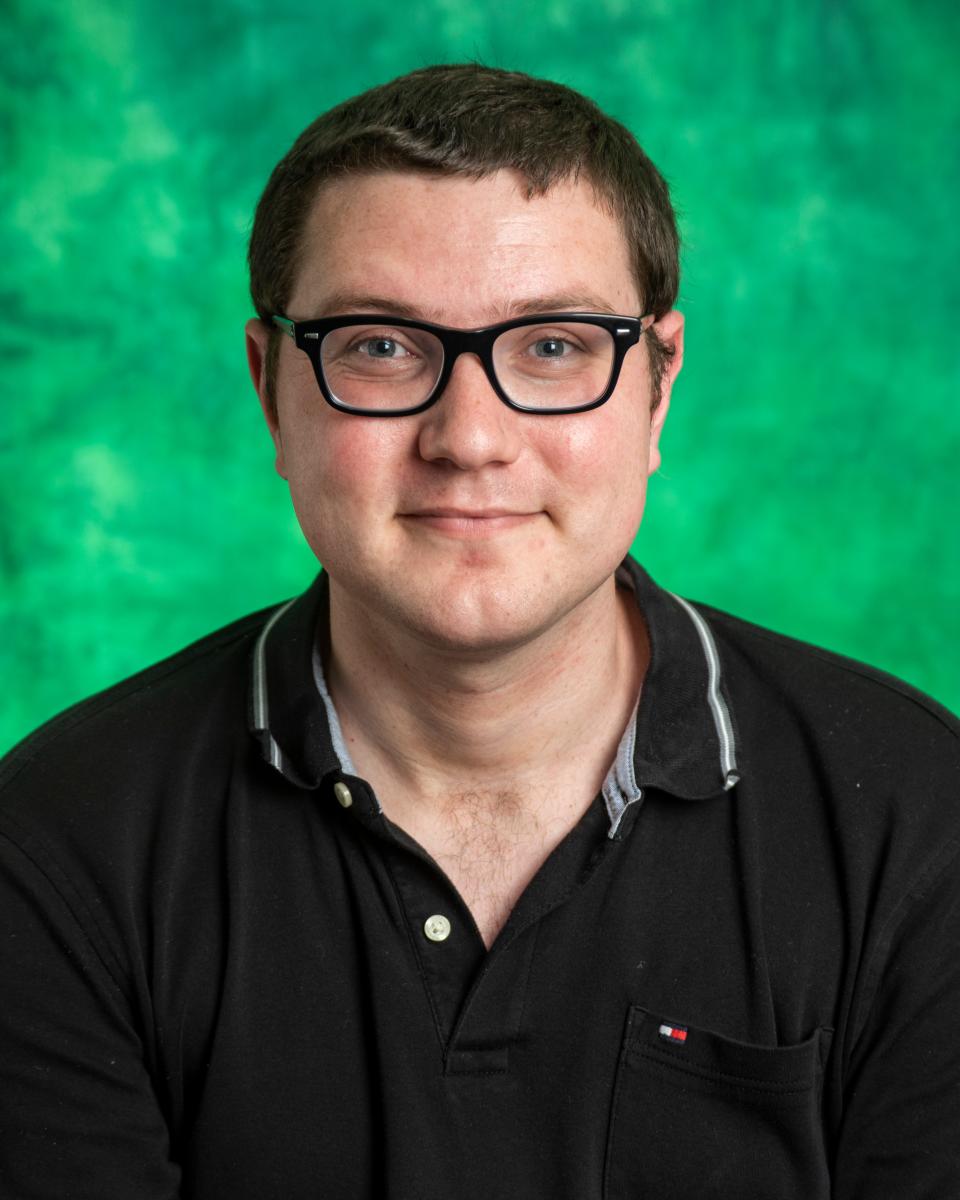
Dr. Brady D. Lund is an Assistant Professor at the University of North Texas, focusing on interdisciplinary research at the intersection of information science, artificial intelligence, and ethics. His work addresses AI adoption in libraries, data privacy, academic integrity, and international development. He holds a Ph.D., M.S., and B.S. from Emporia State University and Wichita State University. Education: Ph.D., Emporia State University M.S., Emporia State University B.S., Wichita State University Research Interests: Dr. Lund explores how AI impacts information seeking behaviors, data privacy literacy, and library services. His work emphasizes ethical AI deployment in academic and clinical settings, with a focus on marginalized communities. Key areas include AI-driven library systems, blockchain applications for academic integrity, and the societal implications of generative AI. Research Trends: Recent publications analyze AI's role in health information, cybersecurity threat intelligence, and library leadership in minority-serving institutions. He critiques AI authorship policies, evaluates large language models, and advocates for equitable AI access in developing countries. Labs & Teams: Leads the Computational Humanities and Information Literacy Lab and the CyberCrews initiative, focusing on AI ethics, digital literacy, and interdisciplinary collaboration.
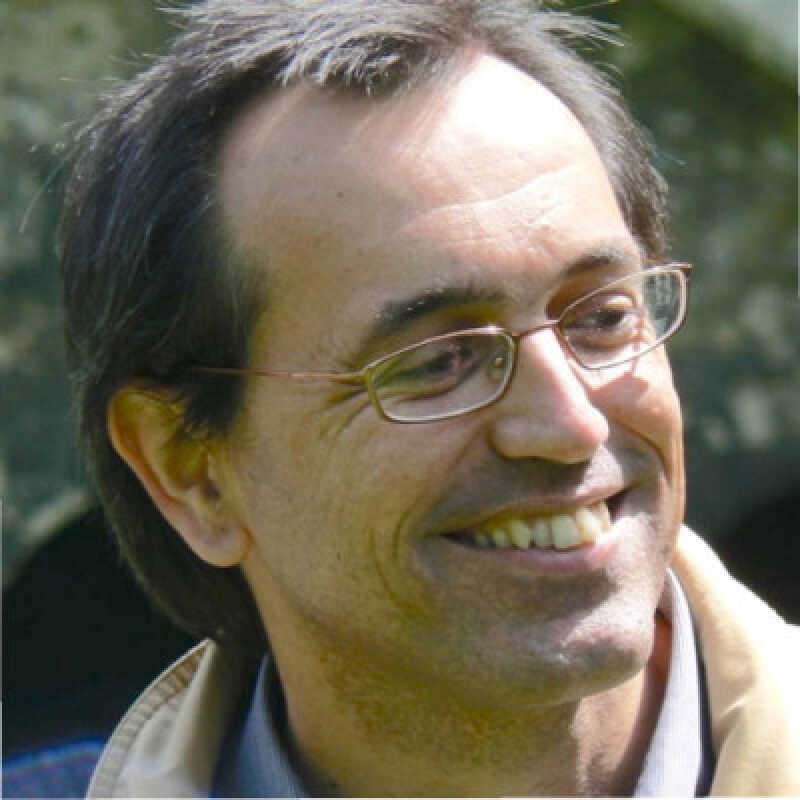
Jordan Siegel is a Professor of Strategy at the Ross School of Business, University of Michigan, and a Michael R. and Mary Kay Hallman Faculty Fellow. He also serves as a Visiting Faculty member at The American College of Greece (ACG). His academic background includes a Ph.D. from MIT, and B.A. and M.A. degrees from Yale University. Professor Siegel’s research focuses on global strategy, particularly how companies leverage institutional differences across borders to gain competitive advantages through governance and human resource management strategies. His work examines institutional arbitrage—how firms exploit formal and informal rules (e.g., laws, cultural norms) to enhance performance, even in single-country operations. Notably, he investigates how foreign multinationals in Japan and South Korea exploit social biases by promoting female managers, leading to long-term performance improvements. His findings highlight the strategic use of labor market discrimination as a competitive tool. Professor Siegel’s research has been published in top-tier journals such as Management Science , Administrative Science Quarterly , and Strategic Management Journal . He is affiliated with the William Davidson Institute and Harvard Korea Institute, contributing to interdisciplinary studies on global business strategy and institutional dynamics.
Rogério de Lemos is a Senior Lecturer in Computing Science and Director of Postgraduate Research (PGR) at the School of Computing, University of Kent. He previously served as an invited assistant professor at the University of Coimbra, Portugal, and as a Senior Research Associate at the Centre for Software Reliability (CSR) at the University of Newcastle upon Tyne, UK. Dr. de Lemos' research focuses on architecting resilient systems, particularly in resilient AI, self-adaptive software systems, and authorization infrastructures. He belongs to both the Programming Languages and Systems Group and the Cyber Security Group at the University of Kent. His specific research interests include: Software engineering for self-adaptive systems assurances and resilience evaluation Dynamic generation of processes Handling insider threats using self-adaptive authorization Architectural abstractions for fault tolerance Verification and validation of dependable software architectures Software development for safety-critical systems Dependability and bioinspired computing His publication trends show increasing emphasis on practical applications of self-adaptive systems in cyber security contexts, with recent work spanning network traffic analysis, cryptographic function detection, and cloud-edge security architectures. His research bridges theoretical foundations with practical implementations, particularly in cyber security and resilient systems architecture. Dr. de Lemos currently leads the "Collaborative and Confidential Information Sharing and Analysis for Cyber Protection" project funded by the European Union's Horizon 2020 Programme. His past projects include "ADAAS: Assuring Dependability in Architecture-based Adaptive Systems" and multiple collaborations with NCR on sensor fusion and fault tolerance. As Director of Postgraduate Research, he oversees the School of Computing's research degree programs and likely supervises PhD students in resilient systems and cyber security, though specific student names are not listed in the available information.
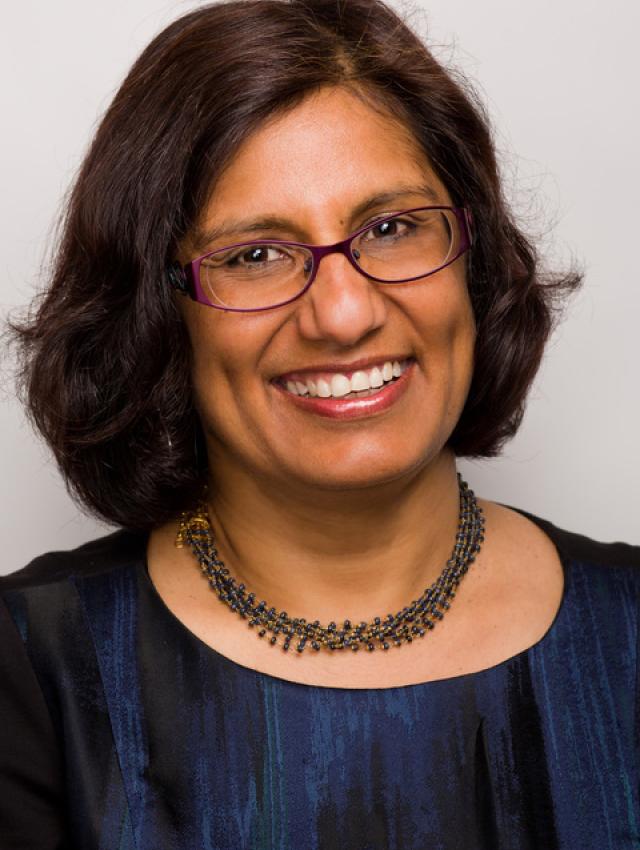
Kusum L. Ailawadi is the Charles Jordan 1911 TU'12 Professor of Marketing at the Tuck School of Business at Dartmouth College. She has established herself as a leading expert in marketing channel strategy, brand equity, and multi-channel distribution systems. Her research examines the strategic interaction and distribution of power between manufacturers and their distribution channel partners, with particular focus on how store brands, promotions, and brand equity affect performance. Education: PhD, University of Virginia, 1991 MBA, Indian Institute of Management, 1984 BSc (Honors), St. Stephen's College, Delhi University, 1982 Professor Ailawadi's research spans two primary streams: the first focuses on manufacturer-retailer relationships and channel strategy, examining how power dynamics affect brand performance; the second investigates how marketing actions influence consumers' health status and the nutritional quality of grocery shopping. She has pioneered research showing how warehouse club shopping affects consumer behavior, revealing that club store shoppers spend more, shop more frequently, and consume more calories than non-club shoppers. Her work on multi-channel distribution has been synthesized in her influential 2020 book Getting Multi-Channel Distribution Right , which provides practical guidance for managing brands across physical and digital channels. Her extensive publication record in top marketing journals like Journal of Marketing , Journal of Marketing Research , and Marketing Science demonstrates consistent scholarly impact. Analysis of her recent work shows a strong focus on the evolving retail landscape, with particular attention to private label brands, multi-channel strategies, and the behavioral economics of consumer shopping patterns. Her research increasingly bridges marketing theory with practical applications in retail strategy and consumer health. Notable Awards: Winner, Paul H. Root Award for Significant Contribution to the Advancement of the Practice of Marketing (2018) Distinguished Alumni Award, Indian Institute of Management Bangalore (2020) Winner, John D.C. Little Best Paper Award, Marketing Science (2005) Winner, First William Davidson Award for Best Contribution to Theory and Practice in Retail Marketing (1997) Multiple finalist positions for Paul E. Green Award across various years Professor Ailawadi serves as president of the INFORMS Society for Marketing Science and has held editorial positions at major marketing journals including Journal of Marketing , Journal of Marketing Research , and Marketing Science . She teaches the highly regarded MBA elective on Multi-Channel Routes to Market and has consulted with companies across consumer goods, retailing, consulting, and financial services sectors. Her expertise has also been sought in legal cases related to distribution, brand equity, and promotions, where she has served as both consulting and testifying expert. Her research has been widely covered in media outlets including Harvard Business Review , Wall Street Journal , Forbes , and Advertising Age , demonstrating the practical relevance of her academic work. Her TEDx talk 'Outsmarting the Marketers' further illustrates her ability to translate complex marketing concepts for broader audiences.
Ugur Cetintemel is the Khosrowshahi University Professor of Computer Science at Brown University, where he has been since completing his PhD at the University of Maryland in 2001. His research focuses on data management systems, database systems, distributed systems, and stream processing, with recent work integrating AI techniques into database systems. He teaches courses such as Database Management Systems and Data Science fundamentals. Notable contributions include the Aurora and Borealis stream processing engines, S-Store for transaction processing, and DBPal for natural language interfaces. His work emphasizes scalable, efficient systems for large-scale data challenges. Education: PhD in Computer Science, University of Maryland, 2001 MS in Computer Science, Bilkent University, 1996 BS in Computer Science, Bilkent University, 1994 Research Interests: Data management, stream processing, distributed systems, predictive analytics, and AI integration with databases. Key projects include optimizing database systems for modern hardware, developing real-time stream processing frameworks, and exploring interactive data exploration techniques. Grants & Advising: Extensive contributions to grants and collaborations, though specific grant details are not listed. Supervises graduate students in areas like database systems and machine learning integration. Part of the Brown Data Management Group. Labs/Teams: Leads research within the Brown Data Management Group, focusing on advancing database systems for big data and real-time analytics.
Norman Doe is Professor of Law at Cardiff University's School of Law and Politics, where he serves as Director of the Centre for Law and Religion and course director of the LLM in Canon Law. He has held significant leadership roles including Director of Research at the Law School (2011-2014) and has been instrumental in establishing key academic programs such as the LLM in Canon Law (1991) and the LLB module Law and Religion (2002). His international academic presence includes being a visiting professor at the University of Paris since 1999, KU Leuven (2013-16), and Pontifical University of St Thomas in Rome (2009). Doe earned his law degree at University College Cardiff, completed his doctorate at Magdalene College, Cambridge, and studied theology at St Michael's Theological College, Llandaff and Mansfield College Oxford University. His academic credentials include LLD (Cambridge), LLM (Wales), MTh (Oxford), PhD (Cambridge), DCL (Lambeth), and he is a Barrister (Middle Temple). Professor Doe's research focuses on Anglican canon law, comparative church law, law and religion, and the history of ecclesiastical law. His scholarly work has established foundational frameworks for understanding Christian legal systems across denominations. His book Canon Law in the Anglican Communion (1998) formed the basis for The Principles of Canon Law Common to the Churches of the Anglican Communion (2008), while his Christian Law: Contemporary Principles (2013) contributed to the Statement of Principles of Christian Law (2016) that was launched at the World Council of Churches in 2022. His recent publications demonstrate a sustained focus on historical Anglican priest-jurists, ecclesiastical legal history, and the development of Christian legal principles across traditions. His scholarly impact is reflected in his election as a Fellow of the British Academy (2024), appointment as honorary King's Counsel (2024), and previous recognition as one of the 'top ten' law and religion scholars worldwide (2018). He has received numerous honors including election to the Council of the Selden Society (2023), becoming an Academic Bencher of the Inner Temple (2021), and being listed among the 50 most influential Anglicans in the world by The Telegraph (2008). Professor Doe serves as Chancellor of the Diocese of Bangor (since 2012), functioning as president of the Diocesan Consistory Court. He has been deeply involved in global Anglican structures, serving on the Lambeth Commission (2003-2004), contributing to the Windsor Report, and working with the Anglican Communion Network of Legal Advisers. He co-founded the Interfaith Legal Advisers Network (2007) and the Law and Religion Scholars Network (2008), demonstrating his commitment to practical applications of his scholarship. His current research focuses on the history of English ecclesiastical law since the Reformation and a series of articles on clergy jurists published in the Ecclesiastical Law Journal . He is also active in multiple networks of the Cardiff Centre for Law and Religion, including the Colloquium of Anglican and Roman Catholic Canon Lawyers and the Church Law History Network. His 2023 canon law play Thrice to Rome about Gerald of Wales has been performed at St Davids Cathedral and the Temple Church London, with upcoming performances planned for Canterbury and Rome.
Mashood Baderin is a Professor at SOAS University of London's School of Law, where he has established himself as a leading scholar in Islamic law, international law, and human rights. With over 90 publications spanning more than two decades, Professor Baderin has made significant contributions to bridging Islamic legal traditions with contemporary international legal frameworks. Professor Baderin's research interests focus on the intersection of Islamic jurisprudence with modern legal challenges. His work explores how Islamic legal principles can inform contemporary human rights frameworks, international criminal justice systems, and social reform initiatives in Muslim-majority countries. He has extensively examined Islamic legal theory (usul al-fiqh), the application of Islamic law in modern contexts, and the relationship between Islamic law and international legal norms. His most recent publications reveal a continued focus on the universality of international law from Islamic perspectives, the application of Islamic law in African contexts, and the relationship between Islamic principles and human rights frameworks. Professor Baderin has edited significant works including 'Islamic Legal Theory' (2014) and authored the widely recognized 'Islamic Law: A Very Short Introduction' (2021). Professor Baderin has supervised numerous doctoral students working on Islamic law topics with regional focus on Nigeria, Saudi Arabia, and the UAE. His students' research often examines gender issues, legal reform, and the practical application of Islamic law in contemporary settings.
Erik Wade is an Assistant Professor in the Department of English and Creative Writing at SUNY Oswego. He holds a PhD from Rutgers University and has taught at Rheinische Friedrich-Wilhelms-Universität Bonn in Germany. His research focuses on race, sexuality, and national identity in early medieval English literature, with a particular emphasis on how these themes intersect with religious texts and cultural narratives. He currently directs the Medieval and Renaissance Studies minor and serves on the advisory board for Exemplaria: Medieval, Early Modern, Theory . Educational Background: PhD in English, Rutgers University (2018) MA in English, University of Oregon (2011) BA in English and History with a minor in Medieval and Renaissance Studies, SUNY Oswego (2009) AA in Humanities, Onondaga Community College (2007) Research Interests: Interrogates racial and sexual discourses in medieval literature Examines how early English texts constructed national identity through contested themes like rape culture and racial hierarchies Investigates global influences (e.g., Byzantine theology) on medieval English thought Challenges Eurocentric narratives in medieval studies Recent Publications Highlight: His work analyzes trans and queer themes in medieval hagiography, the racialized language of 'Anglo-Saxon' terminology, and the intersections between animal studies and gender relations. He co-authored a Smithsonian Magazine article deconstructing the term 'Anglo-Saxon.' Teaching and Advocacy: Teaches courses on medieval global literature, critical theory, and premodern identity. Actively promotes inclusive pedagogy and addresses systemic racism in academic disciplines through published opinion pieces and collaborative projects like the upcoming Race in Early Medieval England (Cambridge UP).
David Mwambari serves as Associate Professor at KU Leuven's Faculty of Social Sciences within the Unit Leuven International and European Studies (LINES). He leads the ERC-funded TMSS project on Life Narratives of Violence Among Refugees from Africa's Great Lakes Region and holds affiliations with the Oxford Consortium on Human Rights and the Centre for Mediation in Africa at the University of Pretoria. His educational background includes BA/MA in International Relations from United States International University-Africa, MA in Pan-African Studies from Syracuse University, and PhD in History from La Trobe University. He previously held academic positions at King's College London, Ghent University, and United States International University-Africa. Mwambari's research centers on memory studies with emphases on post-genocide Rwanda, colonial durabilities, and refugee narratives. His work examines how cultural memory shapes state formation, peacebuilding, and identity politics through interdisciplinary methodologies blending historical analysis, ethnography, and critical theory. Recent projects investigate vernacular memory practices during crises and the spatial dimensions of post-conflict reconstruction. His scientific contributions include the monograph Navigating Cultural Memory (Oxford University Press, 2023), co-edited volume Beyond History (Rowman & Littlefield, 2020), and editorial roles for Qualitative Research journal and Brill's 'Mobilizing Memory' series. His publications demonstrate evolving focus from leadership studies toward memory politics and decolonial research methodologies. European Research Council (ERC) Grant for TMSS Project Fellow at Churchill College, University of Cambridge African Academic Diaspora Fellow at CODESRIA FWO Postdoctoral Research Fellowship Mwambari actively mentors early-career scholars across Africa, Latin America, and East Asia while contributing to public discourse through Al Jazeera and community projects training history teachers in East Africa. His consultancy work addresses cross-disciplinary challenges in healthcare, education, and security, reflecting his commitment to applied scholarship beyond traditional academic boundaries.
Dr. Bimlesh Wadhwa is an Associate Professor in the Department of Computer Science at the National University of Singapore (NUS) and serves as Assistant Dean for Student Life at Tembusu College. She holds dual affiliations as a Residential Fellow at Tembusu College and an active member of the School of Computing's academic community. Her work bridges software engineering, human-computer interaction (HCI), and computing education. Dr. Wadhwa's research focuses on gender issues in HCI, software design quality, and digital well-being. She has pioneered initiatives like the Code for Community program to bring computing education to underserved groups. Her pedagogical contributions include developing courses on object-oriented design, software engineering principles, and interaction design. She actively engages with professional communities through roles such as Faculty Representative at the Singapore Computer Society Student Chapter and advisor to the Computing Club at NUS. Her recent work addresses pressing societal challenges like technology-facilitated sexual violence and integrates AI into educational contexts. She has organized major competitions including CodeXtreme and the Singapore Science and Engineering Fair, fostering innovation among students. Her interdisciplinary collaborations span healthcare applications, smart city technologies, and educational equity initiatives. Dr. Wadhwa’s scholarly contributions include over 80 publications in top venues such as FSE, CHI, and IEEE conferences. She has co-edited book chapters for Springer and Wiley on HCI and informatics, reflecting her commitment to advancing both technical and societal dimensions of computing. In addition to her academic roles, she leads MakerLab initiatives and contributes to national educational policies on computational thinking. Her work emphasizes bridging academia-industry gaps through projects like the GEAR mobile game-assisted rehabilitation system and cloud service brokerage frameworks.
Chris De Sa is an Associate Professor in the Department of Computer Science at Cornell University, affiliated with the Cornell Machine Learning Group and leading the Relax ML Lab. His research focuses on algorithmic, software, and hardware techniques for high-performance machine learning, particularly relaxed-consistency stochastic algorithms like asynchronous and low-precision stochastic gradient descent (SGD). He earned his Ph.D. from Stanford University under advisors Kunle Olukotun and Chris Ré. His work emphasizes constructing efficient, parallel, and distributed machine learning frameworks for deep learning and data analytics. Education: Ph.D. in Computer Science, Stanford University (2017) Research Interests: Algorithmic techniques for scalable ML, quantization, distributed optimization, hyperbolic geometry in ML, and reliable measurement of ML systems. His group develops frameworks for efficient inference/training and explores the intersection of ML with domains like agriculture and plant science through courses like PLSCI 7202. Recent Highlights: DARPA YFA Grant (2024), NSF CAREER Award, Google Research Scholar Award, and multiple best paper recognitions. Key contributions include QuIP quantization methods, Coneheads attention mechanisms, and theoretical advances in decentralized training. Awards: NSF CAREER Award DARPA YFA Grant (2024) Google Research Scholar Award Mr. & Mrs. Richard F. Tucker Teaching Award Grants & Advising: Advises 8 Ph.D. students (including Ruqi Zhang, Yucheng Lu, A. Feder Cooper) and holds leadership roles in MLSys conferences. Active in grant-funded research (e.g., NSF Robust Intelligence). Labs/Teams: Leads the Relax ML Lab and participates in Cornell’s Institute for Digital Agriculture (CIDA).
Abhinav Goyal is a Professor of Finance and Director of Global Engagement at Birmingham Business School, University of Birmingham. He is affiliated with the Department of Finance and plays a leadership role in shaping the school's international strategy. His research is widely published in premier finance journals, and he serves on editorial boards including as Associate Editor for British Accounting Review . Education: PhD in Banking and Finance, University College Dublin, Ireland (2013) MA in Financial Risk Management, Simon Fraser University, Canada (2007) BE (Hons) in Computer Science, India (2006) His research focuses on corporate finance , particularly IPOs, corporate governance, privatization, and dividend policy, with a strong emphasis on institutional and emerging market contexts. His work explores how legal, political, cultural, and media factors influence corporate financial decisions, especially in initial public offerings and payout policies. Using empirical methods, he investigates global patterns in financial markets, often drawing on cross-country datasets to assess the impact of governance reforms, ownership structures, and socio-political events. The recent articles reflect a consistent focus on IPO pricing dynamics, influenced by democracy, media, terrorism, board reforms, and legal frameworks. His research integrates insights from political economy, behavioral finance, and institutional theory, demonstrating a multidisciplinary approach to understanding financial markets. A recurring theme is the role of transparency, governance, and external shocks in shaping corporate financial behavior. Scientific Awards and Editorial Roles: Associate Editor, British Accounting Review Area Editor (Frontier Markets), Research in International Business and Finance Dr. Goyal has advised doctoral and postdoctoral researchers in finance, though specific names are not listed. He has secured research funding through collaborative projects reflected in his co-authored publications with international scholars. His past academic appointments include positions at University College Cork and the University of Liverpool, along with visiting roles at Monash University, Xi’an Jiaotong-Liverpool University, and Manipal University, indicating a strong global academic network. He teaches advanced courses such as Contemporary Topics in Banking and Finance (MBA) and Private Equity and Venture Finance (MSc), contributing significantly to graduate education. He leads no named research lab or center in the provided text, but his editorial roles and global engagement position suggest active participation in research communities and international academic collaborations.
Prof. M. Danish Shakeel is a Professor and Director of the E. G. West Centre for Education Policy at The University of Buckingham, UK. He is also a Research Fellow at Harvard University's Program on Education Policy and Governance. His research focuses on K-12 education policy, particularly in the U.S., with expertise in systematic reviews, meta-analyses, and the political economy of education. Key areas include civic outcomes of private schooling, social capital, charter schools, and non-cognitive traits. His work has been featured in prestigious journals like Journal of School Choice and Education Next , and widely cited in media outlets such as Wall Street Journal and Washington Post . He collaborates globally, presenting at conferences like the American Political Science Association and Association for Education Finance and Policy. Prof. Shakeel advises prospective doctoral students on rigorous quantitative methods and policy-oriented research. His guidance includes structured abstracts, empirical methodology focus, and policy implications. Students pursuing a PhD must demonstrate advanced econometric skills and secure their own funding. His research has influenced philanthropic investments and policy discourse, highlighting gains in U.S. student achievement and the role of charter schools in improving outcomes for marginalized groups.
Mariane C. Ferme is a Professor in the Department of Anthropology at the University of California, Berkeley. Her research focuses on sociocultural dynamics in West Africa, particularly Sierra Leone, with expertise in political anthropology, legal studies, and material culture. She holds a PhD in Anthropology from the University of Chicago and has taught at prestigious institutions including the University of Cambridge and École des Hautes Études en Sciences Sociales. Education : PhD in Anthropology (University of Chicago), MA in Political Science (University of Milano), BA in Anthropology (Wellesley College). Ferme’s research spans the political imagination in conflict zones, agrarian transformations, and the interplay between humanitarian law and local justice systems. Her work has been supported by major grants from the National Science Foundation and the France-Berkeley Fund. She has published extensively on Sierra Leone’s post-war societies and the socio-cultural dimensions of the Ebola outbreak. Scientific awards include funding from the National Science Foundation, Hellman Family Faculty Fund, France-Berkeley Fund, Harvard Academy for International and Area Studies, and the Carter Woodson Institute for African and African-American Studies.