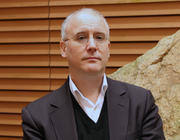
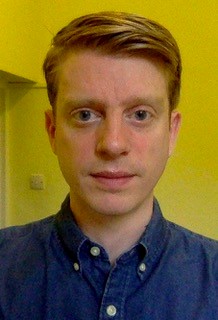
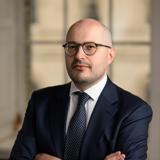
Jordan Siegel is a Professor of Strategy at the Ross School of Business, University of Michigan, and a Michael R. and Mary Kay Hallman Faculty Fellow. He also serves as a Visiting Faculty member at The American College of Greece (ACG). His academic background includes a Ph.D. from MIT, and B.A. and M.A. degrees from Yale University. Professor Siegel’s research focuses on global strategy, particularly how companies leverage institutional differences across borders to gain competitive advantages through governance and human resource management strategies. His work examines institutional arbitrage—how firms exploit formal and informal rules (e.g., laws, cultural norms) to enhance performance, even in single-country operations. Notably, he investigates how foreign multinationals in Japan and South Korea exploit social biases by promoting female managers, leading to long-term performance improvements. His findings highlight the strategic use of labor market discrimination as a competitive tool. Professor Siegel’s research has been published in top-tier journals such as Management Science , Administrative Science Quarterly , and Strategic Management Journal . He is affiliated with the William Davidson Institute and Harvard Korea Institute, contributing to interdisciplinary studies on global business strategy and institutional dynamics.
Anat R. Admati is the George G.C. Parker Professor of Finance and Economics at Stanford University Graduate School of Business, where she directs the Corporations and Society Initiative and serves as a senior fellow at Stanford Institute for Economic Policy Research. Her work spans corporate governance , banking regulation , and financial policy , emphasizing trustworthy institutions and systemic reform . Education: B.Sc. in Mathematics and Economics from Hebrew University Ph.D. in Economics from Yale University Honorary doctorate from University of Zurich Admati's research focuses on financial markets, corporate governance, and regulatory frameworks, with a particular emphasis on bank capital regulation and equity requirements . Her work critiques systemic risks in banking and advocates for transparency and accountability in financial systems. Recent publications highlight trends in corporate misconduct , capital adequacy , and financial contracting . Notably, her co-authored book The Bankers’ New Clothes and follow-up articles like The Parade of the Bankers’ New Clothes Continues (2024) systematically challenge banking industry claims and propose regulatory improvements. Scientific recognition includes: Named Time Magazine's 100 Most Influential People (2014) Included in Foreign Policy Magazine's 100 Global Thinkers (2014) Elected Fellow of the Econometric Society Admati has served on editorial boards, advisory committees (FDIC, CFTC), and as a visiting scholar at the International Monetary Fund. Her advocacy bridges academic rigor with real-world policy impact, particularly in financial regulation and corporate accountability .
Rosana Garciandia is a Senior Lecturer in Public International Law and Co-Director of the Centre for International Governance and Dispute Resolution (CIGAD) at The Dickson Poon School of Law, King's College London. She holds a PhD in Law from the University of Navarra and previously taught at the University of Murcia. Her research focuses on international law responses to human rights abuses, including modern slavery, racial discrimination, and corruption, with an emphasis on state accountability and intersectionality. She is also a Research Leader at the British Institute of International and Comparative Law and a Fellow of the Macrocrimes Center. Education: PhD in Law (University of Navarra) Previous Positions: Secretary General of the European Law Institute, UNODC, EU Agency for Fundamental Rights Her research interests include state responsibility, EU law, migration law, and the law of international organizations. She has published widely on topics such as inter-state communications in UN treaty bodies, domestic servitude, and human rights scrutiny in international trade policies. Recent work includes editing a special issue on inter-state communications (2024) and contributing to the Intersectional Rewrites project. She collaborates with the Leverhulme Centre for Research on Slavery in War, exploring the slavery-war nexus. Her teaching and research address global challenges, linking legal frameworks to issues like modern slavery, corruption, and human dignity. She actively engages with international organizations and policy development.
Norman Doe is Professor of Law at Cardiff University's School of Law and Politics, where he serves as Director of the Centre for Law and Religion and course director of the LLM in Canon Law. He has held significant leadership roles including Director of Research at the Law School (2011-2014) and has been instrumental in establishing key academic programs such as the LLM in Canon Law (1991) and the LLB module Law and Religion (2002). His international academic presence includes being a visiting professor at the University of Paris since 1999, KU Leuven (2013-16), and Pontifical University of St Thomas in Rome (2009). Doe earned his law degree at University College Cardiff, completed his doctorate at Magdalene College, Cambridge, and studied theology at St Michael's Theological College, Llandaff and Mansfield College Oxford University. His academic credentials include LLD (Cambridge), LLM (Wales), MTh (Oxford), PhD (Cambridge), DCL (Lambeth), and he is a Barrister (Middle Temple). Professor Doe's research focuses on Anglican canon law, comparative church law, law and religion, and the history of ecclesiastical law. His scholarly work has established foundational frameworks for understanding Christian legal systems across denominations. His book Canon Law in the Anglican Communion (1998) formed the basis for The Principles of Canon Law Common to the Churches of the Anglican Communion (2008), while his Christian Law: Contemporary Principles (2013) contributed to the Statement of Principles of Christian Law (2016) that was launched at the World Council of Churches in 2022. His recent publications demonstrate a sustained focus on historical Anglican priest-jurists, ecclesiastical legal history, and the development of Christian legal principles across traditions. His scholarly impact is reflected in his election as a Fellow of the British Academy (2024), appointment as honorary King's Counsel (2024), and previous recognition as one of the 'top ten' law and religion scholars worldwide (2018). He has received numerous honors including election to the Council of the Selden Society (2023), becoming an Academic Bencher of the Inner Temple (2021), and being listed among the 50 most influential Anglicans in the world by The Telegraph (2008). Professor Doe serves as Chancellor of the Diocese of Bangor (since 2012), functioning as president of the Diocesan Consistory Court. He has been deeply involved in global Anglican structures, serving on the Lambeth Commission (2003-2004), contributing to the Windsor Report, and working with the Anglican Communion Network of Legal Advisers. He co-founded the Interfaith Legal Advisers Network (2007) and the Law and Religion Scholars Network (2008), demonstrating his commitment to practical applications of his scholarship. His current research focuses on the history of English ecclesiastical law since the Reformation and a series of articles on clergy jurists published in the Ecclesiastical Law Journal . He is also active in multiple networks of the Cardiff Centre for Law and Religion, including the Colloquium of Anglican and Roman Catholic Canon Lawyers and the Church Law History Network. His 2023 canon law play Thrice to Rome about Gerald of Wales has been performed at St Davids Cathedral and the Temple Church London, with upcoming performances planned for Canterbury and Rome.
Alessandra Arcuri is Full Professor of International Economic Law at the Department of Law and Markets, Erasmus School of Law, Erasmus University Rotterdam, and a member of the Erasmus Initiative on Inclusive Prosperity. Her academic leadership spans critical intersections of law, sustainability, and democratic governance within global economic frameworks. Her research interrogates the tensions between international economic law and planetary boundaries, focusing on how investment treaties constrain climate action through cases like Rockhopper v. Italy . She exposes how fossil fuel interests exploit legal mechanisms like the Energy Charter Treaty while analyzing glyphosate regulation failures and corporate influence on EU Green Deal implementation. Her work consistently challenges technocratic governance models that marginalize democratic participation in environmental decision-making. Recent scholarship reveals an intensified focus on supply-side climate policies, where investment law clashes with state efforts to phase out fossil fuels. She documents how tribunals prioritize investor protections over ecological imperatives, using Dutch river pollution cases to demonstrate states' international obligations to prevent toxic emissions. Her analysis of boundary-work in investment law reveals systemic exclusions of public interest perspectives. Scientific Awards: Jean Monnet Fellow (2011-12) Fernand Braudel Fellow (2021-22) Hauser Global Research Fellow (2003-04) Marie Curie Fellow (2001) Professor Arcuri supervises PhD candidates including Abdurrahman Erol, with whom she co-authored pivotal research on Dutch river degassing that directly influenced national policy banning toxic emissions from inland vessels. Her policy impact extends through commissioned reports for the Dutch Parliament, Ministry of Foreign Affairs, European Commission, and NGOs, translating academic rigor into tangible regulatory change. She actively bridges scholarly critique with public advocacy, as seen in open letters correcting ministerial misinterpretations of environmental law. As a core contributor to the Erasmus Initiative on Inclusive Prosperity, she collaborates across disciplines to reconfigure economic governance toward ecological sustainability and democratic accountability, challenging the fossil fuel economy through legal innovation and grassroots empowerment.
Dacia Viejo-Rose is a Senior Lecturer in Cultural Heritage and the Politics of the Past at the Department of Archaeology, University of Cambridge , and serves as Deputy Director of the Cambridge Heritage Research Centre . Her research focuses on cultural heritage in contexts of armed conflict, examining its role in division, exclusion, and post-conflict reconciliation. She integrates perspectives from memory studies, political science, and transitional justice. PhD (2009) in Cultural Heritage from University of Cambridge British Academy Post-doctoral Fellow (2012–2014) Her work analyzes the symbolic and ethical dimensions of cultural heritage destruction and reconstruction, particularly in post-civil war Spain, Bosnia, and Syria. She advocates for reparations frameworks in international law and critiques the instrumentalization of heritage in global conflicts. Key publication themes include: Post-conflict justice and cultural property law Cultural violence and socio-legal approaches Memory politics and identity formation Heritage conservation and ethical interventions Scientific awards: British Academy Post-doctoral Fellowship Her exhibitions, such as the 2015 Gernika Peace Museum display , highlight the interplay between heritage and peacebuilding. She contributes to debates on democratic memorial practices and international involvement in post-conflict societies.
Professor Brian Z. Tamanaha is a distinguished scholar in jurisprudence and law and society at Washington University School of Law. With over 75 publications, his work spans legal realism, rule of law, and legal pluralism, earning international acclaim. Education: Doctorate of Juridical Science (Harvard Law School), Juris Doctor (Boston University), Bachelor of Science (University of Oregon) Research Interests: Focused on the intersection of legal theory, historical analysis, and societal impacts, Tamanaha’s scholarship critiques formalist approaches while exploring the evolution of legal systems across cultures. Scientific Awards: 2019 IVR Book Prize 2018 Prose Awards Honorable Mention Dennis Leslie Mahoney Prize in Legal Theory (2006) Herbert Jacob Book Prize (2002) Special Recognition Award (1998, Law and Society Association) Key Speaking Engagements: Cotterrell Lecture (2015), Kobe Memorial Lecture (2014), Julius Stone Address (2008), and multiple international keynote addresses. Grants & Fellowships: Ferdinand Braudel Senior Fellowship (European University Institute), Institute for Advanced Study Membership (Princeton), and Visiting Professor Fellowship (Queen Mary University).
Helen Rees is Professor of Ethnomusicology at UCLA and Director of the World Music Center, specializing in Chinese musical traditions with emphasis on southwest China's ethnic minorities, ritual practices, and intellectual property frameworks within intangible cultural heritage policies. Her academic foundation includes: B.A. in Chinese, Oxford University, 1987 M.A. in Chinese, Oxford University, 1991 Ph.D. in Music, University of Pittsburgh, 1994 Diploma in flute teaching, Royal College of Music, London Diploma in baroque flute performance, Trinity College, London Diploma in recorder teaching and performance, Trinity College, London Rees's research integrates fieldwork from southwest China and Shanghai to examine tourism's impact on musical traditions, organology (instrument studies), and transnational transmission of Asian musics. Recent scholarship critically engages East Asia's intangible cultural heritage policies and material culture frameworks, reflecting deep interdisciplinary connections between musicology, anthropology, and legal studies. Her publication trajectory reveals consistent focus on Naxi musical traditions and evolving methodological approaches—from historical analysis in Echoes of History (2000) to contemporary multimedia projects like the award-winning documentary Playing the Flute in Shanghai (2021) and the cross-cultural edited volume Instrumental Lives (2024), demonstrating expanding scope from regional studies to pan-Asian material culture networks. Through the World Music Center, Rees bridges academic research and public engagement by facilitating international cultural exchanges at venues including the Smithsonian Folklife Festival, while maintaining active performance practice in Chinese flutes and recorder as integral to her scholarly methodology.
David Armitage is the Lloyd C. Blankfein Professor of History at Harvard University, where he serves as Chair of the Committee on Degrees in Social Studies and teaches intellectual history and international history. He also holds affiliations with the Harvard Department of Government, Harvard Law School, and is an Honorary Professor at the University of Sydney and Queen's University Belfast. Previously, he chaired Harvard's Department of History (2012-14, 2015-16) and taught at Columbia University for eleven years before joining Harvard in 2004. Armitage was born in Britain and educated at the University of Cambridge and Princeton University. His academic journey includes: Undergraduate studies at University of Cambridge PhD at Princeton University Teaching position at Columbia University (1993-2004) Professorship at Harvard University (2004-present) Honorary positions at University of Sydney, Queen's University Belfast, and St Catharine's College, Cambridge Professor Armitage specializes in intellectual history, international history, and global history, with particular expertise in the history of political thought, empires, and international law. His scholarly approach emphasizes the longue durée perspective, seeking to understand historical phenomena across extended time periods rather than narrow chronological frames. He has been a leading voice in advocating for historians to engage with "big history" that spans centuries, arguing that contemporary challenges like climate change and economic inequality require historical understanding that transcends the short-term thinking prevalent in modern politics and policy. His extensive publication record demonstrates consistent engagement with foundational texts and concepts in political theory, declarations of independence, civil wars, and oceanic history. Armitage's work shows a clear trajectory toward increasingly global and interdisciplinary approaches, connecting intellectual history with legal, political, and environmental frameworks. His scholarship bridges early modern and contemporary history, examining how historical concepts continue to shape modern international relations and political thought. Armitage's significant contributions to historical scholarship have been recognized with prestigious awards: Caird Medal from the National Maritime Museum (2006) for "conspicuously important work ... of a nature that involves communicating with the public" Walter Channing Cabot Fellow from Harvard (2008) for "achievements and scholarly eminence in the fields of literature, history or art" LittD from Cambridge University (2015), the university's highest degree, for "distinction by some original contribution to the advancement of science or of learning" As an advisor and mentor, Armitage has guided numerous graduate students through doctoral programs at Harvard and previously at Columbia. His scholarly leadership extends to co-editing two major book series with Cambridge University Press ( Ideas in Context and Cambridge Oceanic Histories ), serving on the Steering Committee of the Center for Early Modern Political Thought at the Folger Shakespeare Library, and contributing to various academic organizations. His work has attracted significant research funding supporting his global historical investigations. Professor Armitage is deeply involved in collaborative scholarly initiatives, particularly through his work with the Harvard Academy for International and Area Studies, where he serves as a Senior Scholar. His research often involves interdisciplinary teams examining oceanic histories, international law, and global political thought. He has been instrumental in developing the "Cambridge Oceanic Histories" series, which brings together scholars from multiple disciplines to explore the historical significance of oceans as connective spaces rather than barriers.
Yavuz Köse is a University Professor of Turkology at the Department of Near Eastern Studies, Faculty of Philology and Cultural Studies, University of Vienna. He currently serves as Head of the Institute of Oriental Studies (since June 2024) and previously as Deputy Head (October 2022-June 2024). Before joining the University of Vienna in 2019, he was W3 Acting Professor for Turkology at the Asia-Africa Institute of the University of Hamburg (2010-2018). His educational background includes a Master of Arts in History and Culture of the Near East as well as Turkology, Psychology and Economics from Ludwig Maximilian University of Munich (2001). Professor Köse's research focuses on social, economic and consumer history of the Ottoman Empire and Turkey, environmental and tourism history, history of science, and migration and workers' history. His work examines Ottoman social structures, economic transformations, cultural heritage, and identity formation, with particular attention to urban contexts and cross-cultural interactions. His recent publications show a strong emphasis on Ottoman social history, with particular attention to conversion narratives, cultural exchanges, and urban economic structures. The 2025 edited volume Becoming Ottoman represents a significant contribution to understanding identity formation in the Ottoman Empire. Among his notable recognitions is the Emerald Literati Award (2020) Professor Köse has supervised numerous doctoral students at both the University of Vienna and University of Hamburg, with research topics spanning cultural heritage in Turkey, migration histories, women's work and property, and Ottoman economic history. He has secured significant research funding including projects funded by FWF, DFG, and VolkswagenStiftung, such as the current 'Lebensmittelhändler von Istanbul' project examining Istanbul grocers as urban actors in supply chains. He is actively involved in academic leadership, serving as Head of the Institute of Oriental Studies and Deputy Spokesperson of the Doctoral School for Philological and Cultural Studies. He co-founded and serves as Editor-in-Chief of the Diyâr. Journal for Ottoman, Turkish and Middle Eastern Studies and is a member of numerous scholarly organizations including the Society for Armenian Studies and the Society for Turkology, Ottoman Studies and Turkey Research.
Dr Philip O'Brien is a Senior Lecturer in the Urban Studies & Social Policy department at the University of Glasgow . His work bridges urban planning , land economics , and institutional theory , focusing on state-market dynamics in property development and policy frameworks like zoning and land value capture . Research Interests: Land and Property Development : Analyzing market-state interactions in urban development. Planning as Market Maker : Exploring how planning systems stimulate or constrain economic activity. Institutionalist Theory : Applying institutional analysis to planning and development processes. European Urban Policy : Comparative studies of zoning and regulatory frameworks across Europe. Publication Trends : His work spans urban economics , planning reform , and housing resilience , with a focus on zoning , land value capture , and market institutions . Recent articles examine Cultural Political Economy approaches to regional construction and European planning systems . Grants: Co-Investigator, Urban Retrofit UK (ESRC, 2024-2027, £1.5M) Co-Investigator, EqualHouse (Horizon Europe, 2024-2027, €3M) Lead on Scottish Land Commission projects and RICS Research Trust grants. Teaching: Convenes modules on MSc City Planning , MSc Real Estate , and International Real Estate Markets , emphasizing planning-process and institutional markets .
Niccolò Ridi is Senior Lecturer in Public International Law and Associate Director of the Centre for International Governance and Dispute Resolution (CIGAD) at King's College London's Dickson Poon School of Law. He joined King's in 2021 after roles at Liverpool University, Copenhagen University, and the Graduate Institute of International and Development Studies. He holds a PhD from King's, an LLM from Cambridge, and an LLB/MA from Florence. His research focuses on international law (public/private), dispute settlement, and empirical methodologies including data mining/social network analysis. He is finalizing books on international adjudication precedent and comity principles (with Thomas Schultz). He serves as Assistant Editor of the Journal of International Dispute Settlement and is affiliated with leading legal societies. Key research areas include judicial behavior analysis, international court performance, and legal communities' practices. His recent work employs scientometrics to study legal idea propagation and network analysis of scholarly collaboration. He co-leads interdisciplinary initiatives like the Centre for Data Futures, exploring data-driven legal tools. His 2020s research emphasizes ICJ dynamics, Security Council resolution impacts, and investment arbitration innovations. He has supervised 1 PhD student and participates in global legal forums.
Carsten Jahn Hansen is an Associate Professor in sustainable place development and planning at Aalborg University's Department of Sustainability and Planning, part of The Technical Faculty of IT and Design. His research focuses on innovations in planning for sustainable place-making, addressing climate change, socio-economic balance, and environmental sustainability. He leads the Planning for Urban Sustainability (PLUS) research group and participates in projects like the PLANNORD research network and EU-funded initiatives such as PlanCoast . Hansen holds a PhD in Spatial Planning and a Master's in Surveying, Planning, and Land Management from Aalborg University. Key affiliations include roles with the Danish Town Planning Institute (Dansk Byplanlaboratorium), ESPON (European Spatial Planning Observatory Network), and OECD/EU policy advisory work. His expertise spans coastal governance, participatory planning, and the integration of cultural heritage into spatial development. He has contributed to over 111 publications, including works on non-mandatory planning frameworks and climate adaptation strategies. Hansen has advised on regional and municipal planning policies, emphasizing trust-based governance and community engagement. His research explores the interplay between strategic planning and grassroots participation, with a focus on urban and rural resilience. Notable contributions include analyses of Denmark's development planning systems and the role of soft planning instruments in addressing complex spatial challenges.
Amanda Giang serves as Assistant Professor at the University of British Columbia's Faculty of Applied Science, Department of Mechanical Engineering, holding a Canada Research Chair in Environmental Modelling for Policy. She maintains a joint appointment with the Institute for Resources, Environment and Sustainability (IRES). Her educational background includes a B.A.Sc. from the University of Toronto, followed by M.S. and Ph.D. degrees from MIT, with postdoctoral training at MIT and Harvard. Dr. Giang's research employs interdisciplinary approaches to develop modeling tools for environmental policy analysis, focusing on pollution assessment, environmental injustice, and the intersection of air quality, decarbonization, and equity. Her work emphasizes action-oriented partnerships with community organizations and government health/environment agencies. Current projects address freight transport decarbonization equity, cumulative impact assessment methodologies for overburdened communities, and holistic environmental impact evaluation in technology design. Her recent publications demonstrate expertise across environmental modeling, policy analysis, and justice frameworks, with significant contributions to understanding spatial inequities in environmental risk distribution and developing community-engaged research methodologies. UBC Killam Research Prize, 2023 Dr. Giang actively collaborates with community groups and government authorities through her LEAP (Learning, Environmental Assessment, and Policy) research group. Her work integrates technical modeling with real-world policy applications, particularly in urban environmental planning contexts where equity considerations are paramount. She has developed innovative frameworks for cumulative impact assessment and environmental justice analysis that directly inform regulatory decision-making processes. Her research laboratory focuses on developing open-source modeling tools for environmental policy analysis while maintaining strong community partnerships that ensure research addresses pressing local environmental justice concerns.
Juan Wang is an Associate Professor at McGill University, specializing in the study of the Chinese state, its institutional dynamics, and interactions between state and non-state actors. His research focuses on China's political economy of development, legal systems, and authoritarian governance. He holds a PhD from Johns Hopkins University and teaches courses on Chinese politics, contentious politics, and judicial systems. Research interests emphasize the construction of bureaucracy, local governance patterns, and epistemology of state power. Methodologically, he uses qualitative and historical approaches to explore topics like judicial corruption, police evolution, and cadre discipline. Recent work examines authoritarian cue effects and comparative citizen categorization systems in China and North Korea. His publications span journals such as American Journal of Political Science and China Law and Society Review , analyzing themes like state repression mechanisms, legal mediation practices, and subnational court empowerment. He has contributed a seminal book The Sinews of State Power (2017) on rural governance dynamics. Advising and grants information is not explicitly detailed in the provided text.