Magdalena Cerda is a Professor in the Department of Population Health at New York University's Grossman School of Medicine, where she directs both the Center for Opioid Epidemiology and Policy and the Division of Epidemiology. Her research focuses on addiction, social determinants of health, and policy impacts on public health outcomes. Key research areas include: Epidemiology of opioid and cannabis use disorders Impact of drug policy reforms Data science applications in overdose prevention Health equity and structural determinants of substance use Recent publications analyze: Geospatial modeling for harm reduction strategies Longitudinal patterns in medication-assisted treatment Policy evaluation of cannabis legalization Sociostructural drivers of overdose mortality
Niklas Wais is a Research Associate and external PhD Student at the TUM Legal Tech Working Group of the Technical University of Munich, joining in November 2024. He works under the supervision of Prof. Matthias Grabmair, who holds the Professorship for Legal Tech. Research Focus: Legal Technology integration with computational methods Active Since: November 2024 His research interests align with the Legal Tech Working Group's mission to bridge law and technology, focusing on: Artificial Intelligence applications in legal frameworks Computational analysis of legal systems Digital transformation of legal practices Legal informatics and data-driven jurisprudence The TUM Legal Tech Working Group is led by: Prof. Matthias Grabmair (Ph.D., LL.M.) Contact: matthias.grabmair@tum.de Location: Boltzmannstr. 3/I, 85748 Garching, Germany
Ludwig Felder is a Doctoral Candidate & Research Associate at the Technical University of Munich (TUM), affiliated with the Chair of Software Engineering & AI under the School of Computation, Information and Technology . His research focuses on Human-LLM Interaction & Collaboration and Development Tools for LLM-Powered Applications . Education: Master of Science in Human-Computer Interaction, Ludwig-Maximilians-Universität München Master of Science in Computer Science, Ludwig-Maximilians-Universität München Bachelor of Science in Media Informatics, Ludwig-Maximilians-Universität München Research Trends: His work explores the intersection of large language models (LLMs), graphical user interface (GUI) testing, and software development tools. Topics include LLM-based agents for app review, EU AI Act compliance, code vulnerability detection via knowledge graphs, and multimodal reasoning for UI/code generation. His research emphasizes practical applications of LLMs in software engineering and human-centric AI systems.
A. Mark Fendrick, MD is a Professor in the Department of Internal Medicine - General Medicine at the University of Michigan. He is also a Center Member at the Institute for Healthcare Policy and Innovation. His research focuses on insurance policy, treatment adherence, colorectal cancer screening, and healthcare economics. Research Areas: Insurance, Treatment Adherence, Intestinal Neoplasms, Endoscopy, Healthcare Policy, Medical Economics. Key Contributions: Studies on multi-target stool DNA testing, impact of insurance costs on healthcare utilization, and policy implications of medical innovations. Contact: amfen@umich.edu | Taubman Health Center, University of Michigan.
Dr. Chloé BéRUT is a Research Fellow at the Department of Comparative Linguistic and Cultural Studies , Ca' Foscari University of Venice , where she has worked since 2023 as part of the EU-funded POLiN project under Professor Stéphanie Novak. Her research explores the political dynamics shaping digital health policy integration within the European Union. PhD in Political Science (Sciences Po Grenoble, 2020) Recipient of the University of Grenoble Alpes Prize and French Association of EU Studies Doctoral Award Her work focuses on: EU governance through interoperability standards in digital healthcare Europeanisation processes in national health policies Political utilization of European soft law instruments Access to health data repositories Policy responses to healthcare system crises Transnational policy diffusion mechanisms Recent publications analyze digital health governance trends across France, Austria, and Ireland, with a special emphasis on how EU frameworks influence national policy trajectories. Her research spans interdisciplinary intersections of political science, health informatics, and comparative public administration. Scientific distinctions include: Marie Skłodowska-Curie Actions (MSCA) Fellowship (2023–2025) Doctoral awards from University of Grenoble Alpes and French Association of EU Studies Previously held postdoctoral positions at Sciences Po Paris and Printemps Research Center, with teaching appointments at European School of Political and Social Sciences and Sciences Po Grenoble.
Profesora Maria Petronela Popiuc es Doctora en Derecho, coordinadora de los Grados en Derecho, Criminología y Seguridad, e Ingeniería Informática en la Universidad Camilo José Cela. Como mediadora profesional acreditada por el Ministerio de Justicia, su perfil se centra en la gestión de conflictos, tecnología e inteligencia artificial, con un enfoque ético y social. Formación Académica Destacada: Doctorado en Derecho Master's Degree in Access to the Legal Profession (Universidad Camilo José Cela, 2019) Graduada en Derecho (Universidad Camilo José Cela, 2017) Intereses de Investigación: Su trabajo investiga la mediación como mecanismo de resolución de conflictos, la justicia digital, la seguridad algorítmica para la paz inteligente, y la aplicación ética de la inteligencia artificial en el ámbito legal. También explora el metaverso como espacio jurídico emergente. Reconocimientos Científicos: Extraordinary Young Talent Award (2017) Extraordinary Final Master's Degree Award (2019) Contribuciones Académicas: Profesora Popiuc ha desarrollado investigaciones sobre vehículos conectados, mediación obligatoria comparada entre España e Italia, protección de datos en gestión de conflictos, y transformación de paradigmas en resolución de conflictos. Sus publicaciones aparecen en editoriales SPI, Dykinson y Tirant lo Blanch.
Giovanni Comande' is a Full Professor of Private Comparative Law at Scuola Superiore Sant'Anna in Pisa, Italy, with additional qualifications including a PhD from SSSA and an LLM from Harvard Law School. He practices law in Pisa (since 1995) and as a New York Bar member (since 1997), while also serving as a mediator and mediation trainer. His academic career spans teaching appointments and visiting roles at numerous international universities. Founder of LIDER-LAB (www.lider-lab.it) Co-founder of Smartlex (www.smartlex.eu) spin-off Principal Investigator (PI) for EU Horizon 2020 projects: LEADs, SoBigData++, Predictive Jurisprudence His research focuses on the intersection of law and technology, particularly addressing data protection, privacy regulation, and ethical implications of artificial intelligence. Recent work explores algorithmic governance, medical robotics implementation challenges, and metamorphosis of liability regimes in digital healthcare. He advocates for harmonizing technical explainability requirements with legal admissibility standards. Publications portfolio includes 6 monographs, 15 collective works, and over 200 law review articles across Italian, English, French, and Spanish languages. He directs two top-tier law journals (Opinio Juris in Comparatione, Rivista di Medicina Legale e del Diritto in Sanità) and serves on multiple international editorial boards. Scientific evaluator for EU Commission, South African Research Foundation, Hebrew University, and Italian ANVUR Member of prestigious bodies: American Law Institute for Information Privacy, European Group on Tort Law (PETL), European Center for Law and Insurance (ECTIL), European Law Institute (ELI)
Katie Atkinson is a Professor of Computer Science at the University of Liverpool, where she serves as Associate Pro-Vice-Chancellor and Director of the Interdisciplinary Centre for Sustainability Research. Her career spans over 20 years of foundational and interdisciplinary research in artificial intelligence, focusing on computational models of argument and AI & Law. Leadership: AIchemy Hub (UKRI-funded), CEPEJ European Commission AI Advisory Board Editorial Roles: Co-Editor-in-Chief of Artificial Intelligence and Law , Special Issue Editor for multiple AI journals Her research extends to explainable AI applications in legal reasoning and materials discovery, bridging symbolic AI with chemistry and sustainability. She has served on the UK Research Excellence Framework (REF) 2021 sub-panel and the Lawtech UK Panel since 2020. Recent publications highlight her interdisciplinary impact across Angewandte Chemie , IOS Press , and IEEE venues, covering topics from chemical space modeling to coalition value allocation frameworks.
Dr. John A. Aucar is an Associate Professor in the Department of Surgery at Creighton University School of Medicine. He practices at Creighton University Medical Center, specializing in trauma and acute care surgery. His career spans academic surgery, clinical research, and surgical education. Clinical Appointments: Associate Professor, Department of Surgery Research Affiliation: Creighton University Medical Center Academic Focus: Trauma Surgery, Acute Care Surgery, Telemedicine Dr. Aucar's research focuses on traumatic coagulopathy, surgical simulation, telemedicine applications in trauma care, and healthcare policy. His work bridges clinical practice with systems-based improvements, including surgical safety protocols and trauma care regionalization. Key contributions include bibliometric analysis of acute care surgery literature and innovative approaches to endoscopic competency training. Scientific contributions include the Jack Barney Award (2008) for his study on trauma resident fatigue. His publications span 30+ years, covering trauma epidemiology, damage control techniques, and digital health integration. Research Themes: Trauma Systems Optimization Methodological Approaches: Bibliometric Analysis, Clinical Epidemiology Technological Interests: Surgical Simulation, Telesurgery
Daphne Odekerken is a Researcher at the AI & Data Science department of Utrecht University , with a focus on Responsible AI . She works at the National Police Lab AI , a collaborative initiative between the Dutch National Police, Utrecht University, and TU Delft, where she implements argumentation-based AI systems for law enforcement applications. Research Areas: Computational Argumentation, Human-in-the-Loop Decision Support, Legal AI, Algorithmic Complexity, and Music Information Retrieval Her publications (2022-2024) explore stability/relevance detection in incomplete argumentation frameworks, ASPIC+ reasoning under uncertainty, and the development of the PyArg visualization tool. Key contributions include efficient algorithms for high-complexity problems and their application in police case analysis. Recent work includes Groundbreaking analysis of justification status in precedent models (2024) Complexity classifications for ASPIC+ reasoning (2024) Interactive IAF visualization systems (2024) These reflect trends in transparent AI for critical decision-making environments. Scientific recognition includes the Donald Berman Best Student Paper Award (2023) . She has developed several open-source tools: PyArg for argumentation visualization DECIBEL for audio chord estimation ForgettingWeb for knowledge base simplification and maintains a web interface for public demonstrations.
Silja Renooij is an Associate Professor at Utrecht University's Department of Information and Computing Sciences, specializing in Artificial Intelligence and Intelligent Systems . Her work bridges Bayesian networks , probabilistic graphical models , and human-centered AI , with a focus on uncertainty quantification, sensitivity analysis, and legal reasoning applications. Current affiliation: Utrecht University Department: Information and Computing Sciences Academic rank: Associate Professor Contact: s.renooij@uu.nl Research interests include: Bayesian network construction and sensitivity analysis Probabilistic reasoning in legal and medical domains Interpretable AI through scenario-based modeling Conflict detection in black-box systems Hybrid human-AI reasoning frameworks Probability elicitation and evidence evaluation Recent publications demonstrate her focus on explainable AI through MAP-independence analysis, legal evidence modeling , and robust decision support systems . Her work often combines argumentation theory with probabilistic graphical models , emphasizing human-AI collaboration in critical domains like healthcare and law.
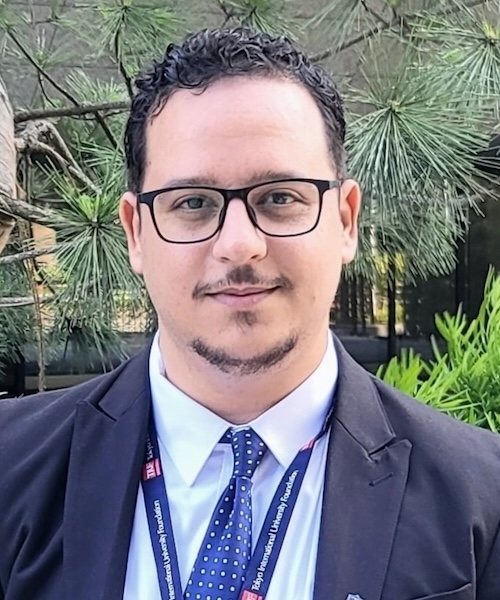
Rafik Hamza is an Associate Professor in Information Management & Cybersecurity at Tokyo International University , with prior roles at National Institute of Information and Communications Technology (NICT, Tokyo), Guangzhou University, and SONATRACH (Algeria). His work spans Cryptography , Privacy-Preserving Machine Learning , and Blockchain-Enabled IoT Security . Ph.D. (2017) in Cryptography and Security from University of Batna M.Sc. (2014) in Cryptography and Security from University of Batna B.Sc. (2011) in Applied Mathematics from University of Batna His research interests focus on securing big data ecosystems through advanced cryptographic methods, including post-quantum algorithms and homomorphic encryption. He actively explores blockchain integration for IoT authentication and privacy-preserving deep learning architectures. Recent publication trends highlight his contributions to hybrid chaotic image encryption, IP protection in distributed systems, and secure ML frameworks. Collaborations with researchers like Alzubair Hassan and Minh-Son Dao demonstrate cross-disciplinary applications. 2021-2022 : Funded by Najran University's Institutional Funding Committee (Project NU/IFC/ENT/01/013) for AI/ML in emerging technologies Associate Editor at Cureus Journal of Computer Sciences (2024–present) Conference Chair for AMLDS 2025
Petra Lingnau is a faculty member at the University of Würzburg , holding the Chair of Computer Science VI - Artificial Intelligence and Knowledge Systems within the Faculty of Mathematics and Computer Science and the Institute of Computer Science . Her research focuses on Artificial Intelligence , Knowledge Systems , and Data Mining , with applications in diverse domains including: Medical information extraction (e.g., EndoAssist, Corpus Monodicum) Legal informatics (e.g., Juriskop, TargetJura) Intelligent heating systems (KI-Nergy) Digital humanities (e.g., segmentation of historical print scans) Educational technology (e.g., it4all, CaseTrain) She leads the development of open-source tools such as: ATHEN (Information Extraction) d3web (Classification) KnowWE (Knowledge Editor) VIKAMINE (Data Mining) Contact: petra.lingnau@informatik.uni-wuerzburg.de
Marijn Schraagen is an Assistant Professor in Natural Language Processing at Utrecht University's Faculty of Science, specifically within the Information and Computing Sciences department. His academic work bridges computational linguistics with practical applications across multiple domains including healthcare, law, and cultural heritage. His research interests focus on the application of machine learning methods to large collections of text and speech data. Schraagen has developed expertise in Dutch language processing with specific applications in clinical settings, legal contexts, and historical language analysis. Notably, within the Goallab at the department of Social, Health and Organizational Psychology, he contributes to developing machine learning models for detecting and preventing low literacy among Dutch children. His publication record demonstrates consistent research activity from 2010 through 2025, with recent work showing particular strength in legal text analysis, clinical NLP applications, and historical language processing. His articles reveal a pattern of interdisciplinary collaboration, working with researchers from psychology, public health, law, and social sciences to address real-world problems through NLP solutions. Schraagen has received research funding from diverse sources including Anders AI Lab, NWO Ai-NEDXS, the National Police, and the Royal Library. His projects include developing AI tools for literacy detection, analyzing protest events in social media, and creating systems for processing historical Dutch texts. He teaches courses in computational thinking, knowledge-intensive process analysis, and methods in AI research, contributing to both the theoretical and practical education of students in the field of artificial intelligence and natural language processing.
Dr. Gerard Vreeswijk is an Assistant Professor in the Department of Information and Computing Sciences within the Faculty of Science at Utrecht University. He specializes in Natural Language Processing and Artificial Intelligence, with over 100 publications spanning multiple decades of research. His academic journey began with a PhD in theoretical computer science from the Vrije Universiteit Amsterdam in 1993. Dr. Vreeswijk's research interests center around multi-agent learning , the theory of computability , and unconventional computation . His scholarly work demonstrates a strong focus on argumentation systems, multi-agent deliberation, and computational dialectics. He serves as a core lecturer for both bachelor's and master's programs in Artificial Intelligence at Utrecht University. His publication record shows consistent contributions to the fields of artificial intelligence and computational argumentation, with recent work examining novelty strategies in game theory, motion types in particle systems, and extensions to explanatory coherence frameworks. His research has appeared in prestigious venues including Theoretical Computer Science, International Journal of Parallel, Emergent and Distributed Systems, and Law, Probability and Risk. Dr. Vreeswijk regularly contributes to the academic community through peer review activities for leading scientific journals and as an arbitrator for the Dutch Research Council (NWO) and European Research Council (ERC). His work intersects with multiple disciplines, particularly bridging theoretical computer science with practical applications in intelligence analysis and decision support systems. He maintains an active role in teaching and research supervision, contributing to the development of the next generation of AI researchers and practitioners at Utrecht University.