Beth Piatote is an Associate Professor of English and Comparative Literature at the University of California, Berkeley. She holds a PhD in Modern Thought and Literature from Stanford University and is an enrolled member of the Confederated Tribes of the Colville Reservation (Nez Perce). Her work bridges scholarly and creative realms, focusing on Indigenous literature, law, language revitalization, and cultural studies. Education: PhD in Modern Thought and Literature (Stanford University). Research interests include Native American legal systems, Nez Perce language preservation, global Indigenous literatures, and creative writing. She co-founded and chairs Berkeley’s Designated Emphasis in Indigenous Language Revitalization and directs the Arts Research Center, where she leads the Indigenous Poetics Lab. Her publications include Domestic Subjects: Gender, Citizenship, and Law in Native American Literature (2013) and the short story collection The Beadworkers (2019), which received multiple literary recognitions. Her plays Antíkoni and Tricksters, Unite! explore Indigenous narratives through performance. Awards include MLA honorable mentions, PEN/Bingham Prize longlistings, and a 2020 Playwrights Retreat win. Current projects involve a scholarly monograph on sensory representations of Indigenous law and creative works in poetry and essays.
Greg Durrett is an Associate Professor in the Department of Computer Science at University of Texas at Austin, leading the TAUR Lab (Text Analysis, Understanding, and Reasoning ). His research focuses on advancing Large Language Models (LLMs) for knowledge-intensive tasks in medical information processing scientific discovery legal reasoning . He received his B.S. in Computer Science and Mathematics from MIT (2010) and Ph.D. in Computer Science from UC Berkeley (2016). His work develops techniques to train LLMs with new capabilities augment models for reliability assess model outputs improve reasoning frameworks . His 15 most recent publications (2021-2025) span knowledge propagation in LLMs chain-of-thought reasoning code generation benchmarks multi-modal reasoning fact verification discourse analysis . Scientific honors include NSF CAREER Award (2024) NSF grants (2018, 2024) Bloomberg Data Science Grant (2017) Facebook Fellowship (2014) Best Paper Finalist (EMNLP 2013) . Teaching: CS388: Natural Language Processing (graduate) CS371N: NLP (undergraduate) High school NLP module .
Tijana Gajić is a researcher at Singidunum University in Belgrade, Serbia. She holds a Ph.D. in Philology (2020), an MA in English Language and Literature (2009), and a BA in the same field (2007) from the University of Belgrade. Her work focuses on the intersection of language education, digital tools, and critical pedagogy. Doctoral Studies: Philology , University of Belgrade (2017-2020) Master Studies: English Language and Literature , University of Belgrade (2008-2009) Bachelor Studies: English Language and Literature , University of Belgrade (2003-2007) Dr. Gajić’s research explores the impact of digital technologies on language acquisition, critical thinking development, and the sociopolitical dimensions of English language learning. She has published extensively on mobile applications like Duolingo, HelloTalk, and WordUp, analyzing their efficacy in modern pedagogy. Her recent publications (2024-2025) examine digital tools’ influence on language education, critical pedagogy in Serbian classrooms, and AI-driven language learning innovations. Earlier works (2020-2016) established her expertise in tandem learning, vocabulary enhancement via apps, and affective factors in language acquisition. Notable collaborations include partnerships with researchers like N. Maenza , A. Gagić , and J. Nikolić . While no specific grants or awards are mentioned, her involvement in conferences such as Sinteza and ELTA Serbia underscores her active role in advancing language education. Her 2022 book, Nastava stranih jezika i razvoj kritičkog mišljenja u eri neoliberalizma , synthesizes her critical pedagogy framework. Current projects likely continue her focus on digital transformation in language teaching.
Maile Arvin is a Kanaka Maoli feminist scholar and Assistant Professor at the Department of Ethnic Studies, University of Hawaiʻi at Mānoa. Her research and teaching focus on Indigenous relationships to land, histories of race and settler colonialism in Hawaiʻi, Oceania, and the United States. Previously, she was faculty in History and Gender Studies at the University of Utah and founding director of the Center for Pasifika Indigenous Knowledges. PhD in Ethnic Studies, University of California San Diego (2013) MA in Ethnic Studies, University of California San Diego (2009) BA in English, Swarthmore College (2005) Her research examines: Colonial production of racial categories, particularly Polynesians as an 'almost white race' in historical social science History of incarceration of Native Hawaiian children in government institutions (1865–1960s) Intersection of settler colonialism and Indigenous feminisms Critique of eugenics and genomic studies in the Pacific Community-engaged memorialization projects in Hawaiʻi Recent scholarly trends include analyses of Indigenous sovereignty, critiques of settler colonial whiteness, and interdisciplinary studies of race-gender dynamics. Arvin's publications explore Polynesian racialization, decolonial feminism, and the socioeconomic impacts of colonial institutions. NEH Chair's Grant for Nā Lei Poina ʻOle ACLS Digital Justice Seed Grant Arvin leads Nā Lei Poina ʻOle (Beloved Children Never Forgotten), a community history project about reformatories and industrial schools in Hawaiʻi. In collaboration with Kawela Farrant and the North Shore Community Land Trust, this project uses archival and oral histories to confront the legacy of child incarceration. She also critiques the nonprofit-industrial complex's role in limiting Indigenous sovereignty.
Prof. Dr. Claudine Moulin is a Full Professor of Historical Linguistics at the Department of German Studies, University of Trier. She co-directs the Trier Center for Digital Humanities and serves as Vertrauensdozentin der Deutschen Forschungsgemeinschaft. With academic roots in Brussels and Bamberg, she completed her PhD in 1990 and Habilitation in 1999 at the University of Bamberg. Her research spans medieval and early modern languages, manuscript studies, digital humanities, and Luxembourgish linguistics. As a leading scholar in historical linguistics, Moulin's work explores urban language history, phraseology, and cultural knowledge transmission through manuscripts. She has directed major digital humanities projects like LexicoLux and Cartul@rium, while pioneering digital codicology methods for medieval texts. Her research combines traditional philology with computational approaches. Her academic accolades include the Akademiepreis Rheinland-Pfalz (2010), Landesverdienstorden (2014), and the Verdienstkreuz am Bande (2025). She has held visiting professorships at Sorbonne, EHESS Paris, and EPHE, and received fellowships from the Humboldt Foundation and European Science Foundation. Notable Academic Roles: Co-founder and Chair of DHd (Digital Humanities in German-speaking countries) Founding member of Trier Center for Language and Communication Member of German Historical Institute Paris scientific board Advisory positions at Austrian Center for Digital Humanities and Herzog August Bibliothek Her editorial leadership includes chief editorship of Sprachwissenschaft journal and co-editorship of Germanistische Bibliothek monograph series. She has mentored over 40 graduate students in topics ranging from medieval marginalia to urban language studies.
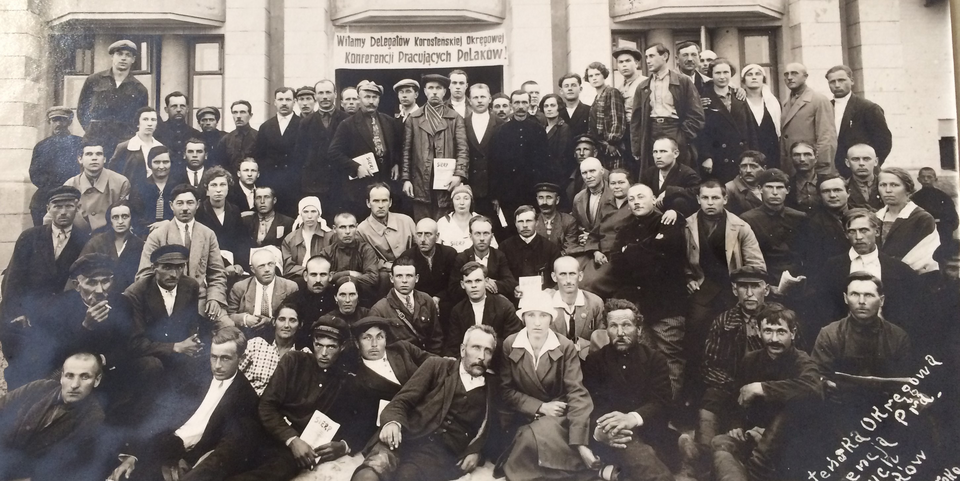
Prof. Dr. Olena Palko is a historian specializing in Eastern Europe, the Soviet Union, and Ukraine. She holds the SNSF Professorship at the University of Basel's Department of History, focusing on East European History. Her research emphasizes Soviet minority policies, cultural politics, and national identity formation in interwar Ukraine. She is a leading scholar with notable works including Making Ukraine Soviet (2021), awarded the 2023 Alexander Nove Prize. Her current SNF-funded project, Red Tower of Babel , examines Soviet minority experiments in Ukraine. Education: PhD from University of East Anglia (2017); Kandydat nauk from National Academy of Sciences of Ukraine (2013). Research Interests: Soviet nationality policy, minority history, Ukrainian twentieth-century history, transnational border dynamics. Her work bridges archival analysis with transnational perspectives, addressing contested borderlands between Poland and the USSR. Key publications include co-edited volumes like Making Ukraine (2022) and Ukraine's Many Faces (2023). She actively contributes to academic governance roles, including co-convening the BASEES Study Group for Minority History and serving on the Scientific Advisory Council of the Council of Europe's history observatory.
Laurie Shannon is the Franklyn Bliss Snyder Professor of English at Northwestern University, with a J.D. from Harvard Law School and a Ph.D. from the University of Chicago. She studies English literature and culture in the long sixteenth century, focusing on the history of ideas in language, stakeholdership, embodiment, and cross-species relations. She serves as convener of The Anne Lister Society and is collaborating with Oxford University Press on a scholarly edition of Anne Lister’s Journal. Education: J.D., Harvard Law School; Ph.D., University of Chicago Shannon’s research explores the political imagination in early modern literature, particularly through friendship (Sovereign Amity: Figures of Friendship in Shakespearean Contexts) and animal studies (The Accommodated Animal: Cosmopolity in Shakespearean Locales). Her current monograph, 'Frailty’s Name: Shakespeare and the Natural History of Human Being,' examines human negative exceptionalism in Renaissance thought and its implications for climate crisis ethics. Her publications span Shakespeare studies, queer theory, environmental humanities, and textual editing. Notable awards include the Elizabeth Dietz Memorial Award, Robert B. Cox Teaching Award, and Dean’s Award for Graduate Mentoring. She has held NEH, ACLS, and Guggenheim fellowships. Scientific Awards: Elizabeth Dietz Memorial Award, Robert B. Cox Distinguished Undergraduate Teaching Award, Dean's Award for Graduate Mentoring, NEH Fellowship, ACLS Fellowship, Guggenheim Fellowship Shannon contributes to the Anne Lister Diary Transcription Project and has served as English Department Chair at Northwestern. Her recent articles focus on Shakespeare’s engagement with natural history, queer cosmology, and animal sovereignty, reflecting her interdisciplinary approach.
Hans Beck serves as Professor of Greek History at the University of Münster (Westfälische Wilhelms-Universität) since 2018, with an additional appointment as Adjunct Professor in the Faculty of Arts at McGill University. His academic career includes previous positions as Professor of Ancient History and Director of Classical Studies at McGill University (2005-2018), Heisenberg Fellow at Goethe-Universität Frankfurt (2004-2005), and Research Assistant at the University of Cologne (1997-2004). Beck earned his academic training through doctoral studies at the Universities of Erlangen, Canterbury, and Cambridge (1989-1996), followed by a fellowship at the Center for Hellenic Studies in Washington, DC (2001-2002). His educational background reflects a strong international foundation in classical studies. His research spans multiple interconnected fields within ancient history, with particular emphasis on the history and culture of ancient Greece, historical geography of Greece, environmental studies of the ancient Greek world, political culture of the Roman Republic, and ancient historiography. Beck's work consistently explores themes of localism, federalism, and political structures across ancient societies, with notable contributions to understanding Greek city-states, regional identities, and comparative political systems. His approach often bridges geographical, historical, and cultural perspectives to examine how ancient communities organized themselves politically and maintained regional identities within larger frameworks. Analyzing his recent publications reveals a sustained focus on local political structures within broader contexts, particularly examining how Greek city-states maintained autonomy while participating in federal leagues. His work increasingly incorporates comparative approaches, connecting Greek political structures with those of Rome and even ancient China, reflecting his editorial work on cross-cultural studies. Beck demonstrates particular expertise in analyzing how physical landscapes shaped political organization and how religious practices reinforced regional identities. Fellow of the Royal Society of Canada (2018) Anneliese Maier Research Award from Alexander von Humboldt Foundation (2014) Heisenberg Fellowship from Deutsche Forschungsgemeinschaft (2004) Doctoral scholarship from German Academic Exchange Service (1995) Doctoral scholarship from Hanns Seidel Foundation (1994) Beck has supervised numerous doctoral students including Jordan Christopher (2022), Chandra Giroux (2021), Wentian Fu (2020), Rebecca Robinson (2017), Alex McAuley (2015), and François Gauthier (2015), covering diverse topics from ancient Qin and Macedon to cult practices in ancient empires. His academic leadership extends to directing research projects B3-49 'Belonging in/to Lakonia' and B3-40 'Localism and Religion in Ancient Greece' within the Excellence Cluster focusing on 'Religious Diversity and Legal-Political Unity.' As head of the project 'Belonging in/to Lakonia' and 'Localism and Religion in Ancient Greece,' Beck leads interdisciplinary research teams examining archaeological and historical evidence from the Sanctuary of Apollo at Amyklai and its surroundings. His work integrates textual analysis with material culture studies, creating comprehensive approaches to understanding ancient regional identities and religious practices. Beck's leadership in these projects demonstrates his commitment to bridging traditional disciplinary boundaries in classical studies.
Kevin D. Ashley is a Professor of Law at the University of Pittsburgh School of Law. He is also a senior scientist at the Learning Research and Development Center and an adjunct professor of computer science at the University of Pittsburgh. His interdisciplinary work bridges artificial intelligence, legal analytics, and ethical reasoning. JD, Harvard Law School M.A. and PhD, University of Massachusetts BA, Princeton University His research focuses on computational modeling of legal reasoning , AI and ethics , legal text analytics , and case-based reasoning . He has pioneered AI applications for legal decision support, automated argumentation, and bias detection in legal corpora. Recent publications include studies on large language models in legal annotation, argument mining, and empirical legal analysis. His work has been supported by multiple National Science Foundation grants, emphasizing fairness in AI and access to justice. 2022 Codex Prize for Computational Law 2015 University of Massachusetts Outstanding Achievement Award 2002 AAAI Fellow for AI in Law contributions 2000 Chancellor’s Distinguished Research Award A former President of the International Association for Artificial Intelligence and Law, Ashley has held visiting roles at the University of Bologna, Stanford CodeX, and IBM Watson Research Center. He co-edits the journal Artificial Intelligence and Law and teaches courses on applied legal analytics.
Yu-Ru Lin is an Associate Professor at the School of Computing and Information, University of Pittsburgh, and serves as Research & Academic Director at the Institute for Cyber Law, Policy and Security (Pitt Cyber). She leads the Pitt Computational Social Dynamics Lab (PICSO Lab) and holds secondary appointments in Political Science, Computer Science, and the Intelligent Systems Program. PhD in Computer Science from Arizona State University Postdoctoral research at Harvard University and Northeastern University Her research focuses on computational approaches for: Networked social dynamics High-dimensional social information summarization Trust and distrust propagation Misinformation detection Policy diffusion analysis Recent publications span 2014-2020, covering: Social media crisis response Graph visualization techniques Policy diffusion patterns Misinformation mitigation Temporal topic modeling Scientific support includes: National Science Foundation (NSF) awards Minerva/ONR funding AFOSR grant for distrust modeling DARPA Understanding Group Biases program As director of PICSO Lab, she leads interdisciplinary research teams on: Digital accountability Urban mobility patterns Health informatics via crowdsourcing Trust-influence dynamics
Albrecht Fuess is a Professor of Islamic Studies at Philipps University of Marburg since 2010, specializing in Middle Eastern History (13th–17th centuries), Mamluk socio-cultural dynamics, and contemporary European Islamic discourses. His research spans historical continuity in Ottoman-Mamluk-Safavid interactions, Islamic youth cultures, and Mediterranean geopolitics. Research Focus: Medieval Islamic history, Transottomanica mobility studies, Islam in Europe, and cultural integration of Muslim migrants. Awards: Le Studium Fellowship (2007–2009) at Université de Tours. His publications emphasize military-economy interplay, legitimacy through religious narratives, and resource management in empires, with a focus on Mamluk and Ottoman transformations. He has advised on doctoral projects covering topics like Islamic welfare, Arabic ʾAmālī literature, and Cypriot-Ottoman relations. Leadership: Co-coordinator of Transottomanica (DFG-SPP 1981), member of ANR and DAAD committees, and liaison professor for the German National Academic Foundation. Editorial Roles: Co-editor of 'Transottomanica' and 'Muslim Worlds' series, and advisory board member for journals in Cairo, Paris, and Leuven.
David B. MacDonald is a full Professor of Political Science at the University of Guelph's Department of Political Science, housed within the College of Social & Applied Human Sciences. He holds an honorary academic position at the University of Auckland and previously taught at the University of Otago and ESCP Business School in Paris. His research focuses on Indigenous-settler relations, genocide studies, decolonization, and comparative politics in Canada, New Zealand, Australia, and the U.S. He has held significant grants from the Social Sciences and Humanities Research Council (SSHRC), including principal investigator roles on projects like 'Complex Sovereignties' and 'Bi-Nationalism as Reconciliation.' Education: PhD in International Relations from the London School of Economics (2001). Key publications include The Sleeping Giant Awakens (2019) and co-authored textbooks like Comparative Politics (2020). He is North American series editor for Palgrave Macmillan's Global Political Sociology. Research interests emphasize settler colonialism, Indigenous sovereignty, and truth and reconciliation processes. He has contributed to policy discussions, including advising the Canadian Senate on the National Council for Reconciliation. His work bridges academic scholarship with activism, aiming to address systemic inequalities and promote Indigenous rights. SSHRC Grants: Over $200k in grants since 2008, focusing on Indigenous self-determination and colonialism. Publications: 4 sole-authored books; 31 refereed articles; numerous edited volumes. Awards: Shortlisted for the John McMenemy Prize (2013, 2017).
Daria Davitti is a Senior Lecturer and Associate Professor in Public International Law at Lund University's Department of Law. Her research focuses on intersections of international economic law and human rights, particularly in contexts of migration, climate breakdown, and privatized public goods. She leads major projects like the ERC-funded 'Refugee Finance: Histories, Frameworks, Practices' and the Formas-funded 'Screening for Sustainability'. Awards include the 2021 Juridiska Föreningens pedagogiska pris and the title of Docent in Public International Law. She advises on EU migration policies and environmental law compliance, and collaborates with institutions like GLAN and the International Code of Conduct Association for private security service providers. Her work examines refugee finance mechanisms, sustainable investment frameworks, and legal accountability in transnational corporate activities. Key areas include refugee entrepreneurship, EU Taxonomy sustainability criteria, and human rights due diligence in international investment. She has published extensively on topics ranging from refugee bonds to litigation finance in investment arbitration.
Jeffrey Monaghan is an Associate Professor at the Institute for Criminology and Criminal Justice (ICCJ) at Carleton University. He holds a Ph.D. in Sociology from Queen’s University and serves on the editorial board of Criminological Encounters . His research focuses on the intersections of policing, surveillance, and systemic inequality, with a particular emphasis on settler colonialism, Indigenous movements, and the global expansion of security practices. Monaghan teaches courses on criminological theories, policing, and justice frameworks. His work examines how security and policing practices criminalize marginalized communities, especially Indigenous peoples and social movements resisting extractive development. Key projects include analyses of counterterrorism strategies, disability injustice in criminal systems, and the securitization of Canadian foreign aid. He has authored/co-authored books like Security Aid: Canada and the Development Regime of Security and Policing Indigenous Movements , and edited volumes such as Protests in the Information Age . Monaghan’s research integrates critical criminology, colonial studies, and sociolegal analysis. He is cross-appointed to Carleton’s Department of Sociology and Anthropology and the School of Canadian and Indigenous Studies, amplifying interdisciplinary engagement with security governance and social justice issues.
Susan L. Burns is a Professor at the University of Chicago, where she holds appointments in the Department of History, Department of East Asian Languages and Civilizations, and The College. She currently serves as Department Chair and Chair of the Undergraduate Studies Committee. Education: PhD, University of Chicago (1994) Her research focuses on Japan’s nineteenth-century social history, emphasizing intellectual and cultural practices, the intersection of medicine and public health, gender analysis, and legal discourses. She explores continuities between Japan’s early modern and modern eras, particularly how medical and legal frameworks shaped national identity. Recent publications span leprosy’s impact on citizenship, the rise of medical marketplaces, and gendered dimensions of reproductive health. Her digital humanities work on Mapping Medical Tokyo integrates GIS and text mining for historical analysis. Scientific Awards: Fulbright-Hays Fellowship IIE Fulbright Japan Foundation Japan Society for the Promotion of Science National Endowment for the Humanities She has secured grants for research on medical commodities, psychiatric practices, and the spatial dimensions of Meiji-era health policies. Her courses include Gender and Japanese History and Medicine and Culture in East Asia .