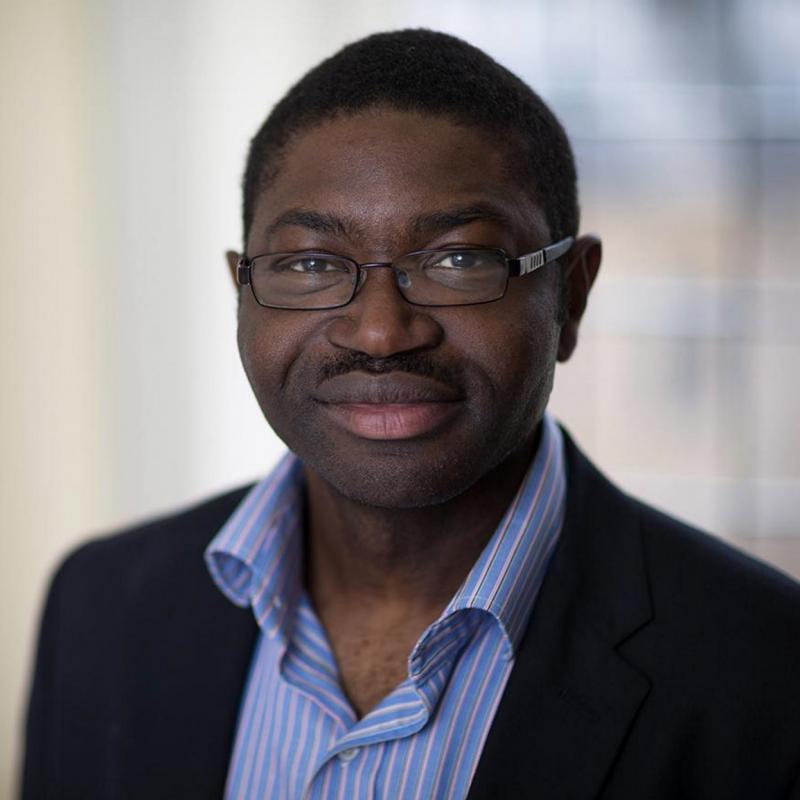
Dr Rod Thornton is a Senior Lecturer in Russian Defence and Security Studies at King’s College London, affiliated with the Defence Studies Department and School of Security Studies. He specializes in the Russian military's kinetic and sub-threshold warfare, with a focus on cyber capabilities, space warfare, and UK homeland resilience. His research includes recent British Academy-funded work on UK civil defense capacity during the pandemic, advocating for dedicated civil defense organizations. He has published extensively on Russian military tactics in Ukraine, AI-cyber integration, and space-based deterrence. Russian military cyber operations Space warfare dynamics UK resilience capacity gaps Scientific awards include a British Academy grant (2020). His students focus on asymmetric warfare, AI, cyber, and regional security issues. He teaches at the UK Defence Academy and has collaborated with institutions in Finland, South Korea, and the Freeman Air and Space Institute.
Richard Jochelson serves as Dean of Law at the Faculty of Law, University of Manitoba (Robson Hall), a position he has held since July 1, 2016. Previously, he taught criminal law for 10 years at the University of Winnipeg. Dr. Jochelson holds a Ph.D. in Law from Osgoode Hall Law School at York University, an LLM from the University of Toronto Faculty of Law, an LL.B. with Gold Medal from the University of Calgary Faculty of Law, and a B.Sc. in Zoology with Distinction from the same institution. He completed his legal training as a clerk at the Alberta Court of Appeal and Court of Queen's Bench before working at a major Canadian law firm. Dr. Jochelson's research program centers on critical issues in criminal justice and constitutional law, with primary interests in police powers jurisprudence, sexual regulation (particularly obscenity and indecency law), jury systems and representativeness, and legal pedagogy. His interdisciplinary approach bridges law with sociology and psychology, bringing empirical and theoretical rigor to legal scholarship. His work consistently addresses social justice concerns, examining how vulnerable populations interact with the justice system and how concepts like risk, precaution, and visibility shape legal decision-making. He has developed a distinctive methodology combining doctrinal analysis with empirical research on judicial behavior and jury decision-making. His recent publications reveal evolving scholarly priorities that respond to contemporary legal challenges. The 2025 article "Morbid Matters" addresses medical assistance in dying within federal corrections, while his 2024 works on youth terrorism cases and agnotology demonstrate expansion into new interdisciplinary territories. His longstanding commitment to police powers scholarship continues with "Ancillary Police Powers in Canada" (2024). The pandemic period saw significant contributions to understanding digital justice, mental health in legal education, and remote court proceedings. His criminal law scholarship maintains focus on jury representativeness, particularly regarding Indigenous inclusion following Bill C-75's elimination of peremptory challenges. Students' Teacher Recognition Award (CATL) - 2018 Dr. Jochelson has secured multiple SSHRC Insight Grants as both Principal and Co-investigator, demonstrating his ability to lead interdisciplinary research teams. His mentorship extends to junior academics and students, with several publications co-authored with emerging scholars. He has built significant research infrastructure, notably assembling nearly 40 interdisciplinary scholars across Canada for Robsoncrim.com, which has elevated the Criminal Law Edition of the Manitoba Law Journal to prominence as one of Canada's preeminent criminal law publications. As Dean of Law, Dr. Jochelson provides leadership in academic governance and legal education innovation. His service includes extensive committee work on academic affairs, workload policy, and hiring/tenure committees. His commitment to universal design principles informs both his teaching approach and administrative leadership, emphasizing accessibility and student-centered pedagogy that allows flexible evaluation methods tailored to individual learning preferences.
Dr. Hillary Briffa is a Senior Lecturer in National Security Studies and Assistant Director of the Centre for Defence Studies at King’s College London. She holds a Ph.D. in War Studies from King’s College London, focusing on small states’ grand strategy. Her roles include teaching National Security Studies, Small States and International Security at MA level, and leading BA3 Dissertation training. Research interests span small states’ security, climate security, grand strategy, and First World War propaganda. She leads the Climate Change and International Order portfolio at the Centre for Grand Strategy and co-organizes the annual U.S.-U.K. World Order summer school. Grants include maritime security for small states (with Georgetown University Qatar), national energy transitions, and foresight with the Estonian Defence Forces. Briffa advises the UK government on strategic reviews, international organizations, and defense policy. Awards include the U.S. State Department’s Emerging Young Leaders Award (2016), Hans J. Morgenthau Fellowship (2020/21), and Fellow of the Higher Education Academy (2023). She serves on King’s Academic Board, EDI committees, and chairs the Circle-U Climate Knowledge Hub. Her work bridges academia and policy, emphasizing small states’ strategic agency in global challenges. Publications include analyses of Maltese neutrality, Indo-Pacific maritime security, and small states’ pandemic responses. She co-authored sections in volumes on war studies, climate policy, and international order. Briffa’s research and outreach aim to enhance small states’ resilience and influence in evolving security landscapes.
Professor Beatrice Heuser is a distinguished academic in the Department of Politics within the School of Social & Political Sciences at the University of Glasgow. Her career spans multiple prestigious institutions across Europe, including King's College London, University of Reading, and visiting professorships at Sciences Po Paris, Bundeswehr University Munich, and MGIMO. She maintains significant affiliations with major strategic research institutes including Chatham House, RUSI, IFRI, and IRSEM. Education: BA from Bedford College London, MA from LSE, DPhil from Oxford (St Antony's/St John's), Habilitation from University of Marburg Professional Experience: Former Director of Studies at German Bundeswehr's military history research office, NATO Headquarters consultant, and extensive teaching across European institutions Her research centers on strategic studies with particular focus on the cultural dimensions of warfare, nuclear strategy, and the historical evolution of strategic thought. Key research areas include strategic culture, military exercises as political instruments, laws of war development, and European defense policy. Her work bridges historical analysis with contemporary security challenges, examining how cultural narratives shape strategic decision-making from antiquity to the nuclear age. Professor Heuser's recent publications demonstrate consistent scholarly output across strategic theory, military history, and contemporary security issues. Her work shows particular emphasis on the conceptual foundations of strategic culture, historical analysis of warfare evolution, and practical applications to modern security challenges including nuclear deterrence and asymmetric warfare. The interdisciplinary nature of her research connects political theory, historical analysis, and security studies. She actively supervises graduate students in strategic theory, nuclear strategy, insurgency studies, and defense policy-making within NATO/EU contexts. Her teaching portfolio includes War and International Relations, Defense Policy, and Strategic Theory courses.
Associate Professor Marcus Mietzner specializes in the politics of Indonesia, focusing on democratization, electoral systems, and the role of the military. He holds a PhD from the Australian National University (ANU) and an MA from Goethe University Frankfurt. His research explores Indonesian political parties, campaign financing, and the presidency in democratic Indonesia. Mietzner has authored over 95 publications and led projects such as the Indonesia Project Phase V and SEARBO (Supporting the Rules-Based Order in Southeast Asia). His work analyzes Indonesia’s political dynamics, including Jokowi’s majoritarianism, elite collusion, and democratic decline. Notable articles discuss Indonesia’s 2024 elections, autocratisation limits, and military oversight crises. Mietzner has contributed to understanding Indonesia’s post-authoritarian trajectory, emphasizing institutional resilience and elite competition. Research supervision focuses on Southeast Asian electoral politics and political parties. His projects address governance challenges, constitutional reforms, and civil society’s role in resisting democratic erosion. Mietzner’s interdisciplinary approach combines historical analysis with contemporary political developments, positioning him as a leading scholar on Indonesia’s political landscape.
Dr. Jack McDonald is a Senior Lecturer in War Studies at King’s College London’s Department of War Studies, and Director of the Centre for Science & Security Studies. He holds affiliations with the Environmental Security research group, Military Innovation Network (MIN), and the Leverhulme Centre for Research on Slavery in War. His research examines the intersection of ethics, law, technology, and warfare, focusing on issues like targeted killings, autonomous weapons, and the legal frameworks governing modern conflict. Education details are not explicitly stated, but his academic output demonstrates expertise in international law, military strategy, and technology’s role in warfare. He has authored two major books and contributed to peer-reviewed journals and policy papers for entities including Chatham House and the UN Mine Action Service. Recent publications emphasize digital technology’s impact on warfare ethics, including works on data privacy in conflict zones and the legitimacy of remote warfare tactics. His research also addresses emerging challenges like climate change’s role in conflict dynamics and the slavery-war nexus. Dr. McDonald supervises PhD students in his specialist areas and teaches courses such as Dirty Wars and War, Technology, and Innovation . He regularly participates in international conferences and public discussions on modern warfare trends, including panels on drones, cyber warfare, and the Ukraine conflict’s strategic implications.
Prof. Chiara Manfletti is a Professor at the Technical University of Munich (TUM), leading the Chair of Space Propulsion and Mobility. She also serves as Director and COO of Neuraspace. Her academic journey includes a degree from Imperial College London (2001), a master's from the International Space University (2002), and a PhD from RWTH Aachen (2010). Previously, she worked at the German Aerospace Center, served as Programme Advisor to the European Space Agency Director General, and became the first President of Portugal's national space agency. Her research focuses on innovative propulsion systems, satellite autonomy, and AI-driven propulsion controls. She has received the National Defence Medal (2020) and Medal of Merit (2020) from Portugal. Research Interests: Democratization of space access via novel propulsion technologies Autonomous and sustainable satellite propulsion systems Data-driven propulsion control using AI and health monitoring Key Contributions: Her work bridges numerical/experimental expertise with space safety policy. Recent publications analyze water hammer phenomena in propulsion systems and propose frameworks for planetary protection in space activities. Awards: National Defence Medal 1st class (2020) Medal of Merit from Portuguese Ministry of Science (2020) Professional Roles: Combines academic leadership with industry roles, actively shaping space policy and innovation. No listed grants are detailed publicly in the provided text.
Antonios Tzanakopoulos is the Professor of Public International Law at the University of Oxford and a Fellow at St Anne’s College . He has held visiting positions at the Universities of Paris II, Paris X, Angers, King’s College London, National and Kapodistrian University of Athens, Bern, Hebrew University of Jerusalem, IDC Herzliya, and China University of Political Science and Law. He previously taught at University College London and the University of Glasgow. DPhil (Oxford), LLM (NYU), LLM/LLB (Athens) Researcher for the Hellenic Ministry of Foreign Affairs and United Nations Graduate Teaching Assistant at Oxford’s Faculty of Law His research interests span public international law, state responsibility, treaty law, international human rights, law of the sea, and international investment law. He has served as counsel in cases before the International Court of Justice , EU courts, and ICSID tribunals, including Cyprus v Russia and Ukraine v Russia. His recent ICJ involvement includes Malaysia’s advisory opinions on the Occupied Palestinian Territory. His scholarly output is evident in 15 recent articles addressing treaty-custom interaction, maritime jurisdiction, self-defence doctrine, sanctions accountability, ICJ provisional measures, and state reactions to international coercion. He co-edits major handbooks on treaty law and domestic judicial engagement with international law. Secretary-General of the International Law Association Joint Secretary of the ILA’s British Branch Editorial Board of Oxford Reports on International Law
Shahid Raza is a Professor of Cybersecurity at the University of Glasgow's School of Computing Science. He previously led the RISE Cybersecurity Unit in Sweden, establishing it as a leading research group. His expertise spans IoT Security, PKI, AI-driven cybersecurity solutions, and hardware/data security. Raza holds a PhD and Docentship from Uppsala University, alongside a Bachelor's with a Gold Medal for academic excellence. Education: B.Sc. (Computer Science, 3.99/4.0 CGPA, Gold Medal), Licentiate, PhD, and Docentship in Cybersecurity from Sweden. He leads EU-funded projects like H2020 CONCORDIA and Horizon Europe CUSTODES, coordinating initiatives such as the Cyber Node and Cyber Range. Active in cybersecurity policy, he serves on the EU SCCG, ECSO, and EARTO Security & Defence Research working groups. Research Interests Public Key Infrastructure (PKI) for IoT AIAgent-Driven Cybersecurity Solutions IoT Certification Standards Hardware Security for Low-Power Devices Grants & Projects Coordinator: Horizon Europe CUSTODES Technical Leader: H2020 Arcadian-IoT Founder: RISE Cyber Range (Sweden's largest cybersecurity test facility) Awards & Memberships IEEE Senior Member Gold Medal for Academic Excellence (Bachelor's)
Alan Hunter is a Professor in Autonomous Systems at the University of Bath's Department of Mechanical Engineering. He serves as Deputy Head of Department for Workload and Wellbeing and is affiliated with the Water Innovation & Research Centre (WIRC) and the UKRI CDT in Accountable, Responsible and Transparent AI. His research focuses on underwater acoustics, signal processing, imaging, and machine intelligence, with applications in sonar-based remote sensing and marine robotics. Education: B.E. (Hons I) in Electrical and Electronic Engineering from the University of Canterbury (2001), PhD in Synthetic Aperture Sonar (SAS) from the same institution (2006). Career highlights include roles at the University of Bristol (2007-2010), TNO Netherlands (2010-2014), and NATO CMRE (2014). He has led projects on sub-sediment imaging, autonomous mine-hunting systems, and precision navigation algorithms. Research Interests: • Underwater Acoustics & Sonar Imaging • Autonomous Underwater Vehicles • Machine Learning for Acoustic Data Analysis • Non-Destructive Inspection via Ultrasound • Sustainable Coastal Protection (via UN SDG contributions) Active Projects (2023-2025+): - Noise Network Plus : Engineering a Quieter Future (EPSRC) - TESSMEX SR 4 : Naval Mine-Hunting Technology (Defence Lab) - Decision-Making with Ambiguities : Legal AI for Robotics (EPSRC) Professional Affiliations: • Senior Member, IEEE • Associate Editor, IEEE Journal of Oceanic Engineering • Collaborations with NATO, TNO, and UK Defence Orgs. Labs & Teams: • Robotics and Autonomous Systems Lab • Centre for Space, Atmospheric and Oceanic Science • WIRC @ Bath (Water Innovation Hub)
Maria Garcia is a Senior Lecturer in International Relations at the University of Bath, specializing in global trade dynamics and UK-EU relations. Her career includes prior roles as a Marie Curie International Fellow at the University of Canterbury and the University of Nottingham, and visiting fellowships at Australian National University, Monash University, University of Salzburg, and ULB Brussels. Current focus: Book project on free trade agreement strategies of global powers in the Asia-Pacific Research emphasizes societal impacts of trade agreements and EU-Asia/EU-USA economic negotiations Research Trends: Maria's recent articles analyze post-Brexit trade frameworks, including the UK-EU fisheries agreement, security partnerships, and implications for agrifood sectors. Her work highlights the interplay between geopolitical shifts, regulatory harmonization, and economic growth. Scientific Contributions: Recipient of Marie Curie International Fellowship Extensive commentary on TTIP, TPP, and Brexit scenarios Expertise Areas: International trade governance, EU economic diplomacy, geopolitical strategy, and regulatory policy impacts.
Dapo Akande is the Chichele Professor of Public International Law at the University of Oxford’s Faculty of Law and a Fellow of All Souls College. He is Co-Director of the Oxford Institute for Ethics, Law and Armed Conflict (ELAC) at the Blavatnik School of Government and has held visiting positions at Yale, Melbourne, and other institutions. Since January 2023, he has served as a Member of the United Nations International Law Commission. His academic background and research span public international law, with a focus on the law of armed conflict, international criminal law, human rights, law of international organizations, and cyber operations. He is a generalist with deep expertise in the regulation of armed conflict, humanitarian access, and accountability mechanisms. His recent scholarship addresses critical issues such as the crime of aggression, immunity of state officials, targeted killings by drones, and humanitarian relief in conflict zones. His work on the Oxford Guidance on the Law Relating to Humanitarian Relief Operations , commissioned by UN OCHA, has shaped policy and legal understanding globally. He co-authored the authoritative Oppenheim’s International Law: The United Nations , which won the 2019 ASIL Certificate of Merit. The trends in his publications reveal a sustained engagement with the evolving legal frameworks governing war, accountability, and state responsibility. His work bridges doctrinal analysis with practical policy impact, particularly in the areas of drone warfare, ICC jurisdiction, and humanitarian law compliance. Scientific awards and recognition include: Certificate of Merit, American Society of International Law (2019) Akande has served as legal adviser to the UK Parliament’s All Party Parliamentary Group on Drones and to multiple international bodies, including the UN Security Council, Human Rights Council, and ICRC. He has advised national courts (including the UK Supreme Court) and acted in cases before the ICJ, ICC, and ECtHR. He is founding editor of EJIL:Talk! and has held editorial roles in leading journals such as the American Journal of International Law and European Journal of International Law . He leads several research initiatives, including the Oxford Process on International Law Protections in Cyberspace, and previously co-directed the Oxford Martin Programme on Human Rights for Future Generations and the ERC-funded project on the Individualisation of War. He is actively involved in global policy through advisory roles with the US State Department, UK Ministry of Defence AI Ethics Panel, and the Ukrainian Government Working Group on war damage compensation.
Dr. Natasha Kuhrt is a Senior Lecturer in International Peace and Security at King's College London's Department of War Studies, housed within the School of Security Studies. Her academic affiliations include membership in BISA, Chatham House, ISA, ASEN, and BASEES. She holds a PhD from UCL and has taught extensively on international law, intervention, and security studies. Her research focuses on Russian foreign policy in Asia, regionalism in Eurasia/Asia-Pacific, nationalism, and the Responsibility to Protect (R2P). Education: BA (Hons) in Russian & German from School of Slavonic and East European Studies (UoL), MA in Soviet Studies (SoSlavonic), PhD (UCL) on Russian policy toward China/Japan. Research interests span Russian security policy, international law applications in conflict zones, and the nexus between memory discourse and foreign policy. She co-leads the BISA Working Group on Russian & Eurasian Security and collaborates on ESRC UK-Japan projects on populism. Current book projects include co-authored volumes on Russian foreign policy and Russia-China relations. Her work appears in outlets like Journal of Global Faultlines , Asian Survey , and Australian Journal of Defence and Strategic Studies . She advises multiple PhD students and engages in public commentary via BBC, Al Jazeera, and academic conferences on Ukraine-Russia dynamics, China-Russia relations, and UN peacekeeping. Labs/Teams: Co-director of War Crimes Research Group and Centre for Grand Strategy, focusing on historical conflict analysis and strategic diplomacy.
Georgina Meakin is an Associate Professor in Forensic Science at the University of Technology Sydney's Centre for Forensic Science within the School of Mathematical and Physical Sciences. She joined UTS in October 2019 after six years at University College London's Centre for Forensic Sciences. With expertise in forensic DNA analysis, particularly in DNA transfer, persistence, prevalence, and recovery (TPPR), Dr. Meakin is recognized for her contributions to forensic science research and casework. Her academic credentials include: MSc in Forensic and Analytical Science, University of Huddersfield (2007-2008) PhD in Molecular Microbiology and Biochemistry, University of East Anglia (2003-2007) BSc in Molecular Biology and Genetics, University of East Anglia (1999-2003) Dr. Meakin's research focuses on the transfer, persistence, prevalence, and recovery (TPPR) of DNA and other trace evidence in forensic contexts. She is particularly interested in indirect DNA transfer and its implications for forensic interpretation. Her work spans crime scene evidence collection, DNA recovery methods, packaging considerations, and the evaluation of trace DNA in casework. Dr. Meakin has co-authored major review articles on DNA transfer in forensic science and contributes to the development of best practices in forensic DNA analysis. Dr. Meakin's recent publications demonstrate a consistent focus on practical forensic challenges related to DNA evidence. Her work examines DNA recovery methods across various substrates, environmental effects on DNA persistence, and packaging considerations to minimize DNA transfer. She has developed innovative approaches to DNA collection, including an applicator prototype for tapelifts. Her research increasingly addresses operational forensic science questions with direct implications for crime scene investigation protocols and evidentiary interpretation. Dr. Meakin actively supervises students in Biological Criminalistics and Crime Scene Investigation courses at UTS. She has secured research funding including a grant for "Development and validation of an applicator for use with adhesive tape for DNA recovery" from the Defence Science and Technology Group (2022-2024). She provides forensic DNA consulting services for legal cases through various solicitors. As part of the Centre for Forensic Science at UTS, Dr. Meakin collaborates with forensic practitioners and researchers globally. She has participated in high-profile cases, notably serving as a forensic scientist on the team that re-examined evidence for the BBC2 documentary 'The Chillenden Murders'. Her editorial roles with Science and Justice and previous work with Annals of Human Genetics demonstrate her commitment to advancing forensic science scholarship.
Dr. David Brewster is a Senior Research Fellow at the National Security College, Australian National University, specializing in Indian Ocean and Indo-Pacific maritime security. He also holds a Distinguished Research Fellow position at the Australia India Institute, University of Melbourne. His work focuses on India’s strategic role in the Indo-Pacific, Sino-Indian naval dynamics, and regional security cooperation. Brewster frequently participates in international security dialogues and contributes to policy-oriented publications. He has authored influential books like *India’s Ocean* and edited volumes such as *India and China at Sea*, examining geopolitical competition in the Indian Ocean. His research integrates geopolitical analysis with maritime security challenges, emphasizing multilateral partnerships to address emerging threats. Qualifications include a PhD from ANU, LLM from Columbia University, and legal/economics degrees from the University of Sydney. Brewster’s expertise spans Indian Ocean security, Indo-Pacific strategy, and defense diplomacy. Key projects include analyzing Australia’s strategic engagement in the Indian Ocean and trilateral partnerships with India and France. He advocates for enhanced maritime surveillance, capacity-building in island states, and addressing geoenvironmental security challenges in the region. Recent publications explore Australia’s strategic posture, AUKUS cooperation with India, and China’s naval ambitions. Brewster’s work underscores the need for adaptive strategies in a multipolar Indo-Pacific, leveraging academic research to inform policy decisions on maritime security and geopolitical stability.