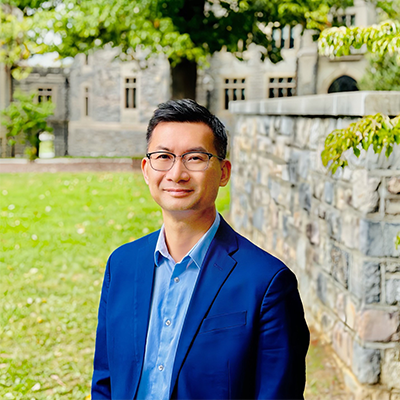
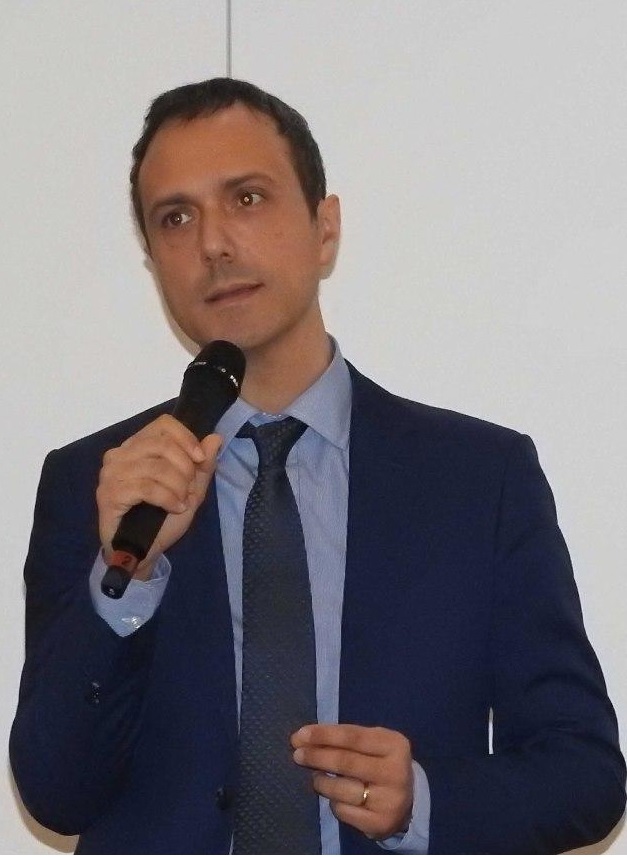
Dr. Michael Grebe is a Consultant Lecturer at the Business School, affiliated with the Department of Information Systems. As a Senior Partner and Managing Director at The Boston Consulting Group GmbH, he bridges academic research with corporate technology strategy. Education University of Mannheim: Diplom Wirtschaftsinformatiker (1994) University of Regensburg: Doktor – Promotion (1997) His research focuses on Next Generation Technology Functions, encompassing Data & Digital Platforms, Agile Transformation at Scale, Strategic Workforce Management, Future Organizational Governance, and Technology as a Strategic Enabler. Additional areas include IT Simplification, Digital Maturity Benchmarking, Large-Scale Program Recovery, Post-Merger IT Integration, and Financial Services Architecture. Recent publications explore Agile Methodology, Generative AI adoption, Digital-Driven Business Resilience, and AI regulation readiness. Themes across his work emphasize technology leadership, digital maturity, and strategic IT-business alignment. Projects include: Rescuing core banking system transformations for 8 regional banks Designing post-merger integrations in Financial Services, Healthcare, and Energy Cost reduction programs in IT for financial institutions Developing frameworks for digital maturity assessment
Inger Berg Ørstavik is a Professor at the Department of Private Law, Faculty of Law, University of Oslo. She has been employed at the department since 2014, initially as an associate professor before being promoted to her current position. Her academic work focuses on intellectual property law, competition law, contract law, and dispute resolution. She maintains active roles in both academic and professional spheres, serving as a board member of Nordic Semiconductor ASA and chairing the Food and Drink Industry Professional Practices Committee (MFU). Ørstavik received her Ph.D. in 2010 with the thesis "The innovation spiral - questions in patent law, contract law and competition law relating to improvements of patented inventions," which was awarded H.M. the King's Gold Medal. Prior to her academic career, she gained professional experience at the Attorney General for Civil Affairs and the law firm Schjødt. Her research interests span multiple interconnected fields within legal studies. Ørstavik specializes in Intellectual Property Law , particularly focusing on patent law, copyright issues in emerging technologies, and the intersection of IP with competition law. She has significant expertise in Competition Law , examining how antitrust principles apply to innovation markets and technology sectors. Her work in Contract Law addresses standard agreements, interpretation principles, and specialized contracts in sectors like offshore energy. Additionally, she has extensive experience in Dispute Resolution , serving as an arbitrator and researching legal remedies for IP enforcement issues. Ørstavik's publication record demonstrates a clear evolution of research interests, moving from foundational work on patent law and the doctrine of equivalence to contemporary issues at the intersection of law and technology. Her recent publications increasingly address artificial intelligence, data rights, and large language models, reflecting the evolving legal challenges in the digital age. She maintains a strong focus on practical applications of legal principles in sectors including renewable energy, biotechnology, and the semiconductor industry. Her notable scientific achievement includes: H.M. the King's Gold Medal for her Ph.D. thesis Ørstavik has extensive teaching experience, including international human rights courses at Fudan University in Shanghai, China. She has published the book "The Innovation Spiral" (2010) and numerous scholarly articles. Her professional activities extend beyond academia through her board membership at Nordic Semiconductor ASA and leadership of the Food Industry Professional Committee, demonstrating her commitment to applying legal scholarship to real-world business and regulatory challenges. She also has significant experience as an arbitrator in legal disputes.
Peter Procházka is an Assistant Professor at the University of Economics in Bratislava, affiliated with the Faculty of Economic Informatics and the Department of Applied Informatics . His teaching and research focus on IoT , UX Design , Multimedia Applications , and technical education. His research spans several subfields, including: IoT : Development of educational tools using Arduino, smart device integration, and open-source platforms. Generative AI : Prompt engineering for neural networks and machine learning applications. Web Analysis : SEO tools, linguistic summaries for data visualization, and compliance with public administration standards. His publications highlight a trend toward data-driven decision-making in technology, including big data, machine learning, and IoT frameworks. He has also contributed pedagogical works on computer hardware, multimedia, and IoT, alongside collaborative studies on digital citizenship and pandemic response in educational institutions.
Joseph P. Ryan is a Professor at the University of Michigan School of Social Work . He serves as Co-Director of the Child and Adolescent Data Lab , an applied research center focused on data-driven policy and practice in child welfare and juvenile justice. His work includes studies such as: Randomized clinical trial of recovery coaches for substance-abusing parents in Illinois ( AODA Demonstration ) Foster care placement prevention for young children in Michigan ( MI Family Demonstration ) Pay for Success (social impact bonds) study for high-risk adolescents in Illinois Kellogg Foundation Education and Equity study on educational outcomes for foster youth Ryan’s research spans child welfare, juvenile justice, public policy, and racial equity , with a focus on data utilization for systemic reform. His recent publications analyze: Racial disparities in child maltreatment reporting AI applications for confidential data analysis Environmental impacts on child abuse Opioid-related risk stratification for families He holds editorial roles at four journals and has received awards for public impact and research excellence. Ryan also teaches courses like Child Welfare System and Integrative Seminar: Child Maltreatment , emphasizing empirical evidence in academic and practical settings.
Jiaang Li is a PhD Fellow and Guest Researcher at the Department of Computer Science , University of Copenhagen. His research spans Natural Language Processing , Computer Vision , and Multimodal Learning , focusing on vision-language models, word order sensitivity, and cross-modal understanding. PhD Fellow , Department of Computer Science, Pioneer AI (P1AI) Guest Researcher , Department of Computer Science, Natural Language Processing Research interests include: Vision-Language Model Analysis Multimodal Dataset Development Language Model Interpretability Human-Centred AI Applications Model Robustness and Ethics Recent publications highlight trends in: Vision-Language Concept Alignment Task-Oriented Model Evaluation Visual Culture Understanding Bias and Cultural Theory in AI Retrieval-Augmented Generation
Anna-Kaisa Kaila is a Doctoral student and Researcher at KTH Royal Institute of Technology working within the Division of Media Technology and Interaction Design. She holds dual expertise as a musicologist (MA) and economist (M. Sc. Econ.), specializing in arts, communications, and intellectual property. Her interdisciplinary PhD project, part of the Wallenberg AI, Autonomous Systems and Software Program – Humanities and Society, examines artificial intelligence's social, ethical, and legal implications on artist communities. Dr. Kaila's research spans several interconnected domains: Socio-political effects of technology on creative and cultural sectors Ethics and aesthetics of creative-AI systems Copyright frameworks applied to AI-generated art Shifting narratives of creativity in the AI era Music semiotics and psychology regarding listeners' visual imagery She has developed innovative methodological tools including the Ethically Aligned Stakeholder Elicitation (EASE) framework for ethical analysis in music AI applications. Her work engages directly with artists using AI in creative work and provides critical analyses from humanist, social science, and legal perspectives. Her recent publications reveal significant tensions around environmental sustainability, data colonialism, and evolving notions of artistic authorship. Dr. Kaila actively contributes to academic discourse through: Teaching courses including Degree Project in Media Technology, Human Perception for Information Technology, and Machine Learning for Media Technology Supervising Bachelor and Master's thesis projects on creative-AI, AI-music, arts and media, and AI ethics Organizing influential workshops such as 'Fictional Abstracts: Ethics, Sustainability, and Creative-AI Futures' at ICCC '23 Moderating panel discussions on AI and Music at venues like the Museum of Artificial Intelligence in Stockholm Contributing to media discussions, including features in Opus Magasin, a prominent classical music magazine
Le Wang is the David M. Kohl Chair and Professor in the Department of Agricultural and Applied Economics at Virginia Tech. He holds roles such as co-editor of China Economic Review and Journal of Labor Research , and associate editor of Econometric Reviews . He serves on the Board of Trustees of the Southern Economics Association, the Human Capital and Economic Opportunity Global Working Group at the University of Chicago, and the Institute for Labor Studies (IZA) in Germany. As director of the Young Scholars Program of the Global Labor Organization (GLO), he promotes interdisciplinary research and academic collaboration. He earned his Ph.D. in Economics from Southern Methodist University in 2006 and a B.A. in International Finance from Jinan University in 2001. His research focuses on applied econometrics, including causal inference and machine learning applications, as well as policy issues in energy economics, public policy, food and health systems, development economics, and labor markets. Notable contributions include studies on intergenerational mobility, gender earnings gaps, and the impact of food aid on civil conflict. Awarded the Kuznets Prize (2018) and multiple Outstanding Professor Awards, his work has been recognized for advancing methodological innovations and policy-relevant insights. Recent accolades include the 2023 Emerald Literati Award for his chapter on “Women’s Potential Earnings Distributions” and the VPR and Partnerships Award for Excellence in Transdisciplinary Research (2023). Le Wang’s expertise extends to editorial leadership and academic administration, reflecting his commitment to advancing rigorous research and equitable policy solutions.
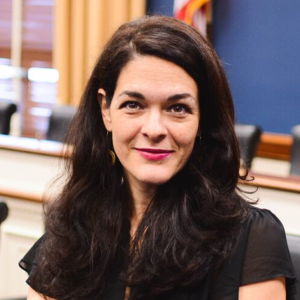
Caroline Bruckner is a Professor at the Kogod School of Business (American University) and Managing Director of the Kogod Tax Policy Center. She holds a Juris Doctor from George Mason University (winning the Best Memorandum of Law Award), a Masters in Taxation (LLM) from Georgetown University, and a BA in Political Science from Emory University. As a Fellow of the American College of Tax Counsel and member of the National Academy of Social Insurance, her expertise focuses on tax policy, small business taxation, gig economy challenges, and gender equity in legislative processes. Her research has influenced U.S. tax legislation, notably prompting Senate Finance Committee action on women business owners' capital access. She regularly testifies before Congressional committees and IRS, with recent work analyzing witness diversity in legislative processes and AI applications in tax administration. Teaching responsibilities include business law, federal taxation, and sustainability-focused courses. She coordinates Kogod's VITA tax assistance program and advises student organizations like the Business Law Society and Kogod Women in Business. Previous roles: Chief Counsel, U.S. Senate Committee on Small Business; Senior Tax Associate at PwC Media appearances: CNBC, NPR, The Wall Street Journal, and other major outlets Key research areas: Tax compliance challenges for small businesses, gender representation in policymaking, and modernizing tax administration through AI Her Congressional witness dataset examines how testimony impacts legislation, revealing systemic biases in expert representation. Current projects include analyzing tax literacy trends among small businesses and evaluating AI's role in enhancing tax agency operations. Awards: 2020 American College of Tax Counsel Fellow; 2021 National Academy of Social Insurance Member Grants: Research supported by AU's Tax Policy Center and congressional testimony analysis initiatives Led the Kogod VITA program providing free tax assistance, fostering student engagement with real-world tax issues while serving the community. Her work bridges academic research with public policy, emphasizing practical solutions for modern economic challenges.
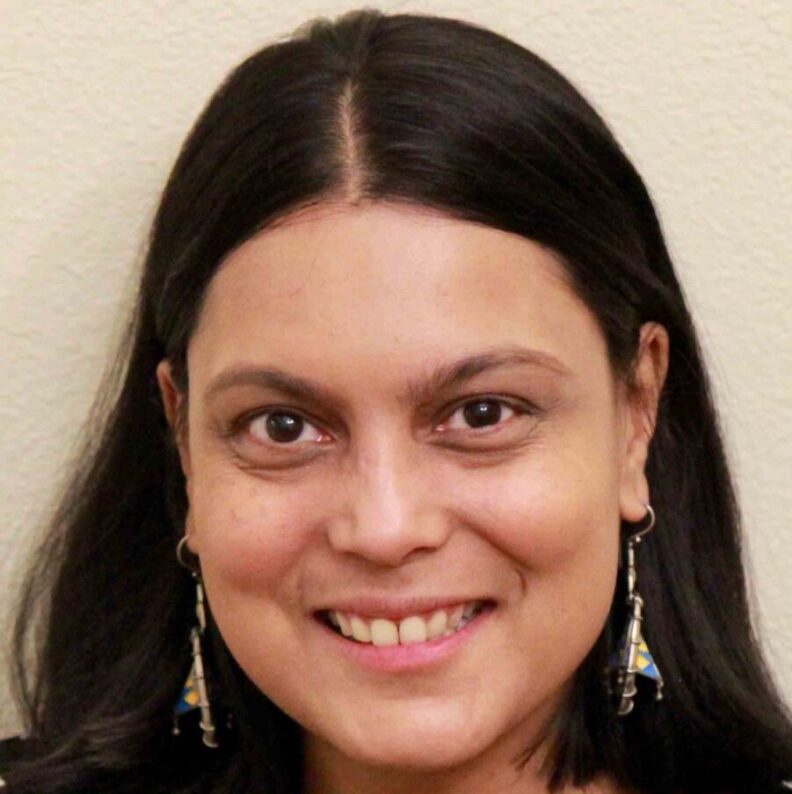
Kirti Rajagopalan is an Assistant Professor in the Department of Biological Systems Engineering at Washington State University (WSU), part of the College of Agricultural, Human, and Natural Resource Sciences. Her research focuses on transdisciplinary approaches to address water and agricultural resource challenges through systems modeling, integrating engineering, economics, and environmental science. She leads the Agricultural, Natural and Human Systems Modeling Group, which develops tools for climate adaptation, water resource management, and crop resilience. Her work emphasizes leveraging satellite imagery, machine learning, and data-driven methods to solve real-world problems in precision agriculture and environmental sustainability. Key research interests include climate change impacts on crop water demand, precision agriculture technologies (e.g., SoilScan mobile app), and sustainable water management strategies. Dr. Rajagopalan collaborates widely with experts in entomology, statistics, and agronomy to ensure interdisciplinary problem-solving. Her contributions include advancing snow-water equivalent prediction models, evaluating seasonal forecast utility for agricultural decisions, and assessing vulnerabilities in the Columbia River Basin under climate change scenarios. Her recent projects highlight innovative applications of AI, such as the IGraSS framework for infrastructure network identification via satellite imagery, and UAV-based digital trait analysis for wheat yield prediction. She also investigates legal frameworks like water right forfeiture and the economic implications of agricultural water trading. Dr. Rajagopalan’s research has been supported by high-profile initiatives, including WSU’s leadership in a $20M NSF-funded AI institute for agriculture. Notably, her work bridges science and practice through public engagement, policy analysis, and stakeholder dialogues focused on the food-energy-water nexus. She emphasizes actionable solutions for resilient agricultural systems in the face of climate uncertainty, leveraging both technical and institutional innovations.
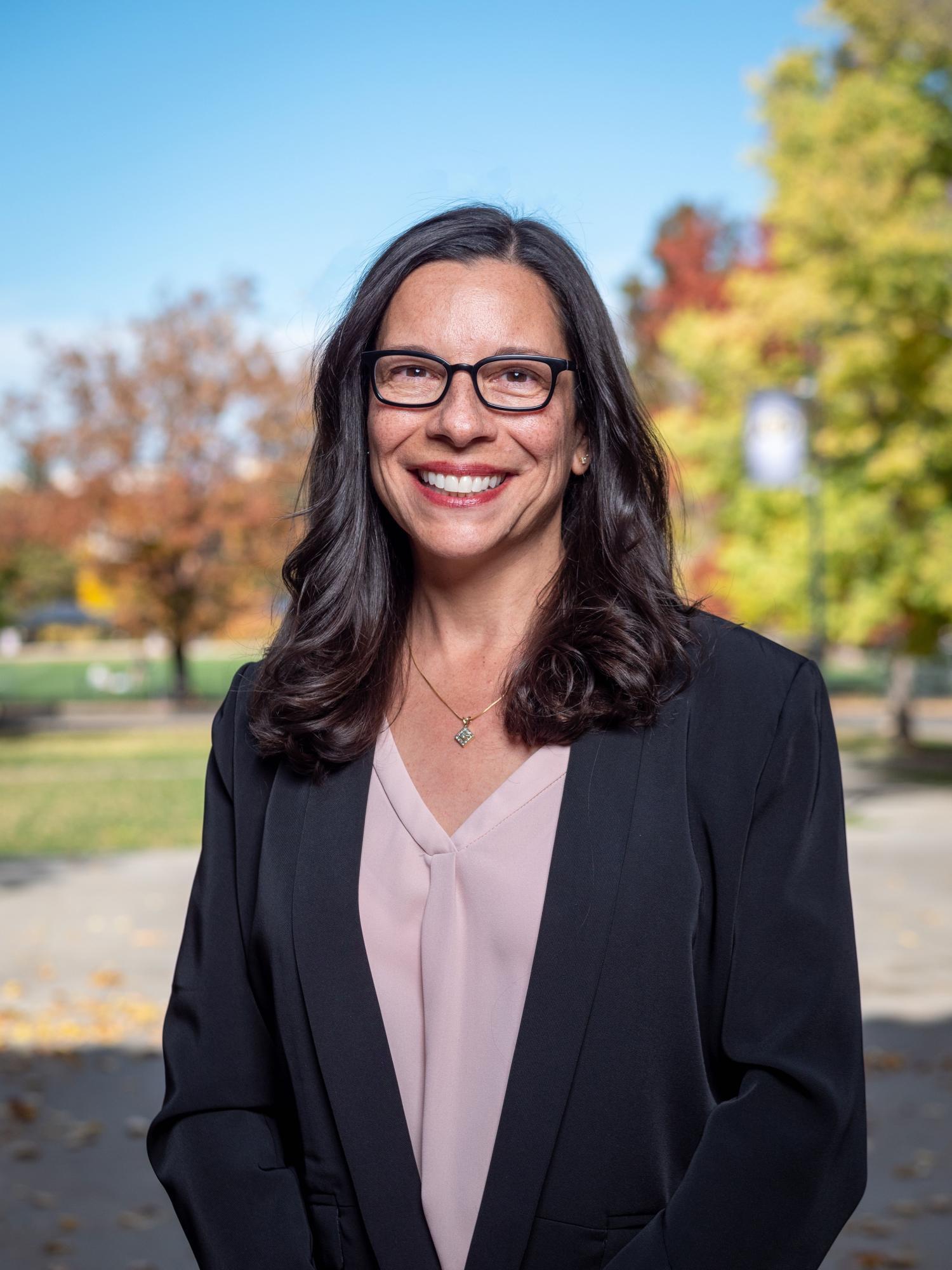
Michele S. Moses is a Professor of Educational Foundations, Policy & Practice at the University of Colorado Boulder’s School of Education, serving concurrently as Vice Chancellor and Senior Vice Provost for Faculty Affairs. She holds leadership roles in professional organizations such as the Philosophy of Education Society and AERA. Her research focuses on ethics, democracy, and higher education’s societal role, with expertise in racial/gender equity, academic freedom, and moral policy disagreements. Moses earned her M.A. in Philosophy and Ph.D. in Education from CU Boulder, plus an M.A. in Higher Education from the University of Vermont. She has authored/co-authored books like Living with Moral Disagreement and Embracing Race , and her work appears in top journals such as Journal of Higher Education and Educational Theory . Research Interests: Moses examines issues like affirmative action, opt-out movements in education, and the interplay between truth, free speech, and democracy on campuses. She emphasizes collaborative, community-based methodologies and bridges philosophy with sociological approaches. Awards: Recipient of CU Boulder’s prestigious Hazel Barnes Prize (2016), AERA Early Career Award, and National Academy of Education/Spencer Postdoctoral Fellowship. She was also named a Fulbright New Century Scholar. Her service includes editorial roles (e.g., Co-Editor of AERA Open) and leadership on boards like the National Education Policy Center. Moses advocates for integrating teaching, research, and mentorship, exemplified by her collaborative projects with graduate students on affirmative action policy analyses.
Neil Christopher Charles Brown is an Associate Professor in the School of Computing at the University of Kent, where he has been actively contributing to computing education research since completing his PhD in 2011. His work bridges theoretical computer science concepts with practical educational applications, focusing on how novices learn to program and how educational tools can better support this process. Dr. Brown's research interests center on programming education, with specific expertise in novice programming behavior, educational tool development, and computing education research methodologies. His early work focused on programming language theory and concurrency models, but he has increasingly specialized in computing education research, particularly examining how students interact with programming languages and environments. He has made significant contributions to understanding novice Java programming mistakes through large-scale data analysis and has developed frame-based programming environments to ease the transition from block-based to text-based programming. His recent publications (2023-2025) show a strong focus on AI applications in programming education, registered reports methodology in computing education research, and the development of tools like Strype that support novice programmers. Brown has published extensively in top venues including SIGCSE, ICER, and ACM Transactions on Computing Education, often collaborating with Michael Kölling on projects related to BlueJ and educational programming environments. Among his notable contributions is the Blackbox data repository project, which has collected millions of student programming attempts to analyze learning patterns. His 2018 paper 'Ten quick tips for teaching programming' in PLoS Computational Biology has been widely influential in the computing education community. Dr. Brown has served in leadership roles for major computing education conferences, including co-organizing ICER 2025 and contributing to SIGCSE workshops on research methodologies. His work demonstrates a commitment to improving both the science and practice of computing education through rigorous research and practical tool development.
Giampaolo Bella is a Professor at the Department of Mathematics and Computer Science, Università degli Studi di Catania, Italy. He holds a Ph.D. from the University of Cambridge (2000) and a Laurea cum laude from Università di Catania (1995). His research focuses on Cyber Security, IoT, Automotive Security, Privacy Threats, and Formal Methods. He has held visiting roles at institutions including Royal Holloway University of London and SAP Research France. Education: Ph.D., Computer Laboratory, University of Cambridge (2000); Laurea in Computer Science, Università di Catania (1995) Postdocs: TU München (2000), Cambridge (2001–2003) Affiliations: Chief Cyber Security Advisor, ICT Cyber Consulting (since 2019) Research interests span IoT security, automotive cybersecurity, privacy-preserving frameworks, and ontology-based compliance verification. Key contributions include the SPADA threat modeling methodology and SecOnto ontology for security directives. His work bridges formal methods with practical applications in smart devices and blockchain. Recent articles emphasize IoT vulnerabilities, automotive cybersecurity, and privacy in digital forensics. Awards include inclusion in Cambridge's 'Distinguished Dissertations' scheme (2000). Collaborations involve teams at De Montfort University and Royal Holloway.
Dr. Don Tuggener is a Researcher at the ZHAW Zurich University of Applied Sciences' School of Engineering, affiliated with the Centre for Artificial Intelligence. His work focuses on Natural Language Processing (NLP), Computational Linguistics, and Machine Learning applications in professional training and AI evaluation. He leads or collaborates on projects such as Meaning@Work (stress management for healthcare professionals), Virtual Kids (child interrogation training), and Favi-Score (bias detection in AI evaluation). His research emphasizes dialogue systems, generative AI ethics, and legal text analysis. Key projects include developing frameworks for conversational AI evaluation (Spot The Bot), large-scale legal text classification (LEDGAR corpus), and innovative training tools using LLMs. He has contributed to over 30 peer-reviewed publications since 2011, spanning topics like compound splitting in German, coreference resolution, and generative AI applications in professional contexts. As an editor for SwissText conferences and reviewer for ACL/EMNLP, he actively participates in the NLP academic community. Project Leadership: Virtual Kids, Interscriber Deputy Leadership: AutoNews, PRISM, SCAI Core Research Themes: AI ethics, dialogue systems, legal NLP Recent work highlights AI's role in professional education (e.g., investigative interviews with children) and societal challenges (hate speech mitigation via social influencers).
Jerry Spanakis is an Assistant Professor at Maastricht University with dual affiliations: the Department of Advanced Computing Sciences (Faculty of Science and Engineering) and the Maastricht Law+Tech Lab (Faculty of Law). His roles include leading the EU Horizon project VOXReality, researching for NSMD/HumanAds/RegTech4AI initiatives, and serving as a technical expert for the European Commission’s e-enforcement academy. He coordinates MaastrichtNLP (NLP research group) and participates in the Open Science Community Maastricht. Education: PhD in Computational Intelligence (2007–2012) from the National Technical University of Athens, School of Electrical & Computer Engineering. Research Focus: Social Machine Learning: Developing responsible AI systems for societal challenges, including interpretable models for consumer protection and regulatory compliance. Computational Social Media: Analyzing social media data to detect online harms (e.g., misleading ads, content moderation failures) and model user behavior. Structuring Unstructured Data: Semantic organization of legal texts, social media, and multimodal data for applications in law, aviation, and public health. Publication Trends: Jerry's recent work (2023–2025) emphasizes NLP innovations for legal and regulatory domains, multilingual information retrieval, and ethical AI frameworks. Key themes include Large Language Model applications in law, influencer marketing compliance, and cross-lingual neural machine translation. Scientific Awards: None reported. Advising & Grants: Jerry supervises 7 PhD candidates and 100+ Master’s/Bachelor’s students in NLP, machine learning, and social computing. He leads the €2.8M EU project VOXReality (voice-driven XR interactions) and contributes to NWO/Philips grants on mental health analytics. Current grants focus on: AI-driven legal process automation (RegTech4AI) Dark pattern detection in e-commerce (NSMD) Influencer marketing transparency (HumanAds) Labs & Teams: Jerry founded MaastrichtNLP, a university-wide NLP research group, and co-leads the Law+Tech Lab, which develops computational tools for legal compliance. His teams collaborate with Deloitte, the European Commission, and healthcare institutions on applied AI projects.
Scott A. Craver is an Associate Professor and Undergraduate Director in the Electrical and Computer Engineering Department at Binghamton University. His research focuses on information security, cryptology, steganography, watermarking, and security engineering. He holds a BS and MS from Northern Illinois University and a PhD from Princeton University. Craver is known for his work on ambiguity attacks in watermarking systems and contributed to the SDMI Challenge, leading to legal disputes with the RIAA. He also patented multilinearization data structures for image browsing with Intel Corporation. Education: PhD in Electrical Engineering, Princeton University BS and MS in Electrical Engineering, Northern Illinois University Research highlights include cryptographic protocols, steganographic channel design, and security analysis of public-key systems. His Erdős number is 3, connected through co-authorships in mathematical publications. Awards include the Chancellor's Award for Excellence in Faculty Service (2013-2014). Key contributions include patents on data structures for efficient image storage, and pioneering work in steganography, including the supraliminal channel concept for secure communication. His teaching focuses on cryptography and information security (e.g., EE 405 course), emphasizing hands-on assignments and programming projects.