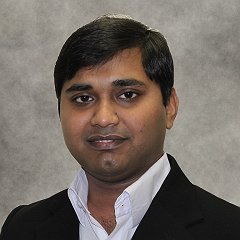
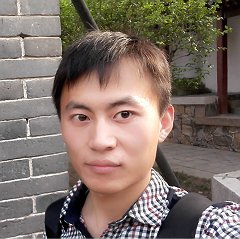
Anish Das Sarma is a researcher affiliated with Google, USA , specializing in uncertain data management, MapReduce algorithms, and knowledge graph systems. He earned a PhD from Stanford University in 2010 under the supervision of Jennifer Widom and Alon Halevy, with a dissertation on "Managing Uncertain Data." His career spans collaborations with leading institutions, focusing on scalable data integration, social choice theory, and machine learning applications in scholarly knowledge organization. PhD in Computer Science, Stanford University (2010) Key collaborations: Stanford, Google Research, NFDI4DataScience His research interests intersect uncertain data modeling , MapReduce optimization , and large language model applications for scientific synthesis. Recent work includes FAIR data frameworks, ontology learning, and clinical entity linking. Article trends highlight his evolution from foundational database systems (2004-2015) to modern applications of LLMs in scholarly communication (2023-2024). Key areas: scalable algorithms, research data management, and ethical AI.
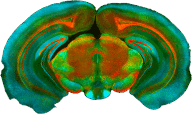
Tobias Bonhoeffer is Director of the Department of Synapses - Circuits - Plasticity at the Max Planck Institute for Biological Intelligence (formerly Max Planck Institute of Neurobiology) in Martinsried, Germany, and Professor at the Ludwig Maximilian University of Munich since 2002. He also serves as Associate Professor at the Norwegian University of Science and Technology (NTNU) since 2014. His research spans multiple levels of analysis, from molecular studies to systems neuroscience, with a primary focus on synaptic plasticity mechanisms and visual system organization. Born January 9, 1960 in Berkeley, California, Bonhoeffer earned his Physics diploma from Eberhard-Karls University of Tübingen (1984) and completed his neurobiology doctorate at the Max Planck Institute for Biological Cybernetics (1988). His postdoctoral work at Rockefeller University with Amiram Grinvald and Torsten Wiesel (1989-1990) was followed by research with Wolf Singer at the Max Planck Institute for Brain Research (1991-1992). He led a research group at the Max Planck Institute of Psychiatry (1993-1998) before becoming Director at the Max Planck Institute in 1998. Bonhoeffer's lab has made seminal contributions to understanding how synaptic plasticity relates to structural changes in the brain. They demonstrated that growth and retraction of dendritic spines underlies synaptic plasticity, that these structural changes facilitate relearning of previously acquired information, and how experience shapes cortical maps. His current research employs advanced imaging techniques to study neural circuits at unprecedented resolution, examining how visual experience drives representational changes in cortical organization and how these relate to memory processes. Analysis of his recent publications reveals a strong emphasis on mouse visual cortex organization, dendritic spine dynamics, and the relationship between structural and functional plasticity. His work increasingly incorporates computational approaches and advanced imaging methods to bridge cellular mechanisms with systems-level understanding of brain function. Member of the Academia Europaea (2003) Ernst Jung Prize for Medicine (2004) EMBO member (2006) Member of the German National Academy of Sciences Leopoldina (2010) Member of the National Academy of Sciences (NAS) (2020) Bonhoeffer has held significant advisory roles including Governor of the Wellcome Trust (2014-2021) and Scientific Advisor to the Chan Zuckerberg Initiative (since 2016). His lab continues to pioneer new methodologies for studying neural plasticity, with recent work focusing on synaptic changes during learning, structural correlates of memory, and how neural circuits adapt to changing environmental demands in both virtual and real-world contexts. The Bonhoeffer Lab maintains extensive international collaborations and trains the next generation of neuroscientists. Their research program integrates multiple approaches including two-photon imaging, virtual reality behavioral paradigms, and computational modeling to unravel the complex relationship between structural and functional plasticity in neural circuits.
Edward W. Felten is a Professor of Computer Science at Princeton University, with a prolific research career spanning computer security, privacy, cryptocurrencies, and distributed systems. He co-authored the definitive textbook Bitcoin and Cryptocurrency Technologies and has published over 120 refereed works since 1985. Felten’s research often bridges technical depth with policy relevance, influencing both academic discourse and real-world systems. Education: Details of formal degrees are not provided in the source text. Research Interests: His work focuses on securing computing systems and understanding their societal impact. Key themes include cryptographic protocols for blockchains, privacy-preserving technologies, DRM and policy, and the economics of decentralized systems. Recent projects explore rollup economics, fraud proofs, and AI safety. Recent Publication Trends: Between 2022 and 2025, Felten has concentrated on blockchain scalability and economic security, authoring studies on efficient dispute resolution (BoLD), MEV arbitrage, and incentive mechanisms for rollup validators. He also contributed to international AI safety reports, highlighting an expanding focus on emerging technology governance. Scientific Awards & Honors: While specific awards are not listed in the provided text, his repeated keynote invitations (CCS 2015, CSLAW 2019) and high citation counts indicate significant peer recognition. Students & Collaborators: Felten has mentored and collaborated with numerous researchers; frequent co-authors include Akaki Mamageishvili, Joseph Bonneau, Arvind Narayanan, and J. Alex Halderman. Exact advisee names are not extracted from the text. Labs & Teams: He has been associated with Princeton’s Center for Information Technology Policy (CITP) and has led or participated in projects such as the SHRIMP multicomputer system and the Arbitrum scalable smart-contract platform.
Marc Adrat is an Honorary Professor at RWTH Aachen University and Head of the Software Defined Radio research group at Fraunhofer Institute for Communication, Information Processing and Ergonomics (FKIE). His dual role combines academic teaching with cutting-edge industrial research in communications engineering. Education: Diplom-Ingenieur in Electrical Engineering (1997), RWTH Aachen University Dr.-Ing. (PhD) in 2003 from Institute of Communication Systems and Data Processing (IND), RWTH Aachen Research Focus: Prof. Adrat specializes in channel coding , modulation techniques , and iterative decoding with particular emphasis on polar codes , BICM-ID systems , and EXIT chart analysis . His work bridges theoretical foundations with practical implementations in software-defined radio systems. His recent research directions include applying machine learning techniques (particularly genetic algorithms) to optimize communication systems, developing autoencoder-based signal enhancement methods, and advancing spectrum monitoring technologies for cognitive radio applications. Awards & Recognition: Best Paper Award at ICMCIS 2022 for work on spectrum monitoring techniques Appointed Honorary Professor by RWTH Aachen University in June 2024 Teaching & Supervision: Since 2009, he has taught courses on Modern Channel Coding for Wireless Communications and Advanced Coding and Modulation at RWTH Aachen. His teaching covers both theoretical foundations and practical implementations of modern communication systems. Laboratories & Teams: At Fraunhofer FKIE, he leads the Software Defined Radio research group, focusing on developing flexible, reconfigurable radio systems for military and civilian applications. The group works extensively on real-time implementations of advanced coding and modulation schemes.
Prof. Ofer Shayevitz is a faculty member at the School of Electrical Engineering , Tel Aviv University , holding the academic rank of Professor . He is affiliated with the Department of Systems and leads interdisciplinary research at the intersection of information theory , statistical inference , and data science . His research explores theoretical challenges in interactive communication , machine learning , and quantum information , with applications to communication complexity , graph analysis , and non-stationary environments . Notable work includes advances in high-dimensional regression , entropy estimation , and memory-constrained algorithms . The trends in his recent publications highlight information-theoretic bounds , statistical inference under constraints , and interactive protocols . His group has made significant contributions to quantum key distribution , planted graph detection , and guesswork analysis . Scientific awards include the Best Student Paper Award at ISIT 2020 . His research is supported by major grants from the Israel Science Foundation (ISF) , ERC Starting Grant , and Israel Innovation Authority . Prof. Shayevitz advises current PhD students Assaf Ben-Yishai , Uri Hadar , and Shahar Stein Ioushua , as well as M.Sc. students Inbar Pinsly and Oz Ben Hamo . Former advisees include faculty members at institutions like Kyushu University and University of British Columbia .
Andreas Both is a Professor at the Faculty of Computer Science and Media at Leipzig University of Applied Sciences (HTWK Leipzig), where he leads the Web & Software Engineering (WSE) research group. His work spans multiple domains of computer science with a strong focus on bridging theoretical foundations with practical applications in software engineering, web technologies, and artificial intelligence. His research interests primarily revolve around Software Engineering (particularly test automation with AI and source code analysis), Web Engineering , Applied Artificial Intelligence (including Machine Learning, Deep Learning, and Large Language Models), Question Answering & Chatbots , and Data-driven Applications . He has developed innovative approaches in knowledge graph question answering systems, multilingual NLP applications, and privacy-preserving data sharing technologies using the Solid protocol framework. The analysis of his recent publications reveals a strong trajectory toward leveraging Large Language Models for knowledge graph applications, with particular emphasis on multilingual capabilities, explainability, and quality improvement in question answering systems. His work increasingly integrates privacy considerations with advanced AI techniques, particularly through Solid protocol implementations for data sovereignty. Best Paper Award at ICWE 2024 for AuthApp - a GDPR-compliant access granting system Outstanding Paper Award at ICWI 2024 for LLM-generated explanations in question answering systems Multiple first-place awards at the TEXT2SPARQL Challenge 2025 Best Paper Awards at ICWE 2025 and IEEE ISI 2025 CHI 2015 Honorable Mentions for search interface research Professor Both actively mentors students through the Google Summer of Code program and serves on the leadership board of the Architecture (ARC) working group of the German Computer Science Society (Gesellschaft für Informatik). His teaching portfolio includes Software Engineering, Question Answering & Chatbots, Software Projects, Project Management Practicum, Web Engineering, and Software Engineering & AI courses. His office hours are Thursdays from 11:15-12:15, requiring advance email appointment with topic specification.
Miguel Andrade is a Professor in the Faculty of Biology at the University of Mainz and serves as Adjunct Director at the Institute of Molecular Biology (IMB) since 2014. Previously, he was a Group Leader at the Max Delbrück Center for Molecular Medicine (2007-2014) and Assistant Professor at the University of Ottawa (2003-2007). His research focuses on computational analysis of protein sequences, particularly tandem repeats and low complexity regions, with applications in neurodegenerative diseases like Huntington's. His educational background includes: PhD in Biochemistry from Universidad Complutense de Madrid (1994) Professor Andrade's research spans bioinformatics and computational biology with emphasis on protein sequence evolution, structural implications of repetitive elements, and development of analytical tools. He investigates how tandem repeats and low complexity regions influence protein folding, aggregation, and interactions in diseases, while exploring evolutionary conservation across species. His work bridges computational methodologies with experimental validation in neurodegenerative contexts. Recent publications (2023-2025) demonstrate consistent innovation in protein sequence analysis, featuring computational tools for homorepeat detection, machine learning applications in proteomics, and multi-omics integration. Key themes include neurodegenerative disease mechanisms, immune system regulation, and evolutionary adaptations, with significant contributions to databases like RepeatsDB and tools such as REP2 and seqQscorer. No scientific awards were documented in the source materials. While specific student names and grant details are unlisted, his leadership at IMB indicates supervision of graduate researchers and postdoctoral fellows. His collaborative network spans immunology, cancer research, and neuroscience, evidenced by co-authorship on diverse projects from lipid-disease associations to T-cell differentiation studies. He directs a research group at IMB Mainz focused on computational genomics, developing algorithms for protein sequence analysis and maintaining community resources. The team actively investigates polyglutamine dynamics in neurodegeneration and applies machine learning to proteome-wide challenges, maintaining strong ties with experimental laboratories for biological validation.
Yasutaka Kamei is a Full Professor at Kyushu University's Graduate School and Faculty of Information Science and Electrical Engineering, where he leads the POSL Lab (Process-Oriented Software Laboratory). He was promoted from Associate Professor to Full Professor in January 2024 after serving as Associate Professor from March 2015 to December 2023. He is also an InaRIS Fellow (2023-2033), receiving 10 million yen annually for his research on 'New paradigm for software development styles based on machine-human interaction.' Dr. Kamei's research focuses on Empirical Software Engineering (ESE) and Open Source Software Engineering (OSSE), with particular expertise in software reliability, testing, defect prediction, code review analysis, and mining software repositories. His work bridges empirical methods with practical software engineering challenges, emphasizing how data-driven approaches can improve software quality assurance processes. His recent publications demonstrate a strong trend toward understanding human factors in software development processes, analyzing modern code review practices, investigating technical debt, and exploring the application of large language models in software engineering tasks. His research spans both traditional software engineering challenges and emerging AI-driven approaches to software development. IPSJ/ACM Award for Early Career Contribution to Global Research (2019) Best industry paper award at ESEM 2018 Distinguished Paper Award at MSR 2014 InaRIS Fellow (2023-2033) Dr. Kamei actively serves the software engineering community as Tutorials Chair for ASE 2025 and has been a program committee member for numerous top-tier conferences including ICSE, FSE, ASE, ESEC/FSE, SANER, and MSR. He has secured multiple competitive grants from MEXT (Ministry of Education, Culture, Sports, Science and Technology) to support his research on test case generation, automated software testing for deep learning systems, technical debt engineering, and mining software repositories. His POSL Lab at Kyushu University serves as a hub for empirical software engineering research, focusing on data-driven approaches to improve software development processes and outcomes through rigorous analysis of software repositories and developer activities.
Dr. Sridhar Chimalakonda serves as Associate Professor and Head of the Department of Computer Science & Engineering at the Indian Institute of Technology Tirupati, with an adjunct appointment as Associate Professor at the University of Waterloo. His academic leadership spans software engineering research and educational innovation. His educational qualifications include: Ph.D. from International Institute of Information Technology Hyderabad, India MS by Research from International Institute of Information Technology Hyderabad, India Research expertise encompasses: Software Engineering : Empirical studies, quality assurance, reuse methodologies, product lines, architecture, ontologies, and gamification Educational Technologies : Instructional design optimization, personalized learning systems, and VR/AR applications for educational storytelling and laboratories Human Computer Interaction : User-centered design in educational and software development contexts Publication analysis (2021-2024) reveals a strategic evolution from foundational software engineering research toward integrated educational applications, particularly in gamified machine learning education for K-12 audiences and sustainable software practices. His work demonstrates consistent methodological rigor in empirical studies while expanding into cross-disciplinary educational technology innovation.
Christoph Csallner is a Professor in the Computer Science and Engineering Department at the University of Texas at Arlington (UTA). He previously worked at Google and Microsoft Research and holds a Diplom-Informatiker degree from Universität Stuttgart, Germany, and M.S. and Ph.D. degrees in Computer Science from Georgia Tech. His research has received numerous best paper awards at top software engineering conferences including ASE, ISSTA, and ISSRE. Dr. Csallner's research interests focus on software engineering, with particular expertise in program analysis, automated bug finding, software security, and mobile software development. His work bridges theoretical foundations with practical applications, developing tools that have real-world impact in improving software quality and security. Recent research has concentrated on analyzing Simulink models for cyber-physical systems, mobile app screen search and generation, and applying deep learning techniques to software testing problems. His publications show a consistent trajectory of innovation in software testing and analysis, with recent work exploring the intersection of machine learning and software engineering. The research spans from foundational program analysis techniques to practical tools addressing challenges in mobile development and cyber-physical systems. His work on Simulink model analysis has created valuable resources for the research community, including large open-source corpora of Simulink models. Scientific awards include: Best Paper Award at IEEE ISSRE 2010 ACM SIGSOFT Distinguished Paper Awards at ISSTA 2006 and 2012 Best Paper Award at PPREW 2014 ACM SIGSOFT Distinguished Paper Awards at ASE 2007 and 2015 Distinguished Referee Award at ASE 2019 Dr. Csallner has successfully advised numerous Ph.D. and Master's students who have gone on to prominent positions at companies like Meta, Google DeepMind, and Bloomberg. His research has been funded by the National Science Foundation, MathWorks, the Alzheimer's Association, and other organizations. He leads the Software Engineering Research Center (SERC) lab at UTA, where his team develops innovative tools for software analysis, testing, and development.
Amiangshu Bosu is a tenured Associate Professor in the Department of Computer Science at Wayne State University's College of Engineering. Previously, he served as a tenure-track Assistant Professor at Southern Illinois University Carbondale from 2016-2018. His academic journey includes completing his Ph.D. at the University of Alabama in 2015 under Professor Jeffrey Carver, followed by postdoctoral research with Dr. Danfeng Yao at Virginia Tech. His educational background reflects a strong foundation in software engineering research, with his doctoral work focusing on empirical approaches to software development practices. This foundation has enabled his current research trajectory examining human aspects of software engineering. Bosu's research program centers on empirical software engineering with particular emphasis on code review dynamics, toxicity detection in developer communications, and diversity issues in open source communities. His work bridges technical analysis with social science perspectives, investigating how communication patterns affect participation, especially regarding gender dynamics in OSS projects. Recent work increasingly incorporates natural language processing and machine learning techniques to build tools like ToxiCR for automated toxicity detection in code reviews. Analysis of his publication record reveals a clear evolution toward examining social dynamics in software development, with growing emphasis on gender bias, toxicity, and diversity issues. His research consistently applies empirical methods to understand real-world developer experiences while developing practical tools to improve code review processes and community health. His scientific recognition includes the prestigious NSF CAREER award (2024), NSF CRII award (2019), and Wayne State University's College of Engineering Research Excellence award (2025). He maintains senior membership status in both ACM and IEEE, reflecting his standing in the computing community. NSF CRII award (2019) NSF CAREER award (2024) College of Engineering Research Excellence award (2025) Senior Member of ACM Senior Member of IEEE Bosu actively contributes to the software engineering research community through service on program committees for major conferences including ICSE, ASE, ESEC/FSE, and ESEM. His GitHub presence (amiangshu.me) demonstrates active engagement with research tools and datasets, particularly those related to code review analysis and toxicity detection. While specific lab structure isn't detailed in the provided materials, his research group appears focused on empirical studies of software development practices with strong connections to industry through collaborations on projects like Chromium OS security analysis.
Istvan David is an Assistant Professor of Software Engineering at McMaster University's Faculty of Engineering, Department of Computing and Software, where he leads the Sustainable Systems and Methods Lab (SSM) and works as a researcher in the McMaster Centre for Software Certification (McSCert). His work bridges the gap between model-driven engineering, digital twins, and sustainability in systems engineering. Dr. David's research interests focus on digital twins , model-driven engineering , sustainability in computing, cyber-physical systems , and collaborative modeling . His lab develops novel reinforcement learning techniques , digital twin architectures , and modeling and simulation methods with a strong emphasis on sustainability as both a system characteristic and an engineering principle. His recent publications reveal a strong trend toward integrating digital twin technology with sustainability concerns, particularly in automotive systems, smart farming, and resource-efficient software engineering. The research spans from foundational modeling techniques to applied solutions addressing the four essential sustainability dimensions of technical systems: technical (long-term usage), economic (financial viability), environmental (reduced impact), and social (elevated utility). Scientific Awards: Best Practice Paper Award at MODELS Best Paper 2024 Runner-up in the Journal of Computer Languages Dr. David actively mentors students including PhD candidate Xiaoran (Sharon) Liu, and has supervised undergraduate researchers like Adwita Kashyap and Kyanna Dagenais. He has secured multiple research grants supporting work on sustainable systems and digital twin technologies, with applications in automotive engineering, smart farming, and resource-efficient computing. His lab collaborates with industry partners and academic institutions worldwide, including VU Amsterdam and University of Montréal. The Sustainable Systems and Methods Lab focuses on the vision of 'sustainable systems by sustainable methods,' addressing the growing problem of unsustainable systems engineering practices. The lab's work on bipartite sustainability aims to both build sustainable systems and develop systems using sustainable methods.
Xiang Gao is a Pre-tenure Associate Professor in the School of Software at Beihang University, China. His research focuses on applying program analysis, test generation, and formal methods to improve software quality through automated bug fixing and program synthesis. He has established significant collaborations with Fujitsu Laboratories of America, Microsoft Research, and other leading institutions in the software engineering field, demonstrating strong industry-academia connections. Dr. Gao received his Bachelor's degree in Computer Science (Elite Class) from Shandong University in 2016, followed by a Ph.D. from the School of Computing at the National University of Singapore, where he also served as a Postdoctoral Fellow until December 2021. His educational background spans both Chinese and Singaporean academic institutions, providing him with a global perspective on software engineering research. His primary research interests span multiple cutting-edge areas of software engineering: Program Analysis techniques for detecting and fixing software bugs with formal methods Software Security vulnerabilities with focus on automated repair methods Automated Program Repair systems that generate high-quality patches without overfitting Program Synthesis for creating transformation rules from examples Software Engineering for Artificial Intelligence (SE4AI) to improve AI model reliability and security Mobile Software Engineering with particular attention to UI testing and automation Deep Learning Security including model protection and obfuscation techniques Dr. Gao's recent publication trajectory shows a strategic evolution toward integrating large language models with traditional software engineering approaches, particularly in test generation and program repair. His work on DNN modularization (NeMo, CNNSpliter, SeaM) represents an innovative approach to enhancing model reusability and security in resource-constrained mobile environments, addressing critical challenges in deploying AI on edge devices. His scientific contributions have been recognized with multiple prestigious awards: ACM SIGSOFT Distinguished Paper Award for "ProveNFix: Temporal Property guided Program Repair" at FSE'24 IEEE TCSE Distinguished Paper Award for "Investigating and Detecting Silent Bugs in PyTorch Programs" at SANER'24 ACM SIGSOFT Distinguished Paper Award for "Modularizing while Training: A New Paradigm for Modularizing DNN Models" at ICSE'24 Distinguished Artifact Award for "Automated Patch Backporting in Linux (Experience Paper)" at ISSTA'21 Dr. Gao actively mentors students at various levels, seeking "self-motivated Ph.D, master, undergraduate students and interns with strong programming skills" for his research projects. He serves on numerous program committees for top software engineering conferences including ICSE, ASE, ISSTA, and FSE, demonstrating his growing influence in the academic community. His research has been supported through collaborations with industry partners including Microsoft Research and Fujitsu Laboratories of America, translating theoretical advances into practical applications. His laboratory focuses on several key research projects including Automated Software Vulnerability Repair (with techniques like Fix2Fit, VulnFix, and ExtractFix that address the overfitting problem in program repair), Program Synthesis for Program Transformation (including Semi-supervised synthesis and FixMorph for automated patch backporting in Linux), and Software Engineering for Artificial Intelligence (with projects like CNNSpliter, SeaM, and Sensei that apply software engineering principles to improve AI model usability and robustness). These projects represent cutting-edge work at the intersection of traditional software engineering and modern AI techniques, addressing critical challenges in software reliability and security.
Jingyue Li is a Professor in the Department of Computer Science at the Norwegian University of Science and Technology (NTNU), within the Faculty of Information Technology and Electrical Engineering. She earned her Ph.D. in Software Engineering from NTNU in 2006 and has extensive industrial experience including positions at IBM and DNV Research and Innovation. Her educational background includes: Ph.D. in Software Engineering from NTNU (2006) Professor Li's research spans several key areas in software engineering with a focus on both theoretical and practical applications. Her work bridges traditional software engineering practices with emerging technologies, particularly in the domain of security and blockchain systems. She has conducted extensive empirical research and applied design science methodologies to develop innovative tools and approaches. Her recent publications demonstrate a strong trend toward blockchain technologies, software security, and the intersection of AI with software engineering. The research shows increasing focus on practical applications of blockchain in decentralized autonomous organizations, consensus protocols, and security vulnerabilities in smart contracts. There's also significant work on integrating security practices into DevOps (DevSecOps) and applying machine learning techniques to software engineering problems. Professor Li has received recognition through her leadership roles in major conferences: General Chair for FSE 2025 (The ACM International Conference on Foundations of Software Engineering) Member of the EASE (International Conference on Evaluation and Assessment in Software Engineering) steering committee In terms of research leadership, Professor Li has served as Principal Investigator (PI) or Key Scientist on numerous research projects including TRACE4EU (2023-2025), PaaSforChain (2020-2023), CyberSmart (2017-2020), and several others focused on blockchain, security, and software engineering. She has also conducted research visits to institutions including University College London, University of Washington, Hiroshima University, and Peking University. Her research group appears to be actively engaged in both theoretical and applied research, with strong industry connections through projects like CyberSmart and SecureCyber that address real-world challenges in cybersecurity and smart city infrastructure.
Professor Ulrich Eisenecker serves as the Director of the Institute for Business Informatics at Leipzig University's Faculty of Economics and Business Administration. He holds the Chair of Business Informatics with specialization in software development for business and administration, a position he has maintained since October 2004. Prior to this, he served as Dean of the Faculty (2012-2016) and Pro-Dean (2008-2012). His academic journey includes professorships at Kaiserslautern University of Applied Sciences (1999-2004) and Heidelberg University of Applied Sciences (1995-1999), following research positions at Daimler-Benz Research Institute and Mannesmann Kienzle GmbH. Professor Eisenecker's research focuses on Generative Software Development , Software Product Lines , Software Visualization (including 2D, 3D, AR and VR applications), and E-Assessment systems . His work bridges theoretical computer science with practical business applications, particularly evident in his application of set theory to software features and product lines. He leads the ongoing 'Visual Software Analytics' project and has previously directed projects funded by the European Social Fund and German Federal Ministry of Education and Research. His publication record spans over two decades, highlighted by the influential 2000 book 'Generative Programming' co-authored with K. Czarnecki and the 2017 Most Influential Paper Award from the Software Product Line Conference. Recent work (2023-2025) continues to advance software engineering and educational technology, particularly in automated assessment systems using AI techniques. Notable recognition: Most Influential Paper Award from Software Product Line Conference 2017 (SPLC 2017) Professor Eisenecker supervises doctoral and master's students, with numerous successful completions including Dr. Richard Müller, Dr. Max Lillack, and Dr. Johannes Kristan. His research group includes several scientific staff members and regularly publishes with student co-authors. He teaches 'Introduction to Computer Science' for economics students, 'Programming,' and 'Software Engineering' courses, integrating his research in automated feedback systems into his pedagogy. His research group maintains strong connections between academic research and practical applications, particularly through open source initiatives and industry collaborations focused on software analytics and educational technology.