Matt Tranterمشاهده پروفایل
مدرس ارشد
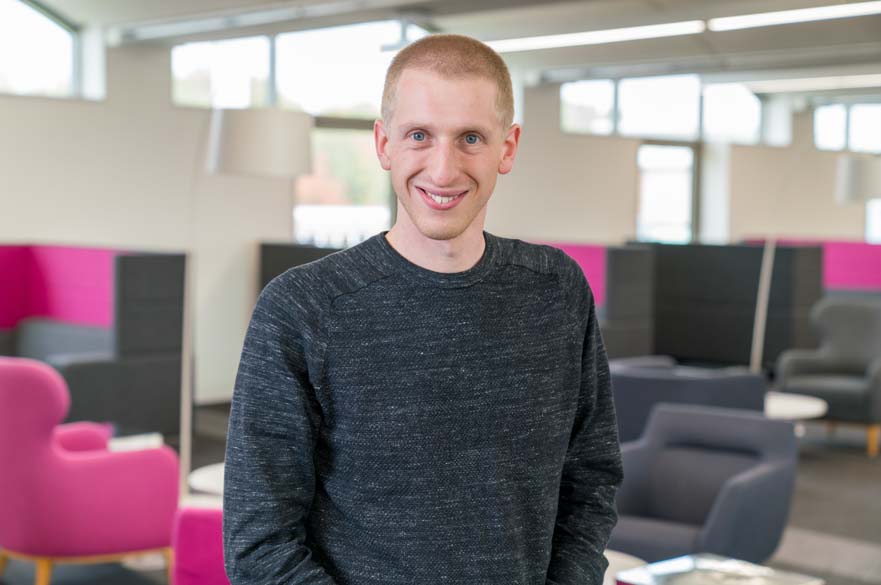
Matt Tranter serves as Principal Lecturer in the School of Science & Technology at Nottingham Trent University, specializing in Physics and Mathematics. He teaches core modules including Calculus, Partial Differential Equations, and Professional Development while leading postgraduate course management since 2024. He earned his PhD from Loughborough University in 2018, focusing on nonlinear wave propagation in layered waveguides, followed by postdoctoral work on droplet dynamics using diffuse-interface models applied to solar panel efficiency. His research expertise spans two interconnected domains: (1) Applied mathematics involving nonlinear wave propagation, soliton dynamics in elastic structures, fluid-structure interaction, and numerical methods for partial differential equations; (2) Mathematics education with emphasis on Learning for Mastery assessments, post-pandemic attendance-attainment relationships, and work placement impacts on student progression. His work on delamination detection using Ostrovsky wave packets demonstrates practical engineering applications. Publication analysis reveals consistent contributions to wave theory (2015-2025) with strategic expansion into educational research since 2021, maintaining rigorous mathematical modeling approaches across both domains while addressing real-world engineering and pedagogical challenges. Dr Tranter has no documented scientific awards in the provided information. He actively mentors students through undergraduate placements (2020-2024 Mathematics Undergraduate Research Studentships coordinator) and currently supervises MRes/PhD candidates in mathematical sciences. His placement management role involved summer internships and professional development, while his current postgraduate leadership shapes advanced curriculum design. His research operates within NTU's Imaging, Materials and Engineering Research Centre and Computation and Simulation group, facilitating cross-disciplinary collaboration on mathematical modeling applications from material science to educational innovation.