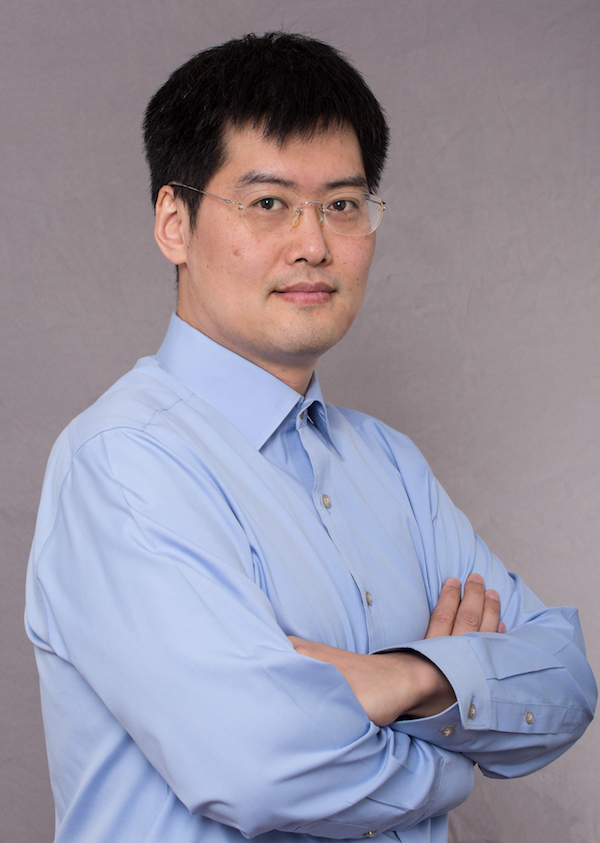
Zeda Li is an Assistant Professor of Statistics at the Paul H. Chook Department of Information Systems and Statistics in the Zicklin School of Business at Baruch College, CUNY. She holds a PhD in Statistics from Temple University (2018) and advanced degrees in Biostatistics and Electrical Engineering.
Christof Weiß is a Professor for Computational Humanities at the CAIDAS / Institute of Computer Science, Julius-Maximilians-Universität Würzburg (JMU), Germany. He serves as Head of the DFG-funded Emmy Noether group on Computational Analysis of Music Audio Recordings: A Cross-Version Approach. His academic journey includes previous positions as Visiting Researcher at University Télécom Paris (2021), Visiting Lecturer at Karlsruhe University of Music (2020, 2021), and Research Assistant at International Audio Laboratories Erlangen (2015-2022) and Fraunhofer Institute for Digital Media Technology (2012-2015). His educational background encompasses a PhD in Media Technology from University of Technology Ilmenau (2017), Concert Diploma in Composition from Würzburg University of Music (2012), Physics Diploma from University of Würzburg (2012), and Music Diploma in Composition from Würzburg University of Music (2011). This unique combination of technical and artistic training forms the foundation of his interdisciplinary research approach. Weiß's research operates at the critical intersection of computer science and musicology, developing novel computational methods for analyzing musical structures in audio recordings. His work bridges technical audio processing with musicological insights, creating methodologies for tonal analysis, key estimation, and cross-version comparison of musical performances. His approach combines deep learning techniques with music theory to extract meaningful patterns from large music corpora, enabling new forms of musicological corpus studies that were previously impossible. His recent publications reveal a clear research trajectory toward integrating advanced machine learning with fundamental musicological questions. The consistent theme across his work involves analyzing classical music structures through computational lenses, with particular emphasis on cross-version consistency in performances, tonal complexity measurement, and developing datasets that support computational musicology. His publications span both highly technical audio processing journals and musicology-focused venues, demonstrating his commitment to bridging these disciplines. Best paper award at the 4th conference on Computational Humanities Research (CHR), 2023 KlarText award for science communication of the Klaus Tschira Foundation, 2018 2nd prize at Festival Pablo Casals composition competition, Prades (France), 2013 Youth Cultural Advancement Award (Kulturförderpreis) of the city of Amberg, Germany, 2011 As principal investigator of the DFG Emmy Noether group, Weiß leads a multidisciplinary research team investigating computational analysis of music audio recordings through a cross-version approach. His research has secured significant funding including the prestigious Emmy Noether program, supporting doctoral and postdoctoral researchers working on various aspects of music information retrieval and computational humanities. His collaborative network spans institutions across Europe, including University Télécom Paris, Queen Mary University of London, and multiple German research centers. Weiß leads the Computational Humanities research group at CAIDAS, which focuses on developing computational methodologies for music analysis with particular emphasis on classical repertoire. The lab creates specialized datasets (including the Wagner Ring Dataset and Schubert Winterreise Dataset), develops algorithms for structural music analysis, and applies these tools to address musicological questions that require computational scale and precision. Their work bridges the gap between technical audio processing capabilities and humanities research questions, creating new pathways for understanding musical structure and evolution.
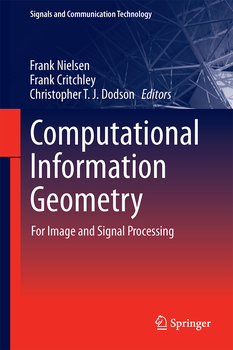
Frank NIELSEN is a Professor at École Polytechnique with expertise in information geometry, data science, and machine learning. He holds a PhD (1996) and HDR (2006) in computer science and has established himself as a leading researcher in geometric approaches to information science. His educational background includes a PhD in computer science (1996) followed by a Habilitation à Diriger des Recherches (HDR) in 2006, the highest academic qualification in France that qualifies one to supervise doctoral candidates. Dr. NIELSEN's research focuses on the Geometric Science of Information , where he develops theoretical frameworks for understanding data through geometric and information-theoretic lenses. His work bridges Computational information geometry Statistical manifold theory Bregman divergences and their applications Machine learning with geometric foundations High-dimensional data analysis He aims to address the challenge of inappropriate data representation in current Data Science by building a theory of Computational Information Geometry to enable Intrinsic Data Science with principled distances. His extensive publication record shows a clear trend toward developing geometric frameworks for understanding statistical divergences, with recent work focusing on Bregman geometry, Fisher-Rao metrics, and their applications in machine learning. His research spans theoretical developments in information geometry to practical implementations like the pyBregMan Python library, demonstrating both theoretical depth and practical relevance. Dr. NIELSEN has made significant contributions through his teaching and publications. He has taught courses at École Polytechnique including INF442, INF517, and INF591. His authored textbooks include Introduction to HPC with MPI for Data Science (2016), A Concise and Practical Introduction to Programming Algorithms in Java (2009), and Visual Computing: Geometry, Graphics, and Vision (2005). He has also edited influential volumes such as Computational Information Geometry for Image and Signal Processing (2016) and Geometric Theory of Information (2014). He actively organizes and participates in academic events, serving on program committees for major conferences including GSI (Geometric Science of Information), CVPR, and ICCV. His work has established him as a key figure in the growing field of geometric approaches to information science.
Prof. Dr. Harald Ritz serves as Professor of Practical Computer Science, especially Business Informatics, at the Technical University of Central Hesse (THM) within the Department of Mathematics, Natural Sciences and Computer Science since 2003. He holds leadership roles as Chair of Examination Committees for B.Sc. and M.Sc. Business Information Systems and Spokesperson for the MNI department in the Business Informatics Working Group (AKWI). His educational background includes a Diplom in Business Informatics (Dipl.-Wirtsch.-Inform.) and doctorate (Dr. rer. pol.) from the Technical University of Darmstadt, following professional experience at SAP SI AG and a professorship at Heilbronn University of Applied Sciences. Ritz's research centers on AI-driven digital transformation for data-driven enterprises, with focus on the “Data to Decision” value chain encompassing Framing, Allocation, Analytics, and Preparation phases. His work integrates business intelligence, data warehousing, machine learning, and SAP ecosystems to address challenges in SME digitalization, operational IT management, and educational technology. Current projects emphasize AI applications in higher education, including intelligent tutoring systems and automated feedback mechanisms. Analysis of his 15 most recent publications reveals a consistent trajectory toward applied AI solutions in business contexts, particularly in intelligent chatbots for educational support, financial trading algorithms, and cloud-based data infrastructure. The research demonstrates increasing integration of no-code platforms, real-time analytics, and domain-specific AI applications across logistics, banking, and procurement sectors. No scientific awards were documented in the source materials. Professor Ritz actively supervises academic development through bachelor’s and master’s theses, doctoral research, and collaborative projects. Current initiatives include the “Winfy” AI chatbot (v4.0, 2025), AI-based feedback systems for educational content (Freiraum 2025 grant), the frits intelligent tutoring project with Prof. Kammer, and doctoral research on AI adoption in SMEs. His work bridges theoretical research with practical implementation in SAP environments and cloud platforms. He operates within THM’s MNI department infrastructure, collaborating through the Business Informatics Working Group (AKWI) and contributing to the Digital Classroom communication platform for online education.
Mariano Cabezas is a researcher in medical imaging and computer vision, currently affiliated with Macquarie University and as an affiliate at the University of Sydney . His work focuses on automating brain MRI analysis for pathologies like multiple sclerosis, Alzheimer's disease, and tumors, with additional contributions to UAV image analysis. PhD in Computer Science (2013), University of Girona MSc in Automation, Computation, and Systems (2010), University of Girona BSc in Computer Science (2009), University of Girona Research Interests : Specializes in magnetic resonance imaging , lesion detection , deep learning , and image processing , with applications in multiple sclerosis , hearing loss , and UAV-derived ecological data . His recent work includes federated learning frameworks for cross-site MS lesion segmentation and pseudo-labeling techniques for longitudinal brain volume estimation. Publication Trends : Over the past five years, his research has emphasized federated learning (4 articles), lesion segmentation (9 articles), and UAV image analysis (3 articles), with a strong focus on clinical validation and cross-institutional collaboration. Labs & Collaborations : Contributed to the NIC-VICOROB group at the University of Girona and maintains affiliations with the Research Institute of the Hospital Vall d'Hebron (VHIR) in Barcelona and Macquarie University in Sydney. Actively develops open-source tools hosted on GitHub.
Professor Marina Gashinova, Chair in Pervasive Sensing at the University of Birmingham, leads the Pervasive Sensing Group within the Microwave Integrated Systems Laboratory (MISL). Her research spans radar sensing for autonomous vehicles, space domain awareness (SDA), and sub-THz/mmWave technology, with international recognition for advancing cognitive radar and space-borne ISAR systems. Research Focus: She pioneers the use of mmWave/sub-THz frequencies for long-range sensing, applying AI to redefine radar capabilities in automotive and aerospace domains. Her EPSRC-funded projects (e.g., PathCAD, EP/Y022092/1) and Innovate UK collaborations (CORTEX, COSMOS) highlight her leadership in cognitive radar and quantum-enabled SDA. Scientific Awards: Lead of REF 2021 Impact Case Study on Advanced Driver Assistance Systems Founding Chair of EMSIG Focus Groups: MODEST (Modern Trends in Medium/Short Range Sensing) and Radar for Space Associate Editor, IEEE Transactions on Aerospace and Electronic Systems Member of EPSRC ICT, EU, and Canadian funding panels Education & Teaching: With a PhD in Physics and Mathematics from St. Petersburg Electrotechnical University and PGCert in Learning and Teaching, she coordinates the MSc module Digital Communication and Signal Processing and contributes to radar and satellite communication curricula.
Scott Nelson is an Associate Professor of Finance at the University of Chicago Booth School of Business. His research bridges consumer credit markets, regulatory frameworks, and behavioral economics, with a focus on how information asymmetries and algorithmic decision-making shape market outcomes. He has contributed to understanding the impacts of the 2009 CARD Act, eviction protections in housing markets, and fairness in credit scoring systems. PhD in Economics, Massachusetts Institute of Technology BA (summa cum laude) in Economics and Mathematics, Yale College Nelson's work employs diverse data sources, including credit reports, court filings, and tax records, combined with structural models to analyze consumer and firm behavior. Key themes include regulatory efficiency, validity disparities in predictive models, and the welfare implications of policy interventions. His articles reveal trends in algorithmic regulation (2025), eviction dynamics (2025), credit scoring disparities (2024), and public finance impacts on Chinese real estate (2023). These publications highlight interdisciplinary methodologies integrating economics, law, and data science. Scientific awards include the AQR Top Finance Graduate Award (2018) and National Science Foundation Graduate Research Fellowship. He has held postdoctoral roles at the Consumer Financial Protection Bureau/Princeton University and visiting research positions at the Federal Reserve Bank of Boston.
Seongjin Choi is an Assistant Professor in the Department of Civil, Environmental, and Geo-Engineering at the University of Minnesota, Twin Cities , where he began his role in January 2024. His research bridges Urban Mobility Data Analytics , Spatiotemporal Modeling , and Deep Learning to advance transportation systems. Affiliated with the Center for Transportation Studies , Minnesota Robotics Institute , and Data Science Initiative , he leads the Choi Research Group . Education: Ph.D., Civil and Environmental Engineering, Korea Advanced Institute of Science and Technology (KAIST), 2021 M.S., Civil and Environmental Engineering, KAIST, 2017 B.S., Civil and Environmental Engineering, KAIST, 2015 His research focuses on Urban Mobility Data Analytics and Deep Learning to optimize transportation systems. Key areas include: Spatiotemporal Data Modeling for forecasting and imputation Generative AI applications in transportation data Reinforcement Learning for Connected Automated Vehicles (CAV) Cooperative Intelligent Transport Systems (C-ITS) Recent publications in Transportation Science and Transportation Research Part C highlight his work on probabilistic traffic forecasting , deep generative models , and vision-language-action frameworks for autonomous systems. His methodologies often combine AI-driven analytics with real-time mobility optimization . Dr. Choi serves as: Associate Editor of The Journal of the Korean Society of Transportation (JKST) , 2023–Present Guest Editor for Journal of Advanced Transportation special issue on "Advanced Data Intelligence Theory and Practice in Transport 2023", 2023–2024 He actively seeks PhD students/postdocs for 2025 cohorts focused on machine learning for transportation challenges. Current projects include AI-enhanced traffic forecasting, CAV control, and urban air mobility (UAM) integration studies.
Isabella "Izzi" Hinks serves as a Teaching Assistant Professor in the Computer Science Department at the University of North Carolina at Chapel Hill. She completed her Ph.D. in Geospatial Analytics at NC State University's Center for Geospatial Analytics in 2024, where she was advised by Dr. Josh Gray. Her academic journey began with dual B.Sc. degrees in Computer Science and Environmental Science, along with a minor in Statistics and Analytics, all earned at UNC Chapel Hill. Dr. Hinks' research focuses on developing innovative algorithms to estimate the adaptive potential of small-scale agriculture in poverty-affected regions. Her work combines computer science expertise with environmental applications, particularly in using remote sensing technologies and deep learning techniques to monitor smallholder farming systems. She has made significant contributions to understanding how smallholder farmers can enhance their climate resilience through strategic adaptations, leveraging both satellite data and field observations. Her publication record demonstrates a consistent focus on applying advanced computational methods to agricultural monitoring challenges. The most recent articles show a progression from basic field boundary mapping using deep learning toward more sophisticated analyses of climate adaptation impacts on smallholder resilience. Her work increasingly integrates multiple data sources, including satellite imagery, household surveys, and on-the-ground measurements, to create comprehensive assessment frameworks for agricultural systems in developing regions. Among her notable recognitions is the Gladys West Award from the Center for Geospatial Analytics' fourth annual CGA Awards, received in January 2023. Her research on deep learning-based smallholder field delineation was featured in an NC State University News article in April 2023, highlighting the practical significance of her work. Dr. Hinks has been actively involved in several research initiatives, including work with the RESCuE Consortium in Thailand monitoring coastal ecosystem rehabilitation and supporting underserved communities during the Covid-19 pandemic through Curamericas Global. She was also a founding member of Acta Solutions, a tech start-up focused on helping local governments optimize decisions using constituent data. Her presentations at major conferences like the AGU Fall Meeting demonstrate her growing prominence in the field of geospatial analytics for agricultural applications.
Steven Laureys, MD, PhD, is a Professor at the University of Liège where he leads the Coma Science Group within GIGA Consciousness. He holds dual prestigious appointments as Canada Excellence Research Chair in Integrative Neuroscience for Sustainable Mental Health and Canada Excellence Research Chair in Neuroplasticity. His clinical roles include neurologist and clinical professor at the Centre du Cerveau of the CHU of Liège, and Director of Research at the FNRS. Laureys' research focuses on alterations in consciousness across multiple states including coma, vegetative state, minimally conscious state, locked-in syndrome, anesthesia, sleep, meditation, and hypnosis. His work integrates multimodal neuroimaging (fMRI, PET, EEG), electrophysiology, and behavioral assessments to develop diagnostic and prognostic tools for disorders of consciousness (DOC). Key methodological approaches include brain connectivity mapping, metabolic analysis, and AI-driven modeling of neural dynamics. His publication portfolio reveals a strong emphasis on brain connectivity dynamics (42% of recent articles), AI applications in consciousness assessment (23%), and translational neurorehabilitation (18%). The work consistently bridges fundamental neuroscience with clinical applications, particularly in developing individualized diagnostic frameworks and neuromodulation therapies for DOC patients. Major scientific recognition includes: Francqui Prize (2017), Belgium's highest scientific honor Generet Prize (2019) Appointment as Editor-in-Chief of Brain Connectivity journal (2024) Two Canada Excellence Research Chairs (2023-2024) Laureys directs the internationally recognized Coma Science Group, which operates within the GIGA Consciousness research center. The group maintains extensive international collaborations across Europe, North America, and Asia, with particular focus on developing standardized assessment protocols and innovative neuromodulation approaches for disorders of consciousness. Current research directions emphasize neuroplasticity mechanisms, meditation's impact on brain health, and sustainable mental health frameworks through integrative neuroscience approaches.
Cihan Tepedelenlioglu is an Associate Professor at Arizona State University's School of Electrical, Computer and Energy Engineering. His work bridges wireless communications, statistical signal processing, and renewable energy systems, with a focus on photovoltaic array monitoring, fault detection, and optimization. PhD, MS, and BS in Electrical Engineering from University of Minnesota, University of Virginia, and Florida Institute of Technology 2001 NSF CAREER Award recipient Research interests span wireless communications , graph signal processing , stochastic optimization , and machine learning applications to solar energy systems . Key projects include quantum machine learning for PV topology optimization, consensus algorithms for distributed networks, and real-time fault detection using neural networks. Recent articles emphasize machine learning in energy systems (2023-2025), with 12 publications on photovoltaic monitoring and 3 on consensus algorithms. Earlier work focused on channel estimation in OFDM systems and fading models in wireless communications. Scientific awards : NSF CAREER Award (2001) Major grants include NSF funding for networked solar array management (2013-2016), nonlinear distributed consensus (2013-2016), and statistical processing of solar data (2009-2012). Teaching roles include EEE 350 Random Signal Analysis and graduate research supervision in signal processing and wireless communications. Collaborates extensively with Andreas Spanias, Mahesh Banavar, and other researchers on cyber-physical systems for energy applications.
Dr. Yongkai Wu is an Assistant Professor in the Department of Electrical and Computer Engineering at Clemson University, where he focuses on advancing Responsible AI , Causal Inference , and Machine Learning . His research addresses fairness, trustworthiness, and transparency in AI systems through causal modeling and has been published in top-tier venues like AAAI, NeurIPS, and KDD. Education: Ph.D. in Computer Science (2020) and M.S. in Computer Science (2018) from the University of Arkansas; B.Eng. in Electronic Engineering (2014) from Tsinghua University. Dr. Wu’s research spans Responsible AI and Causal Inference , with applications in healthcare, computer vision, and cybersecurity. He explores Causal Fairness in non-IID settings, Responsible LLMs , and Robust Learning via hyperspectral data. His work integrates ethics into AI/ML systems, ensuring equitable outcomes in dynamic environments. His recent articles highlight trends in Fairness through causal inference, Explainable AI in healthcare, and Efficient LLMs . Collaborations with institutions like the University of Maryland and Prisma Health underscore real-world impact. Scientific Awards: Best Paper Award (SIGKDD'25), travel awards from SBP-BRiMS, IJCAI, KDD, and NeurIPS. Dr. Wu’s grants include NSF , SC EPSCoR , Prisma Health , and United States Army CCDC funding for projects on Responsible AI in Healthcare , Hyperspectral AI , and Robust Learning . He mentors students through summer programs and directed research, emphasizing hands-on experience with Python, PyTorch, and ethical AI frameworks.
David Mount is a Professor in the Department of Computer Science at the University of Maryland, with an additional appointment at the University of Maryland Institute for Advanced Computer Studies (UMIACS). His primary research focus is Computational Geometry, particularly in designing, analyzing, and implementing data structures and algorithms for geometric problems. Applications of his work span image processing , pattern recognition , information retrieval , and computer graphics . He is a Fellow of the ACM and has received the ACM Recognition of Service Award twice. A member of the Algorithms and Theory Group, Mount has authored over 200 publications, many of which are available on Google Scholar, DBLP, and ArXiV. Research Focus Computational Geometry Algorithm Design and Analysis Geometric Data Structures Nearest Neighbor and Range Searching Clustering Algorithms Recent Publications Mount's recent publications (2023-2025) emphasize non-Euclidean geometry (e.g., Hilbert metric), dynamic geometric structures , and approximation algorithms for polytopes, Voronoi diagrams, and Delaunay triangulations. Collaborative works with students and researchers address challenges in kinetic data compression , label tracking , and geometric software development (e.g., Ipelets for polygonal geometry). Professional Activities Editorial Board Member, TheoretiCS (2021-present) Senior Associate Editor, ACM Trans. on Spatial Algorithms and Systems (2013-2020) Program Committee Member, FOCS , ESA , SODA , and other major conferences Awards ACM Fellow ACM Recognition of Service Award (twice)
Somak Dutta is an Associate Professor at Iowa State University conducting interdisciplinary research at the intersection of statistical methodology, machine learning, and agricultural sciences. His work addresses critical challenges in plant breeding, genomics, and environmental modeling through innovative quantitative approaches. His academic foundation includes: PhD in Statistics, University of Chicago, 2015 M.Stat (First Division with Distinction), Indian Statistical Institute, Kolkata, 2010 B.Stat (Honours with Distinction), Indian Statistical Institute, Kolkata, 2008 Dr. Dutta specializes in developing advanced statistical frameworks for high-dimensional data analysis, Bayesian variable selection, and spatial modeling. His research directly impacts plant breeding programs through applications in phenotyping, haploid induction systems, drought response mechanisms, and genetic architecture studies across key crops including maize, soybean, and mungbean. He also contributes to meteorological science through machine learning applications for severe weather verification. Analysis of his 2023-2025 publications reveals two dominant research streams: (1) agricultural applications focusing on genomic selection, phenotyping technologies, and stress response modeling in crops, and (2) meteorological innovations applying machine learning to severe thunderstorm wind verification and precipitation forecasting. Both streams demonstrate his signature approach of developing novel statistical methodologies tailored to domain-specific challenges. No scientific awards were documented in the provided materials. Information regarding student advising, grant funding, laboratory infrastructure, or collaborative teams was not available in the source documentation.
Xuming He is an Associate Professor at the School of Information Science and Technology (SIST), ShanghaiTech University, where he leads the PLUS Lab. His research spans computer vision and machine learning with a focus on developing algorithms that operate effectively under limited supervision and evolving data conditions. His core research interests include weakly-supervised and few-shot learning for scenarios with sparse annotations, continual learning frameworks for knowledge retention during sequential task acquisition, semantic segmentation techniques for scene understanding, and multimodal vision-language representations. He emphasizes interpretable machine learning to build transparent AI systems capable of human-understandable reasoning, addressing critical challenges in model trustworthiness and deployment reliability. Recent publications reveal strong trends toward novel class discovery in long-tailed recognition scenarios, physics-informed generative modeling for scientific applications, and robust segmentation under distribution shifts. His work increasingly integrates large language models for multimodal reasoning while maintaining focus on efficiency in resource-constrained environments like robotic grasping and medical imaging analysis. He actively mentors students, having supervised Qian He to PhD completion and Chuanyang Hu to Master's degree in 2023. He welcomes prospective graduate students through ShanghaiTech's Computer Science & Technology program and offers undergraduate research projects requiring minimum six-month commitments. The PLUS Lab under his direction drives innovation in learning under supervision constraints, with recent work spanning medical tumor analysis, cross-view geolocation, photonic computing, and semiconductor design verification. The lab's research bridges theoretical advances with practical applications across healthcare, robotics, and scientific discovery domains.