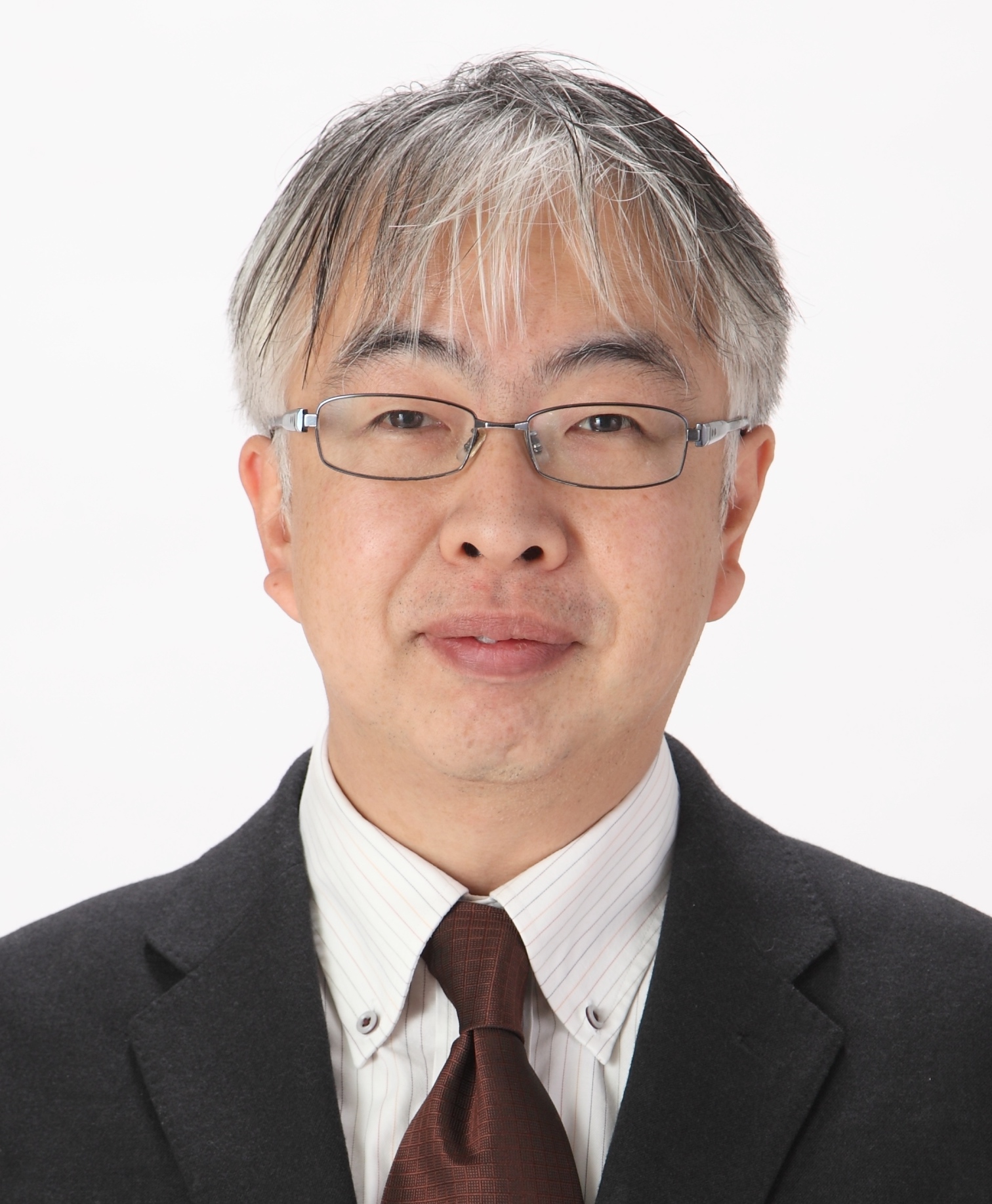
Tomoyuki Yamamoto is a Professor at the Faculty of Science and Engineering, Waseda University , Japan. He holds a Doctor of Engineering from Waseda University and has extensive experience in computational materials science, particularly focusing on electronic structure analysis, crystal field effects, and optical properties of doped materials.
Yuki Hiramatsu is an Assistant Professor at the Global Education Center of Waseda University , where she focuses on Japanese language education and applied linguistics. Holding a PhD in Japanese Language Education (2023) and a Master's degree (2016) from Waseda University, she has been actively involved in teaching and research since 2016. Education: PhD in Japanese Language Education (Waseda University, 2023) Professional Affiliations: Japan Society for Treatise Communication, Waseda Japanese Language Association, Qualitative Psychology Society Her research explores communication education through Taigu-communication theory, focusing on academic writing , business email communication , and subjective awareness in Japanese language education. Key findings in her work highlight the correlation between cognizance of communication subjects and verbal acts, with particular attention to situational awareness and contextual factors. Recent publications examine challenges in graduate student academic writing and framework development for business Japanese education. She has received recognition through committee roles in academic societies and contributes to educational practices through writing center initiatives and curriculum development. Scientific Awards Vice Representative of Graduates, Waseda University Graduate School of Japanese Language Education (2016) Hiramatsu actively participates in writing center operations and educational research projects, including grants from the Japan Society for the Promotion of Science related to academic writing support for international students and business Japanese language education frameworks. She teaches courses in Academic Writing in Japanese and Communication Theory Through Japanese Language at Waseda University.
Akiko Kataoka is an Assistant Professor at the Global Education Center of Waseda University, specializing in career development , leadership education , and local third places . With academic foundations from Hosei University (Master's 2015, Doctorate 2021), she combines practical experience from NEC, educational institutions, and her own career break journey into her research. Key affiliations: Waseda University (2021–present), Hosei University (2022–2023), Tokyo Keizai University (2023–2024) Education: Doctorate in Policy Studies (2021), Master's in Policy Studies (2015) from Hosei University Her research explores career breaks as non-blank periods for self-reassessment, focusing on women's transitions and third places as environments for self-efficacy and regional revitalization. She co-authored the 2024 book Career Break: Letting Go Is Not a Blank and conducted fieldwork on cross-border learning's role in leadership education. Recent publications analyze third place dynamics in local communities, career gap stigma , and self-efficacy mechanisms for displaced workers. Her teaching includes leadership development, organizational communication, and career theory courses at Waseda and Tokyo Keizai University.
Hiromi Nakai is a Professor at Waseda University, School of Advanced Science and Engineering, Department of Chemistry and Biochemistry. She holds a Doctorate in Engineering from Kyoto University and has been a leading researcher in theoretical and quantum chemistry for over three decades. Her academic career includes positions at Kyoto University as a Research Associate followed by a progression through the ranks at Waseda University from Assistant Professor to full Professor since 2004. She has also held concurrent positions at Kyoto University and as a Visiting Professor at Rice University. Dr. Nakai's research focuses on theoretical chemistry, quantum chemistry, electronic state theory, molecular simulation, and machine learning applications in chemistry. Her work has significantly advanced computational methods for large-scale quantum chemical calculations, relativistic effects in quantum chemistry, and the development of efficient algorithms for electronic structure calculations. She pioneered the divide-and-conquer method for linear-scaling quantum chemical computations, which has enabled calculations on systems with millions of atoms. Her recent publications demonstrate a strong emphasis on extending computational methods to handle larger systems, incorporating machine learning techniques, addressing relativistic effects, and applying computational chemistry to energy-related problems including battery materials and CO2 conversion. The research spans fundamental quantum chemical method development to practical applications in materials science and sustainable chemistry. Fukui Medal (2024) Member of International Academy of Quantum Molecular Science (2023) Asia-Pacific Association of Theoretical & Computational Chemists Award (2023) CSJ Award for Creative Work (2016) Fellow of Royal Society of Chemistry (2014) Pople Medal from Asia-Pacific Association (2011) Dr. Nakai serves on numerous editorial boards including the International Journal of Quantum Chemistry and has held leadership positions in professional societies including the Molecular Science Society and the Japan Society of Theoretical Chemistry, where she served as President. Her research has been supported by major Japanese funding agencies including JST CREST and PRESTO programs. She leads a research group that integrates theoretical development with practical applications in energy materials and sustainable chemistry.
LIN, Jia-Yeu is an Assistant Professor (non-tenure-track) at Waseda University's Faculty of Science and Engineering, Global Center for Science and Engineering. They currently serve as a Lecturer at Waseda University's School of Science and Engineering, International Science and Technology Center (2023.04-Present) and previously held Assistant Professor position at Waseda University (2021.04-2023.03). They also maintained a part-time lecturer role at Tokyo Design Technology Center's Robotics Department (2019.04-2024.02). Dr. Lin's educational background includes: Ph.D. in Engineering (2021.03) from Waseda University, Graduate School of Advanced Science and Engineering, Department of Integrative Bioscience and Biomedical Engineering Master's degree (2018.03) from Waseda University, Graduate School of Advanced Science and Engineering, Department of Integrative Bioscience and Biomedical Engineering Bachelor's degree (2016.01) from National Taiwan University, Department of Physics Dr. Lin specializes in robotics with particular expertise in humanoid musical robots, human-robot interaction systems, and therapeutic applications. Their research spans human interfaces, intelligent mechanical systems, and robotics applications in music performance. Notably, they've developed advanced systems for humanoid saxophonist robots capable of musical dynamics expression and contributed significantly to robot-based music therapy for individuals with Autism Spectrum Disorder, focusing on synchronization feedback systems and facial expression recognition interfaces. Dr. Lin's publication record demonstrates a strong focus on humanoid musical robotics, particularly saxophone-playing robots, with significant contributions in musical expression systems, articulation control, and performance dynamics. Their work also extends to social companion robots for elderly care (DarumaTO project) and search and rescue robotics. The interdisciplinary nature of their research bridges mechanical engineering, music technology, healthcare applications, and human-computer interaction, with consistent publication in top robotics conferences including IEEE/RSJ IROS, IEEE ICRA, and IEEE/ASME AIM. Dr. Lin teaches multiple courses at Waseda University's School of Creative Science and Engineering, including Physics Laboratory for Mechanical Engineering, Mechatronics Laboratory (multiple levels), Control Systems, and Fundamentals of Robotics. Their teaching spans both foundational and advanced topics across spring and fall semesters of 2025. Currently leading research on tactile sensation simulators for VR environments, Dr. Lin has developed an independent finger joint force feedback system that provides precise resistance at individual finger joints with forces up to 5N per joint and response time of 20ms. Previous projects include multi-sensory feedback systems for VR, instrumental ensemble systems for human-robot musical interaction, and conductor robots for emotional musical engagement, demonstrating consistent innovation in human-robot interaction systems.
Professor Tadashi Wadayama serves in the Department of Computer Science within the Faculty of Engineering at Nagoya Institute of Technology. He holds a full professorship position and leads research initiatives in coding theory, signal processing, and deep learning applications for next-generation communication systems. Professor Wadayama received his B.E., M.E., and D.E. degrees from Kyoto Institute of Technology in 1991, 1993, and 1997 respectively. He began his academic career at Okayama Prefectural University in 1995 as a research associate and spent 1999-2000 as a visiting researcher at Essen University in Germany. He joined Nagoya Institute of Technology as an associate professor in 2004 and was promoted to full professor in 2010. He maintains active memberships in IEEE and the Institute of Electronics, Information and Communication Engineers (IEICE). His research spans multiple interconnected domains with primary focus on Coding Theory , Signal Processing for Wireless Communications , and Deep Learning applications . Professor Wadayama has made significant contributions to LDPC codes, MIMO signal detection, and the emerging field of deep unfolding techniques that bridge neural networks with traditional signal processing algorithms. His work increasingly incorporates physics-aware modeling of communication channels governed by partial differential equations. Recent research demonstrates strong interdisciplinary integration between information theory, machine learning, and communication engineering principles. Analysis of his recent publications reveals a clear trajectory toward developing foundational technologies for post-Shannon communication architectures. His work emphasizes ultra-large-scale coding, goal-oriented communication, digital homeostasis mechanisms, physics-embedded signal processing, and dual-process learning systems that combine fast reactive processing with deliberative meta-learning using LLM orchestrators. Fundamentals Review Best Author Award, IEICE, 2022 SRC 2010 Paper Award, Storage Research Promotion Organization, 2011 Professor Wadayama has successfully led multiple competitive research grants including JSPS Grant-in-Aid projects. He currently serves as Principal Investigator for the JST CRONOS project "Digital Cybernetics: Towards Next-Generation Communication Architecture" (2025-2031), which aims to develop foundational technologies supporting autonomous, adaptive, and robust large-scale AI systems. As IEEE Information Theory Workshop General Co-chair (2020-2021) and former chair of IEICE's Information Theory Research Committee (2020-2022), he maintains active leadership roles in the academic community. He leads the Wadayama Group at Nagoya Institute of Technology, which focuses on digital cybernetics and communication physics. The group develops physics-aware signal processing implementations, dual-process learning systems, digital homeostasis mechanisms, and system integration for next-generation communication architectures. His team collaborates with researchers from Kyoto University, Hiroshima University, Institute of Science Tokyo, and Tokyo University of Science, creating a robust research ecosystem focused on post-Shannon communication frameworks.