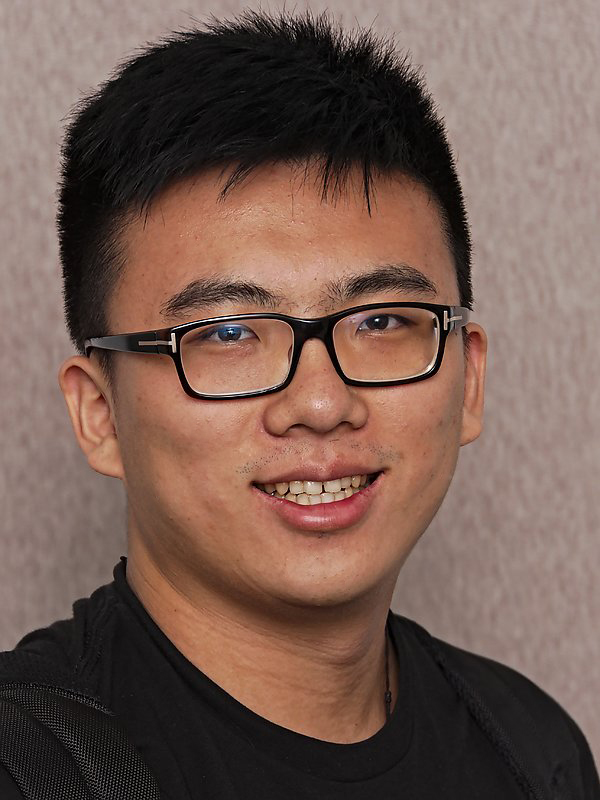
Michael J. Black is a Professor and Honorarprofessor at the University of Tübingen's Faculty of Science, Department of Computer Science, and a founding Director of the Max Planck Institute for Intelligent Systems, leading the Perceiving Systems department. He holds a B.Sc. from the University of British Columbia (1985), M.S. from Stanford (1989), and Ph.D. in Computer Science from Yale (1992). His research focuses on computer vision, 3D human modeling, motion capture, and AI-driven digital humans. Key contributions include the SMPL body model, optical flow algorithms, and datasets like Middlebury Flow and Sintel. He has received major awards such as the PAMI Distinguished Researcher Award, multiple Koenderink and Longuet-Higgins Prizes, and is a member of the German National Academy of Sciences Leopoldina and Royal Swedish Academy of Sciences. His commercial ventures include co-founding Body Labs (acquired by Amazon) and Meshcapade, advancing 3D human generation and interaction technologies. Recent work includes markerless motion capture systems (e.g., MAMMA, PICO), 3D hair and garment synthesis, and AI tools like ChatHuman for 3D human interaction analysis. His research bridges vision, graphics, and robotics, with applications in animation, healthcare, and robotics.
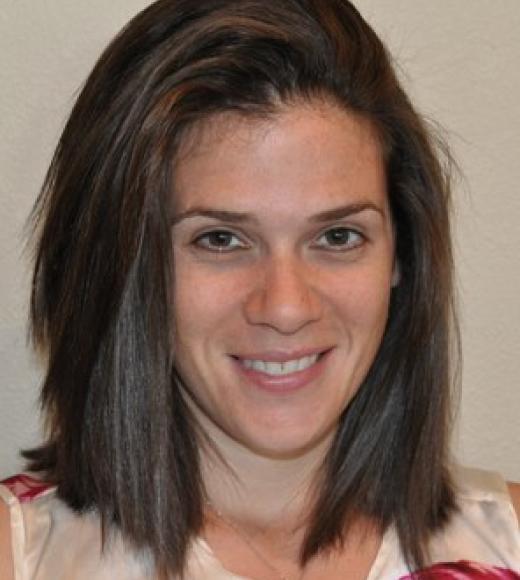
Dr. Jillianne Code is an Associate Professor at the University of British Columbia's Faculty of Education, Department of Curriculum & Pedagogy, directing the ALIVE Research Lab. Her work focuses on learner agency, educational technologies, and social media's impact on student success. Specializes in immersive virtual environments for assessment Researches self-regulated learning and formative feedback Investigates health education through digital interventions Her recent publications examine pandemic-era educational transitions, digital literacy in teacher training, and cognitive tools in virtual reality. She has received Outstanding Paper Awards for her work on immersive assessment. Dr. Code leads research projects on learning analytics, student engagement in digital spaces, and technology education sustainability. Her work bridges educational theory with practical interventions through digital badges, mobile health applications, and 3D learning environments.
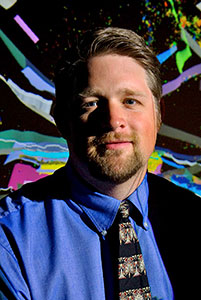
Dr. Md Manjurul Ahsan serves as a Research Assistant Professor in the Department of Industrial & Systems Engineering at the University of Oklahoma, where he develops AI-driven solutions for healthcare diagnostics and advanced manufacturing optimization. His work bridges theoretical AI advancements with practical industrial and medical applications. Education: Ph.D. in Industrial and Systems Engineering, University of Oklahoma M.S. in Industrial Engineering, Lamar University B.S. in Industrial and Production Engineering, Shahjalal University of Science and Technology Research Focus: Dr. Ahsan specializes in Artificial Intelligence with technical depth in Machine Learning , Deep Learning , and Computer Vision to solve critical challenges in healthcare diagnostics and additive manufacturing . His research emphasizes Explainable AI to enhance model trustworthiness and deployment efficiency across Cyber-Physical-Social Systems, with significant contributions to Aerospace and Defense applications. Publication Trends: Recent work (2023-2025) reveals a strategic expansion from core manufacturing applications into medical AI (diffusion models for diagnostics), cultural preservation (NLP for Dravidian languages), and geopolitical AI analysis. His publications consistently address data imbalance challenges while advancing digital twin integration in quality control systems. Scientific Recognition: GCOE Dissertation Excellence Award (2023) International Student Scholarship (2022) Outstanding Academic Achievement in Engineering (2022) IEEE IEMCON Best Paper Award (2020) Netti Vincent Boggs Engineering Excellence Award (2020) Research Leadership: As director of the Sooner Additive Manufacturing Laboratory , Dr. Ahsan leads cross-disciplinary teams developing real-time monitoring systems using FARO arms and CMM metrology. His postdoctoral work at Northwestern University (2023-2024) advanced AI deployment frameworks, resulting in 60+ peer-reviewed publications with multiple papers ranking in engineering's top 1% for citations.
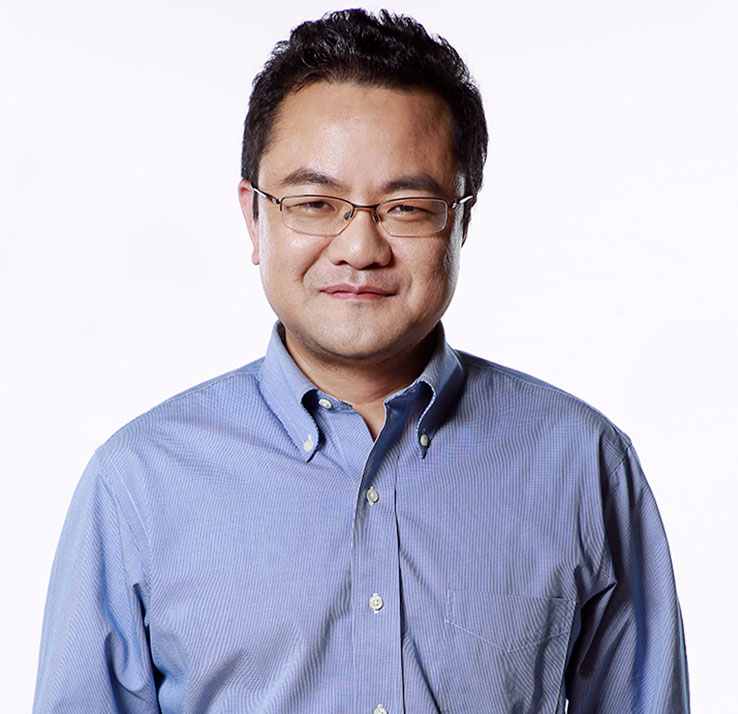
Susan J. Simkins is a Professor of Psychology at The Pennsylvania State University, where she serves as Lead of the CTSI-Team Science Core and is based in Moore Building at University Park. Her contact details include email sxm40@psu.edu and phone (814) 863-7387. Education Ph.D., Ohio State University, 1996 Research Interests Dr. Simkins' research centers on effective teamwork and performance through three interconnected streams: team composition/diversity (examining demographic, cognitive, and personality-based diversity within contingency frameworks), team cognition/mental models (focusing on shared understanding of tasks and teamwork dynamics), and temporal integration in teams (investigating time-based diversity, temporal leadership, and pacing styles). Her work emphasizes individual differences, cognitive processes, and temporal dynamics as critical determinants of team effectiveness in organizational contexts. Publication Trends Her 2013-2017 publications reveal a strong focus on temporal dimensions of teamwork, including polychronicity diversity, temporal conflict in specialized teams (e.g., culinary environments), and time-sensitive mental models. Key methodological approaches involve multilevel analysis and contingency frameworks, with applications spanning leadership theory, decision-making diversity, and climate interactions. Work appears consistently in top organizational psychology journals like Journal of Applied Psychology and Organizational Behavior and Human Decision Processes. Scientific Awards No scientific awards were documented in the provided text. Advising and Grants While the text confirms her faculty role and research leadership, specific details about graduate student advising, grant funding, or sponsored projects were not included in the source material. Labs and Teams Dr. Simkins leads the CTSI-Team Science Core, an initiative dedicated to advancing methodologies for studying team-based research structures and improving collaborative effectiveness in scientific and organizational settings.
Prof. Anya Belz is Full Professor of Computer Science at Dublin City University's School of Computing and Science Lead at ADAPT Research Centre. A leading NLP researcher with PhD-level expertise, she specializes in natural language generation, evaluation methodologies, and multimodal systems. Recipient of multiple best paper awards and NAACL Test of Time Award nomination. Research innovations include foundational work on statistical language generation (deployed in weather forecasting systems), comparative evaluation frameworks, vision-language integration, and reproducibility quantification. Current EPSRC-funded ReproHum project coordinates 20 global labs studying evaluation consistency. Achievements : Developed industry-deployed generation systems for accessibility applications Pioneered cross-modal alignment techniques for image description Authored 100+ publications spanning generation, evaluation, and reproducibility
Tiancheng Zhao is a principal researcher at the Binjiang Institute of Zhejiang University and founder of the Om Artificial Intelligence Laboratory (Om AI Lab), dedicated to frontier open multimodal AGI research for building next-generation agents that transform work and life through advanced human-machine interaction. His academic credentials include: Ph.D. in Computer Science from Carnegie Mellon University (2016-2019) under Prof. Maxine Eskenazi, Prof. Louis-Philippe Morency, Prof. William W. Cohen, and Dr. Dilek Hakkani-Tur, with pioneering dissertation “Learning to Converse With Latent Actions” in end-to-end generative conversational models M.S. in Computer Science from Carnegie Mellon University (2014-2016) B.S. in Electrical Engineering from UCLA (2010-2014) with Summa Cum Laude, focusing on speech signal processing under Prof. Abeer Alwan Dr. Zhao’s research centers on multimodal foundation models and agents, tackling three core challenges: Multimodal Models for cross-modal representation learning in high-dimensional data, Learning to Learn for effective skill acquisition from diverse signals (supervised labels, rewards, meta-learning), and AI Agents for open-world understanding and complex decision-making. His work bridges computer vision, natural language processing, and real-world applications including healthcare analytics and remote sensing. Analysis of his 50+ publications reveals accelerating innovation in multimodal large language models (2024-2025), with emphasis on stable vision-language architectures (VLM-R1), agent orchestration frameworks, and domain-specific applications in geospatial analysis and healthcare. Key trends include solving long-tail distribution challenges in satellite imagery, developing human-like zooming capabilities for multimodal LLMs, and creating unified benchmarks for autonomous GUI testing. His scientific recognition includes: National Breakthrough Technology Award by Ministry of Science and Technology (2021) Microsoft Research Best & Brightest PhD (2018) BEST PAPER AWARD at SIGDIAL 2018 Best Paper Nomination at SIGDIAL 2016 Top 1 Outstanding Bachelor of Science Award at UCLA (2014) As Om AI Lab founder, Dr. Zhao leads research teams developing computational building blocks for human-AI collaboration. While specific student mentorship details aren’t public, his extensive publication record with junior co-authors indicates active research supervision. Current projects focus on practical system implementations for real-world multimodal agent deployment across diverse domains.
Sandy J. Wayne serves as Dean of the College of Business Administration and Professor of Management at the University of Illinois Chicago (UIC), where she leads academic initiatives while maintaining an active research program. An internationally recognized expert in workplace leadership, her work focuses on developing high-performing employees through effective team leadership and organizational practices that enhance motivation and performance. She also investigates systemic barriers affecting the upward mobility of women and people of color in corporate environments. Dr. Wayne earned her academic credentials from: PhD in Management, Texas A&M University MBA, Illinois State University BS in Business Administration, Illinois State University Her research program spans leadership dynamics, organizational behavior, and diversity science. She examines how manager-employee relationships impact engagement and performance, with particular emphasis on work-family balance and career trajectory barriers for underrepresented groups. Her work bridges theoretical rigor with practical applications for organizations seeking to build inclusive, high-performance cultures through evidence-based leadership development. Analysis of her recent publications (2014-2024) reveals three dominant research streams: leader-member exchange theory (particularly LMX differentiation effects), servant leadership measurement and outcomes, and diversity dynamics in advancement pathways. Her work consistently appears in top-tier journals like Journal of Applied Psychology and Academy of Management Journal , demonstrating methodological sophistication through multi-level analyses and cross-cultural investigations. Dr. Wayne's scientific contributions have earned significant recognition: Decennial Influential Article Award for 2015 publication (2025) University Scholar, University of Illinois System (2020-2023) Faculty Impact Award, UIC Business (2019) Fellow, Academy of Management (2019) Decennial Influential Article Award for 2008 publication (2018) As Director of the Institute for Leadership Excellence and Development since 1996, she has cultivated a robust research ecosystem while leading institutional initiatives like the UIC Business Cohort Program and Business Scholars Program. Her administrative leadership extends to faculty development through her former role as Associate Dean for Faculty Affairs (2014-2022), demonstrating sustained commitment to academic excellence and organizational growth.
Dr. Amin Sakzad is an Associate Professor in the Department of Software Systems & Cybersecurity at Monash University's Faculty of Information Technology. His research focuses on lattice-based cryptography, wireless communications, and post-quantum security protocols. He holds a PhD in Applied Mathematics from Amirkabir University of Technology (2011) and has held academic roles at Carleton University and Monash since 2012. Dr. Sakzad’s expertise spans lattice coding theory, MIMO systems, and privacy-preserving technologies for genomic databases and blockchain applications. He leads multiple ARC-funded projects, including work on secure databases (SRDBMS) and post-quantum cryptographic primitives for FinTech and energy sectors. His research has been recognized through awards such as the FIT Dean’s Award for Teaching Excellence (2021). Key collaborations include projects on blockchain security (CollinStar Lab), genomic data privacy, and energy market cybersecurity. His work addresses UN SDGs through contributions to quality education (SDG 4) and industry innovation (SDG 9). Recent publications highlight advancements in lattice-based cryptography (e.g., CRYSTALS-Kyber variants), privacy-preserving energy trading, and secure blockchain protocols like FPPW watchtower systems. His research bridges theoretical cryptography with practical implementations in embedded systems and 5G telecommunications. Grants: 16 active/completed projects including $1.2M in ARC funding Advising: Supervising PhD projects on lattice applications in post-quantum crypto and blockchain Labs: Core member of Monash’s Software Defined Telecommunications (SDT) Lab and CollinStar Lab
Georgia Zellou is an Associate Professor in the Department of Linguistics at the University of California, Davis, where she co-directs the Phonetics Lab and conducts award-winning research at the intersection of phonetics, speech perception, and human-AI interaction. Her work investigates how phonetic detail is cognitively represented through variations in speech production, with significant contributions to understanding speech alignment with voice assistants, face-masked speech intelligibility, and cross-linguistic perception of synthetic voices. Her academic credentials include a Ph.D. in Linguistics from the University of Colorado at Boulder (2012), an M.A. in Linguistics from Stony Brook University (2007), and a B.A. in Linguistics & Anthropology from the University of Florida (2005, Cum Laude, Phi Beta Kappa). Ph.D., Linguistics, University of Colorado at Boulder (2012) M.A., Linguistics, Stony Brook University (2007) B.A., Linguistics & Anthropology, University of Florida (2005) Professor Zellou's research program centers on laboratory phonology approaches to real-world communication challenges, examining how acoustic-phonetic details influence speech perception across contexts. Her studies span speech alignment with voice-AI systems (e.g., Amazon Alexa), sociophonetic variation in bilingual speech, and the cognitive mechanisms underlying perceptual compensation for coarticulation. She employs experimental methods including eye-tracking, acoustic analysis, and perceptual testing to uncover how phonetic variation functions pragmatically in human communication and human-machine interaction. Analysis of her 15 most recent publications (2023-2025) reveals three dominant research trajectories: (1) human-AI voice interaction dynamics, including prosodic alignment and social evaluation of TTS voices; (2) intelligibility optimization in challenging contexts (face masks, clear speech for diverse listeners); and (3) cross-linguistic phonetic variation in vowelless words and consonant clusters. These works consistently bridge theoretical phonology with applied speech technology, demonstrating how fine-grained phonetic detail influences communication effectiveness in both human-human and human-machine contexts. Her scientific recognition includes: Fulbright Scholar (2022) for research in France Chancellor’s Award for Excellence in Undergraduate Mentoring (2019) Fellow of the Linguistic Society of America (2020) Amazon Faculty Research Award (2019) for Alexa-related speech studies Dean’s Fellow designation at UC Davis (2020-2023) Professor Zellou maintains an active mentoring practice recognized with the Chancellor’s Award, supervising undergraduate researchers in the Phonetics Lab while teaching core linguistics courses from introductory to advanced graduate levels. Her research program is supported by competitive grants including NSF funding, Amazon Research Awards, and UC Davis internal grants (Hellman Foundation, ISS Junior Faculty Grant), reflecting the translational value of her work for speech technology development. She has co-directed major initiatives including the 2019 LSA Linguistic Institute. The Phonetics Lab she co-leads serves as a hub for experimental phonetics research, focusing on speech production-perception relationships through projects investigating vocal accommodation to voice assistants, nasal coarticulation dynamics, and cross-linguistic prosody. Current collaborations with industry partners aim to implement human speech adaptation principles into voice assistant design to enhance naturalness and engagement.
Eugenia Rho is an Assistant Professor in the Department of Computer Science at Virginia Polytechnic Institute and State University (Virginia Tech), part of the College of Engineering. Her research focuses on data analytics, machine learning, natural language processing, and human-computer interaction, with particular emphasis on social media discourse, online identity dynamics, and ethical AI applications. Education includes a Ph.D. in Information and Computer Sciences from the University of California, Irvine (2020), and a B.A. in Political Science from Columbia University (2011). Her interdisciplinary background bridges computer science and social sciences. Research interests span AI-assisted communication tools, counterspeech strategies for online hate mitigation, and neurodivergent perspectives in technology design. Her work often integrates computational methods with social science theories to address real-world challenges such as bias detection, mental health support, and ethical AI deployment. Recent publications highlight themes like AI collaboration in writing, identity-driven online interactions, and the efficacy of counterspeech. Her projects frequently involve designing human-centered technologies that prioritize accessibility and ethical considerations. No scientific awards are explicitly mentioned in the provided text. She maintains an active Google Scholar profile and a personal homepage (URLs not provided in the text).
John H. Shaw is the Harry C. Dudley Professor of Structural and Economic Geology and Professor of Environmental Science & Engineering at Harvard University's School of Engineering and Applied Sciences (SEAS). He specializes in structural geology, earthquake hazards, and geomechanics, with a focus on thrust fault systems, fault-related folding, and seismic risk assessment in regions like California and China. His research integrates field observations, 3D modeling, and geomechanical simulations to understand fault dynamics and their implications for societal safety. Shaw's work emphasizes quantitative analysis of fault geometry, slip rates, and rupture processes. Key projects include modeling ground deformation during earthquakes, assessing seismic hazards in fold-thrust belts, and investigating reservoir-induced seismicity. He leads the Structural Geology & Earth Resources Group and contributes to collaborative initiatives like the Southern California Earthquake Center (SCEC). His articles highlight advancements in fault system modeling, including 3D structural reconstructions, distinct element method applications, and coupling geomechanical models with fluid flow simulations. Recent studies focus on the Wilmington blind-thrust fault beneath Los Angeles, the Ventura fault system, and tectonic evolution of the Canadian Rockies and Qaidam Basin. Shaw's research also addresses interdisciplinary challenges such as stochastic velocity modeling for earthquake ground motion prediction and developing open-source tools like the SCEC Unified Community Velocity Model (UCVM). His work bridges fundamental structural geology with applied seismic hazard mitigation strategies.
Dr. Hongtu Zhu is the Kenan Distinguished Professor of Biostatistics, Statistics, Radiology, Computer Science, and Genetics at the University of North Carolina at Chapel Hill (UNC). He holds affiliations with the Gillings School of Global Public Health and leads the Biostatistics and Imaging Genomics Analysis Lab. His expertise spans statistical learning, medical imaging, AI, and big data integration, with a focus on precision medicine and biomedicine. Dr. Zhu earned his PhD in Statistics from The Chinese University of Hong Kong (2000) and has held prior roles including DiDi Fellow/Chief Scientist (2018-2020) and Bao-Shan Jing Endowed Professor at MD Anderson Cancer Center (2016-2018). He has published over 345 peer-reviewed articles in top-tier journals like Nature, Science, and JASA, and actively contributes to editorial roles including Coordinating Editor of JASA. His research interests include neuroimaging analysis, knowledge graphs, and AI applications in healthcare. Notable awards include the COPSS Snedecor Award (2025), IEEE Fellowship (2025), and IMS Medallion (2027). He has mentored over 80 PhD students/postdoctoral fellows and serves on NIH grant review panels and professional organizations like the ASA's Section on Statistics in Imaging. Key Contributions: Imaging genomics, brain connectivity studies, ridesharing market optimization, medical AI frameworks Lab Innovations: Brain Imaging Genetics Knowledge Portal, Biomedical Knowledge Graph Interface Teaching: Advanced biostatistics courses (Generalized Linear Models, Deep Learning in Biomedicine) Recent work explores causal inference in healthcare, X chromosome's role in neurobiology, and AI ethics in medical vision-language models. His interdisciplinary projects bridge statistics, computer science, and clinical practice to address complex biomedical challenges.
Dr. Jon Gruda is an Assistant Professor and Lecturer in Organisational Behaviour at Maynooth University's School of Business. He holds a PhD in Management from emlyon Business School (France) and a joint Dr. rer. nat. in Psychology from Goethe University Frankfurt. His research focuses on relational leadership, dark leadership traits, anxiety in the workplace, and personality psychology, with a strong emphasis on integrating machine learning and AI methodologies. Gruda has been recognized with prestigious awards, including selection for the Lindau Nobel Laureates Meeting in Economic Sciences (2020). His interdisciplinary work includes predicting anxiety and personality traits via social media data analysis. He serves as an Associate Editor for journals like Personality and Individual Differences and Frontiers in Psychology . Education PhD in Management, emlyon Business School (2012–2017) Dr. rer. nat. in Psychology, Goethe University Frankfurt (2012–2017) MSc in Affective Neuroscience, Maastricht University (2018) MSc in Management Research, emlyon Business School (2012–2014) Triple MSc in Management, City University London/ESCP Europe (2010–2012) BSc in International Business & Management, University of Groningen (2007–2010) Research Interests Gruda’s work bridges leadership studies, personality psychology, and data science. Key areas include: Dark leadership traits (e.g., narcissism, Machiavellianism) and their organizational impacts Machine learning applications for detecting anxiety and personality traits via social media Cross-cultural studies on leadership perceptions and attachment orientations Impact of physiological/psychosocial factors on leadership effectiveness Publications & Projects Recent projects include predicting state-level health outcomes linked to narcissism and developing algorithms to track anxiety using Twitter data. Over 20 peer-reviewed articles since 2017 highlight his contributions to organizational behavior and computational social science. Awards 7th Lindau Nobel Laureates Meeting on Economic Sciences (2020) Benedictine University Award (Academy of Management, 2020) Wharton Global Faculty Development Program (2020) Grants & Collaborations Gruda leads projects on pro-environmental behavior and collaborates with the National Care Experience Programme on healthcare feedback analysis. Seed funding includes €301,930 for computational text analytics in healthcare. Labs & Teams Interdisciplinary research collaborations span psychology, data science, and public health, with a focus on applying machine learning to organizational challenges.
Luisa Domingues is an Assistant Professor in the Department of Information Science and Technology at ISCTE - University Institute of Lisbon. She serves as an Integrated Researcher at ISTAR-Iscte - Research Center in Information Sciences, Technologies and Architecture, specializing in Information Systems research. Her academic qualifications include a PhD in Information Science and Technology from ISCTE-IUL (2013). Her primary research interests focus on: Project Management : Methodologies, risk assessment, and knowledge sharing Database Systems : Management, interoperability, and standardization e-Government Solutions : Public sector information systems and shared services Ontological Frameworks : Particularly for architectural heritage documentation Educational Technologies : Blended learning approaches in higher education Her recent publications (2016-2024) demonstrate a strong focus on project management methodologies, knowledge transfer, and information systems in public sector contexts. Key thematic trends include PMBOK framework applications, agile methodology adoption challenges, data science project risks, and technological solutions for cultural heritage preservation. Most works employ case study research and empirical validation methods. Dr. Domingues maintains an active advising portfolio with 1 doctoral candidate and 36 master's students, primarily focusing on topics in project management, information systems, and data science applications. She has held significant academic leadership positions including: 4th Year Coordinator for Bachelor's in Computer Science and Business Management (2020-2027) Program Director for the same degree (2017-2019) At ISTAR-Iscte research center, she contributes to projects involving information systems architecture, data standardization, and knowledge management frameworks.
Devi Parikh is an Associate Professor at the School of Interactive Computing, Georgia Institute of Technology, and a Research Director at Meta’s FAIR lab. Her research focuses on generative models, AI for creativity, computer vision, and natural language processing. Education: B.S. in Electrical and Computer Engineering from Rowan University (2005), M.S. and Ph.D. in Electrical and Computer Engineering from Carnegie Mellon University (2007, 2009). Research interests include embodied AI, human-AI collaboration, and creative applications of AI. She has held visiting positions at Cornell, MIT, CMU, and others. Awards include NSF CAREER Award, IJCAI Computers and Thought Award, and multiple fellowships. Led development of Habitat , a platform for embodied AI research, and contributed to the Open Catalyst Project for renewable energy storage.