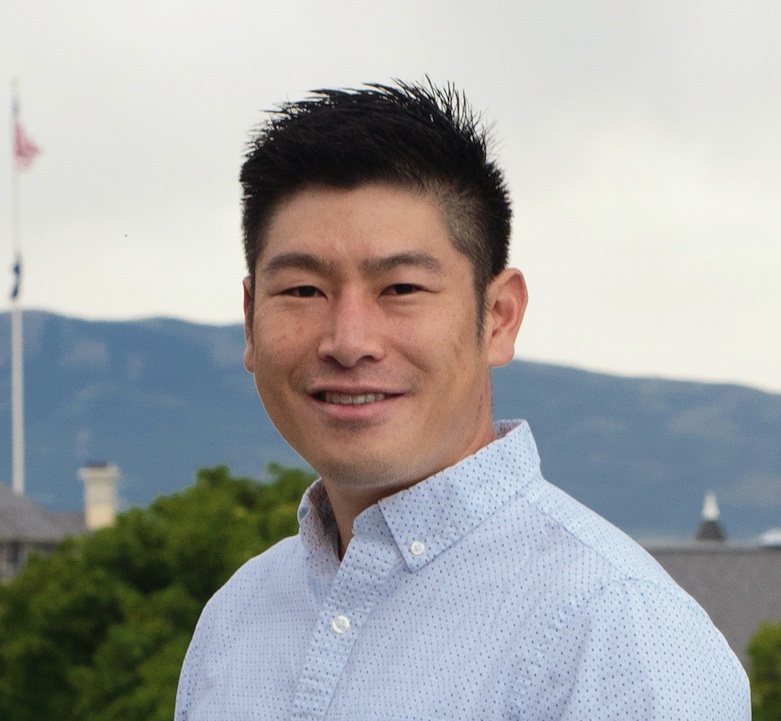
Hee Kwon Song, Ph.D. is an Associate Professor of Radiology at the University of Pennsylvania , affiliated with the Institute for Translational Medicine and Therapeutics and the Penn Center for Musculoskeletal Disorders . His expertise lies in MRI physics and MRI engineering , focusing on novel dynamic imaging strategies. Education: BS in Electrical Engineering, Northwestern University (1991) MS in Bioengineering, University of Pennsylvania (1994) PhD in Bioengineering, University of Pennsylvania (1999) Master of Law, University of Pennsylvania Carey Law School (2021) Dr. Song’s research specializes in dynamic contrast-enhanced MRI (DCE-MRI) using radial data acquisition and KWIC reconstruction for ultra-fast imaging. His work enables retrospective respiratory motion compensation and flexible resolution adjustments in tumor treatment monitoring ( lung, liver, breast, kidney, ovarian ). Applications extend to non-contrast MRA and tissue T1 mapping . Selected Publications demonstrate his focus on accelerated MRI , bone-selective imaging , and deep learning reconstruction , with collaborations spanning Medicine, Obstetrics and Gynecology, Neurology , and Radiation Oncology . Contact: heekwon.song@pennmedicine.upenn.edu
Jasmine Begeske serves as Clinical Assistant Professor of Special Education in Purdue University's Department of Educational Studies within the College of Education. She co-founded and directs CREATE: Center for Research and Equipment for Assistive Technology in Education, an AT library and makerspace providing hands-on opportunities for pre-service teachers to develop individualized solutions for students with disabilities using 3D printers, Cricut, and Glowforge equipment. Her educational background includes: PhD in Special Education with Cognate in Art Education from Purdue University MFA in Photography and Related Media from Purdue University MS in Secondary Education (Special Education specialization) from Indiana University Northwest BFA in Photography with Art History minor from Indiana University Dr. Begeske's research program examines inclusive access to arts education through program evaluation and creative assistive technology development. Her experimental printmaking practice integrates individuals with disabilities as co-creators , while her scholarly work validates instruments measuring preschool arts accessibility and develops multisensory adaptations for students with visual impairments. She bridges art education and special education through evidence-based AT interventions . Analysis of her publication history reveals consistent focus on arts/special education intersections with increasing emphasis on empirical validation of accessibility instruments and multisensory adaptations. Her 2023 work on teacher education in art classrooms and multisensory adaptations demonstrates practical applications of her CREATE center's mission, while her 2022 instrument validation study establishes methodological rigor in measuring arts accessibility. Her scientific recognition includes: 2023 USSEA Outstanding Dissertation Award 2023 Purdue Focus Award for equity initiatives 2022 AEAI President's Award for EDI service Multiple Purdue University teaching and discovery awards (2020-2023) With 15+ years of teacher preparation experience spanning 100+ course sections, Dr. Begeske mentors doctoral students while securing grant funding including $100K from Purdue's Instructional Equipment Grant for CREATE. Her professional service encompasses state-level program reviews, academic standards committees, and leadership roles in Indiana Division of Early Childhood and CEC-DARTS. The CREATE center operates as a dual-space AT innovation hub with fixed location in Beering Hall and mobile carts supporting field experiences. It empowers pre-service teachers to prototype solutions addressing specific student needs while advancing Dr. Begeske's mission of making education universally accessible through technology and creativity.
Itsuro Morita is Professor in the School of Fundamental Science and Engineering, Faculty of Science and Engineering, Waseda University, Tokyo. Before joining Waseda in 2022 he spent 23 years at KDDI R&D Laboratories, advancing from researcher to executive research fellow, and has been a visiting researcher at Stanford University. He is an IEEE Fellow and IEICE Fellow recognized for pioneering large-capacity, long-haul optical transmission systems. Education: 2004 – 2005 Tokyo Institute of Technology, Graduate School of Science & Engineering, Department of Electrical and Electronic Engineering (Doctoral coursework) 1990 – 1992 Tokyo Institute of Technology, Graduate School of Science & Engineering, Department of Physical Electronics (M.E.) 1986 – 1990 Tokyo Institute of Technology, School of Engineering (B.E.) Research Interests: Morita’s work sits at the intersection of optical fiber communication and software-defined networking. He explores ultra-high-capacity transmission via space-division multiplexing (multi-core/few-mode fibers), real-time MIMO digital signal processing for modal crosstalk mitigation, and SDN/NFV orchestration of disaggregated optical networks. Additional interests include quality-of-transmission estimation using machine learning, telemetry-enabled control planes (gRPC/gNMI), and metro-embedded edge/cloud architectures for IoT services. Publication Trends: Recent articles emphasize two converging themes: (i) petabit-per-second SDM/WDM experiments using novel fiber geometries and real-time DSP, and (ii) cloud-native SDN control frameworks that integrate machine-learning-based QoT prediction, YANG/NETCONF modeling, and open APIs (TAPI/OpenConfig) for multi-domain, partially disaggregated networks. These works collectively push both the physical capacity frontier and the agility of next-generation optical infrastructure. Scientific Awards: C&C Prize 2024 (NEC C&C Foundation) – contributions to WDM optical submarine cable systems IEICE Achievement Award 2021 – pioneering research on 10-Pbit/s ultra-large-capacity SDM transmission Telecom System Technology Award 2021 – 10.16-Pbit/s dense SDM/WDM transmission record IEEE Fellow (2021) – contributions to large-capacity high-speed transmission systems IEICE Fellow (2020) – research on trans-oceanic high-speed optical signal transmission Ichimura Industrial Award – Contribution Prize 2018 – development of terabit-class submarine cable systems Maejima Hisoka Award 2012 – proposal and demonstration of distributed-control soliton communication Minister of Economy, Trade and Industry Award for Advanced Technology 2006 – 160 Gbit/s ultra-high-speed optical transmission technology Advising & Grants: At Waseda University Morita advises graduate students on experimental photonic networking and leads externally funded projects on petabit SDM transmission and SDN orchestration. While specific grant numbers are not disclosed, his continuous industry-university collaborative testbeds (with KDDI, CTTC, and others) indicate substantial competitive funding. Labs & Teams: He heads the Optical Space-Division-Multiplexing Laboratory at Waseda, maintaining joint experimental facilities with KDDI Research and international partners (e.g., CTTC, Spain). The group operates real-time coherent MIMO testbeds, multi-domain SDN controllers, and fiber-level SDM prototypes capable of petabit-per-second demonstrations.
Matthias Schlottbom is an Associate Professor specializing in Mathematics of Computational Science, with a focus on numerical methods and their applications in physics, biology, and engineering. His research integrates advanced computational techniques with interdisciplinary problems, including radiative transfer, photonic crystals, and chemotaxis modeling. Research Interests: Schlottbom’s work spans numerical analysis, finite element methods, and machine learning. He develops high-order discretization schemes, iterative solvers for anisotropic transport, and mathematical frameworks for biological network formation. Publications: Recent articles highlight his contributions to accelerating radiative transfer simulations, extending component mode synthesis for Helmholtz equations, and analyzing diffusion limits in kinetic models. His work often bridges computational mathematics with practical applications in photonics and multiscale systems. Collaborations: He actively collaborates on datasets for optical simulations, radiative transfer algorithms, and photonic crystal modeling, contributing to open-access repositories like 4TU.Centre and Zenodo. Activities: Schlottbom has organized workshops such as the Kinetic Theory Workshop in the Netherlands and delivered keynotes on residual minimization and data-driven methods for transport equations. Scientific Awards: No specific awards or fellowships are mentioned in the provided materials. Advising & Grants: Details about students, advising roles, or grant funding are not included in the available data.
Prof. Dr. Pascal Fischer is a Professor for English and American Cultural Studies at the Faculty of Humanities and Cultural Studies, Otto-Friedrich-University Bamberg. He serves as Head of the Examination Board for the B.A. English and American Studies program and has held various academic roles since 2014, including interim professorships at multiple German universities earlier in his career. Education: PhD (summa cum laude) in English Literature (2003), Habilitation in English Philology (2009), both from University of Würzburg. His research spans interdisciplinary intersections of British Romanticism with medical humanities , urban studies , and Jewish-American literature . Key themes include: Political and religious discourse in historical contexts Urban space as a site of resistance and identity negotiation Cognitive approaches to literature and political thought Language as a marker of cultural identity in diasporic communities Prominent publications include monographs on literary conservatism and Jewish identity , co-edited volumes on poetry pedagogy and urban politics, and articles analyzing: Edmund Burke’s legacy in Brexit discourse Biblical texts in early modern political theory Cognitive contrasts between human and AI: literature as a bridge Scientific contributions: PhD with highest honors (2003) Keynote addresses at conferences (e.g., Anglistentag 2011 ) Teaching initiatives focus on integrating lyrical texts into language education and fostering interdisciplinary seminars for pre-service English teachers.
Virginia de Sa is a Professor in the Department of Cognitive Science at the University of California, San Diego. Her research integrates computational modeling, psychophysics, and machine learning to investigate visual and multi-sensory perception, with a focus on understanding how humans learn and perceive through neural mechanisms. Her work emphasizes the synergy between human learning and machine learning, applying insights from both fields to advance understanding of perception. Notable projects include developing brain-computer interface (BCI) systems and analyzing biases in facial expression recognition algorithms. She leads the de Sa Lab, which explores the neural basis of learning through interdisciplinary methods, including EEG analysis and biologically inspired algorithms. Key research directions include improving BCI usability through adaptive spatial filtering, investigating pain assessment via facial and electrophysiological data fusion, and enhancing AI fairness in facial expression analysis. Dr. de Sa has contributed to grants such as the NSF-funded CHS project to enhance BCI reliability and collaborates on initiatives like AI-READI to improve healthcare data practices. Her lab’s BCI division focuses on interpreting EEG data for assistive technologies, while her work on divisive normalization bridges biological insights with artificial neural network design. Ongoing efforts explore zero-shot learning and the generalization of neural models to unseen tasks. Dr. de Sa’s interdisciplinary approach spans neuroscience, computer science, and engineering, with a commitment to advancing both theoretical understanding and practical applications in human-computer interaction.
Andrea Wollensak is Professor of Art at Connecticut College, where she has taught since 1993. She is an interdisciplinary artist and designer whose work explores the convergence of place, identity, and history through site-based artworks that combine new media technology with traditional design and fabrication. Her educational background includes a B.F.A. from the University of Michigan and an M.F.A. from Yale University. She has held visiting faculty positions at numerous institutions including the University of Gothenburg, Nova Scotia College of Art and Design, Concordia University, Rhode Island School of Design, and the Estonian Academy of Arts. Wollensak's research focuses on social design and place-based storytelling, employing collaboration with community partners, computer scientists, musicians, poets, and scientists. Her work addresses themes of place-based narratives, environment, and memory through forms including audio/video, interactive installations, data visualization, artist books, and digitally fabricated works. She examines how design can be used as a tool for social impact and civic participation. Her most recent projects include Mapping Your Journey to School (2023), which engages Estonian and Ukrainian refugee students in creative writing workshops; Water Stories: Visual Poetics and Collective Voices (2022), a year-long artist residency at the Anchorage Museum; and Open Waters (2019-2020), an interactive installation examining Arctic environmental change. U.S. Fulbright Scholar in Estonia (2023) Artistic Excellence Award in Digital Art from Connecticut Office of the Arts Artist residency at Hafnarborg Contemporary Art Museum in Iceland (2011) Connecticut Commission on Culture and Tourism Grants in New Media (2010, 2006) IASPIS International Artist Studio Program in Sweden (2007) Rockefeller Study and Conference Center residency (2000) Wollensak has advised numerous students in design and new media projects, often collaborating with community partners. She served as Director of the Ammerman Center for Arts and Technology at Connecticut College from 2014-2020 and currently serves on the Advisory Council of the Winterhouse Institute and the Advisory Board for Digital Media Connecticut. Her teaching emphasizes design as an interdisciplinary practice that prepares students to be creative problem solvers who can use design to create positive social impact. Her work has been exhibited internationally at venues including the Göteborg International Contemporary Art Biennial, Nova Scotia Art Gallery, Brno Design Biennial Moravian Gallery, Center for Visual Art in Denver, Brown University's Granoff Center Gallery, and the Burchfield Penney Arts Center in Buffalo.
Victor R. Lee serves as an Associate Professor at Stanford University's Graduate School of Education, with his office located at CERAS Building (520 Galvez Mall, Suite 531) in Stanford, California. He is actively affiliated with the Center for Studies in Education and Technology (CSET), where he conducts interdisciplinary research at the intersection of technology and learning. Dr. Lee holds a Ph.D. in Learning Sciences from Northwestern University and earned dual Bachelor's degrees in Cognitive Science and Mathematics from the University of California, San Diego. His academic trajectory bridges technical disciplines with educational research, establishing a foundation for his work in data-intensive learning environments. His research program centers on two interconnected domains: data literacy development in K-12 contexts and STEM education innovation across diverse learning spaces. He investigates how individuals make meaning from data during inquiry-based learning, with particular emphasis on self-collected student data and the epistemological challenges of data sense-making. Concurrently, his STEM education work spans traditional classrooms, makerspaces, computer labs, and school libraries, examining engaged learning practices and conceptual change in mathematics and science. Current projects focus on identifying the specialized knowledge teachers require to effectively scaffold student interactions with complex real-world datasets. Recent publications (2023-2024) reveal a strategic pivot toward artificial intelligence education, examining both teacher preparation and student understanding of AI systems. His work demonstrates consistent methodological rigor through design-based research, classroom implementations, and analysis of student reasoning patterns, particularly regarding how learners conceptualize algorithmic processes in platforms like YouTube. As a core faculty member within CSET, Dr. Lee collaborates with multidisciplinary teams to develop and evaluate educational interventions that bridge theoretical learning sciences with practical classroom applications, with recent emphasis on AI literacy tools and data-enabled pedagogical approaches.
Turkka Keinonen is a Professor of Industrial Design at Aalto University School of Arts, Design and Architecture, serving as Vice Dean of Research and Head of Doctoral Education. His career spans academic leadership, industry roles in Finnish technology sectors (shipbuilding, medical equipment), and a visiting associate professorship at National University of Singapore. He specializes in human-centered design, product concept design, and ethical considerations in design. Keinonen’s research emphasizes public sector innovation, digital service development, and the intersection of technology with societal needs. His work bridges theory and practice, focusing on how design can foster equity, civic engagement, and sustainability. Recent projects explore libraries as digital innovation hubs, smart home technologies’ ethical implications, and volunteer-based IT services. He has authored influential books including Mobile Usability (2003), Product Concept Design (2006), and Designers, Users and Justice (2017), alongside over 100 publications. Keinonen’s research trends reflect a shift toward relational design in public sectors, emphasizing stakeholder collaboration and systemic change. His articles analyze digital literacy initiatives, quasi-public service models, and design’s role in mediating technological control. He advocates for ethical frameworks that prioritize user autonomy and societal justice in design processes. Labs/Teams: Active in Aalto’s design innovation networks, particularly in public service design and human-centered design methodologies. Collaborates with industry partners (e.g., Nokia Research Center) and Nordic institutions on applied design research.
Andrea Stevenson Won is a researcher at Cornell University in the Department of Communication , focusing on virtual reality (VR), human-computer interaction, and social dynamics in immersive environments. Her work explores avatar embodiment , nonverbal behavior , and accessibility in VR for users with disabilities. Research Themes : Virtual embodiment and its psychological effects Accessibility solutions for blind and low-vision users in social VR Nonverbal communication analysis in immersive environments Pro-social behavior through VR interventions Collaborative VR systems and AI integration Recent Article Trends : 2024: Investigated avatar behavior transformation in mixed reality ( MRTransformer ), AI-guided accessibility tools, and nonverbal cue adaptations 2023-2022: Focused on educational VR applications, 360° video narratives, and longitudinal team dynamics 2021-2014: Pioneered avatar embodiment studies, anxiety detection via movement tracking, and homuncular flexibility in VR
Giles Foody is a Professor of Geographical Information Science at the School of Geography, University of Nottingham, and a member of the Rights Lab in the Faculty of Social Science. He is recognized as the UK’s most prolific and highly cited researcher in remote sensing, with a focus on interdisciplinary applications for real-world impact. Education: BSc (1st class honours) and PhD from the University of Sheffield. His research spans image classification for thematic mapping, particularly in land cover and human-induced changes. He pioneered soft image classifications, object-based methods, neural networks in remote sensing, and citizen sensors in mapping. Current projects include 'slavery from space' and Sargassum beaching analysis to meet UN SDGs. The trends in his publications highlight advancements in remote sensing, citizen science, and land cover mapping. His work integrates machine learning and geospatial analysis for social and environmental challenges. Scientific awards: IEEE Fellowship, David Landgrebe Award, Founder's Award (ISARA), multiple RSPSoc accolades, and SDG-related honors. Giles has supervised 51 research students and contributed to academic service via editorial roles, peer review leadership, and participation in national research assessment panels. His interdisciplinary work extends to European National Mapping Agencies and anti-slavery initiatives.
Professor Celso Grebogi, Sixth Century Chair in Nonlinear & Complex Systems at the University of Aberdeen, is a globally recognized leader in nonlinear dynamics , chaos theory , and systems biology . He founded the Institute for Complex Systems and Mathematical Biology and co-founded the Aberdeen-Lanzhou-Tempe Research Centre. His career spans institutions including University of Maryland, University of São Paulo, and Max-Planck-Society (External Scientific Member since 1998).
Eitan Tadmor is a Distinguished University Professor at the Department of Mathematics and Institute for Physical Science & Technology at the University of Maryland. He holds the 2024 Chaire d'excellence at Sorbonne University's Fondation Sciences Mathématiques de Paris, and has served as Director of multiple research centers including the Center for Scientific Computation and Mathematical Modeling (2002-2016) and The Sackler Institute of Scientific Computation (1993-1996). Current: University of Maryland (2005-present) Previous: UCLA (1995-2002), Tel-Aviv University (1989-1995), CalTech (1980-1982) His research spans nonlinear conservation laws , entropy-stable schemes , collective dynamics , spectral methods , and multiscale modeling . He pioneered the spectral viscosity method and developed stability criteria for numerical schemes. Recent publications focus on swarm-based optimization , Euler-Poisson equations , and hydrodynamic alignment with over 15000 citations. His work on kinetic formulations and regularizing effects in PDEs has become foundational in computational mathematics. 2022 Norbert Wiener Prize (AMS-SIAM) 2022 Gibbs Lecturer (AMS) 2015 Peter Henrici Prize (SIAM-ETH) 2013-2021 Fellow of AMS/SIAM NSF grants (1999, 2008-2012, 2012-2020) He developed CentPack software for hyperbolic conservation laws and co-authored influential review papers on numerical methods and mathematical modeling. His collaborative work with institutions like IPAM, KI-Net, and ETH-ITS demonstrates international scientific leadership.
Matt Nowinski is a Collegiate Associate Professor in the Department of Mechanical Engineering at Virginia Tech's College of Engineering. His professional roles include advisory board memberships and leadership positions within the department. He holds multiple degrees including a Ph.D. in Mechanical Engineering from ETH Zurich (1999), an M.S. in Computer Science from Syracuse University (2022), and prior mechanical/aerospace engineering degrees from Virginia Tech. His research focuses on asteroid dynamics (particularly D-type and V-type asteroids), gas turbine engines, aeroelasticity, and education technology. Notable areas include lightcurve analysis, surface mineralogy modeling, and machine learning applications in astronomy. His work bridges aerospace engineering with astrophysics, leveraging both experimental and computational methods. Dr. Nowinski has over 24 years of industry experience as a Boeing subject matter expert in military communications systems, complemented by academic roles at George Mason University and University of Chicago. He is a recipient of the John Jones Faculty Fellowship and Society of Distinguished Alumni honor. His research contributions span asteroid characterization, turbine blade flutter mechanisms, and telescope instrumentation. Current work emphasizes observational astronomy through the Stone Edge Observatory and Slack-based collaborative platforms. He actively contributes to advancing STEM education through innovative curricula and research integration.
Professor John Zeleznikow is an Honorary Associate at La Trobe University's Law School, with a distinguished career spanning 49 years across multiple institutions including the University of Edinburgh and Victoria Business School. His research focuses on AI applications in legal decision-making, dispute resolution, and autonomous vehicle technology. He has secured over $8M in research grants and supervised 20 PhD graduates. Key projects include the Split-Up system (used in high-profile divorce cases like Prince Charles and Lady Di) and Family-Winner software, which won an ABC TV innovation award. His work bridges law, technology, and ethics, with publications in leading journals like the Harvard Negotiation Law Review and Artificial Intelligence and Law . Recent research explores AI-driven online dispute resolution (ODR), autonomous vehicle regulation, and the ethical implications of technology in legal systems. He advocates for transparent, user-centric legal tech solutions to enhance access to justice and improve decision-making processes.