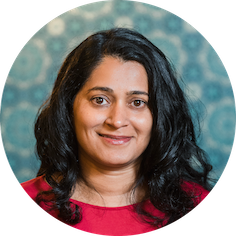
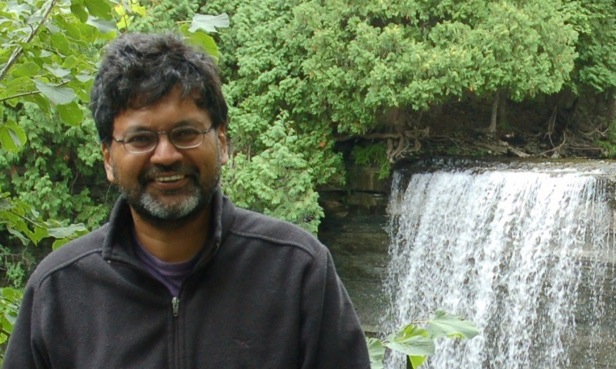
Dr. Nidhi Hegde is an Associate Professor in the Department of Computing Science at the University of Alberta and a Canada CIFAR AI Chair at the Alberta Machine Intelligence Institute (Amii). Her research focuses on privacy-preserving machine learning, algorithmic fairness, and robust algorithm design for networked systems. Dr. Hegde's current research investigates differential privacy in bandit algorithms, debiasing frameworks for language models, and long-term fairness guarantees for minority groups. Her work combines theoretical foundations with practical applications in distributed systems and multi-agent learning environments. Recent publications address covariate shift effects in optimization, private matroid optimization, and reinforcement learning with functional noise. She teaches graduate courses on Responsible AI and Ethical Issues in Data Analytics, covering topics including data privacy, fairness in algorithms, interpretability, and accountability. Dr. Hegde maintains active research collaborations and previously led privacy research at Borealis AI (RBC's research institute).
Possu Huang serves as Assistant Professor of Bioengineering in the Department of Bioengineering at Stanford University's School of Engineering. His research group operates from the Shriram Center for Bioengineering, sharing laboratory space with the Bintu Lab while maintaining an active interdisciplinary program bridging computational and experimental protein engineering. His educational journey includes: B.A. in Molecular and Cell Biology (Biochemistry) from UC Berkeley Ph.D. in Biochemistry and Molecular Biophysics from Caltech Postdoctoral training as Senior Fellow at University of Washington Dr. Huang's research focuses on atomic-precision protein design through integrated computational-experimental approaches. His lab has pioneered breakthroughs including the first computationally designed protein-protein interface, TIM barrel fold design principles, and the eOD HIV immunogen. Current work leverages machine learning , structural biology , and library optimization to develop therapeutic proteins and nanotechnology platforms, with particular emphasis on achieving natural-level complexity in engineered systems. Analysis of his 2023-2025 publications reveals three dominant trends: (1) generative AI for all-atom protein design (e.g., Protpardelle, SHAPES), (2) immunology applications targeting MHC complexes for HIV vaccine development, and (3) optogenetic tools through engineered fluorescent proteins. These works consistently integrate deep learning with wet-lab validation to solve biomedical challenges. Dr. Huang has mentored nine graduate students to completion, including PhD candidates Carla (defended June 2025), Christian (defended May 2025), and master's students Shankara and Kirsten. His lab maintains active social media presence (@possuhuanglab) and regularly publishes high-impact research while training the next generation of protein engineers. The Huang Lab operates as a dynamic interdisciplinary hub where computational biologists collaborate with experimentalists to push the boundaries of protein design. Current projects include developing tetravalent nanobody platforms, photoswitchable binders for temporal protein control, and AI-driven solutions for HIV immunogen design, all conducted within Stanford's state-of-the-art bioengineering facilities.
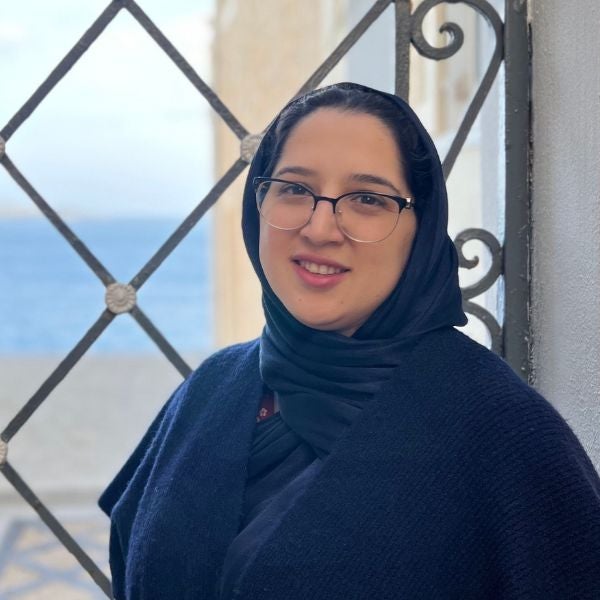
Nooshin Ahmadi serves as a Senior Lecturer in the Department of Human Centered Design within Cornell University's College of Human Ecology, where she applies research-driven methodologies to align spatial design with human behavioral needs and capabilities. Her academic credentials include: Master of Science in Architecture from Texas A&M University, College Station Professional Bachelor of Architecture from Art University of Isfahan, Iran Dr. Ahmadi's research synthesizes architectural theory with human behavioral science to develop environments that enhance usability and well-being, emphasizing evidence-based approaches to object and space optimization. She actively promotes design advocacy and innovative pedagogy to cultivate student problem-solving skills for real-world societal challenges. No scientific awards or honors were documented in the source material. Her advising philosophy centers on fostering lifelong learning through engaging educational experiences, though specific grant funding or formal mentorship records remain unreported in available biographical information.
Shideh Dashti is a Professor and Associate Chair for Administration in Geotechnical Engineering & Geomechanics at the University of Colorado Boulder's Department of Civil, Environmental, and Architectural Engineering within the College of Engineering and Applied Sciences. She holds a PhD (2009) and MS (2005) from UC Berkeley and a BS (2004) from Cornell University where she graduated Magna cum Laude. Dr. Dashti's research focuses on the intersection of geotechnical engineering, infrastructure resilience, and environmental sustainability. Her work spans physical modeling (particularly centrifuge testing), seismic soil-structure interaction, liquefaction mechanisms in urban environments, and the impact of compound hydrologic-seismic hazards on infrastructure. She has pioneered research on the seismic response of underground structures in dense urban settings and performance-based design of liquefaction remediation techniques. Analysis of her recent publications (2021-2025) reveals a strong emphasis on liquefaction mitigation techniques, particularly using dense granular columns and ground densification. Her work increasingly incorporates machine learning approaches and examines the intersection of infrastructure resilience with social equity, as evidenced by her research on environmental vulnerability in incarceration facilities. Her publications predominantly appear in top-tier journals like the ASCE Journal of Geotechnical and GeoEnvironmental Engineering. 2025 Earthquake Engineering Research Institute (EERI) Distinguished Lecture Award 2024 Campus Sustainability Award, CU Boulder 2021 Walter L. Huber Civil Engineering Research Price, ASCE 2015 National Science Foundation Early CAREER Award 2018 Arthur Casagrande Professional Development Award, ASCE Dr. Dashti has received significant research funding including the prestigious NSF CAREER award. She serves as Co-leader and Steering Committee member of GeoEngineering Extreme Event Reconnaissance (GEER), having participated in 8 reconnaissance efforts since 2011 (leading 3). She is also an ISSMGE TC104 committee member and one of two U.S. representatives. Her professional service includes editorial roles, notably as Associate Editor of the Year for the ASCE Journal of Geotechnical Engineering and Geomechanics (2020). As a leader in the field, Dr. Dashti directs research focused on resilient infrastructure with sustainability and equity. She leads the GAANN fellowships in Integrative Reengineering of Infrastructure and is affiliated with the Center for Infrastructure, Energy, and Space Testing. Her work bridges traditional geotechnical engineering with contemporary concerns about social justice and environmental sustainability in infrastructure systems.
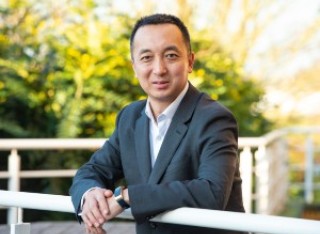
Yue Gao is a Professor of Wireless Communications at the Institute for Communication Systems, University of Surrey. He holds a PhD from Queen Mary University of London (2007) and previously served as a lecturer, senior lecturer, and reader at QMUL. His research focuses on smart antennas, signal processing, spectrum sharing, millimeter-wave systems, and IoT in mobile/satellite communications. He has authored over 180 papers, two patents, a book, and five book chapters. Current roles include EPSRC Fellow (2018–2023) and editorial roles for IEEE Transactions on Cognitive Communications and Networking, Vehicular Technology, and Internet of Things Journal. Notable awards include the EU Horizon Prize (2016). His work spans interdisciplinary projects like GBSense (GHz Bandwidth Sensing) and contributes to 6G research. Collaborations include leadership roles at IEEE conferences and global spectrum sensing challenges. Research interests emphasize antenna design (e.g., 3D printed, Ka-band), sub-Nyquist sampling, and machine learning for spectrum reconstruction. Affiliated with Surrey’s antenna measurement facilities (NPL) for advanced testing (400 MHz to 110 GHz, THz spectroscopy). Active in mentoring PhD students in antennas/wireless communications and oversees projects like the GBSense Challenge, advancing sensor-driven spectrum management.
Ed Chien is an Assistant Professor at Boston University's Department of Computer Science within the College of Arts & Sciences. He specializes in applying differential geometry and topology to graphics, computational engineering, and machine learning. Previously, he was a postdoctoral researcher at MIT's CSAIL and Bar-Ilan University. His work focuses on mathematically rigorous solutions to problems in geometric data processing and optimal transport. Education PhD in Mathematics, Rutgers University (2015) A.B. in Mathematics & Physics, Dartmouth College (2009) Research Highlights Dr. Chien's research includes fundamental studies on hexahedral mesh topology for Finite Element Modeling, optimal transport applications in machine learning, and singularity-free geometric algorithms. His work bridges theoretical mathematics with computational tools for engineering and graphics. Publications span top venues like NeurIPS, Eurographics, and SIGGRAPH, reflecting contributions to geometry processing and machine learning intersections. Program committee roles include Eurographics SGP (2019) and AAAI (2020). Awards & Recognition No specific awards listed, but notable service includes program committee memberships and peer-reviewed contributions to leading conferences. Grants & Advising Active in mentoring through academic positions but no explicit grant details provided. Research focuses on advancing geometric algorithms and optimal transport methodologies.
Dawn Mannay is Professor of Creative Research Methodologies at Cardiff University's School of Social Sciences. Her research examines education, identity, and inequality using participatory, visual, and creative methods with communities. She leads projects on care-experienced children's educational experiences and employs innovative methods including film, artwork, and digital media. Her work emphasizes participatory approaches that amplify marginalized voices in research. Her publications demonstrate extensive methodological innovation in qualitative research. Recent books develop frameworks for creative data analysis and sandboxing techniques in qualitative interviewing. Health and Care Research Wales Public Involvement Award (2017) Social Research Association Innovation Award (2017) Learned Society of Wales Dillwyn Medal (2018) Cardiff University Celebrating Excellence Award (2019) She mentors doctoral researchers studying youth identity, educational experiences, and gender norms. Her research has informed national policies supporting care-experienced young people in Wales.
Jonathan Weare is a Professor of Mathematics at the Courant Institute of Mathematical Sciences, New York University. He holds affiliations with the Faculty of Arts and Science and the Graduate School of Arts and Science. His academic journey includes roles as an Associate Professor at the University of Chicago (2014–2019) and Assistant Professor (2011–2014), following postdoctoral work as a Courant Instructor at NYU. He earned his Ph.D. in Mathematics from UC Berkeley in 2007. His research focuses on stochastic algorithms and models, with applications in astrophysics, biophysics, computational chemistry, and climate science. Key areas include Monte Carlo methods, rare event simulation, and machine learning-driven scientific analysis. Collaborations with domain experts ensure his work addresses real-world challenges in diverse fields. Recent publications emphasize advancements in trajectory stratification, rare event prediction using machine learning, and efficient algorithms for high-dimensional problems. Notable contributions include the BAD-NEUS framework and AI-based solar system instability predictions. His group’s interdisciplinary approach bridges computational methods with scientific inquiry. Weare has advised numerous students and mentored postdocs, fostering talent in applied mathematics and computational science. His work on Mercury’s orbital dynamics and extreme weather prediction showcases the societal impact of his research. Current projects explore AI applications in weather modeling and rare event analysis, leveraging cutting-edge machine learning techniques. Labs/Teams: His research group at Courant develops stochastic algorithms and collaborates with interdisciplinary teams in computational chemistry, climate science, and astrophysics. Key collaborations include the University of Chicago and Columbia University.
Ediz Cetin is an Associate Professor in Digital Electronics Engineering at Macquarie University's School of Engineering and a member of the Astrophysics and Space Technologies Research Centre. He serves as Course Director for the MEng Electronics Engineering program and Chair of the School's Postgraduate Coursework Committee. His research focuses on radio frequency interference mitigation, fault-tolerant reconfigurable circuits for space applications, machine learning in RF signal analysis, and low-power digital circuit design. Education: PhD in Signal Processing (Unsupervised Adaptive Signal Processing Techniques for Wireless Receivers) B.Eng. (Hons.) in Control and Computer Engineering Research Interests: RF interference detection and localization GNSS anti-jamming and spoofing detection FPGA-based reconfigurable systems Space instrumentation and CubeSat technologies Machine learning for signal processing Awards: Excellence in Learning Innovation (FSE Teaching Award, 2022) Highly Commended Finalist – Vice-Chancellor’s Award for Learning Innovation (2022) Innovative Approaches – Highly Commended (FSE Teaching Award, 2020) Key Projects: SmartSat CRC (2020–2026): Smart Satellite Technologies and Analytics Spacecraft Innovation Lab (2021–2022) CubeSat Biological Payload (2019–2022) Teaching Contributions: Led the 'Improving Student Engagement with Anywhere and Any-time Laboratory Access' initiative (2019–2020), enhancing remote lab accessibility for students.
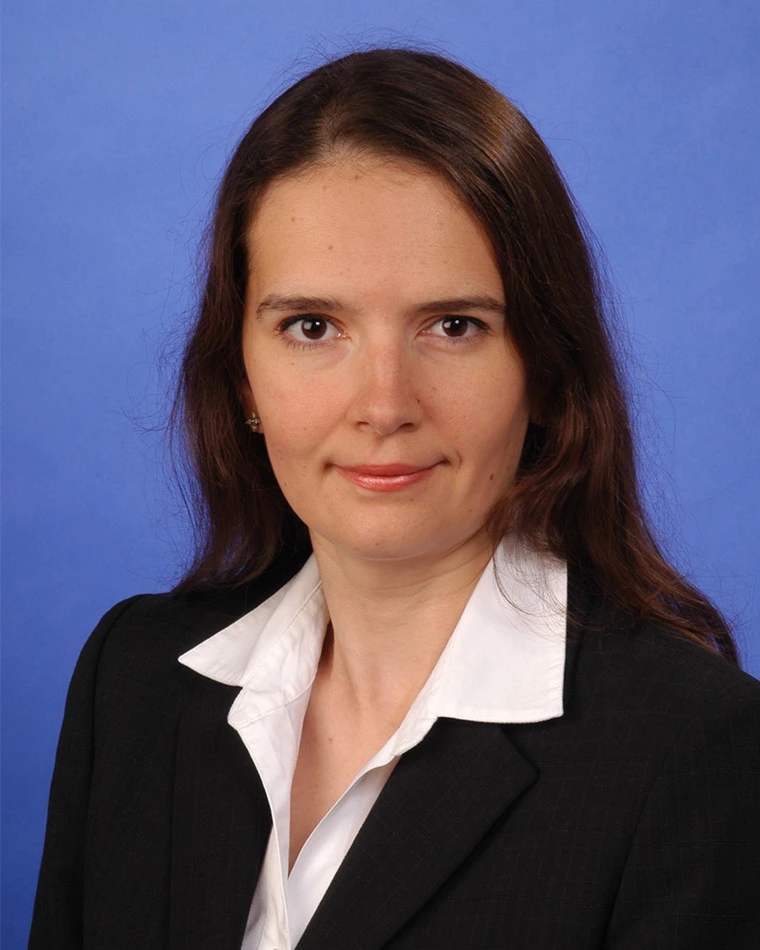
Maryam Aliakbarpour is the Michael B. Yuen and Sandra A. Tsai Assistant Professor in the Department of Computer Science at Rice University, affiliated with the Ken Kennedy Institute. She holds a Ph.D. and M.S. from MIT (2020 and 2015) and a B.S. from Sharif University of Technology (2013). Her research focuses on theoretical computer science, statistical inference, learning theory, differential privacy, and hypothesis testing, with an emphasis on algorithm design under computational and privacy constraints. She has held postdoctoral positions at Boston University, Northeastern University, and UMass Amherst, and participated in the Simons Institute's 2020 program on high-dimensional computation. Her work bridges foundational theory and practical applications, particularly in designing efficient algorithms for distribution testing, privacy-preserving machine learning, and hypothesis selection. Notable contributions include optimal algorithms for distribution testing under memory constraints and advancements in differential privacy for metalearning. She has received the Rising Stars in EECS (2018) and MIT’s Neekeyfar Award. Teaching includes graduate courses on learning theory and probabilistic methods, emphasizing algorithmic tools for modern computational challenges. Her publications span top conferences like COLT, NeurIPS, and ICML, addressing topics such as privacy-aware learning, efficient entropy estimation, and robust statistical methods. She advises on research projects requiring strong algorithmic foundations and mentors students in theoretical computer science and data privacy.
Dr. Olesya Zhupanska is a Professor in the Department of Aerospace and Mechanical Engineering at the University of Arizona, where she holds a faculty position and is a member of the Graduate Faculty. Her research focuses on the mechanics of composite materials, especially under extreme multi-field conditions involving mechanical, thermal, and electromagnetic loads. Education: PhD in Mechanics of Solids and Applied Mathematics, Taras Shevchenko National University of Kyiv, Ukraine, 2000 BS/MS in Mechanics and Applied Mathematics (with Highest Honors), Taras Shevchenko National University of Kyiv, Ukraine, 1996 Her research interests span mechanics of composites, impact and damage, micromechanics, multi-field effects, and structural health monitoring, with applications in aerospace, wind energy, and smart materials. She has made significant contributions to understanding lightning strike damage, electrified composites, and thermostructural response of advanced materials. Her work integrates experimental, analytical, and computational methods to solve complex engineering problems. The 15 most recent publications highlight a strong trend in composite materials under electrical and thermal loads, with a focus on damage mechanisms, contact mechanics, and predictive modeling. Her research bridges mechanics, materials science, and electromagnetics, with increasing integration of machine learning for damage detection. Applications span aerospace structures, hypersonic vehicles, and wind turbine blades. Scientific Awards and Honors: DARPA Young Faculty Award (2011) Elsevier Young Composites Researcher Award (2008) ASME/Boeing Structures & Materials Award (2007) Multiple ASC Best Paper Awards National Research Council Senior Research Associateship Award (2022, 2015) Air Force Summer Faculty Fellowships (multiple years) Woman of Impact Award, University of Arizona (2022) Fellow, ASME Associate Fellow, AIAA ASME Dedicated Service Award (2023) Dr. Zhupanska has advised numerous graduate students, many of whom have won prestigious awards such as the DoD SMART Scholarship and NASA Fellowships. Her research has been funded by DARPA, NSF, NASA, AFOSR, AFRL, and industry partners. She has served on technical review boards including ARL and actively promotes engineering education and inclusion through NSF-funded initiatives. She holds leadership roles in professional societies, currently serving as President of the American Society for Composites (ASC) and as a member of the ASME IMECE Steering Committee Senate. She also serves as a Topic Editor for Composites and Advanced Materials and on the editorial board of Applied Composite Materials.
Linda Ryan Bengtsson is an Associate Professor in the Department of Geography, Media and Communication at Karlstad University. She holds roles as a research advisor and collaborates with public/private entities, including Hagfors municipality, Visit Värmland, and Uddeholm. Her work focuses on geomedia studies, exploring the interplay between place, media practices, and digital culture within cultural industries and tourism. Education: She completed her doctoral dissertation on public art installations and interactive experience in 2012. Teaching includes undergraduate and advanced courses in visual culture, digital design, and design methodology. Research Interests: Her interdisciplinary research combines human geography, tourism studies, and business administration. Key projects include the 'Bruksort 2.0' ecosystem initiative (2024-2025) and the 'Music Ecosystems' EU project (2018-2021). She co-edits the book Geomedia Studies: Spaces and Mobilities in Mediatized Worlds (2017/2018). Collaborations: She serves on boards for the Baltic Sea Foundation and Visit Värmland, emphasizing strategic research environments and funding. Recent articles (2024) address geomedia futures in tourism, pandemic impacts on music industries, and virtual reality immersion. Awards: No specific prizes mentioned, though her work receives grants from Vinnova, EU, and regional agencies. Her research environment development focuses on co-creation with industry partners. Advising/Grants: As a research advisor, she strengthens funding opportunities and national/international collaborations. Projects like 'Experience Industry: Geomedia Technologies for Live Performance' highlight her focus on applied research. Labs/Teams: Central to the Geomedia Studies Research Group, she leads projects like 'Digital Place-Based Experiences' and 'Crisis Communication' initiatives in rural tourism sectors.
Fahiem Bacchus is a Professor in the Department of Computer Science at the University of Toronto, within the Faculty of Arts and Science. His research is centered on foundational problems in Artificial Intelligence, particularly in reasoning, representation, and algorithm design. Institution: University of Toronto School: Faculty of Arts and Science Department: Department of Computer Science Email: fbacchus@cs.toronto.edu His work spans key areas including constraint satisfaction, satisfiability (SAT), automated planning, Bayesian inference, and constraint optimization. He focuses on developing algorithms that exploit domain-specific knowledge and structural properties to improve performance. His research has led to significant contributions such as the TLPlan planning system, which won the AIPS2002 international planning competition, and the 2clseq SAT solver, which demonstrated that extensive binary clause reasoning can dramatically improve solver efficiency. His work on preprocessors like Hypre further advanced formula simplification techniques. The recent articles reflect a strong focus on improving search algorithms through richer reasoning mechanisms, particularly in SAT solving and non-clausal logic. His publications show a consistent trend toward enhancing DPLL-based solvers with advanced inference techniques, reducing search space through preprocessing, and leveraging structural knowledge in logical theories. No scientific awards are explicitly mentioned in the provided text. Bacchus has supervised research and developed educational materials, with involvement in teaching and academic conference organization. While specific grants are not listed, his software releases (2clseq, Hypre, NoClause) suggest externally supported research activity. He has contributed tutorials, talks, and online teaching resources, indicating an active role in academic dissemination and mentoring. His research group has produced several software systems available for non-commercial research use, including 2clseq, Hypre, and NoClause, reflecting a strong applied and experimental component to his work. These tools are used in SAT solving, preprocessing, and non-clausal reasoning, and are documented with detailed technical information and usage instructions.
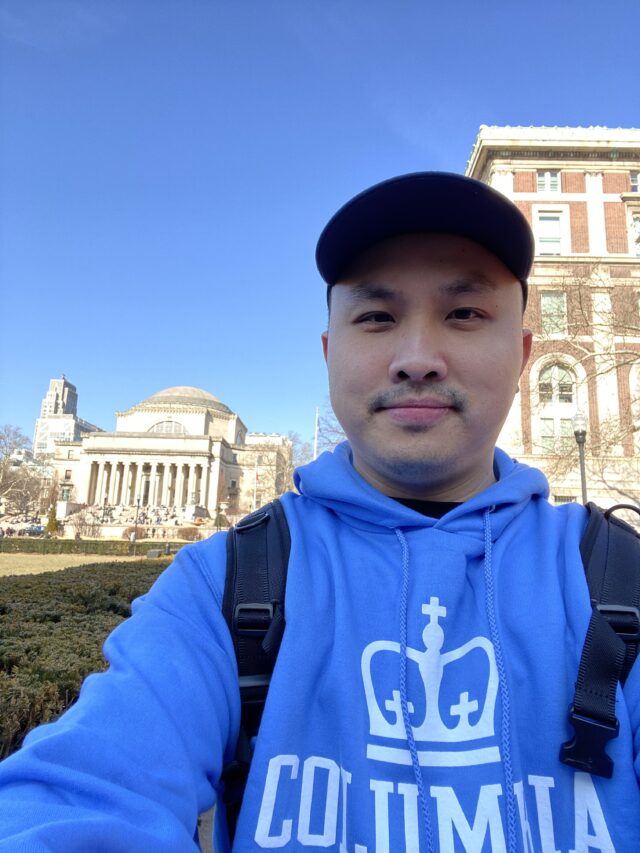
Tianyi Lin serves as an Assistant Professor in the Department of Industrial Engineering and Operations Research (IEOR) at Columbia Engineering, Columbia University, a position he assumed in 2024. He holds dual affiliations as a verified Data Science Institute (DSI) Member and an Affiliated Member of both the Financial and Business Analytics Center and the Foundations of Data Science Center. His academic credentials include: Ph.D. in Electrical Engineering and Computer Science, UC Berkeley Postdoctoral Researcher, Laboratory for Information & Decision Systems (LIDS), MIT (2023-2024) M.S. in Operations Research, UC Berkeley M.S. in Pure Mathematics and Statistics, University of Cambridge B.S. in Mathematics, Nanjing University Dr. Lin's research spans optimization theory , game-theoretic models , and machine learning algorithms , with emphasis on nonconvex minimax problems , variational inequalities , and data science applications . His work bridges theoretical guarantees with practical implementations in high-dimensional settings, particularly focusing on convergence properties and computational efficiency in complex systems. Analysis of his 15 most recent publications (2022-2025) reveals dominant themes in high-order optimization methods , no-regret learning in games , and optimal transport algorithms . His contributions demonstrate consistent innovation in developing doubly optimal algorithms for monotone games, spectral regularization techniques for policy optimization, and structure-driven approaches for nonconvex problems, reflecting strong interdisciplinary connections between operations research, computer science, and applied mathematics. No scientific awards or honors were documented in the provided source material. Information regarding student advising and research grants remains unspecified in the current documentation, though his center affiliations suggest active participation in collaborative research initiatives. Dr. Lin maintains significant interdisciplinary engagement through his affiliations with Columbia's Data Science Institute and specialized research centers, positioning his work at the intersection of theoretical optimization and real-world data science applications.
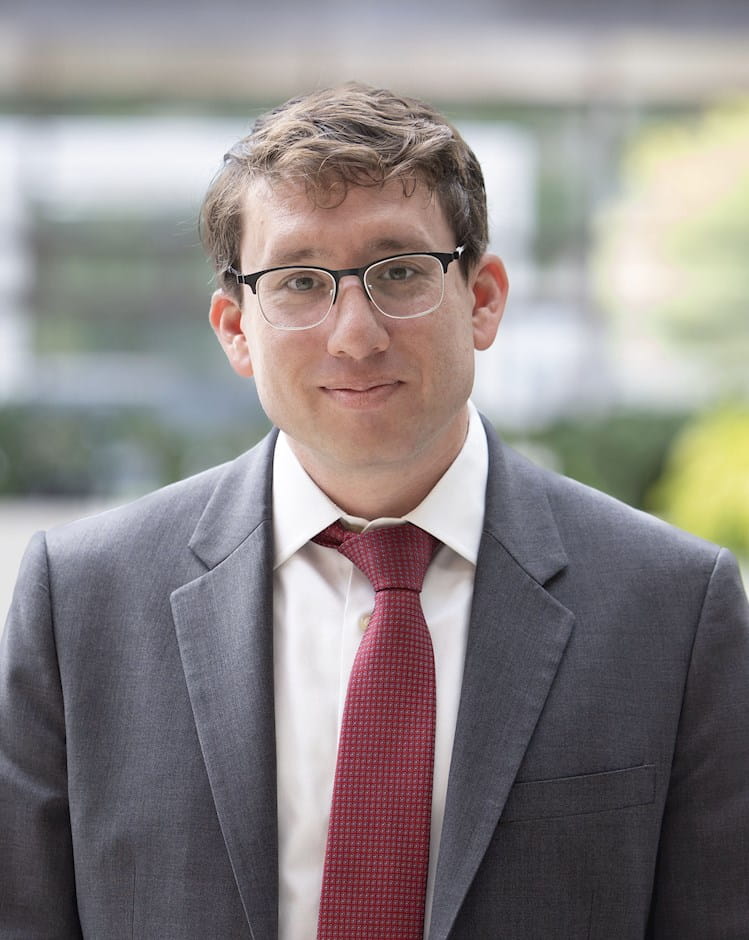
Alexander P. Frankel is the Isidore Brown and Gladys J. Brown Professor of Economics at the University of Chicago Booth School of Business. His research focuses on mechanism design, game theory, and contracting, with applications across various economic domains. Previously, he worked at Yahoo! Research and has published in top economics journals including the American Economic Review and Journal of Political Economy. Education: BS in Mathematics from the University of Chicago BA in Economics from the University of Chicago PhD in Economic Analysis and Policy from Stanford Graduate School of Business Frankel specializes in information economics, mechanism design, and contract theory. His work explores how information structures affect economic outcomes, with applications to delegation, signaling, and strategic communication. He has made significant contributions to understanding how information is designed and used in strategic settings, particularly in areas such as R&D investment, admissions policy, and central banking. Frankel's publication record demonstrates a consistent focus on information design and its applications across diverse contexts. His work spans theoretical developments in signal structures and information hierarchies to practical applications in education policy, corporate decision-making, and monetary policy. The research shows increasing sophistication in modeling information environments and their economic consequences, with recent work addressing contemporary issues like test-optional admissions while maintaining strong theoretical foundations. As a faculty member at Chicago Booth, Frankel teaches Microeconomics (33001) and The Economics of Contracts (33931). His research has received attention in major media outlets including the New York Times, Chicago Tribune, and Freakonomics blog, indicating the broader relevance of his theoretical work to practical economic issues.