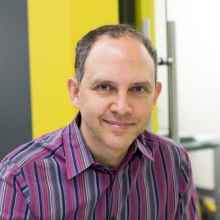
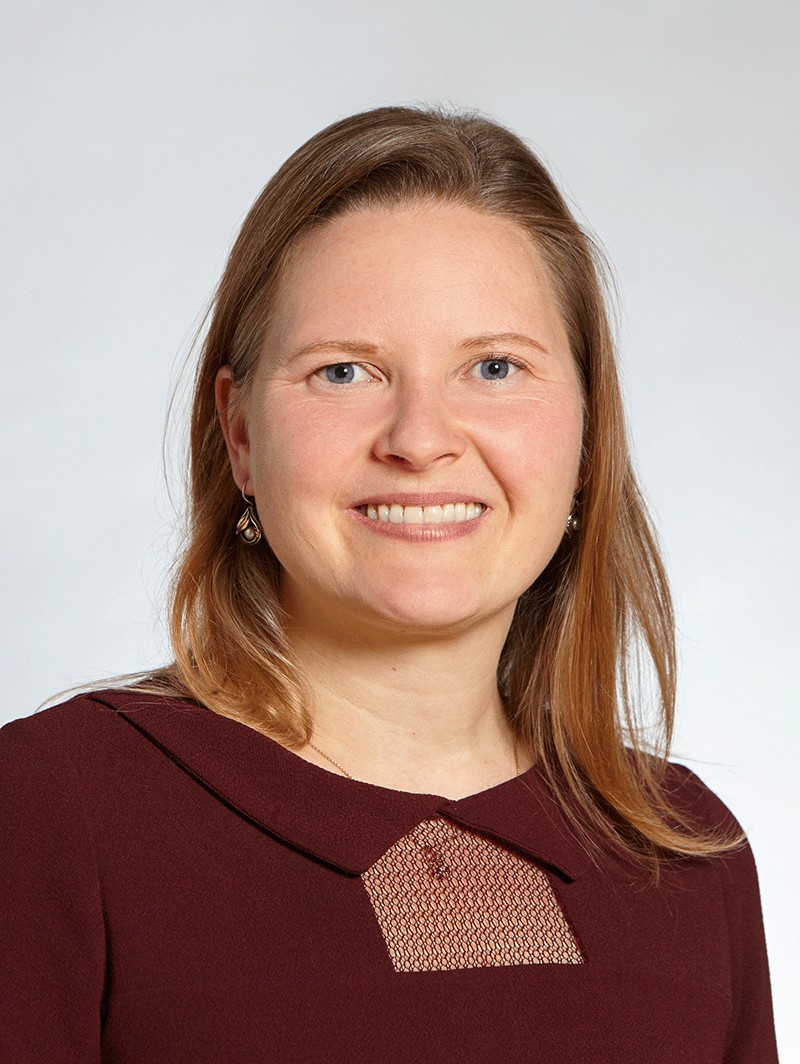
Michelle Kuchera is the Keiser Family Associate Professor of Physics at Davidson College, with affiliations in both the Physics and Mathematics & Computer Science departments. She is a computational physicist specializing in machine learning, nuclear physics, and particle physics. Education: Ph.D., Florida State University M.S., Florida State University B.S., Florida State University Her research focuses on applying machine learning and algorithm development to analyze data from accelerator-based experiments at facilities like the Facility for Rare Isotope Beams (FRIB), Thomas Jefferson National Accelerator Facility, and CERN. She leads the ALPhA (Algorithms for Learning in Physics Applications) research group, addressing computational challenges such as processing massive datasets from detectors like the AT-TPC, which generates data equivalent to the Library of Congress print collection in just two weeks. As an educator, she shares her deep learning expertise with undergraduates and international scientists, emphasizing collaboration as central to scientific progress. She has been involved in interdisciplinary research since her undergraduate work at the John D. Fox Laboratory in 2004.
Marianna Patrick is a Research Fellow at the School of Education, Learning and Communication Sciences (SELCS), University of Warwick. She holds a PhD in Intercultural Communication (2025), MA in Global Communication from the Chinese University of Hong Kong (2013), and BA (Hons) in Politics and International Studies from Warwick University (2012). Her research focuses on generative AI in academic writing, migration narratives, and intercultural communication. She leads a Leverhulme Trust-funded project on AI chatbots' impact on academic writing practices, collaborating with the University of Edinburgh and Sophia University Tokyo. Research & Education: Her doctoral work explored language and place construction in serial migration narratives, supervised by Prof. Stephanie Schnurr and Prof. Steve Mann. She also contributed to Monash-Warwick Alliance projects on multicultural cricket team inclusivity. She teaches professional skills and research methods across Computer Science and Applied Linguistics departments, supervising MSc dissertations in intercultural communication. Awards & Engagement: Received the People's Choice Prize at the Warwick Research Festival. Actively promotes interdisciplinary collaboration through initiatives like the Social Sciences Research Exchange Group (co-founder) and chairs the Applied Linguistics PGR Student-Staff Liaison Committee. She also contributed to EDI efforts as part of the Athena Swan team and served as Assistant Director of Student Experience and Progression for the Faculty of Arts.
Dr. Young Yun Kim is a Professor in the Department of Communication at the University of Oklahoma's Dodge Family College of Arts and Sciences, where she has developed nationally recognized Intercultural Communication graduate programs since joining in 1988. Her academic journey spans continents, beginning in Seoul, Korea, and continuing through significant scholarly institutions in the United States. B.A.: Seoul National University, Seoul, Korea M.A.: University of Hawaii (East-West Center Communication Institute) Ph.D.: Northwestern University, Evanston, Illinois Dr. Kim's research pioneers the theoretical foundations of cross-cultural adaptation and interethnic communication. Her Integrative Communication Theory of Cross-Cultural Adaptation positions communication as the central mechanism for achieving internal equilibrium in new cultural environments, while her Contextual Theory of Interethnic Communication examines associative and dissociative behaviors across ethnic boundaries. Her work uniquely bridges personal transformation with systemic cultural dynamics, emphasizing how intercultural experiences foster expanded human understanding. Analysis of her recent publications reveals consistent theoretical refinement with increasing focus on identity transformation, synchrony in communication, and the emergence of intercultural personhood beyond traditional cultural boundaries. Her scholarship demonstrates remarkable continuity in core themes while progressively incorporating globalization's impact on individual and collective identity formation. Scientific Awards Fellow of the International Communication Association (2002) Top Scholar Award for Lifetime Achievement, Intercultural Communication Division, International Communication Association (2006) Dr. Kim has directed numerous doctoral theses and collaborated on significant cross-cultural research projects examining adaptation patterns among diverse populations including Korean and Indonesian expatriates, Hispanic youth, international students, and refugees. Her research funding includes a two-year study of Indochinese refugees (1978-1980) sponsored by the U.S. Department of Health and Human Services, reflecting sustained external validation of her methodological rigor and theoretical significance. As a foundational leader in intercultural scholarship, Dr. Kim serves on 11 editorial boards including Journal of Communication and Human Communication Research, and has held executive positions in the International Communication Association and International Academy for Intercultural Research, culminating in her presidency (2013-2015) of the latter organization.
Naresh R. Shanbhag is the Jack Kilby Professor in the Department of Electrical and Computer Engineering and the Coordinated Science Laboratory at the University of Illinois at Urbana-Champaign. He serves as Director of the Systems on Nanoscale Information fabriCs (SONIC) Center and held the D.J. Gandhi Distinguished Visiting Professorship at IIT Mumbai from 2015-2020. Previously, he was a visiting faculty member at National Taiwan University (2007) and Stanford University (2014). Dr. Shanbhag received his doctorate from the University of Minnesota (1993) in Electrical Engineering. From 1993 to 1995, he worked at AT&T Bell Laboratories as the lead chip architect for AT&T's 51.84 Mb/s transceiver chips over twisted-pair wiring for Asynchronous Transfer Mode (ATM)-LAN and very high-speed digital subscriber line (VDSL) chip-sets. His research focuses on the design of energy-efficient machine learning, communications, and signal processing systems on resource-constrained embedded platforms. He explores fundamental trade-offs between energy efficiency, latency and accuracy of decision-making systems implemented in nanoscale technologies, with applications to computer vision, biomedicine, automatic target recognition, and imaging. His work spans four primary focus areas: Resource-efficient Machine Learning for the Edge, In-memory Computing (IMC), Energy-efficient High Data Rate Communications, and Shannon-inspired Statistical Error Compensation (SEC). Analysis of his recent publications reveals a strong emphasis on in-memory computing architectures (SRAM, MRAM, RRAM) for machine learning acceleration. His work consistently addresses energy-accuracy trade-offs, with increasing attention to security aspects of hardware implementations and applications to MIMO signal processing and edge AI systems. His research demonstrates a progression from theoretical foundations to practical silicon implementations. 2024 Semiconductor Research Corporation Innovation Award 2018 Semiconductor Industry Association/Semiconductor Research Corporation University Researcher Award 2018 IEEE International Symposium on Circuits and Systems Best Paper Award 2006 IEEE Fellow 1996 National Science Foundation CAREER Award Professor Shanbhag has mentored over 50 graduate students who now work at leading technology companies including Qualcomm, Amazon, Nvidia, Intel, and Apple. His research has been generously supported by the National Science Foundation, DARPA, AFRL, Semiconductor Research Corporation, Texas Instruments, Sandia National Laboratories, and industry partners including IBM, GlobalFoundries, and Intel Corporation. He led the Alternative Computational Models research theme (2006-2012) and was the founding Director of the SONIC Center (2013-2017), a 5-year multi-university center funded by DARPA and SRC. Currently, he leads research themes in the SRC and DARPA funded JUMP 2.0 Program's Center for Co-Design of Cognitive Systems and the Center for Ubiquitous Connectivity, and in the NSF IUCRC Center for Advanced Semiconductor Chips with Accelerated Performance (ASAP). As Director of the Systems on Nanoscale Information fabriCs (SONIC) Center, Professor Shanbhag leads a multidisciplinary team exploring novel computing paradigms for the nanoscale era. His group has benchmarked an extensive collection of in-memory computing and digital accelerator IC designs, maintaining a publicly available IMC benchmarking repository of metrics extracted from published IC prototypes. His research philosophy integrates concepts from information theory, statistical signal processing, detection and estimation, VLSI architectures, and digital and analog integrated circuits to develop energy-efficient systems from algorithms to silicon implementations.
Ronald Parr is a Professor of Computer Science in the Department of Computer Science at Duke University's Pratt School of Engineering. He has been at Duke since 2000, progressing from Assistant Professor to Associate Professor with tenure, and ultimately to Full Professor. From 2014 to 2017, he served as Department Chair and delivered graduation speeches in 2015, 2016, and 2017. Dr. Parr received his Ph.D. in Computer Science from the University of California, Berkeley in 1998, with a dissertation titled "Hierarchical Control and Learning in Markov Decision Processes" under advisor Stuart Russell. He earned his A.B. in Philosophy, cum laude, from Princeton University in 1990. His primary research focuses on methods for solving large stochastic planning problems using Markov Decision Processes and approximate dynamic programming techniques. His work spans reinforcement learning, value function approximation, game theory, sensing, and robotics. Dr. Parr's research has been consistently funded by major agencies including NSF, DARPA, and ARO, with recent projects focusing on feature encoding for reinforcement learning, neurosymbolic hierarchical reinforcement learning, and reasoning in large, structured, uncertain domains. His publication record demonstrates consistent contributions to top venues including NeurIPS, ICML, and AAAI, with work that bridges theoretical foundations and practical applications. Dr. Parr has received numerous honors including being elected as an AAAI Fellow in 2023, receiving an AAAI Outstanding Paper Honorable Mention in 2013, winning the IJCAI-JAIR Best Paper Award in 2007, receiving an NSF CAREER award in 2006, and being named an Alfred P. Sloan Fellow in 2003. He has advised ten graduate students to completion across various research areas within AI and robotics. His research has been supported by over $1.5 million in direct funding to his lab, with additional collaborative funding from multiple NSF, DARPA, and ARO grants. Dr. Parr has served extensively on program committees for major AI conferences including ICML, NeurIPS, AAAI, and UAI, and has held leadership roles such as Program Co-Chair and General Chair for UAI. Dr. Parr maintains an active research group focused on reinforcement learning and sequential decision making, with ongoing projects in neurosymbolic AI, hierarchical reinforcement learning, and interpretable machine learning models, continuing to bridge theoretical foundations with practical applications in robotics and AI systems.
Professor Daniel Rueckert is a leading academic in Artificial Intelligence and Medical Imaging, holding dual positions at Imperial College London (as Professor of Visual Information Processing) and Technical University of Munich (Alexander von Humboldt Professor for AI in Medicine and Healthcare). He obtained his MSc from Technical University Berlin (1993) and PhD from Imperial College London (1997), followed by postdoctoral work at King’s College London. At Imperial, he led the Department of Computing (2016–2020) and founded the Biomedical Image Analysis group. His research focuses on AI-driven medical image analysis, including algorithms for image reconstruction, registration, and clinical decision support. His research interests span AI applications in healthcare, machine learning for medical imaging, and computational methods for clinical diagnostics. Notable contributions include over 500 publications and 60+ PhD graduates, with key works in federated learning, cardiac motion analysis, and biomarker development. Awards include the Leibniz Prize (2025), Royal Academy of Engineering Fellowship (2015), and multiple ERC grants. He leads the BioMedIA research group and is an editorial board member of Medical Image Analysis . Recent publications highlight advancements in AI-driven medical imaging, such as secure federated learning frameworks and deep learning models for disease prediction. His work bridges academic and industrial sectors through initiatives like IXICO, an Imperial spin-out. Current affiliations include roles at both Imperial and TUM, emphasizing interdisciplinary collaboration in healthcare technology. Advising and grants: Supervised over 60 PhD students and 40 post-docs. Secured grants including ERC Synergy (2013) and ERC Advanced (2020). Active in labs focused on biomedical image computing and AI in healthcare systems. Collaborative efforts include the BioMedIA group and TUM’s AI initiatives. Labs/teams: Leads the Biomedical Image Analysis group at Imperial and the TUM AI in Medicine team. Collaborates extensively on projects like cardiac imaging analysis and federated learning for healthcare.
Larissa Schlegel-Pape serves as a Scientific Associate at the Department for Ornamental and Pedigree Poultry within the Farm Animal Clinic of Freie Universität Berlin's Faculty of Veterinary Medicine. Her work focuses on developing innovative methods for assessing chicken welfare through the creation of the "Stressed Chicken Scale," which aims to systematically identify stress indicators in poultry. Her research interests center on animal welfare science, specifically stress assessment in chickens using both behavioral observation and computer vision technology. She investigates how body posture, movement patterns, and other visual indicators can reliably signal discomfort or stress in poultry, with the goal of creating practical assessment tools for veterinarians and poultry farmers. Her work bridges veterinary medicine, ethology, and technological innovation, contributing to refinement research (one of the 3Rs principles) in animal husbandry. Analysis of her publications reveals a strong focus on developing and validating the Stressed Chicken Scale across multiple contexts. Her work spans methodological development, practical implementation studies, and technological integration with computer vision systems. The research demonstrates progression from conceptual framework to validation studies and practical application, with increasing sophistication in assessment techniques and broader implications for animal welfare standards in poultry farming. Schlegel-Pape actively collaborates with the Federal Institute for Risk Assessment (BfR) and participates in interdisciplinary projects involving artificial intelligence applications in agriculture. She presents her findings regularly at major German veterinary conferences including the DVG (Deutsche Veterinärmedizinische Gesellschaft) events, DACh Epidemiology conferences, and specialized poultry medicine gatherings. Her work contributes significantly to advancing animal welfare assessment methodologies and promoting refinement in poultry husbandry practices.
Teruko Mitamura is a prominent researcher at Carnegie Mellon University with over three decades of contributions to natural language processing, computational linguistics, and artificial intelligence. Her work spans from foundational research in event representation to advanced applications in multimodal systems and question answering. Her research interests focus on event detection and understanding, question answering systems, information retrieval, and multimodal processing. She has made significant contributions to event coreference resolution, timeline construction, and cross-document event analysis, developing methodologies that have become standard in the field. Her work often bridges theoretical advances with practical applications, particularly in complex information environments requiring deep semantic understanding. Natural Language Processing : Specializing in event extraction, coreference resolution, and narrative understanding with over 179 publications Question Answering Systems : Developing advanced techniques for complex question answering, particularly through NTCIR QA Lab and PoliInfo tasks Multimodal Processing : Integrating textual, visual, and temporal information for richer understanding in systems like ProMQA Evaluation Methodologies : Creating robust frameworks for assessing NLP systems through TAC KBP Event Tracks Her recent publication trends show a strong focus on leveraging large language models for event understanding, multimodal question answering, and timeline construction. She has expanded her research into specialized domains including patent analysis and novelty examination, demonstrating the breadth of her research impact across academic and practical applications. Active participant in major NLP conferences including ACL, EMNLP, NAACL, and AAAI with consistent publications Long-standing collaborator with researchers at CMU's Language Technologies Institute including Eduard H. Hovy and Eric Nyberg Contributor to shared tasks that have shaped research directions in event processing and question answering Organizer of multiple NTCIR QA Lab tasks focused on political information question answering Dr. Mitamura has mentored numerous researchers who have gone on to make their own contributions to the field, as evidenced by her extensive co-authorship network and the progression of her former students and collaborators into faculty and research positions. Her work continues to evolve with the field while maintaining her focus on deep semantic understanding of events and narratives.
Dina Verdín serves as Assistant Professor in Engineering Education Systems and Design at Arizona State University's Polytechnic School, where she leads research on broadening participation in engineering through critical analysis of access and persistence barriers for first-generation, minoritized, and women students at intersectional identity junctions. Her educational foundation includes: Ph.D. in Engineering Education from Purdue University M.S. in Industrial Engineering from Purdue University B.S. in Industrial & Systems Engineering from San José State University Verdín's research program employs asset-based frameworks to examine how funds of knowledge and identity development influence engineering pathways. Her access strand investigates high school exposure barriers through culturally responsive activities that foster engineering interest and agency, while her persistence strand analyzes undergraduate institutional structures affecting identity negotiation and degree completion. This work centers intersectional methodologies to redefine engineering identity beyond traditional norms. Analysis of her 15 most recent publications (2020-2024) reveals consistent focus on first-generation Latinx students, classroom belonging mechanisms, and funds of knowledge applications. Her work predominantly utilizes mixed-methods approaches within Hispanic Serving Institutions, with growing emphasis on migratory student populations and critical engineering agency development. Her accolades include: NSF Graduate Research Fellowship IEEE Frontiers in Education Best Diversity Paper Award College of Engineering Outstanding Graduate Student Research Award AGEP Distinguished Scholar Award AERA Division D Top 3 In-Progress Research Verdín currently directs multiple NSF-funded initiatives including SAFE Teams (Student Asset-based Approach to Equitable Teams) and Reconceptualizing Community Cultural Wealth in engineering design. Her grants portfolio exceeds $1.3 million as PI/Co-PI, focusing on mastery learning implementation, engineering discipline disparities, and migratory student empowerment through gamified curricula. She teaches core courses in engineering statistics and research methods while mentoring graduate researchers. Her work actively shapes engineering education through community-engaged scholarship that centers student assets and challenges deficit-oriented paradigms in STEM persistence research.
Pierre-Philippe Combes is a CNRS Research Professor and Head of Doctoral Studies in Economics at Sciences Po since 2021. He also serves as Co-Editor of the Journal of Urban Economics and Director of Graduate Programs in Economics at Sciences Po. Previously, he held positions at Aix-Marseille University (2003-2016), Boston University (2001-2003), and CERAS-École des Ponts et Chaussées (1998-2001). He holds a PhD in Economics from CREST (Paris School of Economics). Education PhD in Economics, Paris School of Economics (CREST), 1996 Habilitation à Diriger des Recherches (HDR), Aix-Marseille University, 2004 Research Interests : Urban economics and economic geography, focusing on local labor markets, housing markets, firm and household location choices, and resulting spatial disparities. His work uses machine learning for historical data recovery and examines agglomeration economies, migration externalities, and discrimination in urban contexts. Scientific Output Trends : Recent publications analyze urbanization in Sub-Saharan Africa, agglomeration economies, real income inequality in China, and historical land use through machine learning. Collaborative work spans France, China, and international institutions, addressing housing costs, peer effects in research, and urban poverty metrics. Scientific Awards : NATO Advanced Fellowship Grant (2001-2002) PhD Thesis Award - Association Française de Science Économique (AFSE) PhD Thesis Award - Association de Science Régionale de Langue Française (ASRDLF) Mention très honorable avec félicitations du jury (PhD thesis) Teaching & Editorial Roles : Teaches urban economics at Sciences Po and ENS Lyon. Serves on editorial boards of the Journal of Economic Geography , Regional Science and Urban Economics , and Journal of Urban Economics . Participates in evaluation committees for PhDs and habilitations across Europe. Policy Contributions : Advises on urban poverty measurement for the World Bank and contributes to French regional policy reports, including the Grand Paris Express project and CNIS (National Statistical Council).
Paulo Blikstein serves as Associate Professor of Communications, Media and Learning Technology Design at Columbia University. Previously, he was Assistant Professor of Education and (by courtesy) Computer Science at Stanford University and co-founded the Lemann Center for Brazilian Education (2008-2018). Education: Ph.D. in Learning Sciences, Northwestern University (2009) M.A. in Media Arts & Sciences, MIT Media Lab (2002) M.Eng. in Electronic Engineering, University of São Paulo (2000) B.S. in Metallurgical Engineering, University of São Paulo (1998) His research pioneers constructionist learning environments through digital fabrication, educational robotics, and tangible interfaces—focusing on equitable access for underserved communities. Inspired by Paulo Freire and Seymour Papert, he develops open-source tools like the GoGo Board robotics platform and leads the global FabLab@School initiative establishing fabrication labs in schools across four continents. Current work emphasizes multimodal learning analytics to study student interactions in maker-centered classrooms. Publications reveal strong focus on democratizing invention through maker education, with recurring themes in constructionist theory application, multimodal assessment, and context-specific technology adaptation. Brazilian education reform and low-cost computational solutions form significant threads, particularly in 2016-2017 publications. Scientific Awards: Two Google Faculty Awards National Science Foundation Early Career Award (highest U.S. government honor for early-career scientists) Blikstein directs the Transformative Learning Technologies Lab (TLTL) and co-founded Stanford's Center for Educational Entrepreneurship and Innovation in Brazil. His FabLearn conference established the first academic forum on Maker Movement applications in education. While specific grant details aren't listed, the NSF CAREER Award signifies major federal research funding. He spearheads the FabLab@School project deploying advanced fabrication labs in K-12 institutions worldwide and founded the FabLearn conference series. His work integrates teams of engineers, educators, and designers to create scalable solutions for resource-constrained learning environments.
Margarita Boenig-Liptsin is a tenure-track Assistant Professor of Ethics, Technology and Society at ETH Zurich's Department of Humanities, Social and Political Sciences, a position she has held since September 2022. Trained in Science, Technology and Society with dual PhDs from Harvard University (History of Science) and Université Paris-Sorbonne (Philosophy), she brings interdisciplinary expertise to examining the relationship between technology, power, democracy, and ethics. Her research spans several interconnected areas focusing on transformations to human identity and citizenship in relation to information technologies across time and cultures. She investigates the social and political aspects of digital technologies, identity and selfhood in technological societies, ethics of technology, and comparative cultures of innovation. Her work uniquely bridges historical analysis with contemporary ethical concerns, examining how concepts like human dignity evolve alongside technological developments from punch cards to AI governance frameworks. Her recent publications (2023-2025) reveal a strong focus on AI ethics, data justice, and the philosophical implications of algorithmic systems. These works demonstrate her consistent interest in how technology shapes democratic processes, citizenship, and ethical frameworks. Her research shows progression from historical studies of computer literacy programs to contemporary analyses of generative AI's impact on knowledge production and everyday ethics. Her scientific recognition includes: NSF funding for her collaborative project on Silicon Valley's innovation imaginary Mozilla Foundation Responsible Computer Science Challenge grant (2018-2021) Academic Data Science Alliance support (2020-2022) Sorbonne Université's Paris IAS Chair on 'Major Changes' (2021-2022) At ETH Zurich, she leads research and teaching initiatives that build connections between engineering and social sciences. Previously at UC Berkeley, she directed the Human Contexts and Ethics Program, developing the Human Contexts and Ethics component for data science education. Her work consistently emphasizes translating social science theory for diverse audiences and connecting scholarly work to community needs in Zurich, Switzerland, and Europe. She teaches courses including 'Artificial Intelligence and Human Values' and 'Research in Ethics, Technology and Society' for the Fall 2025 semester.
Richard J. Cook is a University Professor and Mathematics Faculty Research Chair in the Department of Statistics and Actuarial Science at the University of Waterloo. He holds cross-appointments at the School of Public Health and Health Systems at the University of Waterloo and the Faculty of Health Sciences at McMaster University. Previously, he held a Tier I Canada Research Chair in Statistical Methods for Health Research from 2005 to 2019. His educational background includes: BSc in Statistics from McMaster University MMath in Mathematics from University of Waterloo PhD in Statistics from University of Waterloo Professor Cook's research focuses on developing and applying statistical methods for public health research. His primary areas of interest include the analysis of life history data, longitudinal data analysis, methods for incomplete data, clinical trial design, and multivariate analysis. His work provides critical methodological frameworks for understanding disease progression and evaluating interventions in complex health settings. He has made significant contributions to the development of multistate models for disease processes and methods for handling interval-censored data. His extensive publication record demonstrates consistent focus on methodological innovations addressing real-world health research challenges. Recent work emphasizes estimand specification in clinical trials, transportability of research findings, and causal inference methods. His research bridges theoretical statistics with practical applications in autoimmune diseases, transfusion medicine, and public health. Professor Cook has received significant professional recognition: Tier I Canada Research Chair in Statistical Methods for Health Research (2005-2019) Mathematics Faculty Research Chair at University of Waterloo His students have earned prestigious awards including multiple Pierre-Robillard Awards, ISCB Student Conference Awards, and ENAR Distinguished Student Paper Awards, with notable achievements like Dr. Shu (Joy) Jiang being named in the Forbes Top 30 Under 30 North America (2023) for Healthcare. Professor Cook has advised numerous graduate students throughout his career, with many going on to successful academic and industry positions. His research has been supported by various grants, and he collaborates extensively with researchers in rheumatology, transfusion medicine, and public health through affiliations with the Centre for Prognosis Studies in Rheumatic Diseases, the International Psoriasis and Arthritis Research Team, and the McMaster Centre for Transfusion Research. He leads a vibrant research team that includes research associates, post-doctoral fellows, and graduate students working on cutting-edge statistical methodology. His research group maintains strong connections with multiple institutions and research centers focused on health outcomes and disease progression.
Tim Q. Duong, Ph.D., is a Professor at Albert Einstein College of Medicine, affiliated with the Departments of Radiology, Biochemistry, Ophthalmology & Visual Sciences, and Neuroscience. His research focuses on medical imaging, MRI, image analysis, machine learning, and predictive modeling for studying diseases like COVID-19 , neurodegeneration (Alzheimer's, multiple sclerosis), brain injuries , and breast cancer . Develops AI-driven MRI techniques for early disease detection Investigates neuroplasticity in glaucoma and diabetic retinopathy Leads grants from NIH and National Eye Institute Research Trends : Recent publications emphasize AI integration in medical imaging, long-term effects of SARS-CoV-2, and advanced MRI applications for ocular and neurological disorders. Grants include multiple R01 awards for diabetic retinopathy and glaucoma studies. Training Opportunities : Actively recruits postdocs, research coordinators, and faculty. Offers research positions for graduate, medical, and high school students, including Regeneron Scholar programs. Labs & Teams : Leads the Duong Lab at Montefiore Medical Center, focusing on translational research for clinical imaging solutions.
Paul D. Asimow is the Eleanor and John R. McMillan Professor of Geology and Geochemistry at the California Institute of Technology (Caltech), part of the Division of Geological and Planetary Sciences. He holds a B.A. from Harvard University (1991), an M.S. (1993), and a Ph.D. (1997) from Caltech. His career progression includes roles as Assistant Professor (1999–2005), Associate Professor (2005–2010), and Professor (2010–present), with the McMillan Professorship since 2016. Education: A.B. in Geology, Harvard University, 1991 M.S. in Geology, Caltech, 1993 Ph.D. in Geology, Caltech, 1997 Research Interests: Focuses on computational, experimental, and observational approaches to igneous petrology and mineral physics. Key areas include adiabatic mantle melting, water's role in mantle dynamics, high-pressure mineral physics, and processes at mid-ocean ridges. His research utilizes advanced facilities like the Lindhurst Laboratory of Experimental Geophysics and the alphaMELTS software package for thermodynamic modeling. Articles Overview: Recent work spans planetary crust formation, Martian petrogenesis, and high-pressure mineral behavior. Themes include experimental techniques, computational modeling, and cosmochemical studies of meteorites. Awards and Honors: James B. Macelwane Medal (AGU) Frank Wigglesworth Clarke Medal (Geochemical Society) Richard P. Feynman Prize for Teaching Excellence (Caltech) Fellow of the American Geophysical Union Fellow of the Mineralogical Society of America Grants and Labs: Received NSF funding for developing an interactive phase equilibria curriculum. Leads the Lindhurst Laboratory, focusing on shock-wave experiments and high-pressure mineral physics. Collaborates on software tools like alphaMELTS and MAGMASOURCE. Labs and Teams: Active in the Caltech Shock Wave Laboratory, advancing experimental methods for planetary material studies. Engages in interdisciplinary projects on Mars geology and terrestrial planet formation.