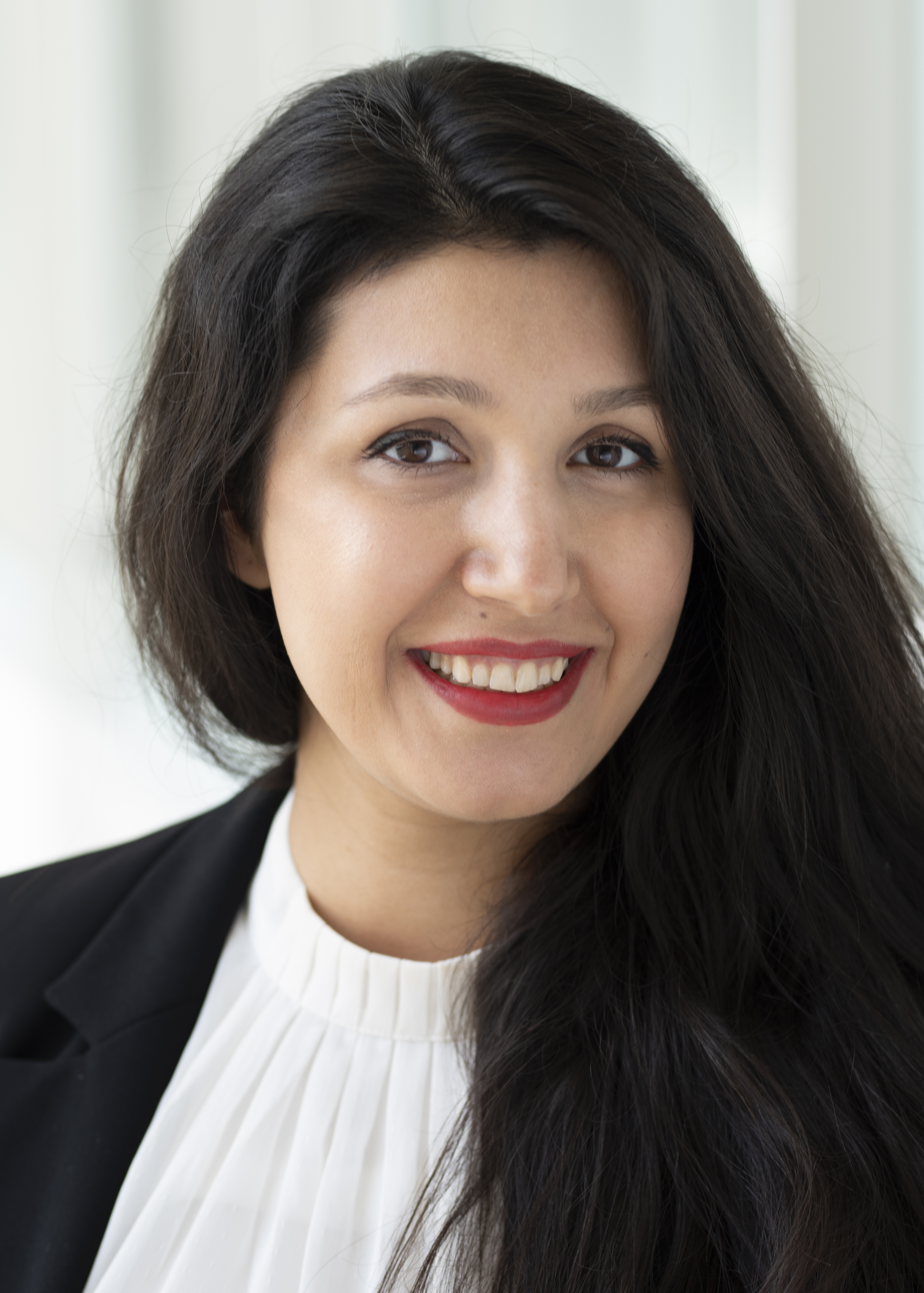
Alis Oancea is Professor of Philosophy of Education and Research Policy at the University of Oxford's Department of Education, part of the Social Sciences Division. She holds additional roles including ESRC Centre for Global Higher Education Deputy Director and Social Sciences Division Advocate for Responsible Engagement. With dual doctoral degrees (DPhil from Oxford and PhD from Bucharest), she also received a Doctor Honoris Causa from University of the West Timisoara. Her research focuses on meta-research, research policy, and higher education governance. Key areas include research assessment frameworks, impact measurement, ethics, open knowledge practices, and teacher education. She co-edited the 2024 Handbook of Meta-Research and leads international studies on research cultures and policies. Education: DPhil (Oxford), PhD (Buc), DipLATHE (Oxford), Dhc (UWT) Roles: Director of Research (2016-20), REF2021 Coordinator, ESRC CGHE Deputy Director Leadership: Over 30 funded projects including the RKEEI initiative and BERA Observatory Her 150+ publications span research policy, impact evaluation, and education systems. Awards include FAcSS Fellowship and numerous international advisory roles across Europe and Norway. Advises on global education reforms and chairs panels for EU, UK, and Nordic research councils. Current doctoral supervision focuses on research policy, higher education systems, and teacher education innovations. Active in editorial roles for Oxford Review of Education and Review of Education .
Masood Masoodian is an Associate Professor in the Department of Art and Media at Aalto University, Finland. He leads the Visual Communication Design research group, focusing on interactive visualization for health, energy, and sustainability contexts. Previously, he held roles at the University of Waikato (2000-2016), University of Southern Denmark, and Massey University. Education: Doctoral degree in Other disciplines from the University of Waikato (1999) Research interests include design thinking, visualization of complex data, and creative aging interventions. Notable projects include the EU-funded INT-ACT initiative (2024-2026) addressing intangible cultural heritage. He has received an award for collaborative work on video game ludonarrative analysis (2019). Recent activities include organizing workshops on map-based interfaces, co-creating cultural heritage methods, and delivering public talks on digital design. Supervised two theses and contributed to 131 peer-reviewed outputs, emphasizing human-centered design and sustainability. Grants: Principal investigator for multiple EU projects totaling over 3 years of active funding. Awards: Prize for 'Comedy in the Ludonarrative of Video Games' (2019). Labs/Teams: Visual Communication Design group, collaborating internationally on projects like INT-ACT's cultural heritage mapping.
Dr. Peter Edwards is an Adjunct Professor at RMIT University's School of Property, Construction and Project Management (PCPM). He retired in 2006 but continues to engage in research supervision and academic activities. His expertise spans project risk management, value management, public-private partnerships (PPP), sustainable development, and corporate social responsibility. Research Contributions: Focuses on construction industry challenges, including HIV/AIDS intervention management, workplace stress, and PPP procurement. Co-founded the Co-operative Network for Building Researchers (CNBR) in 1991, now a global network with 2,800+ members. Awards: UK Leverhulme Trust Visiting Fellowship (2003), ARC Small Grant (1998). Education: Extensive academic background in quantity surveying and construction economics, including roles as Senior Lecturer and Associate Professor at RMIT (1987–2006). His research bridges construction management, public health, and organizational behavior. Notable work includes studies on South African construction workers' mental health and the operational phase of PPP projects.
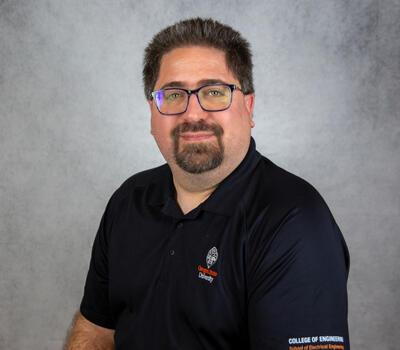
Kyle C. Hale is an Associate Professor at Oregon State University's School of Electrical Engineering and Computer Science (College of Engineering). He holds a Ph.D. and M.S. from Northwestern University (2016, 2013) and a B.S. in Computer Science from UT Austin (2010). Prior to joining Oregon State in 2024, he served as an Associate Professor at Illinois Tech in Chicago. His research spans operating systems, high-performance computing (HPC), virtualization, computer architecture, and system security. Current work focuses on specialized system software stacks for emerging computing paradigms like memory disaggregation and parallelism optimization. He leads the HExSA Lab and collaborates with the HiPCastor group. Scientific Awards: NSF CAREER Award (2023-2028) Illinois Tech College of Computing Excellence in Research (2023) Illinois Tech College of Computing Excellence in Teaching (2021) Illinois Tech Department of Computer Science Teacher of the Year (2020) EuroSys '22 Best Artifact Award Recent Research Trends: His publications emphasize compiler techniques for memory-disaggregated systems, optimizing parallel runtimes through hardware-software integration, virtualization at fine granularities, and accelerating machine learning workloads via system-level innovations. Keywords include HPC, virtualization, parallelism, and secure execution contexts. Teaching: Courses taught include Computer Architecture (CS/ECE 472), System Security (CSP 544), Operating Systems (CS 450), and advanced topics in serverless/edge computing. He actively recruits PhD students to the HExSA Lab.
Scott Kerlin is a Senior Lecturer in the Department of Electrical Engineering and Computer Science at Oregon State University's College of Engineering. He holds an M.S. and B.S. in Computer Science from the University of North Dakota. Prior to academia, he worked at the Mayo Clinic on medical software systems and IBM as a build master for enterprise products. His career spans roles including network administrator, lab manager, and Undergraduate Director at UND. Dr. Kerlin's research focuses on bridging industry experience with academic curriculum, particularly in computer science education, project-based learning, and cybersecurity. He emphasizes practical applications of theoretical concepts, such as integrating 3D printing and scanning technologies with security systems for small satellites. His work also explores student efficacy in AI courses and scalable software project management methodologies. He has taught at multiple institutions, including the University of Minnesota and Augsburg University, and held roles at Michigan Tech as Senior Security Engineer. His 2024 Engineering+ Outstanding Teaching Award highlights his commitment to pedagogical innovation. Current projects include in-space 3D printing, solar energy systems, and cryptographic solutions for satellite communications. Key areas of contribution include: 3D printing/Scanning: Material characterization, key replication, and aerospace applications Cybersecurity: Intrusion detection, satellite communications security, and chaotic cryptosystems Educational Innovation: Active learning frameworks, PBL implementation, and student performance modeling His interdisciplinary approach connects computer science fundamentals with real-world engineering challenges, emphasizing sustainability and industry relevance in curricula.
Anastasia Ailamaki is a Professor at the Swiss Federal Institute of Technology in Lausanne (EPFL), renowned for her work in database systems and data management . Her research focuses on optimizing query processing for modern hardware, particularly GPUs and heterogeneous systems, and advancing cloud data analytics with serverless architectures like PixelDB . She has co-authored influential frameworks for adaptive query optimization , hardware-conscious database engines , and model-relational data management . Key research areas: GPU acceleration , HTAP , query approximation , spatial data processing , and cloud-native databases . Recent work emphasizes cross-task optimizations in distributed environments, efficient sampling , and context-aware joins integrating vector embeddings. In 2023, she contributed to adaptive recursive query optimization and speculative K-means clustering, while 2024 publications addressed proportional caching (HPCache) and model-relational systems . Her collaborations span institutions such as MIT, Microsoft, and ETH Zurich, with publications in top venues like SIGMOD , VLDB , and ICDE .
Ulrik Schroeder is a Universitätsprofessor (Full Professor) at RWTH Aachen University, leading the Chair of Learning Technologies within the Faculty of Computer Science. His research focuses on the intersection of educational technology, learning analytics, and immersive technologies with particular emphasis on practical implementations in higher education settings. Professor Schroeder's research spans multiple interconnected domains in educational technology. His primary interests include Learning Analytics implementation (particularly using xAPI standards), Virtual Reality applications for education, Open Educational Resources development and conversion, and gamification approaches for programming education. He has developed several notable tools including convOERter for OER conversion, WebWriter for creating explorable explanations, and various xAPI-based learning analytics infrastructures. His work consistently bridges theoretical frameworks with practical educational applications, often focusing on computer science education contexts. Analysis of his recent publications reveals a strong trend toward integrating Learning Analytics with immersive technologies, particularly Virtual Reality environments. His research demonstrates a systematic approach to educational technology development, with emphasis on scalability, interoperability through standards like xAPI, and practical implementation in real educational settings. The work increasingly focuses on personalized learning paths, quality assurance for educational resources, and privacy-conscious data collection. Co-editor of 21. Fachtagung Bildungstechnologien (DELFI) (2023) Co-editor of Hochschuldidaktik der Informatik HDI 2018 Co-editor of DeLFI 2018 conference proceedings Professor Schroeder has supervised numerous doctoral and postdoctoral researchers who frequently appear as co-authors on his publications, indicating an active research group. His projects often involve interdisciplinary collaborations across computer science, education, and psychology. Current major initiatives include the AIStudyBuddy project for study path analysis and the development of VR classroom simulations for teacher training. His research group, the Learning Technologies Innovation Lab, develops open research tools that support various aspects of educational technology research and implementation.
Dr. Godfred Afrifa is a Senior Lecturer in Accounting and Senior Tutor (Canterbury) at Kent Business School , University of Kent. He is also a Visiting Lecturer at IESEG School of Management (France) since 2014 and at ISCID-CO International Business School (France) since 2016. PhD in Finance and Risk (Bournemouth University, 2013) MSc in Finance (University of Leicester, 2008) BSc in Applied Accounting (Oxford Brookes University) HND in Accounting (Kumasi Polytechnic) Chartered Accountant and Certificate in Insurance (Chartered Insurance Institute) His research explores the intersection of corporate governance , working capital management , and microfinance institutions . He investigates how CSR governance affects business practices, the dynamics of trade credit in SMEs, and the role of regional development in service-sector performance. His recent work also covers linguistic influences on financial reporting and pedagogical innovations in accounting education. Dr. Afrifa's 15 most recent publications (2020–2025) span topics like CSR decoupling , firm identity changes , credit policies , and microfinance integrity , with methodologies including stochastic frontier analysis and cross-country comparisons . His work frequently addresses financial strategies in SMEs and sustainability in supply chains and development. Scientific Awards : Fellow of The Higher Education Academy (2015), Affiliate Member of ACCA (2004). Dr. Afrifa supervises Mohammad Abwen (PhD thesis: Credibility of CSR Disclosure ) and welcomes PhD candidates in SME management , working capital , and microfinance . His Visiting Lecturer roles at French institutions highlight international collaboration. The 2023 Evaluation Report on Re:Generation 2031 underscores his work in sustainable development beyond traditional finance.
Nicoline Frølich is Professor and Director of the Centre for Learning and Education (LINK) at the University of Oslo, Norway. She also holds part-time Professor II appointments at the Department of Government, University of Bergen and at NIFU – Nordic Institute for Studies in Innovation, Research and Education. Education 2002 – PhD in Comparative Politics, University of Bergen 1994 – Master in Comparative Politics, University of Bergen 1992 – Pedagogy, Norwegian School of Economics (NHH) 1989 – Master in Economics and Business Administration, Norwegian School of Economics (NHH) Research Interests Frølich’s research focuses on governance, management and organisation of higher education systems, institutional reforms, knowledge policies, and public administration. She employs institutional theory to examine how universities and colleges respond to policy pressures, merger processes, quality assurance mechanisms, and leadership communication during change. Recent Publication Trends Between 2018 and 2025 her work has concentrated on three interconnected themes: leadership and communication within university mergers, gendered career trajectories in academia, and the tension between quality assurance systems and institutional autonomy. Empirically, her studies draw on Nordic and European cases, combining survey data with qualitative analyses of policy enactment. Scientific & Professional Appointments 2023–present – Academic Chair, Circle U alliance 2023–present – Member, SIKT advisory board (Norway) 2021–present – Editorial board member, TEAM – Tertiary Education and Management 2021–2022 – Chair, EAIR – The European Higher Education Society 2019–present – Advisory Board member, UKÄ (Swedish Higher Education Authority) 2019–2021 – Co-Editor-in-Chief, TEAM – Tertiary Education and Management Research Groups & Projects Frølich leads the research group Knowledge, Learning and Governance: Studies in higher education and work (HEDWORK) and participates in the Policy, Bureaucracy, and Organization (PBO) group. She is currently directing the project Re-Structure , which investigates the effects of structural reforms on Norwegian higher education institutions.
Kambiz Ghazinour is a Professor and Chair of the Department of Cybersecurity at SUNY Canton, where he directs the Advanced Information Security and Privacy (AISP) Lab. He holds a PhD in Computer Science from the University of Calgary (2012) and a Postdoctoral Fellowship from the University of Ottawa and Children's Hospital of Eastern Ontario (2014). Previously, he served as an Assistant Professor at Kent State University (2015-2019) and earned a Master's in High Performance Scientific Computing from the University of New Brunswick (2007). Research Focus: Data Security and Privacy, Privacy Enhancing Technologies, Usable Security, Healthcare Systems, and Social Media. Key Projects: DigitalPASS—patented simulation-based privacy education tool for social media safety. His recent publications span Cybersecurity , Deep Learning , and Health Informatics , including works on cryptocurrency price prediction, Alzheimer's detection via eye tracking, and privacy-preserving surveillance. He has received multiple teaching awards such as the Best Teaching Award at the University of Calgary (2008). Faculty Recognition Award, Kent State University (2015, 2016) University Teaching Certificate (2009) Dr. Ghazinour's teaching portfolio includes graduate courses in Data Mining, Digital Forensics, Cryptography, and undergraduate instruction in cybersecurity fundamentals and programming.
Golnoosh Farnadi is an Assistant Professor at McGill University's School of Computer Science and an Adjunct Professor at the University of Montréal. She serves as a Visiting Faculty Researcher at Google, a Core Academic Member at MILA (Quebec Institute for Learning Algorithms), and holds a prestigious Canada CIFAR AI Chair. Farnadi co-directs McGill's Collaborative for AI & Society (McCAIS) and founded the EQUAL Lab (EQuity & EQuality Using AI and Learning algorithms), which focuses on advancing algorithmic fairness and responsible AI. Her educational background includes a Ph.D. in Computer Science from KU Leuven and Ghent University (2017), with postdoctoral research at the University of Montreal/MILA (2018-2020) and the University of California, Santa Cruz (2017-2018). During her doctoral studies, she was a visiting scholar at UCLA, University of Washington, Tsinghua University, and Microsoft Research. Dr. Farnadi's research centers on developing mathematical tools and algorithms for fairness-aware machine learning systems. Her work addresses bias and discrimination in AI decision-making across critical domains including healthcare, criminal justice, financial services, and social media. She has pioneered approaches to ensure fairness in deep learning models, particularly in sequential decision-making under uncertainty. Her research bridges theoretical foundations with practical applications, examining how AI systems can be designed to promote equity while maintaining performance. Analysis of her recent publications reveals a strong focus on practical implementations of fairness mechanisms across diverse AI applications. Her work spans technical domains from generative models and large language models to recommender systems and healthcare optimization. A unifying theme is the development of mathematically rigorous frameworks that balance performance with fairness considerations, with increasing attention to cultural diversity in multilingual AI systems and privacy-preserving fairness approaches. Google Scholar Award (2021) Facebook Research Award (2021) Rising Stars in AI Ethics (2021) Google Award for Inclusion Research (2023) WAI Responsible AI Leader of the Year Finalist (2023) 100 Brilliant Women in AI Ethics (2023) Canada CIFAR AI Chair Dr. Farnadi advises numerous doctoral and master's students across McGill University, University of Montréal, and MILA, with research focusing on fairness, privacy, and responsible AI. Her EQUAL Lab brings together researchers from computer science, social sciences, and policy domains to address systemic challenges in AI ethics. She has secured significant research funding from Google and other major organizations to support her work on fairness-aware AI systems, with applications spanning healthcare, social media safety, and public policy. The EQUAL Lab serves as a hub for interdisciplinary research on algorithmic fairness, bringing together computer scientists, social scientists, and policy experts. The lab's work spans theoretical foundations of fairness metrics, practical implementations in real-world systems, and policy recommendations for responsible AI deployment. Current projects include developing frameworks for fair kidney exchange programs, mitigating cultural stereotypes in multilingual language models, and creating privacy-preserving approaches for detecting online harms while protecting user data.
Xiaohui Yu is a Professor and Graduate Program Director in the School of Information Technology at York University. He holds a BSc from Nanjing University, an MPhil from the Chinese University of Hong Kong, and a PhD from the University of Toronto. His research focuses on the intersection of data management and machine learning, including ML-based database systems, large-scale machine learning, and spatio-temporal data analysis in contexts like intelligent transportation systems and social networks. Supported by grants from NSERC and industry partners, his work has been published in top venues such as SIGMOD, VLDB, and TKDE. He serves as an Associate Editor for journals like IEEE TKDE and ACM TKDD, and actively participates in conference program committees. Education: BSc (Nanjing University), MPhil (Chinese University of Hong Kong), PhD (University of Toronto). Research Interests: Big data management, database systems, machine learning, spatio-temporal data analytics, and video query processing. Recent articles emphasize ML-driven database components, efficient video query optimization, and scalable algorithms for large-scale data. His work addresses challenges in query processing, indexing, and real-time systems. Service: Serves on editorial boards (e.g., Information Systems), and chairs/workshops (e.g., Symposium on Data Markets). Active in program committees for SIGMOD, ICDE, and other leading conferences. Advising & Grants: Directs graduate programs and leads research groups. Collaborates with industry on data marketplaces and AI model integration. No specific student names listed, but actively recruits PhD/Master’s candidates.
Bruce Rusk is an Associate Professor in the Department of Asian Studies at the University of British Columbia (Faculty of Arts) and serves as the Graduate Advisor. He previously taught at Cornell University for six years before joining UBC in 2012. During the 2012–13 academic year, he was on leave at the Institute for Advanced Study in Princeton and the National Humanities Center in North Carolina. Additionally, he is the webmaster and past president of the Society for Ming Studies, a scholarly organization focused on Ming history and culture. Bruce holds a Ph.D. from the University of California, Los Angeles (UCLA), where his dissertation, The Rogue Classicist: Feng Fang (1493–1566) and his Forgeries , examined sixteenth-century classical text forgeries. Following his Ph.D., he was a postdoctoral fellow at Stanford University from 2004 to 2006. He also earned his B.A. (History Honours) from UBC, which inspired his return to Vancouver to join the scholarly community here. His research focuses on the cultural history of pre-modern and early modern China, particularly the Ming and Qing dynasties. Key interests include authenticity and forgery in textual and material culture, transmission of knowledge, history of philology, writing systems in East Asia, and digital humanities. He collaborates globally on the SSHRC-funded FROGBEAR project, developing an open access repository for East Asian religious studies. Current work explores authentication practices surrounding artifacts like Xuande incense burners and silver ingots, reflecting his broader study of how authenticity and deception were negotiated in late imperial China. Recent publications address intersections between forgery, material culture, and digital methodologies, including co-editing Literary Information in China: A History (2021) and analyzing Ming-Qing literary practices. His work highlights the cultural significance of textual preservation and the sociocultural dynamics of early modern Chinese scholarship. As a leader in academic organizations, Bruce has contributed to the Society for Ming Studies, advancing research in Ming culture through his roles as webmaster and past president. His advising and grants include mentoring UBC graduate students and contributing to the FROGBEAR initiative. His career bridges historical research with digital innovation, emphasizing interdisciplinary approaches to Asian studies.
Dr. İsmail ÖZTEL serves as an Assistant Professor in the Department of Computer Engineering at Sakarya University's Faculty of Computer and Information Sciences. He has been a faculty member since 2019, following his tenure as a Research Assistant from 2012-2019 at the same institution. His educational background includes: Doctorate in Computer and Information Engineering (2014-2018) from Sakarya University with thesis on "Facial expression detection on partial and full face images using machine learning methods" Master's Degree in Computer and Information Engineering (2012-2014) from Sakarya University with thesis on "Driver simulator for educational purposes" Bachelor's Degree in Computer Engineering (2007-2011) from Sakarya University Dr. ÖZTEL's research focuses on artificial intelligence, deep learning, and computer vision with significant applications in healthcare, mobile technology, and public safety. His work has evolved from foundational facial expression recognition to sophisticated medical applications including skin disease classification using smartphones, monkeypox detection from skin lesions, and pandemic response systems for face mask detection. His research demonstrates strong interdisciplinary connections between computer science and healthcare. An analysis of his publication trends reveals a clear progression toward increasingly complex deep learning architectures applied to real-world problems, with recent work emphasizing medical applications using mobile technology and public health safety systems. His 2023-2025 publications show particular focus on skin disease classification, intelligent vehicle systems, and hybrid feature extraction methods for pandemic response. Dr. ÖZTEL has served as a reviewer for numerous prestigious journals including Expert Systems With Applications (multiple years), World Wide Web, Multimedia Tools and Applications, and Journal of King Saud University - Computer and Information Sciences, demonstrating his recognition in the academic community across multiple domains. His research projects include work on facial expression detection in open scientific databases (2020), performance evaluation of transfer learning approaches (2019), and current projects on brain tumor classification systems and earthquake safety education for individuals with developmental disabilities. His international research experience includes collaboration with Filiz Bunyak in 2017, indicating global engagement in his field.
Dr. Arnab Bhattacharya is a Professor in the Department of Computer Science and Engineering at the Indian Institute of Technology (IIT) Kanpur since December 2020. He previously served as Associate Professor (2014–2020) and Assistant Professor (2007–2014) at IIT Kanpur. Education: PhD in Computer Science (2007), University of California, Santa Barbara MS in Computer Science (2007), University of California, Santa Barbara Bachelor of Computer Science and Engineering (2001), Jadavpur University Research Focus spans Databases , Data Mining , Information Retrieval , and Artificial Intelligence . His work emphasizes graph analytics , skyline queries , probabilistic data , and knowledge graph management . Article Trends reveal expertise in graph neural networks , trajectory-aware systems , statistical significance in databases , and legal/medical data mining . His methodologies often integrate chi-square statistics , approximate indexing , and provenance tracking . Scientific Awards: IBM Faculty Research Award Yahoo! Faculty Research and Engagement Program Award Best Paper at COMAD 2011 Best Student Paper at COMAD 2010 Top-Five Student Paper at ICDM 2005 ICDM Student Travel Award sponsored by IBM Contact: Office RM 409, Department of Computer Science and Engineering, IIT Kanpur Email: arnabb@iitk.ac.in | Phone: +91-512-259-7650