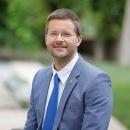
Daniel Sierra Ramos is an Adjunct Professor at IE University, Spain, and Co-Founder of Fitizens, a startup developing AI-driven wearables for physical activity quantification. He has over 6 years of experience as a Lead Data Scientist at Telefónica and Synergic Partners, specializing in AI applications for industries like banking, retail, and telecommunications. His expertise includes machine learning models for customer segmentation, predictive maintenance, and demand forecasting, alongside Big Data and cloud technologies (AWS/Azure). Education: Master in Telecommunication Engineering (Carlos III University, 2015) Master in Multimedia and Communications (Carlos III University, 2015) Bachelor in Telematic Engineering (Carlos III University, 2013) His research focuses on integrating AI into wearable devices and industry-driven data solutions. He trains professionals in AI from technical and business perspectives, emphasizing autonomy in data-centric environments. Active in corporate roles since 2015, he bridges technological innovation with practical business applications.
Miguel Ángel Bernal Merino serves as a Part-Time Lecturer in the Department of Modern Philology, Translation and Interpretation at the University of Las Palmas de Gran Canaria. Concurrently, he acts as convener of the MA in Translation at the University of Roehampton in London, managing its Specialised Translation, Audiovisual Translation, and Intercultural Communication pathways since 2005. His academic profile bridges theoretical research and industry application in localization disciplines. PhD in The Localisation of Video Games, Imperial College London MSc in The Localisation of Multimedia Interactive Entertainment Software, Imperial College London Certificate in Software Localisation, University of Limerick CELTA, University of Cambridge MPhil in Lip-Synched Dubbing, Universidad de Alicante MA in Hispanic Literature, University of Rhode Island BA in English & Spanish Linguistics, Universidad de Alicante Bernal Merino's research pioneers the expansion of Translation Studies into interactive media domains. His work on video game localization examines interactivity, cultural adaptation, glocalisation, and playability, while his audiovisual translation research investigates creativity in lip-synched dubbing, subtitling, and audiodescription. He extends these frameworks into gaming-based language learning through haptic environments and multisensory reinforcement, exploring physiological aspects of multilingual cognition and polysemiotic neural networks. This multidisciplinary approach fundamentally challenges traditional boundaries in translation theory. His publication trajectory reveals evolving industry-academia integration, shifting from foundational game localization frameworks (2008-2015) toward user-centered research and educational applications (2018-2024). Recent work emphasizes measurable business impacts through quality localization, regional market adaptations, and crowd-sourced methodologies, demonstrating consistent influence on professional standards across gaming and translation sectors. Fellow of the Higher Education Academy Bernal Merino supervises doctoral research on mobile game localization, transmedia fan experiences, and historical game content translation while developing industry-academia pipelines through projects like AHRC's Media Across Borders. His funded initiatives—including Maximising ROI through Quality Game Localisation and Video Games for Language Learning—bridge theoretical innovation with commercial implementation, focusing on glocalisation strategies, interactivity metrics, and playability optimization. These collaborations connect European universities, gaming studios, and localization service providers. As chair of the IGDA Localization SIG and member of GIR Discourse, Communication and Society, he directs international forums for game localization discourse. His work with Routes into Languages promotes audiovisual media in language education, while REF-readiness collaborations enhance research excellence across European institutions through his professional network spanning industry conferences like GDC Summit and Game Global.
Carlos Alvarez Martinez is a faculty member at the Universitat Politècnica de Catalunya (UPC), affiliated with the Department of Computer Architecture at the Barcelona School of Informatics (FIB). He is a key member of the Programming Models (PM) research group and collaborates closely with the Barcelona Supercomputing Center (BSC). His research focuses on high-performance computing, FPGA acceleration, task-based programming models like OmpSs, and hardware-software co-design for heterogeneous systems. His research interests center on advancing parallel computing through innovative programming models and hardware acceleration. He investigates efficient task scheduling, resource management in multicore and FPGA-based systems, and runtime support for dataflow models. His work enables high-performance execution of complex applications in domains such as scientific computing and cyber-physical systems. He actively contributes to European initiatives like TEXTAROSSA and AXIOM, aiming to develop next-generation exascale supercomputing technologies. The trend in his recent publications shows a strong focus on leveraging FPGAs for HPC, optimizing SpMV operations, improving task scheduling with hardware support, and developing frameworks for multi-FPGA clusters. His work consistently bridges theoretical models with practical implementations, emphasizing performance, scalability, and energy efficiency in heterogeneous computing environments. Scientific Awards: Premi UPC al Compromís Social 2019 Premi Disseny per al Reciclatge 2013 Alvarez Martinez has advised or collaborated with several doctoral students, including Jaume Bosch, Xubin Tan, and Fahimeh Yazdanpanah. He has been involved in numerous competitive R&D projects, often related to high-performance computing and parallel programming models. His work includes significant contributions to educational innovation, particularly in active learning methodologies and formative assessment using interactive systems. He leads and participates in research labs and teams focused on programming models and computer architecture, notably the PM group at UPC/BSC. These teams develop runtime systems, compilers, and hardware accelerators to push the boundaries of parallel computing efficiency and programmability.
Gil Serrancoli Masferrer is an Associate Professor in the Department of Mechanical Engineering at the School of Engineering of East Barcelona (EEBE), part of the Polytechnic University of Catalonia (UPC). He is affiliated with the InSup - Research Group in Surface Interaction in Bioengineering and Materials Science and the LAM - Multimedia Applications and ICT Laboratory. His work focuses on biomechanics, computational modeling, and telerehabilitation systems development for clinical applications. Dr. Serrancoli's research spans multisolid dynamics, dynamic optimization, movement simulation, and telerehabilitation systems. His expertise lies in applying computational techniques to solve complex problems in orthopedics, gait analysis, and rehabilitation engineering. His work bridges mechanical engineering with biomedical applications, particularly in musculoskeletal modeling and simulation of orthopedic procedures. He has developed novel computational frameworks for estimating internal musculoskeletal loading and muscle adaptation in various conditions, including hypogravity environments. His recent publications demonstrate a strong focus on in-silico modeling of orthopedic procedures, particularly knee osteotomies (proximal fibular osteotomy versus high tibial osteotomy), with detailed analysis of joint pressure redistribution. He has also pioneered the application of machine learning techniques, particularly recurrent neural networks, to biomechanical problems including cycling biomechanics and running dynamics prediction. His work consistently integrates computational efficiency with clinical relevance. Technical Award - OpenSim+ Advanced Workshop March 2024 Accésit del XLV Congreso de la Sociedad Ibérica de Biomecánica y Biomateriales European Society of Biomechanics Travel Award OpenSim Virtual Workshop - Technical Award OpenSim Visiting Scholar 2017 Enginyers BCN 2018 Dr. Serrancoli leads several competitive R&D projects including 'Muvity: a novel physical telerehabilitation system' for vulnerable populations and 'Simulaciones predictivas in silico para cirugías ortopédicas' (Predictive in-silico simulations for orthopedic surgeries). He collaborates extensively with researchers across Europe, particularly with Jordi Torner, Josep Maria Font Llagunes, and Joan Carles Monllau, and has secured funding from national and regional programs including Plan Estatal de Investigación Científica y Técnica y de Innovación. He is actively involved in the BIOMEC - Biomechanical Engineering Lab and the TecSalut - Research Group in Health Technologies, where he contributes to the development of innovative solutions for healthcare challenges, particularly in the areas of telerehabilitation and computational biomechanics for orthopedic applications.
Karina Gibert is a Full Professor at Universitat Politècnica de Catalunya (UPC), specifically at the Faculty of Computer Science of Barcelona (FIB) in the Department of Statistics and Operations Research. With a permanent teaching position since 1990, she contributes to research and education with a focus on Data Science, Artificial Intelligence, Explainable AI, and Ethics in AI. Full Professor, UPC (since 1990) PhD in Informatics Engineering Postgraduate in Higher Education Teaching Director and co-founder of IDEAI research center Dean of the Official Professional College on Informatics Engineering of Catalonia Active in bridging the gender gap in STEAM through multiple initiatives Her research focuses on extracting strategic knowledge from data and intelligent systems with ethical and explainable perspectives. She has led various projects including Diet4You for personalized diets, INSESS-COVID19 for social vulnerability analysis, Top Rosies Talent for female AI development, and ciutadanIA for AI culture promotion. Her work spans health, environment, sustainability, tourism, and social technology applications. As an editor of Environmental Modeling and Software journal and active academic, she contributes to international conferences, working groups, and research collaborations. Her service includes membership on various ethics and AI strategy committees and advisory boards. Women Tech Award 2023 National Informatics Engineering Award in Digital Dissemination 2022 Ada Byron Award 2022 Honorific Mention of Creu Casas award 2021 donaTIC 2018 Award Finalist at AMETIC Awards 2021 Finalist of European Social Services Awards 2021
Pere-Pau Vázquez is an Assistant Professor in AI for Visual Computing at the Computer Vision Lab, TU Wien, Austria . Previously, he held academic positions at the ViRVIG Group and Facultat d'Informàtica de Barcelona (UPC) , where he taught courses in Programming, Computer Graphics, and Visualization for over 20 years. His research focuses on Information Visualization, Scientific Visualization, Medical Data Visualization, Molecular Visualization, and AI applications to Visual Computing . Current Teaching : Data Visualization, Fast Realistic Rendering, Information Visualization, Medical Images, Scientific Visualization, Virtual Reality, and 3D Medical Visualization. Former PhD Students : Elena Molina, Alexandra Cortez, Jesús Díaz, Pedro Hermosilla, Eva Monclús. His scientific awards include the Best PhD Thesis Award (UPC, 2003), Best Student Paper Award (SPIE, 2012), and Best Paper Award (International Conference on Computer Graphics Theory and Applications, 2013). Recent publications explore AI integration in biomedical visualization, molecular data analysis, and interactive techniques for volume rendering. He serves on the EuroGraphics Executive Board as Secretary and is active in steering committees for EuroVis and Visual Computing for Biology and Medicine . His work bridges Computer Graphics, Artificial Intelligence, and Human-Computer Interaction , with applications in medical and molecular data analysis.
Juan Francisco Jiménez-Alcázar is a Professor at the Universidad de Murcia, affiliated with the Department of Prehistory, Archaeology, Ancient History, Medieval History and Historiographic Sciences and Techniques within the Faculty of Arts and Humanities. His research focuses on Medieval History, Digital Humanities, and the intersection of history with video games and digital media. He holds a Doctorate from the Universidad de Murcia (1993) with a thesis on 'Espacio, poder y sociedad en Lorca (1460-1521)'. His work explores historical representation in modern media, particularly analyzing how video games depict medieval soundscapes, warfare, and cultural frontiers. Key themes include the study of linguistic diversity in medieval Spain, governance structures in frontier regions like Murcia, and the impact of historical epidemics such as the 1507-08 plague in Murcia. Recent publications include books on Digital Humanities and video games (2020), medieval warfare simulations, and interdisciplinary studies on migration and historical identity. He collaborates with institutions like CONICET and the CNR in Italy, and his research contributes to both academic and public understanding of medieval history through digital tools and cultural analysis.
Jordi Guitart Fernández is a Professor at the Department of Computer Architecture, Barcelona School of Informatics (FIB), Universitat Politècnica de Catalunya (UPC). He is also affiliated with the Barcelona Supercomputing Center (BSC-CNS), a leading national supercomputing facility. He leads the CROMAI research group, focusing on Computing Resources Orchestration and Management for AI. His work bridges high-performance computing, cloud systems, and artificial intelligence. Research Interests: Cloud Computing and Edge Computing Green and Energy-Efficient Computing Containerization and Virtualization for HPC Resource Orchestration and Management Autonomic and Self-Adaptive Systems Machine Learning Workflow Management AI-Driven System Optimization His recent publications reveal a strong focus on intelligent management of computing resources across cloud, edge, and HPC environments using machine learning and agent-based frameworks. He investigates performance, efficiency, and reliability in containerized AI and HPC workloads, particularly within Kubernetes and distributed infrastructures. His work increasingly integrates human-in-the-loop and trustworthiness aspects into AI systems. Scientific Awards: CLOUD Conference 2025 Best Paper Award VISIGRAPP 2025 Best Student Paper Award Premi Extraordinari de Doctorat 2025 - Àmbit d'Enginyeria de les TIC Test of Time Award Honorable Mention (e-Energy) Reconeixement als Mèrits Docents d'Especial Qualitat Top reviewers for Polytechnic University of Catalonia (Computer Science) - September 2017 Advising and Grants: He has advised doctoral students, including Peini Liu. He leads and participates in numerous competitive R+D+i projects, such as CROMAI and DALEST, funded by national and European programs like HORIZON 2020 and the Spanish State Research Plans. His work is supported by grants focused on knowledge generation and industrial leadership in computing technologies. Labs and Teams: He is the leader of the CROMAI - Computing Resources Orchestration and Management for AI research group at UPC. He also collaborates closely with the Barcelona Supercomputing Center (BSC-CNS), contributing to large-scale computing initiatives and strategic research agendas in Europe.
Agustín Zaballos Diego is an Assistant Professor in the Department of Computer Engineering at University Ramon Llull (URL), Barcelona, Spain, since 1999. He serves as Research Coordinator in the Department of Engineering at La Salle Campus Barcelona and leads the R&D Networking and Security Area since 2002. His academic background includes a PhD in Data Networks and Internet Technologies (2012), an International MBA (2014), and an M.S. in Electronic Engineering (2000). University: University Ramon Llull (URL) Department: Department of Computer Engineering Research Group: GRITS Research Focus: Real-time QoS-aware routing protocols in Smart Grids, Ubiquitous Sensor Networks, and IoT communications. His work bridges telecommunications, computer science, and energy systems through projects like OPERA (FP6), INTEGRIS (FP7), and FINESCE (FP7). Publication Trends: Recent articles highlight advancements in HF communications for Antarctic research, hybrid genetic algorithms for traffic engineering, IPv6 testing, and Industry 4.0-related networking solutions. Keywords span Smart Grids, IoT, Sensor Networks, and QoS optimization. Collaborative Projects: Key initiatives include the Antarctica Project , ATHIKA (ICT in healthcare), ENVISERA (environmental sensor networks), HOTSUP (online teaching innovation), PLANET4 (AI/ML in industry), and XIoT (IoT scalability challenges).
Felix Gomez Marmol is an Associate Professor at the University of Murcia's Faculty of Informatics, Department of Information and Communication Engineering. His research focuses on cybersecurity, artificial intelligence, network security, and IoT security. He holds a PhD in Computer Science from the University of Murcia (2010), supervised by Dr. Gregorio Martínez Pérez. Key research interests include adaptive intrusion detection systems, dark web analysis, and AI-driven cybersecurity frameworks. He leads the Intelligent Systems and Telematics research group and previously contributed to the Sistemas Inteligentes group. His work emphasizes practical applications such as the SCORPION Cyber Range platform for cybersecurity training and gamification. Recent projects involve detecting hate networks on social media, optimizing malware defense using transfer learning, and developing SIEM systems for IoT environments. His contributions span technical papers on cybersecurity education, ethical hacking fundamentals, and blockchain-based security solutions. Prof. Gomez Marmol has collaborated on initiatives like the COBRA framework for simulating advanced persistent threats (APTs) and the COnVIDa dashboard for pandemic-related data analysis. His research bridges theoretical advancements with real-world cybersecurity challenges.
Elisa Santana Monagas is a Part-Time Substitute Professor at the Department of Psychology, Sociology and Social Work, Universidad de Las Palmas de Gran Canaria. She is affiliated with the Institute of Textual Analysis and Applications (IU IAText) and the ICP2 Project research group. Her research focuses on teacher-student communication styles, motivational messages in educational contexts, and their impacts on student motivation, academic performance, and psychological well-being. She employs sentiment analysis and longitudinal studies to explore reciprocal relations between teaching practices and student outcomes, particularly in secondary education settings. Her key research interests include developmental and educational psychology, with an emphasis on autonomy-supportive communication, relatedness in teacher-student relationships, and the role of emotional engagement in learning. She has contributed to understanding how classroom environments influence covitality, boredom reduction, and adaptive behaviors among adolescents. Notable contributions include analyzing reciprocal dynamics between motivational appeals and academic outcomes, gamification strategies in higher education, and the validation of assessment tools for teacher feedback. Her work bridges theoretical frameworks like self-determination theory with methodological innovations in sentiment analysis and needs-supplies fit processes. Elisa collaborates with interdisciplinary teams in the GIR IATEXT group, focusing on didactics and learning in specific educational contexts. She actively publishes in peer-reviewed journals and presents at conferences on topics such as teacher enthusiasm, empathetic communication, and the design of pedagogical interventions to enhance student well-being.
Miguel Ángel Sotelo Vázquez is a full Professor at the University of Alcalá, leading the INVETT Research Group (Intelligent Vehicles and Traffic Technologies). He holds the Department of Automatic Control and specializes in autonomous systems, particularly in path planning, sensor fusion, and human-vehicle interaction. His research integrates machine learning, robotics, and control theory to address challenges in intelligent transportation systems. He earned his Ph.D. in 2001 with a thesis on autonomous vehicle navigation in partially known environments. His work emphasizes real-world deployment, explainable AI, and safety-critical systems. Recent projects focus on lane change prediction, pedestrian behavior modeling, and cybersecurity for autonomous systems. Key contributions include neuro-symbolic frameworks for decision-making, real-time multi-physics field reconstruction, and cross-cultural studies of pedestrian interactions. He collaborates internationally on urban mobility resilience and hydrogen refueling infrastructure. Research Highlights : Development of knowledge graph-based prediction architectures Experimental validation of human-vehicle interaction in VR environments Creation of the SCOUT trajectory prediction framework
Tania Fernández Villa is an Associate Professor in the Department of Biomedical Sciences at the Faculty of Veterinary Medicine, University of León. Her primary academic affiliation centers on preventive medicine and public health research within the GIIGAS (Interactions Gene-Environment-Health) research group. Her research spans nutritional epidemiology, gender studies in food systems, substance use disorders, and chronic disease prevention. Key focus areas include alcohol consumption patterns among university students (via the UniHcos cohort), sarcopenia in metabolic syndrome, breast cancer risk factors, and pandemic impacts on health behaviors. Her work integrates longitudinal cohort analysis, systematic reviews, and psychometric validation studies. Recent publications demonstrate strong trends in gender-disaggregated health research, pandemic-related behavioral shifts, and methodological innovations in dietary assessment. Her 2024-2025 output shows increasing emphasis on environmental sustainability of diets and multi-cancer risk prediction models. She serves on the editorial board of the Spanish Journal of Human Nutrition and Dietetics, contributing to strategic planning (2020-2026) and open science initiatives. Her PhD from Universidad de Granada focused on ICT usage patterns among university students. Current projects include the UniHcos longitudinal study tracking health behaviors in Spanish university students, with particular attention to alcohol use, sleep patterns, and nutritional status. Her research group actively investigates gene-environment interactions in public health contexts.
Maria Rosa Rifà Ros is a Lecturer in the Department of Nursing and Physiotherapy at the Blanquerna School of Health Sciences, Universitat Ramon Llull. She is an active researcher with 52 publications spanning from 1993 to 2025 and maintains an h-index of 5 with 46 citations. Her research expertise centers on nursing education, primary health care, nursing diagnosis, and immigrant health. Dr. Rifà Ros employs diverse methodologies including cross-sectional studies, qualitative approaches, and systematic reviews to investigate nursing student experiences, pandemic impacts on healthcare education, and health disparities among vulnerable populations. Her fingerprint analysis shows strong focus areas in Nursing Diagnosis (100%), Immigrant Health (94%), and Nursing Student experiences (68%). Recent publications reveal a consistent trajectory examining healthcare inequalities, clinical education environments, and pandemic-related transformations in healthcare delivery. Her work spans both Spanish and international contexts with particular attention to vulnerable populations and healthcare system responses to emerging challenges. Dr. Rifà Ros has been actively involved in the Global Research on Wellbeing (GRoW) project as a researcher from 2017-2021 and continues in this role from 2022-2025, funded by the Agència de Gestió d'Ajuts Universitaris i de Recerca (AGAUR). This sustained research commitment demonstrates her dedication to advancing knowledge in health and wellbeing. She has mentored numerous nursing students and collaborated extensively with colleagues including Carrillo Alvarez, Rodríguez Monforte, Salinas Roca, and Costa Tutusaus on research examining healthcare systems, student experiences, and health inequalities. As a key member of the Global Research on Wellbeing group, Dr. Rifà Ros collaborates with an interdisciplinary team across various health science disciplines, contributing her nursing expertise to address complex health challenges through research that directly impacts clinical practice and healthcare education.
Francesc Xavier Marín Torné serves as an Associate Professor in the Department of Educational Sciences at the Faculty of Psychology, Educational Sciences and Sports, Blanquerna, Universitat Ramon Llull in Barcelona, Spain. His academic profile demonstrates extensive engagement with religious education, particularly Islamic studies within Catalan public schools, and the educational potential of sacred architecture. His research bridges educational theory, religious studies, and architectural analysis, with a distinctive focus on the Sagrada Familia basilica as a paradigmatic educational space. His primary research interests include: Religious education in pluralistic societies, with particular emphasis on Islamic education in Catalan public schools The pedagogical potential of sacred architecture and worship spaces as educational environments Intercultural and interreligious dialogue in educational contexts Educational approaches to social inclusion and coexistence with Maghrebi students The psychological dimensions of religious education and misinformation Peace education through religious understanding and architectural spaces Dr. Marín Torné's scholarly output reveals a cohesive trajectory examining worship spaces through multiple lenses - theological, architectural, and pedagogical - with the Sagrada Familia serving as his central case study. His research also addresses contemporary societal challenges including the psychological effects of pandemic misinformation and the integration of religious minorities in educational settings. This work contributes significantly to understanding how religious diversity can be accommodated within secular educational frameworks while maintaining social cohesion. He currently leads the GREDA (Research Group in Education, Didactics and Learning) project (2022-2025) funded by AGAUR, and previously directed the EDUISLAM project (2023-2024) analyzing Catalonia's pilot plan for Islamic religious education. His earlier work includes the 2007-2008 project developing guidelines for secondary school teachers working with Maghrebi students and the 2015 Ramon Llull legacy project commemorating the 700th anniversary of Llull's death. Dr. Marín Torné maintains active research collaborations across multiple disciplines and institutions, contributing to both theoretical scholarship and practical applications in teacher training and educational policy development. His work demonstrates consistent scholarly productivity with numerous publications appearing through 2024.